 3
VZMORE AX9 Max Review
Web & Office Productivity »General Performance
AIDA64 Cache & Memory
The AIDA64 memory benchmark measures how quickly data moves between system memory and the CPU's cache hierarchy. It provides a closer look at memory bandwidth, latency, and cache behavior.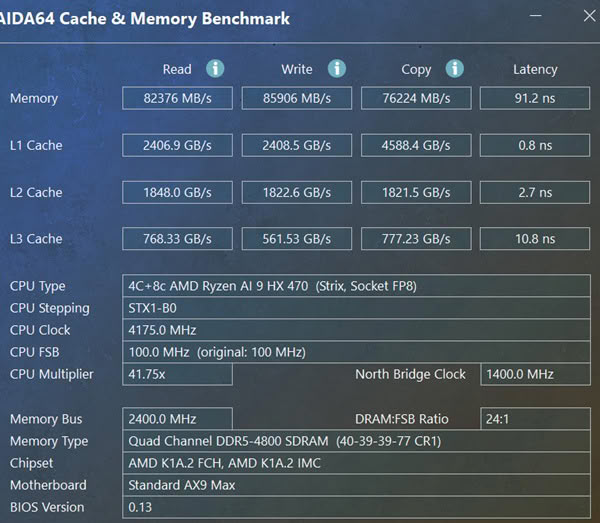
With both DDR5 modules operating in dual-channel mode, the AX9 Max recorded 82,378 MB/s in memory reads, 85,906 MB/s in writes, and 76,224 MB/s for copies, with latency at 91.2 ns. Those bandwidth figures are good for this configuration, particularly because the Radeon 890M uses the same system memory as the CPU.
Cinebench
Cinebench uses Maxon's Cinema 4D engine to measure processor rendering performance across both single-threaded and multithreaded workloads. Comparing both scores shows how well the processor handles lightly threaded tasks and heavier rendering jobs.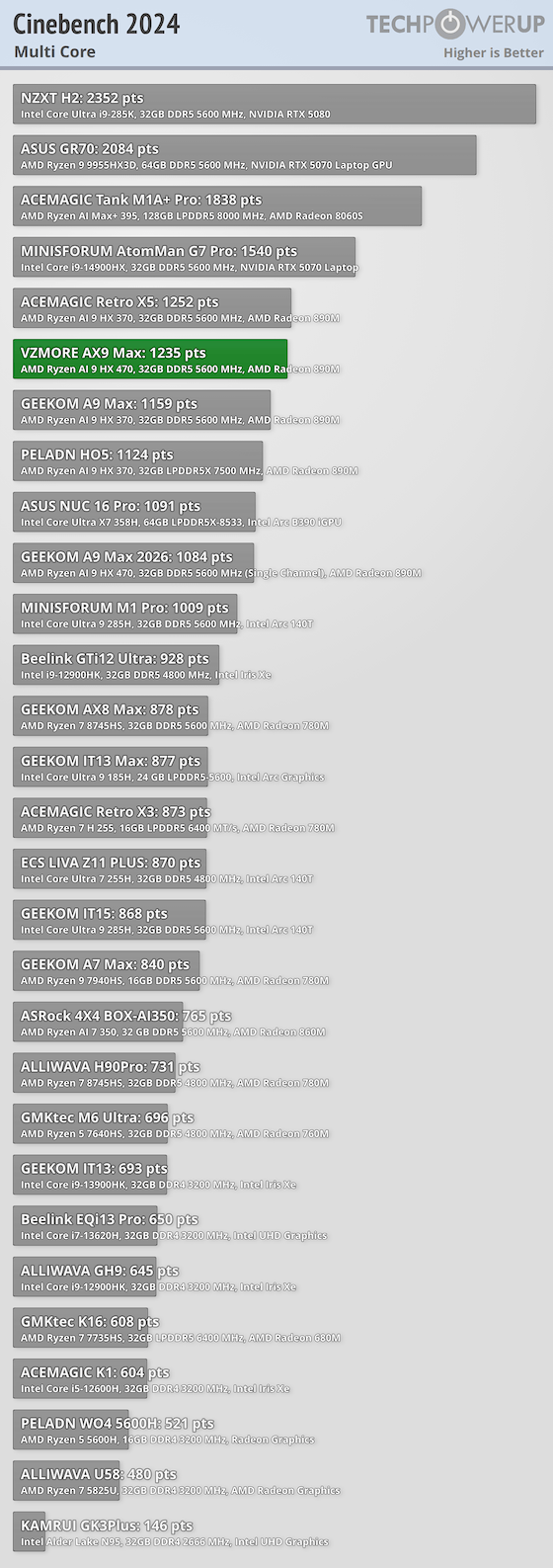
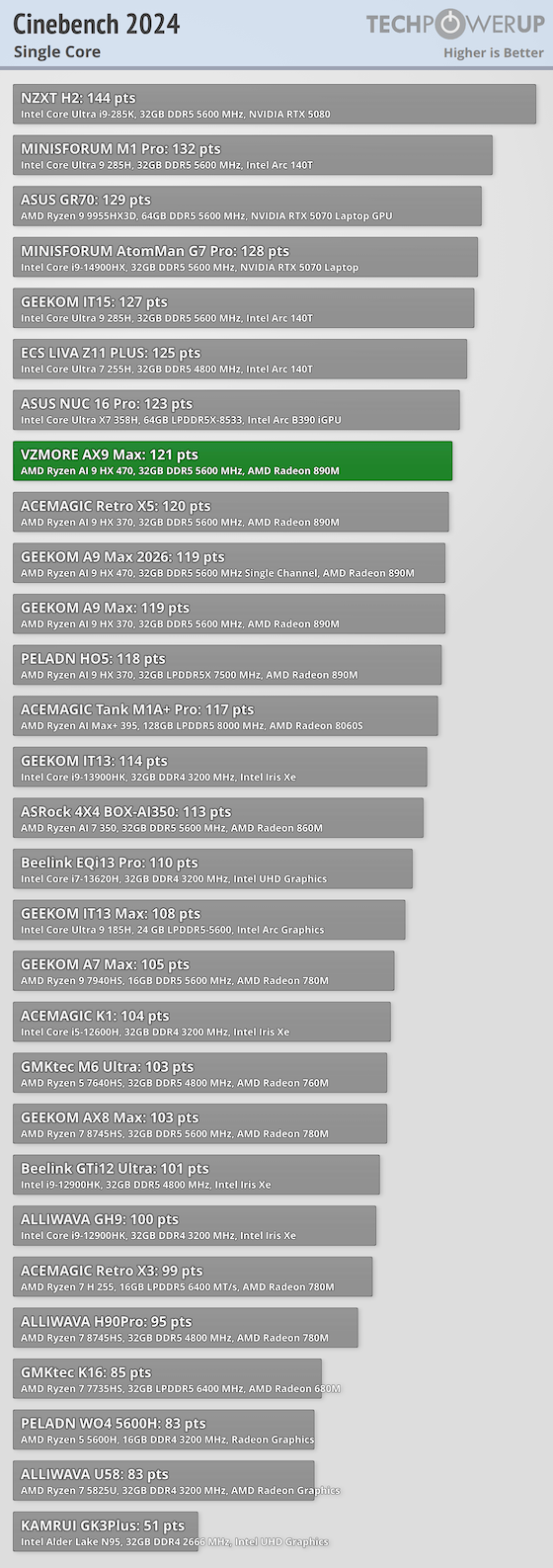
Cinebench scored 1,235 points in the multicore test and 121 points in the single-core run, placing the AX9 Max close to the faster Ryzen AI systems already in the comparison charts. It also finished ahead of the GEEKOM A9 Max 2026, which recorded 1,084 points in the multicore test.
I also repeated Cinebench in Performance Mode to see whether increasing the power limit from 54 W to 65 W would improve rendering performance. The difference was negligible, with the higher power setting doing very little to affect the score.
7-Zip
7-Zip's built-in benchmark measures processor performance during both data compression and decompression across a range of dictionary sizes. It's a useful indicator of how a system handles file-heavy workloads such as packing archives, installing software, or building projects.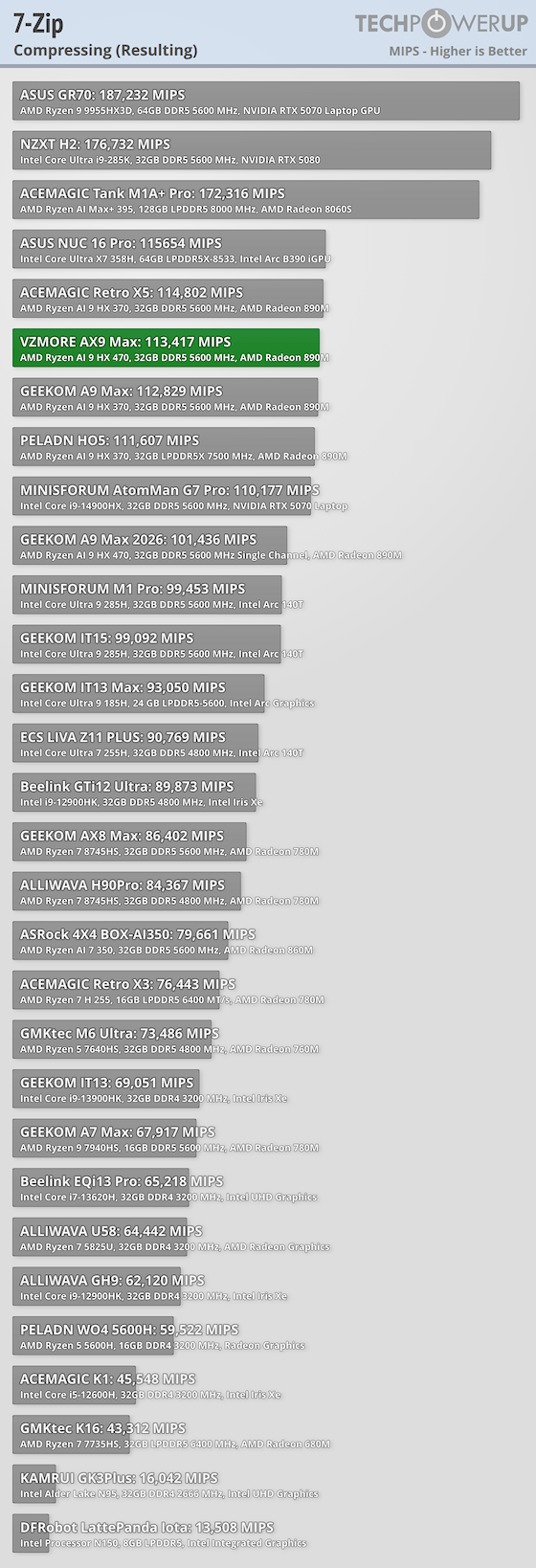
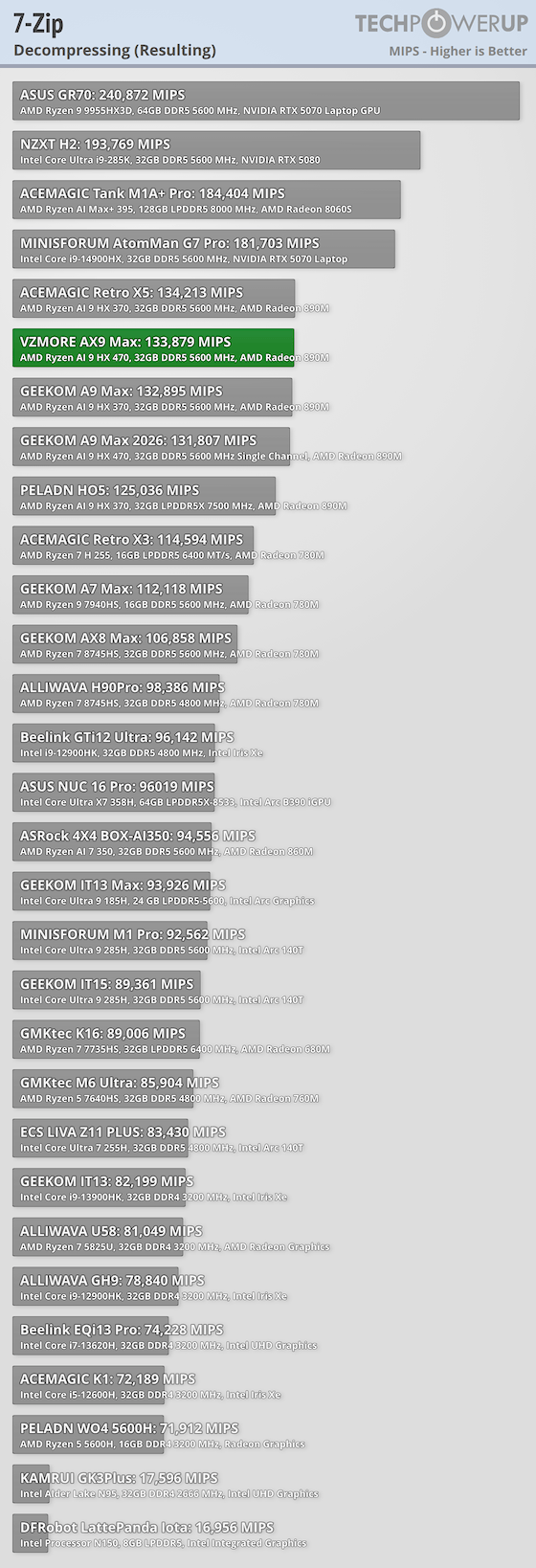
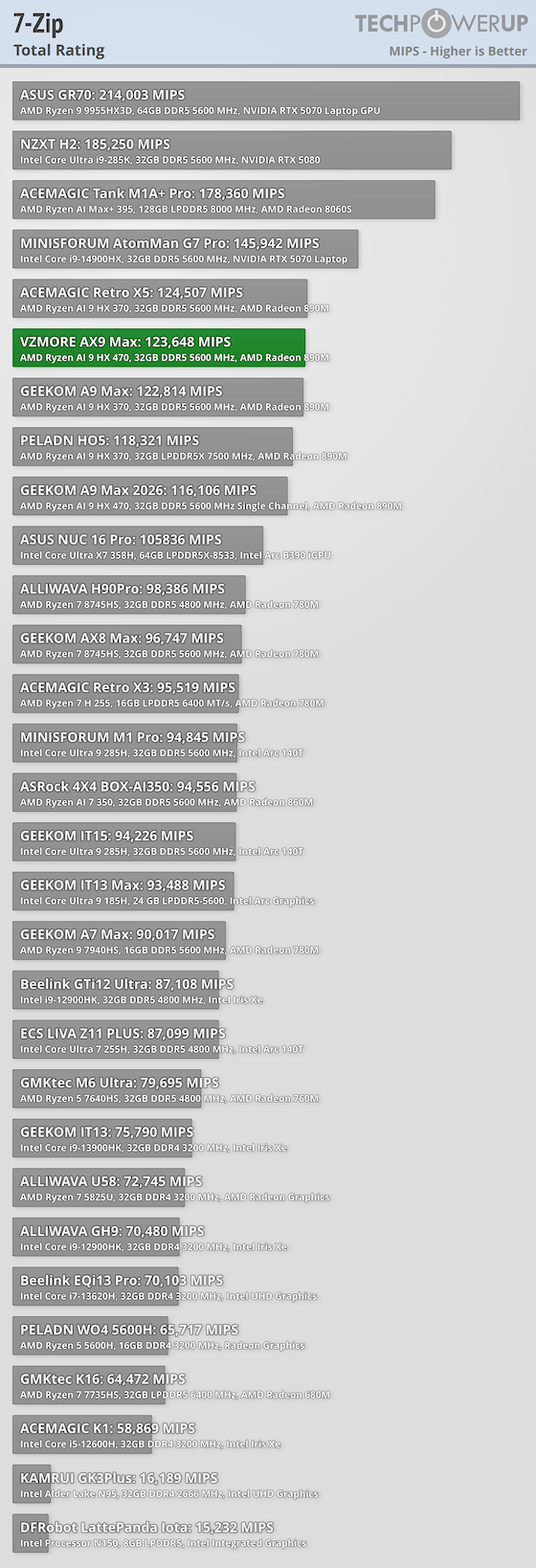
The AX9 Max recorded 113,417 MIPS in compression and 133,879 MIPS in decompression, for a combined rating of 123,648 MIPS. Those results put it among the faster Mini-PCs in this comparison, particularly when decompressing files.
PCMark
PCMark runs a collection of common desktop activities, including web browsing, video conferencing, office applications, and media workflows. It gives a broad look at day-to-day desktop performance.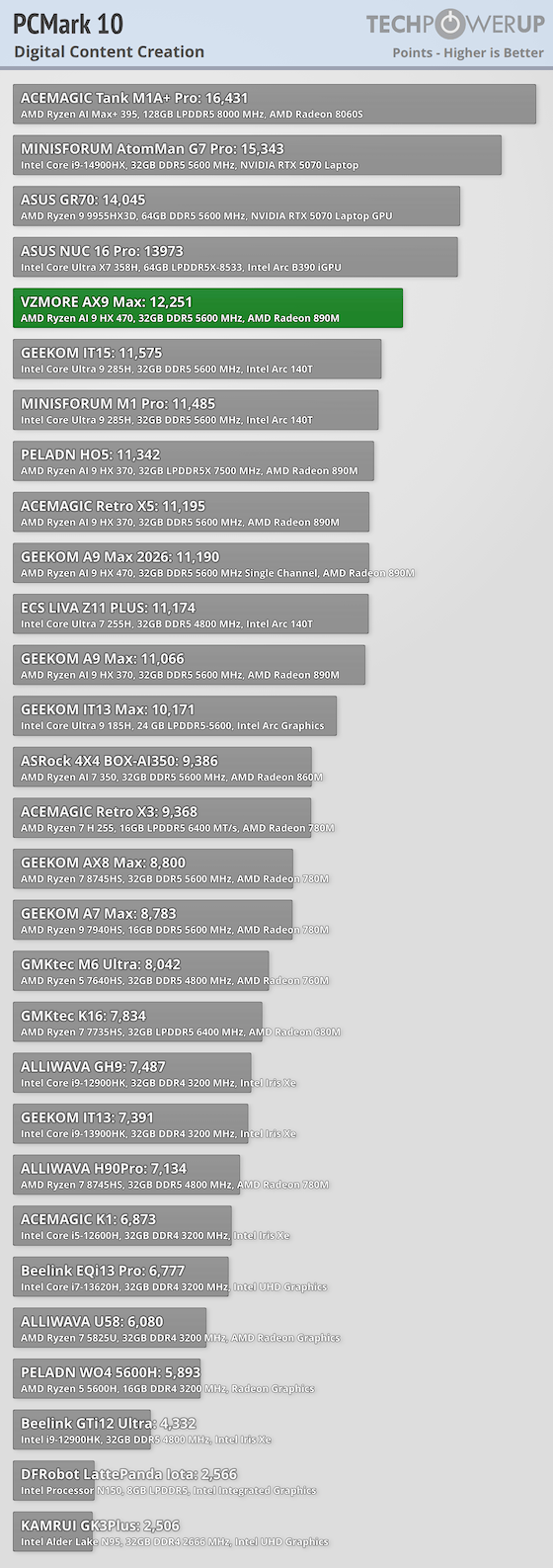
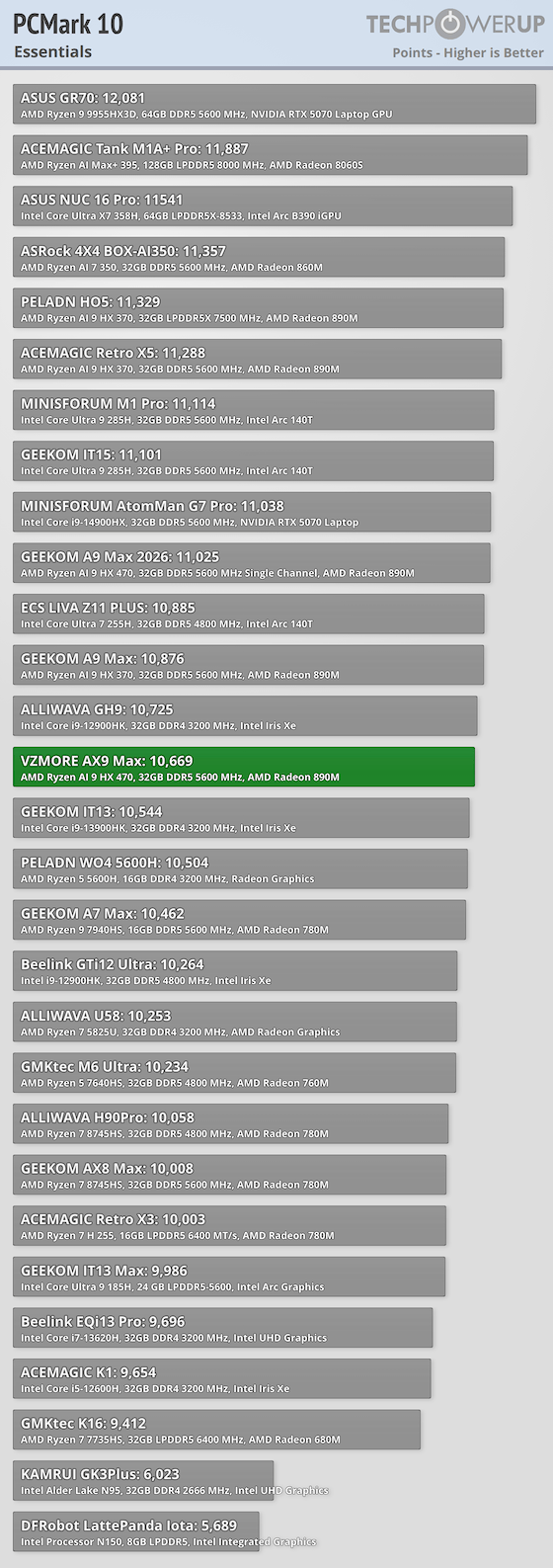
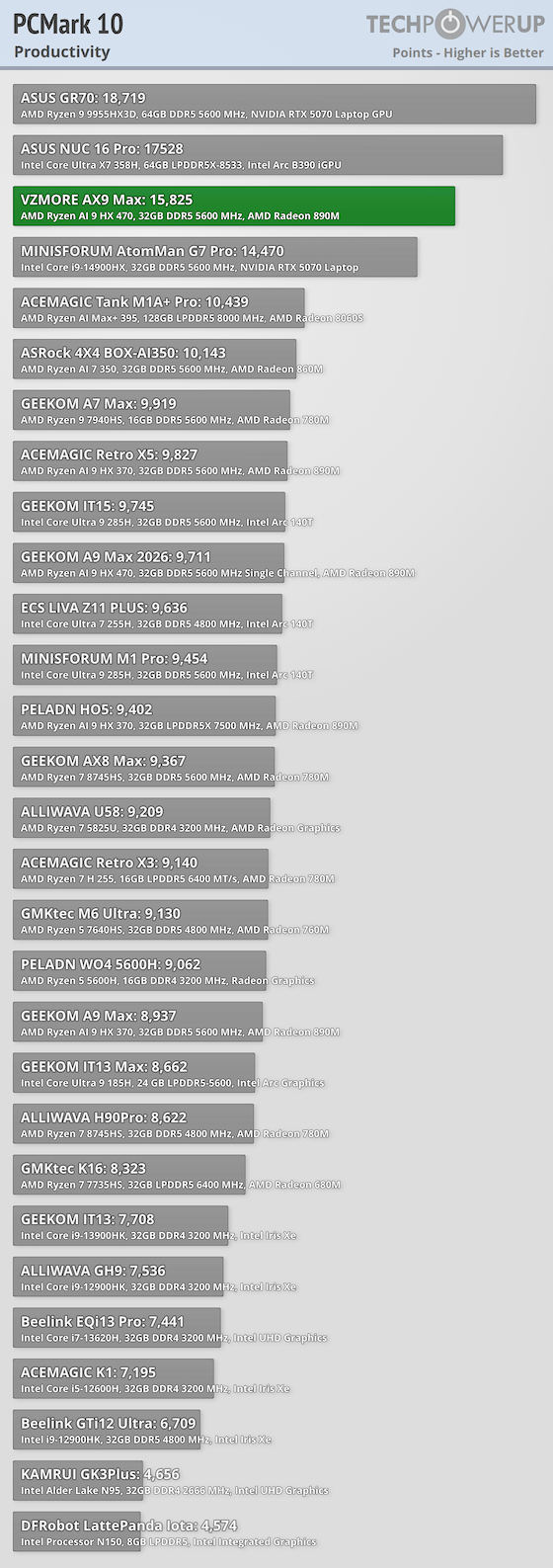
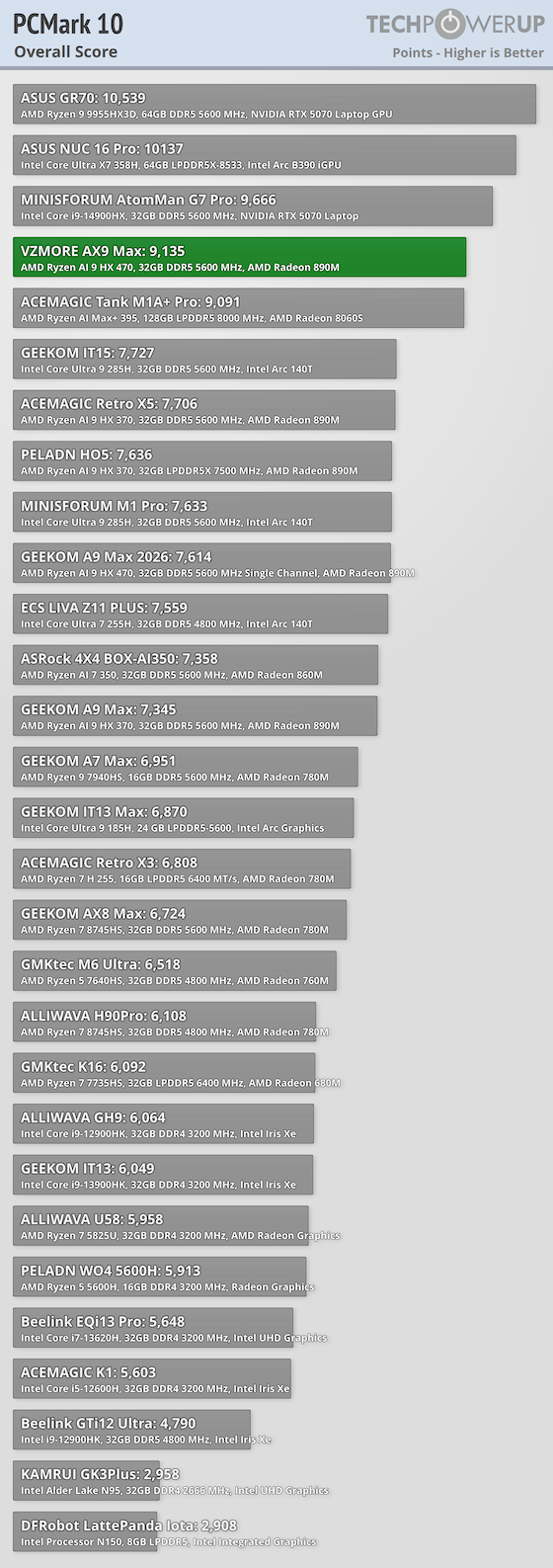
The AX9 Max reached 9,135 points overall in PCMark, with 10,669 in Essentials, 15,825 in Productivity, and 12,251 in Digital Content Creation. The overall score also finished above several Ryzen AI 9 HX 370 systems in the chart, giving this configuration a good result across the benchmark's mixed desktop tasks.
Y-Cruncher
Y-Cruncher calculates digits of Pi to extreme precision, placing heavy demands on both the CPU and system memory. It's useful for gauging raw compute ability and stability under heavy math workloads.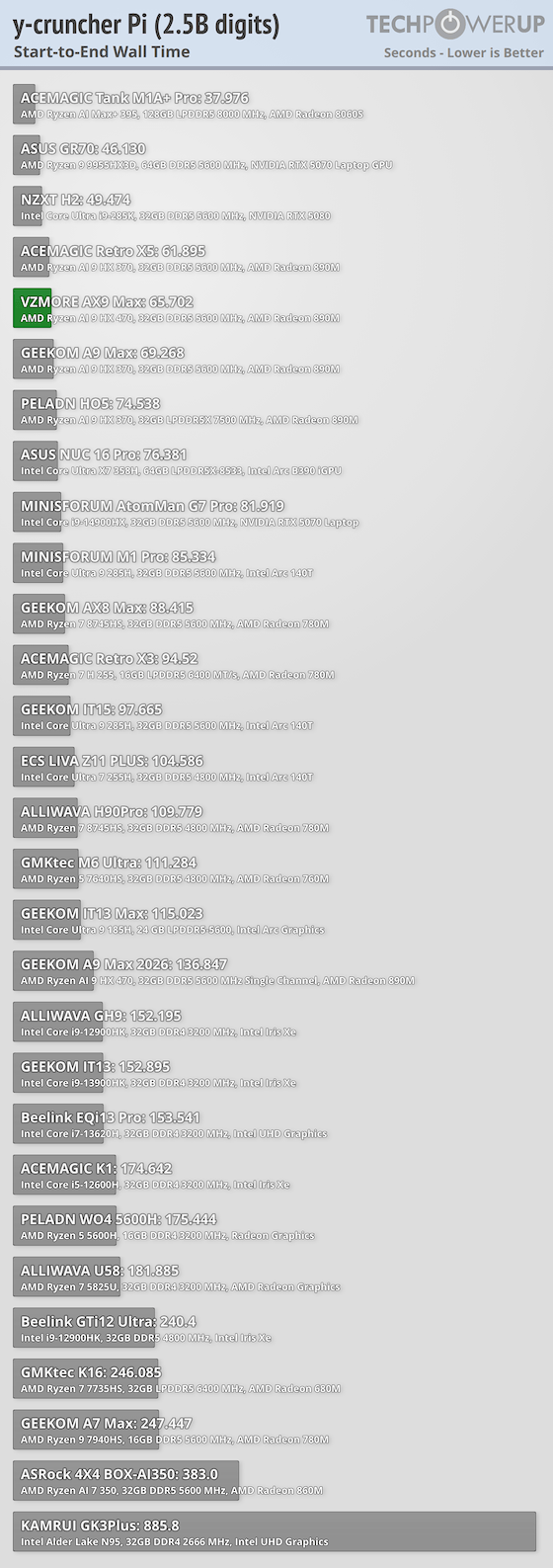
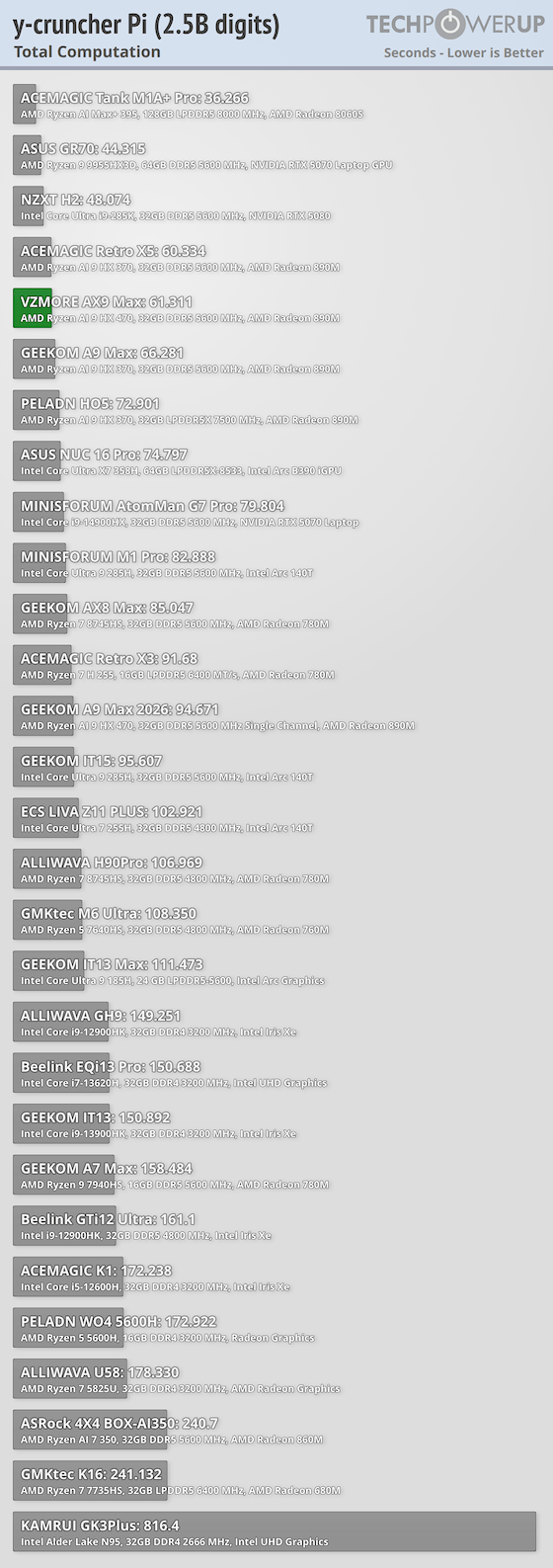
The AX9 Max completed the 2.5-billion-digit calculation in 61.311 seconds, with a total elapsed time of 65.702 seconds. It also performed well against the other Ryzen-based Mini-PCs in this demanding CPU and memory benchmark.
Geekbench
Geekbench tests a wide variety of workloads, from encryption and AI inference to office productivity and photo editing. It also includes a GPU compute test, which provides a useful look at graphics performance outside of games.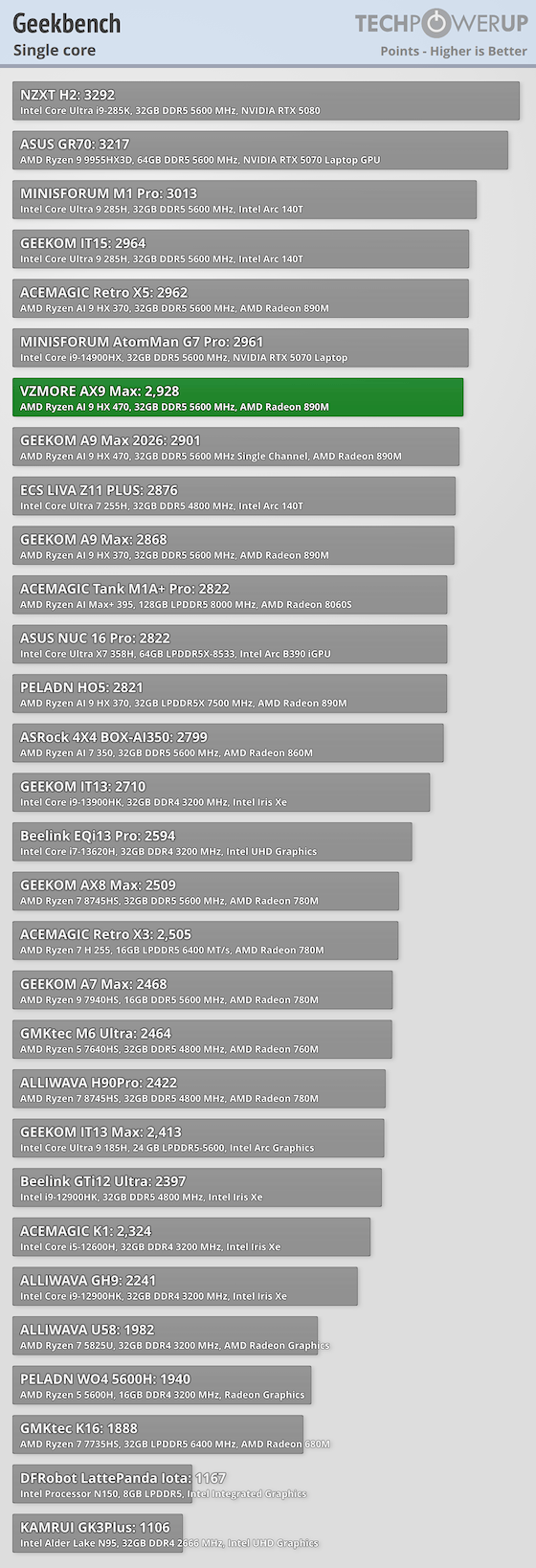
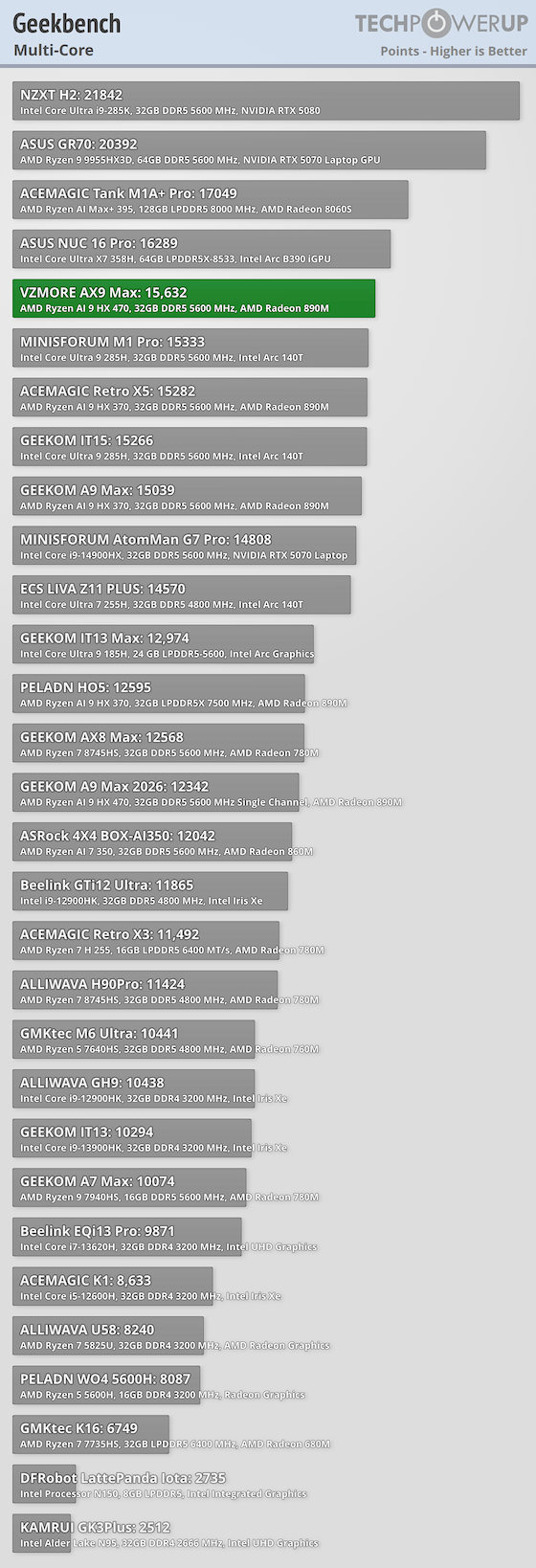
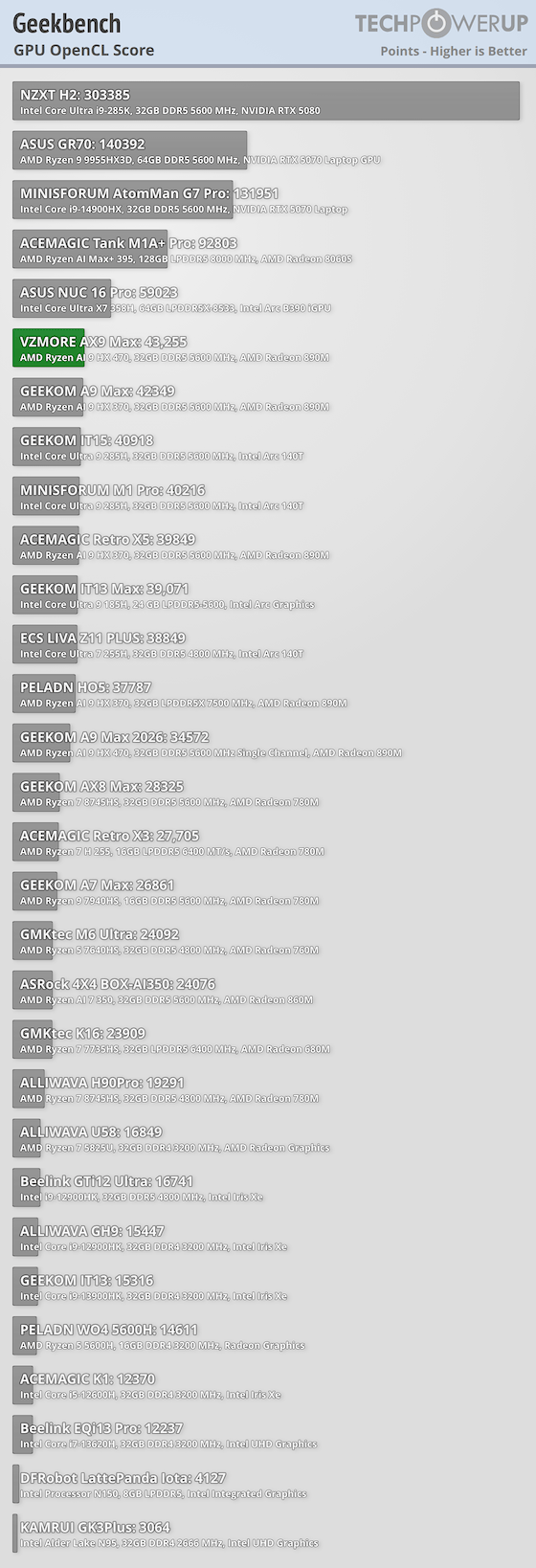
Geekbench measured 2,928 points in the single-core CPU test, 15,632 in multicore, and 43,255 in the Radeon 890M's OpenCL GPU compute test.
I ran Geekbench again in Performance Mode as another check of the higher power setting, but the results were virtually unchanged from Balanced Mode. Even with the higher 65 W limit selected, there was no significant improvement in performance.
Nov 25th, 2026 08:20 CST
change timezone
Latest GPU Drivers
New Forum Posts
- Increasing Power Limit? (35)
- Claude credits purchased on or after Dec. 7 now have an expiry date (0)
- Ryzen Owners Zen Garden (8566)
- WarpCoreBench scores! (104)
- Sexy Hardware Close-Up Pic Clubhouse. (10344)
- {NA} 2026 Black November prices / deal (6)
- Smokin Hot Lappy (1)
- What is the latest game you finished or 100% (205)
- The time has come to upgrade...my desktop (20)
- Can you guess Which game it is? (358)
Popular Reviews
- ASRock X870E Challenger Wi-Fi White Review
- Microsoft Surface Laptop Ultra Review - The Next-gen Arm Laptop
- VZMORE AX9 Max Review
- Upcoming Hardware Launches 2027 (Updated Nov 2026)
- AMD Ryzen 7 9800X3D Review - The Best Gaming Processor
- AMD Zen 6 Technical Deep Dive
- Corsair RM1200e (Second Generation) Review
- Phantom Blade Zero Performance Benchmark Review - 35 GPUs Tested
- Pulsar Office Tour & First Look at P1 Dual-Sensor Mouse
- Ocypus lota P1000 Review
TPU on YouTube
Controversial News Posts
- Jensen Huang Reinstated as CEO of NVIDIA (555)
- NVIDIA Co-Founder and CEO Jensen Huang Officially Resigns (492)
- Report: Jensen Huang Eyes NVIDIA Comeback (281)
- Open Letter Asking NVIDIA to Reinstate Jensen Huang Passes 115,000 Signatures (184)
- OpenAI CEO Argues Home PCs Waste the World's Limited DRAM Supply (152)
- NVIDIA Launches Investigation Into Jensen Huang's Relationship With Suspected Chinese Spy (136)
- Intel "Raptor Lake Next" 16-Core and 20-Core CPUs Surface (130)
- Intel Razor Lake Gets a 12 P-Core bLLC Chip With No E-Cores, Per Leak (94)