 23
XPG Lancer Blade RGB DDR5-5600 16 GB CL46 Review - Low Profile
AMD 9950X Frametime Analysis: Baldur's Gate 3 »Frametime Analysis
We present a more in-depth analysis than just average FPS to show how the framerate changes over time, which helps highlight FPS drops. Minimum FPS at both the 95th and 99th percentile are reported in these charts, too. A second chart, a histogram, shows shape and spread for the frametime data—how tightly grouped the measurements are. The "IQR" result is called "Interquartile Range," which is an outlier-resistant statistical value that tells us the range in the middle of the frametime distribution.In the following charts, we are comparing two retail memory kits. By doing so, the game benchmarks reveal where the limits lie for a top of the line AMD or Intel computer in 2025. For both memory kits, the respective EXPO/XMP profiles are loaded, and all sub-timings are based on those individual profiles. These are not adjusted further.
Tests are conducted with the following components:
CPU: AMD Ryzen 9 9950X (Stock PBO)
GPU: PNY GeForce RTX 4090 XLR8 VERTO
Memory (1): Lancer Blade RGB 5600 AX5U5600C468G (46-46-46-90-134) - FCLK 2000 MHz - 2:1 Ratio
Memory (2): DDR5-6000 32 GB (28-35-35-72-107) (EXPO) - FCLK 2000 MHz - 1:1 Ratio
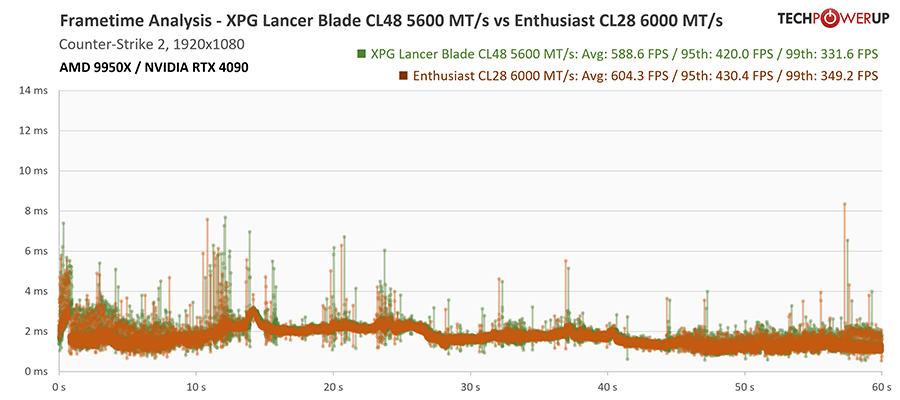
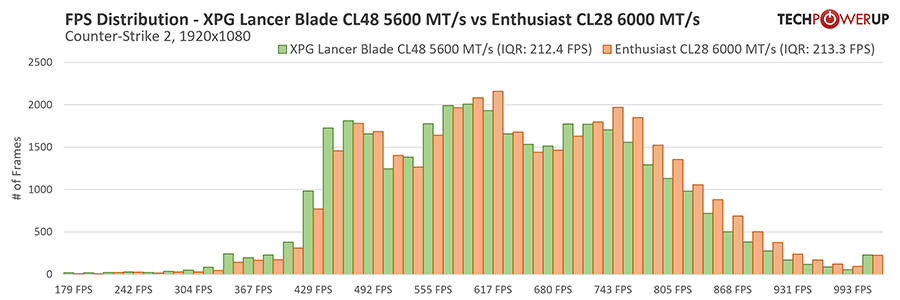
Counter-Strike 2 is a game where every frame matters, and the right memory choice can make a significant difference. When comparing the XPG Lancer Blade RGB DDR5-5600 CL46 16 GB kit to a 32 GB CL28 6000 MT/s enthusiast-tier product, the numbers speak volumes for competitive gamers. The enthusiast CL28 6000 MT/s kit takes the lead with an average of 604.3 FPS compared to 588.6 FPS. The XPG kit understandably falls short due to using JEDEC timings and the PCB is populated with fewer ICs.
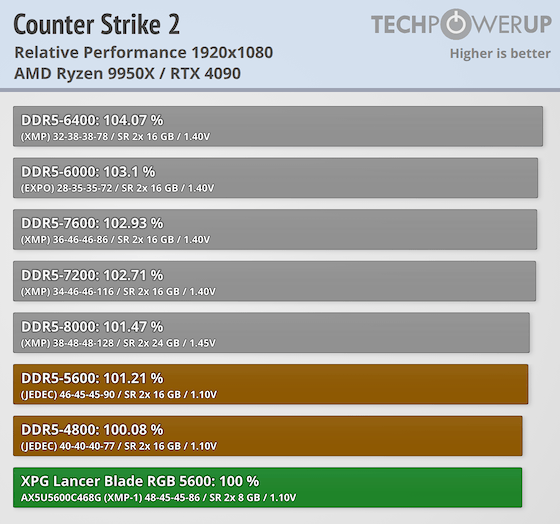
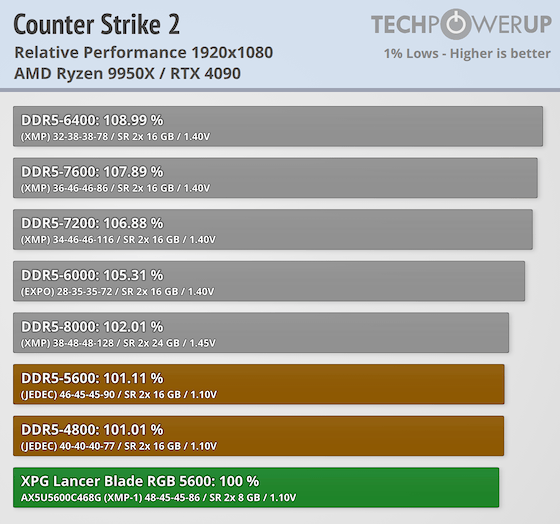
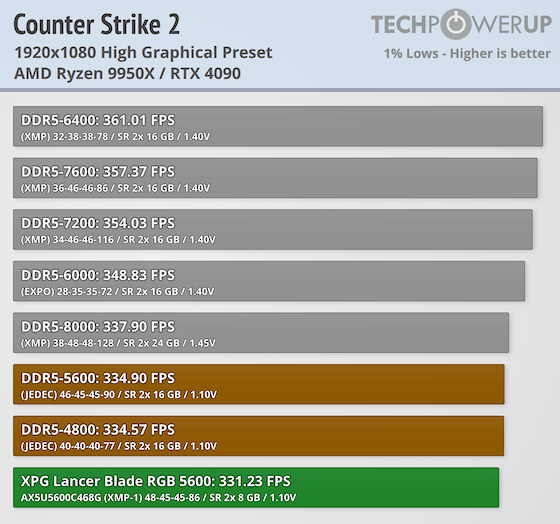
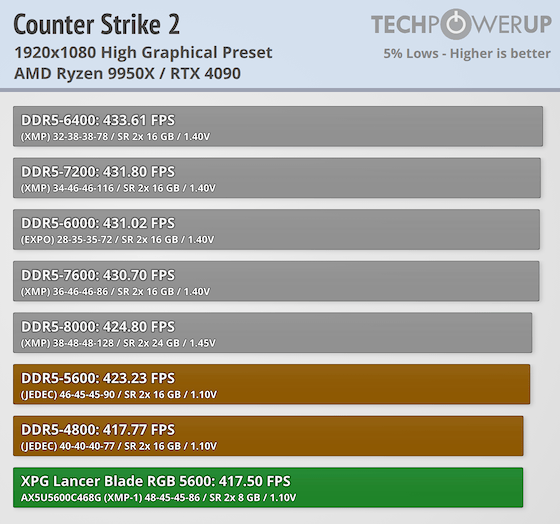
In Counter Strike 2 on the AMD Ryzen 9950X, the XPG Lancer Blade RGB 5600 sits at the very bottom of the chart. Set as the 100% baseline in both Average FPS and 1% Lows, it trails every other kit tested including the JEDEC DDR5-4800 and JEDEC DDR5-5600 configurations. This is a particularly telling comparison, since the JEDEC DDR5-5600 kit runs the exact same 46-45-45-90 timings and frequency as the XPG kit's XMP profile, the only meaningful difference is that it's a standard 16 GB DIMM with a full 8-IC-per-module population, versus the XPG's 8 GB DIMMs built with only 4 ICs each. Despite identical timings and frequency, that halved IC count is enough to give the JEDEC 16 GB kit a small edge, and the gap from the bottom only widens further up the chart, with DDR5-6400 leading by over 8–9% in both metrics.
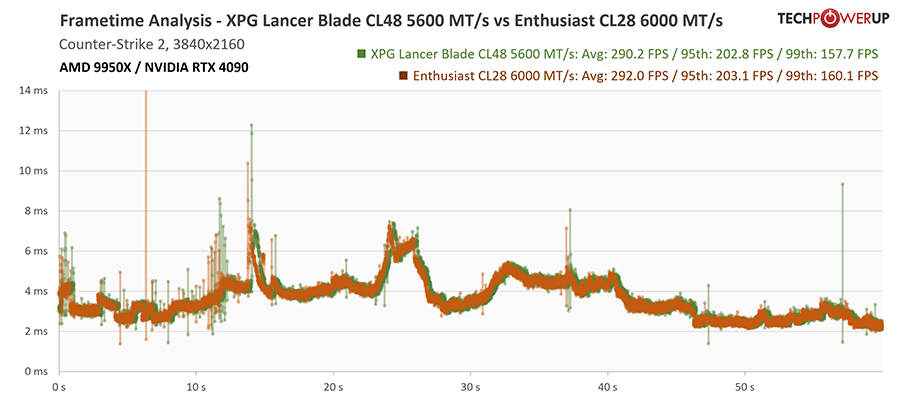
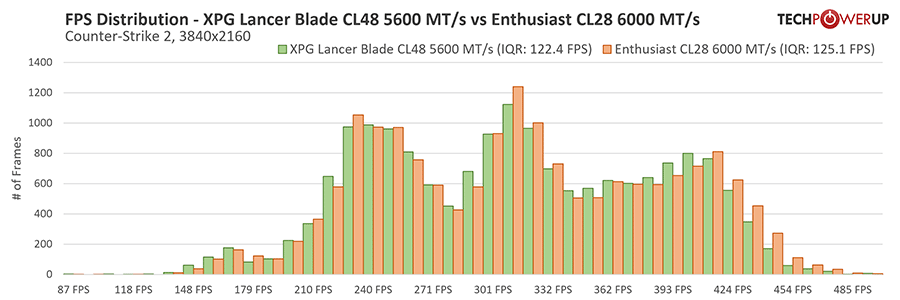
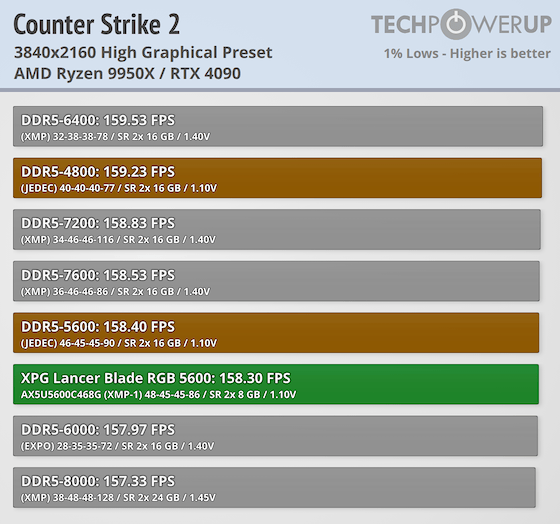
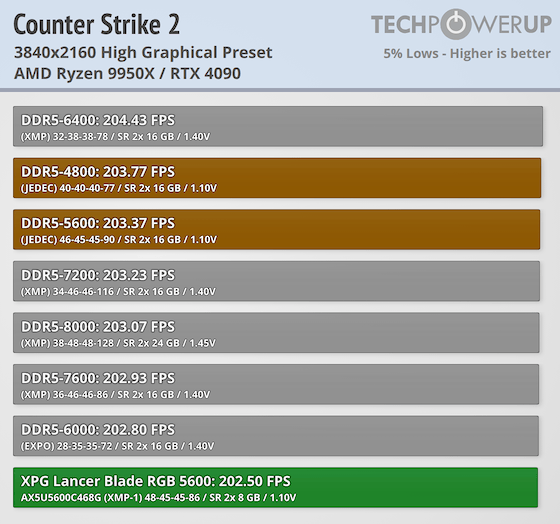
Jumping right to gaming at 4K, we have reached the point where it doesn't matter what you use due to the bottleneck no longer being the memory itself. Though there are minor fluctuations in the 99th and 95th frame rate percentiles, depending on the memory frequency and latency.
Nov 18th, 2026 20:06 PST
change timezone
Latest GPU Drivers
New Forum Posts
- TPU's Nostalgic Hardware Club (22168)
- Dual B70 or Dual R9700 Pro on Linux (7)
- Time to upgrade CPU and MOBO (40)
- Honestly, do you care about GTA VI? (150)
- Windows 11 General Discussion (7730)
- 26.11.2 Adrenalin Edition is out (0)
- Without Jensen, PC gaming will be (45)
- [Poll] 12V-2x6 Connector Protection: What Are You Using? (WireView / Ampinel / Equalizer / Other / Nothing) (42)
- Got a new laptop! What should I do with it? (6)
- What are you playing? (26235)
Popular Reviews
- Acemagic Retro X3 Review
- Upcoming Hardware Launches 2027 (Updated Nov 2026)
- Ugreen NASync DXP4800 GT Review
- AMD Zen 6 Technical Deep Dive
- Pulsar Office Tour & First Look at P1 Dual-Sensor Mouse
- Biwin Black Opal NV7400 2 TB Review
- Sapphire Radeon RX 7700 XT Pure Review
- Chieftec Iceberg PRO 360 DARK Review
- ASUS ROG Strix B850-I Gaming Wi-Fi7 W Review
- Sapphire Radeon RX 7700 XT Pulse Review
TPU on YouTube
Controversial News Posts
- NVIDIA Co-Founder and CEO Jensen Huang Officially Resigns (483)
- Report: Jensen Huang Eyes NVIDIA Comeback (196)
- Open Letter Asking NVIDIA to Reinstate Jensen Huang Passes 115,000 Signatures (184)
- OpenAI CEO Argues Home PCs Waste the World's Limited DRAM Supply (152)
- NVIDIA Launches Investigation Into Jensen Huang's Relationship With Suspected Chinese Spy (136)
- Intel "Raptor Lake Next" 16-Core and 20-Core CPUs Surface (130)
- Legendary Game Studio BioWare Shuts Down Following EA Layoffs (104)
- Dell CEO Says the Memory Shortage Will Get Worse in 2027 (95)