 23
XPG Lancer Blade RGB DDR5-5600 16 GB CL46 Review - Low Profile
Intel Memory Overclocking »Average Gaming Framerate
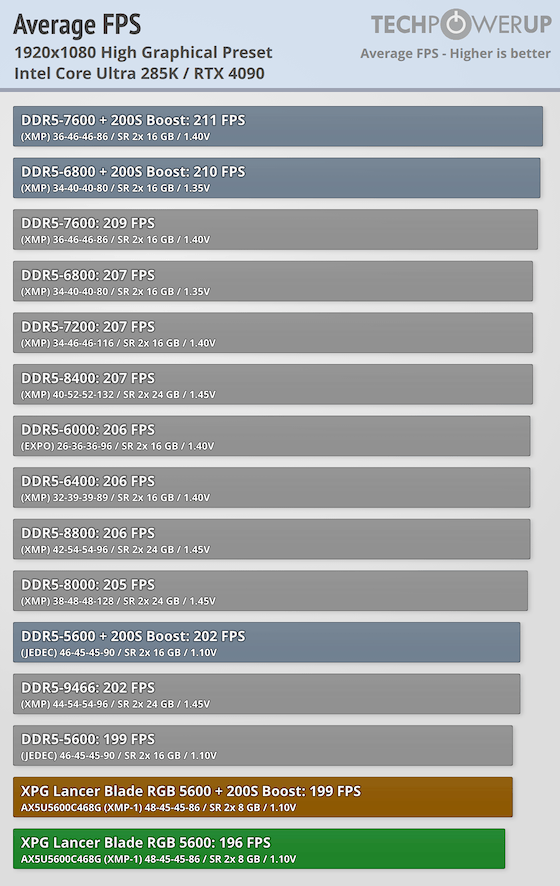
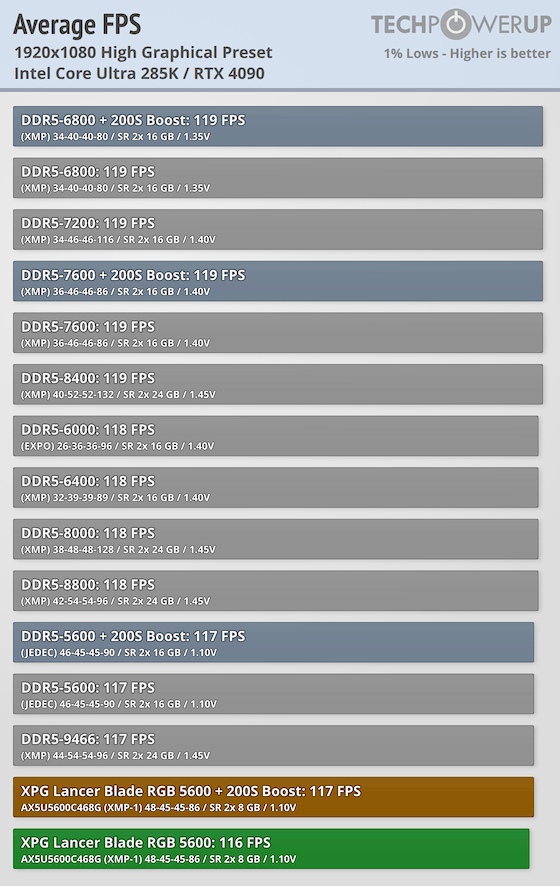
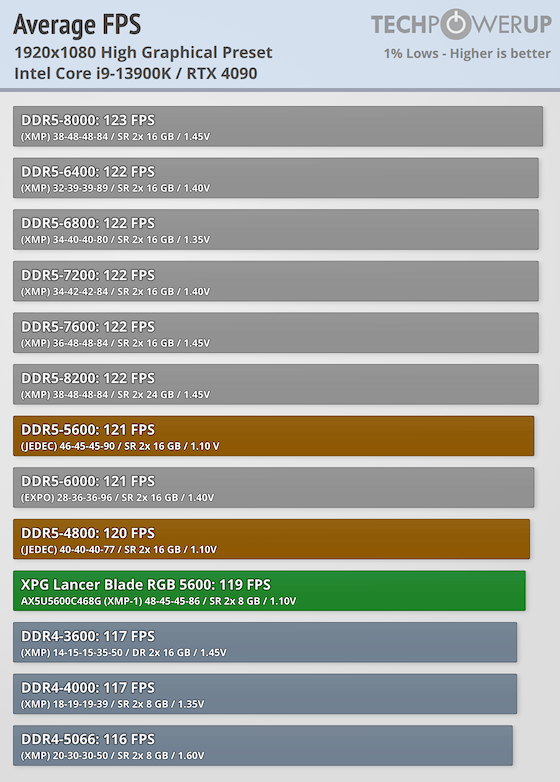
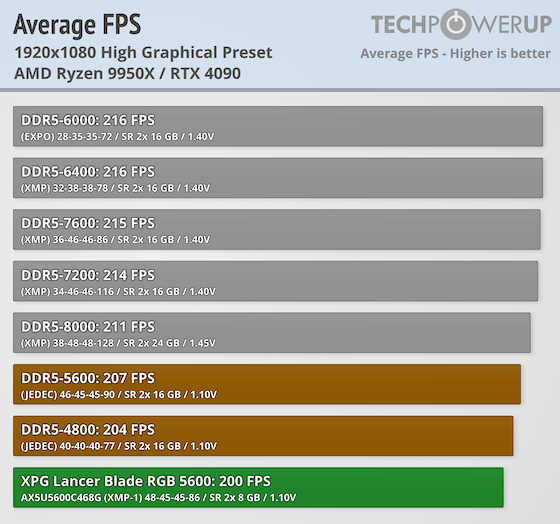
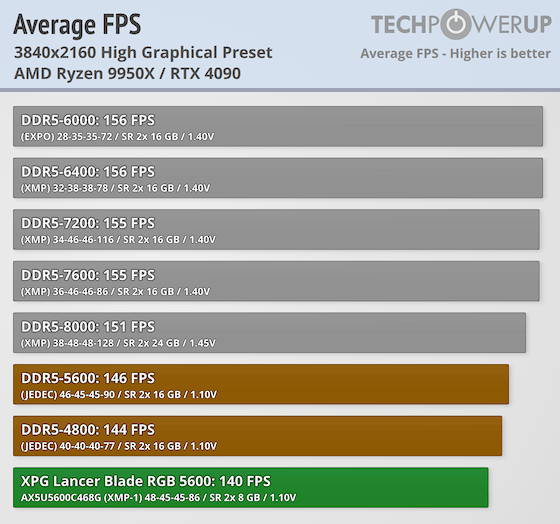
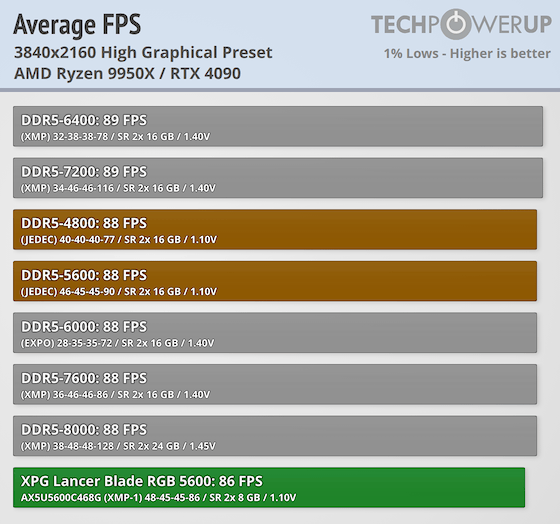
Looking at the raw Average FPS across all nine games on all three platforms, the XPG Lancer Blade RGB 5600 consistently lands at the bottom of the chart. For the Intel Core i9-13900K, it is 17 FPS behind the DDR5-8200 leader. Next, for the Intel Core Ultra 285K, it is 15 FPS behind the DDR5-7600 + 200S Boost. A clear and consistent pattern reflecting the bandwidth limitation of its 8 GB DIMMs missing four ICs per module. That said, a nine-game average, while useful as a general performance indicator, can mask meaningful title-by-title variance. Some games are far more sensitive to memory bandwidth and latency than others that are CPU-bound, or simulation-style games can show significantly larger gaps between memory kits than the average suggests, while GPU-bound or less memory-sensitive titles might show almost no difference at all. So while the average paints a consistent and fair overall picture of the XPG Lancer Blade RGB 5600 as a bandwidth-constrained performer, anyone gaming primarily in one specific title should weigh that game's individual memory sensitivity rather than relying solely on the blended average to predict their real-world experience.1920×1080 Memory Average FPS

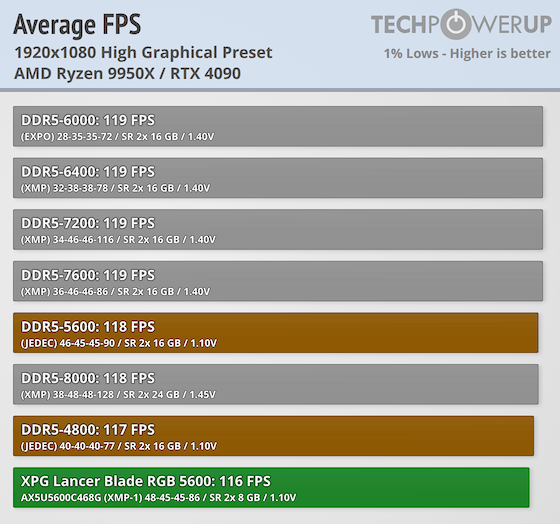
3840×2160 Memory Average FPS
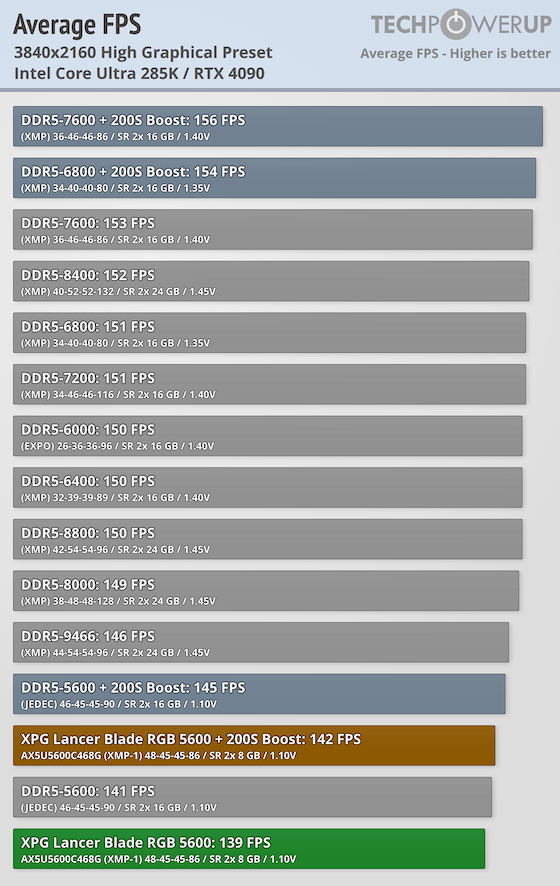
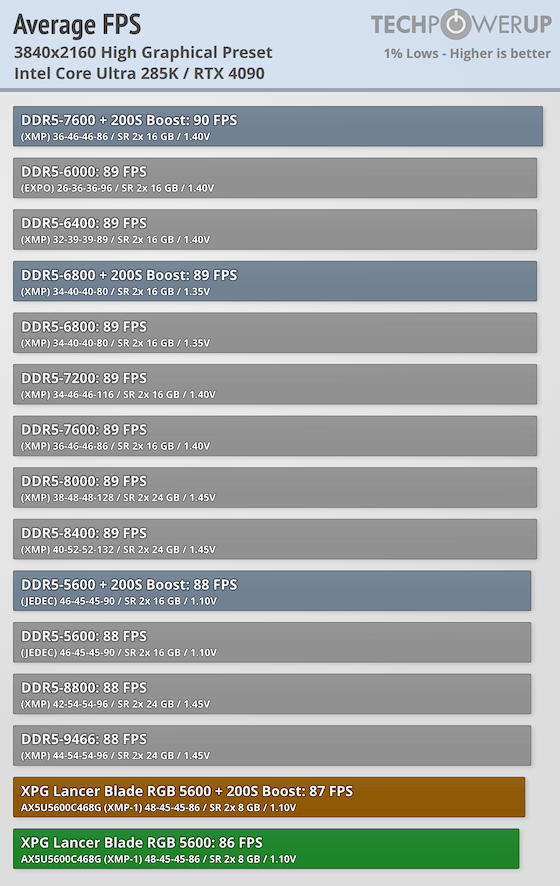
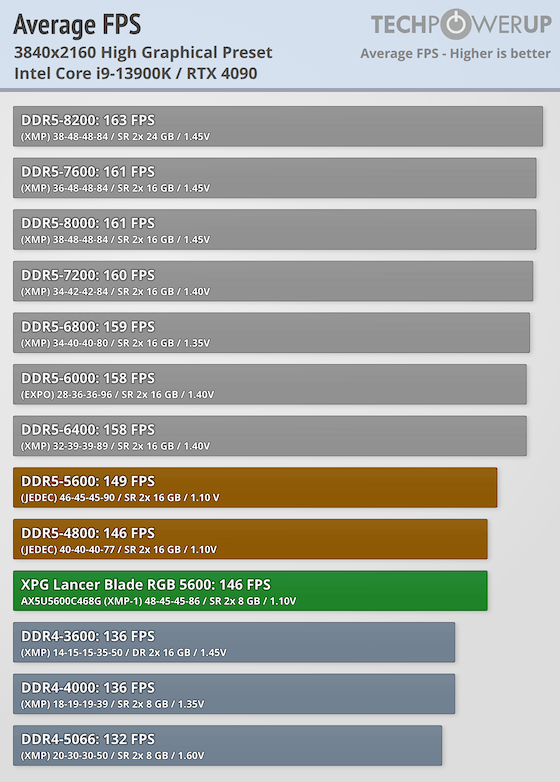

Nov 18th, 2026 21:44 PST
change timezone
Latest GPU Drivers
New Forum Posts
- Windows HDR on = Tinted colors (4)
- Honestly, do you care about GTA VI? (151)
- Without Jensen, PC gaming will be (46)
- TPU's Nostalgic Hardware Club (22168)
- Dual B70 or Dual R9700 Pro on Linux (7)
- Time to upgrade CPU and MOBO (40)
- Windows 11 General Discussion (7730)
- 26.11.2 Adrenalin Edition is out (0)
- [Poll] 12V-2x6 Connector Protection: What Are You Using? (WireView / Ampinel / Equalizer / Other / Nothing) (42)
- Got a new laptop! What should I do with it? (6)
Popular Reviews
- Acemagic Retro X3 Review
- Upcoming Hardware Launches 2027 (Updated Nov 2026)
- Ugreen NASync DXP4800 GT Review
- AMD Zen 6 Technical Deep Dive
- Pulsar Office Tour & First Look at P1 Dual-Sensor Mouse
- Biwin Black Opal NV7400 2 TB Review
- Sapphire Radeon RX 7700 XT Pure Review
- Sapphire Radeon RX 7700 XT Pulse Review
- Chieftec Iceberg PRO 360 DARK Review
- ASUS ROG Strix B850-I Gaming Wi-Fi7 W Review
TPU on YouTube
Controversial News Posts
- NVIDIA Co-Founder and CEO Jensen Huang Officially Resigns (483)
- Report: Jensen Huang Eyes NVIDIA Comeback (196)
- Open Letter Asking NVIDIA to Reinstate Jensen Huang Passes 115,000 Signatures (184)
- OpenAI CEO Argues Home PCs Waste the World's Limited DRAM Supply (152)
- NVIDIA Launches Investigation Into Jensen Huang's Relationship With Suspected Chinese Spy (136)
- Intel "Raptor Lake Next" 16-Core and 20-Core CPUs Surface (130)
- Legendary Game Studio BioWare Shuts Down Following EA Layoffs (104)
- Dell CEO Says the Memory Shortage Will Get Worse in 2027 (95)