 3
XPG PRECOG Studio Review - Good For Your Ears And Wallet
(3 Comments) »Introduction

The XPG PRECOG Studio claims to be the first ever gaming headset with a balanced design and a 4.4-mm (Pentaconn) connector, instead of the usual single-ended (unbalanced) 3.5-mm jack. Those that never ventured into the world of higher-end Hi-fi will be interested to know that the Pentaconn connector typically uses five contact points (TRRRS, Tip-Ring-Ring-Ring-Sleeve), allowing separate left and right channel signal paths, as well as ground and two additional connections for balanced audio. Balanced audio is regularly used in professional and Hi-fi audio because it's designed to reduce electrical and radio interference, essentially eliminating unwanted noise.

The way this works is by splitting the audio signal into two identical signals, but with one being inverted (180° out of phase) relative to the other. These two signals are sent through a pair of wires within the same cable. Any external noise or interference picked up along the way affects both wires equally. At the receiving end, a differential receiver compares the two signals. Since the noise affects both signals equally, it appears as a common-mode signal and is canceled out when the receiver subtracts one signal from the other. The subtraction process effectively cancels out the noise, leaving only the original audio signal. This results in a cleaner sound, especially over long distances. This method is particularly useful in professional audio environments where long cable runs are common, as it significantly reduces the potential for noise and interference. Also, a balanced signal is generally louder than an unbalanced signal, because balanced connections send two in-phase signals, which effectively doubles the signal strength. This results in an increase of about 6 to 10 dB compared to unbalanced signals.
Sounds expensive, right? Well, here's the kicker. The XPG PRECOG Studio is priced at a mere $60, which puts it pleasantly close to the budget gaming headset category. But wait, there's more. You're not only getting a gaming headset with a balanced cable and connector, but also an external USB dongle to drive it. The XPG-branded dongle is equipped with the ESS ES9260Q DAC chip, as well as a pair of ESS Sabre 9601K amplifiers. I'm hesitant to call it a sound card simply because it offers no software support of any kind, so there's no conventional way to alter the default sound signature or do any other kind of configuration. What you see is what you get, but with such strong technical specifications, is that even an issue? Let's examine the XPG PRECOG Studio to find out.
Specifications
- Drivers: 50-mm dynamic (neodymium magnet)
- Impedance: Not specified
- Sensitivity: 101±3 dB
- Frequency Response (specified by the manufacturer): 20–20,000 Hz
- Design: Closed-back, over-ear
- Microphone: Omnidirectional (non-removable)
- Connectivity: USB-C (USB Type-A adapter supplied), 4.4 mm analog
- DAC: ESS ES9260Q (up to 32-bit/96 kHz PCM)
- Platform support: PC, PlayStation 4/5, mobile devices
- Weight: 300 g
The Package
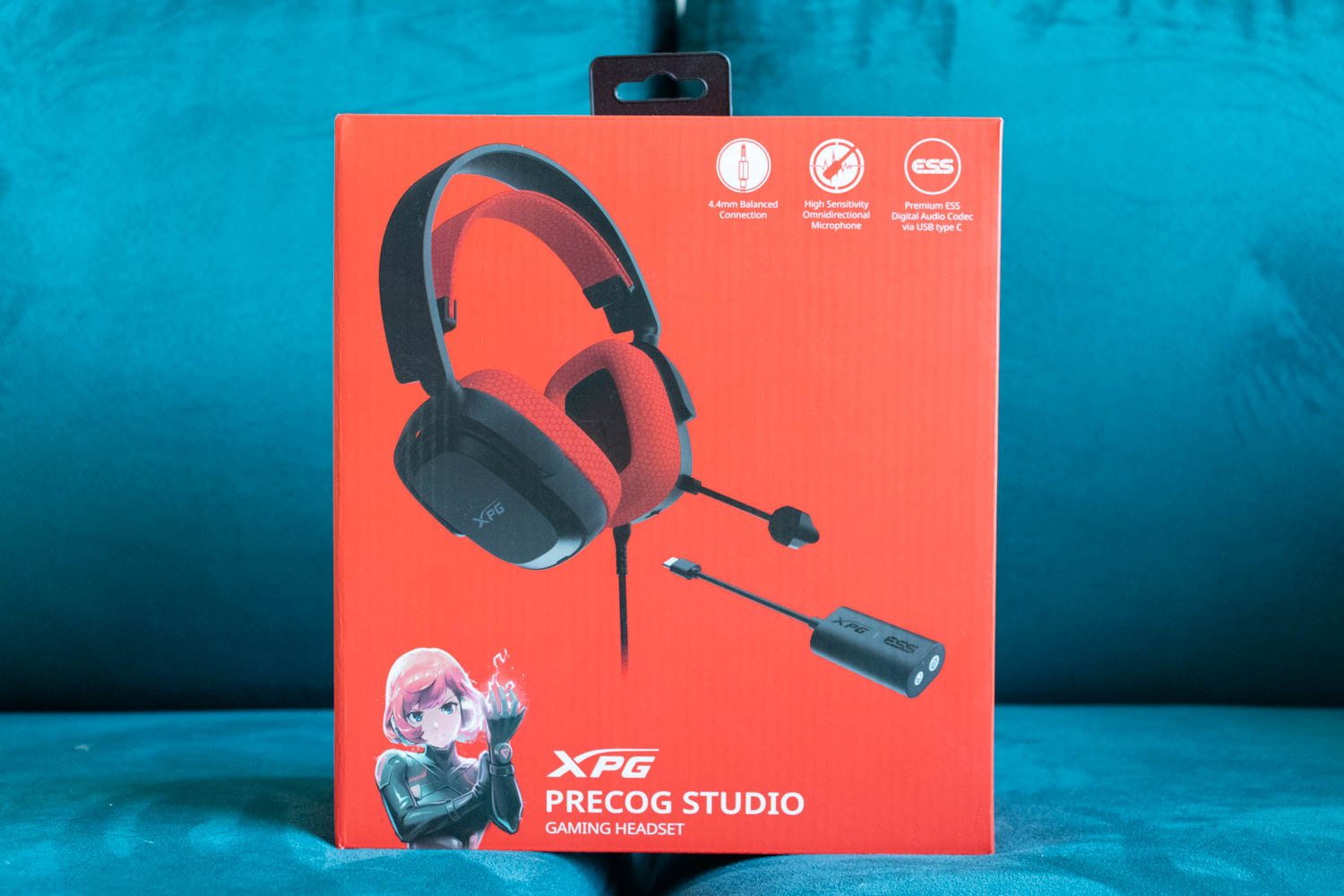
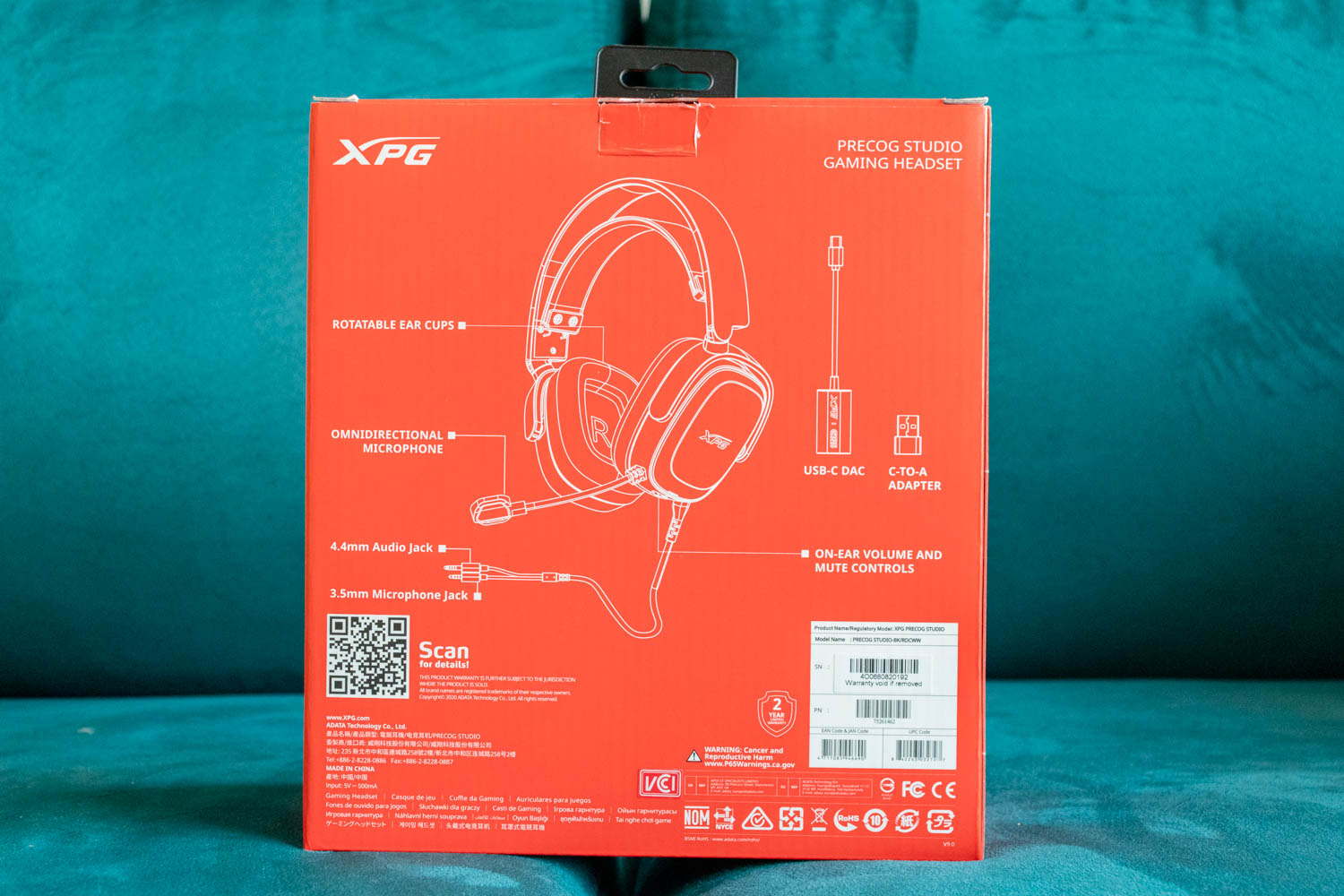
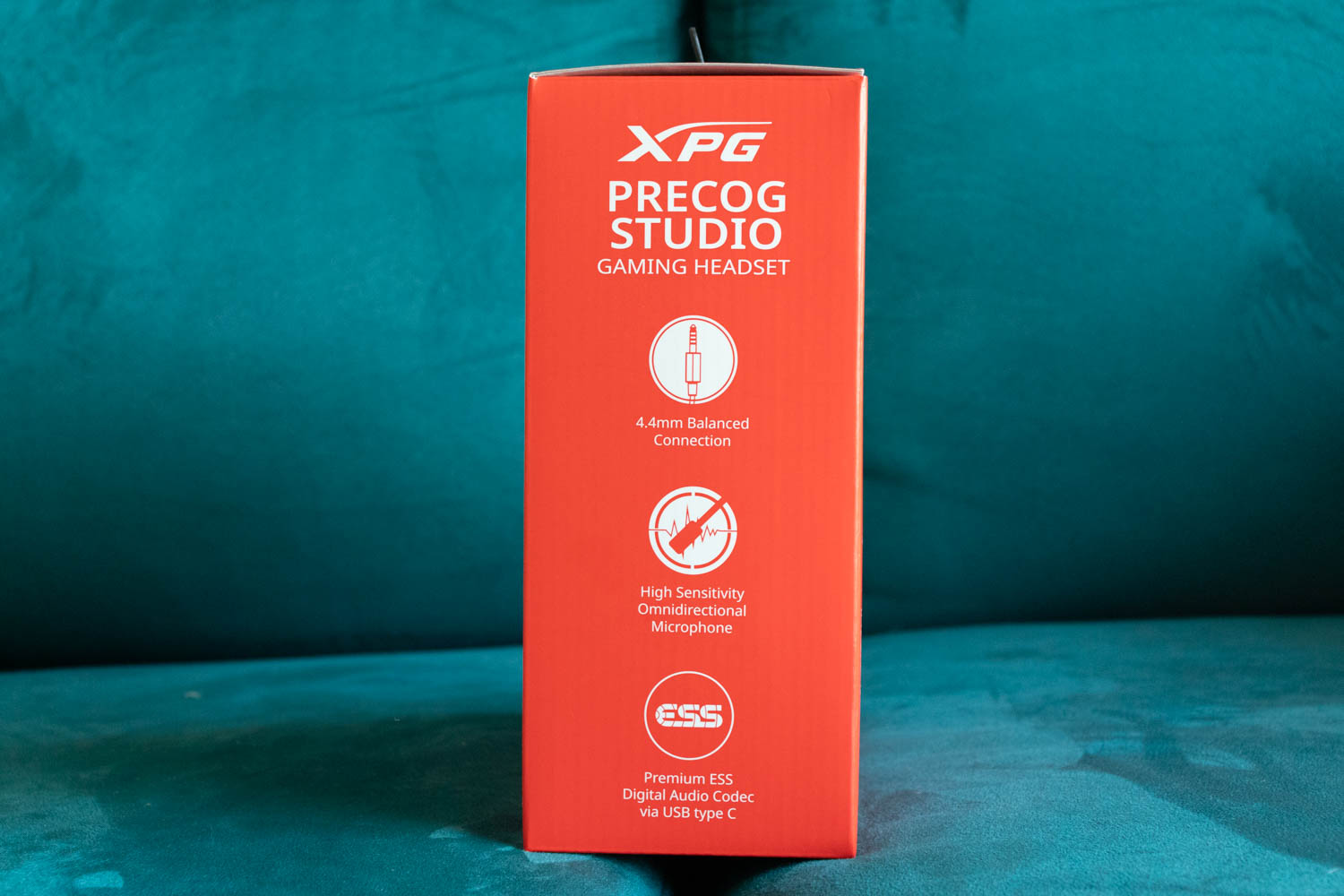
The red cardboard box depicts the headset and supplied USB dongle, and goes over the PRECOG Studio's key features. It also lists box contents, so you can know what you're getting yourself into before buying the product. A bit of anime artwork is thrown in for good measure; Mera, the official "XPG Ambassador."

Inside the box you'll find the headset, the accompanying USB-C dongle, a USB-C to USB Type-A adapter, a quick start guide and some XPG and Mera stickers. Somewhat surprisingly, all the contents are simply placed in a foam bag and thrown into the cardboard box, with no extra protection for the headset. That being said, the PRECOG Studio was delivered to Croatia with no damage to either the box or any of its contents.
Our Patreon Silver Supporters can read articles in single-page format.
Nov 13th, 2026 23:22 CST
change timezone
Latest GPU Drivers
New Forum Posts
- no "PhysX" workable (9)
- What are you playing? (26215)
- Tell me about your favourite graphics card (32)
- AI generated images... (224)
- Crimson Desert (31)
- RenoDX HDR - how to view the differnce Before&After in game? (0)
- Displayport DP80 3M (10ft) cable that can achieve 80gbps stable? (5)
- I'll flash a ASUS ROG Strix RX480 O8G in Cause of Code 43, as a Newbie (1)
- Opinion on Monitor Replacement (6)
- TMOG - post your benchmark results here (16)
Popular Reviews
- AMD Zen 6 Technical Deep Dive
- Corsair HX1000i Shift Crystal Review
- NZXT C1200 Platinum Review
- Upcoming Hardware Launches 2027 (Updated Nov 2026)
- ASUS ROG Strix B850-I Gaming Wi-Fi7 W Review
- Montech King 95 3D PRO Review
- NZXT H7 RGB+ Review
- NZXT H5 Review
- Phantom Blade Zero Performance Benchmark Review - 35 GPUs Tested
- XPG NIMBUS PLUS Review - Mid-range Chair With Strong Competitors
TPU on YouTube
Controversial News Posts
- NVIDIA Co-Founder and CEO Jensen Huang Officially Resigns (380)
- OpenAI CEO Argues Home PCs Waste the World's Limited DRAM Supply (152)
- NVIDIA Launches Investigation Into Jensen Huang's Relationship With Suspected Chinese Spy (136)
- Intel "Raptor Lake Next" 16-Core and 20-Core CPUs Surface (130)
- Legendary Game Studio BioWare Shuts Down Following EA Layoffs (104)
- Dell CEO Says the Memory Shortage Will Get Worse in 2027 (95)
- NVIDIA GeForce RTX 50-Series Scheduled for up to $500 Price Hike This Week (89)
- Modder Fits RTX 5090 With Four 8-Pin Connectors, Halving Current per Wire (80)