 23
Zhitai TiPlus 9100 1 TB Review
(23 Comments) »Value and Conclusion
- The Zhitai TiPlus 9100 1 TB currently sells for 1319 RMB in China, which converts to around US$160 without tax.
- Solid real-life performance
- Excellent 4K random performance
- Competitively priced (in China)
- Very energy efficient
- Good sustained write speeds
- Runs fine without heatsink in normal use
- In-house YMTC Xtacking 4.0 NAND
- Proven Maxio controller platform
- PCI-Express 5.0
- Strong fSync write speeds
- Five-year warranty
- Only sold in China
- Not as fast as top-tier Gen 5 drives
- No DRAM cache
- No heatsink included (but not strictly required)
Technology & Positioning
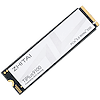
YMTC, China's leading memory maker, makes its own NAND flash and sells finished drives under its own consumer brand Zhitai—something only a handful of companies can do, like Samsung, SK hynix and the now-discontinued Crucial (Micron). The flash is YMTC's latest 267-layer Xtacking 4.0 3D TLC (X4-9070), paired with a Maxio MAP1802—a DRAM-less PCIe Gen 5 controller built on TSMC's 6 nm process. The MAP1802 is the Gen 5 successor to the highly popular MAP1602 that powered famous drives like the Lexar NM790. The result is an affordable, mainstream way into Gen 5—high-end speed without the price premium of a DRAM-equipped flagship.
Synthetic Performance
For a DRAM-less drive the TiPlus 9100 is seriously quick. Sequential reads reach the ~11 GB/s range you expect from Gen 5, but the more impressive numbers come at low queue depths: 4K random performance and QD1 latency are right up there with the DRAM-equipped flagships, and fSync write performance—which matters for databases and other durability-sensitive workloads—is excellent, far ahead of most drives in this class. This is where you see the maturity of the Maxio controller architecture and its HMB implementation.
Real-Life Performance
With this review we're also introducing our new 2026 real-life test suite. It runs on an AMD Ryzen 7 9800X3D with a fresh Windows 11 25H2 install and a refreshed set of workloads. New additions include Blender, where we measure the time to launch the application and load a scene, and a second file-compression test that unpacks a large photo archive—complementing our existing kernel-source test, which stresses lots of tiny files instead. We also switched the compilation test from C++ to Go, and Microsoft Hyper-V now replaces VMware Workstation for virtualization. Finally, our game load-time testing has been updated and expanded to ten titles, giving you a much better feel for how quickly each drive gets you into a game.
In our real-life application-based testing the TiPlus 9100 achieves good performance numbers, that are slightly lower than the top Gen 5 SSDs in our test group, but all these drives are 2 TB versions, whereas the tested drive is 1 TB only, which affects how much SLC cache it can use. It's still very nice to see the drive match the famous Samsung 990 Pro, ending up only a few percentage points behind the Corsair MP700 Pro and Samsung 9100 Pro. The fastest Gen 5 DRAM-based drives run up to 7% faster.
SLC Cache/Sustained Performance
The Zhitai TiPlus 9100 comes with an SLC cache size of 150 GB (or 45% in SLC mode), which is enough to soak up most typical bursts of write activity. Once the SLC cache is exhausted, transfer rates still reach a decent 2 GB/s. Filling the whole 1 TB capacity completed at a very good 1.7 GB/s, which is faster than the Lexar NM790 and nearly all Gen 4 SSDs, but still behind the fastest Gen 5 drives with faster NAND and DRAM cache.
Power Consumption/Heat
The 6 nm controller pays off here: the TiPlus 9100 is one of the most energy-efficient Gen 5 drives we've tested, with low idle draw and modest power under load. In our thermal testing it runs fine as a bare drive, without a heatsink, under normal workloads—which is very impressive for a PCIe Gen 5 drive, but for sustained, write-heavy use a heatsink is definitely recommended.
Pricing & Alternatives
This is where it gets interesting. In China, the 1 TB TiPlus 9100 sells for 1319 RMB—around $160 once you strip out the 13% VAT that's baked into Chinese prices. In its home market, that makes it one of the most affordable Gen 5 drives around. It undercuts competing foreign brands (Samsung, Corsair, Kioxia, WD) by a wide margin. Paired with the drive's solid performance, that makes it well worth considering—if you have a way to buy it. The comparison pricing in our review is based on US market prices, which makes the Zhitai look expensive here, but I have no doubt YMTC could offer these drives at highly competitive prices in other markets if they chose to. The US would be tricky, given the tariff situation and the political pressure on YMTC, but an expansion into Europe makes a lot of sense—it could establish YMTC as a strong contender and challenge the established players.

YMTC, China's leading memory maker, makes its own NAND flash and sells finished drives under its own consumer brand Zhitai—something only a handful of companies can do, like Samsung, SK hynix and the now-discontinued Crucial (Micron). The flash is YMTC's latest 267-layer Xtacking 4.0 3D TLC (X4-9070), paired with a Maxio MAP1802—a DRAM-less PCIe Gen 5 controller built on TSMC's 6 nm process. The MAP1802 is the Gen 5 successor to the highly popular MAP1602 that powered famous drives like the Lexar NM790. The result is an affordable, mainstream way into Gen 5—high-end speed without the price premium of a DRAM-equipped flagship.
Synthetic Performance
For a DRAM-less drive the TiPlus 9100 is seriously quick. Sequential reads reach the ~11 GB/s range you expect from Gen 5, but the more impressive numbers come at low queue depths: 4K random performance and QD1 latency are right up there with the DRAM-equipped flagships, and fSync write performance—which matters for databases and other durability-sensitive workloads—is excellent, far ahead of most drives in this class. This is where you see the maturity of the Maxio controller architecture and its HMB implementation.
Real-Life Performance
With this review we're also introducing our new 2026 real-life test suite. It runs on an AMD Ryzen 7 9800X3D with a fresh Windows 11 25H2 install and a refreshed set of workloads. New additions include Blender, where we measure the time to launch the application and load a scene, and a second file-compression test that unpacks a large photo archive—complementing our existing kernel-source test, which stresses lots of tiny files instead. We also switched the compilation test from C++ to Go, and Microsoft Hyper-V now replaces VMware Workstation for virtualization. Finally, our game load-time testing has been updated and expanded to ten titles, giving you a much better feel for how quickly each drive gets you into a game.
In our real-life application-based testing the TiPlus 9100 achieves good performance numbers, that are slightly lower than the top Gen 5 SSDs in our test group, but all these drives are 2 TB versions, whereas the tested drive is 1 TB only, which affects how much SLC cache it can use. It's still very nice to see the drive match the famous Samsung 990 Pro, ending up only a few percentage points behind the Corsair MP700 Pro and Samsung 9100 Pro. The fastest Gen 5 DRAM-based drives run up to 7% faster.
SLC Cache/Sustained Performance
The Zhitai TiPlus 9100 comes with an SLC cache size of 150 GB (or 45% in SLC mode), which is enough to soak up most typical bursts of write activity. Once the SLC cache is exhausted, transfer rates still reach a decent 2 GB/s. Filling the whole 1 TB capacity completed at a very good 1.7 GB/s, which is faster than the Lexar NM790 and nearly all Gen 4 SSDs, but still behind the fastest Gen 5 drives with faster NAND and DRAM cache.
Power Consumption/Heat
The 6 nm controller pays off here: the TiPlus 9100 is one of the most energy-efficient Gen 5 drives we've tested, with low idle draw and modest power under load. In our thermal testing it runs fine as a bare drive, without a heatsink, under normal workloads—which is very impressive for a PCIe Gen 5 drive, but for sustained, write-heavy use a heatsink is definitely recommended.
Pricing & Alternatives
This is where it gets interesting. In China, the 1 TB TiPlus 9100 sells for 1319 RMB—around $160 once you strip out the 13% VAT that's baked into Chinese prices. In its home market, that makes it one of the most affordable Gen 5 drives around. It undercuts competing foreign brands (Samsung, Corsair, Kioxia, WD) by a wide margin. Paired with the drive's solid performance, that makes it well worth considering—if you have a way to buy it. The comparison pricing in our review is based on US market prices, which makes the Zhitai look expensive here, but I have no doubt YMTC could offer these drives at highly competitive prices in other markets if they chose to. The US would be tricky, given the tariff situation and the political pressure on YMTC, but an expansion into Europe makes a lot of sense—it could establish YMTC as a strong contender and challenge the established players.
Nov 20th, 2026 16:47 PST
change timezone
Latest GPU Drivers
New Forum Posts
- Honestly, do you care about GTA VI? (214)
- Without Jensen, PC gaming will be (51)
- WarpCoreBench scores! (86)
- What's your latest tech Freebie? (80)
- Nvidia GPU undervolting via MVolt+? (0)
- How to prevent OLED burn damage due to PC freezes or power outtages? (49)
- RX 9000 series GPU Owners Club (2249)
- Logitech Headsets Modded Driver — Unlock Dolby in G HUB (23)
- 1 - 5 person file storage server equivalent accasible from anywhere + general VM server. (1)
- When you could finally run Crysis maxed out? (63)
Popular Reviews
- Microsoft Surface Laptop Ultra Review - The Next-gen Arm Laptop
- Ugreen NASync DXP4800 GT Review
- Corsair RM1200e (Second Generation) Review
- Pulsar Office Tour & First Look at P1 Dual-Sensor Mouse
- Upcoming Hardware Launches 2027 (Updated Nov 2026)
- Acemagic Retro X3 Review
- Biwin Black Opal NV7400 2 TB Review
- AMD Ryzen 7 9800X3D Review - The Best Gaming Processor
- AMD Zen 6 Technical Deep Dive
- Chieftec Iceberg PRO 360 DARK Review
TPU on YouTube
Controversial News Posts
- NVIDIA Co-Founder and CEO Jensen Huang Officially Resigns (491)
- Report: Jensen Huang Eyes NVIDIA Comeback (256)
- Open Letter Asking NVIDIA to Reinstate Jensen Huang Passes 115,000 Signatures (184)
- OpenAI CEO Argues Home PCs Waste the World's Limited DRAM Supply (152)
- NVIDIA Launches Investigation Into Jensen Huang's Relationship With Suspected Chinese Spy (136)
- Intel "Raptor Lake Next" 16-Core and 20-Core CPUs Surface (130)
- Legendary Game Studio BioWare Shuts Down Following EA Layoffs (104)
- NVIDIA GeForce RTX 50-Series Scheduled for up to $500 Price Hike This Week (89)