 6
ZOTAC GeForce GTX 560 Ti AMP! Edition 1 GB Review
(6 Comments) »Introduction

NVIDIA's GeForce GTX 560 Ti is based on NVIDIA's new GF114 chip. As far as specifications and transistor-count go, it is identical to the GF104 on which GTX 460 was based, except that it has all 384 of the CUDA cores physically present enabled, and that it uses the same secret-sauce (read: electrical enhancements) that made GF110, an evolved clone of the GF100, totally rock with power consumption figures. 384 CUDA cores apart, there's a 256-bit wide GDDR5 memory interface, 32 ROPs, branched geometry processing, and the immediate fruition of the electrical enhancements, clock speeds: 822 MHz core, 1640 MHz CUDA cores, and 1000 MHz (4.00 GHz effective) memory. As far as features go, the GTX 560 Ti doesn't come with anything we haven't seen already with the GTX 460, it's all about performance per watt/dollar in this round.
ZOTAC's GeForce GTX 560 Ti AMP! Edition uses massively increased clock speeds to give the user a nice performance gain for a small price increase while also bundling a full version of Assassin's Creed.
| GeForce GTX 460 | GeForce GTX 460 | Radeon HD 6850 | Radeon HD 5850 | GeForce GTX 470 | Radeon HD 6870 | GeForce GTX 560 Ti | ZOTAC GTX 560 Ti AMP! | Radeon HD 5870 | GeForce GTX 570 | GeForce GTX 480 | GeForce GTX 580 | |
| Shader units | 336 | 336 | 960 | 1440 | 448 | 1120 | 384 | 384 | 1600 | 480 | 480 | 512 |
| ROPs | 24 | 32 | 32 | 32 | 40 | 32 | 32 | 32 | 32 | 40 | 48 | 48 |
| GPU | GF104 | GF104 | Barts | Cypress | GF100 | Barts | GF114 | GF114 | Cypress | GF110 | GF100 | GF110 |
| Transistors | 1950M | 1950M | 1700M | 2154M | 3200M | 1700M | 1950M | 1950M | 2154M | 3000M | 3200M | 3000M |
| Memory Size | 768 MB | 1024 MB | 1024 MB | 1024 MB | 1280 MB | 1024 MB | 1024 MB | 1024 MB | 1024 MB | 1280 MB | 1536 MB | 1536 MB |
| Memory Bus Width | 192 bit | 256 bit | 256 bit | 256 bit | 320 bit | 256 bit | 256 bit | 256 bit | 256 bit | 320 bit | 384 bit | 384 bit |
| Core Clock | 675 MHz | 675 MHz | 775 MHz | 725 MHz | 607 MHz | 900 MHz | 823 MHz | 950 MHz | 850 MHz | 732 MHz | 700 MHz | 772 MHz |
| Memory Clock | 900 MHz | 900 MHz | 1000 MHz | 1000 MHz | 837 MHz | 1050 MHz | 1002 MHz | 1100 MHz | 1200 MHz | 950 MHz | 924 MHz | 1002 MHz |
| Price | $150 | $180 | $180 | $200 | $250 | $220 | $250 | $279 | $270 | $350 | $400 | $500 |
Packaging


Contents

You will receive:
- Graphics card
- Driver CD + Documentation
- DVI Adapter
- Mini-HDMI to HDMI Adapter
- 2x PCI-Express Power Cable
- Assassin's Creed Coupon
The Card


ZOTAC is using the same cooler shroud on their AMP! Edition as on their normal GTX 560. We have also seen similar coolers on GTX 400 models from ZOTAC.

Like all other GTX 560 boards, the ZOTAC GTX 560 AMP! Edition requires two slots in your system.

The card has two DVI ports, and one mini-HDMI port. Unlike AMD's latest GPUs, the output logic design is not as flexible. On AMD cards vendors are free to combine six TMDS links into any output configuration they want (dual-link DVI consuming two links), on NVIDIA, you are fixed to two DVI outputs and one HDMI/DP in addition to that. NVIDIA confirmed that you can use only two displays at the same time, so for a three monitor setup you would need two cards.
NVIDIA has included an HDMI sound device inside their GPU which does away with the requirement of connecting an external audio source to the card for HDMI audio. The HDMI interface is HDMI 1.3a compatible which includes Dolby TrueHD, DTS-HD, AC-3, DTS and up to 7.1 channel audio with 192 kHz / 24-bit. NVIDIA also claims full support for the 3D portion of the HDMI 1.4 specification which will become important later this year when we will see first Blu-Ray titles shipping with support for 3D output.
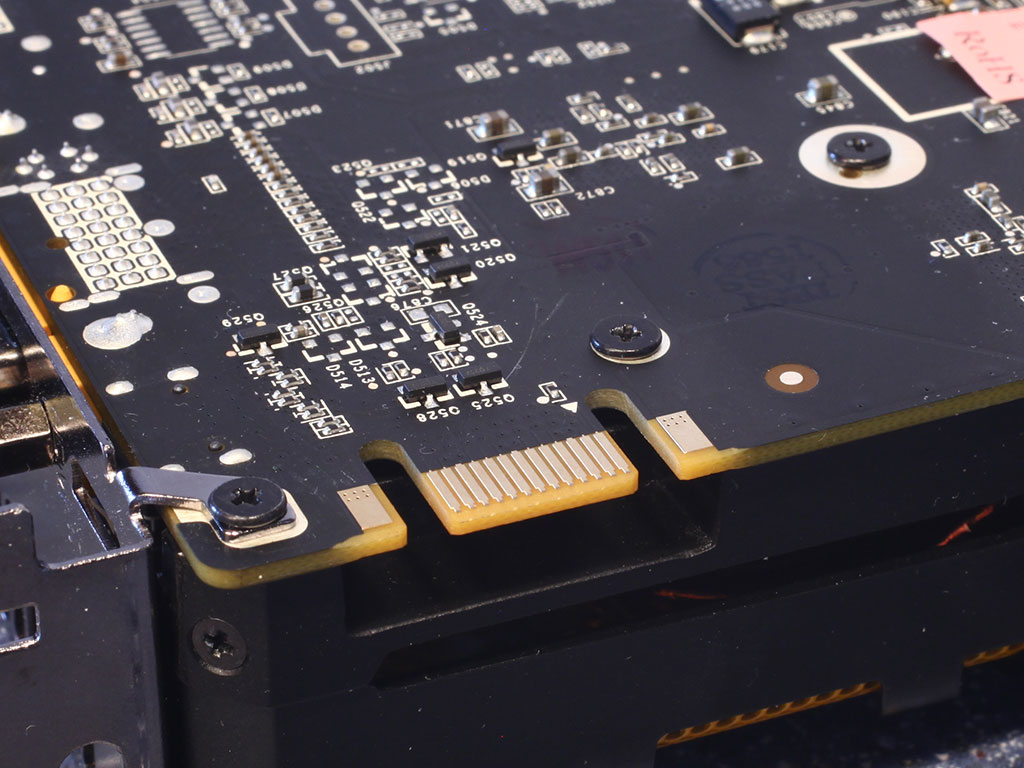
You may combine up to two GTX 560 Ti cards of any model from any vendor in SLI.

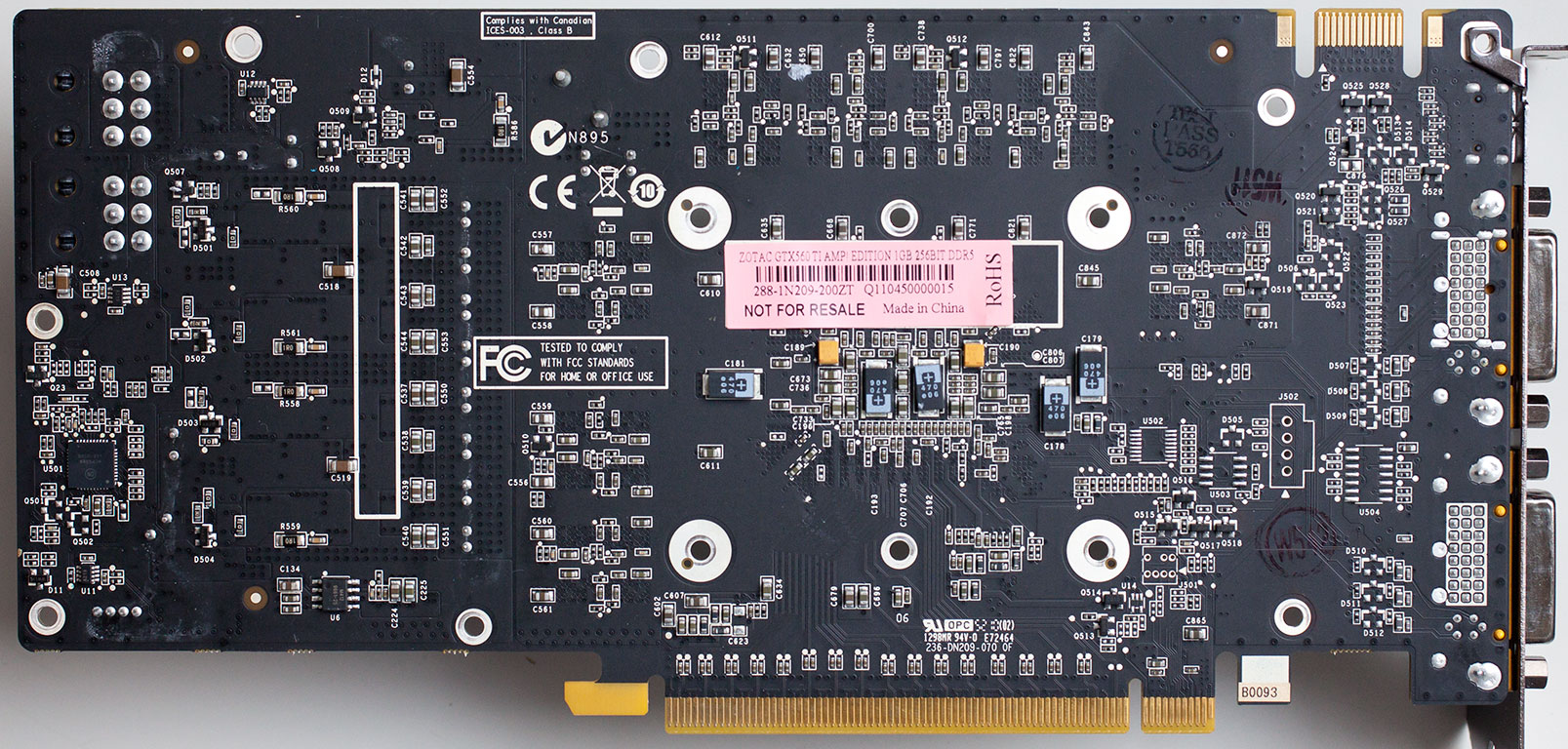
Here are the front and the back of the card, high-res versions are also available (front, back). If you choose to use these images for voltmods etc, please include a link back to this site or let us post your article.
Our Patreon Silver Supporters can read articles in single-page format.
Nov 14th, 2026 20:59 CST
change timezone
Latest GPU Drivers
New Forum Posts
- Planning for Prolonged High Prices and Maintaining What You Already Have (68)
- WarpCoreBench scores! (37)
- What can the FX 8320 do today? Here is the answer. (44)
- Recommendations Wanted - Affordable Enterprise SSD for Boot (1)
- [INTEL]-How To Update Your Microcode for Intel HX 13/14th Gen. CPUs Laptops/Mobile Easily. (260)
- [Intel AX1xx/AX2xx/AX4xx/AX16xx/BE2xx/BE17xx] Intel Modded Wi-Fi Driver with Intel® Killer™ Features (632)
- Optical Disc Drive owners club (208)
- Game Soundtracks You Love (1287)
- Tell me about your favourite graphics card (80)
- 9070 GRE 3.9ghz validation reached. (11)
Popular Reviews
- AMD Zen 6 Technical Deep Dive
- ASUS ROG Strix B850-I Gaming Wi-Fi7 W Review
- Corsair HX1000i Shift Crystal Review
- Upcoming Hardware Launches 2027 (Updated Nov 2026)
- Montech King 95 3D PRO Review
- NZXT C1200 Platinum Review
- NZXT H7 RGB+ Review
- NZXT H5 Review
- Phantom Blade Zero Performance Benchmark Review - 35 GPUs Tested
- AMD Ryzen 7 9800X3D Review - The Best Gaming Processor
TPU on YouTube
Controversial News Posts
- NVIDIA Co-Founder and CEO Jensen Huang Officially Resigns (407)
- OpenAI CEO Argues Home PCs Waste the World's Limited DRAM Supply (152)
- NVIDIA Launches Investigation Into Jensen Huang's Relationship With Suspected Chinese Spy (136)
- Intel "Raptor Lake Next" 16-Core and 20-Core CPUs Surface (130)
- Legendary Game Studio BioWare Shuts Down Following EA Layoffs (104)
- Dell CEO Says the Memory Shortage Will Get Worse in 2027 (95)
- NVIDIA GeForce RTX 50-Series Scheduled for up to $500 Price Hike This Week (89)
- Modder Fits RTX 5090 With Four 8-Pin Connectors, Halving Current per Wire (80)