 27
Zotac GeForce RTX 2080 AMP Extreme 8 GB Review
(27 Comments) »Introduction

NVIDIA launched the GeForce RTX 20-series in September this year, with support for several new technologies like machine learning and RTX Raytracing. This feature is so big for NVIDIA that it has changed the naming of their GeForce cards from "GTX" to "RTX".
NVIDIA RTX is a near-turnkey real-time ray-tracing model for game developers that lets them fuse real-time ray-traced objects into 3D scenes that have been rasterized. Ray-tracing the whole scene in existence isn't quite possible yet, but the results with RTX are still better-looking than anything rasterizing can achieve. To even get those few bits of ray tracing done right, an enormous amount of compute power is required. NVIDIA has hence deployed purpose-built hardware components on its GPUs that sit alongside all-purpose CUDA cores, called RT cores.

The Zotac GeForce RTX 2080 AMP Extreme is the company's current flagship RTX 2080 card. It comes with a powerful 16-phase VRM and four phases for the memory. Clocks are the highest of all RTX 2080 cards currently on the market with 1905 MHz Boost, which is a 105 MHz increase over the Founders Edition. Memory is also overclocked, to 1800 MHz.
Priced at $900, the card is not cheap—$100 more than the NVIDIA RTX 2080 Founders Edition and $150 more than the cheapest RTX 2080 models currently available.
| Price | Shader Units | ROPs | Core Clock | Boost Clock | Memory Clock | GPU | Transistors | Memory | |
|---|---|---|---|---|---|---|---|---|---|
| RX Vega 64 | $410 | 4096 | 64 | 1247 MHz | 1546 MHz | 953 MHz | Vega 10 | 12500M | 8 GB, HBM2, 2048-bit |
| GTX 1080 Ti | $675 | 3584 | 88 | 1481 MHz | 1582 MHz | 1376 MHz | GP102 | 12000M | 11 GB, GDDR5X, 352-bit |
| RTX 2070 | $500 | 2304 | 64 | 1410 MHz | 1620 MHz | 1750 MHz | TU106 | 10800M | 8 GB, GDDR6, 256-bit |
| RTX 2070 FE | $600 | 2304 | 64 | 1410 MHz | 1710 MHz | 1750 MHz | TU106 | 10800M | 8 GB, GDDR6, 256-bit |
| RTX 2080 | $700 | 2944 | 64 | 1515 MHz | 1710 MHz | 1750 MHz | TU104 | 13600M | 8 GB, GDDR6, 256-bit |
| RTX 2080 FE | $800 | 2944 | 64 | 1515 MHz | 1800 MHz | 1750 MHz | TU104 | 13600M | 8 GB, GDDR6, 256-bit |
| Zotac RTX 2080 AMP Extreme | $900 | 2944 | 64 | 1515 MHz | 1905 MHz | 1750 MHz | TU104 | 13600M | 8 GB, GDDR6, 256-bit |
| RTX 2080 Ti | $1000 | 4352 | 64 | 1350 MHz | 1545 MHz | 1750 MHz | TU102 | 18600M | 11 GB, GDDR6, 352-bit |
| RTX 2080 Ti FE | $1200 | 4352 | 64 | 1350 MHz | 1635 MHz | 1750 MHz | TU102 | 18600M | 11 GB, GDDR6, 352-bit |
Packaging and Contents
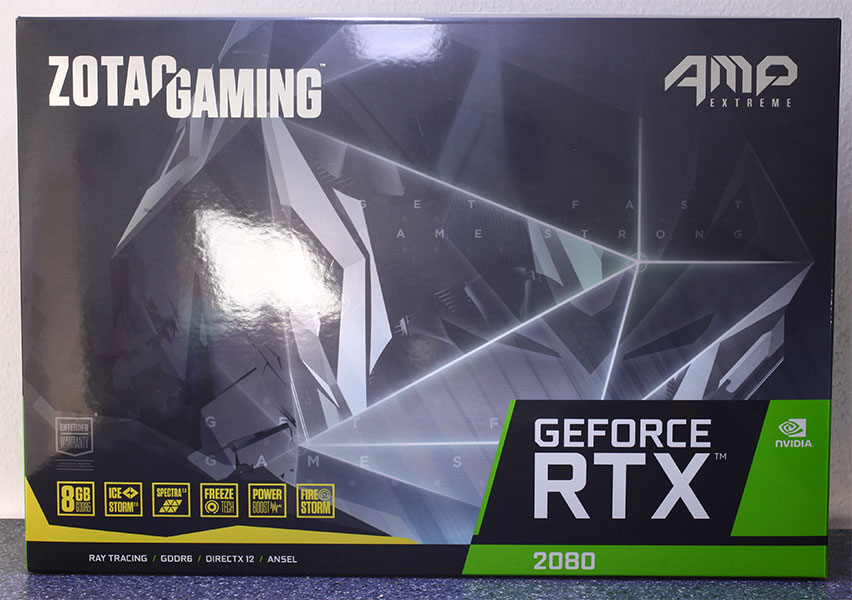
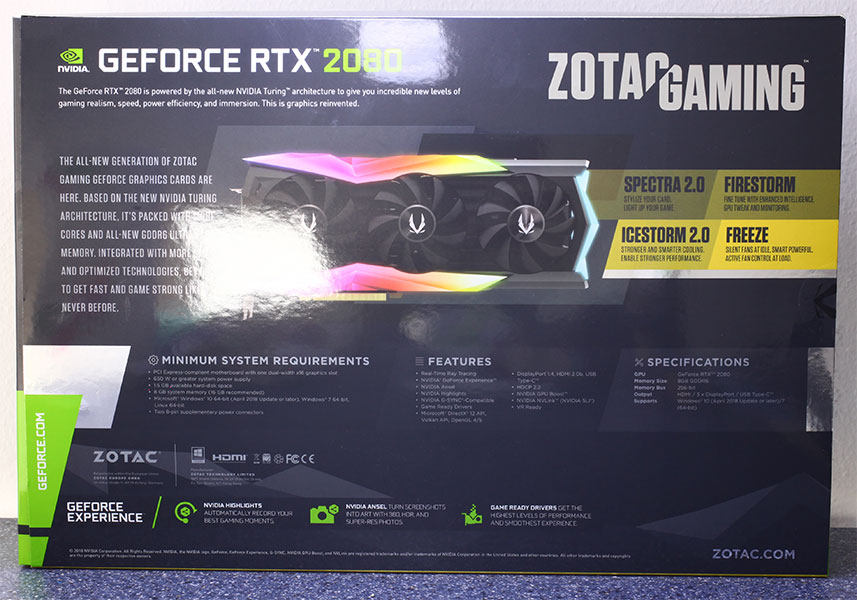
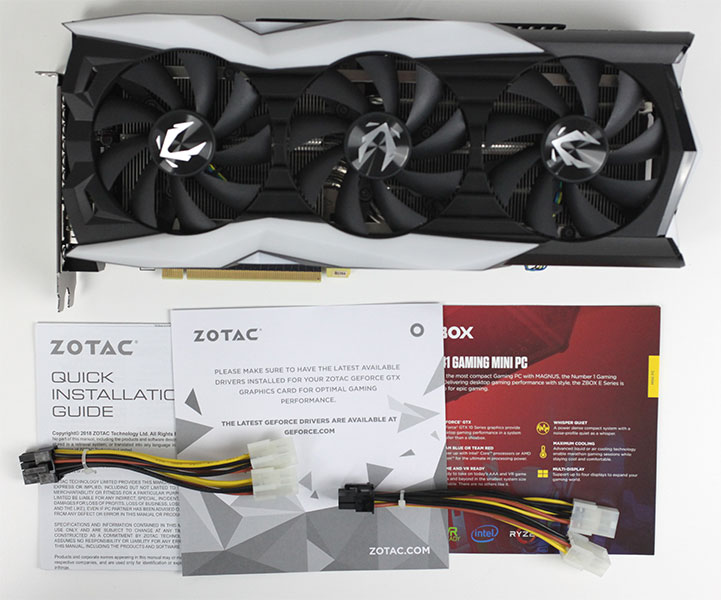
You will receive:
- Graphics card
- Documentation
- 2x PCIe power adapter
The Card
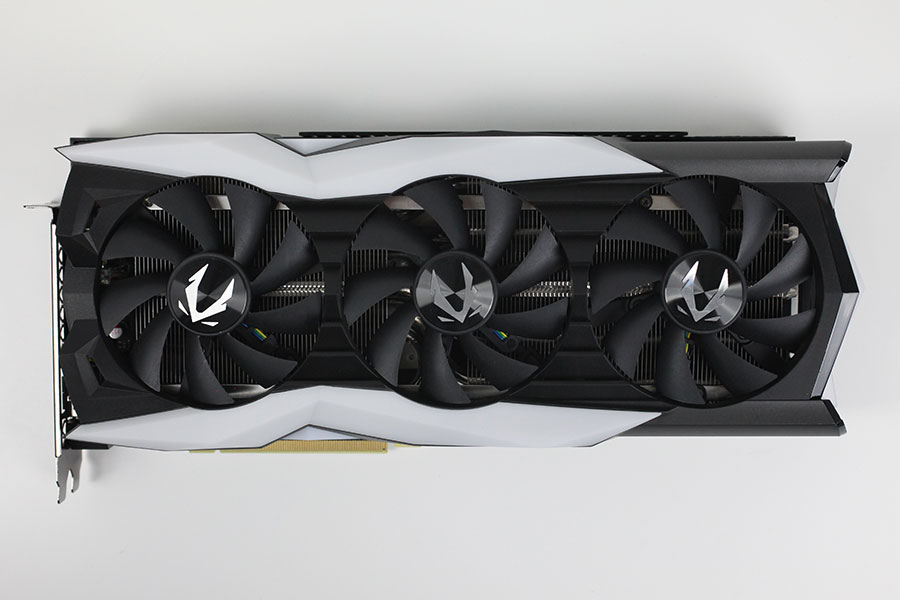
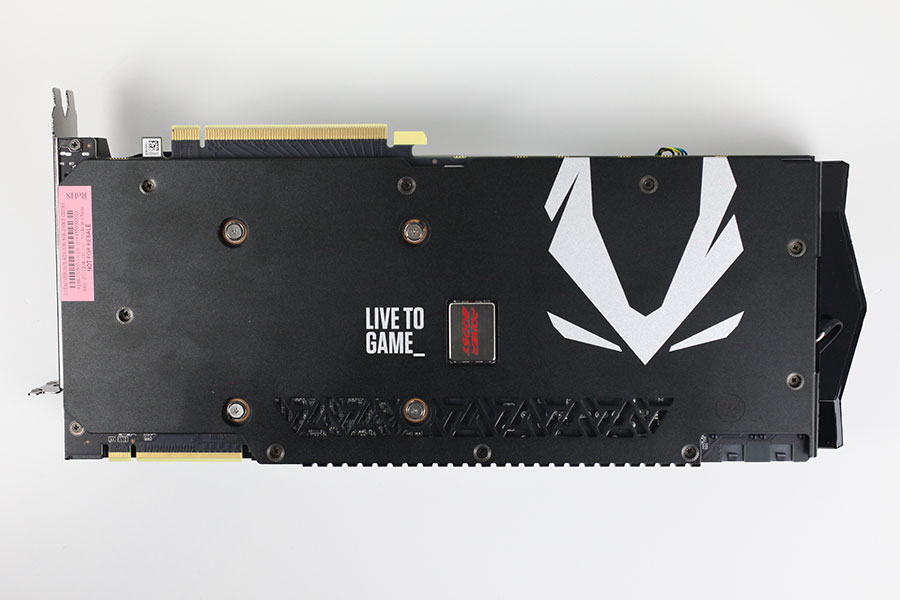
Zotac is using an all-metal construction for the cooler, which gives it an ultra-high quality feel. A high-quality, matte black backplate is installed on the back of the card. Dimensions of the card are 32.0 x 13.5 cm.

Installation requires three slots in your system.

Display connectivity options include three standard DisplayPort 1.4a, one HDMI 2.0b, and a VirtualLink connector, which is basically USB-C with DisplayPort routing and USB-PD, so a single cable can power, display, and take input from your VR HMD.
NVIDIA has updated their display engine with the Turing microarchitecture, which now supports DisplayPort 1.4a with support for VESA's nearly lossless Display Stream Compression (DSC). Combined, this enables support for 8K@30Hz using a single cable, or 8K@60Hz when DSC is turned on. For context, DisplayPort 1.4a is the latest version of the standard that was published in April, 2018.

The board uses two 8-pin power connectors. This input configuration is specified for up to 375 watts of power draw.

With Turing, NVIDIA is using NVLink as a physical layer for its next-generation SLI technology. NVLink provides sufficient bandwidth for multi-GPU rendering at 8K 60 Hz, 4K 120 Hz, and other such bandwidth-heavy display resolutions. It's a point-to-point link between your GPUs, and so, latencies will be lower compared to pushing data through the PCI-Express bus.

We shine the light from a self-leveling line laser on to the card, which shows no sagging.
Disassembly
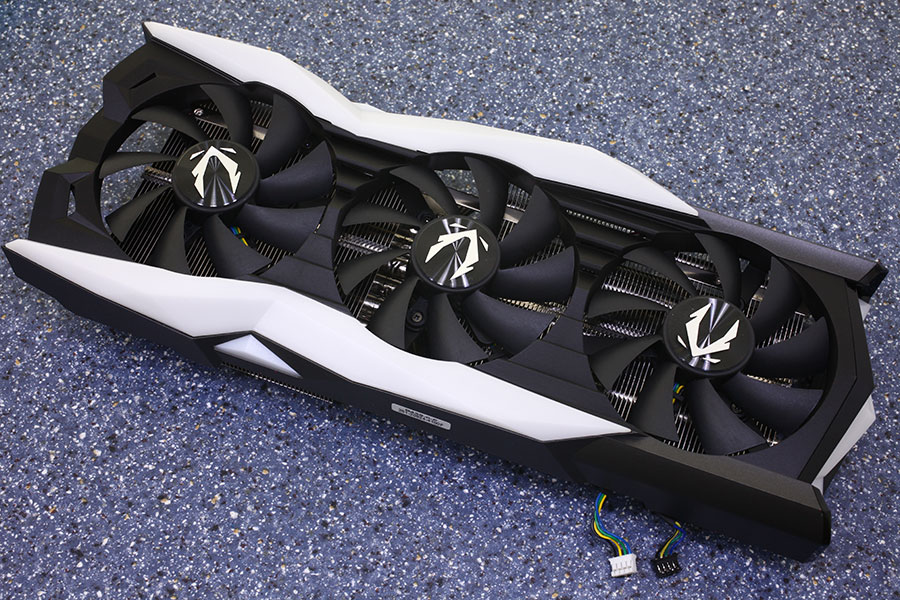

Zotac is using five heatpipes and a copper base on their cooler.

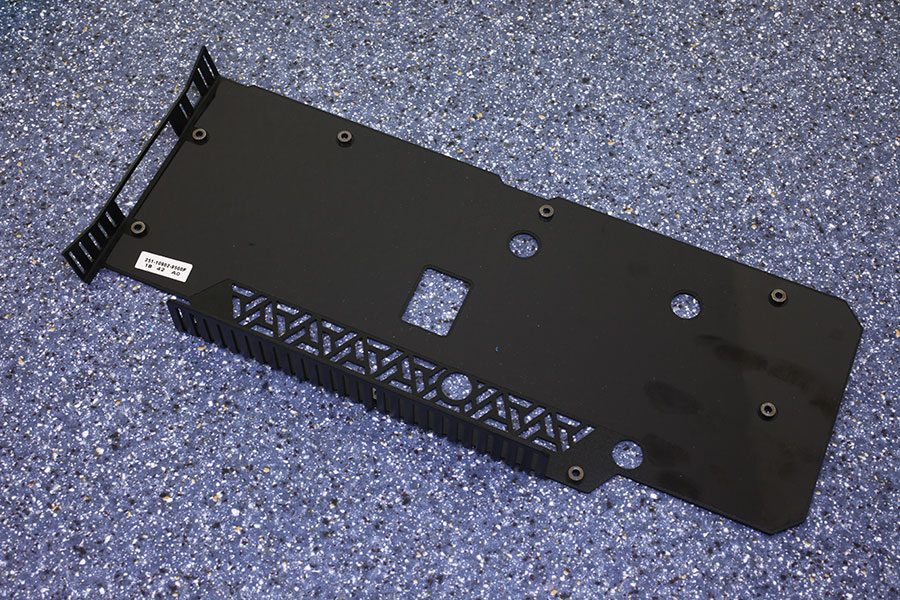
The backplate is made out of metal and protects the card against damage during handling and installation. Note how the backplate actually partially wraps around the card for added protection and improved looks.

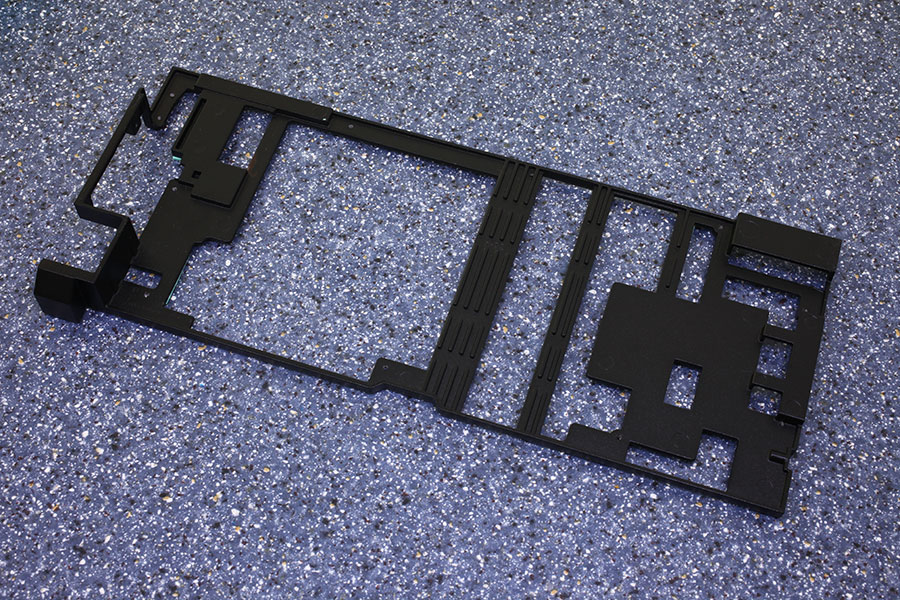

Once the main heatsink is removed, a black baseplate becomes visible, which provides cooling for the VRM circuitry.
On the next page, we dive deep into the PCB layout and VRM configuration.
High-resolution PCB Pictures
These pictures are for the convenience of volt-modders and people who would like to see all the finer details on the PCB. Feel free to link back to us and use them in your articles or forum posts.

High-res versions are also available (front, back).
Our Patreon Silver Supporters can read articles in single-page format.
Nov 14th, 2026 23:09 CST
change timezone
Latest GPU Drivers
New Forum Posts
- WarpCoreBench scores! (45)
- Optical Disc Drive owners club (209)
- Honestly, do you care about GTA VI? (23)
- "Legacy Control Panel" won't install (0)
- Planning for Prolonged High Prices and Maintaining What You Already Have (72)
- Tell me about your favourite graphics card (83)
- What can the FX 8320 do today? Here is the answer. (47)
- Recommendations Wanted - Affordable Enterprise SSD for Boot (3)
- [INTEL]-How To Update Your Microcode for Intel HX 13/14th Gen. CPUs Laptops/Mobile Easily. (260)
- [Intel AX1xx/AX2xx/AX4xx/AX16xx/BE2xx/BE17xx] Intel Modded Wi-Fi Driver with Intel® Killer™ Features (632)
Popular Reviews
- AMD Zen 6 Technical Deep Dive
- ASUS ROG Strix B850-I Gaming Wi-Fi7 W Review
- Corsair HX1000i Shift Crystal Review
- Upcoming Hardware Launches 2027 (Updated Nov 2026)
- Montech King 95 3D PRO Review
- NZXT C1200 Platinum Review
- NZXT H7 RGB+ Review
- NZXT H5 Review
- Phantom Blade Zero Performance Benchmark Review - 35 GPUs Tested
- AMD Ryzen 7 9800X3D Review - The Best Gaming Processor
TPU on YouTube
Controversial News Posts
- NVIDIA Co-Founder and CEO Jensen Huang Officially Resigns (408)
- OpenAI CEO Argues Home PCs Waste the World's Limited DRAM Supply (152)
- NVIDIA Launches Investigation Into Jensen Huang's Relationship With Suspected Chinese Spy (136)
- Intel "Raptor Lake Next" 16-Core and 20-Core CPUs Surface (130)
- Legendary Game Studio BioWare Shuts Down Following EA Layoffs (104)
- Dell CEO Says the Memory Shortage Will Get Worse in 2027 (95)
- NVIDIA GeForce RTX 50-Series Scheduled for up to $500 Price Hike This Week (89)
- Modder Fits RTX 5090 With Four 8-Pin Connectors, Halving Current per Wire (80)