Saturday, February 7 2009
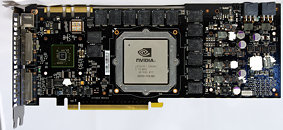
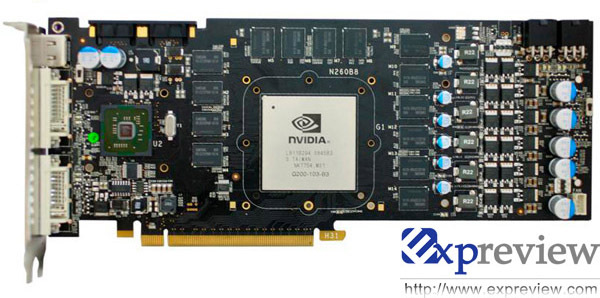
The introduction of the new G200b series graphics processors sought to revive NVIDIA's stronghold over the high-end graphics market, by reducing manufacturing costs, and facilitating high-end graphics cards at unusually low price-points, to compete with rival ATI. The first SKU using the G200b GPU was the new GeForce GTX 260. The PCB of design of the new model (P654) saw several drastic changes, that also ended up contributing to the cost-cutting: all memory chips were placed in the business end of the PCB, and the VRM area rearranged. News emerging from Expreview suggests that NVIDIA has worked out an even newer PCB reference design (model: P897) that aims mainly to cut production costs further. The reference design graphics board based on the PCB will be given the internal name "D10U-20". A short list of changes is as follows:
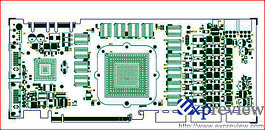
  • The number of PCB layers has been reduced from 10 to 8, perhaps to compress or remove blank, redundant or rudimentary connections
  • A 4+2 phase NVVDD power design using the ADP4100 voltage regulator IC, the FBVDDQ circuit has been reduced from 2 phases to 1, and the MOSFET package has been changed from LFPAK to DPAK grouping, to reduce costs. The ADP4100 lacks the I2C interface, which means voltage control will be much more difficult than on current PCBs of the GeForce 260,280, 285 and 295
  • The optional G200b support-brace has been removed
  • While the length of the PCB remains the same, the height has been reduced to cut costs
  • BIOS EEPROM capacity reduced from 1 Mbit (128 KB) to 512 Kb (64 KB)
  • Cheaper DVI connectors
The new PCB is expected to reduce costs by as much as US $15 which will impact on the overall product cost, and help step up the competitiveness. Expreview notes that the new PCB will be available to the partners by the third week of this month. Below are the drawing and picture of the PCB. For reference, the second picture is that of the older P654 design.


Source: Expreview
posted by btarunr - 9:09 AM |  Related News

User comments
1 to 26 of 78 | Go to Page 1 2 3 4    Previous | Next
by alexp999 (February 7th - 9:23 AM) - Reply
So current gen GT200 PCB's are better then?

- Voltage Control
- Better DVI ports
- Bigger EEPROM

And do you mean width of the PCB is 1.5cm less? Got me confused for a sec cus I was thinking, "But the PCB is only about 5mm thick! :confused: ", lol.
by Disruptor4 (February 7th - 9:30 AM) - Reply
It appears they are skimping out on PCB manufacturing which is not good.
by btarunr (February 7th - 9:31 AM) - Reply
by: alexp999
So current gen GT200 PCB's are better then?

- Voltage Control
- Better DVI ports
- Bigger EEPROM

And do you mean width of the PCB is 1.5cm less? Got me confused for a sec cus I was thinking, "But the PCB is only about 5mm thick! :confused: ", lol.

Yes, software voltage control could get difficult as the VRM IC doesn't support the standard interface in which voltage is controlled by software. DVI ports really wouldn't make a noticeable change the older ones had EMI shielding. We doubt if the G200b made use of the extra 64 KB of EEPROM space on the older PCB. Your BIOS .rom file for the GTX260 always weighed 64KB. The "height" as in:


Look at the red line. That dimension for a PCB is called its height. For example, "half-height" cards are HTPC or Slim form-factor friendly.
by rpsgc (February 7th - 9:43 AM) - Reply
by: alexp999
And do you mean width of the PCB is 1.5cm less? Got me confused for a sec cus I was thinking, "But the PCB is only about 5mm thick! :confused: ", lol.
Height.
by Zubasa (February 7th - 9:57 AM) - Reply
by: alexp999
So current gen GT200 PCB's are better then?

- Voltage Control
- Better DVI ports
- Bigger EEPROM

And do you mean width of the PCB is 1.5cm less? Got me confused for a sec cus I was thinking, "But the PCB is only about 5mm thick! :confused: ", lol.

Its call the Height as the card is always perpendicular to the motherboard.
by iamverysmart (February 7th - 11:07 AM) - Reply
Why not just call it length.
by rpsgc (February 7th - 11:22 AM) - Reply
by: iamverysmart
Why not just call it length.
Uhm... because it's not?

http://en.wikipedia.org/wiki/Length
by btarunr (February 7th - 11:23 AM) - Reply
by: iamverysmart
Why not just call it length.


^Length.
by DaedalusHelios (February 7th - 11:49 AM) - Reply
Good news post and thanks for explaining it too.
by EarlZ (February 7th - 12:24 PM) - Reply
Which means we will get a lesser durable and lesser overclocking card, kudos to nvidia then.
by Tatty_One (February 7th - 12:26 PM) - Reply
by: Disruptor4
It appears they are skimping out on PCB manufacturing which is not good.
it's good if it works and reduces costs.
by DaedalusHelios (February 7th - 12:27 PM) - Reply
by: EarlZ
Which means we will get a lesser durable and lesser overclocking card, kudos to nvidia then.
The only people it will hold back will be the ones trying to use software voltmod techniques. The people serious about volt modding already use the hardware method instead.

I guess some people see all news as bad news. It shouldn't make any difference except lower costs to the manufacturer and customer. Sounds like an upside.
by Jarman (February 7th - 12:31 PM) - Reply
sod up full cover waterblocks too id imagine?
by EarlZ (February 7th - 12:36 PM) - Reply
by: DaedalusHelios
The only people it will hold back will be the ones trying to use software voltmod techniques. The people serious about volt modding already use the hardware method instead.

I guess some people see all news as bad news. It shouldn't make any difference except lower costs to the manufacturer and customer. Sounds like an upside.
Maybe, but i cant see how reducing the PCB layers and VR's would not somewhat reduce the overclocking capabilities and durability.. also "cheaper" DVI connectors.. image quality degradation perhaps?
by btarunr (February 7th - 12:40 PM) - Reply
by: EarlZ
also "cheaper" DVI connectors.. image quality degradation perhaps?


No. All a DVI connector does is connect the card to the monitor. It's just a piece of plastic with a few sockets and metal conveying the signal. All that's different between the new one and the old, is that the old one used an EMI shield. Evidently NVIDIA found that unnecessary. Image quality is care of the NVIO2 processor. That's what handles display, and the fact that it's isolated from the GPU (and its power-hungry components) shows they've already lopped EMI, or any form of interference, although the intention of separating display logic was because the GPU die had become too big.
by eidairaman1 (February 7th - 12:46 PM) - Reply
only thing i see people really complaining about is the eeprom size being shrunk, perhaps can have larger wired in.
by buggalugs (February 7th - 12:47 PM) - Reply
I dont like it. Sounds like poorer quality all round. $15 saving on a $300-$400 card doesnt sound like its worth it.
by DrPepper (February 7th - 1:00 PM) - Reply
by: buggalugs
I dont like it. Sounds like poorer quality all round. $15 saving on a $300-$400 card doesnt sound like its worth it.
I don't think they will pass the savings on to the consumer, this is probably so they can make more money.
by eidairaman1 (February 7th - 1:08 PM) - Reply
more yields= more money to them.
by AddSub (February 7th - 2:21 PM) - Reply
With the global economy in such a bad shape this was to be expected. In fact they have already reduced costs with their 55nm lineup. The coolers on their 55nm lineup have been cut down. When compared to the coolers on the original 65nm GTX 260/280 lineup, the new coolers are lighter, have no back cover, heatpipes are shorter and smaller and many benchmarks reveal that in many situations 55nm parts actually run hotter than 65nm parts. Cutting down on the actual circuitry was the next logical step. They are taking the route AMD took a year ago. Hence the massive jump in Radeon 3xxx RMA's when compared to the previous generation, something that also carried on with the Radeon 4xxx lineup. In the following months you can expect a heathy increase in threads with titles such as "OMG! My brand new GTX 260 is DEAD after 2 days" or "My brand new nvidia GPU is artifacting at stock clocks!". Just watch.

Nehalem from Intel and 65nm GTX GPU's from nVidia are truly the last quality products we will see from both manufacturers since due to the worsening global economic conditions they will be cutting down on quality assurance along with everybody else in the industry. Here is an easy prediction: next massive GPU release from nVidia (384SP monster) gets pushed back by at least 6 months.
by newtekie1 (February 7th - 2:42 PM) - Reply
If it makes the card cheaper to produce, and allows the manufacturers to reduce the prices on the cards to be more competitive, this can only be seen as a good thing in the consumer's eyes.

Most consumers don't overclock the cards, and even fewer volt-mod them. So the reductions won't affect the majority of people buying the cards. And the ones that would be affected by the changes will just buy one of the more expensive versions that use the old PCB, as I'm sure both will exist side by side on the market.
by LittleLizard (February 7th - 3:45 PM) - Reply
imo this has it pros and con

pros: cheaper good nvidia cards.
cons: bad overclock, the pre-overclocked cards will have a higher DOA rate, not as durable as the first gen.

Conclusion: as long as u dont overclock, this is good, if u overclock, this is bad
by newtekie1 (February 7th - 4:34 PM) - Reply
by: LittleLizard
imo this has it pros and con

pros: cheaper good nvidia cards.
cons: bad overclock, the pre-overclocked cards will have a higher DOA rate, not as durable as the first gen.

Conclusion: as long as u dont overclock, this is good, if u overclock, this is bad
Overclocking shouldn't affect durability with these changes, in fact these changes shouldn't affect durability at all unless more voltage is being run through the card(ie Volt-mods).
by phanbuey (February 7th - 5:06 PM) - Reply
by: newtekie1
Overclocking shouldn't affect durability with these changes, in fact these changes shouldn't affect durability at all unless more voltage is being run through the card(ie Volt-mods).
+1

This is nothing but good news. The cost saving will have minimal, if any impact on the performance of the card; they are just becomeing more skilled with the manufacture of these cards and eliminating unnecessary waste.
by Haytch (February 7th - 5:18 PM) - Reply
I would rather pay the $15 extra and not have those features taken away.
The cons of this move, too heavily outweigh the pro here. I mean pro because it only has one real pro, thats the $15 saving, which infact doubles up as a con.

If Nvidia are unable to wipe $15 off their products without stripping them down then they are in trouble. But we all know that this is not the case. Its one thing to reduce costs, its another thing to strip the card of parts.

To me, this is nowhere near a $15 price reduction or an improvement in manufacturing. What i gather is that Nvidia worked out a way to take off more then $15 worth of parts and allow the card to still work which gives the enduser a $15 saving with Nvidia raking in way over $15 in profit.

Nothing they removed was ' unessessary ', unless ofcourse your a monkey.
1 to 26 of 78 | Go to Page 1 2 3 4    Previous | Next
8138 Users online, 5.05 mbps
Quick Search
Already a member?
Username:
Password:
Register Here!
TechPowerUp on Facebook 
TechPowerUp on Google+ 
New Forum Posts
13:39 by 1Kurgan1
Dear Esther (12)
13:34 by BondExtreme
Is my SSD Corrupted? (8)
13:15 by pantherx12
AMD FX OC'ers Club (841)
13:12 by GullyFoyle
Battlefield 3 Clubhouse (11422)
12:47 by mokos
OpenCl not checked for HD 6520G (0)
12:47 by Fourstaff
Guild Wars 2 - Thoughts? (4)
Popular Reviews

Latest VGA Drivers

ATI Catalyst 12.1 WHQL

XP32 | XP64 | W7 32 | W7 64

NVIDIA GeForce 285.58 WHQL

XP32 | XP64 | W7 32 | W7 64