Tuesday, July 22nd 2025

Angelbird Introduces Performance Card Reader CFexpress B & USB-C Solid Flex Cables

Angelbird is excited to introduce the next-generation Performance Card Reader CFexpress B - the ultimate post-production tool for professionals who demand both maximal efficiency and reliability. With transfer speeds of up to 40 Gb/s via USB-C 4.0 Gen 3x2 and full compatibility with the latest CFexpress v4 Type B technology, this card reader is designed to accelerate your creative process—eliminating frustrating delays and allowing you to work directly from your Type B storage media.

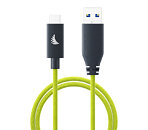
Moreover, we introduce our new line of ultra-flexible, full-featured USB-C Solid Flex Cables - available in four length options, three types of cable connectors, and two striking colors. With data transfer speeds of up to 40 Gb/s and fast charging capabilities of up to 240 W, these cables keep workflows running smoothly. The compact and mid-length cables (32 cm / 1 ft, 1 m / 3.3 ft, and 2 m / 6.6 ft) meet versatile every day and production needs, while the specialized 4,5 m / 14.8 ft tether cable is designed specifically for professional studio workflows.
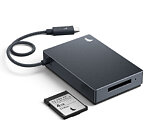
Performance Card Reader CFexpress B
  • EUR/USD 249.99 MSRP
  • Price excl. local VAT
USB-A-to-C Solid Flex Cable
EUR/USD 15.99 MSRP
  • USB-C 4.0 Solid Flex Cable
  • Straight-to-straight connector, 32 cm
  • Straight-to-right-angle connector, 32 cm
  • Straight-to-straight connector, 1 m
  • Straight-to-right-angle connector, 1 m
  • Straight-to-straight connector, 2 m
  • Straight-to-right-angle connector, 2 m
  • EUR/USD from 15.99 MSRP
USB-C 3.2 Solid Flex Tether Cable
  • EUR/USD 59.99 MSRP
  • Prices excl. local VAT
Add your own comment

7 Comments on Angelbird Introduces Performance Card Reader CFexpress B & USB-C Solid Flex Cables

#1
The Tech Guy
I'm surprised CFexpress cards were not replaced by 2242 M.2 NVME drives a long time ago. A CF card measures 43x36mm a 2242 M.2 NVMe drive 42x22mm. You can now buy for example a 2242 WD_BLACK SN770M NVMe SSD 2TB for around US$169.00 try to find a 2TB CF card for less than double that! The SN770M has an endurance of 1200TBW and 4850MB/s seq write speed. Compare this to say a Atlas Ultra CFexpress 4.0 card which does up to 3000MB/s write and the 2TB price about US$550.00. The M.2 interface should be being utilized by all new devices now.
Posted on Reply
#2
ZeDestructor
The tech guyI'm surprised CFexpress cards were not replaced by 2242 M.2 NVME drives a long time ago. A CF card measures 43x36mm a 2242 M.2 NVMe drive 42x22mm. You can now buy for example a 2242 WD_BLACK SN770M NVMe SSD 2TB for around US$169.00 try to find a 2TB CF card for less than double that! The SN770M has an endurance of 1200TBW and 4850MB/s seq write speed. Compare this to say a Atlas Ultra CFexpress 4.0 card which does up to 3000MB/s write and the 2TB price about US$550.00. The M.2 interface should be being utilized by all new devices now.
I can throw my CFExpress cards into a pocket in my bag with zero protection alongside a other cards, it's reader and the cable for the reader without any real worries that it will break or suffer any damage besides cosmetic scuffing. I can't do the same with a bare M.2 SSD. (yet)

Now, what is actually disappointing is that nobody has seen the obvious hole in the market and tuned their 2230 SSDs to do well under sustained loads with near-zero cooling so that we can stick em into a 30-dollar M.2 to CFExpress adapter and "build" our own CFExpress cards for cheap. Or just make their own CFExpress cards tbh.
Posted on Reply
#3
The Tech Guy
ZeDestructorI can throw my CFExpress cards into a pocket in my bag with zero protection alongside a other cards, it's reader and the cable for the reader without any real worries that it will break or suffer any damage besides cosmetic scuffing. I can't do the same with a bare M.2 SSD. (yet)

Now, what is actually disappointing is that nobody has seen the obvious hole in the market and tuned their 2230 SSDs to do well under sustained loads with near-zero cooling so that we can stick em into a 30-dollar M.2 to CFExpress adapter and "build" our own CFExpress cards for cheap. Or just make their own CFExpress cards tbh.
I'm sure you could buy protector cases for 2242 M.2 NVMe drives or as being about the same size use a CFexpress card case but I get your point.
2230 NVMe SSDs are even smaller. What I'm really trying to point out is we have an interface and product far superior and cheaper and not making full use of it. I've never owned anything needing a CF card but as the speed of the CF cards increase I guess the cooling requirements are much the same as NVMe drives. The trouble with adapters is will the interface bottle-neck the transfer speed? USB certainly does even thunderbolt 5 via USB Type-C can't do Gen 5 NVMe speeds via the M.2 interface.
Posted on Reply
#4
ZeDestructor
The tech guyI'm sure you could buy protector cases for 2242 M.2 NVMe drives or as being about the same size use a CFexpress card case but I get your point.
2230 NVMe SSDs are even smaller. What I'm really trying to point out is we have an interface and product far superior and cheaper and not making full use of it. I've never owned anything needing a CF card but as the speed of the CF cards increase I guess the cooling requirements are much the same as NVMe drives. The trouble with adapters is will the interface bottle-neck the transfer speed? USB certainly does even thunderbolt 5 via USB Type-C can't do Gen 5 NVMe speeds via the M.2 interface.
In the case of CFexpress, it's just physical constraints - type-B (the big one) is an evolution of Sony's XQD format that pre-exists M.2 and NVMe complately. Later on Sony donated everything XQD-related to CFA and CFexpress was born with 2 lanes of PCIe... because that's all that could be done with the pins already there and offered a very neat in-place upgrade for some XQD cameras via a firmware upgrade.

The M.2 to CFe adapters are just super-simple passive adapters, so there is no concern about the adapter bottlenecking anything aside from the inherent 2-lane limitation of type-B or 1-lane for type-A (and signal integrity eventually), but even with the original PCIe 3.0×2 interface you can record 8.2K60 RAW video (at 4:2:0 typically; roughly 1GB/s) no problem with the right card and camera. Storage capacity is actually the bigger limitation for anyone going that far with the video.

Thermals isn't necessarily the issue with the 2230 SSDs, actually - a lot of the time it's filling up the SLC cache fast and the cameras (for now) seemingly not having any HMB support, so you end up having good performance for a few bursts, then it slows right down as the SSD reaches into a performance profile that it's designers never planned for. 2242 in theory could solve that issue by having DRAM onboard, but not in an adapted form because the M.2 connector and card reader pins makes 2230 the maximum. Really though, with CFe 4.0, the performance needs are essentially met IMO with only price being the annoyance, and even that is getting better every few months as the competition increases.
Posted on Reply
#5
LiKenun
The tech guyI'm sure you could buy protector cases for 2242 M.2 NVMe drives or as being about the same size use a CFexpress card case but I get your point.
I’ve scoured this market. There is nearly nothing for 2242 or 22110.

Everything caters to 2230 or 2280―mostly 2280, the most common form factor.

Most of what accommodates 2242 is just because adding an additional mount point to a 2280 enclosure is a negligible cost. You’ll almost never find anything specifically made for 2242, which means everything occupies a volume in excess of what is necessary for just a 2242 M.2 SSD.

(And just forget about 2260. Nobody cares these days.)
Posted on Reply
#6
The Tech Guy
ZeDestructorIn the case of CFexpress, it's just physical constraints - type-B (the big one) is an evolution of Sony's XQD format that pre-exists M.2 and NVMe complately. Later on Sony donated everything XQD-related to CFA and CFexpress was born with 2 lanes of PCIe... because that's all that could be done with the pins already there and offered a very neat in-place upgrade for some XQD cameras via a firmware upgrade.

The M.2 to CFe adapters are just super-simple passive adapters, so there is no concern about the adapter bottlenecking anything aside from the inherent 2-lane limitation of type-B or 1-lane for type-A (and signal integrity eventually), but even with the original PCIe 3.0×2 interface you can record 8.2K60 RAW video (at 4:2:0 typically; roughly 1GB/s) no problem with the right card and camera. Storage capacity is actually the bigger limitation for anyone going that far with the video.

Thermals isn't necessarily the issue with the 2230 SSDs, actually - a lot of the time it's filling up the SLC cache fast and the cameras (for now) seemingly not having any HMB support, so you end up having good performance for a few bursts, then it slows right down as the SSD reaches into a performance profile that it's designers never planned for. 2242 in theory could solve that issue by having DRAM onboard, but not in an adapted form because the M.2 connector and card reader pins makes 2230 the maximum. Really though, with CFe 4.0, the performance needs are essentially met IMO with only price being the annoyance, and even that is getting better every few months as the competition increases.
Thanks for the info. Price, speed, capacity and endurance are all superior for NVMe drives for example a Crucial P310 2TB NVMe M.2 Gen4 2230 SSD will only set you back about US$190.00 reads up to 7100 MB/s, writes up to 6000 MB/s and has endurance of 440 TBW. Would cameras and docks not have been better off to have ditched CFe for the M.2 interface? M.2 will still be the interface for Gen 6 and Gen7 drives where is CFe going? but as you point out CFe 4.0 performance needs are essentially met so perhaps going forward there are no problems continuing to use and develop CFe despite there is already a better alternative available.
Posted on Reply
#7
ZeDestructor
LiKenunI’ve scoured this market. There is nearly nothing for 2242 or 22110.

Everything caters to 2230 or 2280―mostly 2280, the most common form factor.

Most of what accommodates 2242 is just because adding an additional mount point to a 2280 enclosure is a negligible cost. You’ll almost never find anything specifically made for 2242, which means everything occupies a volume in excess of what is necessary for just a 2242 M.2 SSD.

(And just forget about 2260. Nobody cares these days.)
In PC, sure. In cameras, tablets and phones things are quite a bit different, and CFexpress is designed for camera use first and foremost (and hopefully microSD Express, SD Express/CFexpress-A finally gives SD the boot as well). Now, you can certainly argue that cameras should be able to just write directly to a USB drive (and some do already!), but there are ergonomic and ruggedness concerns when you dangle a USB drive from the camera with a cable.
The tech guyThanks for the info. Price, speed, capacity and endurance are all superior for NVMe drives for example a Crucial P310 2TB NVMe M.2 Gen4 2230 SSD will only set you back about US$190.00 reads up to 7100 MB/s, writes up to 6000 MB/s and has endurance of 440 TBW. Would cameras and docks not have been better off to have ditched CFe for the M.2 interface? M.2 will still be the interface for Gen 6 and Gen7 drives where is CFe going? but as you point out CFe 4.0 performance needs are essentially met so perhaps going forward there are no problems continuing to use and develop CFe despite there is already a better alternative available.
Again, bare M.2 is fragile, especially when you're trying to work fast, in an awkward environment because the lion/eagle/butterfly doesn't want to stay put. As for endurance, firstly the number on the spec-sheet barely matters even if you're shooting 8K60 RAW everyday for work - you just write off the cost of the card as cost of business, while hobbyists will basically never burn through simply because we just don't shoot enough stuff often enough. Besides, if you really, really care, you can find pSLC drives *far* more easily on CFexpress than on M.2.

EDIT: longer-term CFe will almost certainly bring newer versions of PCIe to the form factor, but the camera industry moves fairly slowly and I personally expect jumps in storage requirements from camera usage to be slower than PCIe and NAND will evolve. The only real pain point with CFe is the pricing really, and that just gets better every year as the vendors undercut each other a little every new launch, so even that will sort itself out more or less automatically given enough time.
Posted on Reply
Nov 13th, 2026 22:48 CST change timezone

New Forum Posts

Popular Reviews

TPU on YouTube

Controversial News Posts