Friday, July 25th 2025

AMD Strix Halo Makes Handheld Debut in GPD Win 5 Teaser, Boasts Impressive FPS
AMD's Strix Halo APU has finally shown up in a gaming handheld, with the GPD Win 5 today appearing in a teaser by GPD and further specifications being revealed by The Phawx on YouTube shortly thereafter. The GPD Win 5 shown off by the Chinese handheld manufacturer featured the AMD Ryzen AI Max+ 395 with the fully fledged AMD Radeon 8060S running at a CPU power of 55-60 W. With those power figures, the GPD Win 5 is able to run Black Myth Wukong at 160+ FPS for the most part. Of course, there is no way to know what sort of settings the game was running at or what the CPU or iGPU loads were, but the temperatures also seemed to be relatively healthy, with the CPU temperature fluctuating between the mid- and high 60° range throughout the video. The iGPU also showed off some healthy clock speeds, at around 2300-2500 MHz.
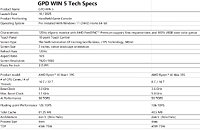
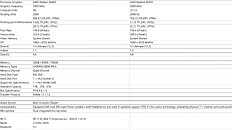
According to the follow-up video by The Phawx, the specifications of the GPD Win 5 include a 7-inch, 1080p, 120 Hz display with AMD FreeSync Premium support, ten-point touch support, and 100% sRGB coverage. The display is also covered by Corning Gorilla Glass 6, which should protect it against scratches and minor drops. The gaming handheld will come with either the AMD Ryzen AI Max+ 395 or the slightly less powerful AMD Ryzen AI Max 385. The former is the full-fat 16-core, 32-thread APU with the Radeon 8060S iGPU, while the latter offers just 8 cores and 16 threads and ships with the slower, less power hungry Radeon 8050S iGPU. Both APUs, however, will have a TDP of 45-75 W. Both configurations offer 32, 64, or 128 GB of LPDDR5x-8000 RAM in quad-channel configuration and 1, 2, or 4 TB of PCIe Gen 4 M.2 storage. If the Win 5 follows the same formula as the Win 4, it will feature a slide-up display that hides a basic keyboard, solving one of the more annoying quirks of using these Windows-powered gaming handhelds—the on-screen keyboard.
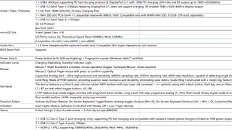
 Unlike previous GPD Win devices, the GPD Win 5 will seemingly feature a removable battery that can operate in a "backpack" mode or in wired mode. If the cooling requirements of the Ryzen AI Max+ 395 are any indication—GPD lists a dual-fan, quad-heatpipe solution—this design is likely to accommodate a thicker cooling solution. The gaming handheld will also be able to operate in a wired mode, with the charger cable connected directly to the battery. Connected to battery, GPD seemingly expects the Win 5 to get around 2 hours of continuous intensive use, with that stretching to 6 hours during light-duty use.
In the spec sheet that The Phawx shows off, GPD specifies that the battery will be available for separate purchase, however, in the same spec sheet, there is a list of items that looks like a package contents list, and that includes the handheld PC, charging hardware, an 80 Wh external battery, and some documentation. This seems to indicate that there will either be a version of the GPD Win 5 that includes the battery or that the "available for purchase separately" portion of the spec sheet simply means that you'll be able to buy spare batteries when it launches.
GPD has confirmed that it will show off the GPD Win 5 at Chinajoy 2025, which will take place on August 1 to August 4, 2025, although the gaming handheld is expected to launch in October of this year.
Sources:
GPD Game Console on YouTube, The Phawx on YouTube
According to the follow-up video by The Phawx, the specifications of the GPD Win 5 include a 7-inch, 1080p, 120 Hz display with AMD FreeSync Premium support, ten-point touch support, and 100% sRGB coverage. The display is also covered by Corning Gorilla Glass 6, which should protect it against scratches and minor drops. The gaming handheld will come with either the AMD Ryzen AI Max+ 395 or the slightly less powerful AMD Ryzen AI Max 385. The former is the full-fat 16-core, 32-thread APU with the Radeon 8060S iGPU, while the latter offers just 8 cores and 16 threads and ships with the slower, less power hungry Radeon 8050S iGPU. Both APUs, however, will have a TDP of 45-75 W. Both configurations offer 32, 64, or 128 GB of LPDDR5x-8000 RAM in quad-channel configuration and 1, 2, or 4 TB of PCIe Gen 4 M.2 storage. If the Win 5 follows the same formula as the Win 4, it will feature a slide-up display that hides a basic keyboard, solving one of the more annoying quirks of using these Windows-powered gaming handhelds—the on-screen keyboard.


In the spec sheet that The Phawx shows off, GPD specifies that the battery will be available for separate purchase, however, in the same spec sheet, there is a list of items that looks like a package contents list, and that includes the handheld PC, charging hardware, an 80 Wh external battery, and some documentation. This seems to indicate that there will either be a version of the GPD Win 5 that includes the battery or that the "available for purchase separately" portion of the spec sheet simply means that you'll be able to buy spare batteries when it launches.
GPD has confirmed that it will show off the GPD Win 5 at Chinajoy 2025, which will take place on August 1 to August 4, 2025, although the gaming handheld is expected to launch in October of this year.
12 Comments on AMD Strix Halo Makes Handheld Debut in GPD Win 5 Teaser, Boasts Impressive FPS
A well-configured low-latency frame generator in LLS 3.1 can dramatically increase performance while simultaneously reducing load and power consumption on both the CPU and GPU. To illustrate: Instead of struggling for 120FPS, we now generate only 60FPS + an additional 60FPS using FrameGenerator x2. This results in 60FPS responsiveness and 120FPS smoothness. This hybrid rendering model improves both power efficiency and platform performance, which, as we know, is crucial for mobile devices running on battery power.
I've been using LLS 3.1 for months now, and it works very well on a Ryzen 5600X + RX6800 + 1440p/180Hz screen. A fairly stable 180FPS in every game. However, it requires proper LLS and game settings configuration.
The fact GPD have got it to work at 60 watts in a handheld form factor is amazing and I can see it being really attractive in a docked mode but show me the 10-20 watt performance, hell even 5 watts just to see if its viable to get multiple hours per charge without being as hot as the surface of the sun in my hands.
www.amd.com/en/products/processors/laptop/ryzen/ai-300-series/amd-ryzen-ai-max-plus-395.html