Monday, August 25th 2025
ULTRARAM Nearing Production to Bridge the Gap Between Memory and Storage
Quinas Technology and IQE plc announced this week that ULTRARAM, an experimental memory designed to combine DRAM speed with NAND-like persistence, had cleared a significant manufacturing hurdle and is moving toward pilot production. After a year of close collaboration, the partners have developed an industrially scalable epitaxy process for the compound semiconductor layers that ULTRARAM relies on. Both companies now report discussions with foundries and other partners about pilot wafers and packaged chips. Innovate UK funding and recent intellectual property recognition helped push the project forward, and the teams describe the result as a key step from university lab work to commercial memory products.
At the technical level, ULTRARAM relies on resonant tunneling within precisely grown layers of gallium antimonide and aluminium antimonide. The new epitaxy passage provides engineers with atomic-layer control, allowing standard photolithography and etching to form reliable memory cells. In lab testing the design has shown extremely fast switching, very low switching energy, and data retention measured in years rather than hours. If those characteristics can be reproduced at scale, systems could eliminate DRAM refresh power in servers, cut boot and resume times for client devices, and enable always-on features. That hope comes with a dose of realism, because moving from a scalable epitaxy method to profitable, high-yield manufacturing will require strong supply-chain partnerships, careful yield optimization, and system-level integration. All of that will be demonstrated in a pilot run, which will serve as the final true test.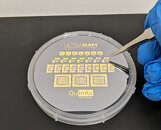
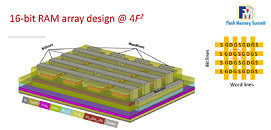
At the technical level, ULTRARAM relies on resonant tunneling within precisely grown layers of gallium antimonide and aluminium antimonide. The new epitaxy passage provides engineers with atomic-layer control, allowing standard photolithography and etching to form reliable memory cells. In lab testing the design has shown extremely fast switching, very low switching energy, and data retention measured in years rather than hours. If those characteristics can be reproduced at scale, systems could eliminate DRAM refresh power in servers, cut boot and resume times for client devices, and enable always-on features. That hope comes with a dose of realism, because moving from a scalable epitaxy method to profitable, high-yield manufacturing will require strong supply-chain partnerships, careful yield optimization, and system-level integration. All of that will be demonstrated in a pilot run, which will serve as the final true test.


12 Comments on ULTRARAM Nearing Production to Bridge the Gap Between Memory and Storage
Hey People!!!
Let's not forget about RaceTrack memory, this one is coming soon too!
Stationary retention is about 1000 years.
So at this point my assumption is that even continuous cycling won't wear UltraRam in the same way as it happens with your usual non-compound memories.
I'm just saying that: In the entire world there's no ROM capable of stationary retention for about 1000 years.
So the final question is: - Who says that UltraRam in it's final version won't be capable to play as RAM too?
as replacement for Ram based on capacitors, as replacement for SSD based on flash/nand and only after some years, they will find a way to unify everything in one storage (maybe in 2030?).