Friday, November 21st 2025

Tuxedo Gives Up on Snapdragon X Elite-Powered Linux Laptop
Tuxedo Computers, the brand known for making high-performance Linux laptops powered by its own TuxedoOS, has officially announced that it has stopped work on a planned Qualcomm Snapdragon X1 Elite laptop, citing development difficulties as the reason for stopping the project. Some of the issues Tuxedo ran into were caused by incompatibility and a lack of driver support, while others were seemingly just platform limitations and a lack of platform maturity. One of the main complications Tuxedo cites is a lack of support for BIOS updates under Linux, but this lack of support also extends to virtualization, fan control, and high-speed USB4 ports, at least given the prospective launch timeline. Tuxedo also explains that the long battery life—the main draw of Arm-powered laptops—simply wasn't panning out on Linux.
Supposedly, Tuxedo would require "several more months" of development to be able to deliver a retail unit, which would mean anyone buying the Snapdragon Tuxedo laptop would immediately have very outdated hardware. Instead, Tuxedo has left the door open to being able to resume development on the system if and when it makes sense to do so. Tuxedo has, in the meantime, committed to contributing the device tree and any progress it has made during the unrealized laptop's development to the mainline Linux kernel so that the community can benefit from the work the company did manage to complete. There's also a non-zero chance that the development will be picked up by enterprising community members, eventually resulting in the maturation of Snapdragon support on Linux.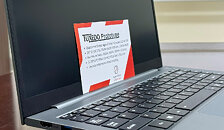
Source:
Tuxedo Computers
Supposedly, Tuxedo would require "several more months" of development to be able to deliver a retail unit, which would mean anyone buying the Snapdragon Tuxedo laptop would immediately have very outdated hardware. Instead, Tuxedo has left the door open to being able to resume development on the system if and when it makes sense to do so. Tuxedo has, in the meantime, committed to contributing the device tree and any progress it has made during the unrealized laptop's development to the mainline Linux kernel so that the community can benefit from the work the company did manage to complete. There's also a non-zero chance that the development will be picked up by enterprising community members, eventually resulting in the maturation of Snapdragon support on Linux.

Less suitable than expected
Development turned out to be challenging due to the different architecture, and in the end, the first-generation X1E proved to be less suitable for Linux than expected. In particular, the long battery runtimes—usually one of the strong arguments for Arm devices—were not achieved under Linux. A viable approach for BIOS updates under Linux is also missing at this stage, as is fan control. Virtualization with KVM is not foreseeable on our model, nor are the high USB4 transfer rates. Video hardware decoding is technically possible, but most applications lack the necessary support.
Given these conditions, investing several more months of development time does not seem sensible, as it is not foreseeable that all the features you can rightfully expect would be available in the end. In addition, we would be offering you a device with what would then be a more than two-year-old Snapdragon X Elite (X1E), whose successor, the Snapdragon X2 Elite (X2E), was officially introduced in September 2025 and is expected to become available in the first half of 2026.
9 Comments on Tuxedo Gives Up on Snapdragon X Elite-Powered Linux Laptop
I wonder how much MS is paying them to keep them on Windows side...
Given current state of Windows, Linux on ARM could be that blow everybody waits for and first nail in the coffin of Windows (and quick path to last one). OK, maybe second nail, because first one Microsoft hammered already).
They gave it a chance, invested time and effort to try to develop one system that works, but Qualcomm's SoC is not ready for prime time in consumer devices running on Linux.
Not only that, X2 Elite SoC will not be even mature enough for Windows, let alone for any competition in high-end mobility platforms. The SoC doesn't support USB4 v2 or DP 2.1 UHBR signal for external monitors, so it's a no-no for creators and productivity folks who already have an access to those technologies in x86 and Apple device.
X3 Elite might address those standards, but others will offer another set of new features by that time. Qualcomm is constantly one or two steps behind in laptop chips.
QC really should have undercut the competition. It's true, being perceived as the "budget" brand can be difficult to overcome. Just ask AMD. However, QC's stubbornness has led to their utter failure to capture any meaningful share of this market, making their future prospects limited, especially when it comes to putting resources into Linux support. There is almost no financial incentive for them to even continue in this market anymore, outside of Microsoft throwing some serious money at them.