News Posts matching #X2

Return to Keyword Browsing

KORA Introduces AI-Focused Operating System with Local AI and Agentic Workspaces

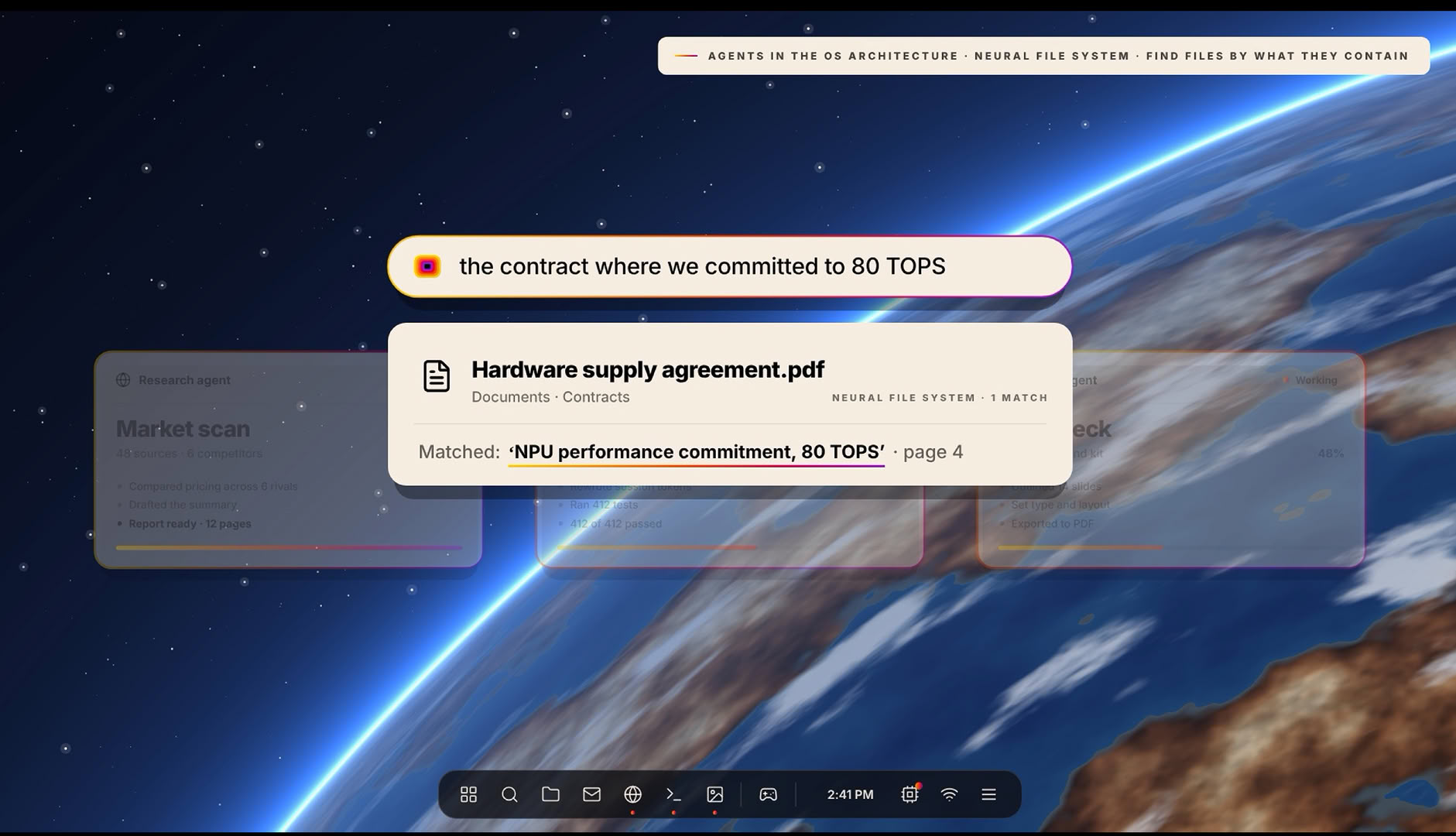
There is a new player in the operating systems arena from KORA Systems Inc. Called KORA, this operating system is the first bottom-up OS designed specifically for AI PCs, enabling agentic workflows. It is one of the first concepts where a system is so heavily customized that AI workflows are native to it. The company developed this customized operating system on top of NixOS, using it as a foundational layer.

The customization includes the development of what are called neural workspaces and file systems, which replace traditional folders and desktop apps. While these traditional elements are still present, the workflow on KORA OS is organized around intent, context, and memory. Each workspace is divided based on user intent, and the OS manages the files accordingly. Security is robust, as KORA implements each workspace within a secured sandbox for applications and agents, with separate permissions. The memory and context of the workflow remain on the user's desktop, never leaving the machine. Features like semantic search and email are natively integrated, allowing you to search across your entire OS or email to find what you need.



ASUS Rolls Out FSR 4.1 Preview for ROG Xbox Ally Handhelds

ASUS has started rolling out a preview GPU driver that brings AMD FSR 4.1 upscaling to the ROG Xbox Ally X and ROG Xbox Ally X20. Owners can grab it through Armoury Crate SE under Update Center, then Preview Updates. This follows AMD's announcement earlier this week that FSR 4.1 is expanding to Radeon RX 6000 series GPUs, APUs, and Xbox. According to ASUS, the handheld version runs on a lighter model that is less than half the size of the original INT8 model, built with the Ryzen AI Z2 Extreme in mind. FSR 4.1 works in over 400 games that support FSR 3.1 or newer. Handheld owners have waited a while for this, as AMD previously had no definitive decision on RDNA 3.5 APUs before confirming FSR 4 for APUs by the end of 2026.

Once FSR is enabled in a game's settings, users also have to add the FSR tile in Command Center and switch it on. ASUS warns that RSR, the system-level upscaler, should not be combined with it. Neither AMD nor ASUS has shared any performance numbers yet, and ASUS notes that preview updates may still have bugs. As for the regular ROG Xbox Ally, ASUS says it will also get support through a GPU driver update coming soon, though there's no date yet. The Xbox Series X|S consoles are next in line and will reportedly get FSR 4.1 in the coming weeks, while FSR Diamond has already been teased for Project Helix.

Microsoft Reportedly Cutting Specs on Entry-Level 12-Inch Surface, AMD Arm Chip in the Mix

Microsoft might be working on a cheaper 12-inch Surface, and Apple's MacBook Neo looks like the reason. DigiTimes reports, citing supply chain sources, that Microsoft is reviewing the specifications of its entry-level 12-inch Surface to bring costs down, and is also rethinking which processor goes inside. The report's headline, spotted by harukaze5719 on X, goes as far as saying Apple is forcing Microsoft to downgrade the device, and hints at a comeback for AMD with an Arm chip. Reportedly, the processor, memory, camera, battery, and chassis are all being looked at, though nothing seems to be finalized yet.

The pricing gap between the two laptops is quite large. Microsoft only just refreshed the 12-inch Surface Pro with Snapdragon X2 Plus, and it now starts at $1,149, up from $799 last year, partly because the 8 GB base configuration was dropped. Apple launched the MacBook Neo at $599, and even after a $100 increase in June that Apple blamed on memory costs, it still sits at $699. As for the chip, AMD's "Sound Wave" Arm APU was previously linked to Microsoft's 2026 Surface lineup and has even shown up in shipping manifests, so it looks like a candidate. Leaks put it at 2 performance and 4 efficiency Arm cores, RDNA 3.5 graphics with 4 CUs, and a 5 W to 10 W power target. Then again, Microsoft could just as well stick with Qualcomm, and neither Microsoft nor AMD has confirmed anything.

Intel "Panther Lake" Reportedly Gets Up to 20% Price Hike, Older Generations Also Impacted

Intel is reportedly preparing for a significant price increase across its silicon designs, according to supply chain sources cited by Commercial Times Taiwan. The first to experience this price hike is the latest "Panther Lake" processor generation, built on the Intel 18A node, with an increase ranging from 15% to 20% depending on the SKU. Intel reportedly made these adjustments on September 1, but consumer price increases have not yet been observed, or it may take a few more weeks for the old supply to clear. This supply-side price hike doesn't mean that Intel is directly changing its consumer pricing, but rather adjusting the pricing for major laptop OEMs such as Acer, ASUS, Lenovo, Dell, and HP. With a potential 20% price hike, this could translate to a few dozen US dollars more for the OEMs. Laptop manufacturers are likely to pass these increased costs onto consumers, especially given the current challenges with memory and storage pricing, which are already squeezing margins.

The reported price hikes don't stop there. The "Meteor Lake" and "Arrow Lake" processor families are also expected to see price increases, with reports indicating a 5% to 10% hike for these two generations, depending on the SKU. Intel sources silicon from both TSMC and its internal foundry, but the demand for silicon in the form of CPUs is skyrocketing in the age of AI, making price increases likely. Consumer demand remains, but much of the available CPU manufacturing capacity, both internally and externally, is being absorbed by agentic AI workloads, which are pushing server configurations to a 50:50 ratio of CPUs to GPUs.

Microsoft's Advanced Shader Delivery Arrives to NVIDIA GeForce RTX GPUs Later This Month

Microsoft's Advanced Shader Delivery (ASD), which provides pre-compiled shaders with the game itself, is finally becoming available on a range of platforms. The company confirmed that this feature will expand to NVIDIA's GeForce RTX graphics cards and the RTX Spark platform later this month. This means that game developers will be able to ship pre-compiled shaders to speed up game loading times and reduce any shader-induced stuttering during gameplay. When Microsoft unveiled a public preview of ASD, it reportedly supported various AMD RDNA generations, but now more platforms are receiving support.

Currently, ASD is claimed to work on AMD RDNA 1, RDNA 2, RDNA 3, RDNA 3.5, and RDNA 4 GPU generations, as well as on Qualcomm Snapdragon X2 Series with Adreno integrated graphics. Later this month, Microsoft plans to extend ASD to Intel Arc B-Series, which includes B570, B580, Intel Core Ultra Series 2, and Intel Core Ultra Series 3. This update will coincide with support for all NVIDIA GeForce RTX GPUs and the RTX Spark platform, ensuring that every RTX-based GeForce system benefits from the speedup.

Logitech Ships Unreleased X3 Superstrike Mouse Instead of X2 Superstrike

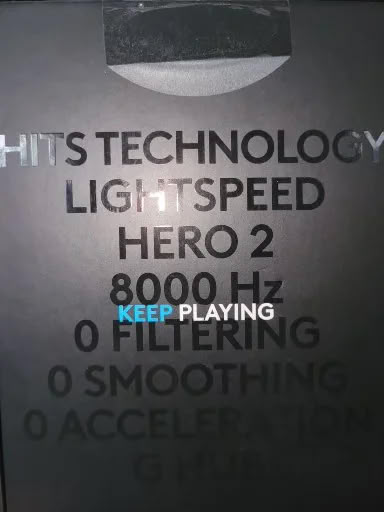
It's no secret by now that Logitech is planning to launch an update to the G Pro X2 Superstrike, even though the peripheral-maker has yet to actually announce or acknowledge the new gaming mouse. However, the mouse's existence and upcoming launch has just be confirmed by Logitech itself, thanks to what appears to be a logistics mix-up. One Reddit user u/Alternative-Cream444, who recently posted in r/MouseReview, received an unreleased Logitech G Pro X3 Superstrike when they had ordered a G Pro X2 Superstrike.

The user posted a number of photos of the new mouse and its packaging, confirming much of what was previously leaked about the X3 Superstrike. For starters, the accidentally shipped unit comes in the leaked pink colorway, and it will feature what appears to be an identical shape to the X2 Superstrike—perhaps with a slightly more pronounced lip on the right sidewall for improved grip. The box also confirms that it will have a slightly updated Hero 2 sensor with 90 G acceleration and up to 48,000 DPI sensitivity. It also appears as though the battery life will be improved, with Logitech citing 135 hours on the X3 Superstrike, compared to just 90 hours on the X2 Superstrike. The box also cites a 59 g weight and dimensions of 125 × 63.5 × 40 mm.

Logitech Preparing Gen-2 Superstrike 2 Gaming Mouse for September Launch

It hasn't been long since Logitech launched the G Pro X2 Superstrike gaming mouse that made waves thanks to its adjustable haptic feedback and actuation distance features, but it already seems as though the peripherals maker is preparing a new iteration of the G Pro X2 Superstrike. According to a recent leak via the Pericord Discord server, shared by @jakeufps on X, Logitech will launch the new mouse at Logitech G Play in September.

It's unknown if there will be any physical changes to the mouse, and obviously, the rumors are unconfirmed, but the supposed leaker says that the mouse will not get a new sensor, at least not a full Hero 3 update, but it will get an upgraded MCU, and tweaks to the HITS haptic feedback and adjustable actuation system. Since Logitech launched the X2 Superstrike, a number of other mouse makers have entered the magnetic mouse switch market, so Logitech will have more competition than last time. At the time of writing, gamers are asking for improved skates and a redesigned shell, mostly to reduce weight and rebalance the weight so that the second-gen Superstrike isn't as front-heavy.

Finalmouse Reveals 38 g Starlight X Wireless Gaming Mouse: TMR Switches, Exclusive Sensor, and Nordic MCU for $179

Finalmouse, maker of the high-performance, somewhat controversial ULX series of gaming mice, has just launched its latest gaming mouse, the Finalmouse Starlight X, after weeks of teasing the new peripheral. The Starlight X is an ultra-light carbon fiber composite gaming mouse, weighing in at 38 g, and it is the first new Finalmouse shape in 11 years. The mouse was designed with FPS gaming in mind, and the brand says that the symmetrical shape has a fuller rear hump with increased support, and reduced pressure points. The Starlight X shell measures 124.8 × 58.9 × 39.5 mm (L × W × H) and has minimal cutouts on the top, likely to balance light weight without compromising comfort and grip. The Finalmouse SLX Nightfall is currently the only colorway on offer, and it will be available for pre-order on the Finalmouse online store for $179 starting on May 30 unless you have an early access code. The headline feature of the Starlight X, however, is the addition of TMR sensing, which enables analogue features, like rapid trigger, adjustable actuation point, and a claimed up to 35 ms latency reduction compared to similar gaming mice.

The new switch tech itself isn't simply a new switch; the SLX uses what it calls the "TMR Dual-State" switch system, which implements TMR sensing with a mechanical click feedback mechanism. According to Finalmouse, this means the new switch mechanism incurs a weight penalty of just 0.24 g, while Logitech's HITS analogue sensing and feedback system on the new G Pro X2 Superstrike adds complexity and has been the scapegoat for the Superstrike's 61 g weight. The drawback of this hybrid switch tech is that the tactile feedback is not adjustable. The SLX is built around a custom Finalmouse F1 sensor, built in collaboration with PixArt, and a Nordic nRF54LM20 MCU, although Finalmouse has deliberately not quoted common specs, instead citing end-to-end latency of 223 µs (0.223 ms). The sensor is likely based on the PAW 3955 sensor, which was previously shown off in the Akko Dash series. Finalmouse has also neglected to specify the Starlight X's polling rate, stating instead that "SLX moves beyond traditional polling-rates entirely," with PerfectPolling that combines subtick optimization, efficient and robust RF scheduling, and high-speed USB interrupts. For what it's worth, USB is generally capped at 8 kHz, and the 232 µs figure cited previously lines up with 8 kHz, which offers theoretical latency of 125 µs.

Mouse Brands Line Up Magnetic Mouse Switches To Compete With Logitech HITS

Logitech's HITS (haptic inductive trigger system), introduced with the G Pro X2 Superstrike gaming mouse in late 2025, made serious waves in enthusiast gaming mouse spaces, but, as is the case with many of Logitech's innovations, the mouse the tech came with was imperfect and commanded a premium price. Now, it seems as though at least two Chinese peripheral makers are lining up to challenge at least some of Logitech's capabilities with their own magnetic switch tech. First, and the one we know the least about, is Keychron, surprisingly enough who is apparently preparing a micro switch called the MagOpt. The MagOpt switch was teased by Keychron on the brand's own YouTube channel, where it showed off a switch design that looks to use a hybrid optical and magnetic sensing mechanism combined with a traditional click leaf. It seems as though Keychron's MagOpt switch will attempt to mimic some of the functionality of the HITS system—like rapid trigger, adjustable actuation, and better longevity—but without a lot of the adjustability enabled by the haptic feedback of Logitech's HITS system.

The other incoming contender is Snaptiq, a product by a Russian streamer (shared by @goonerfps on X), and this system appears to have much more feature parity with Logitech HITS. The sensors in Snaptiq are analogue, like those found in Logitech's implementation, but these use magnets and either Hall effect or TMR sensor in place of Logitech's inductive switches. More importantly, Snaptiq will also mimic the tactile feedback with vibration motors, similar to HITS. How this pans out remains to be seen, but Lunacy claims that it will be able to detect movement as fine as 1 micron (0.001 mm) and that the mouse clicks themselves will be completely silent. Lunatic's Snaptiq is slated to launch by the end of 2026, although it is unlikely to launch in Western markets. However, this and Keychron's implementation may be the start of a wave of Chinese brands adopting similar tech to Logitech HITS.

ASUS Raises Laptop Prices by $100-350 Just One Day After Launch

Yesterday, Qualcomm introduced its Snapdragon X2 Elite series of chips to consumers in partnership with major OEMs like ASUS and HP. On the same day, ASUS released additional laptop models based on Intel and AMD SoCs. However, just a day after some media outlets published their reviews, ASUS increased the prices of its products through its launch partner distributor, Best Buy, significantly affecting some reviewers' conclusions. Reportedly, ASUS raised prices by $100 to $350, depending on the laptop model and configuration, regardless of the platform. This is a substantial change; for example, a $350 increase on a $1,000 model like the Zenbook 14 represents a one-third increase in the device's advertised price. Reviewers, such as those at TechPowerUp, evaluate the model based on its value. If a model is aimed at budget users, the perspective of a budget user is applied, and if a model is aimed at workstation users, a small price increase may not be a dealbreaker. However, in the $1,000 range for a laptop, ASUS is now pushing these laptops into a completely different category.
Below is the price change, broken down by model. On the left is the launch pricing listed by ASUS, and on the right is the new pricing from Best Buy as of today.

ASUS Announces All-New Zenbook Lineup, Now Available in the United States

ASUS today announced the U.S. availability of its latest Zenbook lineup, headlined by the all-new Zenbook A16. Setting a new standard for groundbreaking performance, the Zenbook A16 debuts as the fastest Snapdragon -powered laptop on the market, equipped with the top-of-the-line Snapdragon X2 Elite Extreme processor for unprecedented local AI capabilities. The new Zenbook series—which also features the Zenbook A14, Zenbook S16, and Zenbook S14—is unified by Ceraluminum, an ASUS-exclusive material that combines the refined touch of ceramic and strength of aluminium to offer a unique tactile experience and lasting durability. As fully certified Copilot+ PCs, these devices are built to harness the full potential of local AI, furthering ASUS's commitment to deliver future-ready computing today and beyond.

ASUS Zenbook A16
ASUS Zenbook A16 (UX3607)—featuring the latest Snapdragon X2 Elite Extreme processor, which combines 18 cores and up to 80 TOPS NPU performance to unlock the next era of AI-enhanced computing—bridges the gap between ultra-portability and uncompromised performance. With a remarkable leap in CPU and GPU performance, while also optimized for superior battery efficiency, Zenbook A16 delivers fluid, lag-free performance across every scenario including media editing and rendering as well as productivity tasks. The laptop also features a vibrant 16-inch 3K 120 Hz ASUS Lumina OLED display, six super-liner speakers, and a comprehensive array of full-size I/O ports. Despite its expansive display, the laptop's sleek, all-Ceraluminum 2.65lbs.

Microsoft is Forcing Windows 11 25H2 Update to 24H2 Users

Microsoft is now force-installing the latest version of Windows 11, the 25H2, for users of the older 24H2 version of the operating system. Through what Microsoft calls a "machine learning-based intelligent rollout," the company is automatically updating 24H2 users to Windows 11 25H2 when their devices are ready. This forced update is part of a staged update plan for Windows 11, where Microsoft is gradually updating systems worldwide to phase out the 24H2 version, as support for this operating system will officially end on October 13, 2026. It makes sense to upgrade users to an operating system with a longer support period. However, Windows 11 users might be frustrated with the constant forced upgrades that Microsoft is pushing, which seem to offer little real-world benefit beyond regular security maintenance.

Regarding Windows versions, the situation has been a bit confusing recently. Microsoft has dedicated the 26H1 update exclusively for Windows-on-Arm devices, supporting new silicon, including the Snapdragon X2 Elite and X2 Plus platforms, as well as the potential launch of NVIDIA's N1/N1X laptop SoCs. The latest feature and security updates have been delivered through both the 24H2 and 25H2 versions, which have been the primary focus for x86-based PC systems. However, as support for 24H2 is coming to an end, the focus is gradually shifting to 25H2. There is still time before October of this year, and Microsoft is using AI for a staged rollout. Importantly, users cannot refuse this update. They can only schedule the restart for the update to be applied or postpone it slightly before it is finally installed.

Lenovo Unveils New Business Notebooks and More at MWC 2026

At MWC 2026, Lenovo builds on the momentum from CES and Tech World to highlight its latest portfolio of AI-powered business devices, intelligent form factors, and enterprise-ready platforms, designed to help organizations scale AI with confidence. From modular AI PC concepts and rugged frontline tablets to the trusted ThinkPad portfolio and human-centric AI companions, Lenovo's MWC showcase highlights how innovation, reliability, and repairability come together to support modern work.

The new announcements reflect a continued focus on delivering democratized AI that is productive, adaptable, and protected, addressing the real-world needs of professionals, IT leaders, and enterprises operating across increasingly distributed environments. By combining AI-ready devices with strong repairability, platform choice across leading silicon partners, and enterprise-grade security and services, Lenovo is enabling businesses to adopt AI-powered computing without added complexity.

Logitech G Pro X2 Superstrike Gets Players Banned from Apex Legends for "Cheating"

In a rather unfortunate throwback to the early days of the Hall effect gaming keyboard boom, it seems as though the new Haptic Inductive Trigger System in the Logitech G Pro X2 Superstrike gaming mouse is resulting in players getting permanently banned from Apex Legends for cheating. This is according to a new post on X by Iaroslav Mamalat, who shared a screenshot of an Apex Legends ban report that claims the player used gameplay enhancements.

An email received by the same player reads: "We observed: Gameplay enhancement. This means using unauthorized methods to enhance in-game performance by removing gameplay constraints or improving in-game abilities (e.g. weapon, movement, or item enhancements)." This potentially refers to the use of rapid trigger technology in the Logitech G Pro X2 Superstrike, but there are other reports in the replies to the X post that suggest it may simply have been a false ban, since similar has happened to other players who weren't using the new Logitech gaming mouse. Curiously, EA doesn't actually ordinarily ban rapid trigger keyboards in Apex Legends, but it isn't uncommon for game studios to ban SOCD, especially in competitive FPS games. Some theories online suggest that EA's anti-cheat may be using timing as a way to detect macro inputs, and that rapid trigger on the Superstrike may be resulting in click spamming that exceeds that timing threshold, resulting in a ban.

Update Feb 23rd: It has been confirmed by a Respawn team member in the r/apexlegends subreddit that this was a false ban, although it was seemingly still the result of the Logitech G Pro X2 Superstrike triggering a minimum threshold.

PMM Teases Logitech G Pro X2 Superstrike Custom Mouse Mod With Near 50% Weight Reduction

PMM is a mouse mod maker that provides commercially available custom ultra-light shells for popular gaming mice, like the Razer Viper V3 Pro and the Endgame Gear OP1 8K, often shaving off upwards of 15 g from the stock weight. The latest mouse on the PMM mod radar is the Logitech G Pro X2 Superstrike, which weighs in at a hearty 60 g in stock form. The custom shell designer revealed in a post on X that an ultra-light G Pro X2 Superstrike shell is in development, asking for community feedback on a target weight and design in the process.

Throughout the thread, there are implications that the mouse modder may be able to get the mouse weight as low as 35 g, with PMM going so far as to comment that 39 g may even be possible with a solid shell with no weight-reduction holes. Replies to comments also indicate that a final weight as low as 29 g—over 50% reduction from stock—may be possible, if somewhat challenging, while 33 g would be "ambitious" while also retaining the battery. PMM also suggests that a mod kit with a different battery position could solve the forward weight bias that some users have complained about. It will likely be a while before PMM actually launches a mod kit for the Superstrike, since the design process involves 3D scanning an existing mouse and then optimizing the design from there.

Windows 11 26H1 Limited to New Arm-based Processors, Other PCs Remain on 25H2

Microsoft's Windows 11 26H1 update, initially expected to offer only new silicon support without a host of new features, is now dedicated exclusively to new and upcoming Arm-based processors like the Snapdragon X2 Elite/Plus. This marks a significant shift in Windows 11's development path—a first divergence in Windows deployment in the recent timeline, and a first for Windows 11. As a result, regular PC users with x86-64 and older Arm-based platforms will continue to use the Windows 11 25H2 as a feature update. According to the latest Windows IT Pro Blog, "Windows 11, version 26H1 is not a feature update for version 25H2," indicating that a different version will serve as the next feature update for Windows 11, rather than the anticipated 26H1.

Microsoft is concentrating on providing full support for the new Windows-on-Arm platforms, some of which are already available. These platforms include Qualcomm's Snapdragon X2 Elite processors and NVIDIA's N1 and N1x SoCs. This new hardware requires optimization from Microsoft to ensure the best experience on Windows 11, so the company is dedicating most of its efforts for the 26H1 update to this task. Since new silicon requires fine-tuning, such as specific power profiles and hardware optimizations to extract maximum performance, Microsoft is separating Windows 11 into another branch to make sure that servicing and updates are easier, and also that shipping customized power/performance settings doesn't end up corrupting the build for non-Arm CPUs.

NVIDIA N1 and N1X Laptop Chips Scheduled for This Quarter

NVIDIA's long-awaited N1 and N1X laptop chips are set to arrive in the first quarter of this year, according to sources close to DigiTimes. The new roadmap indicates that NVIDIA's latest Windows-on-Arm platform will debut with the N1X chips this quarter, while the regular N1 chips are expected in the second quarter of 2026. After years of speculation, this release could finally position NVIDIA to compete with other Windows-on-Arm platforms like Qualcomm's Snapdragon X2 Elite and X2 Plus. The N1X and N1 processors were initially expected to debut around CES 2026.

NVIDIA reportedly used its GB10 Superchip—the design powering the DGX Spark—as the blueprint for the N1/N1X. The CPU features 20 Arm v9.2 cores, divided into two clusters of ten, each supported by 16 MB of shared L3 cache (32 MB total), with each core having private L2 storage. The memory subsystem uses a unified LPDDR5X-9400 fabric on a 256-bit bus, supporting up to 128 GB and delivering approximately 301 GB/s of raw bandwidth, although it's unclear if such capacity will be available in consumer laptops. The package is rated at around 140 W TDP and includes PCIe 5.0 for high-speed NVMe SSD connections. For the GPU, N1X variant is rumored to include 6,144 CUDA cores.

ASUS ZenBook A16 Launches at CES As Ultra-Portable Snapdragon X2 Elite Extreme Laptop with 21-Hour Battery

ASUS has had a strong presence at CES 2026, presenting updated gaming and creator laptops, including an AMD Ryzen AI Max+ 395-powered convertible laptop and a new ZenBook Duo with dual 14-inch OLED displays. As it happens, that Intel Panther Lake ZenBook has a Snapdragon-powered sibling as well. The new ASUS ZenBook A16 is a 16-inch Windows-on-Arm PC intended to be used as an everyday general productivity and media consumption laptop. ASUS's goal with the A16 was to design the "best commuter laptop," and balance portability, versatility, and efficiency. The end result is a 1.2 kg laptop that measures just 16.5 mm thick but still boasts 21 hours of battery life from a 70 Wh battery.

The ZenBook A16 will be available with both the Qualcomm Snapdragon X2 Elite Extreme X2E-92-100 and the X2 Elite Extreme X2E-94-100, both versions with 48 GB of LPDDR5x memory and up to 2 TB of PCIe 4x4 storage. The CPU in the ZenBook A16 aside, there are also a number of interesting features that make the new Arm-powered laptop stand out. For starters, the 3K (2880 x 1800) OLED touch display—there is also an otherwise identical non-touch version—reaches 1100 nits peak brightness and features a 120 Hz refresh rate. The ZenBook A16 is light on ports, though, likely owing to its thin Ceraluminum chassis—which ASUS says is 30% lighter and 3x more durable than regular aluminium. The ZenBook A16 has dual USB4 ports, a single USB 3.2 Gen 2 Type-A port, an HDMI 2.1 port, and a 3.5 mm combo audio jack. The A16's included chiclet keyboard has 1.3 mm of total travel, and the included trackpad has been stretched to the vertical limit, which has become a trend in modern laptops.

Tuxedo Gives Up on Snapdragon X Elite-Powered Linux Laptop

Tuxedo Computers, the brand known for making high-performance Linux laptops powered by its own TuxedoOS, has officially announced that it has stopped work on a planned Qualcomm Snapdragon X1 Elite laptop, citing development difficulties as the reason for stopping the project. Some of the issues Tuxedo ran into were caused by incompatibility and a lack of driver support, while others were seemingly just platform limitations and a lack of platform maturity. One of the main complications Tuxedo cites is a lack of support for BIOS updates under Linux, but this lack of support also extends to virtualization, fan control, and high-speed USB4 ports, at least given the prospective launch timeline. Tuxedo also explains that the long battery life—the main draw of Arm-powered laptops—simply wasn't panning out on Linux.

Supposedly, Tuxedo would require "several more months" of development to be able to deliver a retail unit, which would mean anyone buying the Snapdragon Tuxedo laptop would immediately have very outdated hardware. Instead, Tuxedo has left the door open to being able to resume development on the system if and when it makes sense to do so. Tuxedo has, in the meantime, committed to contributing the device tree and any progress it has made during the unrealized laptop's development to the mainline Linux kernel so that the community can benefit from the work the company did manage to complete. There's also a non-zero chance that the development will be picked up by enterprising community members, eventually resulting in the maturation of Snapdragon support on Linux.

Qualcomm Says 90% of Games Run on Snapdragon X2 Elite, Outperforming Intel and AMD

Qualcomm is ready to push its Snapdragon X2 Elite and Elite Extreme SoCs into a sector that was previously dominated by x86 SoC makers, and that is gaming. The company now claims that its SoC can run more than 90% of the most played games available on the market on the initial launch. However, this is not the only striking claim, as Qualcomm has benchmarks that prove that its Adreno X2 iGPU is 50% faster than the iGPU inside Intel Core Ultra 9 288V "Lunar Lake" and 29% faster than the iGPU on AMD Ryzen AI 9 HX 370 "Strix Point," under the same graphics settings. This is of course, no small win, and Qualcomm expects to win hearts of gamers with its next-generation platform.

The new chip delivers frame rates up to 2.3x higher than its predecessor while supporting many popular Windows games. Its architecture uses four processing blocks that give the flagship X2 Elite Extreme an edge over competing integrated graphics. Each block efficiently processes graphics work before passing it to shader processors organized around two micro-units. These units each contain 128 KB of memory feeding 128 ALUs. The design supports multiple precision formats, employs a more efficient execution model, and can process two instructions at once to maximize its 128-ALU groups. In total, the GPU has eight shader processors and 2,048 ALUs running at up to 1.85 GHz, backed by 21 MB of on-chip memory, 2 MB of cache, and 228 GB/s of memory bandwidth on the flagship model.

Snapdragon X2 Elite Extreme Benchmarks Highlight Impressive CPU Performance but Underwhelming GPU

Qualcomm recently unveiled the Snapdragon X2 Elite Extreme SoC as its latest foray into the world of Windows on Arm hardware. It claimed that the new processor would deliver up to 75% higher CPU performance and a 2.3 × improvement in performance per watt. Now, following the post-launch hype, independent benchmarks are starting to appear and show what Qualcomm didn't on-stage. The most recent set of benchmarks comes from ComputerBase, the German-language outlet known for its in-depth hardware testing, and it shows that Qualcomm's claims of CPU performance were surprisingly impressive. Although it also becomes clear why Qualcomm stuck to performance per watt instead of focusing too much on raw GPU performance.

According to the ComputerBase review, the Qualcomm Snapdragon X2 Elite Extreme was able to outperform Apple's best and brightest, the Apple M4 Pro, in both Cinebench 2024 and Geekbench 6.3 multicore benchmarks, scoring 1,964 and 23,693 points, respectively. Results are a little less consistent when it comes to single-core scores, with the Apple M4 Pro pulling ahead of the Snapdragon SoC by 7% in the Cinebench 2024 single-core test but falling behind the X2 Elite Extreme by 7% in Geekbench 6.5. NPU performance was also impressive, with the X2 Elite Extreme's 80 TOP NPU coming out undefeated, at 128% faster than the Intel Core Ultra 9 288V in the ASUS Zenbook S 14. Unfortunately, that seems to be where the good news for Qualcomm ends—mostly. When it comes to GPU tests, the Snapdragon X2 Elite Extreme remains well behind the Apple M4 Pro in both the 3DMark Steel Nomad Light Unlimited and 3DMark Solar Bay Unlimited tests, scoring 5,687 points and 22,946 points, respectively. While that puts the new Arm silicon a solid 37-40% ahead of the nearest competing iGPU, the Apple M4 10-Core, it is still 37-46% behind the Apple M4 Pro in GPU benchmarks. It remains to be seen how this translates to real-world gaming performance and actual CPU workloads, given the translation layer that Arm SoCs currently still rely on for many non-native Windows apps and games, but it's an impressive showing nonetheless.

Qualcomm Reveals the Snapdragon X2 Elite Extreme and Snapdragon X2 Elite

Qualcomm Technologies, Inc. today announced Snapdragon X2 Elite Extreme and Snapdragon X2 Elite, the next-generation premium-tier platforms within the Snapdragon X Series portfolio. With superior performance, multi-day battery life and groundbreaking AI, these new processors are the fastest, most powerful and efficient processors for Windows PCs.

Ultra-premium performance for the pros
Snapdragon X2 Elite Extreme is built for ultra-premium PCs, tackling agentic AI experiences, computationally intense data analytics, professional media editing and scientific research. Ultimate power users, experienced creators and professional producers can carry out their complex, expert-level workloads on thin and light PCs while plugged in or on the go.

Qualcomm's Upcoming Snapdragon X2 Elite PC to Get a 22% Performance Boost

Qualcomm aims to boost the performance of its Windows-on-Arm PC chips by about 18-22% percent with the next-generation Snapdragon X2 processors. That estimate comes from Focused Digital, a well-known Chinese blogger often leaks supply-chain details. He says these new Snapdragon X2 chips will hit boost clocks of around 4.40 GHz, which is up from the 4.0 to 4.30 GHz range we see on today's Snapdragon X Elite models. Currently, those Elite chips use Oryon cores built on the TSMC 4 nm-class N4P process. They run between 3.0 and 3.80 GHz at base and can turbo up to 4.30 GHz. So, simply cranking the top speed up another 100 MHz could explain a chunk of that performance jump. Beyond clocks, Qualcomm is probably squeezing more efficiency out of its Oryon V3 microarchitecture too, though we don't have details yet.

We also don't know exactly which process node Qualcomm will pick. They could stick with a refined 4 nm variant or switch to 3 nm later on. Either way, a roughly 20 percent improvement aligns with what you'd expect from a new generation of chips due in 2025. Another rumor floating around is that the X2 Elite series will jump from 12 to 18 cores, giving the processors more parallel horsepower. Internal test rigs reportedly pair these chips with up to 48 GB of LPDDR5X RAM and 1 TB of NVMe storage. Qualcomm rolled out its first Snapdragon X Elite processors in mid-2024 and began testing the SC8480XP prototype in September 2024. If these performance figures hold up, the new Snapdragon X2 lineup could close the gap on x86 competitors and set Qualcomm up nicely for competing in stronger with a push in the PC segment by 2026.

TOZO Shows Golden X2 Pro HiFi Wireless Earbuds at CES 2025

Audio manufacturer TOZO revealed its new Golden X2 Pro wireless earbuds at CES today, featuring dual digital-to-analog converters (DACs) and expanded smart features. These new earbuds are TOZO's push into the premium audio segment. The X2 Pro uses a hybrid driver system, pairing a 12 mm dynamic driver with a Knowles balanced armature. New earbuds support LDAC codec and Hi-Res Wireless Audio certification, with a frequency response ranging from 12 Hz to 44.1 kHz. The active noise cancellation system employs six microphones to reduce environmental noise by up to 50 decibels, while automatically adjusting to surrounding conditions. For spatial audio, the earbuds incorporate gyroscopic sensors to enable head tracking.

A notable hardware addition is the 1.47-inch color display built into the charging case, which shows battery status and allows users to adjust settings without using their phone. The earbuds also include a feature called Vocal Vibration Detection that automatically adjusts audio when the user starts speaking. On the software side, TOZO has added several AI-powered features through its companion app, including language translation, voice transcription, and meeting note generation. The implementation of these features and their effectiveness in real-world use remains to be tested.

Qualcomm Snapdragon X2 Surfaces in Testing, Codenamed "Project Glymur"

Qualcomm debuted its Snapdragon X Elite/Plus series of laptop processors a few months ago, and the company is already testing the next-generation Snapdragon X2 series. Interestingly, the new "SC8480XP" SoC is carrying a codename "project Glymur." Up until now, Qualcomm has exclusively used codenames of places in Hawaii. However, with the Snapdragon X2 series, it shifts to Iceland, with the highest waterfall name being used for this next-generation processor. While we have almost zero clue about core counts and clocks, we know that the CPU cores will be an iteration of Nuvia's Oryon design, likely being pre-designed before the acquisition of the Nuvia design team.

According to Winfuture, Qualcomm started testing the next-generation SC8480XP SoC in July and August, testing various RAM and storage configurations. The company will likely evaluate the best configurations for the upcoming platform, tune the RAM speed with the SoC, and decide on guidelines for storage configurations. We are still waiting to see meaningful hints about the next-generation platform, and we are especially curious about the clocks and core counts that Qualcomm is preparing.
Return to Keyword Browsing
Nov 11th, 2026 07:09 CST change timezone

New Forum Posts

Popular Reviews

TPU on YouTube

Controversial News Posts