Tuesday, December 9th 2025

Philips and AOC Release First 1000 Hz Dual-Mode Gaming Monitors
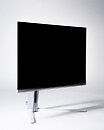
Philips and AOC introduced the first gaming monitors capable of supporting 500 Hz at 1440p and 1000 Hz at 720p. The Philips Evnia 27M2N5500XD and AOC AGON Pro AGP277QK monitors were showcased in China on December 6 and both seem to be built around the same 27-inch panel. Both models are QHD 500 Hz displays that can toggle to a lower-resolution 720p mode that will double the refresh rate to 1000 Hz. DisplaySpecifications reports a 2000:1 static contrast ratio, VESA DisplayHDR 400 certification, 1 ms GtG response time, and wide-gamut coverage. While the panel type hasn't been confirmed, the listed contrast rules out TN and makes high-contrast IPS or VA variants the most likely candidate.
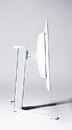
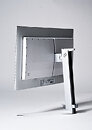
The Evnia 27M2N5500XD previously appeared at the WePlay Culture Expo in Shanghai, where Philips highlighted its AI-based light-sync system and ComfortView 4.0 eye-health features. The retail version includes Philips' Smart ErgoBase for full adjustability; the AOC AGP277QK is expected to ship with a similar 4-way stand. As these remain LCD panels, the 1000 Hz mode is subject to typical LCD limitations, including not-perfect response times. This could result in some image quality issues, however, this marks the first commercial implementation of 1000 Hz on a desktop monitor. Philips and AOC have not announced pricing or global availability. Most likely, the two monitors will be showcased in a few weeks at CES 2026, where more details will be shared.

Source:
DisplaySpecifications
The Evnia 27M2N5500XD previously appeared at the WePlay Culture Expo in Shanghai, where Philips highlighted its AI-based light-sync system and ComfortView 4.0 eye-health features. The retail version includes Philips' Smart ErgoBase for full adjustability; the AOC AGP277QK is expected to ship with a similar 4-way stand. As these remain LCD panels, the 1000 Hz mode is subject to typical LCD limitations, including not-perfect response times. This could result in some image quality issues, however, this marks the first commercial implementation of 1000 Hz on a desktop monitor. Philips and AOC have not announced pricing or global availability. Most likely, the two monitors will be showcased in a few weeks at CES 2026, where more details will be shared.


9 Comments on Philips and AOC Release First 1000 Hz Dual-Mode Gaming Monitors
This is similar to "defragmentation" I saw on recent Xiaomi smartphones. Truly magnificent tech.
There are some blind study variables that showed 120 vs 480 OLED was more human visible to the main stream than 60 vs 120 LCD.
(The blind study assumes full screen 2D scrolling while eyetracking, with framerate=Hz and motionspeed was 2000 pixels/sec (motionspeeds multiples faster than the maxHz, to allow multiple pixel step = motion blurs and stroboscopics)