Monday, December 22nd 2025
PC Prices Expected to Jump by up to 8% in 2026, Notes Report
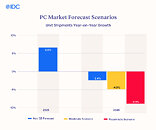
According to the analyst firm IDC, PC prices are projected to rise by up to 8% overall in 2026, due to a significant storage and memory shortage currently impacting the supply chain. IDC's moderate projection suggests that average selling prices for PCs could increase by approximately 4% to 6%, while a more severe shortage could drive the increase up to 8%. Several major vendors, including Dell, Lenovo, HP, Acer, and ASUS, have already warned customers about contract resets and overall list-price increases ranging from 15% to 20% for systems shipping in the second half of 2026.
The overall situation remains grim despite significant shifts in industry trends. For instance, Dell, one of the largest PC manufacturers, reports that Windows 10 to Windows 11 transition has been slower than expected. During a recent Q3 earnings call, COO Jeffrey Clarke noted, "We have not completed the Windows 11 transition. In fact, if you were to look at it relative to the previous OS end of support, we are 10-12 points behind where we were with the previous generation." This suggests that PC industry sales have been relatively stagnant, with clients not updating their PCs as much as anticipated.
 Another significant trend in the PC industry is the rise of AI PCs, which is losing momentum due to DRAM and NAND shortages. These shortages are affecting vendors' ability to offer high-memory, high-storage capacity systems at competitive prices. Manufacturers and channel partners are cautious about maintaining large inventories of premium AI systems, with some even offering models with reduced memory to protect their margins. This approach weakens the value proposition for buyers seeking genuine on-device AI performance. While enterprise demand remains the most reliable driver, corporate refresh programs are limited by budgetary and supply constraints, keeping consumer adoption low. As a result, the transition to widespread AI PCs is progressing unevenly, and the hardware ecosystem risks falling behind the software platforms and marketing claims that promote the concept.
Sources:
IDC, via Tom's Hardware
The overall situation remains grim despite significant shifts in industry trends. For instance, Dell, one of the largest PC manufacturers, reports that Windows 10 to Windows 11 transition has been slower than expected. During a recent Q3 earnings call, COO Jeffrey Clarke noted, "We have not completed the Windows 11 transition. In fact, if you were to look at it relative to the previous OS end of support, we are 10-12 points behind where we were with the previous generation." This suggests that PC industry sales have been relatively stagnant, with clients not updating their PCs as much as anticipated.


19 Comments on PC Prices Expected to Jump by up to 8% in 2026, Notes Report
When memory prices increase several hundred percent, storage prices double (and that's just the situation now, not "in 2026"), sales numbers of all other PC items start to fall - CPUs, GPUs, motherboards, PSUs, cases... And to maintain the revenue, everyone will increase prices to try to regain some of the cash flow.
You can save these articles and show them in a couple of months, when prices of everything will at least double.
But the old pc's that are now on shelves in bigbox stores will be mostly the same.
I'm not loving windows 11, but it's not getting in my way and has been behaving pretty well
It is, what it is. No amount of BS marketing will change that.
There's not a lot of evidence that all part manufacturers will increase prices to regain cash flow. The multiple crypto GPU shortages and the 2011 Thailand flood that shot HDD costs up 175%+ are evidence of this. In neither scenario did pricing of other unrelated parts shoot up, probably because customers would not have tolerated it. Hence why analysis predict an 8% increase in the cost of PCs: www.tomshardware.com/tech-industry/idc-expects-average-pc-prices-to-jump-by-up-to-8-percent-in-2026-due-to-crushing-memory-shortages-some-vendors-already-selling-pre-builts-without-ram
All parts doubling in price simply isn't viable. People wouldn't buy PC parts period outside of extreme enthusiasts. Many parts are already very expensive to the point where doubling just the cost of memory causes sales to plummet, let alone everything.The increase at the end of the year is likely to be greater than 8% but due to supply contracts, prices increases for whole systems is likely to maintain reasonable levels until more of those contracts start expiring. Sort of related, SONY is said to have enough memory for the whole of 2026.
It also depends on if the demand we see now is just panic buying or more long term.
I will sign that 8% right now!
More like 80% with all the AI shenanigans going over.
Even my lowest-end SBC for mundane tasks comes with 8 GB of RAM.They can't because they're Microsoft's actual customers and they wanted the system requirements for Windows 11 to be elevated, so they could sell more new computers. They are also utterly dependent on Microsoft to provide them with an operating system, so they have nowhere else to go.
The only thing that went wrong here is that the price of RAM and NAND went up by so much that it's harming their sales of new computers.
It's more a case of damned if you do, damned if you don't. And in the end it's the end customer who suffers.
Thing is, that's almost universally wrong once you go out more than 6-12 months. And there are 1000 ways for it to go wrong. China could drop a bomb on Taiwan, Japan could have an earthquake, maybe investors decide AI is a sham and pull the plug giving us a glut of memory and storage, or perhaps one of these new cloud data centers opens to virtually no customers prompting mass contract cancellations. They just don't know what's going to happen.
And yeah, 8% increase after a whole year? We'd call that normal inflation.
:p
www.techpowerup.com/343363/nvidia-may-stop-bundling-memory-with-gpu-kits-amid-gddr-shortage