Friday, September 25th 2026
GL.iNet Launches Mango 2 (GL-MG1300) Dual-band Mini Travel Router
GL.iNet, a global provider of secure and customizable networking solutions, today introduced Mango 2 (GL-MG1300), a dual-band mini travel router designed to simplify connectivity on the go. With its slim design, straightforward setup, VPN support, and multi-device connectivity, Mango 2 is designed for travelers with everyday connectivity needs, those seeking a more portable alternative to existing travel routers, and first-time users looking for an easy introduction to travel routers.
The Mango series provides an accessible entry point to GL.iNet's secure networking experience. Mango 2 creates one manageable travel Wi-Fi network, allowing users to maintain familiar network and VPN settings throughout their trip.
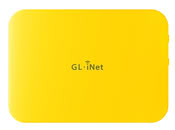

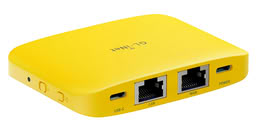 Slim Design with USB-C Power
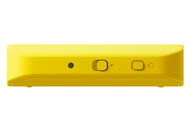
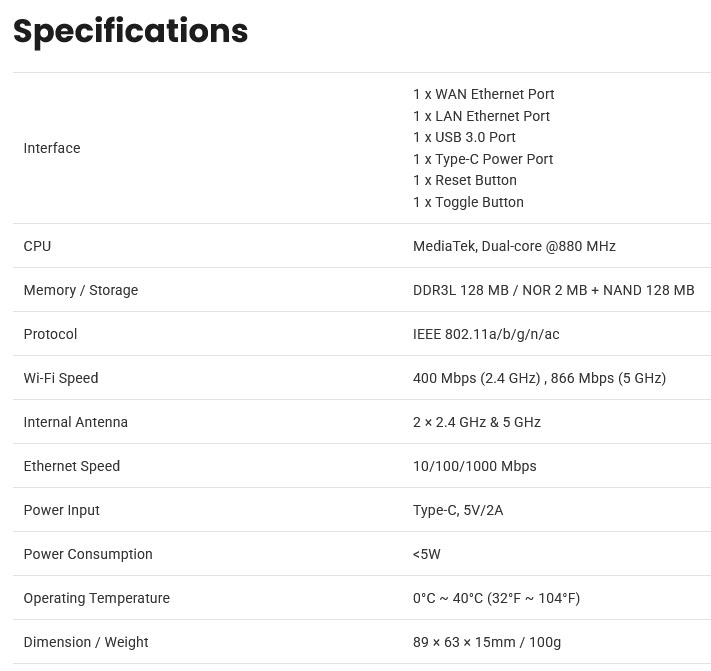
Measuring 89 × 63 × 15 mm and weighing 100 g, Mango 2 fits easily into a travel organizer, everyday carry pouch, or backpack compartment. Its bright yellow design also makes it easy to spot in a bag or on a hotel desk. With USB-C power and a low-power design, Mango 2 can be powered using a compatible USB-C charger or power bank, reducing the need to carry an additional dedicated power adapter.
Four Ways to Get Online with Automatic Failover
Mango 2 supports four internet connection methods: Wi-Fi repeater, Ethernet, USB tethering, and a compatible USB cellular modem. Captive portal support helps users complete the sign-in process on compatible hotel and public Wi-Fi networks.
If the primary connection becomes unavailable, automatic failover can switch to a previously configured backup connection, helping reduce interruptions as network conditions change.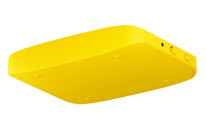
 VPN Privacy on Public Networks
Users can configure a compatible VPN once on Mango 2 and share the connection across phones, laptops, tablets, and other connected devices without installing a separate VPN app on each one. This can also extend VPN connectivity to supported streaming devices, game consoles, and other devices that cannot run VPN apps.
VPN policies allow users to choose which connected devices or websites use the VPN and which connect directly to the internet. Mango 2 supports WireGuard and OpenVPN client and server functionality and is compatible with more than 30 VPN service providers. It is also Tailscale-ready, enabling secure remote access between authorized devices.
One Travel Wi-Fi Network for Multiple Devices
Mango 2 creates one travel Wi-Fi network for phones, laptops, tablets, streaming devices, and other compatible devices. Once connected, these devices can continue using the same Wi-Fi credentials and network settings while Mango 2 connects to the available internet source.
This makes it easier to bring multiple devices online when checking into a hotel, connecting to public Wi-Fi at a café or airport, or setting up a temporary workspace.
Availability
Mango 2 became publicly available for pre-order on September 22, 2026, through the official GL.iNet online store at a pre-order price of $39.90 USD, with a regular retail price of $49.90 USD.
Source:
GL.iNet (product page)
The Mango series provides an accessible entry point to GL.iNet's secure networking experience. Mango 2 creates one manageable travel Wi-Fi network, allowing users to maintain familiar network and VPN settings throughout their trip.


Measuring 89 × 63 × 15 mm and weighing 100 g, Mango 2 fits easily into a travel organizer, everyday carry pouch, or backpack compartment. Its bright yellow design also makes it easy to spot in a bag or on a hotel desk. With USB-C power and a low-power design, Mango 2 can be powered using a compatible USB-C charger or power bank, reducing the need to carry an additional dedicated power adapter.
Four Ways to Get Online with Automatic Failover
Mango 2 supports four internet connection methods: Wi-Fi repeater, Ethernet, USB tethering, and a compatible USB cellular modem. Captive portal support helps users complete the sign-in process on compatible hotel and public Wi-Fi networks.
If the primary connection becomes unavailable, automatic failover can switch to a previously configured backup connection, helping reduce interruptions as network conditions change.


Users can configure a compatible VPN once on Mango 2 and share the connection across phones, laptops, tablets, and other connected devices without installing a separate VPN app on each one. This can also extend VPN connectivity to supported streaming devices, game consoles, and other devices that cannot run VPN apps.
VPN policies allow users to choose which connected devices or websites use the VPN and which connect directly to the internet. Mango 2 supports WireGuard and OpenVPN client and server functionality and is compatible with more than 30 VPN service providers. It is also Tailscale-ready, enabling secure remote access between authorized devices.
One Travel Wi-Fi Network for Multiple Devices
Mango 2 creates one travel Wi-Fi network for phones, laptops, tablets, streaming devices, and other compatible devices. Once connected, these devices can continue using the same Wi-Fi credentials and network settings while Mango 2 connects to the available internet source.
This makes it easier to bring multiple devices online when checking into a hotel, connecting to public Wi-Fi at a café or airport, or setting up a temporary workspace.
Availability
Mango 2 became publicly available for pre-order on September 22, 2026, through the official GL.iNet online store at a pre-order price of $39.90 USD, with a regular retail price of $49.90 USD.
5 Comments on GL.iNet Launches Mango 2 (GL-MG1300) Dual-band Mini Travel Router
I mean, it was an ok MIPS based chip, but I doubt it's still supported software wise by MTK, but it still seems to be a current product. Latest kernel supported by MTK appears to be 3.10...
www.mediatek.com/products/home-networking/mt7621
GL.iNet utilizes OpenWRT heavily. The first Mango is based on it and the manufacturer provides a clean firmware image so that you can switch to upstream OpenWRT if you wish.
I wish more manufacturers provided such an option for when the device support period ends.
I have a GL-MT2500 and it's on an even older version and seems to be EOL as far as support goes and it's not even a two year old product.
Moving to OpenWRT gives you a different UI/UX that isn't nearly as user friendly and lacks some of the GL.inet specific features, so that's not really an option for everyone.