Thursday, November 5th 2026

AMD "Medusa Point" With 10-Core, 20-Thread CPU Configuration Surfaces
AMD's "Medusa Point" APU has surfaced on Geekbench, showcasing a 10-core, 20-thread configuration divided into two clusters: four "Zen 6" cores and six "Zen 6c" cores. This suggests that AMD will continue its hybrid approach with two different core types. Each core is equipped with 32 KB of L1 instruction cache, 48 KB of L1 data cache, and 1 MB of L2 cache, while all cores share a single 16 MB L3 cache. The sample shows a base frequency of 2.0 GHz, and Geekbench lists the maximum frequency at just 1996 MHz, which is likely a misreading of early silicon rather than its actual boost clock. The instruction set confirms full AVX-512 support, including the AVX512-FP16 and AVX512-VNNI extensions, along with AVX-VNNI. The test system was paired with 64 GB (only 55.58 GB usable) of quad-channel DDR5 memory running at 5,188 MT/s.
"Medusa Point" is rumored to introduce a desktop-exclusive "RDNA 4" into mobile segment with the new "RDNA 4m" variant. Although we initially lack direct comparisons between the two, some instruction set extensions, such as WMMA and SWMMAC instructions, suggest support in the new "GFX1170" GPU, which is expected to be part of the GFX11 generation, also known as "RDNA 3." Currently, this is believed to be an upgraded "RDNA 3" with many RDNA 4 modules, enabling FSR 4 support even on the less powerful "Medusa Point" APU.
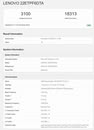 In terms of performance, the "Medusa Point" sample scored 3,100 points in the single-core test and 18,313 points in the multicore test. Compared to the 16-core Ryzen AI Max+ 395, which averages roughly 2,742 single-core and 27,412 multicore points according to Primate Labs' preliminary data, the 10-core "Medusa Point" leads by about 13% in single-core performance, while trailing in multicore as expected given its lower core count. Since this is an early engineering sample with seemingly locked or misreported clocks, final retail silicon should deliver higher performance once AMD finalizes frequencies and firmware.
Sources:
GeekBench v7, via HXL
"Medusa Point" is rumored to introduce a desktop-exclusive "RDNA 4" into mobile segment with the new "RDNA 4m" variant. Although we initially lack direct comparisons between the two, some instruction set extensions, such as WMMA and SWMMAC instructions, suggest support in the new "GFX1170" GPU, which is expected to be part of the GFX11 generation, also known as "RDNA 3." Currently, this is believed to be an upgraded "RDNA 3" with many RDNA 4 modules, enabling FSR 4 support even on the less powerful "Medusa Point" APU.


7 Comments on AMD "Medusa Point" With 10-Core, 20-Thread CPU Configuration Surfaces