News Posts matching #2 GB

Return to Keyword Browsing

NVIDIA GeForce RTX 5080 24 GB Reportedly Cancelled, 16 GB Model Remains

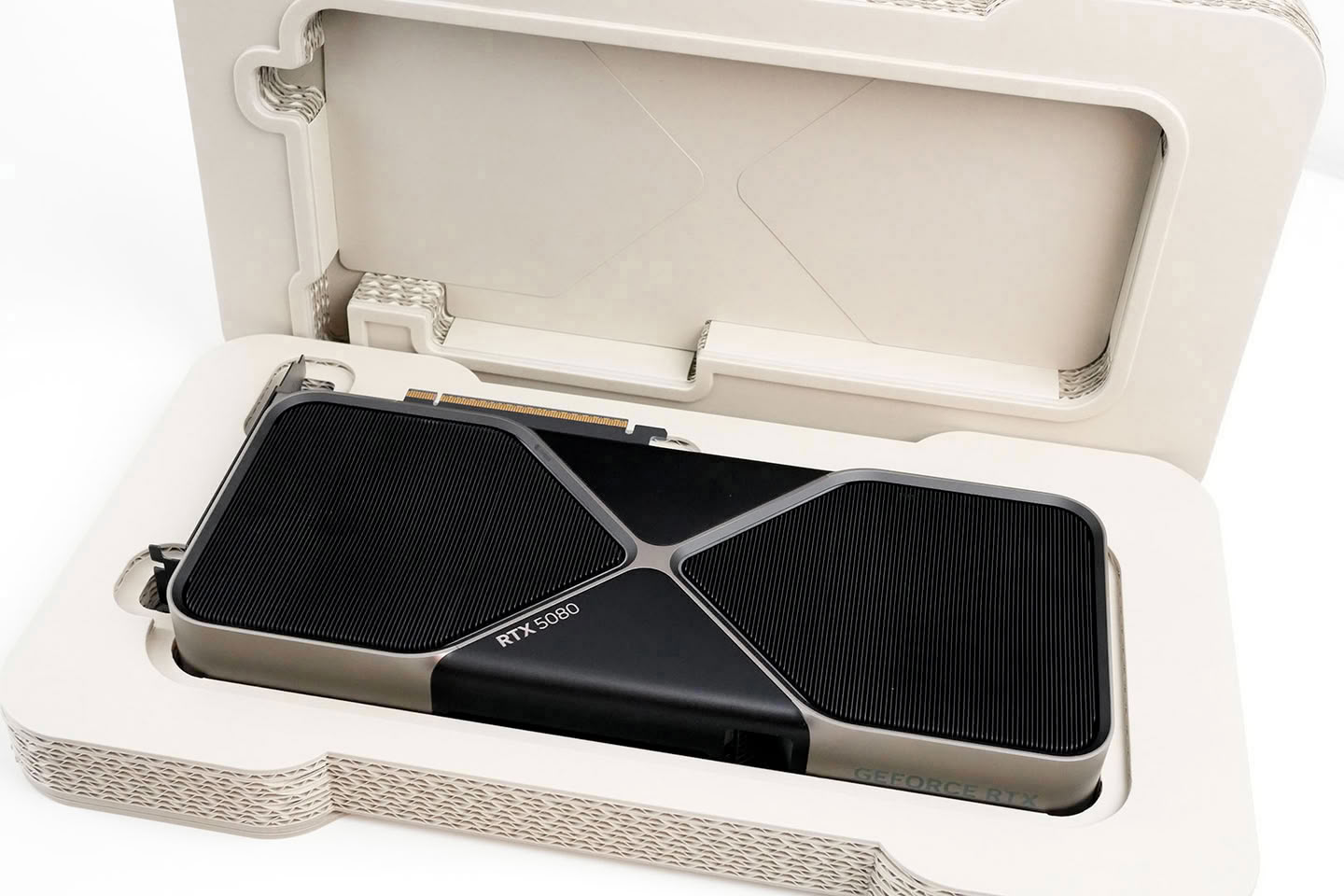
NVIDIA's rumored GeForce RTX 5080 24 GB model has reportedly been put on hold. The company is struggling to secure enough 3 GB GDDR7 memory modules and is instead opting for the less expensive 2 GB modules for the standard 16 GB version. According to a report from Board Channels, NVIDIA has already informed its add-in card (AIC) partners to officially cancel the January 2027 launch plan for the 24 GB model, citing economic challenges. As we are currently experiencing one of the worst supply chain shortages for memory modules, using the more expensive 3 GB GDDR7 modules would result in a significantly higher MSRP and, consequently, a higher price for customers. Therefore, the 2 GB GDDR7 memory modules will continue to be used, and the RTX 5080 16 GB model will remain available.

Readers may recall that NVIDIA did not plan any other changes to the model besides the memory configuration, as the CUDA core count was to remain the same. The new 24 GB model would potentially have slightly higher TDP and clock speeds, but the main improvements would come from increased memory capacity and bandwidth. Since it seems we won't be getting the revised model, and there's no rumor of a "SUPER" overhaul anytime soon, we will have to stick with the standard lineup a bit longer until the next-generation GeForce RTX 60-Series "Rubin" arrives.
Modded RTX 2080 Ti 22 GB Shows What Extra VRAM Can Still Do for Turing

PC Games Hardware has put a modded GeForce RTX 2080 Ti 22 GB through their test gauntlet, and the extra memory seemingly pays off once games run out of headroom. At 4K with DLSS Performance and FSR 3.1 Frame Generation, the card averaged 52.5 FPS in Flight Simulator 2024 against 30.2 FPS on a regular 11 GB model, roughly 74% faster. Spider-Man 2 jumped from 39.4 to 64.0 FPS, and Indiana Jones and the Great Circle crashed to the desktop on the 11 GB card. At 1440p with DLSS Quality, the gap was smaller, though those first two games still ran about 20% slower on 11 GB. Of course, PCGH chose nine memory-hungry games on purpose, and most titles run fine on 11 GB. Keep in mind that these are just one outlet's numbers, and other results may vary.

These cards have shown up everywhere from Alibaba to eBay listings at $499, and this one came from a reader. All eleven memory chips are swapped for 2 GB Samsung parts. No firmware changes are needed, since relocating a single strap resistor tells the GPU about the extra capacity, and NVIDIA's regular drivers pick it up. Its weak blower-style cooler and 250 W limit held it back, so PCGH tuned both cards to identical 1.9 GHz, 15 GT/s, and 280 W settings. At around €500, the 22 GB card costs quite a bit less than a 16 GB RTX 5060 Ti, which goes for €770 in Germany. PCGH still calls it a gamble, citing eight-year-old hardware and soldering work that can fail weeks later, and advises checking the seller's reputation and whether any warranty goes beyond a 30-day return window.

Lenovo Legion Go 2 Price Hike Puts Ryzen Z2 Extreme Handheld Price Over $3,000

The second-generation Lenovo Legion Go handheld devices have already received a substantial price increase after their initial launch, with the entry-level Legion Go S jumping from $899.99 and $649.99 to $1,579.99 and $989.99, for the Z1 Extreme and Z2 Go models, respectively. This was after Lenovo already increased the price on the AMD Ryzen Z2 Extreme-powered Legion Go 2 from $1,349.99 to $1,999.99. Now, the same Legion Go 2 with 32 GB of RAM and 2 TB of storage that previously jumped to $2,849 can now be found on the Lenovo US online store for $3,081.99.

This is a $233 price jump that corresponds to around 8% of the total previous price, although the Legion Go 2 with 1 TB of storage can still be found at Best Buy for $1,999.99. The latest price increase for the Legion Go 2 comes as the gaming handheld continues to be out of stock at Lenovo, despite partner stores, like Best Buy, having stock of the handhelds. Lenovo hasn't yet announced the price hike for the Legion Go, but it seems reasonable to assume the price increase is linked to the ongoing RAMpocalypse that has repeatedly affected pricing across various PC hardware segments—but most severely RAM and DRAM.

Raspberry Pi Raises Prices of 2 GB Raspberry Pi 4 and Pi 5

Raspberry Pi CEO Eben Upton has announced today in a blog post a $12.50 price increase for the 2 GB variants of both the Raspberry Pi 4 and Raspberry Pi 5. Starting today, the 2 GB Pi 4 costs $67.50, and the 2 GB Pi 5 hits $77.50. Back in April, Raspberry Pi was able to keep the 1 GB and 2 GB pricing unchanged while raising costs on higher-density models. However, that approach has now become unsustainable. For the moment, prices for 1 GB variants of both boards, and the 2 GB Compute Module 4 and Compute Module 5, remain unchanged. Upton also pointed users to consider whether older models like the Pi 3B, 3A+, or 3B+ might be a better fit for their needs given the current pricing environment.

The future is yet to bring that tiny light at the end of the tunnel, at least for consumers. Yesterday, Sanjay Mehrotra, Micron's CEO, said during the company's fiscal Q4 2026 earnings call that memory and storage supply will likely be even tighter in 2027 and 2028 than it was this year. Moreover, according to TrendForce's latest research, conventional DRAM prices are on track to rise another 10-15% quarter over quarter, as suppliers continue to prioritize advanced-process capacity for high-performance server products over mainstream consumer memory.

Framework Desktop with Ryzen AI Max+ Pro 495 Gets Official Pre-Order Date

After teasing the AMD Ryzen AI Max+ Pro 495 upgrade to the Framework Destkop mini PC, Framework has officially announced that pre-orders for the SFF desktop will start on Wednesday, 30 September. The announcement came in a post on the OEM's official X account, where it also confirmed that, as is typical with its Framework Laptop upgrades, the rest of the motherboard and case will remain the same, for backwards compatibility purposes.

Currently, it is unclear how much the new AMD Ryzen AI Max+ Pro 495-powered mini PC will cost, but it'd be a safe bet to assume it will be more expensive than the current-generation Ryzen AI Max+ 395 model, especially on the high-end version, topping out at 192 GB of LPDDR5X-8533 memory where the 395 version tops out at 128 GB.

Ayaneo Opens Orders for Konkr Pocket Block, a Sub-$100 Game Boy-Style Android Handheld

Ayaneo has opened orders for the Konkr Pocket Block, the vertical Android handheld its budget Konkr sub-brand first showed off in May. The 2 GB RAM and 32 GB storage model costs $89, while the 3 GB and 64 GB version costs $109. Early bird pricing knocks $10 off both for a limited time, bringing them to $79 and $99. Ayaneo says shipping starts at the end of October. The handheld packs a 3.33-inch 4:3 LCD with a 960 x 720 resolution, a MediaTek Helio G85 chip, a microSD slot, and a 3,500 mAh battery. It runs Android 12 and has no fan, so Ayaneo is using a heat spreader instead.

It looks like the 2 GB model only comes in gray, while the 3 GB version also gets Cube Purple and a translucent Atoms White. The Helio G85 is a budget chip, so it might be best suited to emulating older systems up to around the PS1 and PSP era, while PS2 and GameCube games will probably be a struggle. Ayaneo billed the Pocket Block as the world's first AI handheld back in May, but it still hasn't said what the AI features are. In the meantime, the company also unveiled and launched the Game Boy Advance-inspired Konkr Pocket Advance. Pricing here looks to be reasonable enough that it may be worth a look, though readers are advised to wait for reviews first.

Micron's 2 GB GDDR7 Memory Chips Reportedly Reach End of Life

Micron has reportedly discontinued its 2 GB GDDR7 memory chips, the same modules used on several GeForce RTX 50 series cards. Spotted by UNIKO's Hardware, Micron's 28 Gbps D8FHL chip (MT68A512M32DF-28:A) is now listed as end of life on the company's own website. Every 2 GB GDDR7 chip in Micron's catalog, both the 28 Gbps and 32 Gbps variants, now carries the same EOL status, leaving 3 GB modules as the only option going forward.

Micron only started supplying GDDR7 to NVIDIA in a meaningful way earlier this year, and its chips were never the primary source for RTX 50 cards. Samsung and SK Hynix still cover the bulk of the supply, so this shouldn't cause an immediate shortage. Still, losing even a partial supplier during an already tight memory market isn't reassuring, and it says something about where these companies would rather put their manufacturing capacity these days.
Return to Keyword Browsing
Nov 11th, 2026 06:15 CST change timezone

New Forum Posts

Popular Reviews

TPU on YouTube

Controversial News Posts