
News Posts matching #3D QLC

Return to Keyword Browsing

Solidigm Reportedly Plans Its First NAND Fab in the United States

SK hynix subsidiary Solidigm is reportedly planning to open its first NAND Flash manufacturing facility in the United States. To address global supply chain challenges, SK hynix is exploring ways to expand its production capabilities worldwide and create a more resilient operation against geopolitical events. Currently, Solidigm operates in the United States with its headquarters and R&D center, while all its manufacturing is based outside the country. When SK hynix acquired Intel's NAND Flash manufacturing business in 2021 and established the Solidigm brand, the company continued manufacturing in China without expanding overseas.

At present, Solidigm operates Fab 1 in Dalian, China, and has accelerated the construction of Fab 2 nearby. This expansion aims to increase production by 50% by 2027 to meet the rising demand for NAND Flash. Solidigm owns and operates this facility, marking a resumption of expansion in mainland China after a four-year project freeze.
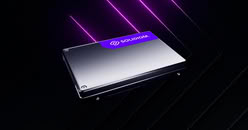
SK hynix to Boost NAND Flash Production in China by 50% in 2027

SK hynix is reportedly continuing to invest capital, human resources, and strategic planning into its NAND Flash fab in China. According to recent reports, SK hynix plans to increase production at its plant in Dalian, China, by 50% in 2027 to meet the rising demand for NAND Flash. This fab is owned and operated by its NAND subsidiary, Solidigm, which is finally resuming expansion in mainland China after a four-year project freeze. In 2021, when SK hynix acquired Intel's 3D NAND and SSD business, it formed Solidigm to focus on this area of production. However, export controls and a downturn in the NAND Flash market halted any expansion plans that Solidigm and SK hynix had in China, effectively stopping strategic planning from the headquarters.

Currently, Solidigm produces about 100,000 wafers per month of NAND Flash, so a 50% increase in 2027 would raise production to approximately 150,000 wafers per month. Solidigm will also begin producing its floating gate 3D QLC NAND Flash, which will feature over 200 active storage layers per chip. This advancement will enable multi-terabyte SSDs for enterprise use, which is currently the primary consumer of these solutions. With global NAND Flash production expected to finally balance with demand in 2027, this introduction will be a welcome addition, though it represents just a small fraction of the global NAND Flash demand.

Samsung Launches 990 QLC DRAMless SSD, $270 for 1TB, $530 for 2TB

Samsung on July 14 formally launched the 990, its value-segment M.2 NVMe SSD. Not to be confused with the 990 EVO, another DRAMless SSD from the company that uses TLC NAND flash, the new 990 implements QLC NAND flash, and relies on controller-level optimization to shore up performance. Built in the M.2-2280 form-factor, the Samsung 990 features an M.2 NVMe Gen 4 (PCI-Express 4.0 x4) host interface, and is driven by a Samsung Piccolo-Q DRAMless controller. It uses the company's in-house V9 series 280-layer 3D QLC NAND flash memory.

The Samsung 990 comes in two capacity variants, 1 TB and 2 TB, priced at $270 and $530, respectively. The 1 TB variant offers sequential reads of up to 7150 MB/s with up to 6450 MB/s sequential writes, with up to 700,000 IOPS 4K random reads and up to 1.1 million IOPS 4K random writes; while the 2 TB variant offers slightly higher performance, with up to 7250 MB/s sequential reads, up to 6450 MB/s sequential writes, up to 850,000 IOPS 4K random reads, and up to 1.2 million IOPS 4K random writes. Where the 990 differs significantly from the TLC-based 990 EVO Plus, is write-endurance. The 2 TB variant offers 800 TBW, while the 1 TB variant offers a paltry 400 TBW. For reference, the 2 TB 990 EVO Plus offers 1200 TBW, and 1 TB 990 EVO Plus offers 600 TBW. Both variants are backed by 3-year warranties.

Kingmax Intros PQ4442 M.2 NVMe Gen 4 SSD in M.2-2242 Form-factor

Kingmax today introduced the PQ4442 line of M.2 NVMe Gen 4 SSDs in the compact M.2-2242 form-factor (42 mm length). The drive comes in 500 GB, 1 TB, and 2 TB capacities, and combines 3D QLC NAND flash with a Silicon Motion SM2268XT DRAMless controller. All three variants offer sequential read speeds of up to 5000 MB/s, but while the 2 TB variant offers up to 4400 MB/s sequential writes, the 1 TB variant offers up to 4300 MB/s, and the 500 GB model just up to 2500 MB/s.

4K random reads are rated up to 400,000 IOPS for the 2 TB and 1 TB variants, and up to 350,000 IOPS for the 500 GB variant; all three variants offer up to 500,000 IOPS 4K random writes. Write endurance of the 2 TB variant is rated at 960 TBW, and 560 TBW for the 1 TB variant; while the 500 GB variant offers 280 TBW. Kingmax is backing these drives with 3-year product warranties. The company didn't reveal pricing.

KIOXIA Adds 4 TB Variant to Exceria G3 Series M.2 Gen 5 NVMe SSDs

KIOXIA today introduced a 4 TB variant to its Exceria G3 series of mid-range M.2 Gen 5 NVMe SSDs. The company had debuted this series last December, with only 1 TB and 2 TB variants at the time. It features a combination of Phison E31T series DRAMless controller, paired with Kioxia's own 218-layer BiCS8 3D QLC NAND flash memory, but now comes in a 4 TB variant.

The new 4 TB variant offers mostly similar performance to the existing 2 TB variant, with up to 10 GB/s sequential reads, and up to 9.6 GB/s sequential writes; along with up to 1.45 million IOPS for 4K random reads and writes. Write endurance is rated at 2,400 TBW. With a whole-drive peak power draw of just 6.4 W, the drive doesn't come with any cooling solution. The company didn't reveal pricing. The drive is backed by a 5-year warranty.

Kioxia's 122.8 TB NVMe SSD Based on BiCS NAND Flash Memory Pictured

Kioxia's LC9 Series 122.88 TB NVMe SSD was photographed on the show floor at NVIDIA's GTC 2025 by Tom's Hardware, revealing the first production-ready implementation of the company's BiCS FLASH generation 8 3D QLC technology with 2 Tb die density. The 2.5-inch form factor drive delivers immense storage density in the enterprise SSD market on a PCIe 5.0 connection. The LC9 Series features a dual-port design providing 32 GT/s throughput via PCIe 5.0 1x4 or 2x2 configurations, with NVMe 2.0 and NVMe-MI compliance. Built specifically to address density requirements for AI workloads, the drive leverages CMOS directly Bonded to Array (CBA) technology in its flash architecture. The enterprise-class unit is rated at 0.3 drive writes per day (DWPD) and 67,000 TBW endurance, positioning it for read-intensive applications rather than write-heavy workloads. The reported read speeds are around 15 GB/s, as demonstrated at the booth.

The LC9 supports vector database operations through Kioxia's AiSAQ technology implementation, which transfers vector database operations from DRAM to SSD storage. This approach significantly reduces system-level costs while maintaining acceptable latency profiles for AI RAG operations. Kioxia demonstrated the SSD at booth #1811 at the San Jose McEnery Convention Center through March 21, with live performance demonstrations highlighting its capabilities in AI dataset retrieval operations. The drive represents a critical advancement for enterprise AI infrastructure where data density and retrieval speeds are becoming bottlenecks in scaled LLM deployments. A massive capacity will allow entire enterprises to operate AI LLMs on top of company data with RAG and at low latency and high endurance.

Phison Unveils Pascari D-Series PCIe Gen 5 128TB Data Center SSDs

Phison Electronics, a leading innovator in NAND Flash technologies, today announced the newest addition and highest available capacity of the Pascari D-Series data center-optimized SSDs to be showcased at SC24. The Pascari D205V drive is the first PCIe Gen 5 128 TB data center class SSD available for preorder to address shifting storage demands across use cases including AI, media and entertainment (M&E), research and beyond. In a single drive the Pascari D205V offers 122.88 TB of storage, creating a four-to-one capacity advantage over traditional cold storage hard drives while shrinking both physical footprint and OPEX costs.

While the exponential data-deluge continues to strain data center infrastructure, organizations face a tipping point to maximize investment while remaining conscious of footprint, cost efficiency and power consumption. The Pascari D205V read-intensive SSD combines Phison's industry-leading X2 controller and the latest 2 Tb 3D QLC technology engineered to enable unequaled 14,600 MB/s sequential read and 3,000K IOPS random read performance. By doubling both the read speeds against Gen 4 as well as the capacity against the 61.44 TB enterprise SSDs currently available on the market today, the Pascari D205V allows customers to upgrade to larger datasets per server, top-tier capacity-per-watt utilization and unparalleled read performance.

Team Group Unveils the MP44Q M.2 Gen 4 NVMe SSD

Renowned global memory brand Team Group Inc. is committed to providing consumers with diverse and optimal storage solutions. Today, it proudly unveils the Team Group MP44Q M.2 PCIe 4.0 Solid State Drive, featuring the latest 3D QLC NAND technology, combining cutting-edge technology with the trend of demanding high storage capacity to meet daily system and file storage needs.

Team Group MP44Q M.2 PCIe 4.0 SSD utilizes the latest 3D QLC NAND, offering capacities of up to 4 TB. With the PCIe Gen 4 x4 interface and SLC Caching technology, it achieves maximum sequential read and write speeds of up to 7,400 MB/s and 6,500 MB/s, respectively. The MP44Q SSD operates with low power consumption, catering to all document processing and storage applications, significantly enhancing work efficiency. Paired with Team Group's exclusively patented graphene heat dissipation sticker, whose thickness is less than 1 mm, eliminating the potential for mechanical interference in any assembly, coupled with the native heat sink of the motherboard, such an arrangement effectively addresses the heat generated by high performance, extending the SSD's lifespan.

YMTC Claims its 3D QLC NAND Offers Endurance Comparable to 3D TLC NAND

YMTC X3-6070 3D QLC NAND flash chips are claimed by the company to offer endurance comparable to 3D TLC NAND flash chips from its competitors, ITHome reports. The company launched the new NAND flash chip at an event earlier this week. The X3-6070 is based on YMTC's 3rd Generation Xtracking architecture, and is 128-layer, which may not sound very competitive, given that other brands have moved up to 176-layer, or 232-layer; but YMTC says that the 128-layer design-choice is one of the four key ingredients to achieving high endurance for this chip.

The other three ingredients are innovations in the materials making up the NAND flash physical layer, new error-correction algorithms, and optimizations at the level of the SSD controller. The X3-6070 can sustain 4,000 P/E cycles per cell, YMTC claims, which is in league of contemporary 3D TLC NAND flash chips. It is able to do so, at lower costs from the QLC architecture. Besides the X3-6070, YMTC also launched a few first-party reference design SSDs that fully implement the controller-level optimizations needed for the chip to perform and endure as advertised.
Return to Keyword Browsing
Nov 15th, 2026 11:01 CST change timezone

New Forum Posts

Popular Reviews

TPU on YouTube

Controversial News Posts