News Posts matching #A18

Return to Keyword Browsing

Apple Announces HomeView, a $299 Smart Home Hub

Apple has officially announced HomeView, its long-rumored smart home hub, priced at $299 in the US. It comes in two versions, a tabletop model and a wall-mounted one, both built around a 7-inch Liquid Retina display with True Tone that ranges from 500 nits down to just 0.3 nits. The tabletop model sits on a domed speaker base with a down-firing woofer, attached through a tilting stainless steel hinge. Inside, there's an A18 chip with Secure Exclaves, which Apple says keeps camera and microphone data separate from the rest of the system.

HomeView leans heavily on Apple's new Siri AI, which is still in beta on the device. Personal context features need a paired Apple Intelligence-capable iPhone or iPad, and some server-side features come with daily limits, with paid expanded access planned for later. The hub also recognizes up to six people by face, each with their own Home Screen. Smart home control covers Matter accessories as well as Apple's new Home Collection, designed with LG and Schneider Electric and arriving in December.



ASUS Announces 2026 TUF Gaming Laptop Lineup

ASUS is proud to announce the launch of the 2026 TUF Gaming A16, F16, and A18 gaming laptops. The TUF Gaming A16 and F16 boast two impressive display options, either a gorgeous 2.5K 120 Hz OLED panel or an ultra-fast 2.5K 300 Hz IPS display. Both models feature advanced anti-reflection coatings on the panel for increased immersion, while the TUF Gaming F16 also comes equipped with the all-new Intel Core Ultra 9 processor 290HX Plus. The larger TUF Gaming A18 sports up to an NVIDIA GeForce RTX 5070 Ti Laptop GPU and a lightning-fast 2.5K 300 Hz IPS display for a truly impressive and immersive gaming experience.

16-inch upgrades
The 16-inch TUF Gaming A16 and F16 receive major upgrades this generation, headlined by two premium new display configurations designed to elevate both immersion and competitive play. Users can choose between a stunning 2.5K 120 Hz OLED panel featuring a Corning DXC advanced anti-reflection coating, or an ultrafast 2.5K 300 Hz IPS panel enhanced with ACR anti-reflection technology for clearer visibility in bright environments. These advanced coatings significantly reduce glare while preserving color accuracy and contrast even when viewed at off angles, ensuring gameplay remains sharp and distraction-free and increasing immersion across your entire gaming library.

Apple Announces the US$600 MacBook Neo

Apple today unveiled MacBook Neo, an all-new laptop that delivers the magic of the Mac at a breakthrough price, making it even more accessible to millions of people around the world. MacBook Neo starts with a beautiful Apple design, featuring a durable aluminium enclosure in an array of gorgeous colors—blush, indigo, silver, and a fresh new citrus. Its stunning 13-inch Liquid Retina display brings websites, photos, videos, and apps to life with high resolution and brightness, and support for 1 billion colors. Powered by A18 Pro, MacBook Neo can fly through everyday tasks, from browsing the web and streaming content, to editing photos, exploring creative hobbies, or using AI capabilities across apps. In fact, it's up to 50 percent faster for everyday tasks like web browsing, and up to 3x faster when running on-device AI workloads like applying advanced effects to photos, compared to the bestselling PC with the latest shipping Intel Core Ultra 5. Providing up to 16 hours of battery life, MacBook Neo allows users to go all day on a single charge.

A 1080p FaceTime HD camera and dual mics make it easy to look and sound great, and the dual side-firing speakers with Spatial Audio deliver crisp, immersive sound. MacBook Neo also features Apple's renowned Magic Keyboard for comfortable and precise typing, and a large Multi-Touch trackpad with support for intuitive gestures, enabling smooth and precise control. Completing the MacBook Neo experience is macOS Tahoe, with powerful built-in apps like Messages, Pages, Calendar, and Safari; seamless integration with iPhone; Apple Intelligence; as well as broad compatibility with third-party apps. And starting at just $599 and $499 for education, MacBook Neo is Apple's most affordable laptop ever, providing an unprecedented combination of quality and value. MacBook Neo is available to pre-order starting today, with availability beginning Wednesday, March 11.

TSMC Greenlights Record $45 Billion CapEx to Boost Semiconductor Capacity

TSMC just reported its January 2026 revenue results, with a net revenue of NT$401.26 billion (about $12.763 billion), an increase of 19.8% from December 2025 and an increase of 36.8% from January 2025. While these results are impressive, TSMC will have to spend more to keep customers coming back, and its board has just approved a $44.962 billion package to expand and upgrade its semiconductor facilities in 2026. This is a record capital expenditure for TSMC, indicating that the AI boom and sustained demand from its mobile customers are enough to keep the capital expenditure increasing every year. Originally, the plans included spending about $17.141 billion in Q1 of 2025, $15.247 billion in Q2, $20.657 billion in Q3, and $14.981 billion in Q4. However, most of these funds will actually be spent in 2026. Less than the new $45 billion figure was spent in 2025, making the new 2026 CapEx target the largest one to date.

TSMC's plans for this massive figure include expanding production capacity with hundreds of thousands of wafers per month, distributed across mature, current, and next-generation advanced nodes. Interestingly, mature node capacity is as important as maintaining the current node production, as entire industries like the automotive industry rely on TSMC's production and advanced packaging to satisfy all market needs. The current plan is to allocate about 70-80% of the new $45 billion package towards advanced nodes, with about 10-20% going to advanced packaging and mask making. The remaining 10% will be used for specialty technology expansion, likely including silicon photonics and other technologies.

Apple Prepares Affordable 13-Inch Laptop Powered by iPhone's A18 Pro SoC

An Apple-first attempt at making an affordable computer is underway. The company is working on a new 13-inch laptop that promises to bring the power of its latest iPhone chip to a more budget-friendly computer. Rather than using one of its custom M-series processors, this model will run on the A18 Pro, which currently powers the top iPhone lineup. By tapping into existing smartphone-grade CPUs, Apple aims to reduce manufacturing costs without compromising everyday performance for students and casual users. According to Ming-Chi Kuo, mass production could start as early as the late fourth quarter of 2025 or the early first quarter of 2026. The design will resemble a slim MacBook Air, with a screen measuring approximately 13 inches across, a unibody case, revised vents (possibly none), and ports, in smartphones the A18 Pro is passively cooled.

To add some flair, Apple plans to offer the laptop in several colors, like silver, blue, pink, and yellow, similar to its earlier iMac palette. This affordable MacBook is a key component of Apple's strategy to boost desktop and laptop shipments back to their pre-pandemic peak of roughly 25 million units, now projected for 2026. Following a slowdown this year, the company anticipates shipping approximately 20 million MacBooks in 2025. The new 13-inch model alone is forecast to account for five to seven million of those sales, making it one of Apple's most important products next year. How well the A18 Pro SoC handles the desktop load remains to be seen, but for basic office and everyday tasks, it could be a very usable device. The single-core A18 Pro performance is comparable to the latest M4, but the multi-core performance lags behind, so incorporating a mobile-grade chip will be an interesting addition to Apple's Mac product stack.

Apple's A18 4-core iGPU Benched Against Older A16 Bionic, 3DMark Results Reveal 10% Performance Deficit

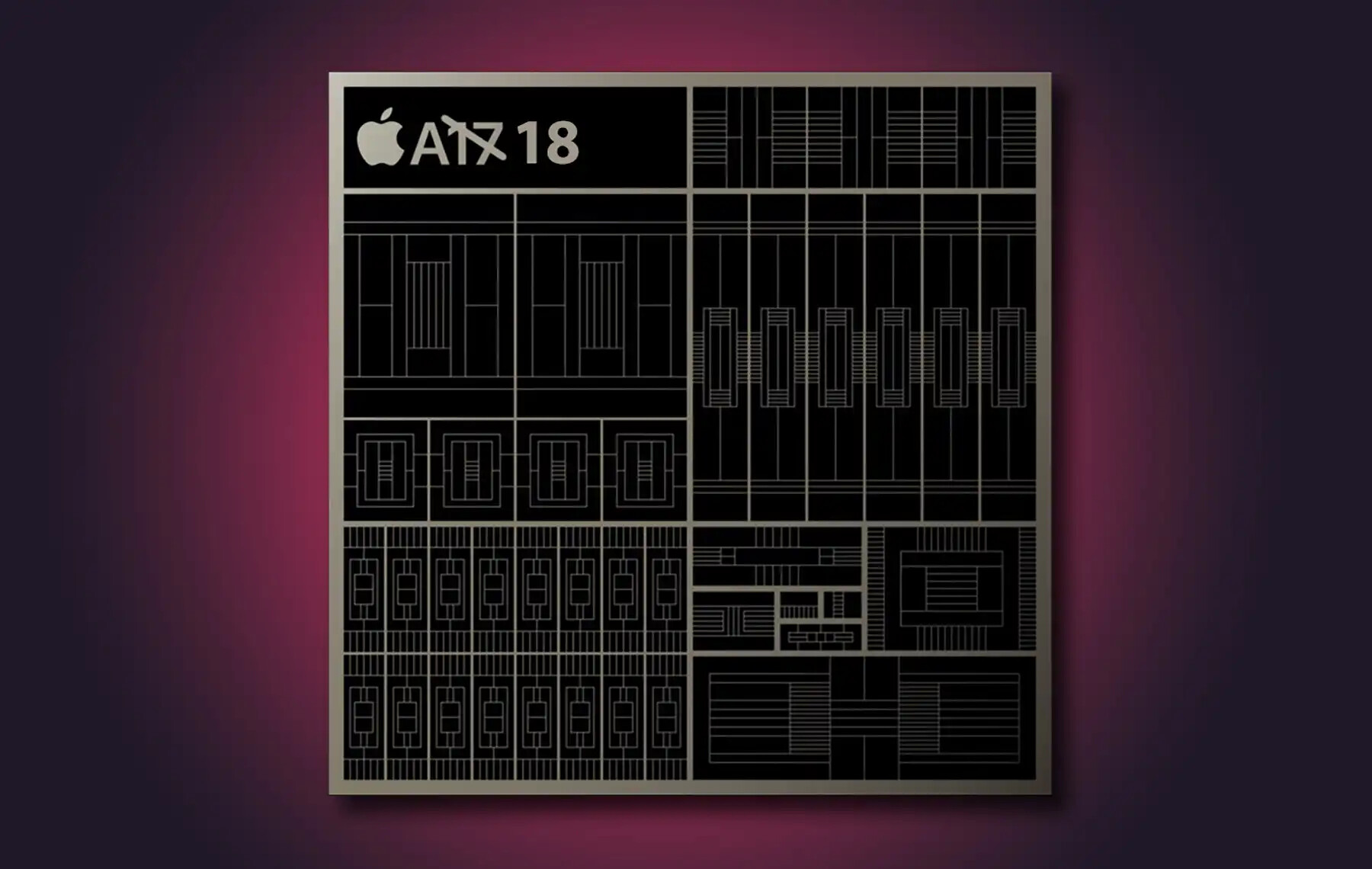
Apple's new budget-friendly iPhone 16e model was introduced earlier this month; potential buyers were eyeing a device (starting at $599) that houses a selectively "binned" A18 mobile chipset. The more expensive iPhone 16 and iPhone 16 Plus models were launched last September, with A18 chips on-board; featuring six CPU cores, and five GPU cores. Apple's brand-new 16E smartphone seems to utilize an A18 sub-variant—tech boffins have highlighted this package's reduced GPU core count: of four. The so-called "binned A18" reportedly posted inferior performance figures—15% slower—when lined up against its standard 5-core sibling (in Geekbench 6 Metal tests). The iPhone 16E was released at retail today (February 28), with review embargoes lifted earlier in the week.

A popular portable tech YouTuber—Dave2D (aka Dave Lee)—decided to pit his iPhone 16E sample unit against older technology; contained within the iPhone 15 (2023). The binned A18's 4-core iGPU competed with the A16 Bionic's 5-core integrated graphics solution in a 3DMark Wild Life Extreme Unlimited head-to-head. Respective tallies—of 2882 and 3170 points—were recorded for posterity's sake. The more mature chipset (from 2022) managed to surpass its younger sibling by ~10%, according to the scores presented on Dave2D's comparison chart. The video reviewer reckoned that the iPhone 16E's SoC offers "killer performance," despite reservations expressed about the device not offering great value for money. Other outlets have questioned the prowess of Apple's latest step down model. Referencing current-gen 3DMark benchmark results, Wccftech observed: "for those wanting to know the difference between the binned A18 and non-binned variant; the SoC with a 5-core GPU running in the iPhone 16 finishes the benchmark run with an impressive 4007 points, making it a massive 28.04 percent variation between the two (pieces of) silicon. It is an eye-opener to witness such a mammoth performance drop, which also explains why Apple resorted to chip-binning on the iPhone 16e as it would help bring the price down substantially."

Apple iPhone 16e Launched With A18 SoC, Apple Intelligence, And $599 Price Tag

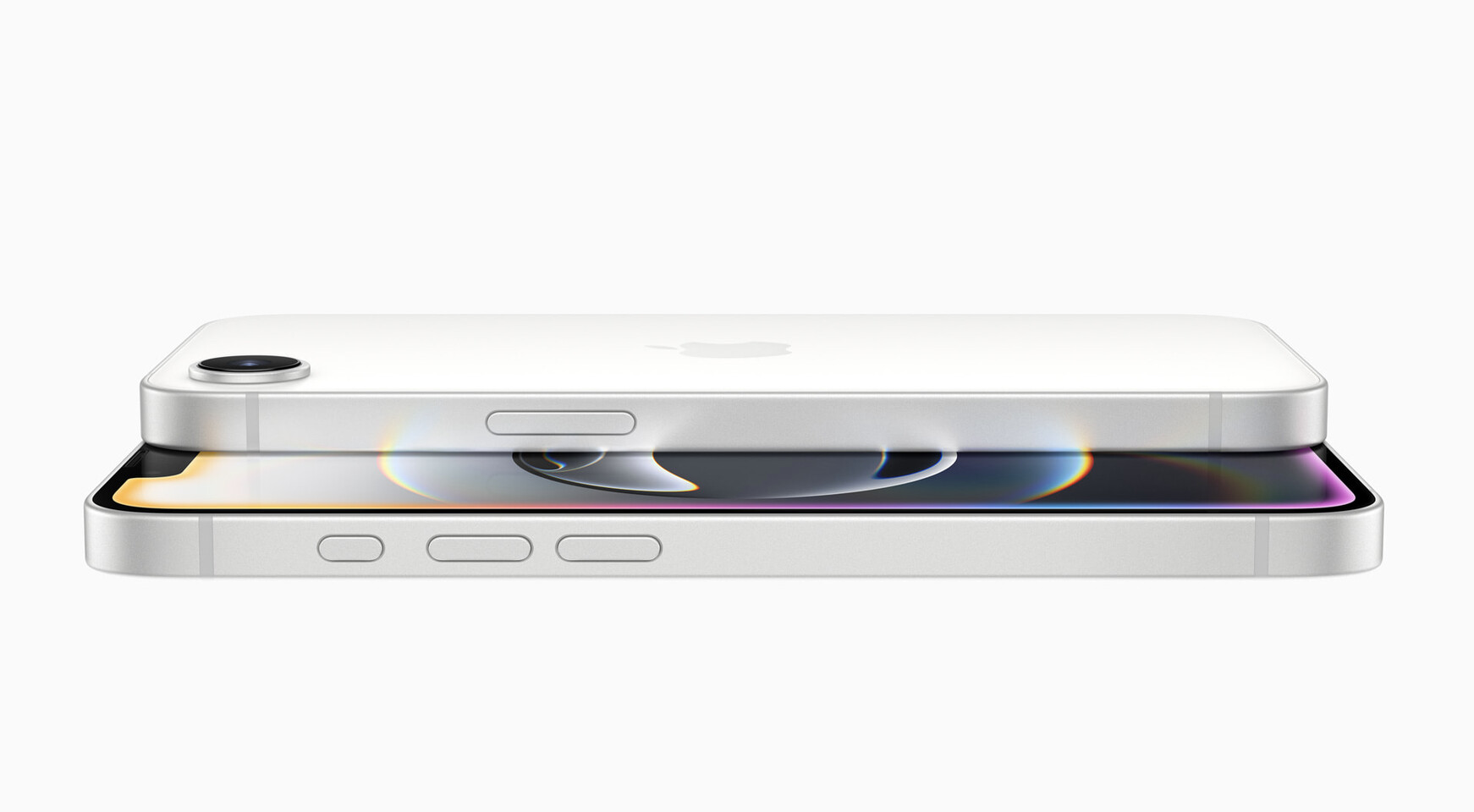
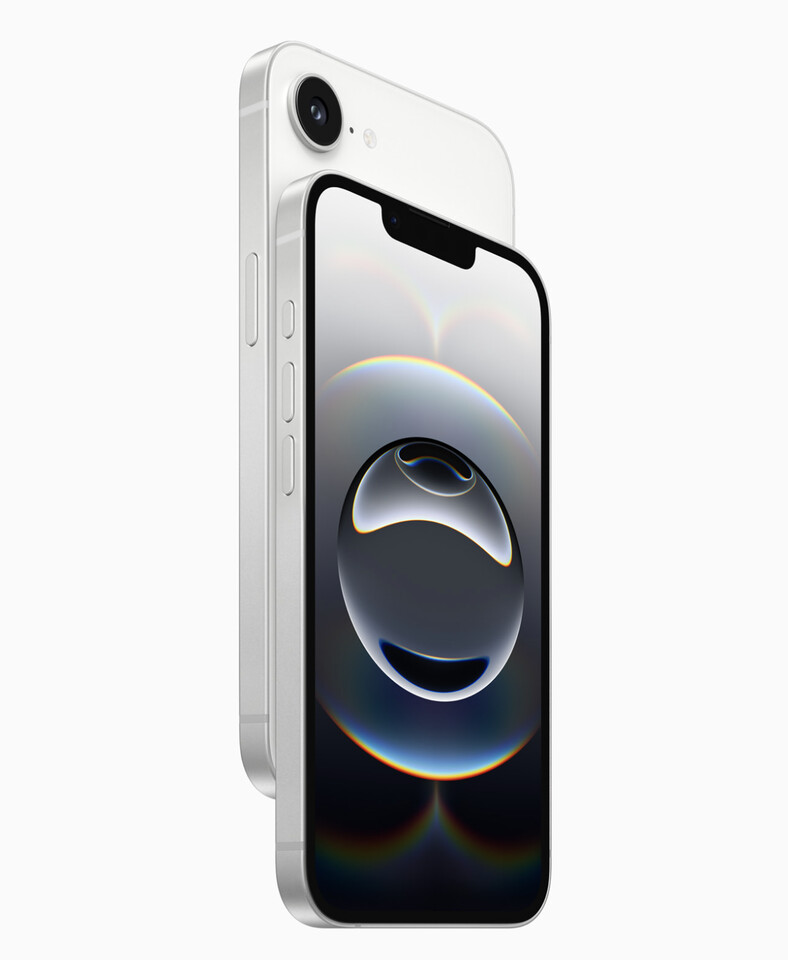
The wait is finally over - Apple has lifted the curtains off its widely anticipated budget iPhone, the iPhone 16e. The smartphone was previously rumored to arrive with the SE 4 moniker, but it appears that Apple wanted to give its entry-level budget smartphone a fresh naming scheme. This is not the first time that Apple has introduced a new name for a budget iPhone - the company famously introduced the iPhone XR in 2018, and never bothered to give it a refresh. With a starting price of $599, the iPhone 16e will start reaching customers on the 28th of February.

For those keeping up with the rumor mill, a major portion of the leaked information turned out to be accurate after all. For instance, the iPhone 16e is indeed called, well, the iPhone 16e, and boasts a binned A18 SoC with four GPU cores instead of five - likely paired with 8 GB of memory - to allow for Apple Intelligence support. As expected, the design is identical to the iPhone 13-era in many ways. At the front, a 6.1-inch OLED display with a pixel density of 460 sits beneath a 12 MP TrueDepth camera that brings FaceID support. The mute toggle switch is abandoned in favor of the Action Button. Moreover, the device also boasts Apple's first-ever 5G modem, the C1, which is said to bring substantial efficiency improvements.

Intel Could Manufacture Apple's Next-Generation A20 SoC for iPhone

Apple is reportedly considering diversifying its chip manufacturing strategy with a new silicon manufacturer: Intel. While the upcoming iPhone 17 series, expected next year, will likely feature A19 chips produced by TSMC, a recent rumor from Chinese leaker Fixed Focus Digital hints at a potential switch to Intel for the A20 chipsets powering the 2026 iPhone 18 series. The A18 and A18 Pro chipsets debuted alongside the iPhone 16 series in September 2024, manufactured using TSMC's N3E node. Apple's A19 chips are expected to upgrade to TSMC's N3P node. According to the source, Apple is seeking an Intel 20A node. However, since the A20 node is canceled in favor of 18A, Apple could be an Intel Foundry customer for either 18A or 14A nodes.

Despite the buzz, skepticism persists. Intel has historically struggled with process node transitions and even outsourced production of its Arrow Lake CPUs to TSMC, raising questions about its readiness to deliver on Apple's demands. On the other hand, alternative reports suggest Apple might stick with TSMC's yet-unnamed 2 nm node for the A20, maintaining continuity in its supply chain. As the iPhone 18 series remains two years away, much can change. For now, we are left speculating whether this rumored collaboration with Intel represents a new chapter in Apple's chipset innovation or just a rumor with little substance. If the US government mandates more domestic production, chip designers could be looking at some of the more local manufacturing options, like Intel does on US soil. That could force Apple, NVIDIA, AMD, and Qualcomm to look into Intel's offerings.

Apple Introduces the iPhone 16 and iPhone 16 Plus

Apple today announced iPhone 16 and iPhone 16 Plus, built for Apple Intelligence, the easy-to-use personal intelligence system that understands personal context to deliver intelligence that is helpful and relevant while protecting user privacy. The iPhone 16 lineup also introduces Camera Control, which brings new ways to capture memories, and will help users quickly access visual intelligence to learn about objects or places around them faster than ever before. The powerful camera system features a 48MP Fusion camera with a 2x Telephoto option, giving users two cameras in one, while a new Ultra Wide camera enables macro photography. Next-generation Photographic Styles help users personalize their images, and spatial photo and video capture allows users to relive life's precious memories with remarkable depth on Apple Vision Pro. The new A18 chip delivers a huge leap in performance and efficiency, enabling demanding AAA games, as well as a big boost in battery life.

iPhone 16 and iPhone 16 Plus will be available in five bold colors: black, white, pink, teal, and ultramarine. Pre-orders begin Friday, September 13, with availability beginning Friday, September 20.

Apple Debuts the iPhone 16 Pro and iPhone 16 Pro Max - Now with a Camera Button

Apple today introduced iPhone 16 Pro and iPhone 16 Pro Max, featuring Apple Intelligence, larger display sizes, new creative capabilities with innovative pro camera features, stunning graphics for immersive gaming, and more—all powered by the A18 Pro chip. With Apple Intelligence, powerful Apple-built generative models come to iPhone in the easy-to-use personal intelligence system that understands personal context to deliver intelligence that is helpful and relevant while protecting user privacy. Camera Control unlocks a fast, intuitive way to tap into visual intelligence and easily interact with the advanced camera system. Featuring a new 48MP Fusion camera with a faster quad-pixel sensor that enables 4K120 FPS video recording in Dolby Vision, these new Pro models achieve the highest resolution and frame-rate combination ever available on iPhone. Additional advancements include a new 48MP Ultra Wide camera for higher-resolution photography, including macro; a 5x Telephoto camera on both Pro models; and studio-quality mics to record more true-to-life audio. The durable titanium design is strong yet lightweight, with larger display sizes, the thinnest borders on any Apple product, and a huge leap in battery life—with iPhone 16 Pro Max offering the best battery life on iPhone ever.

iPhone 16 Pro and iPhone 16 Pro Max will be available in four stunning finishes: black titanium, natural titanium, white titanium, and desert titanium. Pre-orders begin Friday, September 13, with availability beginning Friday, September 20.

Apple M4 & A18 Chipsets Linked to Significant Neural Engine Upgrade

Apple CEO, Tim Cook, discussed planned generative AI software features during an early February earnings call: "As we look ahead, we will continue to invest in these and other technologies that will shape the future. That includes artificial intelligence, where we continue to spend a tremendous amount of time and effort, and we're excited to share the details of our ongoing work in that space later this year." His "prepared" statement did not provide any specific insights into involved technologies, but many iPhone experts believe that the upcoming release of iOS 18 could be "the biggest update" in Apple mobile operating system history. The American multinational technology giant is seemingly taking a relaxed approach with internal artificial intelligence developments—rival smartphone maker, Samsung, has already jumped into the on-the-go AI deep end with its recently launched Galaxy S24 series. Qualcomm's Snapdragon 8 Gen 3 (for Galaxy) chipset is ready to take on all sorts of artificial intelligence-augmented tasks, while a next-gen ARM Cortex-X "Blackhawk" unit (leveraging "great" LLM performance) is in the pipeline for a late 2024 rollout.

Taiwan's Economic Daily News has reached out to insider contacts, albeit on the hardware side of things—their sources reckon that Apple is working on next generation processors that sport "significantly upgraded Neural Engine performance with additional cores." Tipsters believe that plans for 2024 include an effort to "significantly strengthen the AI computing power of the (existing) M3 and A17 processors," while the true "new generation" M4 and Bionic A18 chipsets will be augmented with greater AI computing core counts. Taiwan's top foundry is reportedly in the mix: "Apple has strengthened the AI computing performance of mobile devices and greatly increased the computing power of its own processors, which has simultaneously increased its wafer investment in TSMC. According to industry sources, Apple's wafer production volume for TSMC's 3 nm enhanced version process this year is expected to increase by more than 50% compared with last year, making it firmly the largest customer of TSMC."

Return to Keyword Browsing
Nov 19th, 2026 22:02 CST change timezone

New Forum Posts

Popular Reviews

TPU on YouTube

Controversial News Posts