News Posts matching #Asus

Return to Keyword Browsing

SteamOS Runs on ASUS ROG Ally, Complete Ecosystem Support Coming Soon

We are inching closer to Valve releasing an official, unmodified version of SteamOS for third-party handhelds and PCs, a significant push to broaden its gaming ecosystem beyond the Steam Deck. While the final build remains pending, tech reviewer The Phawx recently showcased an unofficial SteamOS 3.8 installation on the ASUS ROG Ally (2023), offering a glimpse into its current capabilities—and limitations. Running on Ally's Ryzen Z1 Extreme chip, SteamOS already delivers solid performance in titles like Batman: Arkham Knight (73.3 FPS) and Horizon Zero Dawn (55.9 FPS) at 720p. However, challenges persist: hardware-specific features like Ally's VRR (Variable Refresh Rate) work, but its TDP controls and dedicated buttons remain non-functional. In Cyberpunk 2077, the Steam Deck narrowly outperformed the Ally (47.8 vs. 45.8 FPS), a result attributed to Valve's bespoke optimizations for its own hardware. The lack of TDP adjustment also led to inefficiencies, with some games defaulting to 20 W power draws.

Valve's upcoming "Powered by SteamOS" branding initiative aims to standardize third-party integrations, requiring partners to use official system images and launch directly into SteamOS. Early collaborations, like Lenovo's CES-announced Legion Go S, also contribute to this goal. Meanwhile, updates like SteamOS 3.6.19 have expanded support for devices such as the ROG Ally and third-party controllers, suggesting broader compatibility ahead. Valve's expansion could position SteamOS as a rival to Windows in the portable PC space, leveraging its gaming-first interface and growing developer support. While The Phawx's demo has shown SteamOS's potential, Valve's official release—expected to resolve current hardware quirks—will determine its viability for partners. As competition heats up, SteamOS's success may hinge on balancing open accessibility with the tailored optimizations that made the Steam Deck a hit. Further software tweaks will bring ecosystem stability and improved performance, and we expect Valve's partners to join and develop better integration with SteamOS, too.


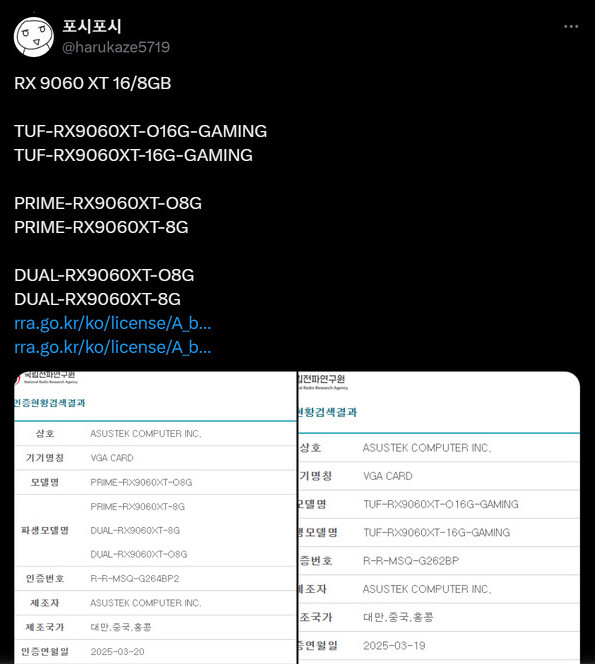
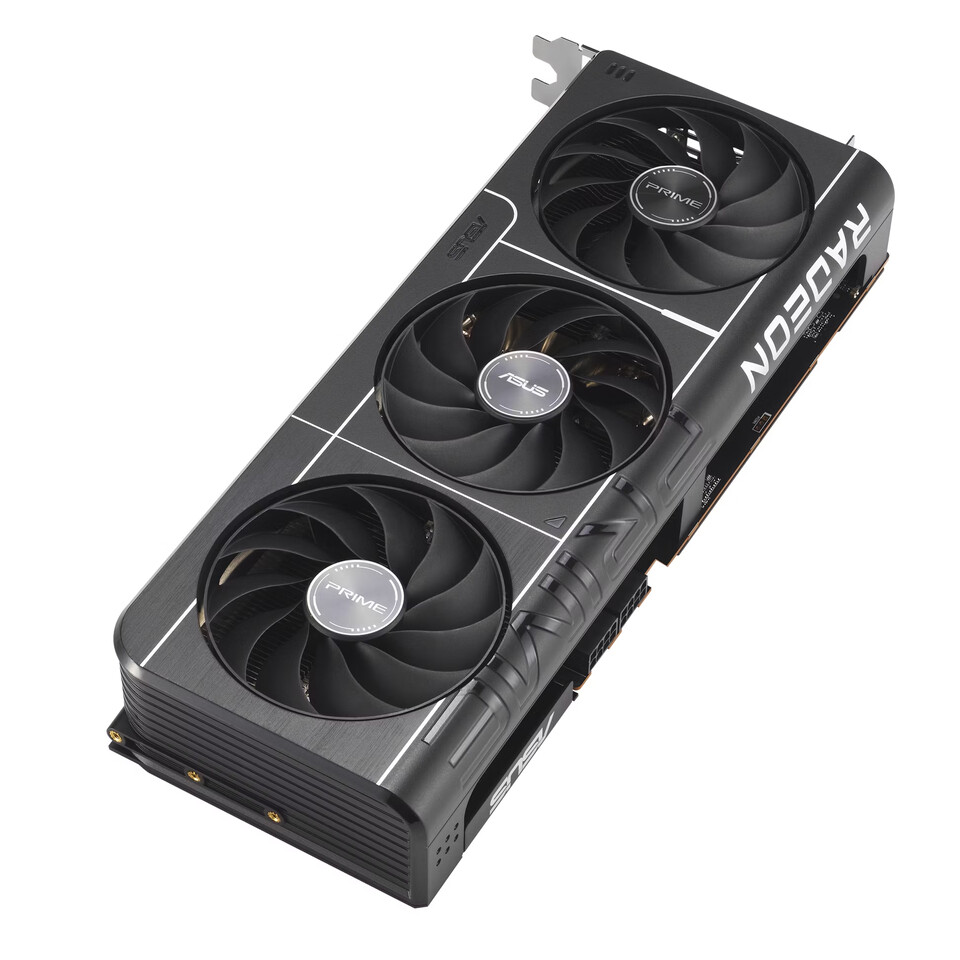
ASUS Registers Multiple Radeon RX 9060 XT 16 & 8 GB SKUs in South Korea

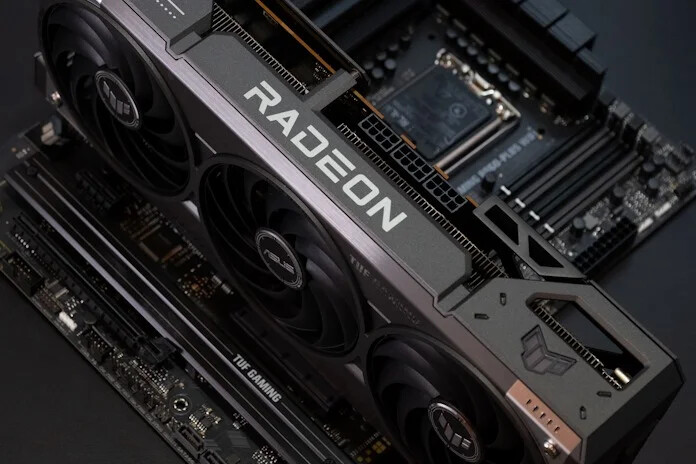
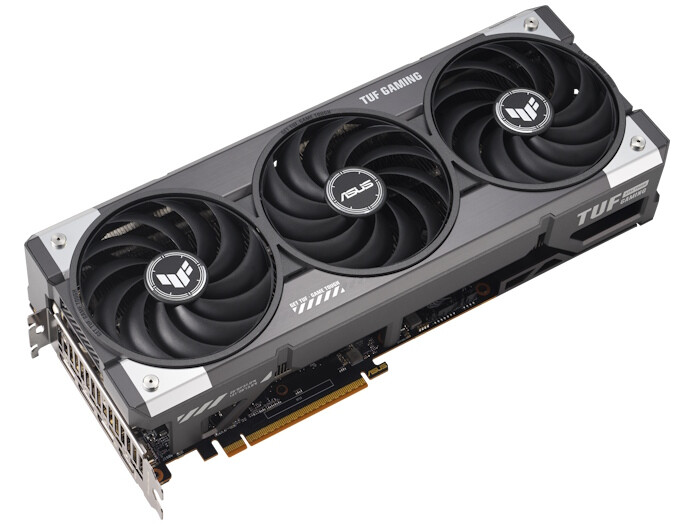
AMD is likely readying its Radeon RX 9060 Series graphics cards for launch in the near future—an official Q2 2025 release window was announced late last month, but company representatives did not go into great detail regarding specifications or pricing. Early March leaks indicated that Team Red board partners were preparing custom Radeon RX 9060 XT models in 16 GB and 8 GB forms; a recent discovery—courtesy of the ever intrepid harukaze5719—corroborates these configurations. Last week, ASUS registered multiple unannounced TUF Gaming, PRIME and DUAL Radeon RX 9060 XT models with the South Korean Radio Agency. Interestingly, only the TUF Gaming OC and non-OC cards are specced with pools of 16 GB VRAM. The rest of the pack makes do with 8 GB.

Similarly, several EEC registrations of Acer "Nitro" and "Predator BiFrost" Radeon RX 9060 XT 16 GB and 8 GB SKUs were spotted by harukaze5719 three weeks ago. According to VideoCardz, leaked AIB technical data suggests the use of GDDR6, 20 Gbps memory chips and 128-bit memory interfaces. TechPowerUp's GPU database still specifies that the Radeon RX 9060 XT is based on a Navi 48 LE GPU variant, but other sources reckon that a "smaller" Navi 44 model would be more appropriate for this class of graphics card. With the rumored delay of NVIDIA's GeForce RTX 5060 Ti and RTX 5060 models, AMD's lower end RDNA 4 offerings could launch during a quiet period.

ASUS ROG RTX 5090 Astral Dhahab OC Edition Blessed with Jensen Huang Signature, Card Will be Auctioned Off for Charity

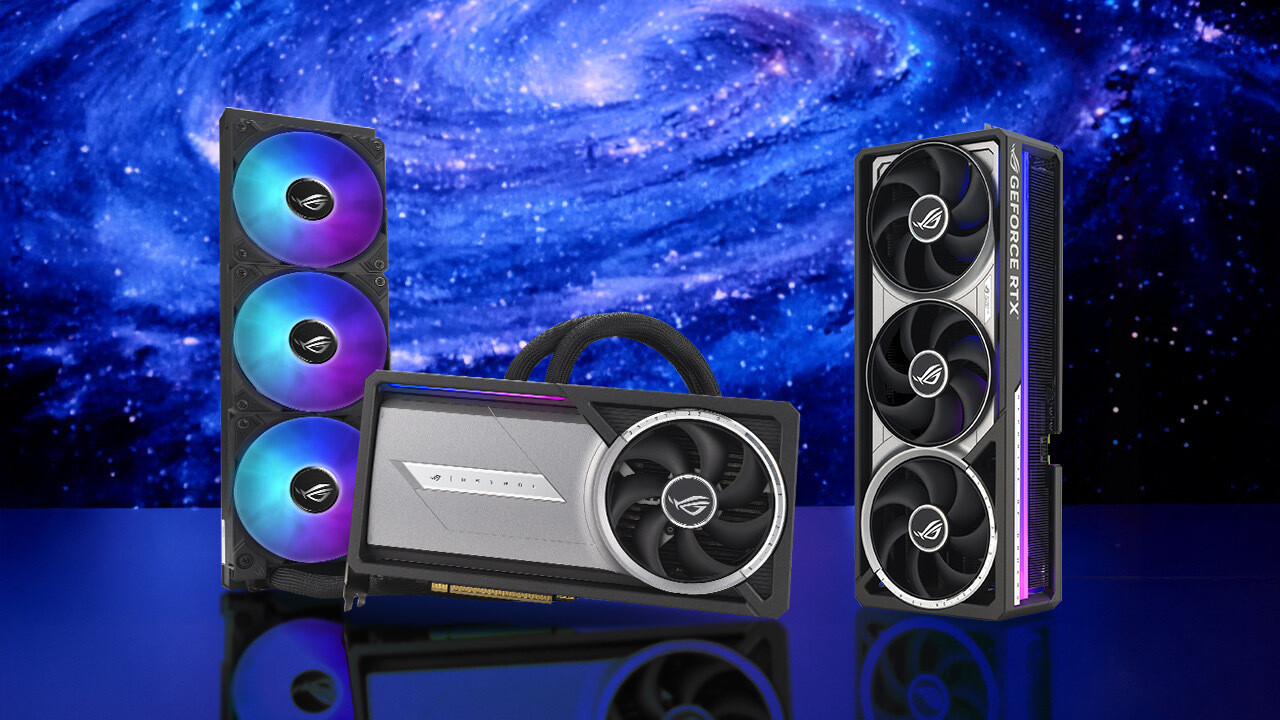
The "standard" ASUS ROG Astral RTX 5090 OC Edition is already a really an "astronomically expensive" prospect (if you can find available stock); launch MSRP was $2800, but retailers pushed that figure beyond the $3000 mark. An even fancier golden variant exists—as a reminder; news outlets picked up on the existence of a "Dhahab" model early last month. This luxuriously decorated collector piece was likely introduced as a regional exclusive, for MENA (Middle-East and North Africa). This week, ASUS managed to sneak one gold encrusted sample out to San Francisco, California.

Ernest Cheng—Director of Marketing at the firm's North American branch—shared a photo (via LinkedIn) of the very unique ROG Astral RTX 5090 Dhahab OC Edition model; freshly scribbled on by Jensen Huang during GTC 2025. The ASUS exec commented on this blessing: "graphics card is one of a kind when it's been anointed. But it says a lot more when it's a Golden ROG RTX 5090 Astral." Press outlets reckon that this extremely special item will be auctioned off for charity; the presence of Team Green CEO's autograph and slogan ("RTX ON!") will boost its value severalfold. A Jensen Huang-signed ROG MATRIX RTX 4090 PLATINUM card attracted a top bid of $16,000; Der8auer (aka Roman Hartung) was officially congratulated as the winner back in late 2023.

Update 18:02 UTC: ASUS has confirmed that it will be supporting a local charity: "we are extremely honored to have this special edition ROG Astral RTX 5090 Dhahab OC graphics card, signed by NVIDIA CEO Jensen Huang. This card will be officially auctioned to support relief efforts for the California wildfires in Los Angeles."

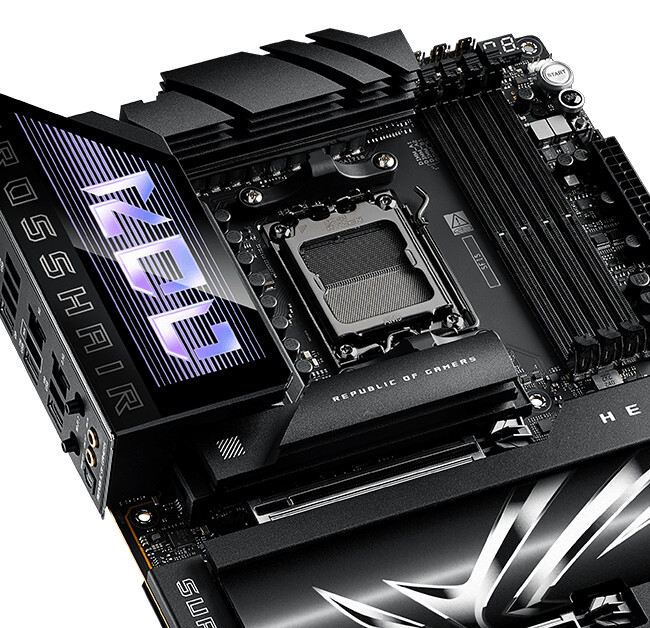
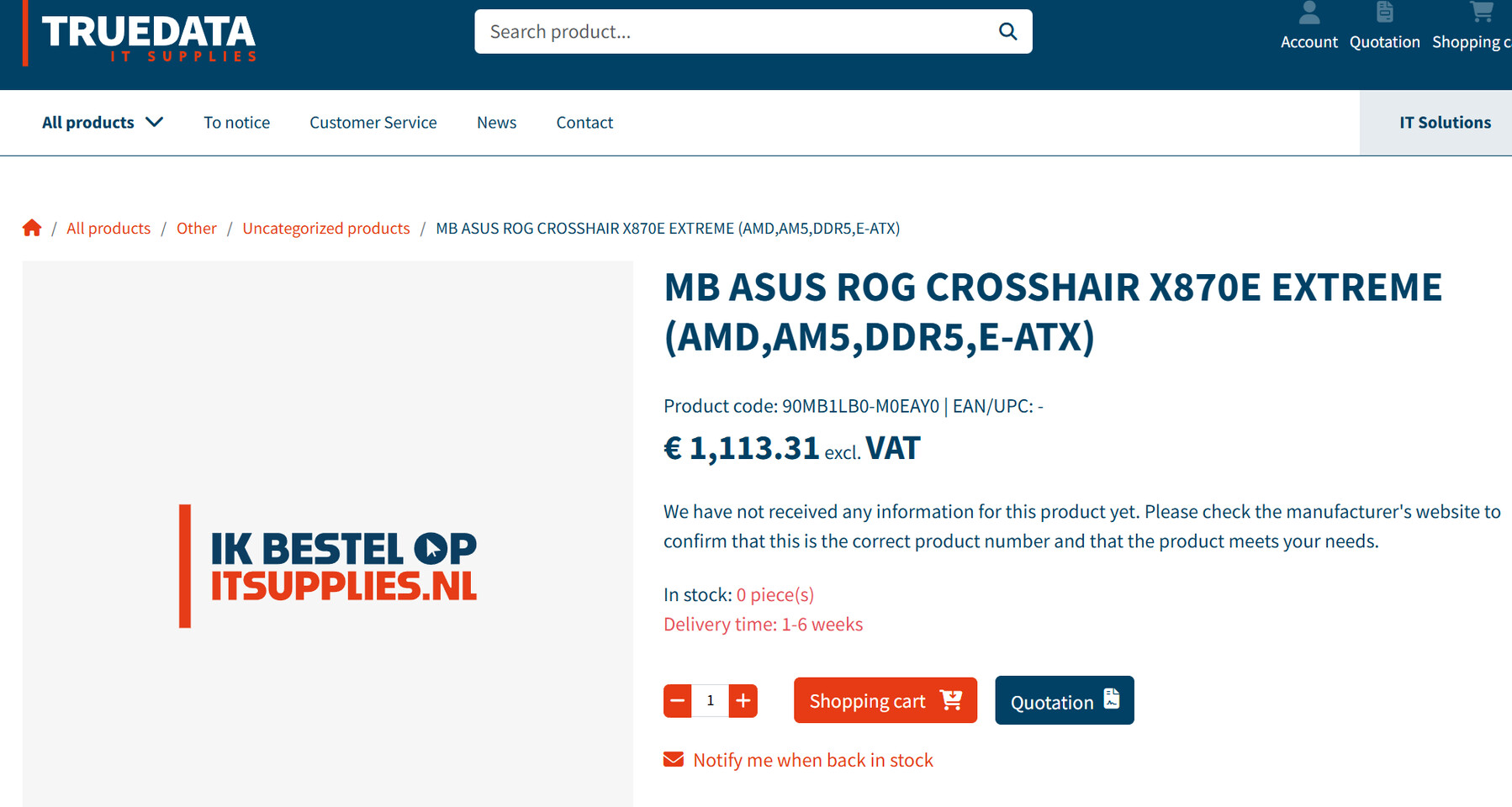
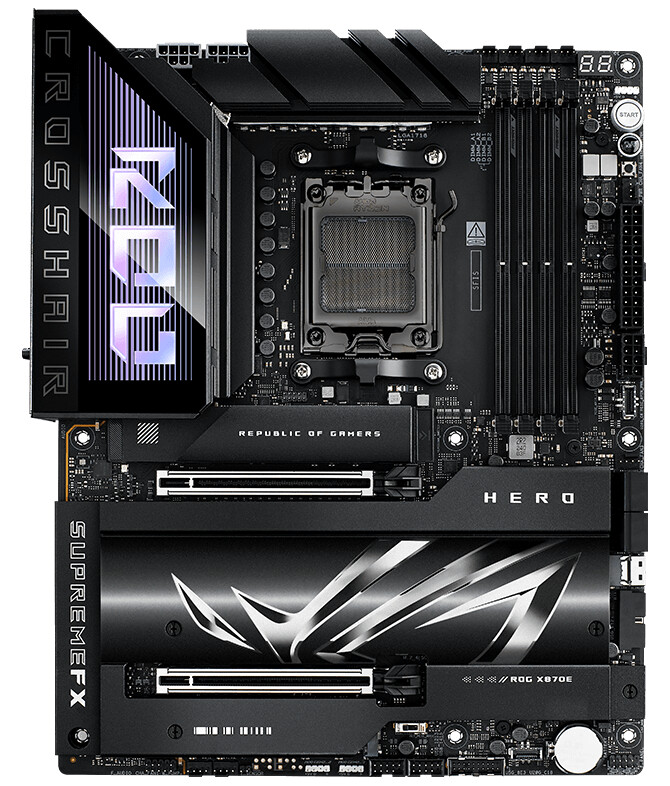
ASUS ROG Crosshair X870E Extreme Motherboard Listings Appear in Europe, Leaks Suggest €1200+ Price Point

At CES 2025, ASUS unveiled their elite-tier ROG Crosshair X870E Apex motherboard design. Additionally, early January press material teased another top contender: "ROG Crosshair X870E Extreme is also waiting in the wings, with details to be shared on the way to its expected release in the first quarter (of 2025)." As reported by VideoCardz, the Taiwanese manufacturer seems to be readying its mysterious ultra-premium model for an imminent launch. Last week, HWiNFO v8.23-5685 Beta release notes turned up—revealing the existence of "enhanced sensor monitoring on ASUS ROG Crosshair X870E Extreme." Concurrently, a smattering of retail/e-tail listings have turned up in Europe. The lowest observed asking price (including VAT) was €1202.80, courtesy of Max ICT's (Netherlands) premature publishing of a product page.

Hopping across the Atlantic, industry watchdogs noted that Newegg was demanding a cool $749 for ASUS ROG Crosshair X870E Apex pre-orders. Potential European customers will likely be greeted by a ~€827 (inc. VAT) price point. Since January, the Republic of Gamers marketing team has kept quiet on the X870E Extreme front. Their fancily-appointed board is still an unknown quantity in many regards; recent retail leaks lack technical information and visual representation. As noted by VideoCardz, time is running out for a Q1 2025 launch. As we head into April, Q2 looms in the near distance.

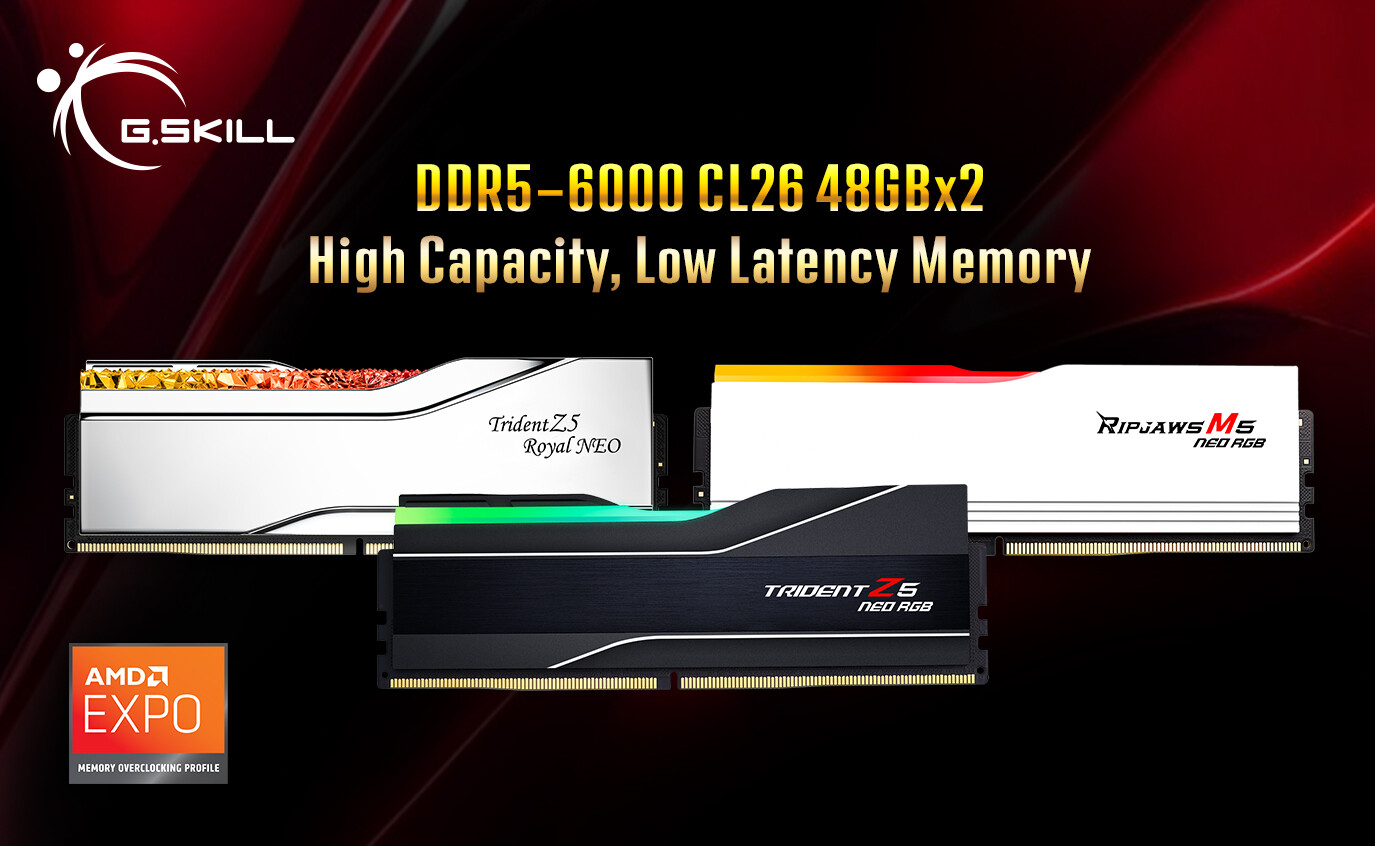
G.Skill Unveils High-Capacity, Low-Latency DDR5-6000 CL26 48GBx2 Memory Kit for AMD AM5 Platform

G.Skill International Enterprise Co., Ltd., the world's leading brand of performance overclock memory and PC components, is announcing a new high-capacity, low-latency DDR5 specification of DDR5-6000 CL26 with a total of 96 GB (48 GB x2) kit capacity, intended for the AMD AM5 platform. Designed for PC enthusiasts, gamers, professionals, and AI applications who are looking for high performance, this new memory kit enables low-latency performance at high kit capacities on the latest AMD computing platforms.

High-Capacity & Low-Latency Performance DDR5 Memory for AMD AM5
G.Skill continues to push the limits of DDR5 memory with the new DDR5-6000 CL26 at a high kit capacity of 96 GB (48 GB x2). Featuring a very low latency timing of CL26-36-36-96, this memory kit is engineered to provide efficiency and responsiveness for high-performance computing tasks, such as content creation, 3D modeling, or AI applications, on the latest AMD AM5 platforms. See below for a Memtest validation screenshots on the ASUS ROG CROSSHAIR X870E HERO motherboard with the AMD Ryzen 9 9950X3D desktop processor, as well as on the MSI MPG X870E CARBON WIFI motherboard with the AMD Ryzen 9 9900X desktop processor.

ASUS Announces NUC 15 Pro+

ASUS today announced NUC 15 Pro+, a mini PC that marries cutting-edge technology with sophisticated design. Powered by up to the latest Intel Core Ultra 9 processors (Series 2) and Intel Arc Graphics, NUC 15 Pro+ delivers unparalleled speed and breathtaking visuals. It boasts Intel WiFi 7, Bluetooth 5.4, and an array of I/O ports to ensure unrivalled connectivity and compatibility, including the ability to support up to four 4K displays. Inside its premium aluminium chassis is an advanced cooling design to ensure whisper-quiet performance.

AI-enhanced power
Featuring up to the Intel Core Ultra 9 processor (Series 2) with up to 99 TOPS, NUC 15 Pro+ delivers an 18% performance boost over previous-generation NUC models for faster and more efficient processing. This mini PC makes light work of the most demanding workloads, enabling seamless multitasking and exceptional energy efficiency. Ideal for professionals and creators, NUC 15 Pro+ ensures remarkable speed and reliability, whether handling everyday tasks or the most intensive applications.

ASUS Unveils the Latest ASUS AI POD Featuring NVIDIA GB300 NVL72

ASUS today joined GTC 2025 as a Diamond sponsor to showcase the latest ASUS AI POD with the NVIDIA GB300 NVL72 platform. The company is also proud to announce that it has already garnered substantial order placements, marking a significant milestone in the technology industry. At the forefront of AI innovation, ASUS also presents the latest AI servers in the Blackwell and HGX family line-up. These include ASUS XA NB3I-E12 powered by NVIDIA B300 NVL16, ASUS ESC NB8-E11 with NVIDIA DGX B200 8-GPU, ASUS ESC N8-E11V with NVIDIA HGX H200, and ASUS ESC8000A-E13P/ESC8000-E12P supporting NVIDIA RTX PRO 6000 Blackwell Server Edition with MGX architecture. With a strong focus on fostering AI adoption across industries, ASUS is positioned to provide comprehensive infrastructure solutions in combination with the NVIDIA AI Enterprise and NVIDIA Omniverse platforms, empowering clients to accelerate their time to market.

By integrating the immense power of the NVIDIA GB300 NVL72 server platform, ASUS AI POD offers exceptional processing capabilities—empowering enterprises to tackle massive AI challenges with ease. Built with NVIDIA Blackwell Ultra, GB300 NVL72 leads the new era of AI with optimized compute, increased memory, and high-performance networking, delivering breakthrough performance.

ASUS Introduces Ascent GX10 AI Supercomputer Powered by NVIDIA GB10 Grace Blackwell Superchip

ASUS today announces its groundbreaking AI supercomputer, ASUS Ascent GX10, powered by the state-of-the-art NVIDIA GB10 Grace Blackwell Superchip. This revolutionary device places the formidable capabilities of a petaFLOP-scale AI supercomputer directly onto the desks of developers, AI researchers and data scientists around the globe.

As the size and complexity of generative AI models grow, local development efforts face increasing challenges. Prototyping, tuning and inferencing large models require substantial memory and compute performance. To address these needs, Ascent GX10 is designed to provide developers with a powerful, economical desktop solution for AI development.

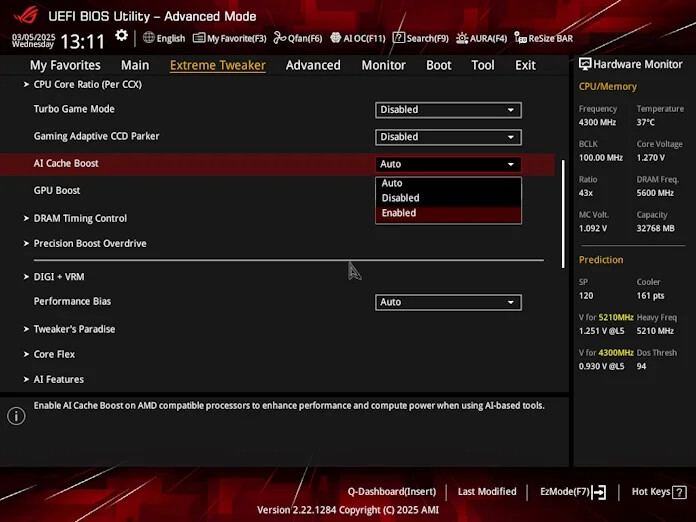
ASUS Introduces New "AI Cache Boost" BIOS Feature - R&D Team Claims Performance Uplift

Large language models (LLMs) love large quantities of memory—so much so, in fact, that AI enthusiasts are turning to multi-GPU setups to make even more VRAM available for their AI apps. But since many current LLMs are extremely large, even this approach has its limits. At times, the GPU will decide to make use of CPU processing power for this data, and when it does, the performance of your CPU cache and DRAM comes into play. All this means that when it comes to the performance of AI applications, it's not just the GPU that matters, but the entire pathway that connects the GPU to the CPU to the I/O die to the DRAM modules. It stands to reason, then, that there are opportunities to boost AI performance by optimizing these elements.

That's exactly what we've found as we've spent time in our R&D labs with the latest AMD Ryzen CPUs. AMD just launched two new Ryzen CPUs with AMD 3D V-Cache Technology, the AMD Ryzen 9 9950X3D and Ryzen 9 9900X3D, pushing the series into new performance territory. After testing a wide range of optimizations in a variety of workloads, we uncovered a range of settings that offer tangible benefits for AI enthusiasts. Now, we're ready to share these optimizations with you through a new BIOS feature: AI Cache Boost. Available through an ASUS AMD 800 Series motherboard and our most recent firmware update, AI Cache Boost can accelerate performance up to 12.75% when you're working with massive LLMs.

ASUS Implements Another GeForce RTX 5090 Price Hike, PRIME RX 9070 XT "MSRP" Adjusted to $719

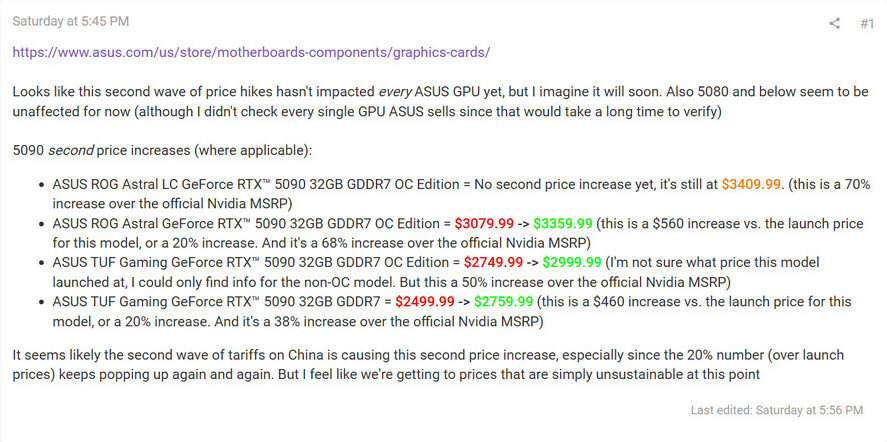
"Second wave" ASUS price hikes were documented online over the past weekend; affecting air-cooled premium ROG Astral and mid-tier TUF Gaming GeForce RTX 5090 models. Looking at the company's North American webshop, visitors noticed a freshly adjusted price for the ROG Astral GeForce RTX 5090 32 GB OC Edition—going from a previous level of $3079.99 up to $3359.99. Curiously, the asking price of a liquid-cooled sibling was not adjusted—remaining at a "first wave" point of $3409.99. The "cheapest" model—TUF Gaming GeForce RTX 5090 (non-OC)—experienced a $460 (representing 20%) price hike, bringing total cost of ownership up to $2759.99. As a reminder, NVIDIA's baseline MSRP guideline was $1999—as announced at CES 2025—but ROG Astral and TUF Gaming designs demand a premium or two for fancier feature sets. VideoCardz has fervently explored worrying market trends in the recent past; several of NVIDIA's big board partner players have jacked up asking prices for GeForce RTX 50-series graphics cards. Availability of stock is still a major sore point for potential buyers, who were not able to secure launch day wares. Despite a driving up of costs, the ASUS US webstore has absolutely zero stock of GeForce RTX 5090 SKUs—at the time of writing.

In addition, VideoCardz and other PC hardware media outlets noted price hikes affecting the manufacturer's stable of recently launched AMD Radeon RX 9070 Series TUF Gaming and PRIME models. In the absence of AMD-built (MBA) reference card designs, board partners were tasked with the providing of baseline "MSRP" conformant custom cards. The ASUS PRIME Radeon RX 9070 XT OC and RX 9070 OC Editions were readied as $599 and $549 options (respectively). Weekend sleuthing work put the spotlight on newly adjusted price points of $719.99 and $659.99 (respectively)—representing further cases of plain 20% elevations over baseline. AMD's debut batch of RDNA 4 cards was met with unprecedented demand earlier on in March, but secondary/tertiary stock shipments face unclear market conditions—Team Red GPU enthusiasts have (similarly) voiced their collective displeasure about elevated prices at retail. Mid-way through last week, the PC hardware community heard about ASUS leadership considering a new pricing strategy. The company is reportedly accelerating its manufacturing exodus from China.

AMD Radeon Captures 45% Market Share in Japan, Could Be Even Higher if Supply Chain Allows

AMD's Radeon GPU lineup has achieved a remarkable 45% market share in Japan, representing the brand's strongest position in the competitive graphics card market, according to AMD Japan executive Sato during a recent industry roundtable. This significant market penetration marks a turning point for Team Red in a region historically dominated by NVIDIA. The announcement came during a multi-vendor panel featuring representatives from ASRock, ASUS, GIGABYTE, MSI, PowerColor, and Sapphire at an AMD-focused event in Akihabara. While celebrating the milestone, industry partners pushed for more ambitious targets, with ASRock's Haraguchi challenging AMD to aim for a 70% market share. ASUS executive Ichikawa humorously noted the brand's historical underdog status, remarking, "We've never been the ruling party!"

The event also featured insights on AMD's latest hardware from prominent tech influencers. "Sir Gradeon" praised the Radeon RX 9070 series for its overclocking headroom and substantial VRAM capacity, highlighting that the GPUs don't require power supply upgrades. Fellow influencer "Shurarara!!" emphasized the RX 9070 XT's price-to-performance ratio, noting its ability to run demanding titles like Monster Hunter Wilds at 4K resolution with appropriate settings. Supply constraints emerged as a significant concern during the roundtable, with AIB partners expressing frustration over GPU allocation limitations despite strong demand. The candid admission from AMD's representative about the company "not being used to selling graphics cards" at this volume sparked laughter among attendees, showing the unexpected nature of AMD's market surge. The event attracted substantial attention, with long lines forming before doors opened. Attendees participated in the X-Walk Post Campaign across Akihabara's electronics district, with early purchasers of AMD products receiving exclusive promotional items.

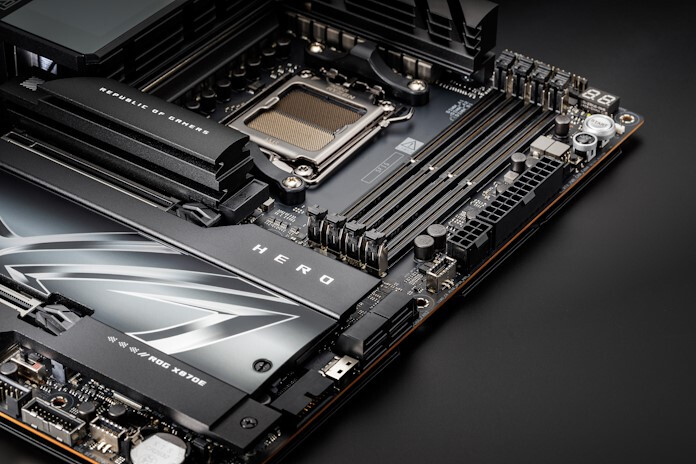
ASUS Revamps PCIe Q-Release Mechanism Notorious for Scratching GPUs

ASUS has discreetly modified its controversial Q-Release Slim mechanism in the newly launched ROG Crosshair X870E Apex motherboard, removing a metal bracket linked to GPU PCIe connector scratches. The unannounced revision, spotted by Uniko's Hardware, follows months of backlash from enthusiasts who reported cosmetic damage to high-end GPUs after repeated use of the quick-release feature. While ASUS has not formally addressed the redesign, it acknowledges the issue—a stark contrast to its earlier dismissal of concerns as "typical wear-and-tear" after 60+ removal cycles. The controversy, first spotted in January 2025, escalated when users shared evidence of scratched PCIe pins on platforms like Reddit and Bilibili.

ASUS's global responses varied sharply: its US division downplayed functional risks, while ASUS China rolled out compensation, including motherboard replacements and store credits, and confirmed a redesign was underway. This regional split shows differing consumer protection norms, with China's aggressive compensation contrasting Western markets' reliance on warranty assurances. Competitors seized the moment. GIGABYTE's AORUS Japan publicly mocked ASUS with a 100-cycle stress test of its EZ Latch Plus, showcasing zero GPU damage—a direct jab at Q-Release Slim's durability. The campaign, echoed by GIGABYTE's Western accounts, emphasized rivalries in the premium motherboard segment. ASUS's quiet hardware fix avoids a formal recall, likely due to the niche impact—frequent GPU swaps are rare among mainstream users.

ASUS Also Announces the Vivobook S14/S16 Copilot+ PCs

Today marks the launch of ASUS Vivobook S14/S16 (S3407QA/S3607QA), a pair of Copilot+ PCs engineered to be the ideal companions for everyday life.

Featuring the latest high-performance Snapdragon X processor with up to 45 TOPS NPU, these ultra-slim, lightweight laptops deliver powerful AI capabilities, extended battery life, and next-level connectivity. For work, study, or play, Vivobook S14/S16 provide an immersive entertainment experience with stunning 16:10 FHD OLED or 2.5K 144 Hz IPS displays, along with Snapdragon Sound and Dolby Atmos audio. Designed for style and durability, these devices ensure effortless AI computing with premium metallic chassis, military-grade resilience, and advanced security features for total peace of mind.

ASUS Reveals the Vivobook S14/S16 Series (S3407CA/VA / S3607CA/VA)

Today marks the launch of the ASUS Vivobook S14/S16 series (S3407CA/VA and S3607CA/VA), 14- and 16-inch laptops crafted for everyone.

ASUS Vivobook S14/S16 deliver outstanding performance in a sleek, lightweight design, weighing just 1.40 kg and measuring 1.59 cm thin, and featuring a durable metal chassis that ensures style and reliability for users on the go. Powered by up to an Intel Core Ultra 7 processor (Series 2) and a 70Wh battery offering up to 20 hours of life with fast charging, they maximize productivity. The dedicated Copilot key provides instant access to Copilot's AI assistance, while ASUS AI noise cancelation and ASUS 3D Noise Reduction (3DNR) video technology enhance conferencing. Premium 16:10 display choices—up to a stunning WUXGA OLED or an anti-glare WUXGA 144 Hz IPS panel—deliver immersive visuals for work or entertainment, and make Vivobook S14/S16 the perfect choice for everyday life.

ASUS Showcases Servers Based on Intel Xeon 6, Intel Gaudi 3 at CloudFest 2025

ASUS today announced its showcase of comprehensive AI infrastructure solutions at CloudFest 2025, bringing together cutting-edge hardware powered by Intel Xeon 6 processors, NVIDIA GPUs and AMD EPYC processors. The company will also highlight its integrated software platforms, reinforcing its position as a total AI solution provider for enterprises seeking seamless AI deployments from edge to cloud.

Intel Xeon 6-based AI solutions and Gaudi 3 Acceleration for generative AI inferencing and fine tuning training
ASUS Intel Xeon 6-based servers leverage the Data Center Modular Hardware System (DC-MHS) architecture, providing unparalleled scalability, cost-efficiency and simplified maintenance. ASUS will showcase a comprehensive Intel Xeon 6 family of processors at CloudFest 2025, including the RS700-E12, RS720Q-E12. and ESC8000-E12P-series servers. The ESC800-E12P-series servers will debut the Intel Gaudi 3 AI accelerator PCIe card. This lineup underscores the ASUS commitment to delivering comprehensive AI solutions that integrate cutting-edge hardware with enterprise-grade software platforms for seamless, scalable AI deployments, highlighting Intel's latest innovations for high-performance AI training, inference, and cloud-native workloads.

ASUS Announces the Vivobook S14/S16 Series (M3407HA/M3607HA)

Today marks the launch of the ASUS Vivobook S14/S16 series (M3407HA and M3607HA), 14-inch and 16-inch laptops crafted for everyone.

ASUS Vivobook S14/S16 deliver outstanding performance in a sleek, lightweight design, starting at just 1.40 kg and 1.59 cm thin, and featuring a durable metal chassis that ensures style and reliability for users on the go. Maximize productivity with up to an AMD Ryzen 7 260 processor and up to 20 hours of battery life with fast charging. The dedicated Copilot key provides instant access to Copilot's AI assistance, while ASUS AI noise cancelation and ASUS 3D Noise Reduction (3DNR) video technology enhance conferencing. Premium 16:10 display choices—up to a stunning WUXGA OLED or an anti-glare WUXGA 144 Hz IPS panel—deliver immersive visuals for work or entertainment, and make Vivobook S14/S16 the perfect choice for everyday life.

Report Claims ASUS Likely To Launch Xbox-branded Handheld Gaming Device

Not that long ago, an Xbox executive claimed that an Xbox handheld gaming device is still in the prototyping stage, with a launch expected to take place sometime in the next two to three years. There is no denying that the handheld segment is an incredibly lucrative space, boosted by the impressive performance and efficiency gains made by the chip giants in recent years. Microsoft clearly intends to take a piece of the pie, and as a recent report by Windows Central pointed out, the first Xbox-branded handheld is in development and may even see the light of day as early as the third or fourth quarter of this year. Now, a fresh report by The Verge has revealed that Microsoft might be collaborating with ASUS in order to bring the handheld gaming device to market.

This is quite interesting, considering that ASUS is one of the most well-known players in the handheld segment, thanks to its ROG Ally lineup. But the conflict of interest shouldn't be much of a hassle - Lenovo is also a major player in the segment, and did not hesitate teaming up with Valve to bring the first third-party SteamOS handheld to the market. Microsoft is likely targeting something similar, intending to combine Xbox and Windows platforms in order to improve the experience for developers and players alike, allowing better inter-compatibility of games between handheld, PC, and console platforms. Essentially, the handheld will reportedly feature an Xbox-like interface, but will be powered by Windows underneath. The aforementioned late-2025 launch timeline is still in place, but considering the very nature of early reports, accept this information with a grain of salt.

ASUS Could Increase Product Prices Amid Production Shift from China

ASUS executives have warned investors that consumers may face higher prices later this year as the company accelerates its manufacturing exodus from China in response to anticipated US tariff policies. Despite efforts to absorb costs internally, ASUS acknowledged during its recent earnings call that production relocation expenses could eventually impact retail pricing. This comes as the PC industry braces for trade policy changes under the new US administration. While competitors like Dell and HP have already established diversified supply chains outside China over several years, ASUS faces the financial pressures of rapidly developing alternative production capacity. Such transitions induce significant costs beyond facility construction, including workforce training, supply chain reconfiguration, and temporary production inefficiencies.

"We will try to limit these costs to within a reasonable level. However, as we make further adjustments to production lines, it may become possible that we need to offset some of these costs to our clients," stated an ASUS co-CEO during the call. The executive noted that several competing manufacturers have already implemented price adjustments to compensate for similar expenses. ASUS wants to maintain competitive pricing despite these pressures, indicating a willingness to accept margin compression in the short term. Component-level products may experience more immediate pricing pressure than fully assembled systems, where manufacturers can partially offset tariff impacts through internal efficiencies. ASUS's cautious messaging suggests the company is attempting to balance shareholder concerns about profitability with consumer sensitivity to price increases in the competitive PC market.

GIGABYTE Japan Conducts "Ultimate PCIe Scratch Test" - Indirectly Ribs ASUS Q-Release Slim Design

Around late January, concerned owners of high-end ASUS motherboards uploaded photo and video evidence of alleged physical damage caused by the manufacturer's PCIe "Q-Release Slim" system. Social media and forum posts showed worrying scraping and scratching on graphics card interfaces. The North American branch of ASUS responded to reports with a public service announcement: "in our internal testing and evaluation of the extremely small number of cases reported, we found no damage to the motherboard or graphics card that would affect functionality and/or performance....However, it is important to emphasize that any type of PCIe add-in card will exhibit signs of usage and wear marking after 60 continuous insertions and removals." Rival brands have kept tabs on this sorry situation; many offer similar motherboard-mounted GPU quick release systems. Yesterday, GIGABYTE's Japanese office posted a very "on the nose" demonstration of their EZ Latch Plus design.

The AORUS Japan social media account's "Ultimate PCIe Scratch Test" video involved the repeated insertion and removal of a candidate card from a GIGABYTE Z890 AORUS ELITE WIFI7 ICE motherboard. An anonymous employee completed one hundred cycles. Upon the experiment's conclusion, the graphics card's interface displayed zero evidence of physical deterioration. The manufacturer's Japanese AORUS branch boasted (via machine translation): "start building your PC with confidence! GIGABYTE's renowned easy DIY and ultra-durable design ensures smooth, hassle-free builds and rock-solid reliability. No more worrying about peeling golden finger contacts or scratches from metal edges." Their sarcastic delivery seemingly pokes fun at ASUS and the "troubled" Q-Release Slim system; it should be noted that it is a relatively new design. As reported back in early February, ASUS China launched an extensive customer support/compensation program. According to user accounts, some very expensive custom GeForce RTX 50-series cards have suffered cosmetic damage on PCIe interfaces. GIGABYTE's Western web presences have joined in on the fun—the AORUS Official social media account delivered a slightly different spin on their overall message: "game on with confidence! With our renowned DIY-friendly and Ultra Durable design, you'll enjoy a smooth, hassle-free build with rock-solid reliability. No more worries about gold finger paint peeling or scratches from metal edges—our design provides complete protection for both your GPU and motherboard."

ASUS IoT Showcases Intelligent Edge Computing and AI Solutions at Embedded World 2025

ASUS IoT, a global leader in AIoT solutions, today unveils its latest innovations at Embedded World 2025. Showcasing a comprehensive lineup of advanced Edge AI and embedded computing technologies, ASUS IoT empowers businesses to accelerate AI adoption and enhance efficiency across industries such as manufacturing, robotics, and smart city infrastructure.

Revolutionary edge AI computing
This year, ASUS IoT is showcasing the upcoming RUC-1000G, its rugged 19-inch 2U edge AI computer - the world's first to support a 600 W GPU and PCIe 5.0. Designed for mission-critical industrial applications, it features advanced thermal management to ensure superior real-time AI inference and deep learning performance. Enhanced data security with TPM IC and IEC 62443-4-1 compliance ensures protection, while the iBMC module enables rapid system recovery.

ASUS Announces Availability of VU Air Ionizer Monitors

ASUS today announced a VU Air Ionizer series of monitors designed to enhance users' well-being with a host of innovative features. The 23.8-inch VU249HFI-W and the 27-inch VU279HFI-W models feature FHD IPS panels with 178° viewing angles, 100 Hz refresh rates, and 1 ms Moving Picture Response Time (MPRT). Meanwhile, the top-of-the-range VU34WCIP-W boasts a 34-inch 1500R curved panel featuring USB Type-C connectivity, a 100 Hz refresh rate, and 1 ms MPRT. Each model has a built-in air ionizer that's able to remove up to 90% of airborne dust within three hours for improved air quality. The monitors also feature TÜV Rheinland-certified Low Blue Light and Flicker-Free technologies to reduce eye strain. In addition, eco-friendly packaging can be repurposed into multiple organizers and a phone stand.

Fresh, clean air
Powered by nano-ion technology, the air ionizer in each of these monitors is positioned to purify the air directly in front of the user, effectively removing pollen, allergen, and other pollutants, and reducing 90%i of airborne dust in just three hours. The ionizer has an effective coverage area of 1 m³, purifying air throughout a workspace for comfortable productivity. With no filters required, ASUS VU Air Ionizer series monitors seamlessly combine air purification and cutting-edge display technologies in one streamlined design.

Asus Vivobook 18 Launched With AMD Ryzen 7 260 APU and 144 Hz Display

There is no shortage of folks who have modest performance expectations from their systems, but require a large display for entertainment and creativity purposes. ASUS has introduced a massive new laptop seemingly intended for such people, dubbed the Vivobook 18. As the name suggests, the laptop sports a large 18.3-inch display with an aspect ratio of 16:10. As we shall find out later, the product is affordably priced, which justifies the 1080p IPS display. At its size, a higher-resolution panel would've certainly been a welcome addition. Thankfully, however, the display boasts a refresh rate of 144 Hz, which should allow for an excellent motion experience. The display is also claimed to cover 100% of the sRGB color gamut, which is pretty neat.

At its heart, the Vivobook 18 is powered by the Ryzen 7 260 APU with 8 Zen 4 cores and 16 threads paired with up to 32 GB of DDR5 memory. The APU is no slouch, and packs enough grunt to trade blows with the Intel Core Ultra 9 185H CPU. There is no option for discrete graphics, which means that any graphically demanding task will have to solely rely on the integrated Radeon 780M iGPU. For non-intensive workloads and casual lightweight gaming, the RDNA 3-based Radeon 780M should easily suffice. An M.2 2280 PCIe 4.0 x 4 slot takes care of storage requirements, with 512 GB as standard. The memory is also upgradeable, courtesy of the single unpopulated SODIMM slot.

ASUS Discusses Addition of Radeon RX 9070 Series to TUF Gaming & PRIME Portfolios

Considering that CPUs like the AMD Ryzen 7 9800X3D are turning heads everywhere for their unstoppable gaming prowess, you might be thinking about building a new PC in 2025. You'll need a potent graphics card to power your gaming ambitions. Today, you have more options on that front than ever. We're expanding our portfolio of AMD-powered graphics cards with Radeon RX 9070 XT and Radeon RX 9070 models from TUF Gaming and Prime.

Next-gen feature set
Armed with the latest RDNA 4 architecture and a supersized 16 GB serving of VRAM, these graphics cards stand poised to give you premium gaming experiences for years to come. Next-gen HYPR-RX tech delivers ultra-fast gaming, and you'll enjoy next-level immersion with the latest AI-powered features from AMD, including an improved experience with ray tracing. New for this generation is a machine-learning based super resolution mode compatible with select FSR 3.1 games that gives you an incredible balance of detailed images and fluid frame rates. DisplayPort 2.1 outputs give you incredible bandwidth for going big on resolution while supporting high-end refresh rates.

Retailers Anticipate Increased Radeon RX 9070 Series Prices, After Initial Shipments of "MSRP" Models

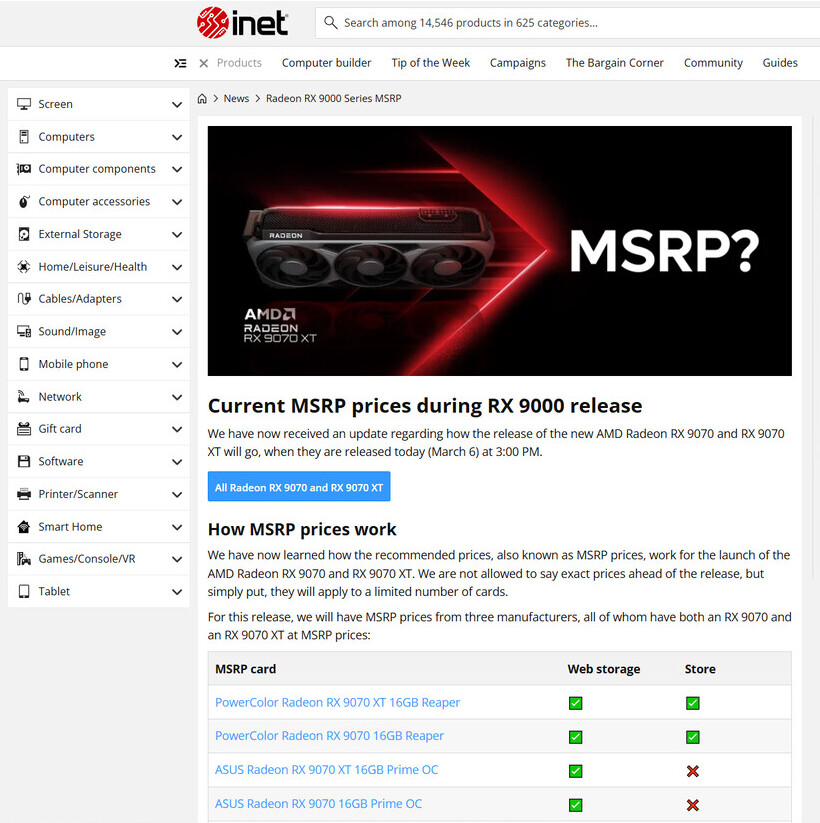
Over the past month and a half, PC hardware retailers have tasked themselves with sharing of all sorts of bad news to their respective customer bases. Inet AB has outlined the outlook for regional availability of GeForce RTX 5070 graphics cards, but a newer blog entry focuses on the Team Red side of things. The popular Swedish store put a spotlight on today's launch of RDNA 4 products: "we have learned how the recommended prices, also known as MSRP prices, work for the launch of the AMD Radeon RX 9070 and RX 9070 XT. We are not allowed to say exact prices.., but simply put, they will apply to a limited number of cards. For this release, we will have MSRP prices from three manufacturers, all of whom have both an RX 9070 and an RX 9070 XT at MSRP." According to Inet's product table, the brands are: ASUS, PowerColor and SAPPHIRE. Respectively, the PRIME, Reaper and PULSE product families serve as substitutes to (absent) AMD-built equivalents.

So far, the retail launch of Radeon 9070 Series has experienced fewer hiccups—when compared to recent GeForce RTX 50-series releases. Unfortunately, Inet has indicated that price climbs are in the pipeline for AMD's brand-new RDNA 4 generation. The shop's blog elaborated on shifting circumstances: "the prices only apply to the first shipment of each model. For Sapphire and ASUS it will be just as usual, we have only received one shipment, and you can buy it until it runs out, but with PowerColor it will be different. In other words, only the cards that were released with MSRP prices at release will be sold for the lower price." Earlier today, Overclockers UK's initial batch of "baseline price conformant" stock was depleted rapidly—forum and social media posts boasted about "thousands of units" being amassed in a warehouse, prior to launch. Gibbo—a well-liked OCUK employee—shared some additional insight (yesterday): "I feel stock will be fine for a few days. MSRP is capped quantity of a few hundred, so prices will jump once those are sold through. Re-stocks and pricing is unknown going forward, nobody really knows what April will bring due to instability in world with USA starting to rage a trade war, we are all hopeful it won't impact computer stuff, but who knows."

OCUK Created Massive Cube of SAPPHIRE PULSE RX 9070 XT Retail Stock, Claimed Supply of 1000+ Units

Earlier in the week, SAPPHIRE's Global Senior VP Marketing Manager—Adrian Thompson—posted a fascinating photo of soon-to-be released PULSE Radeon RX 9070 XT graphics cards, located in an unidentified warehouse. His social media post/teaser stated: "ready to ship to happy customers." Given the apparent impressive volume of boxed products on display, supply chain insiders have referred back to prior leaks. As far back as mid-January (2025), board partner custom Radeon RX 9070 XT and RX 9070 models were reaching end destinations; at retail/e-tail warehouses. In reaction to Thompson's preview of stockpiled RDNA 4-based PULSE boxes, Overclockers UK (OCUK) expressed mild disapproval.

Gibbo (aka Andrew Gibson) posted a follow-up on the company's discussion board: "as Sapphire jumped the gun with our content (TUT, TUT), I might as well share with you guys the Borg Cube (that) Overclockers UK's marketing department spent hours building out of Sapphire RX 9070 XT Pulse Cards and yes the cube is solid, the center is even more 9070 XT Pulse cards, and we have over 1000 in stock just of this model. Even better, OCUK will hit £569 (including VAT) on this incredible beast of a card, with hundreds to go round at MSRP. In fact, we have so much stock we could build an armada of Borg Cubes pretty much out of every model we have and from all brands, we have several thousand cards in stock spanning across Sapphire, PowerColor and ASRock all of which have 1000+ in stock of each brand." This friendly update strikes with a happier tone—in sharp contrast, Gibbo detailed a sorry situation prior to the launch of GeForce RTX 5090 cards. At the time of writing, the Overclockers UK webstore is down—visitors are seeing "504 Gateway Time-out" error messages. A lot of pre-launch buzz and hype has likely drummed up plenty of buyer interest—thus causing an overloading of servers. In yesterday afternoon's board post, Gibbo continued his Star Trek-themed musings: "we then also have several hundred cards from Gigabyte and ASUS as well, this launch will be impossible to resist as such is the reason we built Borg Cubes, because AMD will assimilate you, resistance is futile, BUY tomorrow (March 6) from OCUK at 2pm with prices starting from £524.99 Inc VAT."
Return to Keyword Browsing
Nov 25th, 2026 23:43 CST change timezone

New Forum Posts

Popular Reviews

TPU on YouTube

Controversial News Posts