News Posts matching #Asus

Return to Keyword Browsing

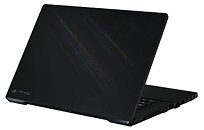
ASUS ROG Zephyrus M16 Pictured, Combines 8-core Tiger Lake with RTX 3070 Mobile

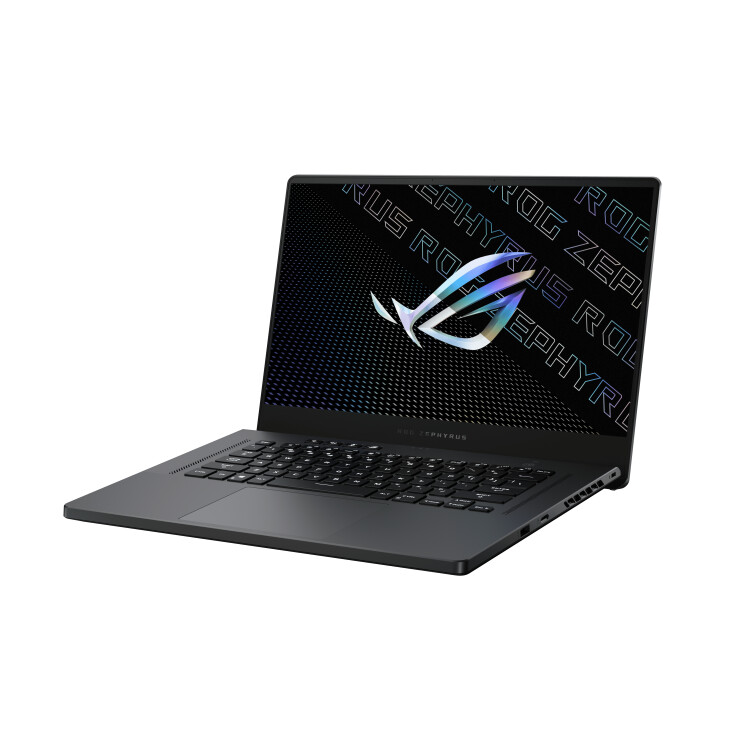
Here are some of the first pictures of the ASUS ROG Zephyrus M16, a high-end 16-inch gaming notebook in development, characterized with its tall 16:10 aspect-ratio display. This display will come in two resolution options—2560 x 1600 at 144 Hz and 1920 x 1200 at 165 Hz. Both displays support 100% DCI-P3 coverage, and are mounted via a 180-degree hinge. Things get very interesting with that's alleged to be under the hood. The 2021 ROG Zephyrus M16 is powered by 11th Gen Core "Tiger Lake H45" processors, with the top SKU powered by the 10 nm Core i9-11900H, an 8-core/16-thread beast. Graphics options go all the way up to the GeForce RTX 3070 Mobile. A PCI-Express 4.0 x4 NVMe SSD is also included. Given its early listings on Amazon, one can expect launch of these notebooks to be right around the corner.


ASUS Introduces Chrome Enterprise Devices for Modern-Day Businesses

ASUS today announced ASUS Chrome Enterprise devices, an exciting offering that combines the benefits of top-notch ASUS hardware with the business capabilities of Chrome OS. ASUS Chrome Enterprise devices are specifically built for business—enabled with Chrome Enterprise and housed in versatile, lightweight and robust ASUS Chrome devices to provide professionals with the tools they need to be effective and productive.

The lineup of ASUS Chrome Enterprise devices spans Chromebooks with clamshell and convertible designs and various form factors, as well as Chromebox models tailored to different business needs. With this offering, businesses can enjoy features such as zero-touch enrollment and Parallels Desktop for Chrome OS to optimize workflows for cloud-first devices.

ASUS ROG G15 with Radeon RX 6800M and Ryzen 9 5900HX Spotted

It's close to impossible finding a Ryzen 9 mobile processor-powered gaming notebook with a high-end NVIDIA GPU. Having returned to the high-end discrete GPU market with the "Big Navi" Radeon RX 6000 series, AMD is looking to complement its Ryzen 5000M series "Zen 3" Cezanne mobile processors with high-end RDNA2 GPUs of its own. An upcoming model of the ASUS ROG G15 (2021) leaked to the web in a CPU-Z validation database (model: G513QY). This notebook packs a Ryzen 9 5900HX "Cezanne" 8-core/16-thread processor based on the "Zen 3" microarchitecture; but more interestingly, the discrete GPU is Radeon RX 6800M.

The desktop Radeon RX 6800 (non-XT) and RX 6700 XT have shown that AMD has achieved performance/Watt parity/leadership over NVIDIA with high-end GPUs. VideoCardz reports that the RX 6800M is likely based on a maxed-out 7 nm "Navi 22" silicon, with 2,560 stream processors, and 12 GB of GDDR6 memory across a 192-bit wide memory bus. The RX 6800M could play in the same performance league as the GA104-based GeForce RTX 3080 Mobile, given that the desktop RX 6700 XT is leveling up to the desktop RTX 3070. Given the 256-bit memory bus width of the larger "Navi 21" silicon, it's quite possible that AMD comes up with even higher mobile SKUs, so AMD-powered gaming notebooks finally match/beat Intel+NVIDIA combinations.

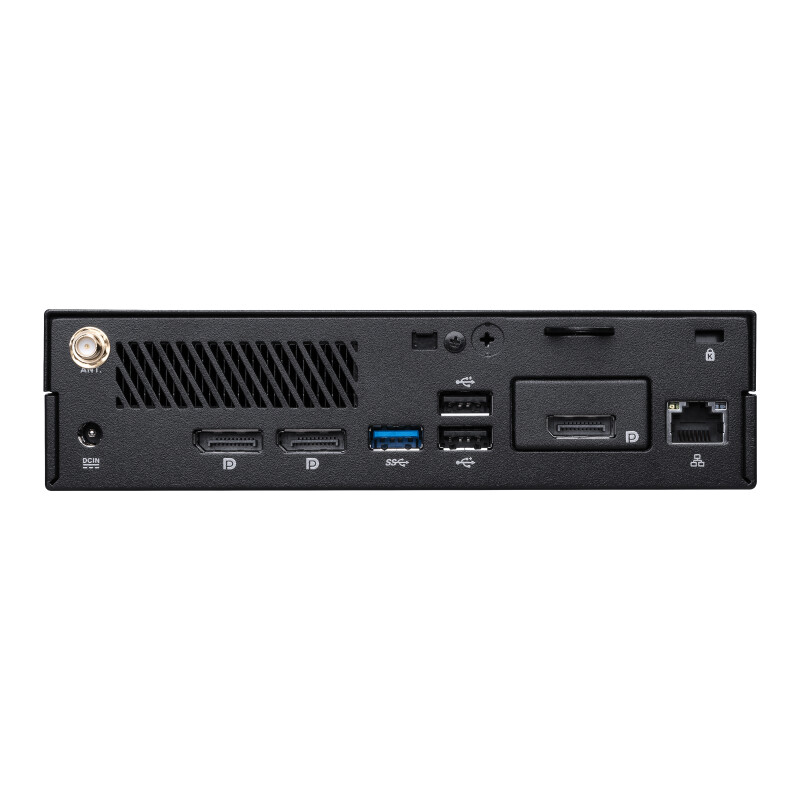
ASUS Announces Mini PC PB62

ASUS today announced Mini PC PB62, a durable computer that delivers powerful performance to provide flexibility, expandability and performance to suit a range of business applications, including digital signage, point-of-sales (POS) system, kiosks and intelligent vending machines. Mini PC PB62 is powered by the latest desktop-grade up to 11th Generation Intel Core processor and fast DDR4 3200 MHz memory.

Engineered for performance: 11th Gen Intel Core, DDR4 3200 MHz memory and Intel Optane
With the latest up to 11th Gen Intel Core i7 processors, Mini PC PB62 is caters for with support for either a 35- or 65-watt CPU - so it's ready to be specified for supreme efficiency or maximum performance. PB62 also has built-in support for Intel Optane H20 memory, the technology that greatly improves storage speeds, enables frequently-used documents, pictures, videos and applications to be accessed more quickly while improving overall system performance to maximize productivity and efficiency.

Intel Core i9-11900K Breaks 7 GHz Barrier at 1.873 V

Intel Core i9-11900K processor, the flagship model from the 11th generation "Rocket Lake" CPU lineup, has been overclocked to more than 7 GHz by the "Rog-Fisher". Thanks to the report coming from VideoCardz, we have information that the top-end Rocket Lake processor is possibly a very good overclocker. Running at 7048 MHz, the CPU managed to achieve that frequency using "only" 1.873 V. There is no doubt that the system was being cooled by LN2, as such overclocks need it to remain stable, however, we don't have any data on that. The CPU was paired with the ASUS ROG Maximus XIII Apex motherboard, designed for extreme overclocking purposes.

It is important to note that the CPU didn't run any benchmarks, as it was just validated at that frequency by Valid x86. The sample was likely supplied by Intel, so it could be a cherry-picked model. For the official benchmark results of Rocket Lake processors, we have to wait until tomorrow (March 30th), when NDA lifts.

ASUS Launches Single-Fan RTX 3060 12GB Phoenix Graphics Card

ASUS has recently launched their first Ampere Series Phoenix card with the GeForce RTX 3060 Phoenix (PH-RTX3060-12G). The Phoenix features a 2.5 slot design with a single fan and measures just 17.7 x 12.8 x 5.1 cm which makes it the shortest Ampere GPU from ASUS. The card features the NVIDIA standard 1777 MHz boost clock but can be configured with the bundled ASUS software for 1807 MHz. The Phoenix includes three DisplayPort 1.4a connectors and one HDMI 2.1 along with a single 8-pin power connector. The card is now available to purchase from select retailers but official pricing and availability have not been released.
ASUS: "Lower Yields Upstream" Responsible for Lack of NVIDIA Chips

In a recent ASUS investor call from March 17th, a company representative explained the company's financial outlook and what it sees as its successes and failures in Q42020. In it, the company referenced the lack of NVIDIA graphics cards to satisfy demand as one of the major hurdles it has had to face. As the company said, "Our guess is that the gap might have been caused by lower yields upstream. As for when [Nvidia] can increase that yield is something hard for us to predict."

This is likely the clearest indicator we've had since NVIDIA's RTX 30-series launch that there is more than a demand problem for NVIDIA's Ampere graphics cards - there's a yield one as well. NVIDIA could have simply failed to predict demand for its graphics cards in wake of the recent cryptomining craze, and asome theorize a miscalculated allocation of wafers with Samsung on expectations of lower demand post-holiday season. That one doesn't make much sense, as by that time, COVID and its effects on tech market demand were already pretty clear. And while NVIDIA certainly doesn't have all available capacity at Samsung's 8 nm at its disposal, there should certainly be more available capacity for NVIDIA's RTX 30-series than say, for AMD's Navi graphics cards, which have to share the 7 nm wafers with virtually all other AMD products (from CPUs to mobile chips to enterprise solutions). The idea of lower upstream yields than would be ideal for NVIDIA does certainly come as a possible reason - a change in foundry partner comes with certain additional difficulties in adapting the design to that given processes' strengths and issues. As always, we'll just have to wait and see.

ASUS Launches Custom Design Radeon RX 6700 XT Graphics Cards

ASUS today launched a trio of custom-design AMD Radeon RX 6700 XT graphics cards. These include the RX 6700 XT DUAL, the TUF Gaming RX 6700 XT OC, and the top-of-the-line ROG Strix RX 6700 XT O12G. All three a factory-overclocked cards, and while the company didn't disclose the clock-speeds, one can make out how the three stack up—the ROG Strix at the top, the TUF Gaming OC next, followed by the DUAL. The company will also sell reference-design RX 6700 XT cards. The ROG Strix RX 6700 XT O12G leads the pack with its latest-gen DirectCU III cooling solution that's featured across its custom RX 6000 and RTX 30-series lineup; which features a large aluminium fin-stack heatsink, a trio of the latest-gen Axial-Tech fans, a blinding amount of RGB bling, and the strongest VRM setup among the three, which pulls power from a pair of 8-pin PCIe power connectors, and other goodies such as dual-BIOS, RGB and case fan headers.

The TUF Gaming RX 6700 XT OC is next up, along with its acclaimed TUF Gaming cooling solution that exposes much of its heatsink's bare-metal, through an airy metal shroud; and uses a trio of Axial-Tech fans. This card pulls power from two 8-pin PCIe connectors, much like the ROG Strix, but is expected to have a slightly downsized VRM, and lower factory-overclocked speeds. You still get dual-BIOS. Lastly, there's the RX 6700 XT DUAL, slotted in the company's sober-looking PRIME family of motherboards and graphics cards. It features a more compact board design, with a lighter aluminium fin-stack heatsink that uses only a pair of Axial-Tech fans. This card pulls power from 6-pin + 8-pin connectors. All three are expected to launch on March 18, 2021.

ASUS Announces ProArt B550-Creator Motherboard with Thunderbolt 4 Support

Check out the latest B550 board from ASUS. Designed for professionals and creatives who need ultra-fast USB and Thunderbolt connectivity alongside stable and reliable operation. The B550-Creator is a great choice for those building a Ryzen based system with Ryzen 3000 series or Ryzen 5000 series CPUs. The board Features out-of-the-box UEFI support for both series of processors. The B550 Creator is the first AM4 motherboard with Thunderbolt 4 onboard! In addition, you have dual 2.5 Gbps LAN, dual M.2 slots alongside dual heatsinks. It also incorporates the latest ASUS M.2 Q-Latch design for simple and tool-free M.2 drive installation. For the latest generation of chassis, you also have front USB 3.0 connectivity as well as USB 3.2 Gen 1 Type Internal connectivity.

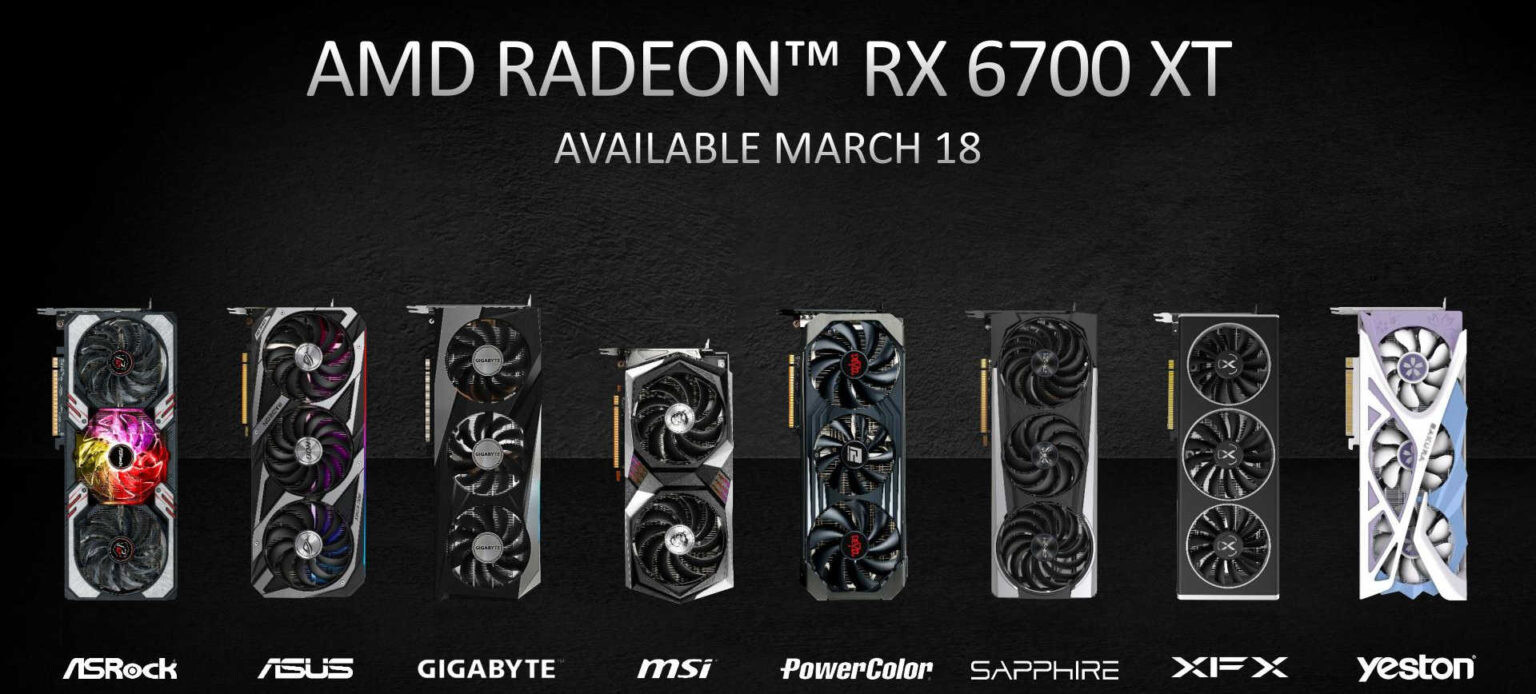
AMD Showcases Upcoming Custom Radeon RX 6700 XT Graphics Cards from AIB Partners

AMD has pulled what could be another sucker punch on NVIDIA with the announcement of its upcoming Radeon RX 6700 XT graphics card set at the $479 price point. Considering, of course, that there's availability; in case there's not, our very own btarunr defined AMD's claims quite well on the news post covering AMD's announcement. If there is actual availability, however, AMD has showcased eight different designs coming from its more high-profile partners: AsRock, ASUS, Gigabyte, MSI, PowerColor, Sapphire, XFX, and Yeston.

All the showcased graphics cards will feature the Navi 22 GPU and 12 GB of GDDR6 memory, but all of them should differ from AMD's reference design in the power delivery: dual 8-pin configurations are the expected changes to the design, so as to allow for higher performance, higher power limit ceilings, and better potential overclocks. Expect all of them - all of them - to be priced higher than AMD's suggested (and we know how that suggestion goes nowadays) MSRP of $479. All of these cards should be available in some quantity come March 18th.

ASUS Rolls Out ThunderboltEX 4 Add-on Card

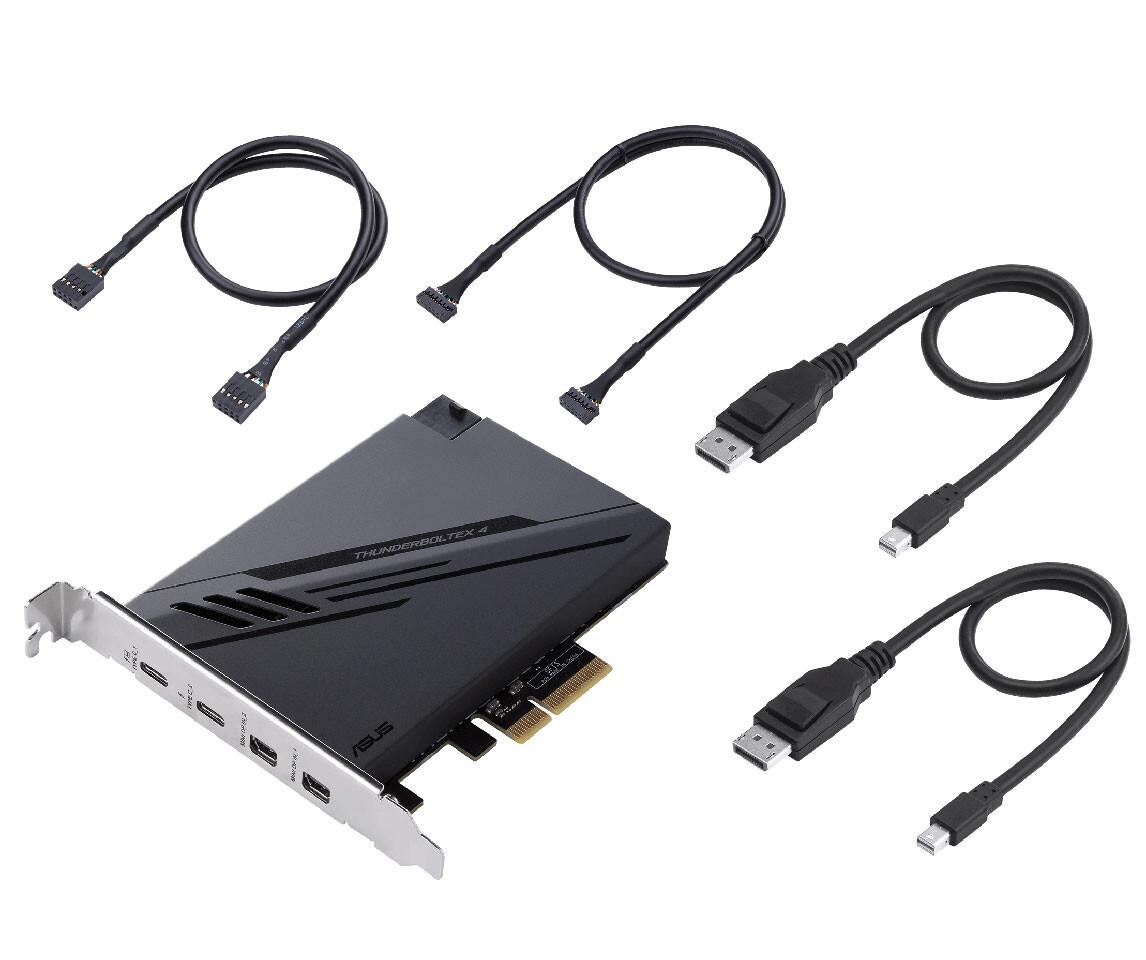
ASUS today rolled out the ThunderboltEX 4, an add-on card designed to give your PC full Thunderbolt 4 connectivity. The only catch here is that you'll need an ASUS motherboard with a Thunderbolt readiness header (which provides timing and other low-level system commands to the card). Also needed is a USB 2.0 header, of which you're likely to have plenty. The card features a PCI-Express 3.0 x4 host interface, and can be installed on any PCIe slot, x4 or larger. A 6-pin PCIe power input is also needed, as Thunderbolt 4 is capable of up to 100 W of power delivery per port, enabling single-cable RAID enclosures and monitors.

The ASUS ThunderboltEX 4 card puts out two Thunderbolt 4 ports in the USB type-C physical format, each with 40 Gbps of bi-directional bandwidth. The card provides DisplayPort passthrough for each port. You connect your graphics card to the ThunderboltEX 4 using the included DisplayPort to mini-DisplayPort cables. The card supports DisplayPort 1.4 passthrough, so you can scale all the way up to 8K resolution on the connected monitors, if your graphics card is game. Under the hood, the card features an Intel JHL8540 "Maple Ridge" Thunderbolt 4 controller. The company didn't reveal pricing.

ASUS Radeon RX 6700 XT DUAL and TUF Gaming Pictured

Here are some of the first pictures of custom-design AMD Radeon RX 6700 XT graphics cards, in the form of the ASUS Radeon RX 6700 XT DUAL, and the TUF Gaming Radeon RX 6700 XT OC. Both cards feature 12 GB of memory, and use ASUS's latest generation of Prime Series DUAL and TUF Gaming board designs. The Radeon RX 6700 series is expected to compete with NVIDIA's GeForce RTX 3060-series "Ampere" graphics card in the high-volume "sweetspot" segment. The ASUS DUAL card is a lot larger than it looks, measuring a little over 29 cm in length, and using a pair of 100 mm Axial-Tech fans to ventilate a large heatsink underneath; while the TUF Gaming OC is about as large as any of the other TUF Gaming cards from this generation. AMD is expected to announce the RX 6700 series at an online event, on March 3, 2021.

Akasa Releases Turing A50 Fanless Chassis for ASUS PN50

Akasa, a global leader in fanless technology, has extended their Turing fanless chassis design series by releasing the new Turing A50. The Turing A50 has been designed specifically to support the mainboards found inside the ASUS Mini PC PN50 series, which features the latest AMD Ryzen 4000 notebook PC mobile processors in conjunction with Radeon graphics. The Turing A50 is a product at the forefront of fanless technology and combines innovative style with solid functionality in order to create a contemporary Ryzen fanless system.

The ASUS Mini PC PN50 series can feature some of the latest AMD mobile processors: the Ryzen 3, 5 and 7. Whichever you choose, the Turing A50 will be able to keep the APU cool under all working conditions to optimize performance in complete silence. The case utilizes fanless technology, where the solid aluminium core that showcases hi-performance AK-TC5026 thermal compound and gap fillers, efficiently transfers heat from the APU. With the chassis itself working as a heatsink, the excess heat from the APU is then transferred to the external fins via the aluminium core and into the surroundings, keeping the APU cool without the need of a noisy fan. Built with deep cooling fins to maximize the surface area and an aluminium casing, the system functions optimally whilst also existing as a completely silent component.

ASUS USB-C2500 Provides a Handy, Tool-free 2.5GbE Upgrade

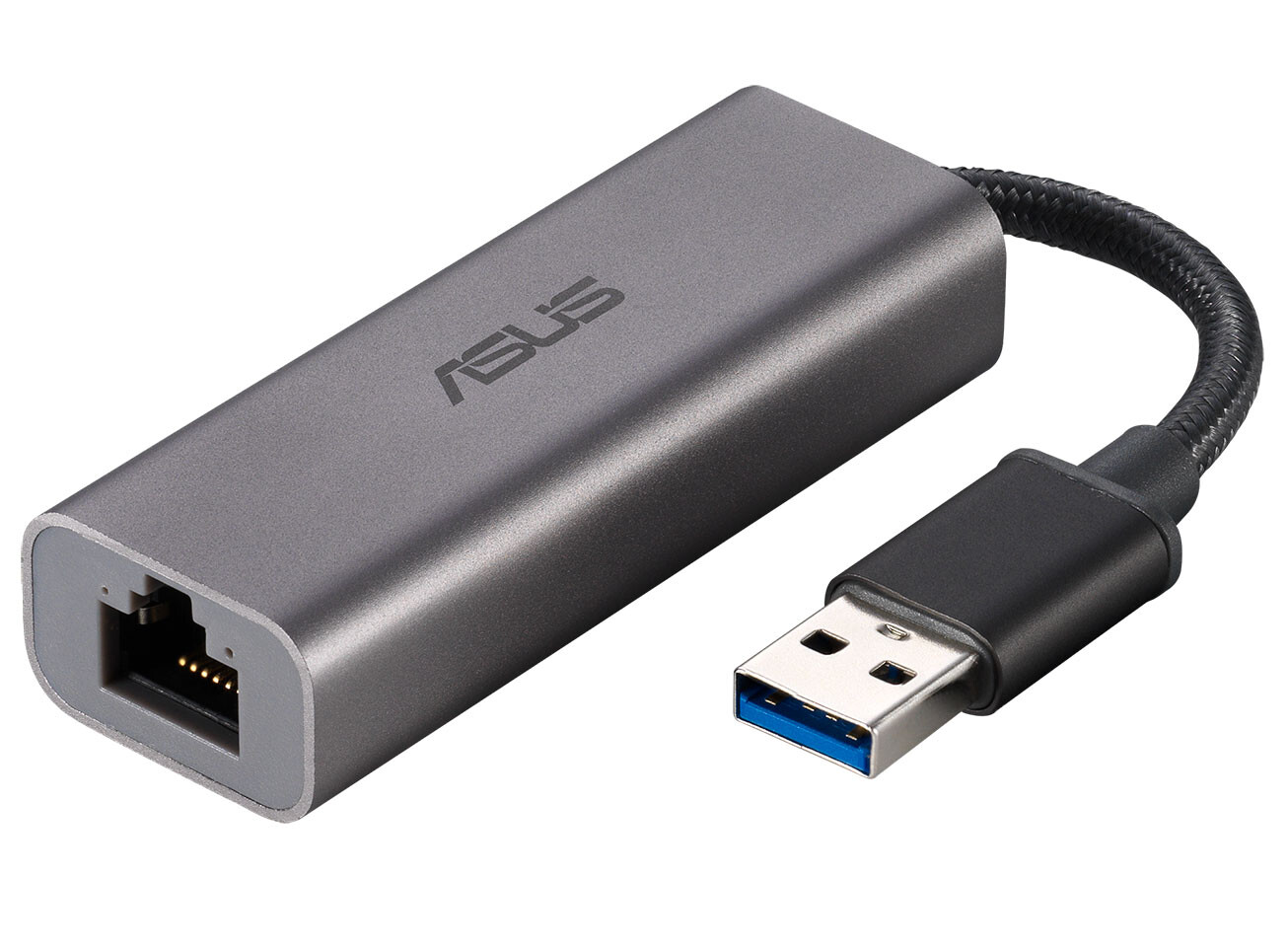
ASUS USB-C2500 lets you add 2.5 Gbps wired Ethernet to your PC or NAS without the fuss of opening it up for a PCIe adapter. The dongle features a USB 3.0 type-A (5 Gbps) connector on one end, and an easy-to-setup 2.5 GbE port on the other. The main body of this network dongle is made of an aluminium alloy, while a Nylon-sleeved 5 cm cable ties it to the USB 3.0 type-A connector. A type-A to type-C adapter, or native type-C interface aren't included, unlike with the ASUSTOR AS-U2-5G2. The company didn't mention the controller underneath, but it's very likely to be the Realtek RTL8156B, possibly the only USB3-based 2.5 GbE single-chip solution at large. The company didn't announce pricing.

ASUS ROG Zephyrus Duo 15 Owners are Applying Custom GPU vBIOS with Higher TGP Presets

With NVIDIA's GeForce RTX 30-series lineup of GPUs, laptop manufacturers are offered a wide variety of GPU SKUs that internally differ simply by having different Total Graphics Power (TGP), which in turn results in different clock speeds and thus different performance. ASUS uses NVIDIA's variant of GeForce RTX 3080 mobile GPU inside the company's ROG Zephyrus Duo (GX551QS) with a TGP of 115 Watts, and Dynamic Boost technology that can ramp up the card to 130 Watts. However, this doesn't represent the maximum for RTX 3080 mobile graphics card. The maximum TGP for RTX 3080 mobile goes up to 150 Watts, which is a big improvement that lets the GPU reach higher frequencies and more performance.

Have you ever wondered what would happen if you manually applied vBIOS that allows the card to use more power? Well, Baidu forum users are reporting a successful experiment of transforming their 115 W RTX 3080 to 150 W TGP card. Using GPU vBIOS from MSI Leopard G76, which features a 150 W power limit, and applying it to the ROG's Zephyrus Duo power-limited RTX 3080 cards is giving results. Users have successfully used this vBIOS to squeeze out more performance from their laptops. As seen on the 3D Mark Time Spy rank list, the entries are now dominated solely by modified laptops. Performance improvement is, of course, present and it reaches up to a 20% increase.

ASUS Publishes Full GeForce RTX 3000 Series Laptop GPU Specifications Including TGP and Frequency

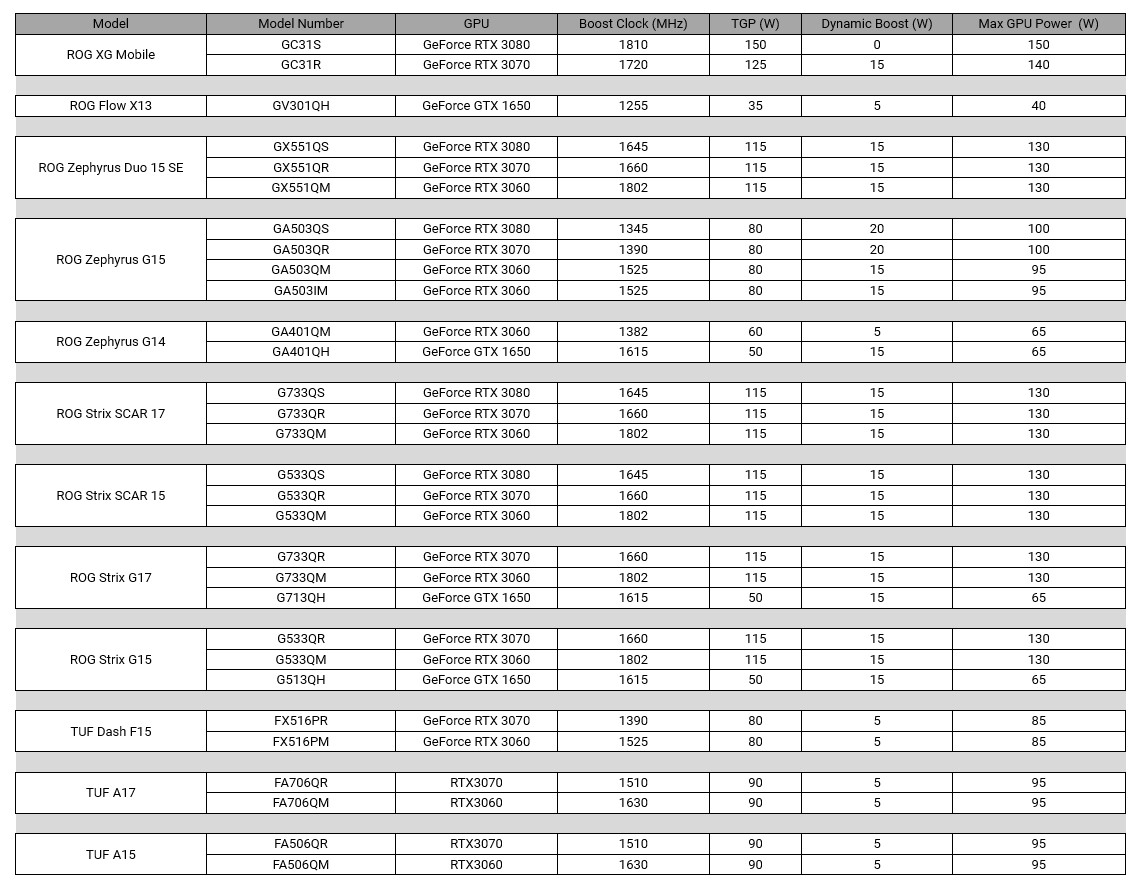
On a request from Tweakers, ASUS has decided to reveal full GPU specifications for the entire laptop GPU lineup. Having NVIDIA GeForce RTX 3000 series GPUs in their laptops, companies were not committed to listing the TGP and whatever the GPU inside was a Max-Q or Max-P variant. That would confuse the average consumer and a GPU variant they got could be significantly slower than what they have expected. So to clear up the confusion, ASUS has decided to provide us with the table of GPU TGPs and frequencies found inside the company's laptops. Not only has ASUS published a table of TGPs and frequencies, but the company has also updated its website to reflect the exact TDP and exact frequency of any GPU used in a laptop to avoid any confusion and give consumers reassurance in their purchase. You can find the table of laptops with their exact GPU TGP and GPU clock speeds below.

IKEA and ASUS Announce Furniture that Puts Gamers First

There are 2.5 billion gamers around the world, a diverse group united by their love of e-sports and gaming - and by being an overlooked group from a life-at-home perspective. But that is about to change: the new gaming range developed by IKEA in collaboration with Republic of Gamers (ROG) was launched at IKEA China on January 29, 2021. From May 2021 it will be available at IKEA Japan, and from October 2021 the range will be sales started globally. Gaming is more than a fun past-time. It is a way to wind down and take your mind off everyday hassles, and to connect with people everywhere. For some, it is even a livelihood. With an ever-increasing number of gamers worldwide and a rapidly growing market, getting into gaming was a natural step for IKEA.

At IKEA, we know a lot about smart home furnishing solutions, but we are novices at gaming. So, how to create a properly high-performing gaming range? To contribute to a better everyday life for all gamers, IKEA partnered with ROG (Republic of Gamers), an ASUS sub-brand, keeping the leading position in gaming industry and designing high quality, innovative hardware and gear for gamers. ROG has in-depth knowledge of the gaming industry and want to find new ways to make gaming blend into the home. Combining the best of these two worlds, the collaboration aimed to democratise the gaming experience, by creating relevant, functional, beautiful and affordable products and complete gaming solutions to make it easier for everyone to create the setup and the home they want.

ASUS ROG Z590 Motherboards Include MemTest86 Utility Integrated in BIOS

The recently announced ASUS ROG Z590 motherboards will include the MemTest86 utility as part of their UEFI BIOS. The memory testing tool is used to test system memory for faults, which will help overclockers get the best performance out of their systems. The Intel 11th Generation Rocket Lake processors offer greatly improved memory capabilities with 3200 MHz DDR4 natively supported and various motherboard manufacturers supporting up to 5000+ MHz. The MemTest86 program runs directly from the BIOS and saves the results to BIOS archives for reference. ASUS ROG B560 and Z590 motherboard will both also include a free 60 day AIDA64 Extreme subscription.

Thermaltake's Pacific V-RTX 3070 and Pacific V-RTX 3080/3090 GPU Water Blocks are Now Available for Purchase

Thermaltake, the leading PC DIY premium brand for Cooling, Gaming Gear, and Enthusiast Memory solutions, is excited to announce that the Pacific V-RTX 3070 GPU Water Block and Pacific V-RTX 3080/3090 GPU Water Block are both ready to sell.

The Pacific V-RTX 3070 GPU Water Block and Pacific V-RTX 3080/3090 GPU Water Block are both RGB designed waterblocks for ASUS ROG STRIX RTX 3070 and 3080/3090 graphic cards; these transparent water blocks are part of the TT RGB ecosystem and support the TT RGB Plus software, displaying 16.8M RGB lighting effects to create the best visual effects for the users' builds. They also support various motherboards with a 5 V addressable RGB header allowing users to control the lighting effects through the synchronized software, such as ASUS Aura Sync and MSI Mystic Light Sync. Their high-water flow design, mirror-finished CU base, and micro-channel structure guarantee these water blocks' performance and visual aesthetics. Therefore, if you happen to get an ASUS ROG STRIX RTX 3070 or a 3080/3090 graphics card, come try out our latest Pacific V-RTX 3070 GPU Water Block or the Pacific V-RTX 3080/3090 GPU Water Block.

Intel Partners with ASUS To Launch Iris Xe Desktop Graphics Cards to OEMs

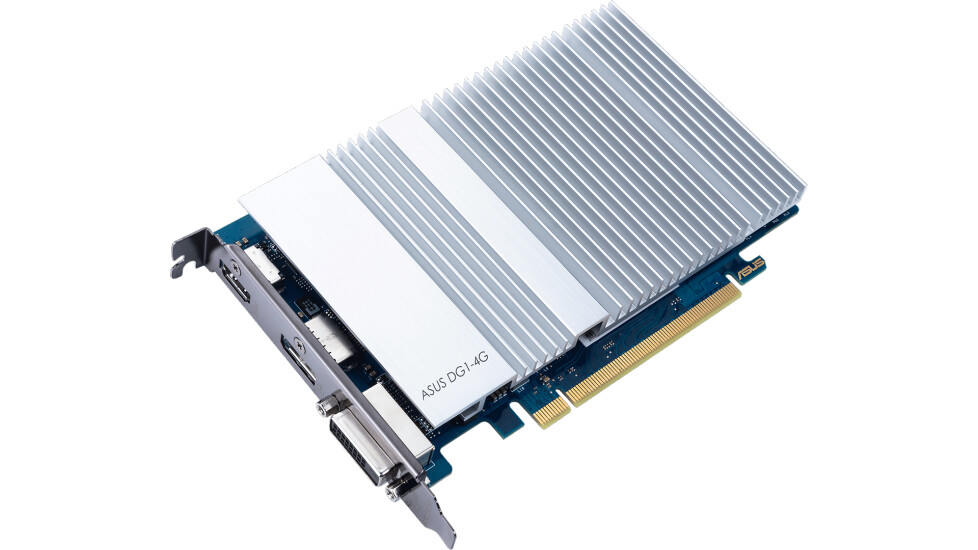
Intel has partnered with ASUS and Colorful to design and launch Intel Iris Xe discrete desktop graphics cards. The two new DG1 boards are targeted towards mainstream users and small to medium-size businesses. The cards will only be available to system integrators who will offer Iris Xe discrete graphics as part of pre-built systems.

These new desktop cards follow the launch of Intel Iris Xe MAX for notebooks, including many of the same features and specifications. The cards feature 80 execution units and 4 GB of LPDDR4X video memory which is 16 execution units less than the notebook version however we are unsure of what clock speed they will be running at. The desktop cards also feature the same three display outputs, hardware video decode and encode acceleration, including AV1 decode support, VESA Adaptive Sync, and Display HDR support along with artificial intelligence capabilities.

Update Jan 28th: Colorful has recently published an official statement clarifying that they will not be releasing an Intel Iris Xe Desktop Graphics Card, this means that Intel's other launch partner is currently unknown.

ASUS GeForce RTX 3070 and RTX 3060 Ti Megalodon Graphics Cards Pictured

ASUS is readying the new Megalodon line of graphics cards. Aesthetically, these cards bear some resemblance to the ROG Strix, but are likely slotted below even the TUF Gaming series, with metal cooler shrouds and back-plates making way for what appear to be plastic ones. The coolers still keep the Axial-Tech fans, which ventilate a lighter heatsink than the one found in the ROG Strix cards. The PCB appears to be similar to the company's DUAL series cards, with single 8-pin PCIe power inputs for the RTX 3060 Ti, and possibly additional connectors for the RTX 3070. It's very likely that ASUS is selling the Megalodon series only in the Chinese market.

IKEA x ASUS ROG Furniture for Gamers: First Look

IKEA and ASUS ROG announced a collaboration last September, for furniture and accessories targeted at gamers. The first products from this combine are out. From what we can tell, IKEA has given some of its existing home-office and garage furnishings an ASUS ROG trim, but we can also spot some new creations. Among the gear IKEA showed off are standing desks (both manual and motorized), wheeled desktop tower case stands, mats for your gaming chair, peg-boards with pegs, hooks, and Velcro straps for various kinds of hardware and peripherals; wheeled chests of drawers, and other accessories. What we're yet to see from IKEA x ROG, though, is a proper gaming chair. Perhaps one is in the works, since it would have to be a clean-slate design.

ASUS Showcases ROG Ryujin II AIO Cooler With 3.5" LCD Display

ASUS has showcased an update to their ROG Ryujin AIO, which features an LCD display that's far increased in size compared to the original's 1.77" OLED. The ROG Ryiujin 2 features a redesign of the OLED screen component (now an LCD, likely due to OLED burn-in) sitting on top of the CPU waterblock, now measuring in at a whopping 3.5", that can be user-configured to showcase ROG pre-installed graphics, system data such as temperatures, voltages, and etc, or even user-created graphics.

The ROG Ryujin II looks much the same as its predecessor, barring the new larger display. While the original sold at an MSRP of $220, the ROG Ryujin II will likely retail for higher than that. While the cooler features RGB lighting capabilities, ROG elected to showcase it in a more subdued approach, marrying the LCD graphics with the black aesthetics of its ROG Maximus Z590 Hero motherboard. A beautiful AIO loop, to be sure, although the expectedly high pricing may give would-be buyers some pause.

ASUS Unveils GeForce GTX 1660 SUPER ZAKU II EDITION Graphics Card

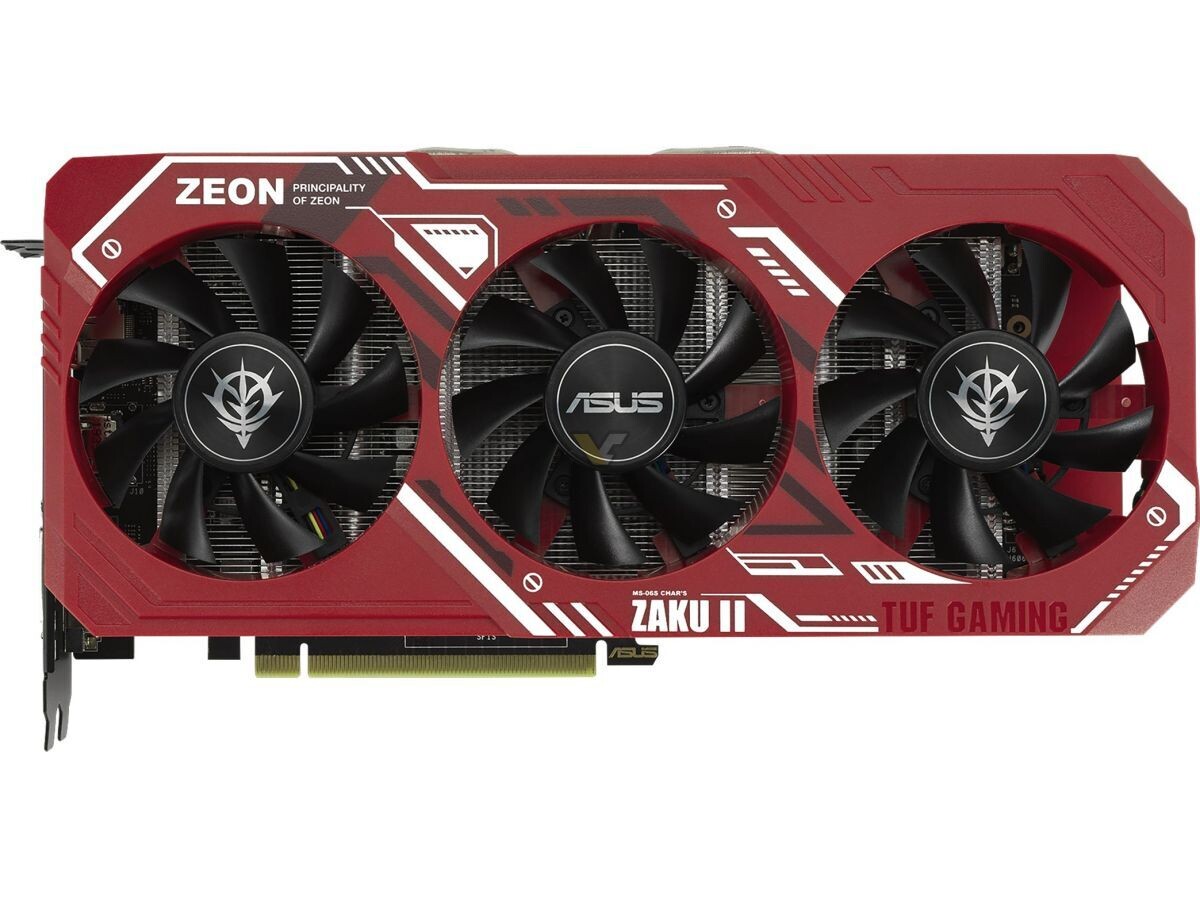
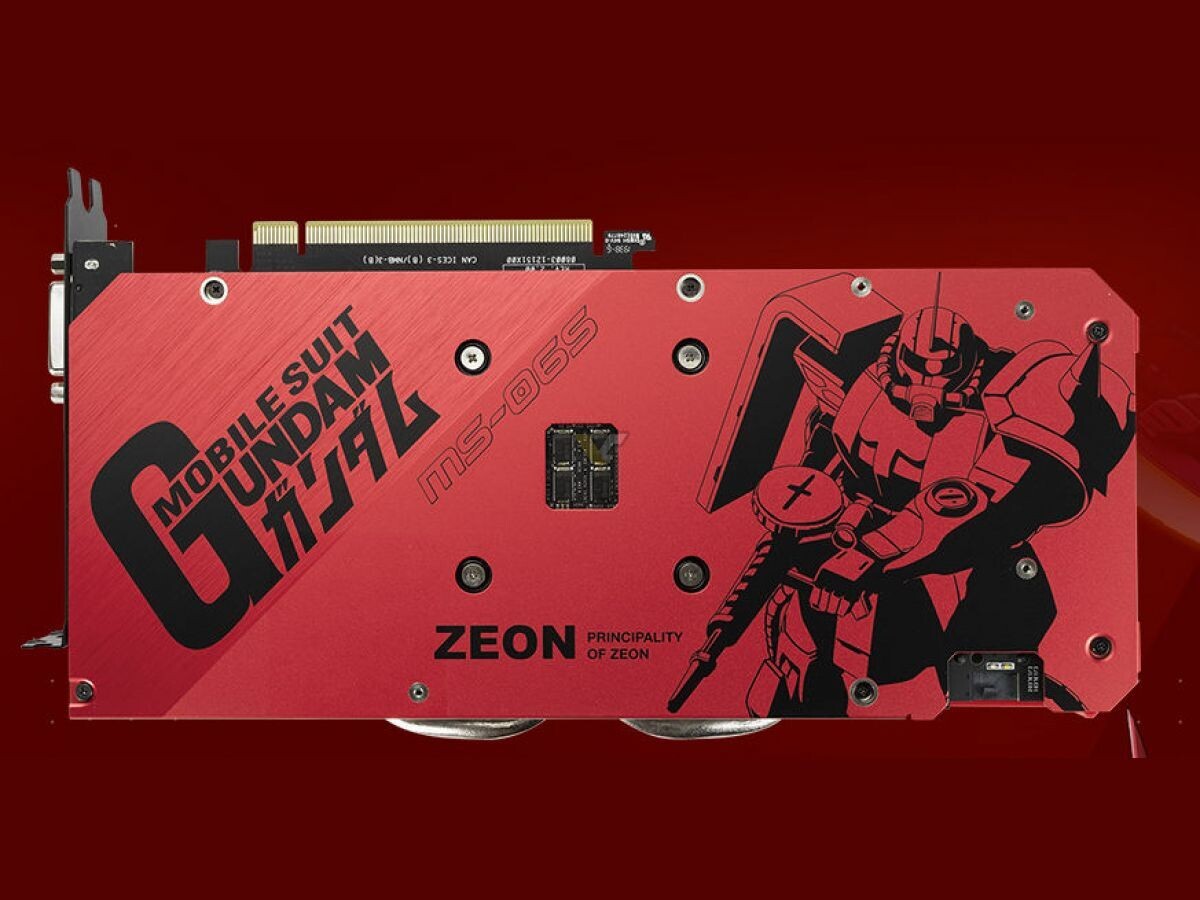
ASUS has been super hyped-up about the popular Japanese military science fiction media franchise/media mix called GUNDAM, where the company has developed multiple products based on the series. Starting with the all-white GUNDAM GeForce RTX 3090 graphics cards to the latest edition of ASUS TUF Gaming X3 GeForce GTX 1660 SUPER ZAKU II EDITION graphics card, ASUS seems to be loving the fiction universe of GUNDAM. The latest GTX 1660 SUPER graphics card is a factory overclocked design with a slight improvement to the boost speed. The GPU will boost up to 1830 MHz, representing a mere 2.5% improvement. The rest of the specifications match the reference GTX 1660 SUPER design with 1408 CUDA cores and 6 GB of GDDR6 14 Gbps memory.

However, the main appealing and marketing thing about this card is not its overclocking speeds, but rather its aesthetics. It features Char's MS-06S ZAKU II Mobile Suit color scheme, which is a red colorway. It comes in a 2.7 slot body with a triple-fan cooling system, and a special red backplate with some stylish character animation.

NVIDIA Discloses Listing of Mice Compatible With Reflex Latency Analyzer

NVIDIA has published listings of gaming mice compatible with their Reflex latency reduction technology - specifically, mice that are compatible with NVIDIA's Latency Analyzer, which will ensure the best responsiveness from your NVIDIA-equipped PC in gaming scenarios. The mice listing is always pending updates as more and more manufacturers submit their mice for NVIDIA certification, and the list of certified ones is currently bigger than what NVIDIA is sharing in renders.

As per NVIDIA, the listing of currently-supported and certified reflex mice features a total of 11 mice. Acer features three certified mice in the form of the Acer GM310, Predator Cestus 330, and Predator Cestus 350; Alienware's only mice is the AW610M; ASUS ROG counts with the Chakram Core; Corsair's DARK CORE RGB PRO/ RGB PRO SE make the cut; Logitech features the G Pro X Superlight; MSI counts with the GM 41 gaming mouse in the roster; The Razer Death Adder V2 and SteelSeries Rival 3 also make the cut. These are mice that are certified to provide compatibility with NVIDIA's Reflex ecosystem, which takes into account your graphics card, PC monitor and gaming mouse to ensure the lowest latency and fastest system response times for competitive gaming.
Return to Keyword Browsing
Nov 26th, 2026 01:23 CST change timezone

New Forum Posts

Popular Reviews

TPU on YouTube

Controversial News Posts