News Posts matching #Asus

Return to Keyword Browsing

ASUS Intros GeForce GTX 1650 GDDR6 Phoenix Graphics Card with Axial-Tech Fan

ASUS today introduced its GeForce GTX 1650 (GDDR6) Phoenix graphics card (model: PH-GTX1650-O4GD6). This 2-slot thick card is 17.4 cm in length and 12.6 cm in height, designed to fit in most SFF cases. Its cooling solution consists of an aluminium monoblock heatsink that's ventilated by a single 80 mm Axial-Tech fan. Found in some of ASUS's higher end cards, this fan features double-ball bearings, and an impeller with webbed edges, such that all its airflow is guided axially onto the heatsink below (and none laterally).

The GTX 1650 (GDDR6) Phoenix comes with a mild factory-overclock of 1605 MHz (vs. 1590 MHz reference for the GTX 1650 GDDR6). The card's 4 GB memory is untouched at 12 Gbps (GDDR6-effective). The card draws all its power from the PCI-Express slot. Display outputs include one each of dual-link DVI-D, HDMI 2.0b, and DisplayPort 1.4a. Based on the 12 nm "TU117" silicon, the GTX 1650 GDDR6 features 896 "Turing" CUDA cores, 56 TMUs, 32 ROPs, and a 128-bit wide GDDR6 memory interface, holding 4 GB of memory. The company didn't reveal pricing, although we expect it to be around $160.
ASUS GTX 1650 Phoenix

AAEON Unveils AI and Edge Computing Solutions Powered by NVIDIA

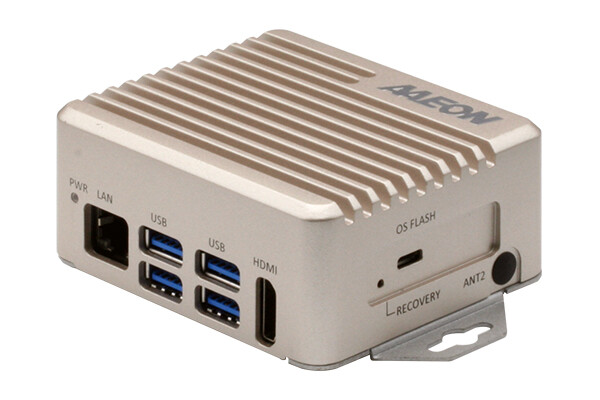
AAEON, a leading developer of embedded AI and edge-computing solutions, today announced it is unveiling several new rugged embedded platforms—augmenting an already extensive lineup of AAEON AI edge-computing solutions powered by the NVIDIA Jetson platform. The new AAEON products provide key interfaces needed for edge computing in a small form factor, making it easier to build applications for all levels of users, from makers to more advanced developers for deployments in the field.

AAEON also introduced a new version of the popular BOXER-8120AI, now featuring the Jetson TX2 4 GB module, providing an efficient and cost-effective solution for AI edge computing with 256 CUDA cores delivering processing speeds up to 1.3 TFLOPS."Partnering with an AI and edge computing leader like NVIDIA supports our mission to deliver more diversified embedded products and solutions at higher quality standards," said Alex Hsueh, Senior Director of AAEON's System Platform Division. "These new offerings powered by the Jetson platform complement our existing lineup of rugged embedded products, providing an optimal combination of performance and price in a smaller form factor for customers to easily deploy across a full range of applications."

More ASUS Z490 Motherboard Specs Sheets Surface: 6-layer Minimum, Optimem III Dual-Rank DDR4 Optimization

Earlier today we brought you pictures and specs sheets of ASUS' top-tier ROG Maximus XII family of socket LGA1200 motherboards based on the Intel Z490 chipset. The rest of that slide-deck was leaked to the web by VideoCardz, revealing some fascinating specs common across the series. Apparently, a 6 PCB layers is the bare minimum for ASUS' lineup, which probably contributes to the elevated prices across the board. Some of the cheaper 300-series chipset motherboards make do with just 4 PCB layers.

The CPU VRM solutions are a definitely step up from the previous generations, designed to cope with rising electrical requirements of the 14 nm 10th gen Core processors. For the ATX and M-ATX models, 12+2 phase solutions appear to be the bare minimum for the ROG Strix Z490 series, and 9-phase for the cheapest Prime Z490 series. The ROG Strix Z490-E Gaming, which leads the ROG Strix Z490 series, tops the chart with a 16-phase solution that's probably similar to the one on the Maximus XII Hero. There's also a big innovation with memory optimization, series-wide. With its Z490 motherboard series, ASUS is transitioning from T-topology to daisy-chain, across the board. This is combined with the company's Optimem III automated memory optimization feature on select models, which enables you to populate all four slots on your motherboard with dual-rank DIMMs, and yet achieve frequencies as high as DDR4-3600, with timings as tight as CL16.

ASUS ROG Maximus XII Family of Z490 Chipset Motherboards Detailed

Here are some of the first pictures of the ASUS' high-end Republic of Gamers (ROG) Maximus XII family of socket LGA1200 motherboards based on Intel Z490 chipset. The lineup consists of an impressive 5 SKUs: ROG Maximus XII Extreme and Extreme Glacial (M12E); ROG Maximus XII Formula (M12F), ROG Maximus XII Hero WiFi (M12H), and the ROG Maximus XII Apex (M12A). The Maximus XII Extreme leads the pack with its 16-phase VRM that probably uses 90 A power stages. It includes Thunderbolt 3 and 10 GbE support. The Glacial version is possibly a combination of cosmetic- and functional changes (such as preparation for sub-zero cooling).

The Maximus XII Formula is the go-to board for overclockers with elaborate liquid-cooling setups. The board comes with liquid-cooling ready VRM heatsinks. Compared to the Extreme, the Formula loses out on Thunderbolt, but retains 10 GbE. The Maximus XII Hero (WiFi) is next in line, and somehow better endowed than the Maximus XII Apex, in featuring an 8-layer PCB like the Extreme and the Formula; and a combination of 5 GbE and 1 GbE networking. The Maximus XII Apex comes with a 6-layer PCB, a single 2.5 GbE connection, but somehow a similar CPU VRM configuration to the Extreme. This is probably how the Apex could end up pricier than the Hero. Find specific details in the specs sheet below.
ASUS ROG Maximus XII series ASUS ROG Maximus XII series

ASUS Unveils ROG Strix 850W White Edition Power Supply

ASUS unveiled an addition to its ROG Strix power supply series with a new 850-Watt model. The series was, until now, led by a 750 W model. What's more the ROG Strix 850 W comes in a new White Edition trim, which sees a mostly white+silver color combination. Matte white with silver accents make up the PSU's body the AxialTech fan impeller, and the cables. Under the hood, the ROG Strix 850 W features a single +12V rail design with 80 Plus Gold rated efficiency, full-bridge LLC resonant converter, sync rectifier, and DC-to-DC switching. Among its connectors are a 24-pin ATX, two 4+4 pin EPS, six 6+2 pin PCIe power, ten SATA power, and three Molex. It is likely that ASUS extends the White Edition treatment to other models in the ROG Strix-G PSU series.

ASUS Launches ZenBook Duo (UX481) Featuring ScreenPad Plus

ASUS today launches ZenBook Duo (UX481), a groundbreaking 14-inch laptop featuring the new ASUS ScreenPad Plus — a revolutionary 12.6-inch full-width auxiliary touchscreen that expands and enhances the interactive capabilities offered by the original ASUS ScreenPad. We covered the initial announcement at CES, ASUS has now released full details and pricing.

ScreenPad Plus changes the way users can interact with their laptop, allowing productivity-enhancing workflows and easy multitasking. It integrates seamlessly with the primary display, and the built-in ScreenXpert software includes a wide selection of useful apps, tools and utilities that allow users to easily enjoy the efficiency benefits of ScreenPad Plus.

ASUS Readies Zenbook 14 Model Combining Ryzen 4000 and GeForce MX350 Graphics

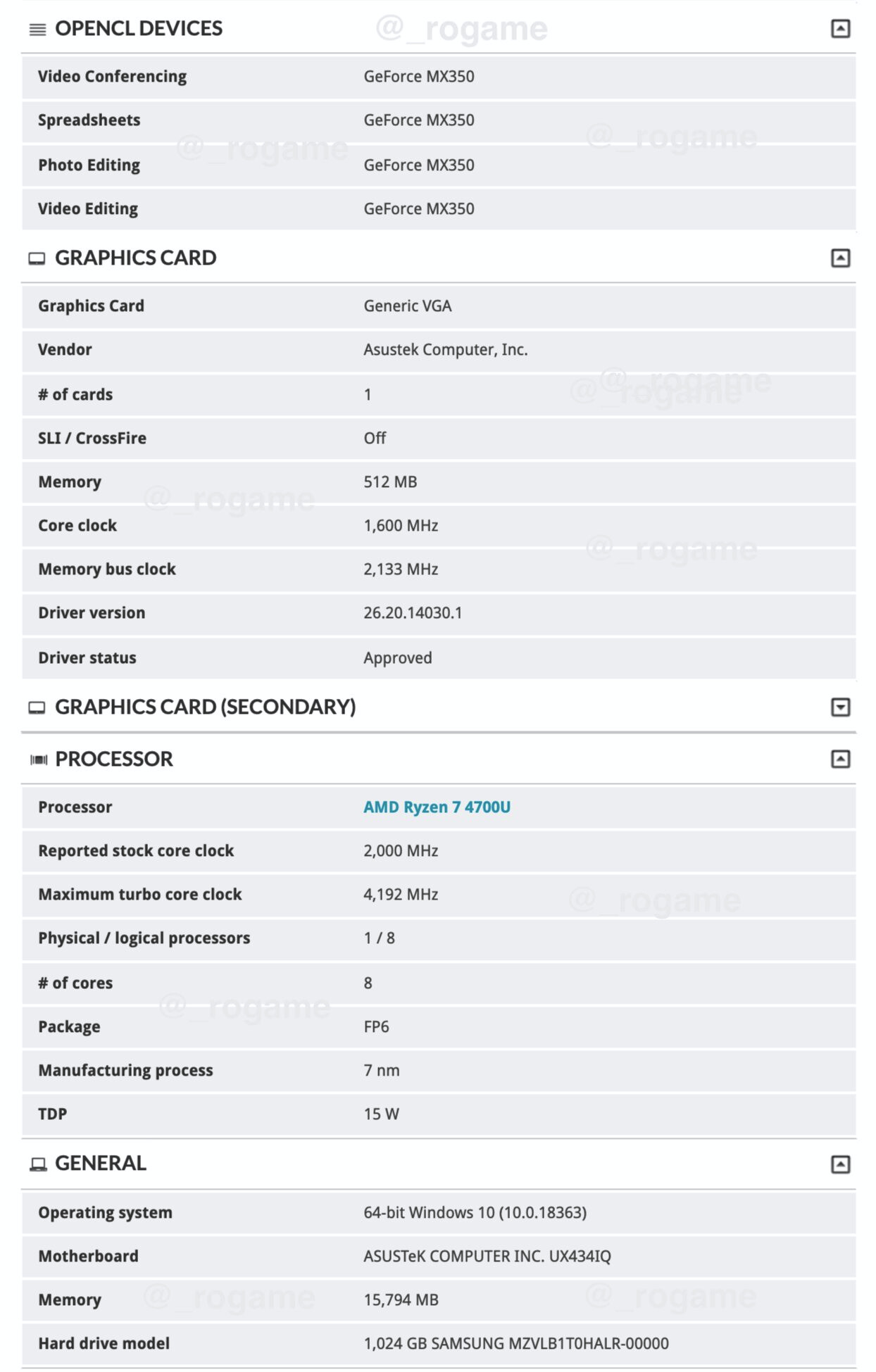
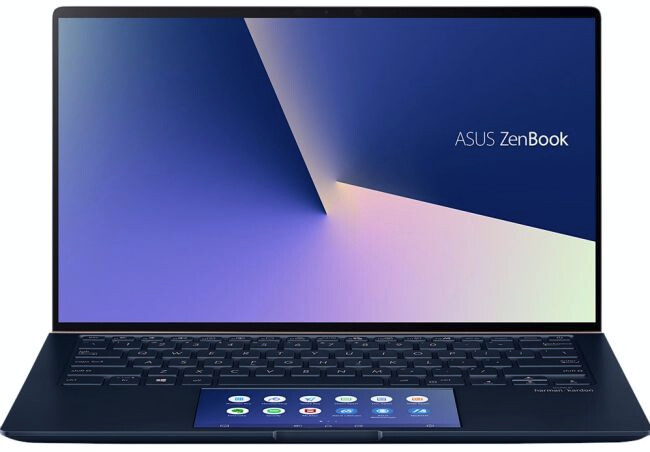
ASUS is giving finishing touches to the launch of a new Zenbook 14 (UX434IQ) model with a combination of a Ryzen 4000 "Renoir" processor and NVIDIA's entry-level GeForce MX350 discrete graphics. Although never pictured and with no confirmation of whether it gets the swanky ScreenPad (a color touchscreen that works like the notebook's trackpad); the combine surfaced in a Futuremark database submission.

The Zenbook 14 (UX434IQ) combines an AMD Ryzen 7 4700U (8-core/8-thread) processor with NVIDIA GeForce MX350 discrete graphics, and more interestingly, 16 GB of LPDDR4x-4266 memory. The "Pascal" based MX350 graphics features 640 CUDA cores, and a 64-bit GDDR5 memory interface holding 2 GB of memory. It's marketed to offer a 2.5x performance uplift against an Intel Gen 9.5 iGPU, but we're not sure if it makes even a 1.5x uplift over the iGPU of the 4700U (448 "Vega" stream processors, 1600 MHz engine clock, plenty of memory bandwidth at its disposal thanks to LPDDR4x). The notebook also packs a decent Samsung PM981 1 TB NVMe SSD.

ASUS TUF Gaming Z490-PLUS WiFi Motherboard Pictured

Here are some of the first pictures of the TUF Gaming Z490-PLUS WiFi, the company's top TUF Gaming series motherboard for socket LGA1200. The board retains its "yellow+black" color scheme and exuberant product design, and could possibly command a price of around $200, given that Z490 motherboards we've heard of so far appear to start around that price. The board pulls power from a combination of 24-pin ATX, 8-pin EPS, and an additional 4-pin EPS (which appears to be the base minimum power input configuration for this platform). A 16-phase VRM conditions it for the CPU.

The processor is wired to four DDR4 DIMM slots, and one PCI-Express 3.0 x16. Four other PCIe 3.0 x1 or x4 slots make for the rest of the expansion. Storage connectivity on the TUF Gaming Z490-PLUS WiFi includes two M.2-2280 slots, with PCI-Express 3.0 x4 wiring; and six SATA 6 Gbps ports. Networking connectivity includes 802.11ax WLAN, and one wired Ethernet connection. It is very likely that a near-identical board based on the mid-range B460 chipset is in the works. What sets the two apart is probably CPU overclocking capability.
ASUS TUF Gaming Z490-PLUS WiFi Angled ASUS TUF Gaming Z490-PLUS WiFi Front ASUS TUF Gaming Z490-PLUS Package

ASUS Leaks PRIME Z490-P and Z490-A Motherboards for Intel's 10th Gen

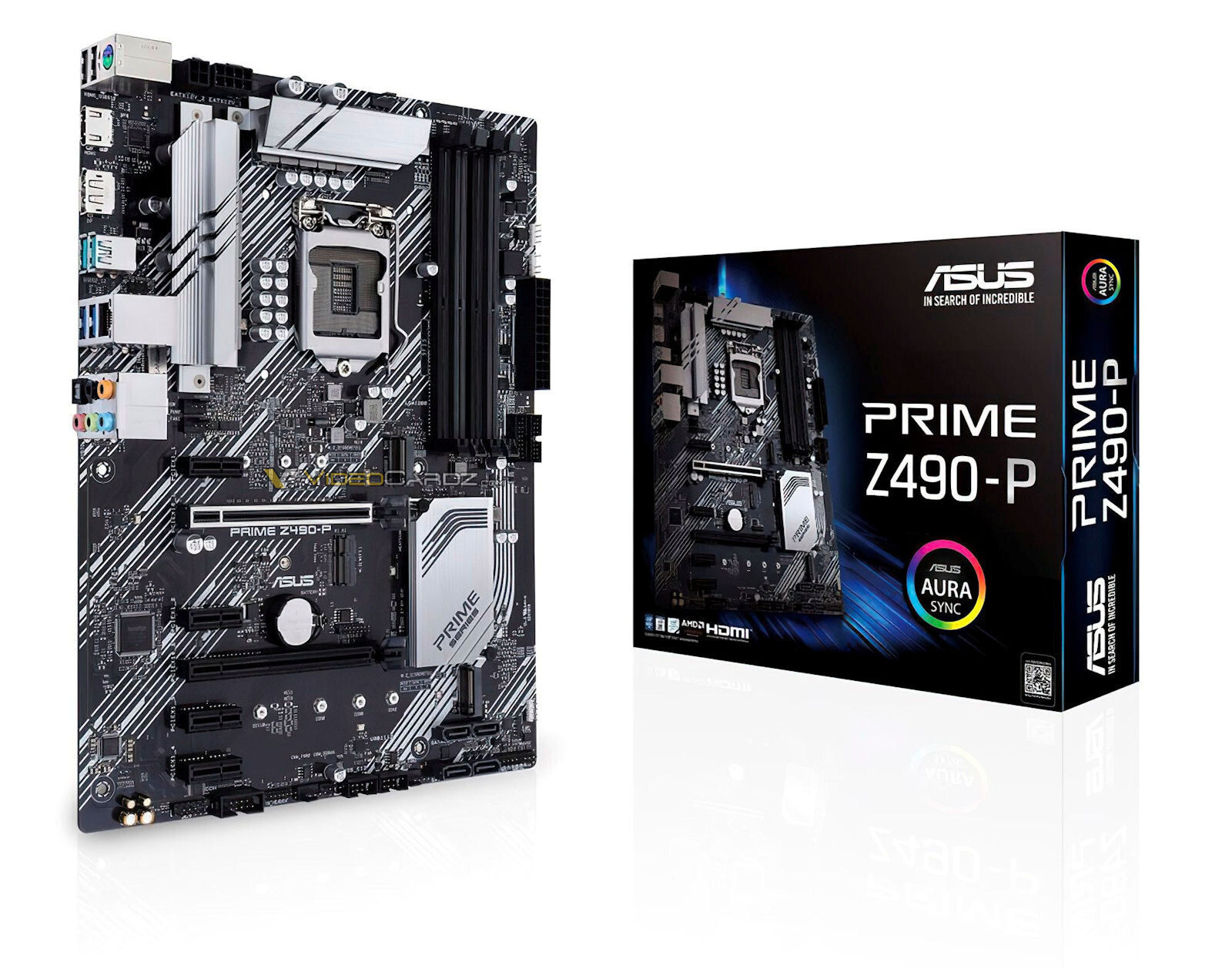
ASUS has inadvertently leaked images of their upcoming PRIME Z490-P and Z490-A motherboards, which will accompany the introduction of Intel's 10th Gen "Ice Lake" CPUs. As is usual with Intel, the new generation CPU release will be met with a new chipset launch, of which ASUS apparently has finalized designs: the company has uploaded Z490 pictures on their current Z390 PRIME webpage.

Like with previous ASUS designs, the PRIME Z490-P seems to target budget-conscious users, with a reduced feature set including a no-frills VRM heatsink design (which means the VRM itself isn't a top-tier one) and a pretty basic on-board sound processor. The motherboard still packs 2x M.2 slots and 2x PCIe 3.0 x16 slots, though the rest of the expansion slots are of the 1x kind (4x slots in total). The Z490-A, though, boasts of a more premium construction, with oversized heatsinks (including for at least one of the M.2 slots) and 3x PCIe 3.0 x16 slots alongside 3x Pcie 3.0 1x slots. The sound processing subsystem has also been clearly beefed up in comparison.
ASUS PRIME Z490-P ASUS PRIME Z490-A

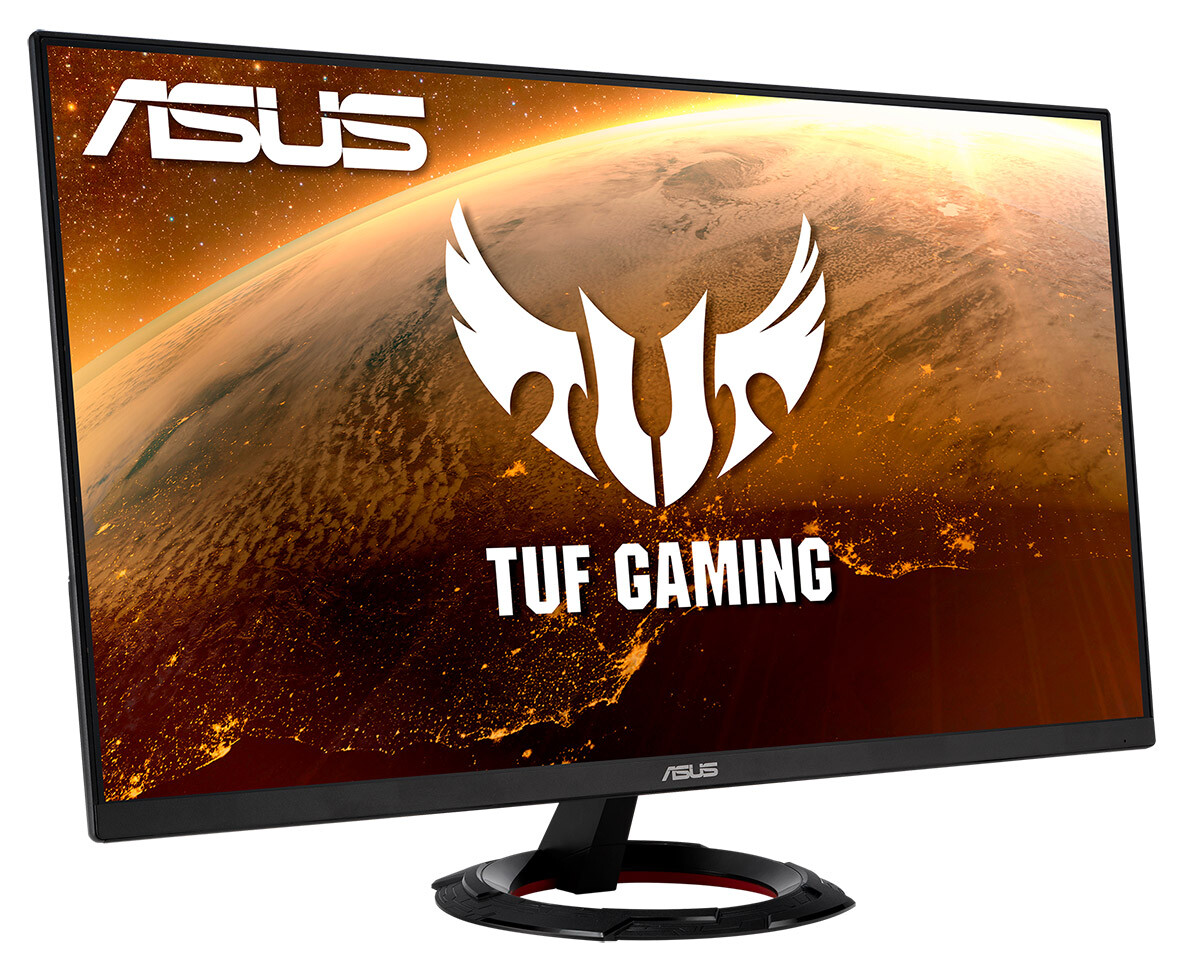
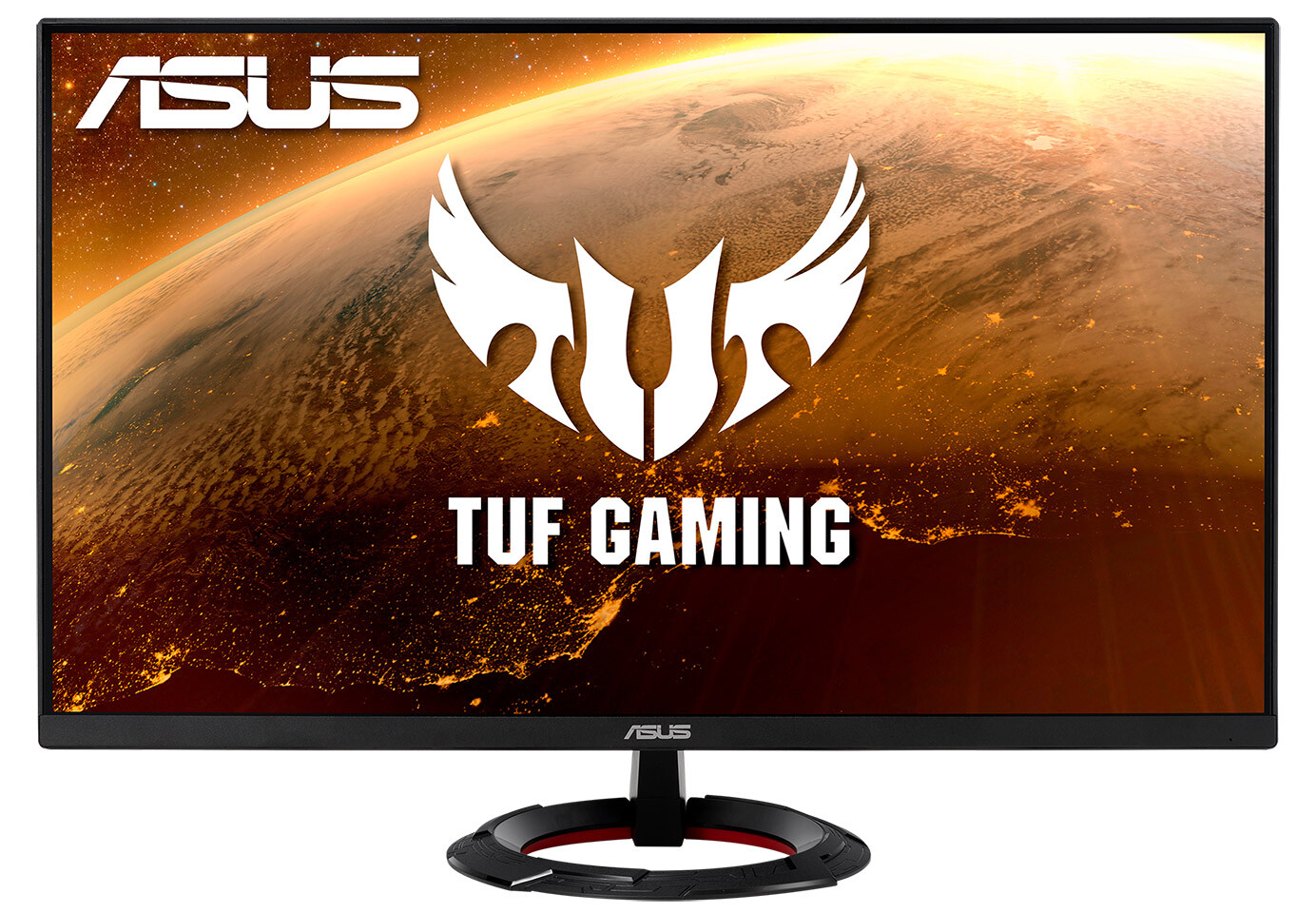
ASUS Intros TUF Gaming VG279Q1R 27-inch Monitor

ASUS today rolled out the TUF Gaming VG279Q1R, a fast 27-inch gaming monitor. If you're willing to overlook its Full HD (1920 x 1080 pixels) resolution, on offer is an IPS panel with 144 Hz refresh-rate, 1 ms MPRT response time, ELMB (extreme low motion blur), and AMD FreeSync Premium support. ASUS offers most of its gamer-specific innovations such as GamePlus (hardware crosshairs, FPS counter, timer, multi-display alignment); and GameVisual (game genre-specific display presets). Display inputs include a DisplayPort 1.2a, and two HDMI 1.4a. The stand offers basic tilt adjustments, and can be detached to reveal a VESA wall mount. We expect a $250 price.

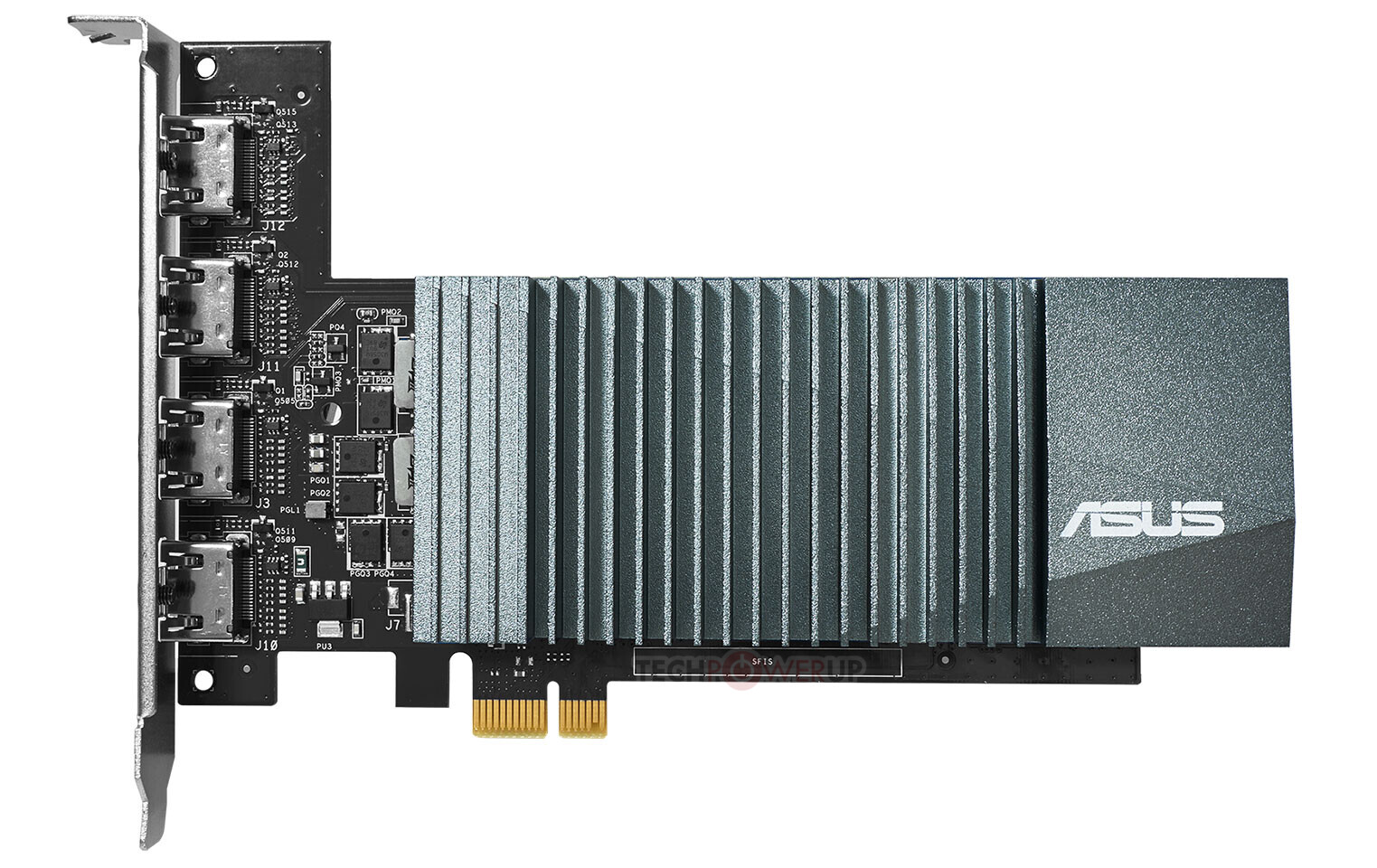
ASUS Updates its GeForce GT 710-based Card with 4x HDMI Output

ASUS updated its circa 2016 GeForce GT 710 graphics card with a new PCB and a modern display output setup. The GT710-4H-SL-2GD5 succeeds the GT710-SL series graphics cards. While those were truly half-height and single-slot, the new card is full-height. These cards aren't really meant for gaming in 2020, but rather something to put out graphics if you have a workstation with many displays and can't be bothered with 3D rendering performance. This particular card puts out four HDMI ports. You can connect up to one 4K UHD display at 60 Hz. If more than one 4K display is connected, the refresh-rate is limited to 30 Hz. We guess this card is best suited for video walls or digital signage setups. Expect it to be priced around $50.

Bitspower Unveils Mono Block for ASUS ROG Crosshair VIII Impact

Bitspower today unveiled its Mono Block for the ASUS ROG Crosshair VIII Impact X570 motherboard. It is designed to cool the socket AM4 processor and CPU VRM of the Crosshair VIII Impact, with precisely-laid base-plate contact points for the board's 8+2 phase VRM and the processor. The block's primary material is nickel-plated copper, with mirror-finish at its base-plate contact points. It features a clear acrylic top with provision for an ARGB LED light strip. A micro-fin lattice is located over the CPU for heat-dissipation. The block measures 115 mm x 98 mm x 28 mm, and features standard G1/4" fittings. Available now, it is priced at USD $140.

ASUS Rolls Out ROG Strix GeForce GTX 1650 GDDR6 Series

ASUS finally joined the GeForce GTX 1650 GDDR6 party with a pair of ROG Strix series premium graphics cards. The cards feature a DirectCU II aluminium fin-stack heatsink with two copper heat pipes making direct contact with the GPU at the base; and a pair of AxialTech fans ventilating it. These fans are designed to guide most of their airflow axially as the edges of the impellers are webbed to prevent lateral airflow. You get a few segment-first features such as dual-BIOS and a FanConnect II 4-pin PWM case fan header. A metal back-plate is included.

The ASUS ROG Strix GTX 1650 GDDR6 series comes in two variants, the overclocked O4GD6 with 1815 MHz GPU Boost, and the mildly overclocked A4GD6 with 1620 MHz GPU Boost, compared to NVIDIA reference speeds of 1590 MHz for the GTX 1650 GDDR6. Both cards stick to 12 Gbps for the GDDR6 memory clock speeds. While most GTX 1650 GDDR6 cards are designed for no additional power connectors, the ASUS ROG Strix series needs a 6-pin PCIe input. Display outputs include two each of HDMI 2.0b and DisplayPort 1.4a The company didn't reveal pricing.

ASUS Releases BIOS Updates for Radeon RX 5600 XT That Unlock 14 Gbps Memory On Select Cards

Back in January, AMD released its Radeon RX 5600 XT graphics card with a last-minute specifications update that made it competitive with NVIDIA's GeForce RTX 2060 graphics card. It did so by increasing GPU clock speeds, and more importantly, increasing memory clock speeds to 14 Gbps up from 12 Gbps in the original spec. Various AMD add-in board (AIB) partners released one-click BIOS updates on January 22nd (find them for ASRock, Sapphire, MSI, PowerColor, and Gigabyte). An easy updater from ASUS was missing in action at the time. The company finally got around to releasing easy, Windows-based programs that update the video BIOS of its ROG Strix Radeon RX 5600 XT O6G and TUF Gaming RX 5600 XT EVO OC graphics cards. The BIOS updates run the video memory at 14 Gbps since the cards physically do feature 14 Gbps-rated memory chips. The specifications update has had a profound impact on the price-performance positioning of the RX 5600 XT, from being able to outperform the GTX 1660 Ti to trading blows with the RTX 2060. Grab the BIOS update from the links below.

DOWNLOAD: ASUS RX 5600 XT Easy BIOS Updates for ROG Strix RX 5600 XT O6G | TUF Gaming RX 5600 XT EVO OC

ASUS Also Launches ExpertBook B9450 Laptop for Business Professionals

ASUS today announced the launch of the ExpertBook B9450 laptop, the latest ASUS ExpertBook for business professionals that provides unmatched performance, durability and design within an incredibly thin and light form factor weighing in at just 2.2 lb with a 0.59 inch thin profile. The new ExpertBook-series laptops maintain a professional and reliable personality while incorporating innovation and flexibility in order to meet the requirements of modern businesses.

Designed for business professionals on-the-go, the ExpertBook B9450 delivers top-tier performance thanks to up to an 10th Gen Intel Core i7 processor, dual-storage design with two ultrafast 1 TB PCIe 3.0 x4 SSDs, and up to 16 GB of RAM and Wi-Fi 6 (802.11ax) connectivity. Expect uninterrupted performance on the B9450 with long-lasting battery life delivering up to an impressive 24 hours of use on a single charge, with extra comfort features like the ErgoLift hinge, built-in voice assistant support, and a Harman Kardon-optimized audio system.

ASUS Announces Chromebook Flip C436, Powered by Intel "Project Athena"

ASUS today announced the launch of the ASUS Chromebook Flip C436, the latest in the ASUS Chromebook Flip family that pairs premium features with uncompromising performance. The ASUS Chromebook Flip C436 introduces an eye-catching and elegant convertible form factor, featuring a frameless NanoEdge touch display that's designed to maximize screen size in the smallest form factor possible. The C436 is housed in a durable yet lightweight magnesium alloy chassis, which measures only 13-inches diagonally at a weight of approx. 2.58 lbs - perfect for on-the-go productivity.

The ASUS Chromebook Flip C436 is verified by Intel's Project Athena innovation program and co-engineered for mobile performance. It brings unparalleled power in a convertible and ultra-portable form factor by integrating 10th Gen Intel Core processors with up to 16 GB of RAM, a 512 GB SSD, and cutting-edge Intel Wi-Fi 6 (Gig+) connectivity.

ASUS Announces two new Full-HD 75Hz IPS Gaming Monitors

ASUS has just announced two new IPS Full-HD monitors in 24" and 27" sizes, the VZ249HEG1R and VZ279HEG1R. These two new gaming monitors both feature refresh rates of 75Hz, a luminance of 250 cd/m², a contrast ratio of 1,000: 1, and a 1 ms response time. Input is barebones with only a single HDMI port and a D-Sub connector.

The stands are VESA compatible with 75 x 75 mm mounting options and can tilt -5 to 22 °. Pricing and availability have not been announced.
Front Side Back

NVIDIA GeForce RTX 2060 SUPER Mobile Specs Leaked

NVIDIA last week debuted its GeForce RTX 20-series SUPER Mobile GPU family with four SKUs: the RTX 2080 SUPER (mobile), RTX 2070 SUPER (mobile), and their Max-Q variants. An ASUS ROG marketing slide just revealed the third, unannounced SKU from the series, the RTX 2060 SUPER (mobile), courtesy of a Hardware Unboxed news bulletin. Likely based on the "TU106" silicon, this SKU has an identical core-configuration to its desktop counterpart, with 2,176 "Turing" CUDA cores, 136 TMUs, 64 ROPs, 272 tensor cores, 34 RT cores, and a 256-bit wide GDDR6 memory interface, holding 8 GB of memory.

Where the RTX 2060 SUPER (mobile) differs from the desktop part is clock speeds and aggressive power management. It's clocked at 1305 MHz GPU base, 1485 MHz GPU Boost (1470/1650 MHz for the desktop SKU). The memory clock is untouched at 14 Gbps (GDDR6-effective). Although the slide doesn't say so, it's highly likely that there is a Max-Q variant of this SKU with tighter clock speeds and significantly lower power targets. Find the Hardware Unboxed presentation in the link below.

ASUS Announces the Use of Liquid Metal Thermal Compound in its 2020 ROG Laptops

ASUS has switched to a new liquid metal thermal compound for its entire 2020 ROG gaming laptop range, liquid metal has long been used in the enthusiast overclocking scene but this is the first time we've seen its widespread use in a mainstream laptop. ASUS had to develop new machinery to facilitate the application of the liquid metal thermal compound as traditionally it had only been applied manually which was not feasible in this case.

ASUS is utilizing the highly respected Conductonaut from Thermal Grizzly for the job to ensure the 10th Gen Intel Core processors powering the lineup stay cool, laptops featuring this new combination will be available from Q2. This press release from ASUS details their process in bringing liquid metal thermal compound to the gaming laptop market.
Liquid Metal Thermal Compound

ASUS Announces Premium Strix SCAR 17 Gaming Laptop

Speed and agility are crucial stats in the world of esports, where razor-thin margins make the difference between victory and defeat. In a massive melee, you need a gaming machine that can keep up with the action. Staying competitive at the highest levels demands a high-refresh display and power-packed GPU that can deliver the fluid frame rates required to catch every moment.

The flagship ROG Strix SCAR 17 represents the pinnacle of professional esports. Its blisteringly fast 300Hz gaming panel surpasses the current tournament standard, while its larger chassis and cooling module can run the new GeForce RTX 2080 SUPER GPU at a full 150 W. This config pumps out enough frames to saturate the expansive 17.3" display with the sublimely smooth gameplay required for competitive play.

ASUS Announces Electro Punk Gaming Laptops and Peripherals

ASUS Republic of Gamers has recently announced a new series of Electro Punk special-edition gaming devices decked out in a bold black-and-pink color combination. ROG has a long history of weaving Aura Sync into a huge ecosystem of devices to let gamers shine a light on their personalities through their gear. However, many gamers are looking for ways to express themselves without powering on their RGB lighting. That's why the ROG color palette is expanding to include a new cyberpunk-inspired shade.

Creating a new color for any ROG device takes care. Selecting a shade, implementing it, and matching it across a variety of materials is complicated for just one device, much less an entire collection. Fortunately, ROG designers agreed early on to focus on cyberpunk-inspired pinks. After scrutinizing approximately 10 shades of robust roses and crisp corals in different lightings and environments, ROG designers settled on a high-energy hue with the hex color code #F7266B.
ROG Strix G15 Electro Punk gaming laptop

ASUS Unveils ROG Strix GA35-G35DX Gaming Desktop with Top-Notch Hardware

ASUS today unveiled its top-spec ROG Strix GA35 series gaming desktop, the GA35-G35DX. This pre-built desktop comes with some serious hardware specs geared toward AAA gaming at 4K UHD resolution and future-proofing for many years. Under the hood is a potent combination of an AMD Ryzen 9 3950X 16-core processor, NVIDIA GeForce RTX 2080 Ti graphics, an ROG Strix X570 motherboard, and 64 GB of DDR4-3200 memory. Storage includes a 1 TB PCI-Express 4.0 x4 M.2 NVMe SSD, and a 2 TB SATA HDD. 802.11ac WLAN with Bluetooth 5.1, 1 GbE Ethernet, and SupremeFX integrated audio make for the rest of it.

ASUS is using a 240 mm AIO liquid CPU cooler for the Ryzen 9 3950X, while the graphics card retains ASUS's custom-cooling solution for the ROG Strix A11G variant of the RTX 2080 Ti. The ASUS in-house design case features several RGB embellishments which, along the with AIO and graphics card, can be controlled using the Aura Sync tab in Armory Crate. The case features a plastic handle along the top. The front hides a panel that reveals two 2.5-inch hot-swap drive bays with SATA 6 Gbps back-planes. Front-panel connectivity includes two USB 3.1 type-C, two USB 3.1 type-A, and HDA jacks. A 700 W 80 Plus PSU powers it. The desktop ships with Windows 10 Pro pre-installed. The company didn't reveal pricing.
ASUS ROG Strix GA35-G35DX

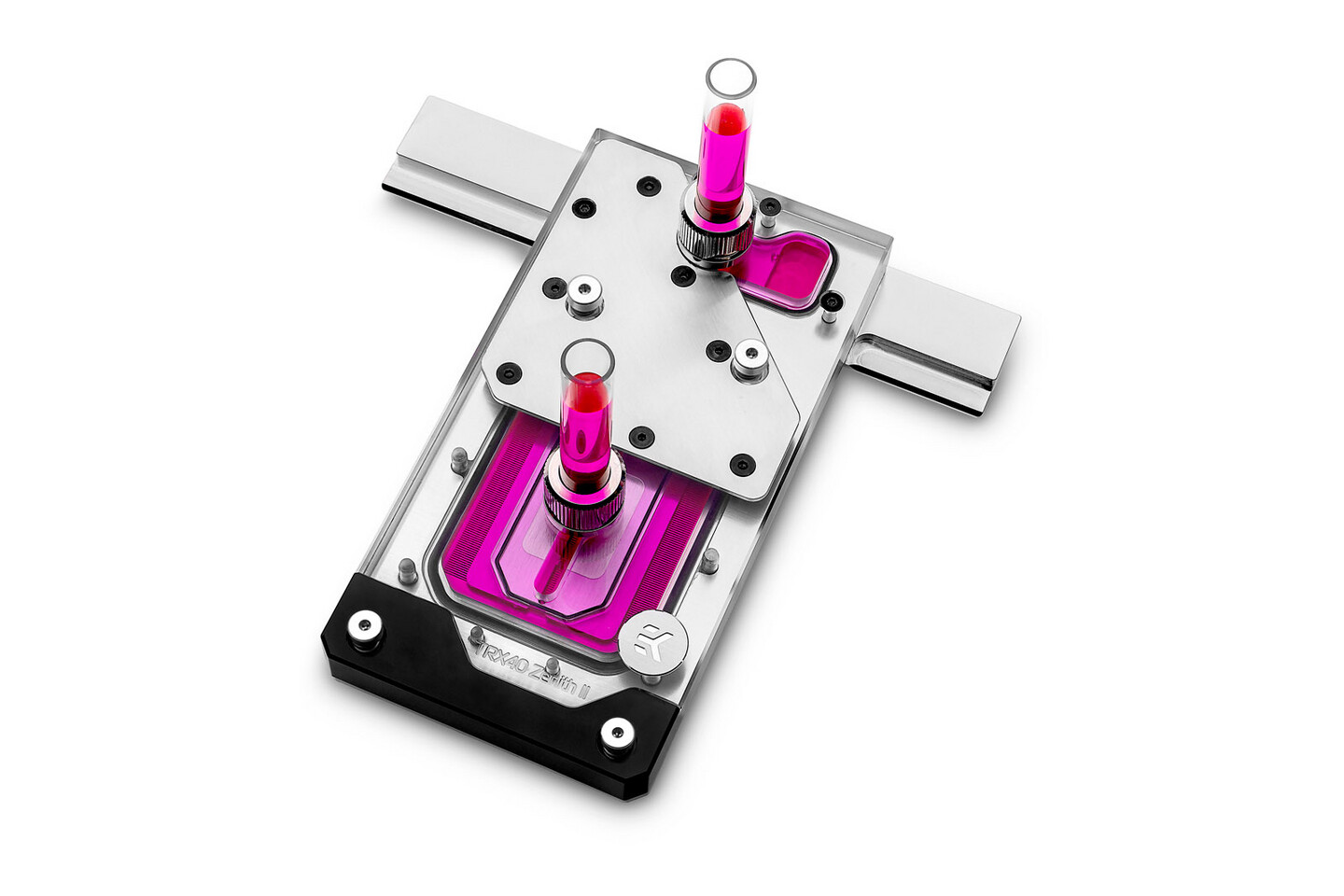
EK Water Blocks Announces the EK Quantum Momentum TRX40 Monoblock for ASUS ROG Zenith II Extreme Motherboard

EK Water Blocks, the Slovenia-based premium computer liquid cooling gear manufacturer, makes another push into the HEDT market by releasing the world's first Socket sTRX4 based monoblock made for made for the ROG Zenith II Extreme motherboard. This is a complete all-in-one (CPU and motherboard) liquid cooling solution for the ASUS motherboard that is based on AMD TRX40 chipset for AMD Ryzen Threadripper processors. This monoblock is compatible with the ASUS ROG Zenith II Extreme motherboard.

Designed and engineered in cooperation with ASUS, this monoblock uses Velocity sTR4 cooling engine to ensure the proper cooling of the large IHS that hides the spread-out chiplets. This water block directly cools AMD sTR4X type CPU, as well as the voltage regulation module (VRM). This kind of efficient VRM cooling on a TRX40 platform opens up even greater overclocking capabilities. Using a monoblock gets rid of the small fans that can be found on these TRX40 motherboards, hidden under the VRM heatsink grill.

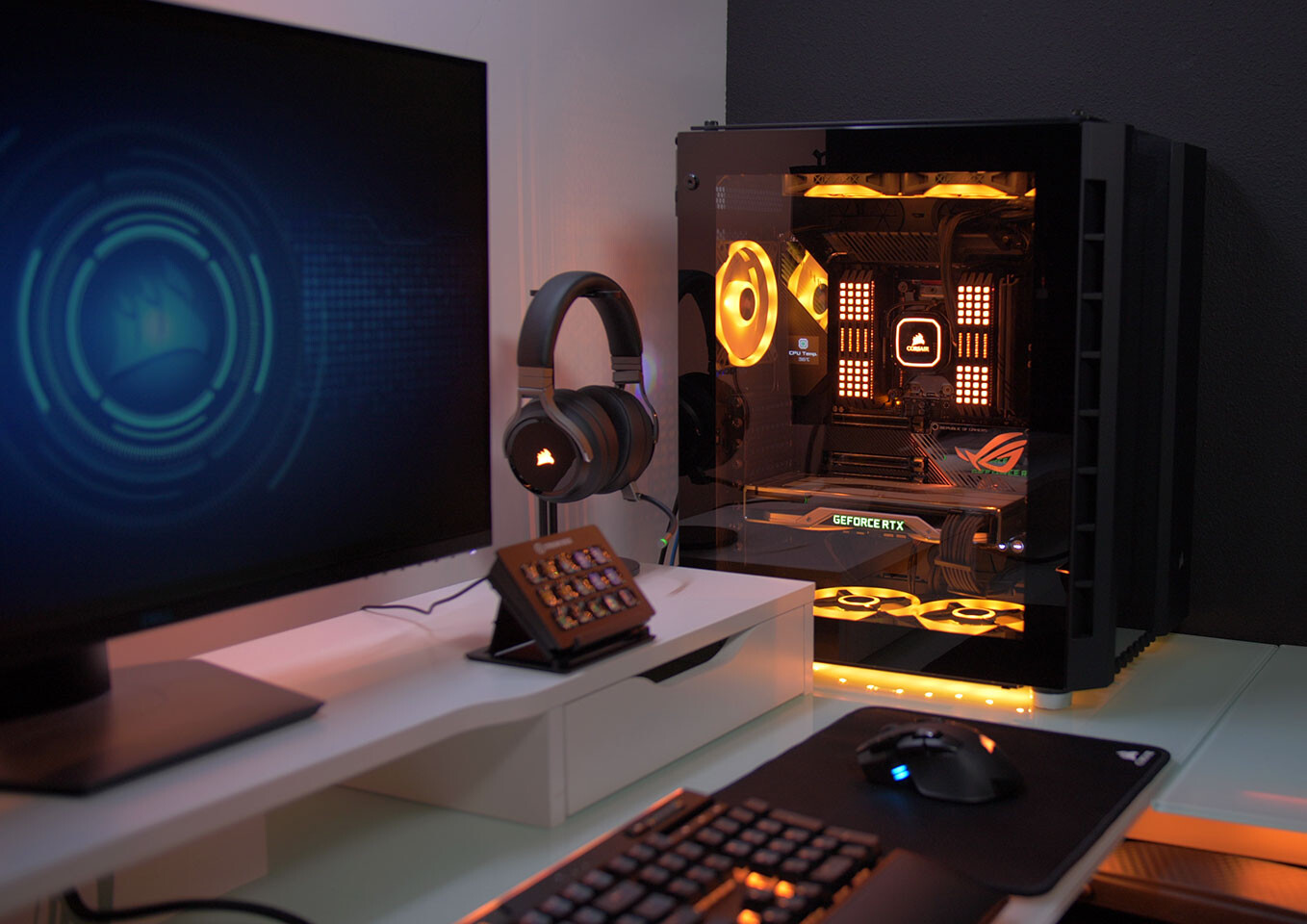
CORSAIR Announces RGB Lighting Control for ASUS Aura Sync RGB Motherboards in iCUE Software

CORSAIR, a world leader in high-performance gaming peripherals and enthusiast components, today announced that the extensive RGB lighting customization in CORSAIR iCUE software now extends to ASUS Aura Sync compatible motherboards. With both iCUE and the latest version of ASUS' Aura Sync Utility installed, users can now fully control the RGB lighting on their ASUS motherboard through iCUE, as well as synchronize lighting with every iCUE-compatible CORSAIR device throughout their setup, from high-performance DRAM and CPU coolers to keyboards and mice.

CORSAIR iCUE software already offers the most robust system-wide RGB lighting control available, enabling users to customize all their CORSAIR product lighting in just a few clicks, or create complex multi-layer lighting effects and synchronize them across CORSAIR components and peripherals. With the addition of ASUS Aura Sync motherboard compatibility, iCUE can now control the lighting for nearly every component in a PC, all consolidated into a single interface, for incomparable system-wide light shows.

ASUS Announces Exclusive Power Balancer Technology and Servers with New 2nd Gen Intel Xeon Scalable

ASUS, the leading IT Company in server systems, server motherboards, workstations and workstation motherboards today announced exclusive Power Balancer technology to support the new 2nd Gen Intel Xeon Scalable Processor (extended Cascade Lake-SP refresh SKUs) across all server product lineups, including the RS720/720Q/700 E9, RS520/500 E9 and ESC8000/4000 G4 series server systems and Z11 server motherboards.

In complex applications, such as high-performance computing (HPC), AI or edge computing, balancing performance and power consumption is always a challenge. With Power Balancer technology and the new 2nd Gen Intel Xeon Scalable Processor, ASUS servers save up to 31 watts power per node on specific workloads and achieve even better efficiency with more servers in large-scale environments, significantly decreasing overall power consumption for a much lower total cost of ownership and optimized operations.
Return to Keyword Browsing
Nov 26th, 2026 01:55 CST change timezone

New Forum Posts

Popular Reviews

TPU on YouTube

Controversial News Posts