News Posts matching #Asus

Return to Keyword Browsing

12K Resolution Gaming Setup Renders 1.5 Billion Pixels, Costs $17,000

What do you call a person who sets up three 32-inch 4K (that's 3840 x 2160 pixels each) side-by-side, pairs three of ASUS's HD 7970 GPUs together to play games using AMD's EyeInfinity technology, all of which costs a whopping $17,000? Insane is one word, rich another or a crazy gamer? Perhaps a mix of all the three.

The setup consists of three Sharp PN-K321 4K monitors connected to three AMD HD 7970 GPUs which are together capable of pushing a mind-blowing 1.5 billion pixels on the combined 12K screen resolution, together with a Power Supply Unit that conks off in a few minutes, perhaps just not able to bear the pure awesomeness of the setup. Oh, to get the setup working, AMD put together some custom drivers to make sure that EyeInfinity works well. Before using the custom drivers, the whole rig was able to pull together a measly 8 frames per second, to be more accurate, a slideshow.

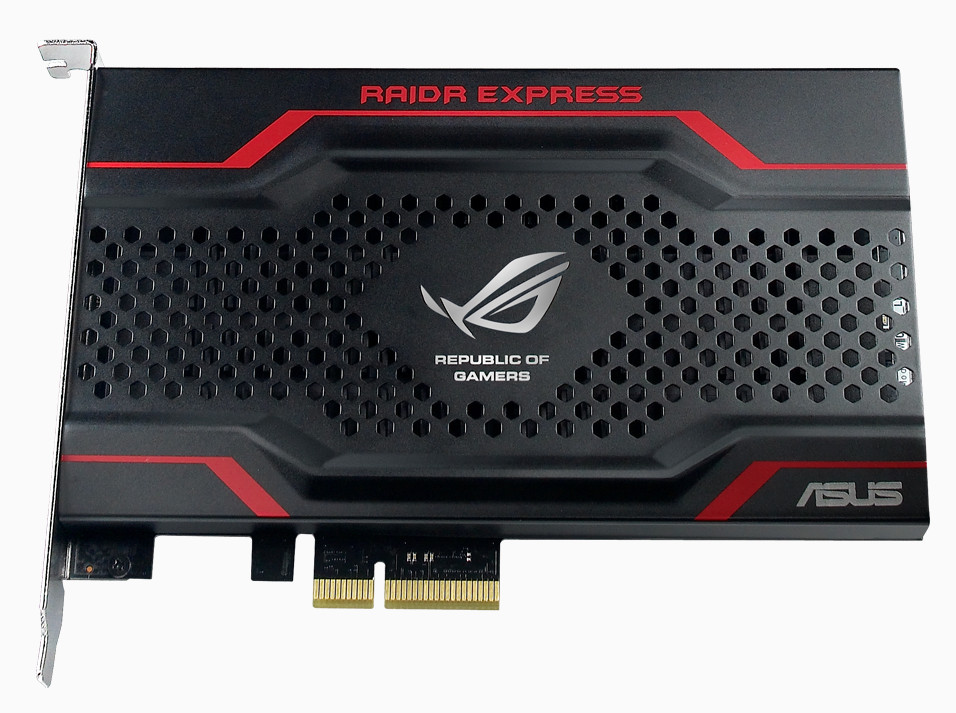
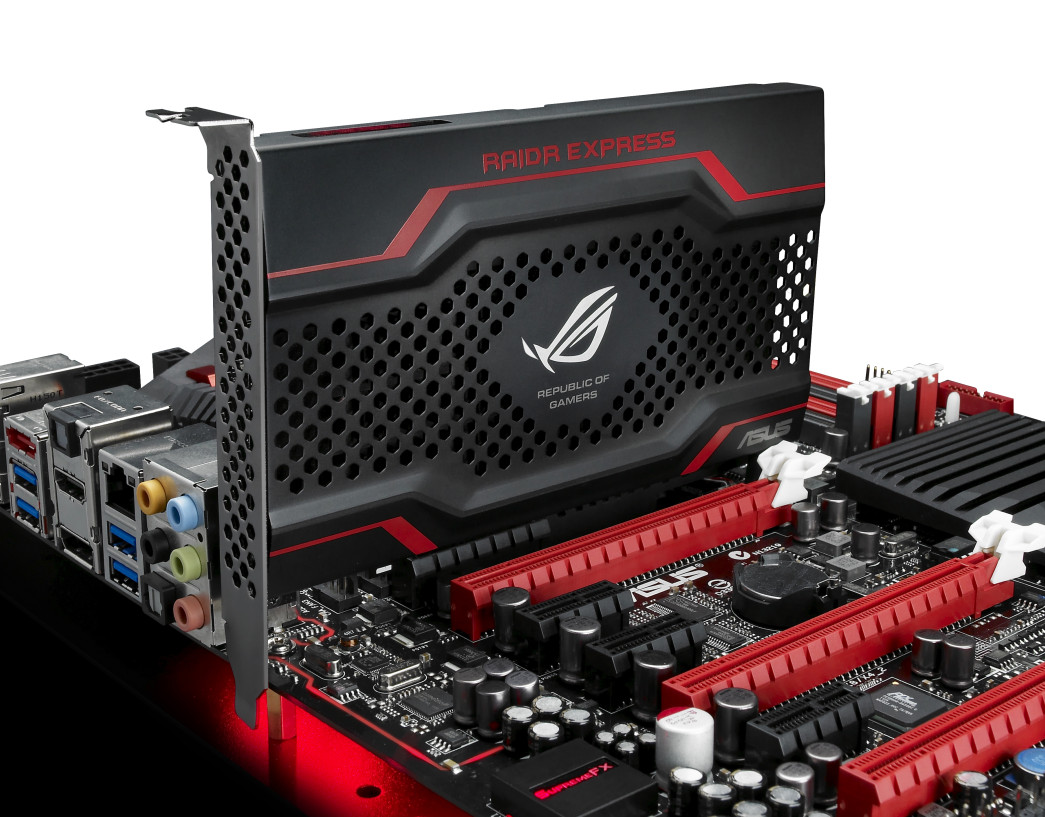
ASUS ROG Launches RAIDR Express PCI Express-based SSD

ASUS ROG today announced RAIDR Express, the first PCI Express-based SSD in the world with a DuoMode feature that allows it to work with either legacy (traditional) or modern UEFI BIOS. Aimed at hardcore gamers and PC enthusiasts demanding a faster and more reliable computer experience, RAIDR Express combines the best compatibility and great performance with incredible durability.
With 240 GB capacity, sequential 830 MB/s read and 810 MB/s write speeds, and bundled with tons of features that maintain the high-speed performance and extend the lifespan, RAIDR Express is made for real speed-demons. Boasting the gorgeous ROG red and black design with double-sided metal shielding and an incredible 620,000 hours mean time between failure (MTBF) to ensure quality, RAIDR Express is built to last.

EK Introduces Two New Custom PCB Type GeForce GTX 770 Water Blocks

EK Water Blocks, Ljubljana based premium water cooling gear manufacturer, is proud to introduce two new Full-Cover water blocks for non-reference design NVIDIA GeForce GTX 770 graphics cards.

EK-FC770 GTX DCII is a high performance full-cover water block engineered specifically for ASUS design GeForce GTX 680 as well as GTX 770 DirectCU II series graphics cards. This water block directly cools the GPU, RAM as well as VRM (voltage regulation module) as water flows directly over these critical areas thus allowing the graphics card and it's VRM to remain stable under high overclocks. EK-FC770 GTX DCII water block also features a very high flow design therefore it can be easily used in liquid cooling systems using weaker water pumps. EK-FC770 GTX DCII is a modified version of EK-FC680 GTX DCII featuring EK-FC Terminal port system instead of EK-FC Bridge & Link CSQ system. As a result these new water blocks are fully compatible with existing EK-FC680 GTX DCII Backplate. Two versions are available:

Intel Cracks Down on Motherboard Vendors Offering Overclocking on non-Z Chipset

Over the past couple of months, motherboard vendors from across the industry offered BIOS updates for their motherboards based on Intel B85 Express and H87 Express chipsets, which enable CPU overclocking for Intel's unlocked Core processors denoted by "K" brand extension (Core i7-4770K, i5-4670K). This reportedly hasn't gone down well with Intel. Intel's Bxx and Hxx chipsets are significantly cheaper than its Zxx series chipset. Sensing a clear threat to its revenue, from the prospect of motherboard vendors coming up with high-end or overclocking-ready (strong CPU VRM) motherboards based on cheaper chipsets in the near future, Intel cracked down on them.

Intel is giving final touches to a CPU microcode update that restricts Core "K" Haswell processors from overclocking on chipsets other than Z87 Express. A microcode update can be deployed both through BIOS updates, and surreptitiously through Windows Update. Intel's used the tried and tested "stability" bogey to justify the update. While it's true that motherboards based on B85 and H87 tend to feature weaker CPU VRM, there's nothing to say that ASUS wouldn't have gone on to design its next ROG Maximus on H87 Express, and save on manufacturing costs. While it's purely hypothetical, something like that wouldn't be in Intel's commercial interests. What next? Intel will push this new microcode update on to motherboard vendors, instructing them to issue BIOS updates with it; and future batches of Intel "K" CPUs may not support overclocking. If that isn't enough to contain the problem, Intel may give Microsoft a ring, and ask it to push the update through Windows Update. It tried that once in the past.

ASUS Announces P1801-T Portable AiO with 18.4-inch Screen

ASUS today announced the P1801-T Portable AiO, a new kind of portable that combines the easy flexibility of an Android tablet with the broader productivity and entertainment options offered by an 18.4-inch multi-touch display with Full HD resolution.

With a sleek, self-contained design, Portable AiO slips easily into the smallest of rooms and a built-in kickstand positions the screen at a comfortable angle for tabletop use. At just 2.4kg, Portable AiO can be carried easily around the home using the integral handle and is light enough to use on the lap when relaxing. The built-in battery removes the need for a nearby mains socket, too, and Portable AiO lasts for up to five hours with 1080p Full HD video playback.

ASUS Z87-C First Motherboard WHQL Certified for Windows 8.1

ASUS today announced that its Z87-C is the first motherboard in the world based on the Intel Z87 chipset to receive Windows Hardware Quality Labs (WHQL) certification for Window 8.1. The ASUS Z87-C is a Socket 1150 motherboard for use with 4th generation Intel Core, Pentium and Celeron processors. WHQL certification is a confirmation from Microsoft that both the ASUS Z87-C hardware and drivers are fully reliable and compatible with Windows 8.1. ASUS makes the best motherboards in the world and this pioneering WHQL certification for Windows 8.1 is further testament to the fact. ASUS is a key Microsoft partner and offers wide support for Windows 8.1 with Intel and AMD-based motherboards. WHQL certification for other models will be announced at a later date.

ASUS Introduces Designo Series MX299Q Ultrawide 21:9 Cinematic Monitor

ASUS announced the Designo Series MX299Q Ultrawide 21:9 Cinematic Monitor, a 29-inch widescreen display with an ultra-wide 21:9 aspect ratio and 2560 x 1080 resolution. The MX299Q features the latest AH-IPS (Advanced High Performance In-Plane Switching) display for rich, vibrant color with 178-degree wide viewing angles, and ASUS SonicMaster audio, co-developed with Bang & Olufsen ICEpower for superlative sound quality with its built-in stereo speakers. It also features an award-winning, simple and elegant sundial-inspired design.

With a display area equivalent to that of two 17-inch (5:4 aspect ratio) monitors placed alongside each other, the ASUS Designo Series MX299Q Ultrawide 21:9 Cinematic Monitor has a display area 33% wider than a similar Full HD monitor. The 21:9 aspect ratio gives more room for working with multiple windows side-by-side, removing the need for a secondary desktop monitor. The ultra-wide 2560 x 1080 resolution also means there are no black bars above and below the image when watching widescreen 2.35:1 movies and gamers can also enjoy games in immersive cinematic widescreen.

ASUS Brings Haswell Processor Overclocking to H87 and B85 Motherboards

ASUS today announced that the latest UEFI BIOS for its motherboards based on Intel H87 and B85 chipsets unlocks previously inaccessible overclocking features for 4th generation Intel Core processors. Before this update, the overclocking features of new Haswell 'K Series' processors could be enjoyed only with motherboards based on the Intel Z87 chipset. Now, however, performance enthusiasts can exploit the power of Haswell K Series processors using ASUS 8 Series motherboards like the ASUS H87M-PRO and B85-PRO. The BIOS update is a free download for 10 ASUS motherboards - the H87-PRO, H87-PLUS, H87M-PRO, H87M-PLUS, H87M-E, H87I-PLUS, B85-PRO, B85-PLUS, B85M-E and B85M-G.

Once installed, the update enables frequency multiplier-based overclocking in one simple step for unlocked Intel K Series processors such as the Intel Core i7-4770K and Core i5 4670K. The BIOS also includes several features to make life simpler for PC users. A 'Last Modified' log makes it easy to determine when and how a particular setting was changed, and custom settings can be saved to a 'favorites' list for rapid switching to suit different applications.

ASUSTOR Launches AS 3 Series NAS

ASUSTOR Inc., a leading innovator and provider of network storage solutions, has announced the launch of its brand new AS 3 Series Network Attached Storage (NAS). The AS 3 Series NAS devices feature powerful multimedia applications including support for 1080p high definition video playback and are the first devices in its class to come equipped with Intel Atom 1.6 GHz dual-core processors along with 1 GB of DDR3 memory. The devices in this new series consist of the 2-bay AS-302T model and the 4-bay AS-304T model. All devices boast a wealth of power saving features including internal and external disk hibernation, Night Mode and System Sleep Mode (S3). During System Sleep Mode, only 0.8 W of power is consumed, helping users to save a significant amount of energy.

With respect to hardware, the AS 3 Series was designed with multimedia and home cloud server applications in mind. In addition to its HDMI interface inherited from ASUSTOR's AS 6 Series, the AS 3 Series features an infrared receiver and 3.5 mm audio jack giving users added convenience and flexibility for multimedia applications. After installing the XBMC multimedia player App from ASUSTOR's App Central, users will be able to use the HDMI interface to play audio and video from the NAS directly to any HDMI ready display. Further pairing XBMC with the ASUSTOR remote control (optional purchase) will allow users to freely and conveniently control all multimedia playback from their NAS. Additionally, users are also free to play the music they have stored on their NAS by connecting it to USB speakers, utilizing the audio jack or connecting the NAS to an amplifier via HDMI.

ASUS Announces PQ321Q Pre-Order: The World's First Consumer 4K Monitor

ASUS, a worldwide leader in high performance large screen displays, today announced the exclusive pre-order for the highly-anticipated PQ321Q True 4K UHD monitor. Starting July 1st, US consumers will be able to pre-order the world's first consumer 4K monitor through Newegg, Amazon, or TigerDirect at an introductory MSRP of $3,499 USD. The PQ321Q True 4K UHD Monitor, a desktop display with a stunning Ultra HD 3840 x 2160 resolution, delivers a screen resolution equivalent to four Full HD displays combined. It has a 31.5-inch LED-backlit 4K Ultra HD display (140 pixels-per-inch) with a 16:9 aspect ratio, and supports 10-bit RGB 'deep color' for vibrant images with more natural transitions between hues.

ASUS Launches GeForce GTX 760 DirectCU Graphics Card Lineup

ASUS today announced the GeForce GTX 760 DirectCU II, GTX 760 DirectCU II OC, and GTX 760 DirectCU Mini graphics cards, based on the latest 28nm NVIDIA GPU technology. They use 1152 CUDA cores, and have 2GB GDDR5 on a 256-bit memory interface. Exclusive DirectCU coolers ensure up to 20% lower temperatures and twice quieter operation compared to a reference GTX 760. The DirectCU Mini design has been created especially for small form factor PCs and other situations where gamers have to consider interior chassis spacing while demanding fully-fledged performance. It uses the CoolTech fan for wider heat dissipation and lower in-case temperatures.

All cards feature exclusive Super Alloy Power components to enhance high load endurance and extend graphics card lifespan. They also use Direct Power architecture to increase stability, lower impedance and power delivery latency, and reduce PCB heat levels. For user-friendly overclocking, the GPU Tweak utility enables intuitive adjustment of graphics card settings.

ASUS GeForce GTX 760 DirectCU II Pictured

Ahead of its launch, a press-shot of ASUS' GeForce GTX 760 DirectCU II graphics card (model: GTX760-DC2OC-2GD5) was leaked to the web. This is the same exact card that showed up on the radar of European price aggregator Geizhals.at, last week. The picture reveals a card with a compact PCB, and a slightly compacted new-generation DirectCU II cooler, which made its debut with the GTX 770/780 DirectCU series. The cooler uses a combination of 8 mm and 10 mm-thick nickel-plated copper heat pipes to draw heat directly from the GPU die, conveying it to a dense aluminum fin-stack, that's ventilated by a pair of 80 mm spinners. The DirectCU II series will likely be available in a reference clock-speed base model, featuring 980 MHz core, 1033 MHz GPU Boost, and 6.00 GHz memory; and the OC variant pictured below, which reportedly features 1006 MHz core, and 1072 MHz GPU Boost, while leaving the memory untouched. As usual, the card is expected to be priced in the $250 to $300 range.

ASUS ROG Maximus VI Extreme Demonstrates Overclocking Supremacy

ASUS announced that the Intel Z87-based Republic of Gamers Maximus VI Extreme motherboard has achieved a decisive 91% success rate at a Computex Taipei 2013 overclocking summit sponsored by Intel and Corsair. Additionally, the board tallied eight world performance records at a separate gathering that took place at ASUS headquarters, all mere days after its official launch.

Ten out of eleven wins at the Intel and Corsair Computex OC Main Event
Competing against top-tier overclocking motherboards from a variety of brands, Maximus VI Extreme took ten out of eleven top spots (or 91%) at the Intel and Corsair Computex OC Main Event. Full details found here.

ASUS VivoBook S551 Touch Ultrabook Launches

ASUS announced the release of ASUS VivoBook S551, a 15.6" touch Ultrabook. It offers customers much more accurate and responsive input compared to competing products, with touchscreens utilizing high-precision detection to ensure rewarding and smooth experiences.

ASUS VivoBook S551 has a stylish hairline-treated metallic design with ultra-thin dimensions, measuring just 22.5mm at its thickest point. Within, 4th generation Intel Core processors and NVIDIA GeForce GT 740M graphics ensure ample power for every application, from productivity to multimedia and gaming. Customers also benefit from an optical drive, made to fit in the compact form factor, and extended 6-hour battery life per charge, which supports longer uninterrupted computing sessions.

ASUS GeForce GTX 760 DirectCU II OC Listed

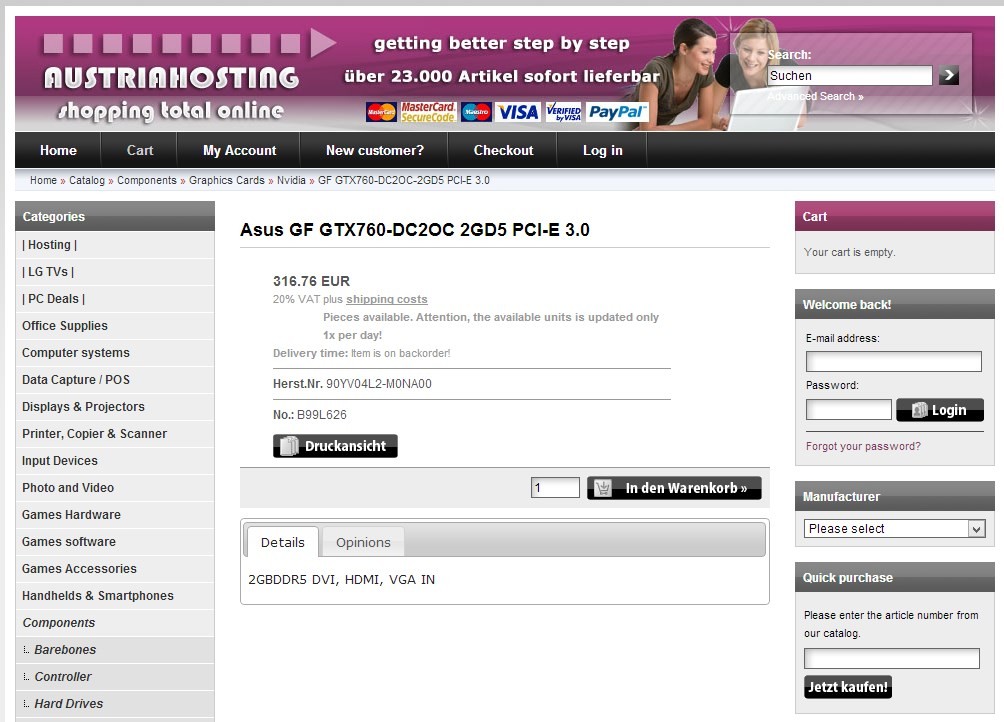
European price-aggregator Geizhals.at sniffed out at least two retailers listing the upcoming ASUS GeForce GTX 760 DirectCU II OC graphics card. The card is priced at 316.5€ on average, including VAT and shipping; and 264€ excluding them. While the card itself isn't pictured by either store, specifications posted by Geizhals appear to check out with Monday's leaks. The card is based on a 28 nm GK104 silicon, with 1,152 CUDA cores, 96 TMUs, 32 ROPs, and a 256-bit wide memory interface holding 2 GB of memory. The way Geizhals describes it, the card features a dual-slot DirectCU II cooler. We don't expect it to look much different from the one that cools DirectCU II versions of GTX 660 Ti or GTX 670. The 264€ pre-VAT pricing of this non-reference design, factory-overclocked card suggests that most GTX 760 cards should be priced in the neighborhood of US $250 to $300.

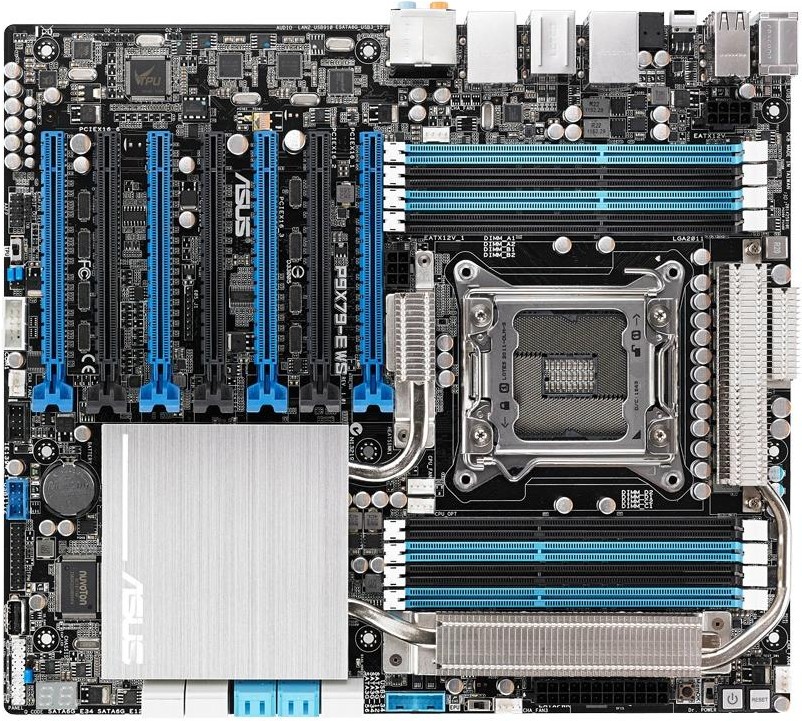
ASUS P9X79-E WS Socket LGA2011 Motherboard Launched

First sighted in January, ASUS' P9X79-E WS socket LGA2011 motherboard is ready to take on the new breed of Core "Ivy Bridge-E" and Xeon "Ivy Bridge-EP" lines of processors, even if initial versions of its BIOS don't advertise that support. Based on Intel X79 Express chipset, the board is built in the 305 x 267 mm SSI-CEB form-factor. The LGA2011 socket is powered by a 10-phase VRM, with 2+2 phase memory VRM. The CPU socket is wired to eight DDR3 DIMM slots, four on its either sides, supporting up to 64 GB of quad-channel DDR3-2133 MHz memory. The board features a total of seven PCI-Express x16 slots. 4-way NVIDIA SLI and AMD CrossFireX are supported.

Storage connectivity on the P9X79-E WS includes two SATA 6 Gb/s ports from the X79 PCH, four SATA 6 Gb/s from a Marvell-made 4-port SATA 6 Gb/s AHCI/RAID controller, four SATA 3 Gb/s from the PCH, and an additional two eSATA 6 Gb/s from an ASMedia-made controller. There are just four USB 3.0 ports on offer, all ASMedia-made controllers. Other connectivity includes two gigabit Ethernet interfaces, both driven by Intel-made controllers, 8-channel HD audio, legacy connectivity such as PS/2 and RS232 COM (header), and a pinch of overclocker-friendly features in the BIOS and on-board. The P9X79-E WS from ASUS is priced at US $499.99.

ASUS GeForce GTX 780 DirectCU II Series Generally Available

ASUS today announced two GeForce GTX 780 DirectCU II graphics cards, the new highest-end offerings in its NVIDIA-based graphics card range. They feature an ASUS-designed PCB and a completely new look for the DirectCU II cooler, as well as DIGI+ VRM digital power delivery and robust Super Alloy Power components.

GeForce GTX 780 DirectCU II cards use an NVIDIA GK110-300 GPU with 2304 CUDA cores. They ship with 3GB GDDR5 video memory on a 384-bit interface. For avid PC gamers who demand ultra-high detail and readiness for resolutions beyond full HD 1080p, GeForce GTX 780 DirectCU II cards deliver extreme cooling, stability, and endurance well above reference card requirements.

ASUS GeForce GTX 780 DirectCU II Detailed

ASUS unveiled its GeForce GTX 780 DirectCU II OC graphics card, featuring a non-reference PCB, and a new-generation DirectCU II cooler. Its PCB features a strong 10-phase VRM, which is tuned to offer a 30% higher voltage threshold, that much better electrical noise suppression (159 mV vs. 239 mV), and an array of tantalum capacitors that ensure clean power delivery to the GPU. ASUS is offering factory-overclocked GPU speeds of 889 MHz core, 941 MHz GPU Boost, compared to NVIDIA reference speeds of 863 MHz and 900 MHz.

A star attraction with the GTX 780 DirectCU II, is its new-generation DirectCU II cooler. It uses a CoolTech fan, which made its debut with the GTX 670 DirectCU Mini, and which is a cross between lateral-flow and top-flow fans, ensuring greater sweep. The cooler uses a combination of one CoolTech fan, and a conventional top-flow fan towards its rear. This is to ensure the lateral sweep of a CoolTech fan doesn't push hot air back into the case from its rear. The one in the front pushes it out through the rear vent. Beneath these fans is a conventional aluminum fin-stack heatsink, in which a combination of four 8 mm thick, and a central 10 mm-thick copper heat pipes make direct contact with the GPU. The card ships with a back-plate, even though there's nothing to cool on the back side. ASUS plans to launch the card soon.

ASUS Maximus VI Formula Completes ROG LGA1150 Lineup

ASUS launched its socket LGA1150 motherboard lineup with three products in its coveted Republic of Gamers (ROG) lineup, the flagship Maximus VI Extreme, the micro-ATX Maximus VI Gene, and the mid-range Maximus VI Hero. A little earlier today, the mini-ITX Maximus VI Impact joined the team with a stunning feature-set for its size. At Computex, we pictured the last piece of the puzzle, the Maximus VI Formula. Pictured below, this ATX motherboard based on the Z87 chipset is best suited for liquid-cooled rigs with 3-way graphics cards. It borrows a piece of technology over from the TUF series, a thermal armor that covers most parts of the board. The armor makes contact with a water block that actively cools the board's CPU VRM.

The Maximus VI Formula uses an identical CPU VRM to the Maximus VI Extreme. The board draws power from a combination of 24-pin ATX and 8-pin EPS. A 4-pin ATX and Molex can be optionally connected to stabilize overclocks. The LGA1150 socket is wired to four DDR3 DIMM slots, and three PCI-Express 3.0 x16 slots (x16/NC/NC or x8/x8/NC or x8/x4/x4), it lacks the PEX8747 bridge chip of its bigger sibling. Three other PCI-Express 2.0 x1 chips make for the rest of the expansion. Connectivity on the Maximus VI Formula includes ten SATA 6 Gb/s ports, eight USB 3.0 ports, SupremeFX audio, gigabit Ethernet (Intel controller), 802.11 ac WiFi, and Bluetooth 4.0. ASUS didn't reveal launch plans.

ASUS Unveils ROG Maximus VI Impact Mini-ITX Motherboard

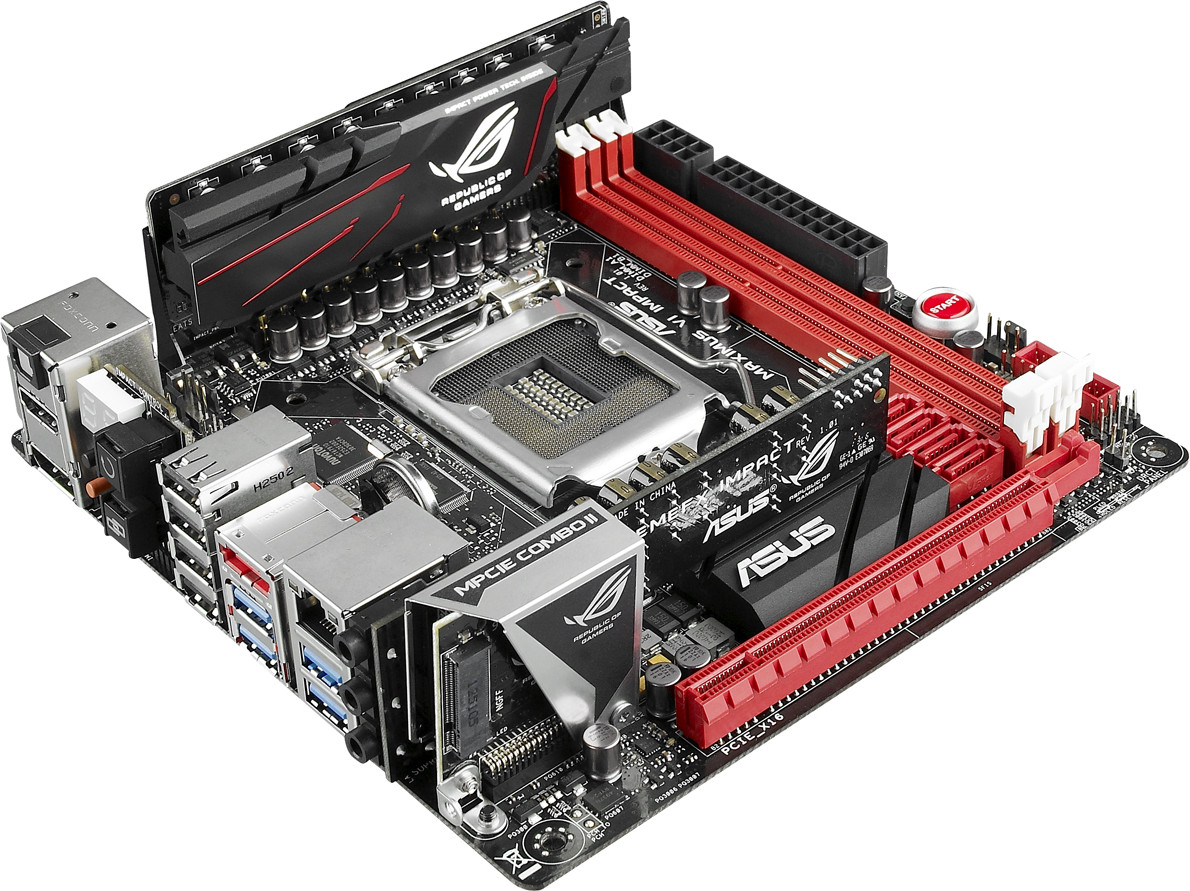
ASUS announced its first Republic of Gamers (ROG) motherboard in the mini-ITX form-factor, the Maximus VI Impact, which could go on to become choice number one for SFF gaming PC builders. Arguably the most feature-rich mini-ITX motherboard ever made, the Maximus VI Impact is a socket LGA1150 motherboard based on Intel Z87 Express chipset, which supports 4th generation Core "Haswell" processors.

The board draws power from a combination of 24-pin ATX and 8-pin EPS connectors, and conditions it using a 10-phase VRM that off-shoots into its own little PCB, with heatsink. The other three daughterboards on the Maximus VI Impact include the SupremeFX Impact, a sound-card with an audiophile-grade 115 dBA DAC, OPAMPs, and audio-grade capacitors; and an mPCIe combo card that lends it 802.11 ac WiFi and Bluetooth 4.0; and an ImpactControl card that gives overclockers POST diagnostic readouts and CMOS reset/restore at the push of a button, right from the rear panel.

ASUS Shows Off Republic of Gamers Poseidon Graphics Card

The GTX 670 DirectCU Mini cooler earned ASUS engineers tons of respect (and hopefully sales) from enthusiasts. The same crew unveiled a new high-end graphics card in the company's Republic of Gamers (ROG) family, based on a performance-segment GeForce GTX 700 series GPU, the ROG Poseidon. The card features a unique new cooler that combines an air-based cooler, with a full-coverage liquid-based one. Users have the choice of running the completely on air, completely on water (with the fan shut off), or with both in concert (air+liquid). The solution works with a common full-coverage base that makes contact with the card's GPU, memory, and VRM, which is in contact with both a complex ain-array, and a coolant channel. An ROG logo on the cooler's top lights up red, and can either stay at a set brightness, or pulsate. The company didn't finalize clock speeds, or launch date.

ASUS Ultra HD Monitor Lineup Led by a 39-incher

It looks like the 31.5-inch PQ321 won't be the only 4K Ultra-HD monitor from ASUS for long. The company unveiled the even bigger unnamed 39-incher at Computex for a brief moment, before veiling it back, leaving us just enough time to take a few snaps. The 39-inch monitor is based on a VA (vertical-alignment) panel, compared to the IGZO panel that drives the PQ321. That could possibly make it cheaper. It offers a native resolution of 3840 x 2160 pixels, single-figure response time, 60 Hz refresh rate (when taking input from DisplayPort 1.2), 5,000:1 static contrast ratio with dynamic mega-contrast, 350 cd/m² brightness, 170°/170° viewing angles, and inputs that include a DisplayPort 1.2, and two HDMI. It also features a different forked stand design to the PQ321.

ASUS Launches Intel Xeon E3-1200 v3-Based Servers and Serverboards

ASUS today announced E8 servers and P9D serverboards for new Intel Xeon processors based on the Intel Denlow platform. E8 and P9D models are engineered for High Ambient Temperature operation at up to 40°C, and deliver over 90% voltage regulation efficiency, representing a major improvement over previous models. Both series also feature PCI Express 3.0, USB 3.0, and ASUS PIKE storage upgrade support.

With ASUS-exclusive air cooling designs, the E8 and P9D Series perform well in HTA (High Ambient Temperature) environments, and maintain stability even at sustained temperatures above 40°C. Their high energy efficiency reduces power consumption, a key aspect of data center applications. Exclusive ASUS Beat Thermal Chokes decrease operating temperatures by 3-5°C and achieve up to 90% voltage regulation efficiency. E8 servers use 80 PLUS power supplies that help reduce operating costs through lower electricity bills.

ASUS Announces BM1 and BP1 Commercial Desktop PCs with Core "Haswell"

ASUS today announced the BM1 and BP1 commercial desktop PCs with the latest 4th generation Intel Core processors and integrated Intel HD Graphics 4600 graphics. Both PCs feature the ASUS Business Suite 2.0 one-stop system management tool, while the BM1AE and BP1AE variants offer Intel vPro technology for advanced remote management for larger businesses. Both the BM1 and BP1 also feature tool-less designs for easy upgrades and maintenance.

Both the ASUS BM1 and BP1 commercial desktop PCs feature the ASUS Business Suite 2.0 utility that makes it easy for IT administrators to manage and update PCs with the minimum of fuss. Based on ASUS-designed utilities and Intel Small Business Advantage (SBA) platform, ASUS Business Suite 2.0 is a combination of software designed for small businesses without a managed network. ASUS Easy Update II keeps BIOS and drivers up-to-date, USB Blocker provides unauthorized data acquisition and transfers, and Secure Delete for irrecoverable data deletion. ASUS Business Suite 2.0 also features the exclusive ASUS Energy Processing Unit (EPU) for optimized energy efficiency.

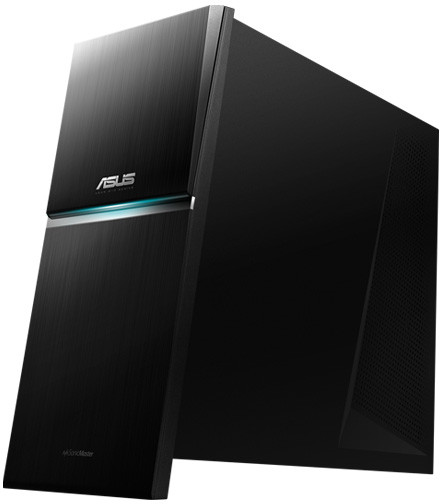
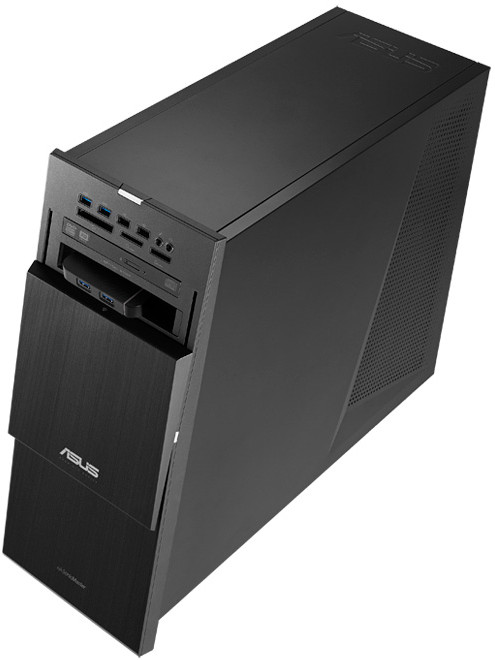
ASUS Introduces G10 and M51 Desktop PCs with Latest 4th Generation

ASUS today announced the G10 and M51 Desktop PCs with the latest 4th generation Intel Core processors and NVIDIA GeForce GTX graphics for smooth multitasking and high-performance gaming. Both new desktops also feature ASUS Smart Cooling technology for cooler and quieter operation, and ASUS Power Pack - a removable UPS (Uninterruptible Power Supply) that can also be used as a portable battery recharger for smartphones and tablets. In addition, the G10 and M51 are its first desktop PCs to feature ASUS SonicMaster audio technology for enhanced sound quality.

ASUS G10 and M51 desktop PCs feature the latest 4th generation Intel Core i7 processors for improved multitasking performance and increased energy efficiency. The G10 comes with NVIDIA GeForce GTX 680 graphics with 3D Vision Surround, and support for up to four monitors for a more immersive gaming experience. Both the G10 and M51 also feature audio enhanced by ASUS SonicMaster technology and the same professional tools heard on the world's most popular music, movies and video games, thanks to MaxxAudio Master by Waves, recipient of a Technical Grammy award. The ASUS exclusive AudioWizard audio interface also allows sound settings to be tailored to suit entertainment at hand.
Return to Keyword Browsing
Nov 26th, 2026 00:45 CST change timezone

New Forum Posts

Popular Reviews

TPU on YouTube

Controversial News Posts