News Posts matching #Cuts

Return to Keyword Browsing

AMD Reportedly Cuts Gaming GPU Supply in China by Up to 50%

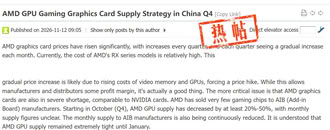
AMD has reportedly cut its gaming GPU supply in China by at least 20% to 50% since the start of the fourth quarter in October. According to a November 12 post on Board Channels spotted by Videocardz, AMD's shortage is now comparable to NVIDIA's, with very few gaming chips going to add-in board (AIB) partners. Their monthly allocations are apparently still shrinking, and the source expects supply to remain extremely tight until January.

The same source describes Radeon prices in China climbing every quarter, with smaller increases month to month within each quarter, and puts that down to rising memory and GPU costs. AMD is reportedly raising the price of its GPU and GDDR6 kits again this month, after an earlier increase in October. Things aren't much better on the green side either, with an NVIDIA partner saying in late October that it couldn't buy RTX 5090 GPU and GDDR7 kits anymore, while RTX 5090 and 5080 prices continue to skyrocket. Graphics cards were already selling 44% above MSRP on average in October, so a smaller pool of Radeon cards is unlikely to help matters.

Tenstorrent Cuts 20 Cores From Already-Shipping "Blackhole" P150 Cards

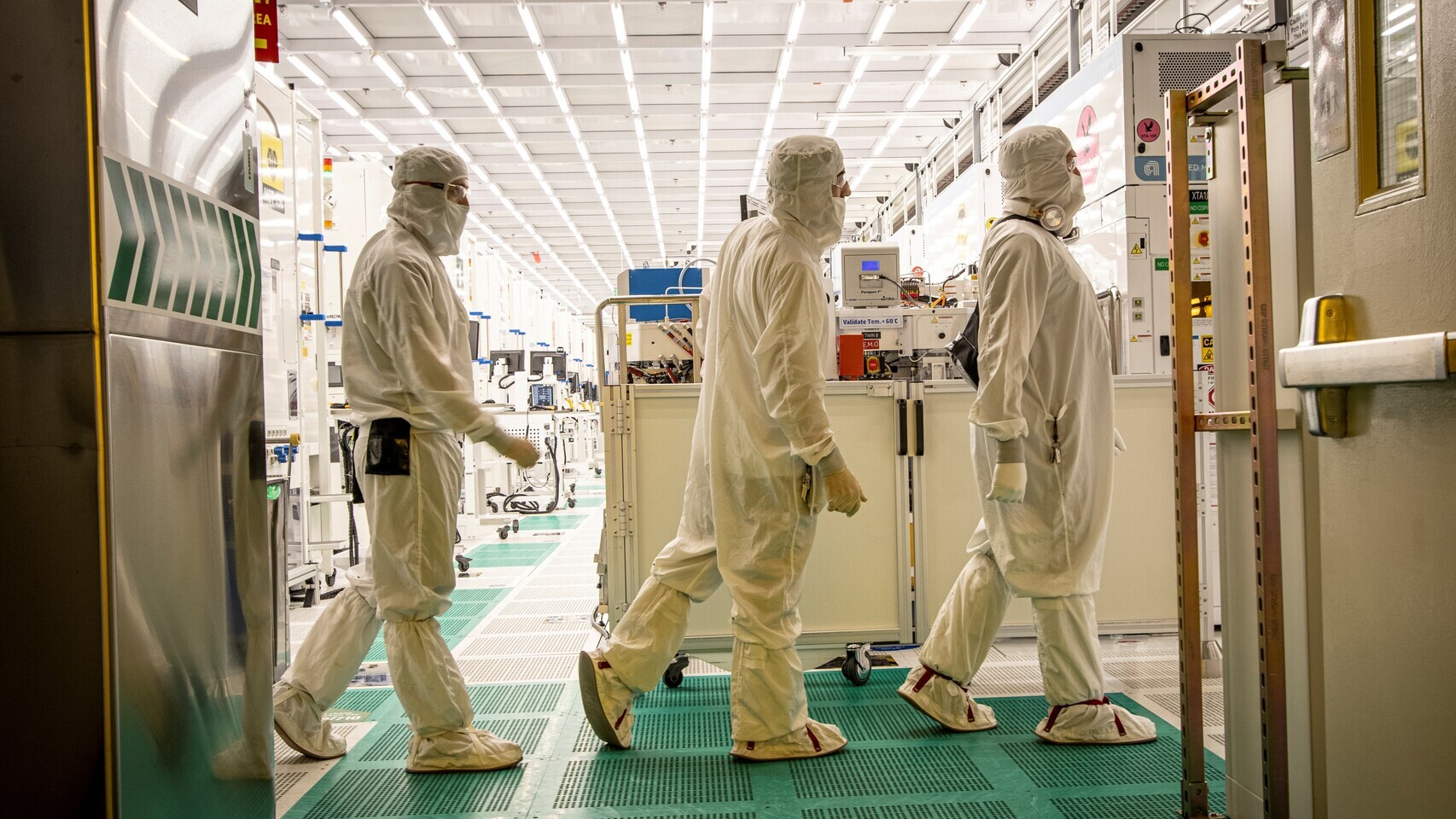
Tenstorrent, a startup focused on designing high-performance AI accelerators and led by the renowned computer architect Jim Keller as CEO, has announced significant hardware updates to its existing Blackhole P150 accelerators, which include the P150a and P150b models. In the latest documentation change, the company notes that its Blackhole P150 accelerators will now work with about 14.3% fewer cores than originally advertised. In the official documents, the P150 accelerators are now shipping with 120 working "Tensix" cores instead of the previously advertised 140 cores. The reason for this change is unknown, as the company provided a vague explanation: "To present a unified interface to metal and other system software, firmware v19.5.0 and later will change the core count on all existing cards to 120. Typical workloads show a non-material (~1-2%) performance difference."

The Blackhole P150 accelerators featured 140 "Tensix" cores and 32 GB of GDDR6 memory, operating at up to 300 W in an actively cooled form factor designed for desktop workstations, and the P150a model includes four passive QSFP-DD 800G ports. However, as the number of cores is reduced by approximately 14%, TeraFLOPS take a nosedive as well. In the older documents for the 140-core SKUs, the BLOCKFP8 8-bit floating point performance was listed at 774 TeraFLOPS, while the new 120-core version reduces that number to 664 TeraFLOPS at the same precision level. Why this sudden change is happening is still a mystery. However, the HPC community with a lot of knowledge in the industry suggests a few reasons.

AMD & NVIDIA Reportedly Consider GPU Cuts, ASUS and Others Slow Motherboard Plans Amid Memory Shortage

A series of reports from Korean and Taiwanese outlets suggests growing pressure across the PC hardware industry as DRAM, NAND, and even NOR Flash prices continue to climb. Korea Economic Daily says NVIDIA, AMD, and other GPU makers are considering dropping some mid-to-high-end gaming cards where memory now makes up an unusually large share of total cost. Taiwanese PC brands, including ASUS, are also said to be looking at ways to reduce memory configurations in upcoming products. TrendForce warns that manufacturers may shift more production toward lower-margin models or raise prices across the board to cope with higher component costs. With most modern PCs, laptops, consoles, tablets, and phones now shipping with at least 16 GB of RAM, any further price spikes or supply shortages could force major brands to cut orders and increase retail pricing. Commercial Times reports that memory alone could add nearly NT$3,000 (about US $96) to basic office PCs next year.

According to Commercial Times, due to rising memory prices some motherboard makers and notebook ODMs vendors have paused new motherboard development or mass production. DRAM, NAND, and NOR Flash supply is tightening at the same time. DDR4 is becoming especially scarce as suppliers accelerate phase-outs and move mature-node capacity toward HBM and DDR5. WJ Capital Perspective estimates a DDR4 shortfall of around 70,000 wafers by the end of 2025, with 2026 unlikely to recover fully. NOR Flash demand is rising as well, driven by AI servers. Commercial Times says NVIDIA's GB200 NVL72 system already uses more than US $600 of NOR per rack, possibly reaching $900 within two years. This comes right after earlier reports that AMD is preparing GPU price increases and Samsung is raising memory prices by up to 60% due to tight supply.

Aggressive Profit Targets Prompt Xbox Layoffs, Price Increases, and Budget Cuts

Inside Microsoft's Xbox gaming division there is a battle for aggressive company profits, which by the looks of it must be accomplished at any cost. According to Bloomberg, Xbox CFO Amy Hood set a company-wide target to reach a 30% profit margin for the entire Xbox unit back in the fall of 2023. Since then, the company has been undergoing significant restructuring, including price increases, layoffs, project cancellations, and budget cuts to meet this profit target. As some readers may recall, Xbox recently revamped its subscription lineup, introducing Essential, Premium, and Ultimate tiers, along with a PC-only plan. These plans saw a 50% price increase, leaving many gamers unhappy with the steep rise in their subscription costs.

According to estimates from S&P Global Market Intelligence, the video game industry averages profits of 17-22%. This figure reflects recent years of game development, which have seen a significant rise in costs due to the complex nature of modern games. For example, the upcoming Grand Theft Auto 6 is rumored to have a $2 billion budget, an astonishing amount for game development. Such high costs are necessary to support all aspects of the complex development cycle. A 30% profit margin, which Xbox aims to achieve, is rare in the gaming industry and is typically reserved for a few top-tier publishers. As we approach Microsoft's earnings call scheduled for October 29, we expect an update on the Xbox division. To reach a 30% margin, Xbox may focus on more premium hardware, higher-priced software, and budget cuts on non-essential projects.

Intel Cuts Budget for Client and Data Center Groups, Layoffs Imminent

Following the recent Q1 2023 financial report with declining revenue, Intel is restructuring its Client Computing Group (CCG) and Data Center Group (DCG). These two units were hit the hardest, with 38 and 39% downturns, respectively. According to Dylan Patel of SemiAnalysis, and a statement from Tom's Hardware, we have information that Intel will be conducting budget cuts to CCG and DCG, with some layoffs. As Dylan Patel notes, Intel will cut CCG and DCG budgets by 10%, resulting in as much as a 20% reduction of the workforce inside those two groups. Additionally, this was supported by Intel's spokesperson, who issued a statement for Tom's Hardware stating the following:
Intel SpokespersonIntel is working to accelerate its strategy while navigating a challenging macro-economic environment. We are focused on identifying cost reductions and efficiency gains through multiple initiatives, including some business and function-specific workforce reductions in areas across the company.

We continue to invest in areas core to our business, including our U.S.-based manufacturing operations, to ensure we are well-positioned for long-term growth. These are difficult decisions, and we are committed to treating impacted employees with dignity and respect.

Sony Takes a Step Backwards with PlayStation 5, Cuts on Cooling Capacity in the new Revision

Sony's latest gaming console, PlayStation 5, has been selling at loss up until August 4th, when the company announced that the new console is now profitable. However, it seems like Sony is trying to extend those profits even further with the latest revision of PlayStation 5 that is seemingly taking a step backward. According to the latest report, Sony has updated its PlayStation 5 internal design and the console is now featuring a smaller heatsink, which you can see below. The new revision is featuring a significantly smaller heatsink and an absence of the large copper cold plate. The fan that cools the heatsink is also reduced, resulting in a complete thermal downgrade.

While there was no in-depth testing of the cooling performance, the exhaust system of the new PS5 revision is spitting out 3-5 degrees Celsius higher temperatures. That is just measuring the air coming out, where the actual SoC could run hotter by an even larger margin. As we wait for more testing of the new PS5 revisions, we have to wonder why Sony opted to cut corners on such an important piece, that ultimately provides the console with longevity, due to cooler silicon.

"Intel inside" Campaign Funds Cut, Might Bring Higher Pricing to End Users

Intel has decided to rollback investment - read, funding - for its "Intel inside" marketing campaign, which has been with us since 1991. The "Intel inside" campaign is one where Intel has been offering OEMs and system integrators some amount of compensation and marketing funding for their Intel-based products, and is aimed at helping OEMs and channel partners drive PC sales growth. However, if CRN's report is right, Intel is looking towards cutting funding for this program by 40% to 60%.

OEMs have been including Intel's "Intel inside" funding as part of their annual marketing budgets, and the reduction of this funding from Intel can go one of two ways: manufacturers reduce marketing budget, or keep the same budget, but pass on the increased expenses towards consumers. For companies, the second option is likelier to be true, simply because marketing plays such a prominent role in company's visibility in the usually crowded markets.
Return to Keyword Browsing
Nov 13th, 2026 07:01 PST change timezone

New Forum Posts

Popular Reviews

TPU on YouTube

Controversial News Posts