Friday, November 14th 2025
Samsung Reportedly Raising Memory Chip Prices by Up to 60% Amid Tight Supply
Samsung has reportedly raised prices for several DDR5 memory modules by up to 60% this month as supply tightens amid the global push to build AI data centers, according to two people familiar with the changes. The increases follow Samsung's unusual move to delay October contract pricing, which it normally sets each month. The jump in server-grade DDR5 costs is putting added pressure on hyperscalers and OEMs already short on parts. Fusion Worldwide president Tobey Gonnerman told Reuters that many major server builders "now accept that they won't get nearly enough product," with premiums reaching "extreme" levels. Recent contract pricing shows how fast costs have climbed. Samsung's 32 GB DDR5 module price rose from $149 in September to $239 in November. The company also raised prices for 16 GB and 128 GB DDR5 modules by about 50%, to $135 and $1,194. Prices for 64 GB and 96 GB modules increased by more than 30%, sources said.
The shortage has triggered panic buying for some customers and is disrupting demand for other semiconductor parts. Semiconductor Manufacturing International Corporation (SMIC) said the tight DDR5 market has caused buyers to hold back orders for additional chip types, while Xiaomi warned that rising memory prices are pushing up smartphone production costs. The shortage is turning into an advantage for Samsung. While the company still trails rivals in advanced AI processors, its memory division now has stronger pricing leverage than SK Hynix and Micron. TrendForce expects Samsung's contract prices to rise 40-50% in Q4, higher than the roughly 30% increase forecast for the broader market, supported by strong demand and long-term supply deals running into 2026 and 2027.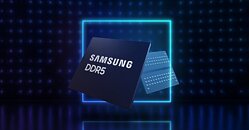
Source:
Reuters
The shortage has triggered panic buying for some customers and is disrupting demand for other semiconductor parts. Semiconductor Manufacturing International Corporation (SMIC) said the tight DDR5 market has caused buyers to hold back orders for additional chip types, while Xiaomi warned that rising memory prices are pushing up smartphone production costs. The shortage is turning into an advantage for Samsung. While the company still trails rivals in advanced AI processors, its memory division now has stronger pricing leverage than SK Hynix and Micron. TrendForce expects Samsung's contract prices to rise 40-50% in Q4, higher than the roughly 30% increase forecast for the broader market, supported by strong demand and long-term supply deals running into 2026 and 2027.


35 Comments on Samsung Reportedly Raising Memory Chip Prices by Up to 60% Amid Tight Supply
Rocketsamsung always blasting off their prices off again.Also fck Samsung, I used to like them as a makers of cool products, now I just see them for the greed based, anti-consumer monopoly they have always been.
I feel they're doing this because they all know what's coming. AI isnt making money. Circular investment plagues the industry. Warehouses are filling up with cards waiting for new datacenters that are not being built fast enough and dont have enough electricity or water to run. All while the Chinese are working on their own domestic examples that will undercut the West's efforts.
The whole industry is heading for a nasty crash, and they're trying to squeeze out every dollar before things break.
64GB
2x WD850X 4TB
RTX 4090
1350W
Bought from Dell two years this week. I bet I could part it out for more than I paid for it.
Could certainly move to a DDR4 rig yes.
On the other hand, looking for a second hand 4080 Super still comes up with loads of people and retailers offering for more than MSRP for used and “refurbished” cards. :rolleyes:
B2T: It's a bummer. Especially, if you look back to last year and see all RAM and NAND suppliers scaling back production, due to “foreseeable” low demand in the future.
Overall I'm with @TheinsanegamerN - foundries hiking prices without any whiff of a rumour of building a new fab or even a line or two in existing fabs hints that they're not seeing AI as a a market that will sustain this crazy demand for 3-5 years, let alone the 10-25 years they'd ned to recoup the costs of building a new fab from scratch.
32gb sticks start around $100 each.
But I wouldn't build a DDR4 system with 32GB. No point to it. 16's more than fine.
If you lived nearby I'd sell you my old rig, R5 3350G + Asrock A520M
I've been at 128gb of ram since 2010.
Now we have venture capitalism and greed, and just jack the prices due to the demand and no other reason.
Is that not profiteering??
Wouldn't it be logical to expect prices of CPUs, motherboards, PSUs, cases, monitors, chairs, desks, keyboards, speakers, and almost everything else PC-related to drop sharply and almost to zero?