Wednesday, February 4th 2026
Tenstorrent Cuts 20 Cores From Already-Shipping "Blackhole" P150 Cards
Tenstorrent, a startup focused on designing high-performance AI accelerators and led by the renowned computer architect Jim Keller as CEO, has announced significant hardware updates to its existing Blackhole P150 accelerators, which include the P150a and P150b models. In the latest documentation change, the company notes that its Blackhole P150 accelerators will now work with about 14.3% fewer cores than originally advertised. In the official documents, the P150 accelerators are now shipping with 120 working "Tensix" cores instead of the previously advertised 140 cores. The reason for this change is unknown, as the company provided a vague explanation: "To present a unified interface to metal and other system software, firmware v19.5.0 and later will change the core count on all existing cards to 120. Typical workloads show a non-material (~1-2%) performance difference."
The Blackhole P150 accelerators featured 140 "Tensix" cores and 32 GB of GDDR6 memory, operating at up to 300 W in an actively cooled form factor designed for desktop workstations, and the P150a model includes four passive QSFP-DD 800G ports. However, as the number of cores is reduced by approximately 14%, TeraFLOPS take a nosedive as well. In the older documents for the 140-core SKUs, the BLOCKFP8 8-bit floating point performance was listed at 774 TeraFLOPS, while the new 120-core version reduces that number to 664 TeraFLOPS at the same precision level. Why this sudden change is happening is still a mystery. However, the HPC community with a lot of knowledge in the industry suggests a few reasons.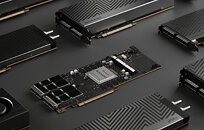
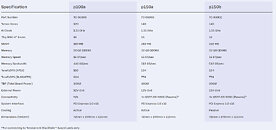
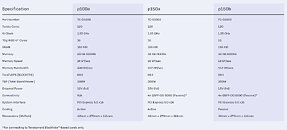 The first one is that the Blackhole P150 accelerators are heavily limited by their thermal capacity, which stands at 300 W only. This means that a 140-core version might not be reaching its full potential easily, limiting the card's performance target. A second and also plausible reason is that the accelerator is aiming to increase its silicon yield, where it is much easier to get a chip with 120 working cores instead of all 140. As the company is preparing to scale its accelerator design to multi-chip systems, getting the silicon yield within an acceptable range is the most important factor. Finally, it could also mean that the shipping silicon versions are not entirely ready, and some argue that this represents the equivalent of shipping experimental silicon.
Source:
FelixCLC
The Blackhole P150 accelerators featured 140 "Tensix" cores and 32 GB of GDDR6 memory, operating at up to 300 W in an actively cooled form factor designed for desktop workstations, and the P150a model includes four passive QSFP-DD 800G ports. However, as the number of cores is reduced by approximately 14%, TeraFLOPS take a nosedive as well. In the older documents for the 140-core SKUs, the BLOCKFP8 8-bit floating point performance was listed at 774 TeraFLOPS, while the new 120-core version reduces that number to 664 TeraFLOPS at the same precision level. Why this sudden change is happening is still a mystery. However, the HPC community with a lot of knowledge in the industry suggests a few reasons.


12 Comments on Tenstorrent Cuts 20 Cores From Already-Shipping "Blackhole" P150 Cards
"I have altered the deal, pray I don't alter it further."
Sadly, the software stack is where it all falls apart, as their software pretty much fails entirely to capitalize on the novel possibilities offered and instead treats the hardware like: "what if we made something that PyTorch wants to interface to, and then struggled really hard to recover a sense of mechanical sympathy from that?" Hot take, possibly unfair, but there is a reason why big tech is taking out huge loans to buy AI hardware, and very little (if any) of that makes it into Tenstorrent's pocket, you know?
Axing cores of an already lunched product with bios update is a new level.
How can any potential buyers be sure that buying their future hardware will not being retroactively downgraded too?
Tenstorrent will lose a ton of business because of this.
I would doubt it has anything to do with yields. It is likely manufactured on a 12nm or 16nm process.
When 6000 series cards ship with missing ROPs, they'll just cut the normal ones down to the same ROP count as the defective ones through a forced driver update.
.... Then sell you your own ROPs back to you, with a monthly subscription
Hey... they already do that.