News Posts matching #DisplayPort 2.1a

Return to Keyword Browsing

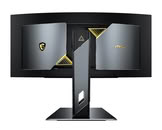
MSI Introduces MEG X, the Flagship Intelligent QD-OLED Gaming Monitor

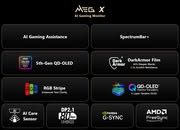
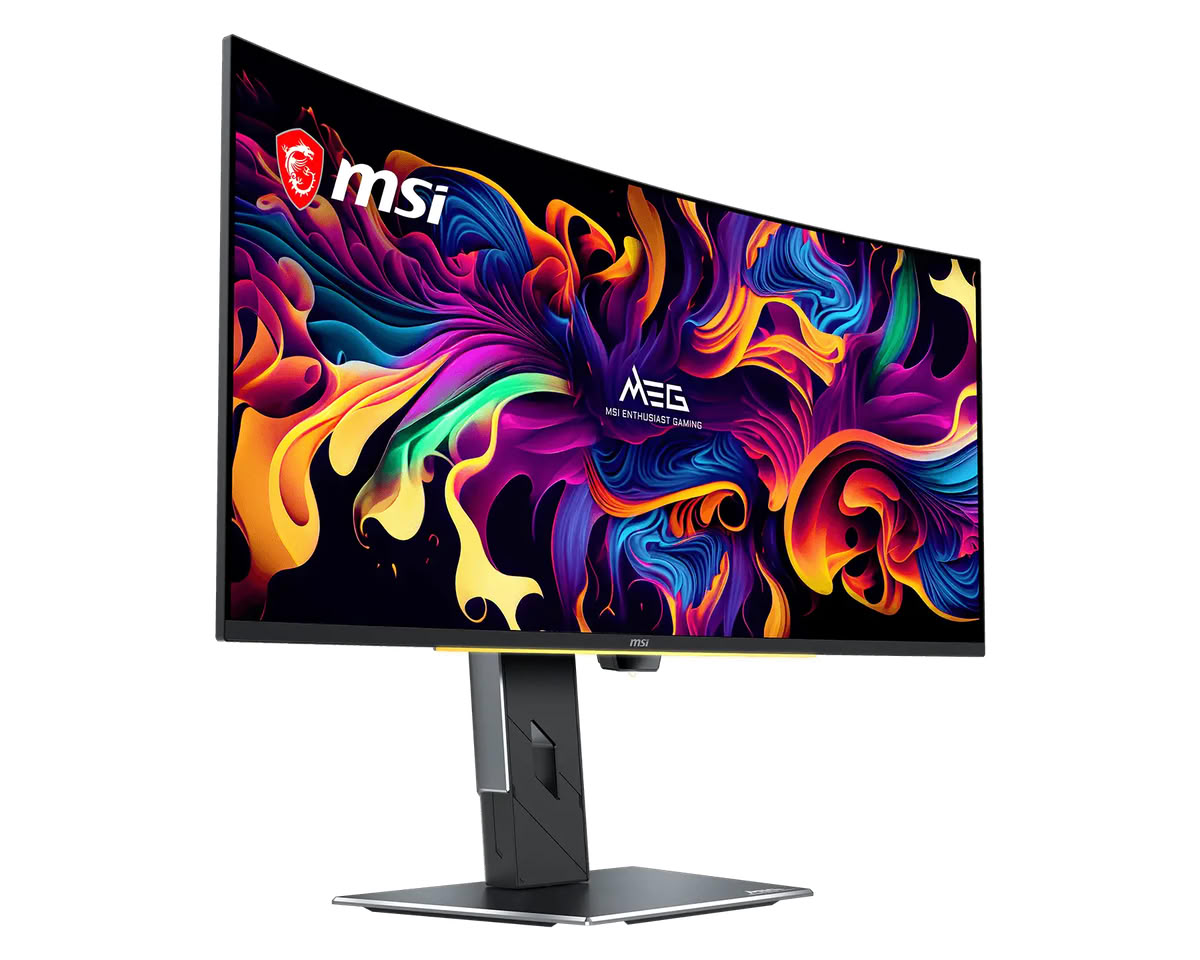
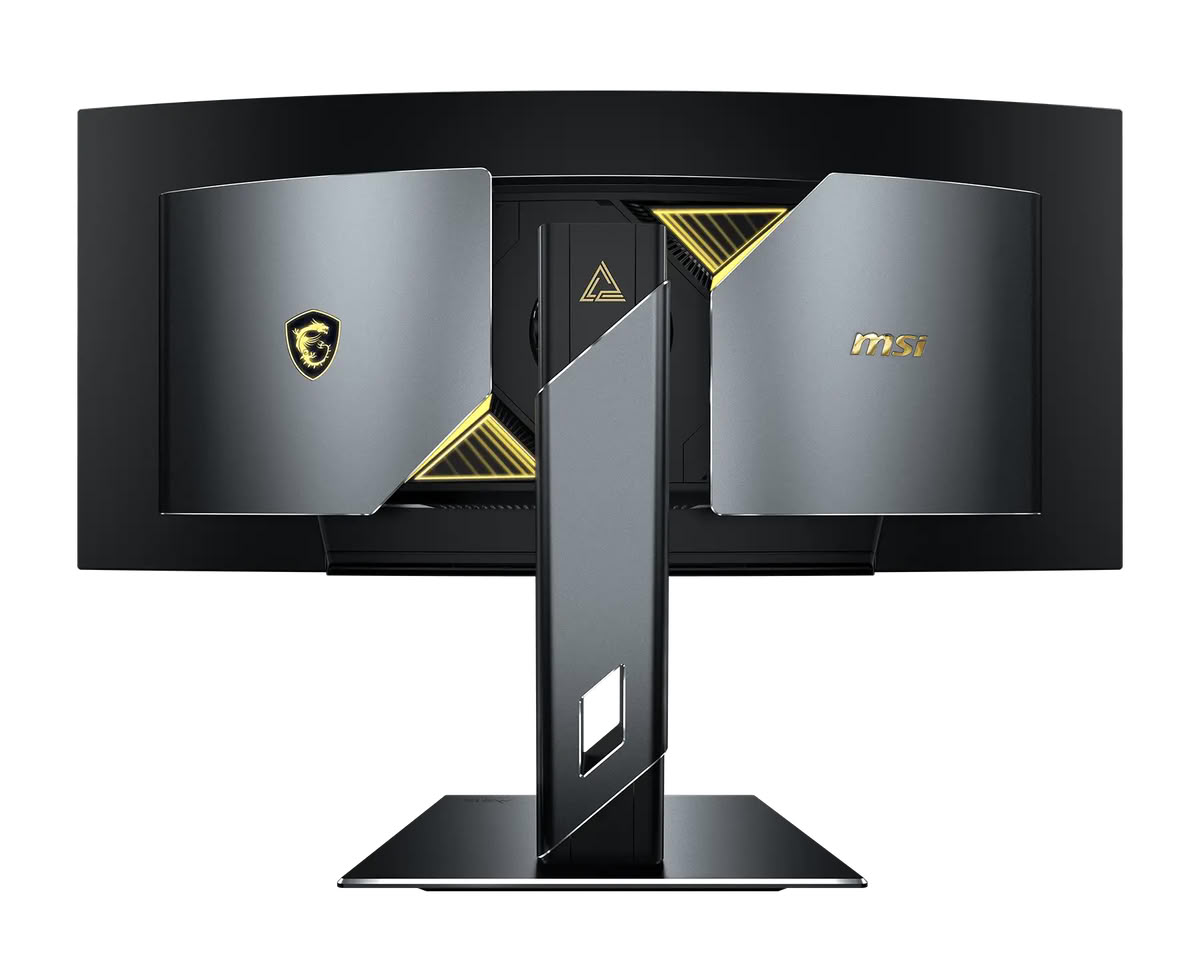
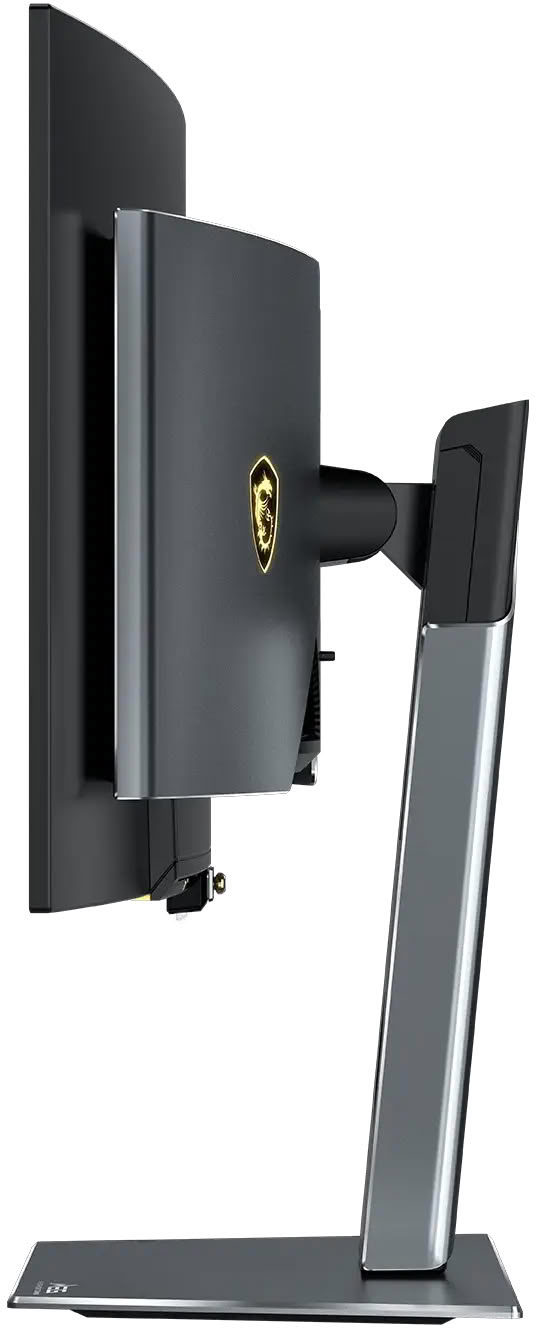
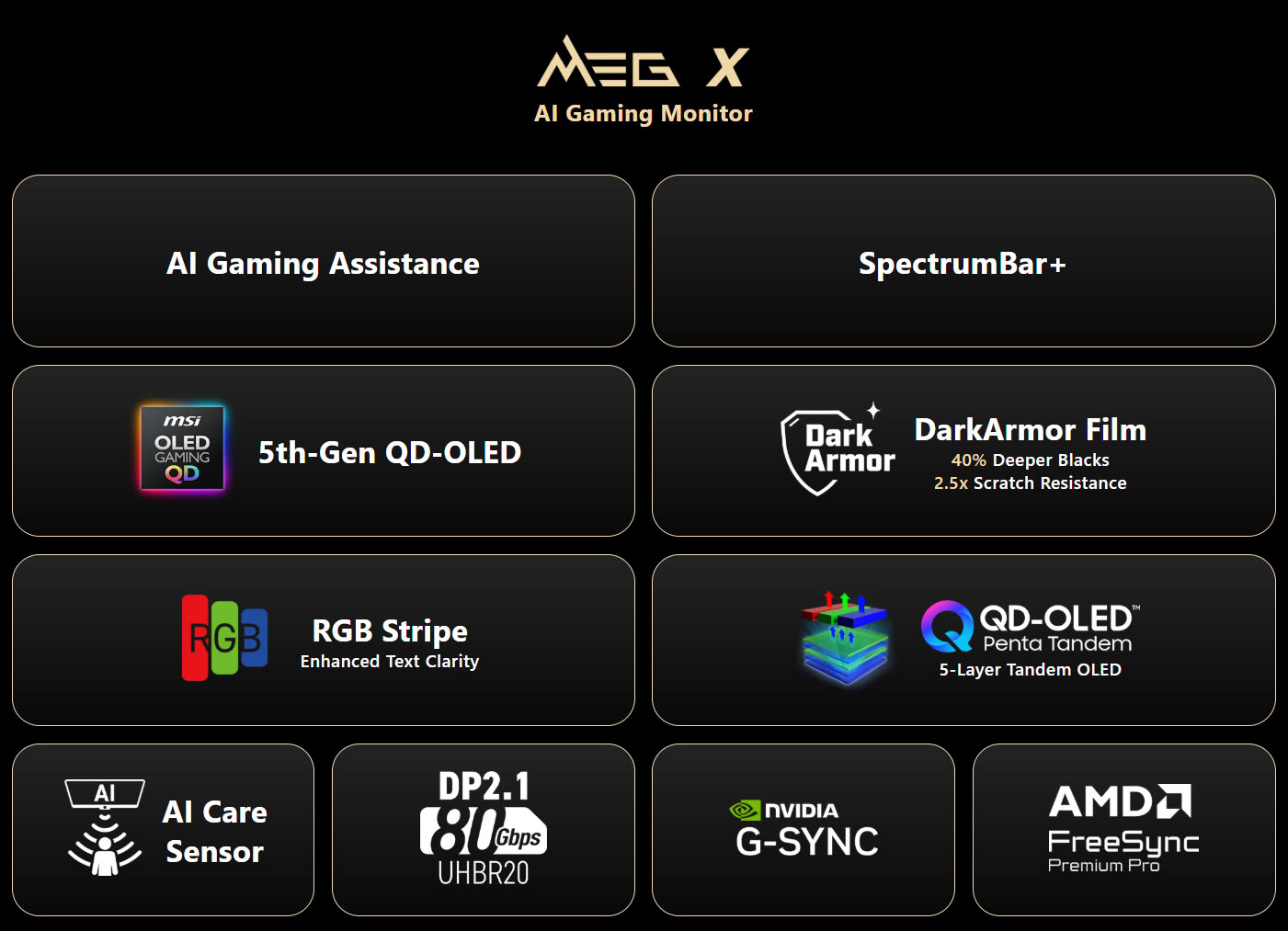
MSI introduces the MEG X, a flagship 34-inch QD-OLED gaming monitor combining advanced on-device AI, next-generation display technology, immersive lighting, and a distinctive Infinity Mirror design. The MEG X features a 34-inch (33.98-inch viewable) UWQHD (3440 × 1440) 5th-Gen QD-OLED panel with Penta Tandem technology, an RGB Stripe sub-pixel layout, and DarkArmor Film, delivering a 360 Hz refresh rate and 0.03 ms (GtG) response time. A dedicated AI Processor powers intelligent visual, audio, and gameplay features, while MSI's exclusive SpectrumBar+ adds real-time lighting feedback for greater immersion.

AI at the Core
The built-in AI Processor analyzes on-screen content directly on the monitor, enabling real-time AI features without requiring dedicated PC software.
ASUS Republic of Gamers Announces Availability of ROG Swift OLED PG27UCWM and PG32UCWM Tandem RGB OLED Gaming Monitors

ASUS Republic of Gamers (ROG) today announced availability of the ROG Swift OLED PG27UCWM and PG32UCWM gaming monitors that feature 4K true Tandem RGB OLED technology. Bringing flagship-tier panel technology to enthusiast setups, the 26.5-inch PG27UCWM and the 31.5-inch PG32UCWM combine true RGB Stripe OLED technology with a TrueBlack Glossy coating and a versatile Dual Mode (4K@240 Hz / FHD@480 Hz) that delivers the ultimate balance of fidelity and speed. Innovative GaNFET power efficiency solution and enhanced OLED Care Pro work together to prolong panel longevity, while Dolby Vision support, VESA DisplayHDR 400 True Black compliance, and DisplayPort 2.1a UHBR20 connectivity make these monitors ready for the most demanding HDR games.

True Tandem RGB OLED
Both monitors feature a 4K true Tandem RGB OLED panel with a proprietary TrueBlack Glossy coating to deliver supersharp imagery and incredibly accurate colors. True RGB Stripe OLED technology omits the white subpixel found in conventional WOLED panels, ensuring razor-sharp text edges and precise color reproduction while delivering up to 27% larger color volume—even at peak luminance levels. The versatile Dual Mode feature lets players effortlessly switch between stunning 4K@240 Hz visuals and ultra-responsive FHD@480 Hz action. Plus, a superfast 0.03 ms response time eliminates ghosting and motion blur in fast-paced games.

MSI to Debut World's First Triple Mode QD-OLED Gaming Monitor at Computex

MSI will showcase its latest QD-OLED lineup at COMPUTEX 2026. The MPG OLED 322URDX36 highlights this showcase with a brand new exterior design. It features a market-leading 4K 360 Hz QD-OLED panel and debuts Triple Mode, setting a new milestone for OLED gaming monitors.

The MPG OLED 322URDX36 is the world's first 31.5-inch 4K 360 Hz gaming monitor on the market to feature the innovative Triple Mode configuration. This technology allows players to switch freely between 4K 360 Hz, 2K 520 Hz, and FHD 680 Hz based on their preferences, meeting the specific performance demands of various game genres. The monitor utilizes a 5th-gen QD-OLED panel with Penta Tandem technology. Its RGB Stripe sub-pixel layout minimizes color fringing and ensures text clarity. The display is equipped with the DarkArmor Film, which improves black levels by 40% and increases scratch resistance by 2.5 times. Additionally, Uniform Luminance supports HDR curve customization, ensuring accurate and consistent visuals across all gaming environments.

MSI Announces Availability of the MPG 322UR QD-OLED X24 and MAG 321UP QD-OLED X24 Gaming Monitors

The new 31.5-inch 4K QD-OLED gaming monitors are officially available. Both MPG 322UR QD-OLED X24 and MAG 321UP QD-OLED X24 feature the 4th-gen QD-OLED panel powered by QD-OLED Penta Tandem technology, increasing light efficiency by 30%. The displays are equipped with DarkArmor Film to deliver 40% deeper blacks and 2.5x better scratch resistance. Additionally, Uniform Luminance supports HDR curve customization, ensuring accurate and consistent visuals across all gaming environments.

MPG 322UR QD-OLED X24
Built for enthusiast setups, the MPG 322UR QD-OLED X24 introduces the AI Care Sensor, utilizing precise human detection for real-time OLED protection while ensuring complete user privacy. Connectivity options include full bandwidth DisplayPort 2.1a (UHBR20) and a USB Type-C port with 98 W Power Delivery to streamline desktop cable management. Gamers can also use the exclusive Gaming Intelligence app to easily customize their display profile and settings.

MSI Introduces Solasta 2 Game Bundle with Selected QD-OLED Gaming Monitors

In tactical RPG adventures, every decision matters—what you see on screen can determine the outcome of every battle. From exploring mysterious environments to planning strategic encounters, visual clarity and responsiveness play a crucial role in delivering a truly immersive experience. To help players fully experience the rich world of Solasta 2, MSI believes a gaming display must do more than simply present visuals—it must bring every moment of the adventure to life.

Solasta 2—A New Tactical RPG Adventure
Solasta 2 builds on the legacy of the acclaimed tactical RPG series, combining deep strategy, rich storytelling, and immersive turn-based combat. Players lead their party through dangerous lands where every decision matters, exploring dynamic environments and facing challenging encounters that test strategy, teamwork, and precision.

ASUS ROG Announces Next-Gen RGB OLED Technology at CES 2026

ASUS Republic of Gamers (ROG) today at CES 2026 announced a stunning array of gaming displays that are set to redefine visual immersion. ASUS and ROG continue to lead globally, holding the No.1 positions in OLED monitors and remaining the top choice for gamers. At CES, ROG unveiled its next-generation QD-OLED and Tandem OLED gaming monitors featuring revolutionary RGB Stripe Pixel OLED technology that reduces color fringing to ensure crystal-clear text and visuals. The new QD-OLED gaming displays also include new ROG BlackShield film that increases perceived black levels and upgrades the panel for improved toughness and scratch resistance.

ROG RGB Stripe Pixel OLED solutions
The latest ROG QD-OLED and Tandem OLED monitors feature revolutionary RGB Stripe Pixel technology that ensures ultrasharp imagery and crisp text for exceptional viewing experiences. The next-generation ROG monitors to feature this technology include the ROG Swift OLED PG34WCDN and Strix OLED XG34WCDMS (RGB QD-OLED panels), along with the ROG Swift OLED PG27UCWM (Tandem RGB OLED panel) monitor.

AMD Unveils Radeon AI PRO R9700S and R9600D GPUs

AMD has officially expanded its Radeon AI PRO R9000 workstation lineup with two new Navi 48-based cards built on the RDNA 4 architecture. The two models are the Radeon AI PRO R9700S and the Radeon AI PRO R9600D. Both models feature 32 GB of GDDR6 memory on a 256-bit interface, delivering a peak memory bandwidth of 640 GB/s. These additions offer a consistent hardware platform for professional customers who require larger frame buffer sizes for compute and visualization tasks.

The Radeon AI PRO R9700S maintains the full Navi 48 configuration with 64 CUs and 4,096 SPs. AMD rates the card at up to 47.8 TeraFLOPS of FP32 performance when the boost clock reaches 2,920 MHz, with a total board power of 300 W. The Radeon AI PRO R9600D, on the other hand, reduces the Navi 48 configuration to 48 active CUs and 3,072 SPs, offering approximately 24.8 TeraFLOPS of FP32 throughput at a boost clock of 2,020 MHz, while targeting a lower 150 W board power.

ASRock Intros Radeon RX 9060 Challenger OC Graphics Card

The Radeon RX 9060 (non-XT) is only released in the OEM-SI channel, for now, which is why AMD's add-in board (AIB) partners are rather muted with their announcements of custom-design RX 9060 graphics cards. A Sapphire-branded card was recently tested where it was shown presenting a good price-performance proposition against the GeForce RTX 5050 and RTX 5060, and now we see ASRock put up the product page of its first custom RX 9060 graphics card on its website. The new ASRock Radeon RX 9060 Challenger OC is based on the same board design as the RX 9060 XT 8 GB Challenger OC. The product page lacks pictures or renders of the retail box of this card, indicating that much like the Sapphire Pulse, this card will be available only to the OEM/SI market until AMD decides to bring the RX 9060 to the DIY retail channel.

The card features an aluminium fin-stack heatsink that's ventilated by a pair of 90 mm fans. Much of the airflow from the second fan flows through the heatsink, and out the backplate through a large cutout. Although branded "Challenger OC," the card does not appear to come with any factory overclock—the RX 9060 ticks at 2400 MHz Game clock, with 2990 MHz boost, while the memory is left untouched at 18 Gbps (GDDR6-effective). The RX 9060 is carved out of the 4 nm "Navi 44" silicon by enabling 28 out of 32 compute units present, working out to 1,792 stream processors, 56 AI accelerators, 28 RT accelerators, 112 TMUs, and 64 ROPs. The card comes with 8 GB of 18 Gbps GDDR6 memory across a 128-bit wide memory bus. The card draws power from a single 8-pin PCIe power connector; display outputs include two DisplayPort 2.1a, and one HDMI 2.1b. Although not yet available in the retail channel, it's been reported that AMD is targeting a $275 price point with the RX 9060.

ASRock Intros Radeon AI PRO R9700 Creator Graphics Card

ASRock today introduced the Radeon AI PRO R9700 Creator graphics card. The card is based on the PRO R9700 GPU AMD launched earlier this week, which is targets both the edge AI acceleration and professional visualization markets. The R9700 is based on the 4 nm "Navi 48" silicon, which it maxes out, with all 64 CU being enabled for 4,096 stream processors, 128 AI accelerators, and 64 RT accelerators. A key difference between the RX 9070 XT gaming GPU and the PRO R9700 is memory, with the latter getting 32 GB of it—double the size. This should help with fairly large AI models. The card also uses PCI-Express Gen 5 memory pooling features in workstations with up to four of these.

To make the card capable of exactly this, ASRock designed its PRO R9700 Creator graphics card to have a strictly 2-slot form-factor, with a lateral blower-based cooling solution that has cutouts behind the blower, and clearance of the backplate toward the tail-end, to help with airflow to adjacent cards. The card also implements the 16-pin 12V-2x6 power connector. This is ASRock's second card from this generation to do so, the other being the Radeon RX 9070 XT Taichi. The connector is located at the tail-end of the card, and not the top. This is important, as the card becomes capable of 3U rackmount chassis installations, something not possible with top-oriented power inputs, particularly with the strict cable bending restrictions of 12V-2x6. The card is 27.1 cm long and 11.1 cm tall. Display outputs include four DisplayPort 2.1a.

ASUS Republic of Gamers Announces Availability of ROG Swift OLED PG27UCDM Monitor

SUS Republic of Gamers (ROG) today announced the immediate pre-order availability of the ROG Swift OLED PG27UCDM, the world's first 27-inch 4K OLED gaming monitor, at an MSRP of USD$1,099. The new display features the latest fourth-generation ROG QD-OLED technology, providing a pixel density of 166ppi to deliver sharper images and clearer text for exceptional visuals and infinite contrast, as well as the latest ROG OLED Anti-Flicker 2.0 technology to further minimize onscreen flicker during intense gaming.

For user convenience, the new monitor benefits from the ROG DisplayWidget Center, offering quick access to monitor settings and OLED Care Pro features. It also features the new ROG OLED Care Pro technology that includes the Neo Proximity Sensor to accurately measure a user's distance to the monitor using wavelength detection.

ASUS ROG Announces Swift OLED PG27UCDM and Strix OLED XG27AQDPG Gaming Monitors

ASUS Republic of Gamers (ROG) today announced a pair of 27-inch OLED gaming monitors—the Swift OLED PG27UCDM and Strix OLED XG27AQDPG. Both monitors feature the latest fourth-generation ROG QD-OLED technology for exceptional visuals and infinite contrast, as well as the latest ROG OLED Anti-Flicker 2.0 technology to further minimize onscreen flicker during intense gaming.

The PG27UCDM is the world's first 27-inch 4K OLED gaming monitor with a superfast 240 Hz refresh rate and a pixel density of 160ppi for sharper images and clearer text compared to previous generation panels. It supports Dolby Vision and HDR10 formats, all selectable via the OSD menu. The monitor offers extensive connectivity options including DisplayPort 2.1a UHBR20, HDMI 2.1, USB-C with 90-watt Power Delivery, and a USB hub. For user convenience, the ROG DisplayWidget Center offers quick access to monitor settings as well as OLED Care Pro features.

MSI Unveils World's First 27" 4K 240Hz and 27" QHD 500Hz QD-OLED Monitors, and More

MSI, the world's leading manufacturer of true gaming hardware, is proudly expanding the hardware possibilities for all gamers. While OLED panels have become the preferred choice for high-end gaming, the OLED burn-in issue has consistently been a major concern for all users. MSI is proud to introduce an exceptional solution that effectively addresses the dreaded OLED problem.

The world's first DisplayPort 2.1a (UHBR20) 27" 4K 240 Hz QD-OLED monitor, the MPG 272URX QD-OLED, is equipped with a 5-layer tandem OLED panel featuring the EL Gen 3 technology. This new material composition improves efficiency up to 30%. This monitor offers stunning clarity with 166 PPI, which enhances text sharpness and significantly reduces color fringing, setting a new standard for daily visuals. Recognized for its design and innovation, it has earned the CES 2025 Innovation Award. ith G-SYNC Compatible support, the monitor delivers smoother, tear-free gaming with reduced lag and fully compatibility with future hardware. This monitor is also perfect for all AAA game titles, ensuring an exceptional gaming experience with flawless performance and visuals.

VESA Announces Updated DisplayPort 2.1a Specifications to Allow for Longer Cables

The Video Electronics Standards Association (VESA) today announced that it has published the latest update to DisplayPort, version 2.1a. This update replaces the VESA certified DP40 ultra-high-bit-rate (UHBR) cable specification with a new VESA certified DP54 UHBR cable spec to enable up to four-lane UHBR13.5 link rate support (a maximum throughput of 54 Gbps) over a two-meter passive cable. As a result, the DisplayPort 2.1a update effectively doubles the passive cable length for UHBR13.5 GPU-to-display connections—which previously could only be supported through a DP80 UHBR cable—providing consumers with greater flexibility in their gaming or workstation setup.

VESA also announces it has published a new Automotive Extension Services protocol specification for both DisplayPort 2.1a and the latest version of VESA's Embedded DisplayPort (eDP) specification, version 1.5a. This new protocol extension provides support for automotive display functional safety as well as secure integrity and authentication for up to 16 display regions of interest. With the VESA Automotive Extension Services protocol, VESA has for the first time established a standard for vehicle displays that can enable display safety engineers to achieve ISO 26262 ASIL-D* - the holy grail of electronic safety integrity. Silicon manufacturers are already adopting VESA's Automotive Extension Services protocol today for chipsets that will be integrated in future vehicles.
Return to Keyword Browsing
Nov 11th, 2026 03:41 CST change timezone

New Forum Posts

Popular Reviews

TPU on YouTube

Controversial News Posts