News Posts matching #Eben Upton

Return to Keyword Browsing

Raspberry Pi 5 16 GB Hits $385 Following Latest Price Hikes

Raspberry Pi has raised prices again, and this time the 16 GB Raspberry Pi 5 takes the hit. CEO Eben Upton announced in a blog post that the 16 GB model goes up by $80 to $385, more than triple the $120 it launched at in January 2025. The 16 GB Compute Module 5 variants are also going up by $40, with updated prices listed in the product brief on the Compute Module 5 page. This follows the October 1 increase, when the 2 GB Pi 4 and Pi 5 each went up by $12.50. Compared to today's hike, that one was minor. Upton blames a lack of alternative supply for 16 GB DRAM, made worse by other ongoing component shortages.

Upton encouraged customers to make sure they are not paying for more memory than they need. He pointed out that lower-density variants or older Raspberry Pi models could be a solution. Also, underlined developers to optimize memory use in their applications. He closes the post by saying the current memory situation is difficult but temporary. Raspberry Pi Foundation intends to roll the increases back once memory costs start to decrease.
Raspberry Pi Raises Prices of 2 GB Raspberry Pi 4 and Pi 5

Raspberry Pi CEO Eben Upton has announced today in a blog post a $12.50 price increase for the 2 GB variants of both the Raspberry Pi 4 and Raspberry Pi 5. Starting today, the 2 GB Pi 4 costs $67.50, and the 2 GB Pi 5 hits $77.50. Back in April, Raspberry Pi was able to keep the 1 GB and 2 GB pricing unchanged while raising costs on higher-density models. However, that approach has now become unsustainable. For the moment, prices for 1 GB variants of both boards, and the 2 GB Compute Module 4 and Compute Module 5, remain unchanged. Upton also pointed users to consider whether older models like the Pi 3B, 3A+, or 3B+ might be a better fit for their needs given the current pricing environment.

The future is yet to bring that tiny light at the end of the tunnel, at least for consumers. Yesterday, Sanjay Mehrotra, Micron's CEO, said during the company's fiscal Q4 2026 earnings call that memory and storage supply will likely be even tighter in 2027 and 2028 than it was this year. Moreover, according to TrendForce's latest research, conventional DRAM prices are on track to rise another 10-15% quarter over quarter, as suppliers continue to prioritize advanced-process capacity for high-performance server products over mainstream consumer memory.

Raspberry Pi Foundation Launches Raspberry Pi 5

It has been over four years since the release of the Raspberry Pi 4, and in that time a lot has changed in the maker board and single-board computer landscape. For the Raspberry Pi Foundation there were struggles with worldwide demand and production capacity brought on by the global pandemic starting in 2020, and plenty of new competitors came to the scene to offer ready to order alternatives to the venerable RPi 4. Today however the production woes have been assuaged and a new generation of Raspberry Pi is here; the Raspberry Pi 5.

Raspberry Pi 5 is being announced in advance of availability unlike every prior RPi device launch. Pre-orders are open with many of the listed Approved Resellers on RPi's website starting today but unit shipments aren't expected until near the end of October 2023. As part of this pre-order scheme, RPi Foundation is withholding pre-orders from bulk customers and will be dealing in single-unit sales for individuals until at least the end of the year, as well as running some promotions with The MagPi and HackSpace magazines to give priority access to their subscribers. Genuinely nice to see, considering how hard it was to obtain a Pi 4 for the average Joe over the last couple years. The two announced prices for the RPi 5 are $60 USD for the 4 GB variant, and $80 USD for the 8 GB variant; or about $5 USD more than current reseller pricing on comparable configurations of the Raspberry Pi 4.

Raspberry Pi Receives Strategic Investment from Sony Semiconductor Solutions Corporation

Sony Semiconductor Solutions Corporation ("SSS") and Raspberry Pi Ltd. ("RPL") today announced the agreement by SSS to make a strategic investment in RPL. The minority investment cements the relationship between the two companies, to provide a development platform for SSS's edge AI devices to the worldwide community of Raspberry Pi users.

"Our goal is to provide new value to a variety of industries and support them in solving issues using our innovative edge AI sensing technology built around image sensors," said Terushi Shimizu, President and CEO of Sony Semiconductor Solutions Corporation. "We are very pleased to be partnering with Raspberry Pi Ltd. to bring our AITRIOS platform -- which supports the development of unique and diverse solutions utilizing our edge AI devices -- to the Raspberry Pi user and developer community, and provide a unique development experience."

Newbie Ventilator Manufacturers Turn to Raspberry Pi as the Brains of Their Life-saving Devices

The unprecedented demand for ventilators in the wake of the COVID-19 pandemic, has pushed many firms from various industries to re-tool their production-lines to make them. A big chunk of these makeshift ventilator manufacturers are from the automobile and aerospace industries. A ventilator isn't as simple a device as it sounds. It's not a mechanized ambu bag. It is an intelligent device that assists in respiration by precisely combining oxygen and ambient air specific to the patient's needs, and assists them in expiration. This requires a microprocessor-based control. Established biomedical equipment manufacturers use their own ASIC-based electronics for their ventilators; but the likes of General Motors don't have time to develop custom electronics. Enter the immensely versatile Raspberry Pi.

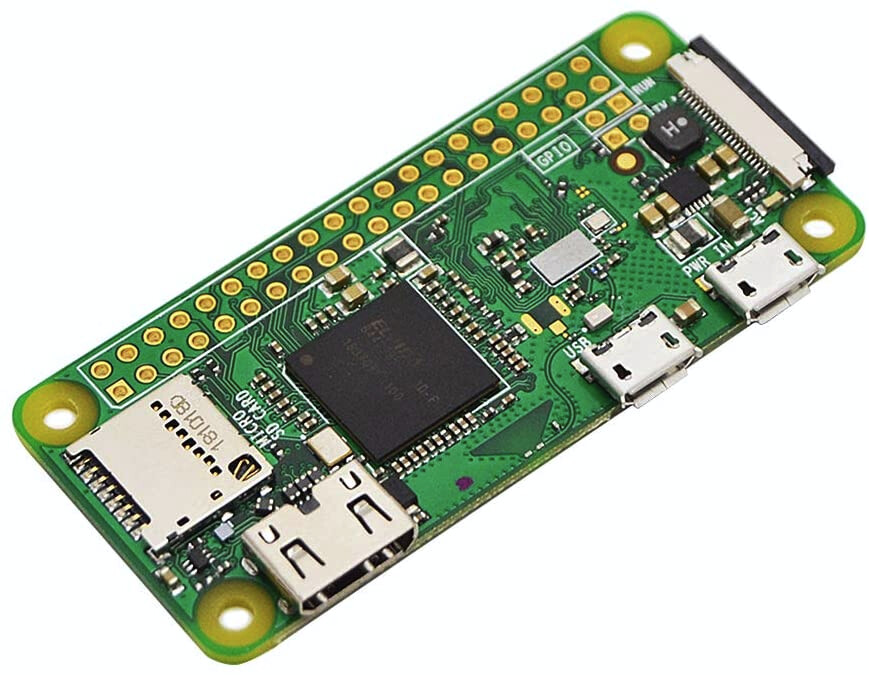
By leveraging Arm-based SBCs (single-board computers) such as Raspberry Pi, with its plethora of modern- and legacy I/O options, makeshift ventilator manufacturers are able to quickly design functional devices. All they have to do is write code for it. Even the cheapest $5 Pi Zero board with its GPIO interface suffices to run embedded Linux and code that runs the ventilator's hardware. Eben Upton, CEO and Founder of Raspberry Pi, says that demand for the Pi Zero is at an all-time high. The company manufactured over 192,000 units of the SBC in Q1-2020, and plans to scale up production to 250,000 per quarter, going forward. The Pi Zero features a Broadcom BCM2835 single-core Arm SoC and 512 MB of RAM, with a microSD slot for storage. That's plenty of brains to run a ventilator and save lives.
Raspberry Pi Zero

The New Raspberry Pi 3 Model A+ is Here: Smaller, Cheaper, But With Compromises

The original Raspberry Pi showed the world that we could have (almost) a computer for $35. This little prodigy has surprised us over and over again, and their developers have now announced the Raspberry Pi 3 Model A+, which according to them "is about closing things out in style" on the current generation of this miniPC. The new version has shrunk down the previous Model B+ both in size and in price: it is now available for just $25. To accomplish that we'll have to live with certain comprises.

The new model keeps the same CPU, but halves the memory to 512 MB of LPDDR2 SDRAM, the four USB 2.0 ports are reduced to one, and there is no Ehernet port available. The rest of its connectivity options are still there, including the 802.11 ac WiFi or the Bluetooth 4.2 LE support. The new model sits therefore between the even more compact Raspberry Pi Zero W and the Raspberry Pi 3 Model B+ announced in March 2018. As Eben Upton explained on the official announcement, the next Raspberry Pi will be quite different from the current generation: "whatever we do next will of necessity be less of an evolution, because it will need new core silicon, on a new process node, with new memory technology". Until that future model arrives, though, the new and compact version of the Raspberry Pi could be an interesting option for many users.

$25 Raspberry Pi Hobby Computer Doubles iPhone 4S GPU Performance And Beats Tegra 2

We have previously reported on the super cheap ARM-based Raspberry Pi hobby computer that's been under development from the Raspberry Pi foundation. However, it's now going into production and is generating a lot of interest, so gamesindustry.biz interviewed its founder, Eben Upton, about it (free registration required).

The computer's primary purpose is as a computer science teaching aid in schools and colleges and also for home brew use by enthusiasts who want to tinker with it and make specialized solutions out of it. However, it seems that enthusiasts will have a nice surprise in that the onboard GPU is surprisingly good. The actual ARM implementation is a Broadcom BCM2835 System on Chip (SoC) containing an ARM 11 CPU and a custom graphics core, which has been designed by the Raspberry Pi team, including Upton. In the interview, Upton claimed that it can double iPhone 4S performance and handily beats NVIDIA's Tegra solution, because of its tile mode architecture.
Return to Keyword Browsing
Nov 13th, 2026 22:32 CST change timezone

New Forum Posts

Popular Reviews

TPU on YouTube

Controversial News Posts