News Posts matching #Intel

Return to Keyword Browsing

NVIDIA Plans US Supply Chain Investment Worth Hundreds of Billions, "Blackwell" Already Manufactured in Arizona

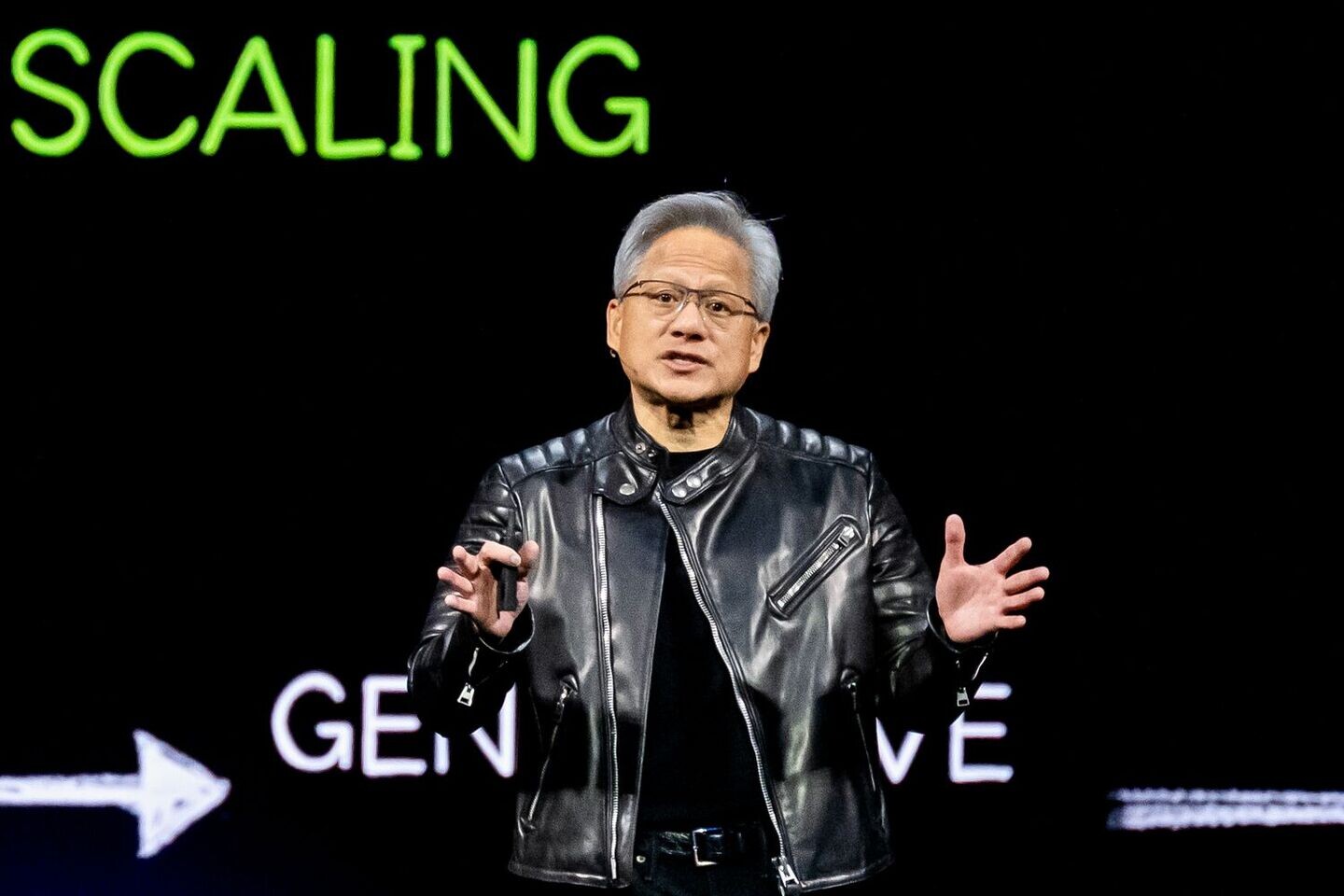
NVIDIA's CEO Jensen Huang made some interesting commentary for the Financial Times, stating that the company will procure over half a trillion US Dollars worth of electronics over the next four years, and it it plans to keep hundreds of billions from the supply chain procurement in the US. "Overall, we will procure, over the course of the next four years, probably half a trillion dollars worth of electronics in total. And I think we can easily see ourselves manufacturing several hundred billion of it here in the US," said Jensen for FT. NVIDIA currently manufactures its silicon at TSMC's facilities, as well as electronics like motherboards and servers at Foxconn. However, the geopolitical situation is making NVIDIA reconsider its supply chain dependencies, and the company is looking for more US-based manufacturing.

NVIDIA confirmed that its latest "Blackwell" series of GPUs, including the latest Blackwell Ultra, are being manufactured at TSMC's Arizona facilities. TSMC announced a $100 billion investment in its Arizona expansion, and NVIDIA is ready to take up more of TSMC's capacity to meet its ever-growing demand for GPUs. During the GTC 2025 event, Jensen noted that only four cloud service providers will use 3.6 million GPUs this year. That is without any AI labs and enterprises, which are massive consumers of GPUs (xAI only has 200,000 GPU clusters). To continue manufacturing excellence so customers won't suffer, NVIDIA is also looking at other options for supply chain manufacturing partners. Intel, the only US-based company capable of producing advanced silicon, is a potential target for NVIDIA. "We evaluate their foundry technology on a regular basis, and we are ongoing in doing that... We look for opportunities to be a customer of theirs... I have every confidence that Intel can do it," added Jensen, who also stated that NVIDIA is interested in silicon manufacturing and chip packaging services, as Intel's Foveros 3D packaging and other technologies are attractive for Team Green.

Intel Releases Arc GPU Graphics Driver 101.6651 Beta

Intel has released its latest version of the Arc GPU Graphics Driver, version 101.6651 Beta. The latest GPU graphics driver update brings Game On driver support for the latest Ubisoft Assassin's Creed Shadows game on Intel Arc B-series, A-series Graphics GPUs and Intel Core Ultra with built-in Intel Arc GPUs, as well as improves performance in Call of Duty: Black Ops 6 Intel Arc B-series Graphics GPUs. According to Intel's release notes, you can expect up to 15 percent improvement on 1080p resolution and up to 12 percent improvement on 1440p resolution, both with Extreme Settings.

The new GPU graphics driver also fixes an issue in Black Myth: Wukong game on may experience application crash while running benchmark with Full Ray Tracing turned on Intel Arc B-Series GPUs, where the game might experience application crash while running benchmark with full ray tracing turned on. There are several new known issues which you can check out in the full release notes below.

DOWNLOAD: Intel Arc GPU Graphics Drivers 101.6651 Beta

Pat Gelsinger Repeats Observation that NVIDIA CEO "Got Lucky" with AI Industry Boom

Pat Gelsinger has quite bravely stepped into the belly of the beast this week. The former Intel boss was an invited guest at NVIDIA's GTC 2025 conference; currently taking place in San Francisco, California. Technology news outlets have extracted key quotes from Gelsinger's musings during an in-person appearance on Acquired's "Live at GTC" video podcast. In the past, the ex-Team Blue chief held the belief that NVIDIA was "extraordinarily lucky" with a market leading position. Yesterday's panel discussion provided a repeat visit—where Gelsinger repeated his long-held opinion: "the CPU was the king of the hill, and I applaud Jensen for his tenacity in just saying, 'No, I am not trying to build one of those; I am trying to deliver against the workload starting in graphics. You know, it became this broader view. And then he got lucky with AI, and one time I was debating with him, he said: 'No, I got really lucky with AI workload because it just demanded that type of architecture.' That is where the center of application development is (right now)."

The American businessman and electrical engineer reckons that AI hardware costs are climbing to unreasonable levels: "today, if we think about the training workload, okay, but you have to give away something much more optimized for inferencing. You know a GPU is way too expensive; I argue it is 10,000 times too expensive to fully realize what we want to do with the deployment of inferencing for AI and then, of course, what's beyond that." Despite the "failure" of a much older Intel design, Gelsinger delved into some rose-tinted nostalgia: "I had a project that was well known in the industry called Larrabee and which was trying to bridge the programmability of the CPU with a throughput oriented architecture (of a GPU), and I think had Intel stay on that path, you know, the future could have been different...I give Jensen a lot of credit (as) he just stayed true to that throughput computing or accelerated (vision)." With the semi-recent cancelation of "Falcon Shores" chip design, Intel's AI GPU division is likely regrouping around their next-generation "Jaguar Shores" project—industry watchdogs reckon that this rack-scale platform will arrive in 2026.

ASUS Announces NUC 15 Pro+

ASUS today announced NUC 15 Pro+, a mini PC that marries cutting-edge technology with sophisticated design. Powered by up to the latest Intel Core Ultra 9 processors (Series 2) and Intel Arc Graphics, NUC 15 Pro+ delivers unparalleled speed and breathtaking visuals. It boasts Intel WiFi 7, Bluetooth 5.4, and an array of I/O ports to ensure unrivalled connectivity and compatibility, including the ability to support up to four 4K displays. Inside its premium aluminium chassis is an advanced cooling design to ensure whisper-quiet performance.

AI-enhanced power
Featuring up to the Intel Core Ultra 9 processor (Series 2) with up to 99 TOPS, NUC 15 Pro+ delivers an 18% performance boost over previous-generation NUC models for faster and more efficient processing. This mini PC makes light work of the most demanding workloads, enabling seamless multitasking and exceptional energy efficiency. Ideal for professionals and creators, NUC 15 Pro+ ensures remarkable speed and reliability, whether handling everyday tasks or the most intensive applications.

GIGABYTE Z890 AORUS TACHYON ICE Shatters Records with DDR5-12752

GIGABYTE TECHNOLOGY Co. Ltd, a leading manufacturer of motherboards, graphics cards, and hardware solutions, thrilled to announce an extraordinary overclocking milestone achieved by the Z890 AORUS TACHYON ICE motherboard paired with the latest Intel Core Ultra (Series 2) processor. Leveraging its proprietary LN2 SWITCH technology - the critical innovation behind this breakthrough—and V-COLOR Manta XFinity RGB DDR5 memory, legendary overclocker HiCookie has established a groundbreaking world record of DDR5-12752. This remarkable achievement solidifies GIGABYTE's position at the forefront of extreme Overclocking performance.

The Z890 AORUS TACHYON ICE is a motherboard designed exclusively for overclocking enthusiasts, offering exceptional capabilities with its advanced all-digital power design. Equipped with overclocking toolkit, convenient shortcut keys, toggle switches, and voltage detection functions, Z890 AORUS TACHYON ICE empowers overclockers to push beyond their boundaries effortlessly. This extraordinary achievement showcases GIGABYTE's ongoing commitment to the overclocking community.

HP Announces a Wide Range of New Products at its Amplify Conference

At its annual Amplify Conference, HP Inc. today announced new products and services designed to shape the future of work, empowering people and businesses to create and manage their own way of working. The company unveiled more than 80 PCs, AI-powered print tools for SMBs, and Workforce Experience Platform enhancements all built to drive company growth and professional fulfillment.

"HP is translating AI into meaningful experiences that drive growth and fulfillment," said Enrique Lores, President and CEO at HP Inc. "We are shaping the future of work with game-changing AI innovations that seamlessly adapt to how people want to work."

Intel Releases XeSS 2 SDK to GitHub, Lays Groundwork for Neural Rendering Support

Intel along the sidelines of the 2025 GDC announced the release of the XeSS 2 SDK on the company's GitHub page. This makes it possible for any game developer to understand XeSS 2 and integrate it with their current and upcoming games, covering features such as XeSS 2 upscaling, XeSS 2 frame generation, and XeSS 2 Low Latency. Intel released the XeSS 2 feature-set with its Arc B-series "Battlemage" graphics cards, it is backwards compatible with Arc A-series "Alchemist" discrete GPUs that support XMX matrix math acceleration. XeSS 2 uses an AI DNN to reconstruct details in upscaled images, making it technologically closer to DLSS than to AMD FSR. Next up, Intel also announced that it has updated its first-party programming guides, its Unreal Engine plugin, and its XeSS Inspector software development tool, to each support XeSS 2, including its upscaling, frame-generation, and low-latency components.

Perhaps the more important development in the Intel Graphics team right now is that the company announced that it has laid the groundwork to implement Neural Rendering, or at least the parts that are standardized under the latest updates to DirectX 12, bringing the benefits of DirectX Cooperative Vectors to game developers. It will soon be possible for 3D applications to directly address the XMX engines on Arc A-series and B-series GPUs for an up to 10x gain in inference performance for neural texture compression.

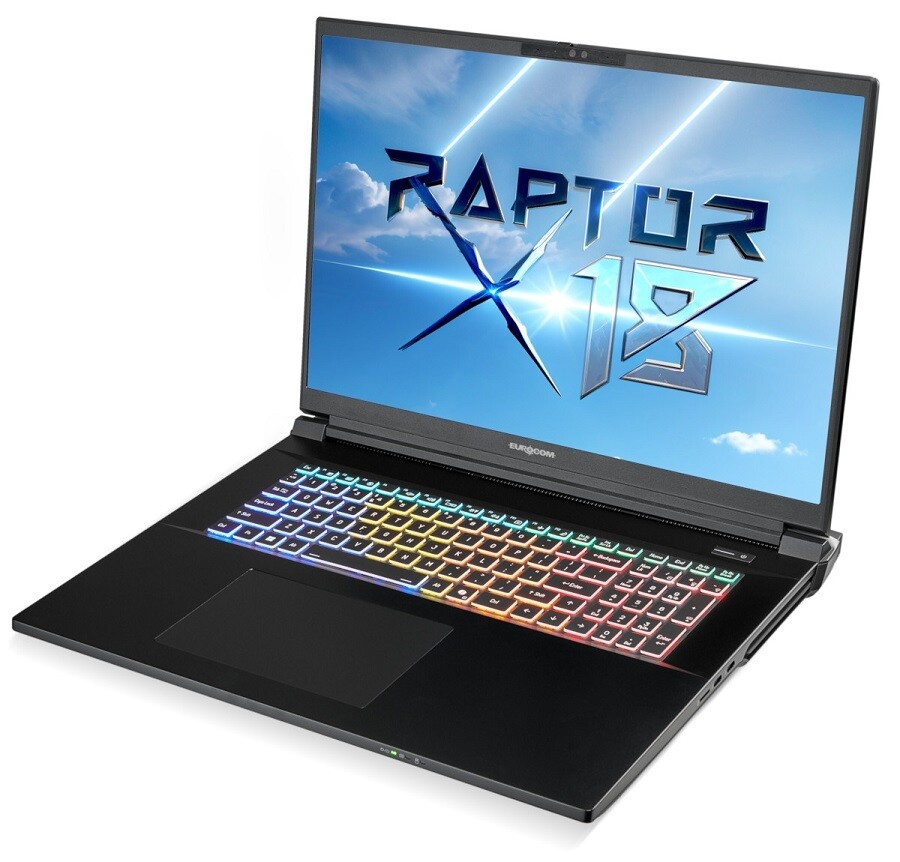
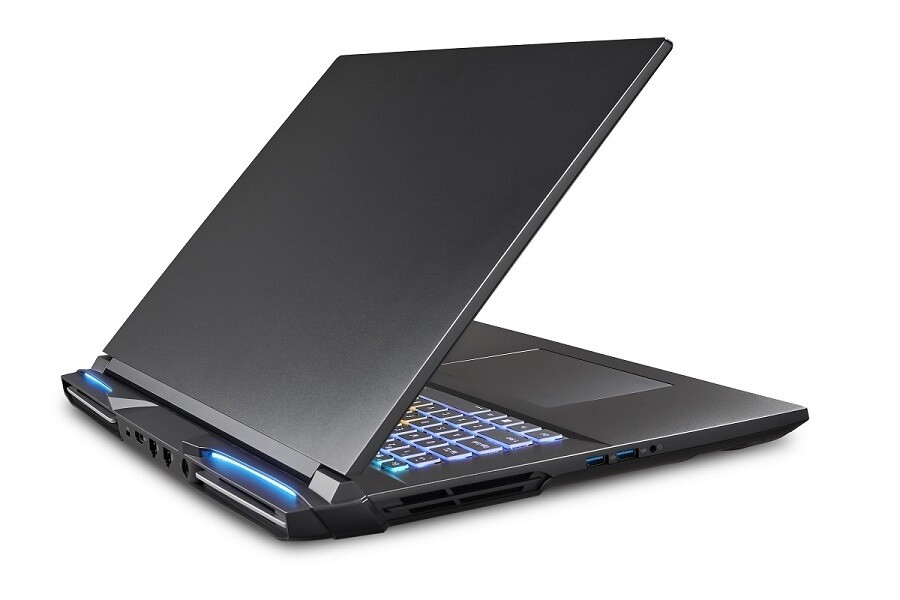
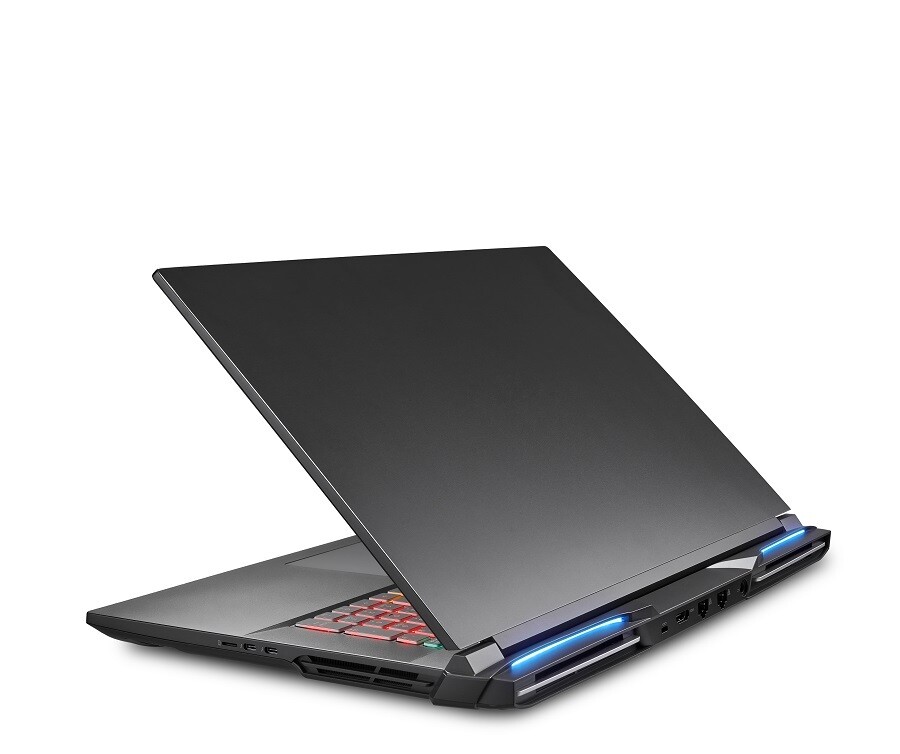
Eurocom Unleashes New 18-inch Raptor X18 Laptop With NVIDIA GeForce RTX 5090

Eurocom is launching the Raptor X18, the world's first customized 18" laptop powered by the newest 24 GB GDDR7 680 Tensor AI cores NVIDIA GeForce RTX 5090, 256 GB of DDR5 memory, 32 TB of RAID 0/1/5 four NVMe SSDs, and the Intel Core Ultra 9 275HX processor with 24 cores, 24 threads, and a massive 36 MB cache. Eurocom is pushing the boundaries of portable high-performance computing with the launch of the Raptor X18 Mobile Supercomputer, designed for those who demand extreme computational power—whether for AI development, deep learning, scientific simulations, engineering, content creation, or gaming at the highest levels.

Unparalleled Performance and Display
The Raptor X18 is the first laptop ever to feature an astonishing 256 GB of DDR5 memory, ensuring seamless multitasking for the most memory-intensive operations, including running large-scale LLM models offline and locally. Combined with 24 GB of next-gen GDDR7 VRAM from the NVIDIA GeForce RTX 5090 GPU (680 Tensor AI cores), this mobile supercomputer dominates AI processing, 3D modeling, complex simulations, and ultra-high-performance gaming. With up to 32 TB of NVMe SSD storage in RAID 0/1/5, users can store and access massive datasets with blazing speed, eliminating bottlenecks in high-end workflows. The Raptor X18 features an 18-inch UHD 200 Hz (3840x2400) display, offering impeccable clarity and smoothness for gaming, scientific visualization, and content creation.

Intel China Presentation Slide Indicates Early 2026 Volume Launch of Panther Lake

According to an attendee of a recent Intel AI presentation, company representatives revealed a release timeline for next-gen Core Ultra "Panther Lake" mobile processor family. Team Blue's China office appears to be courting users of DeepSeek R1, as evidenced by meng59739449's sharing of a processor product roadmap (machine translated by VideoCardz). A volume launch of Core Ultra 300 "Panther Lake-H" series seems to be on the cards for Q1 2026. Earlier this month, an Intel executive insisted that Panther Lake was on track for a second half of 2025 roll out. Lately, industry moles have alleged that a "problematic 18A node" process has caused delays across new generation product lines.

Team Blue watchdogs reckon that high volume manufacturing (HVM) of Panther Lake chips will kick off in September. By October, an Early Enablement Program (EEP) is expected to start—with samples sent off to OEMs for full approval. Industry experts believe that Intel will following a familiar pattern of "announcing the processor in the second half of the prior year, but ramping up mass production in the following year." Previous generation mobile CPU platforms—Meteor Lake and Lunar Lake—received similar treatment in the recent past. Last week, a Panther Lake-H (PTL-H) sample was on general display at Embedded World 2025—the German office is similarly engaged in hyping up the AI-crunching capabilities of roadmapped products.

GIGABYTE Showcases Cutting-Edge AI and Cloud Computing Solutions at CloudFest 2025

Giga Computing, a subsidiary of GIGABYTE, a global leader in IT technology solutions, is thrilled to announce its participation at CloudFest 2025, the world's premier cloud, hosting, and internet infrastructure event. As a key exhibitor, Giga Computing will highlight its latest innovations in AI, cloud computing, and edge solutions at the GIGABYTE booth. In line with its commitment to shaping the future of AI development and deployment, the GIGABYTE booth will showcase its industry-leading hardware and platforms optimized for AI workloads, cloud applications, and edge computing. As cloud adoption continues to accelerate, Giga Computing solutions are designed to empower businesses with unparalleled performance, scalability, and efficiency.

At CloudFest 2025, Giga Computing invites attendees to visit booth #E03 to experience firsthand its cutting-edge cloud computing solutions. From state-of-the-art hardware to innovative total solutions, a comprehensive suite of products and services designed to meet the evolving needs of the cloud industry are being showcased.

Starforge Systems Launches Limited Edition "Kaiju No. 8" PC Gaming System

Get ready, anime fans! Starforge Systems, the Austin-based PC manufacturer known for their highly customized pre-built gaming systems, is suiting up for their latest anime-inspired Limited Edition PC based on the ultra-popular series, Kaiju No. 8. Ahead of the second season slated to debut later this year, this monstrous rig includes Kaiju No. 8 themed plate light inserts, a high-quality desk mat and striking wall art showcasing characters and scenes widely celebrated in the series.

The Kaiju No. 8 PC from Starforge Systems is a Honju sized gaming machine. Equipped with a 9070 XT from AMD and an Intel Core i5-14600K, this machine is sleek and deadly as a monster can be. Built in an embossed Lian Li O11 Evo RGB the details on this case light up and glow from the custom Starforge Plate Light that serves as this kaiju's core.

Initial Intel 18A Node Wafer Run Lands in Arizona Site, High-Volume Manufacturing Could Start Earlier Than Expected

Intel's 18A node, often referred to as Intel's silver lining, has just produced tangible result. In a LinkedIn post of Intel's engineering manager Pankaj Marria, we learn that Intel's 18A node is now being produced in initial wafer lots for testing and evaluation by Intel's customers. This means that Intel's 18A node PDK is officially in version 1.0, and customers are already using that PDK for testing of custom chips. "The Eagle has landed," noted the post, referring to the node development as a major milestone for a node developed and made in US. There were even posters with the same slogans being brought up, meaning that possible customers are also happy with inital test runs. With high-volume manufacturing slated for second half of 2025, we could even see 18A HVM going before initial targets.

Intel's leadership transition to CEO Lip-Bu Tan has overlapped with a recalibration of corporate messaging around the foundry business. Tan's internal communication explicitly frames Intel's strategy as a dual-track approach that maintains both product development and foundry services under unified corporate governance. This position counters speculation regarding potential foundry spinoff scenarios, though it doesn't categorically exclude future structural changes. Previous industry rumors had outlined potential joint venture configurations involving TSMC and major US semiconductor firms, including AMD, Broadcom, and NVIDIA, taking equity positions in a separate foundry entity. While such arrangements remain theoretically viable, Tan's emphasis on fab strategic importance aligns with predecessor Pat Gelsinger's manufacturing-centric vision, suggesting continuity in Intel's Foundry and Product model despite market pressure.

ASUS Showcases Servers Based on Intel Xeon 6, Intel Gaudi 3 at CloudFest 2025

ASUS today announced its showcase of comprehensive AI infrastructure solutions at CloudFest 2025, bringing together cutting-edge hardware powered by Intel Xeon 6 processors, NVIDIA GPUs and AMD EPYC processors. The company will also highlight its integrated software platforms, reinforcing its position as a total AI solution provider for enterprises seeking seamless AI deployments from edge to cloud.

Intel Xeon 6-based AI solutions and Gaudi 3 Acceleration for generative AI inferencing and fine tuning training
ASUS Intel Xeon 6-based servers leverage the Data Center Modular Hardware System (DC-MHS) architecture, providing unparalleled scalability, cost-efficiency and simplified maintenance. ASUS will showcase a comprehensive Intel Xeon 6 family of processors at CloudFest 2025, including the RS700-E12, RS720Q-E12. and ESC8000-E12P-series servers. The ESC800-E12P-series servers will debut the Intel Gaudi 3 AI accelerator PCIe card. This lineup underscores the ASUS commitment to delivering comprehensive AI solutions that integrate cutting-edge hardware with enterprise-grade software platforms for seamless, scalable AI deployments, highlighting Intel's latest innovations for high-performance AI training, inference, and cloud-native workloads.

Cooler Master Unveils the HAF 5 Pro Gaming System

Cooler Master, a leading provider of PC components, gaming peripherals, and tech lifestyle solutions, today announced the HAF 5 Pro, a fully built gaming system designed to deliver robust performance and seamless gameplay. Powered by an Intel Core i7-12700F processor and NVIDIA GeForce RTX 4060 Ti, the HAF 5 Pro leverages Cooler Master's expertise in high airflow cases, efficient cooling, and premium power delivery—paired with the enhanced gaming features of Windows 11.

"We've taken our hallmark high-airflow concept and built a system that's both powerful and visually striking," said Jimmy Sha, CEO of Cooler Master. "Our customers know and trust the HAF lineup for cooling prowess, so outfitting it with top-tier components, a dedicated VGA fan, and Windows 11's advanced gaming capabilities was a natural progression to offer an all-in-one experience."

MSI IPC Introduces High-Performance ATX Motherboard MS-CF05, V2.0 for Industrial and Embedded Applications

MSI IPC, a global leader in industrial computing solutions, proudly unveils the MS-CF05, V2.0, a high-performance ATX motherboard engineered for industrial automation, edge computing, and embedded applications. Designed to support 14th, 13th, and 12th Gen Intel Core, Pentium, and Celeron processors, the MS-CF05, V2.0 delivers exceptional computing power, scalability, and I/O flexibility, including a PCI slot for legacy support, making it ideal for modern industrial needs.

Intel's New CEO Lip-Bu Tan Reaffirms "World-Class Foundry" Vision, Casting Doubt on Spinoff Rumors

At the time of crisis for Intel and uncertainty with foundry goals, Intel has appointed a semiconductor veteran as its new Chief Executive Officer (CEO)—Lip-Bu Tan. In a letter to Intel employees, Lip-Bu Tan has quietly addressed Intel Foundry spinoff rumors, saying that his commitment as a CEO is to "restore Intel's position as a world-class products company, establish ourselves as a world-class foundry and delight our customers like never before." Hence, the foundry spinoff rumors are now not so certain. Previous industry rumors suggested that Intel may very well spin off its fabs entirely or get it in a joint venture that would see TSMC and US companies like AMD, Broadcom, and NVIDIA get a part of the say. That is still a possibility. However, Intel's new CEO understands the strategic importance of Intel's fabs, just like the previous CEO, Pat Gelsinger.

Intel moves a lot of volume with its products, most of that thanks to its internal manufacturing capacity. Without it, Intel would be forced to go to external fabs like Samsung and TSMC and deal with additional complexity, lead times, etc. With the 18A node, Intel plans to use it for its products and offer it to external customers. Some features like backside power delivery using PowerVia and RibbonFET are standout aspects that make its 18A node PDK much more attractive on paper than solutions from TSMC and Samsung. Keeping that technology and manufacturing ability inside Intel is strategically vital for both Intel and US-based advanced silicon manufacturing. The foundry has been burning a lot of cash, 13.4 billion in 2024 alone, but Intel expects it to be net positive by the end of 2027. After that, Intel's products and external customers should be keeping Intel's fab busy with enough revenue to offset losses in the coming years.

Intel Announces Appointing Lip-Bu Tan as New CEO

Intel Corporation today announced that its board of directors has appointed Lip-Bu Tan, an accomplished technology leader with deep semiconductor industry experience, as chief executive officer, effective March 18. He succeeds Interim Co-CEOs David Zinsner and Michelle (MJ) Johnston Holthaus. Tan will also rejoin the Intel board of directors after stepping down from the board in August 2024. Zinsner will remain executive vice president and chief financial officer, and Johnston Holthaus will remain CEO of Intel Products. Frank D. Yeary, who took on the role of interim executive chair of the board during the search for a new CEO, will revert to being the independent chair of the board upon Tan becoming CEO.

"Lip-Bu is an exceptional leader whose technology industry expertise, deep relationships across the product and foundry ecosystems, and proven track record of creating shareholder value is exactly what Intel needs in its next CEO," Yeary said. "Throughout his long and distinguished career, he has earned a reputation as an innovator who puts customers at the heart of everything he does, delivers differentiated solutions to win in the market and builds high-performance cultures to achieve success."

Intel Panther Lake Sample on Prominent Display at Embedded World 2025

Intel representatives have placed a Panther Lake demonstration sample unit on an actual pedestal; as reported by PC Games Hardware (PCGH). German press outlets and other visitors were greeted by Team Blue's dedicated showcase plinth at this week's Embedded World 2025 expo/trade fair. The Nuremberg-based event is advertised as a "world-leading conference presenting state-of-the art technology and forward-looking research." Attendees and industry watchdogs reckon that the prominently displayed demo piece is an example of Intel's Panther Lake-H (PTL-H) mobile-oriented chip design. Last October, Pat Gelsinger (now ex-CEO) unveiled a physical PTL-H sample on-stage during his special guest appearance at Lenovo Tech World 2024. During a CES 2025 keynote presentation, Michelle Johnston Holthaus (Intel's interim co-boss) confirmed a 2025 launch window, while holding up another (or the same) Panther Lake chip.

Recent industry insider whispers have suggested that the Intel Foundry is encountering problems with their 18A node process; thus causing a shift in Panther Lake's release schedule. One prominent leaker claims that Team Blue's opening salvo of PTL-H products will roll out in 2026, but rumors were dismissed by an official source (last week). John Pitzer—Corporate Vice President of Investor Relations at Intel—insisted on multiple occasions, during a fireside chat, that his team's Core Ultra 300 series (aka Panther Lake-H) is on track for launch within the second half of 2025. Intel's Embedded World 2025 booth does not feature any technical rundowns relating to the showcased next-gen offering; their minimalist plinth is simply adorned with blue text spelling out: "Panther Lake." NDA-busting details have emerged online, courtesy of insider leaks—the top-most PTL-H SKU could appear with a 4P+8E+4LP+12Xe3 configuration.

TSMC Still Continues to Explore Joint Venture for Intel Foundry Ownership

TSMC is still considering a strategic joint venture to operate Intel's manufacturing capacity, according to four sources close to Reuters that are familiar with the discussions. The proposed arrangement would limit TSMC's ownership to less than 50% and potentially distribute stakes to major American chip designers, including AMD, Broadcom, NVIDIA, and Qualcomm. The initiative emerged following direct intervention from the Trump administration, which has prioritized revitalizing domestic semiconductor manufacturing while maintaining American control of critical technology infrastructure. Under the proposed framework, Intel would spin off its Intel Foundry division, with TSMC acquiring a minority stake and bringing in partner companies as co-investors.

Apple, TSMC's largest customer, is absent from these preliminary discussions, suggesting careful strategic positioning within the competitive ecosystem—however, significant technical and operational challenges are facing the potential joint venture. Intel's manufacturing and real estate assets are valued at approximately $108 billion, requiring substantial capital commitments from prospective partners. More fundamentally, the technological integration presents massive obstacles, as Intel and TSMC utilize fundamentally different manufacturing processes with distinct equipment configurations and material requirements. However, the complex negotiations remain in the early stages, with significant technical, financial, and regulatory hurdles to overcome before any formal agreement materializes. Intel is still not giving the clear green light to spin off rumors.

GIGABYTE Showcases Future-Ready AI and HPC Technologies for High-Efficiency Computing at SCA 2025

Giga Computing, a subsidiary of GIGABYTE and a pioneer in AI-driven enterprise computing, is set to make a significant impact at Supercomputing Asia 2025 (SCA25) in Singapore (March 11-13). At booth #D5, GIGABYTE showcases its latest advancements in liquid cooling, solutions for AI training and high-performance computing (HPC). The booth highlights GIGABYTE's innovative technology and comprehensive direct liquid cooling (DLC) strategies, reinforcing its commitment to energy-efficient, high-performance computing.

Revolutionizing AI Training with DLC
A key highlight of GIGABYTE's showcase is the NVIDIA HGX H200 platform, a next-generation solution for AI workloads. GIGABYTE is presenting both its liquid-cooled G4L3-SD1 server and its air-cooled G893 series, providing businesses with advanced cooling solutions tailored for high-performance demands. The G4L3-SD1 server, equipped with CoolIT Systems' cold plates, effectively cools Intel Xeon CPUs and eight NVIDIA H200 GPUs, ensuring optimal performance with enhanced energy efficiency.

ASUS IoT Showcases Intelligent Edge Computing and AI Solutions at Embedded World 2025

ASUS IoT, a global leader in AIoT solutions, today unveils its latest innovations at Embedded World 2025. Showcasing a comprehensive lineup of advanced Edge AI and embedded computing technologies, ASUS IoT empowers businesses to accelerate AI adoption and enhance efficiency across industries such as manufacturing, robotics, and smart city infrastructure.

Revolutionary edge AI computing
This year, ASUS IoT is showcasing the upcoming RUC-1000G, its rugged 19-inch 2U edge AI computer - the world's first to support a 600 W GPU and PCIe 5.0. Designed for mission-critical industrial applications, it features advanced thermal management to ensure superior real-time AI inference and deep learning performance. Enhanced data security with TPM IC and IEC 62443-4-1 compliance ensures protection, while the iBMC module enables rapid system recovery.

Dynabook Protege Z40L-N Launched With Lunar Lake Chops and Removable Battery

Dynabook recently made headlines with its X30W laptop, which was claimed to be one of the lightest laptops available on the market. Now, the company has introduced the Z40L-N laptop, also with Intel's Lunar Lake-equipped internals and an impressively lightweight chassis. However, the Z40L-N packs yet another trick up its sleeve - the laptop boasts a battery that is relatively easy to replace, at least by modern standards. At its core, the Z40L-N laptop is powered by Intel's Core Ultra 200V Lunar Lake CPUs, up to the Core Ultra 7 258V with 32 GB of onboard memory. Clearly, the laptop packs plenty of computing horsepower, and the integrated Arc 140 V GPU should be enough for non-intensive workloads and casual gaming.

At the front, a 14-inch display with a resolution of 1920 x 1200 is on offer. With a sub-1-kg (~2.2 lbs) weight, the 14-inch laptop is effortless to carry around in a backpack, and the 56 Whr battery should provide for decently long runtimes away from the wall. As stated previously, the battery is not glued to the chassis, and is therefore relatively easy to replace simply by removing the back panel and then the battery itself. The base configuration starts at $1,699, and ships with the Core Ultra 5 226V CPU with 16 GB of memory and a 512 GB NVMe SSD. There are a plenty of ports on offer, including a selection of USB-A and USB-C (including Thunderbolt 4) ports, microSD slot, audio jack, as well as a RJ45 gigabit LAN port. For wireless communication, Wi-Fi 7 as well as Bluetooth is present. The higher-end variant with the Intel Core Ultra 7 258V CPU with 32 GB of memory commands a $500 premium over the standard variant, which is to be expected.

Intel Panther Lake on Track for H2 2025 Launch, Company Exec Disregards Rumors of 18A Delays

Earlier in the week, online chatter pointed to a possible delay in the production of Panther Lake silicon. Well-known industry analyst—Ming-Chi Kuo—has kept tabs on the inner workings of several big semiconductor players. A previous insider tale revealed NVIDIA's allegedly revised "Blackwell" architecture roadmap. Kuo's latest insight focused on Intel and their 18A node process; rumored setbacks have reportedly pushed the launch of next-gen Panther Lake (PTL) mobile processors into 2026. Team Blue leadership has already reacted to the relatively fresh allegations—earlier in the week, John Pitzer sat down with Morgan Stanley Semiconductor Research's Joe Moore. During their conference fireside chat, Intel's Corporate Vice President of Investor Relations addressed recent internet whispers.

When asked about 18A being developed on schedule, Pitzer responded with: "yes, it is. I mean, I tend to wake up every morning trying to fish through rumors that are coming across on social media about Intel 18A. I want to be very clear. Panther Lake is on track to launch in the second half of this year. That launch date has not changed. We feel really good about the progress that we are making. In fact, if you look at where our yields are on Panther Lake today, they're actually slightly ahead at a similar point in time to Meteor Lake, if you look at the development process for Meteor Lake. I think a couple of weeks ago, there was a technical paper out that actually looked at our SRAM density on Intel 18A that compared well with TSMC's N2. Lots of different metrics you can compare technologies on. I think in general, we think about Intel 18A being an N3 type/N2 sort of comp with the external peers." Panther Lake is set to become the company's first product family that will utilize its own Foundry's 18A node process. Mid-way through February, we heard about the importance of PTL with Intel's portable gaming strategy.

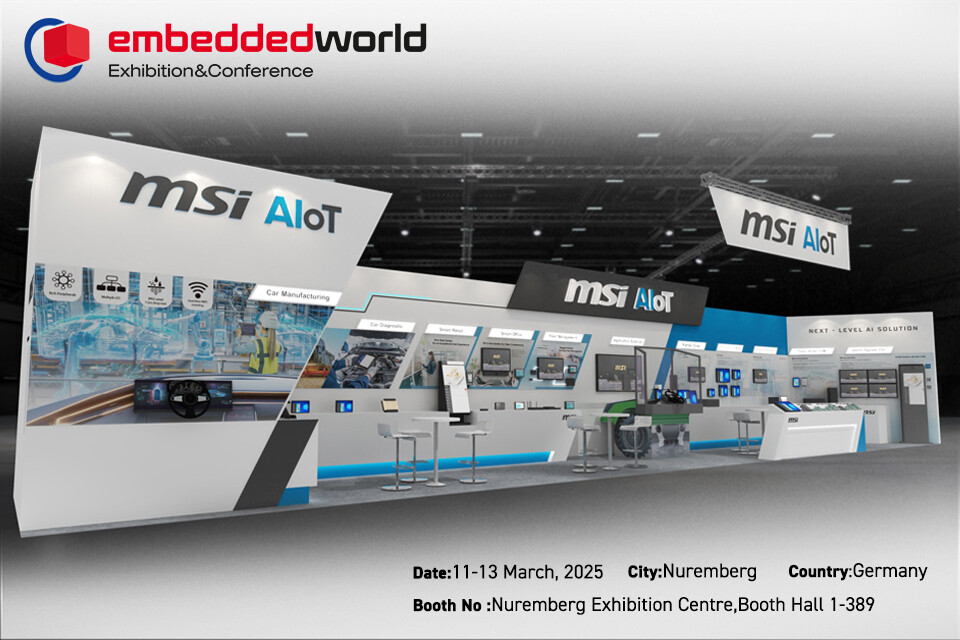
MSI IPC Showcases Cutting-Edge Edge AI Computing Solutions at Embedded World 2025

MSI IPC, a global leader in computing and AI-driven solutions, is set to unveil its latest Edge AI Computing innovations at Booth No. 1-389, Embedded World 2025 in Nuremberg, Germany. Powered by the latest Intel platform, MSI's cutting-edge technologies will drive advancements in automation, digital signage management, and AI-driven customer interactions.

Several MSI's partners, including Alptech, Spo-comm, Spectra, and Elmark, are joining this event to showcase their cutting-edge solutions powered by MSI IPC products. Their demonstrations will feature a diverse range of applications, including 4U rackmount systems, Panel PCs (PPC), and KIOSK solutions, highlighting the versatility and performance of MSI's industrial computing technology in various sectors.

ARCTIC Announces Intel LGA1700/1851 Offset Contact Frame Mounting Set

The Liquid Freezer III Series is compatible with Intel's LGA1700 and LGA1851. However, since the hotspot of the LGA1851-CPUs is off-center, offset mounting can improve cooling performance. The Intel LGA1700/1851 Offset Contact Frame Mounting Set enables precise alignment and thus optimizes cooling performance for Intel Core Ultra CPUs.

Significant improvements for powerful Core Ultra CPUs
The new mounting set shows its strength particularly in the Core Ultra 9 285K. The offset mounting allows a significant reduction in temperature.
Return to Keyword Browsing
Nov 17th, 2026 14:31 CST change timezone

New Forum Posts

Popular Reviews

TPU on YouTube

Controversial News Posts