News Posts matching #Intel

Return to Keyword Browsing

GIGABYTE to Present End-to-End AI Portfolio at COMPUTEX 2025

GIGABYTE Technology, a global leader in computing innovation, will return to COMPUTEX 2025 from May 20 to 23 under the theme "Omnipresence of Computing: AI Forward." Demonstrating how GIGABYTE's complete spectrum of solutions spanning the AI lifecycle, from data center training to edge deployment and end-user applications reshapes the infrastructure to meet the next-gen AI demands.

As generative AI continues to evolve, so do the demands for handling massive token volumes, real-time data streaming, and high-throughput compute environments. GIGABYTE's end-to-end portfolio - ranging from rack-scale infrastructure to servers, cooling systems, embedded platforms, and personal computing—forms the foundation to accelerate AI breakthroughs across industries.

Sparkle Arc B580 ROC Luna OC Ultra Graphics Card Now Available

Sparkle announced availability of its flagship custom-design Intel Arc B580 graphics card, the Sparkle B580 ROC Luna OC Ultra. The card derives its name from an all-white appearance, with white making up not just the cooler shroud and fan impellers, but also the PCB solder-mask underneath. The card's design appears to balance elements to appeal to both gamers and creators. It comes with a 2.5-slot thick design that's at least an inch taller than what constitutes full-height. It uses an aluminium fin-stack heatsink that's ventilated by a pair of 90 mm fans.

The Sparkle Arc B580 ROC Luna OC Ultra comes with the company's highest factory overclock for the B580, with a max boost frequency of 2800 MHz compared to 2670 MHz reference, and 2740 MHz of its Titan OC graphics card. It also comes with increased power limits of 210 W, compared to 190 W reference. It draws power from two 8-pin PCIe power connectors. The company didn't reveal pricing, but we expect it to be between the $250-300 mark.

ASUS Announces TUF Gaming T500 Desktop PC System

ASUS today announced the arrival of TUF Gaming T500, a compact desktop with the power to drive the latest and greatest AAA and esports games. Powered by up to an Intel Core i7-13620H processor, up to an NVIDIA GeForce RTX 5060 Ti GPU, up to 64 GB of DDR5 RAM and 2 TB of PCIe 4.0 storage, T500 is a well-rounded machine for esports and AAA gamers alike. With a compact chassis that features classic TUF Gaming style, T500 is an excellent fit in bedrooms and dorm rooms anywhere.

High-performance components
Powered by up to an Intel Core i7-13620H processor with six Performance cores and eight Efficiency cores and a max boost of 5.0 GHz, T500 can drive incredible gaming experiences alongside a snappy desktop experience. T500 packs up to an NVIDIA GeForce RTX 5060 Ti GPU. Boasting the latest NVIDIA Blackwell architecture, GeForce RTX 50 Series GPUs bring game-changing capabilities to gamers and creators. Equipped with a massive level of AI horsepower, the GeForce RTX 50 Series enables new experiences and next-level graphics fidelity. Multiply performance with NVIDIA DLSS 4 featuring Super Resolution, Ray Reconstruction, and Multi Frame Generation. The GeForce RTX 5060 Ti is ready to power incredible performance in the games of today and tomorrow.

Intel IPO Surpasses 200S Boost Profile in "Arrow Lake" Gaming Performance

In the last few weeks, Intel rolled out two new performance-enhancing presets for its Core Ultra 200S "Arrow Lake" processors: Intel Performance Optimizations (IPO) and the factory-approved 200S Boost overclocking profile. Independent benchmarks shared by a BiliBili user reveal that IPO delivers a slightly stronger uplift in gaming performance compared with 200S Boost. Testing centered on a Core Ultra 7 265K paired with DDR5-8000 memory and a GeForce RTX 5090D. Seven modern titles were measured at 4K with DLSS enabled where supported. Three system presets were compared: a baseline with XMP-enabled DDR5-8000, Intel's 200S Boost, and Intel IPO. Under 200S Boost, Intel ramps the chip's Die-to-Die (D2D) fabric from 2.1 GHz to 3.2 GHz and the Next-Generation Uncore (NGU) fabric from 2.6 GHz to 3.2 GHz, while maintaining factory CPU clock speeds. By contrast, IPO takes a more holistic approach: P-core and E-core boost clocks rise to 5.4 GHz and 4.9 GHz (from 5.2 GHz/4.9 GHz), the ring bus ticks up to 4.0 GHz (from 3.8 GHz), and memory is overdriven to DDR5-8400 with tightened timings.

IPO's D2D and NGU fabrics run at 3.1 GHz due to power-and-thermal headroom trade-offs. Across the board, IPO edged out 200S Boost by roughly 2% in average frame rates and 1% in the 1% lows. In Forza Horizon 5, IPO delivered 274 FPS versus 269 FPS on 200S Boost, with 1% lows of 198 FPS (+1 FPS). Cyberpunk 2077 saw a 3% jump to 297 FPS average and a 6% gain in 1% lows. Total War: Warhammer III's averages climbed 6%, while 1% lows rose 9% under IPO. The most pronounced advantage appeared in Counter-Strike 2 (tested at 1080p), where IPO boosted averages by 16% and 1% lows by 20 %. Watch Dogs: Legion also benefited, with an 8% average and 9% low-end uplift. These results suggest that IPO's balanced tuning of CPU cores, ring bus, interconnects, and memory yields consistent, measurable gains over the simpler fabric-focused 200S Boost profile. Intel has yet to greenlight the IPO's broader rollout beyond its initial OEM launch in China, but these early figures hint at meaningful real-world improvements for Arrow Lake gamers.

IBM Cloud is First Service Provider to Deploy Intel Gaudi 3

IBM is the first cloud service provider to make Intel Gaudi 3 AI accelerators available to customers, a move designed to make powerful artificial intelligence capabilities more accessible and to directly address the high cost of specialized AI hardware. For Intel, the rollout on IBM Cloud marks the first major commercial deployment of Gaudi 3, bringing choice to the market. By leveraging Intel Gaudi 3 on IBM Cloud, the two companies aim to help clients cost-effectively test, innovate and deploy GenAI solutions.

According to a recent forecast by research firm Gartner, worldwide generative AI (GenAI) spending is expected to total $644 billion in 2025, an increase of 76.4% from 2024. The research found "GenAI will have a transformative impact across all aspects of IT spending markets, suggesting a future where AI technologies become increasingly integral to business operations and consumer products."

Intel's Chief Commercial Officer Resigns Amid Company Restructuring

Christoph Schell, Intel's chief commercial officer and executive vice president, plans to step down on June 30, according to a recent Securities and Exchange Commission filing. The notice filed on April 28 states Schell is leaving to "pursue another career opportunity" with Kuka Group where he'll take on the CEO role. "Since joining Intel in 2022, Christoph has poured his heart and soul into our business and worked tirelessly in service of our customers," Intel CEO Lip-Bu Tan wrote. "He has helped to steer our Sales and Marketing Group (SMG) through a challenging period and built a strong team along the way. I am grateful for his contributions and wish him success in his next role". Kuka Group stands out as a world leader in robotics offering robots, manufacturing cells, software, and cloud-based digital services. This exit comes after Intel reported another quarter of losses and more cost-cutting plans. However, it might not affect CEO Lip-Bu Tan's efforts to reshape the company, which include cutting jobs and simplifying management layers.

Since joining Intel in March 2022 from Hewlett-Packard, where he served seven years in senior management positions, Schell has witnessed Intel's continued financial challenges, including the recent first quarter results showing a net loss of US$800 million on revenue of US$12.7 billion. While the revenue met the upper threshold of previous guidance, Lip-Bu Tan acknowledged in the financial results statement that although "the first quarter was a step in the right direction, there are no quick fixes as we work to get back on a path to gaining market share and driving sustainable growth." Schell's tenure at Intel coincided with a period of leadership transition, having been appointed under former CEO Pat Gelsinger, who resigned in December 2024 after assuming the position in February 2021. Following Schell's departure, the head of America sales, Greg Ernst, is stepping in as the interim leader of Intel's Sales and Marketing Group.

Leak Suggests Intel Shipping Arc Xe2 "Battlemage G31" GPUs to Limited Edition Card Production Hub

Intel has only released two Arc Xe2 "Battlemage" desktop models: the B580 12 GB and B570 10 GB graphics cards. So far, these lower priced options have been warmly welcomed by reviewers and buyers alike—but gaming GPU enthusiasts are still actively clamoring for more potent second-gen "Battlemage" variants. The collective status of theorized "B750, B770, and (fancifully) B780" SKUs is frustratingly unclear. Intel has not generated any official new product noise since the launch of their B570 design, earlier this year—recent big announcements have focused on next-gen "AI PC" processor lines. A series of vague leaks have indicated cancelations and then revivals of speculated mid-to-high-end Arc Xe2 discrete cards.

As of late, a larger "BMG-G31" GPU identifier has appeared in shipping manifests—a previous leak pointed to "prototype" units being moved between company facilities. Yesterday, Haze2K1 shared another extract from NBD inventory documents—crucially, they believe that these items are heading to a crucial manufacturing plant in Vietnam. This location is/was tasked with the assembling of first-party B570 and B580 Limited Edition products. Fresh conjecture suggests that "B7XX" Limited Edition cards are in the pipeline, but current circumstances are still hazy. VideoCardz reckons that a "Developer Edition" 24 GB model is still in active development, but this rumored workstation/productivity-oriented card could be based on Intel's readily available "BMG-G21" GPU die.

Intel Plans to Ship One "Panther Lake" SKU in 2025, Others On Track for 2026

Intel is preparing to launch its first "Panther Lake" mobile processor later this year, but only one configuration will arrive in 2025. This SKU features four high-performance P-cores paired with eight E-cores, leaves out the lower-power efficiency cores, and packs four Xe3 GPU cores. With a 45 W TDP, it is clearly aimed at mainstream gaming laptops rather than ultralight notebooks. Panther Lake fills the gap left by "Lunar Lake" with a higher power envelope and a more performance-oriented design. Lunar Lake ranged from 17 W to 28 W, while Panther Lake's 45 W shows Intel is targeting users who need more sustained compute and graphics throughput. Rumors indicate additional Panther Lake variants will arrive in Q1 of 2026, when Intel plans to have more SKUs shipping to OEMs from volume production.

One such SKU is expected to feature 12 Xe3 GPU cores for premium thin-and-light laptops without discrete graphics. All of Panther Lake processors combine "Cougar Cove" performance cores with "Darkmont" efficiency cores, following Intel's hybrid approach introduced with "Meteor Lake". Intel's decision to stagger the rollout reflects supply chain considerations and product segmentation by power and graphics capability. Gaming laptops that can rely on integrated Xe3 graphics will welcome this 45 W chip, while other form factors may wait for next year's lower-power or ultralight 15 W models. Qualification with OEM partners should begin later this year, with laptop shipments expected by late Q4 2025. Until Intel shares more details on the rest of the Panther Lake lineup, much remains speculative.

Intel Prepares 1,000 W Package-Attached Liquid Cooling Modules

Intel is exploring a new way to cool its hottest chips by weaving tiny water channels into the processor package itself. At its Foundry Direct Connect showcase, via HardwareLuxx coverage, the company revealed working prototypes for LGA desktop CPUs, BGA servers, and AI modules. Rather than flood the bare silicon, a slim copper block sits on top of the package, its microchannels precisely etched to carry coolant directly over the hottest areas. Intel engineers cooled Core Ultra desktop chips and high-end Xeon processors in live demonstrations. The system moves standard liquid-cooling fluid through those channels at a rate fast enough to whisk away up to 1,000 watts of heat. In the lab, that level of thermal performance isn't standard for everyday PC use, but it matches the demands of AI training, scientific computing, and professional workstations.

This design stands out because of its attention to every layer between the chip and the coolant. Intel carefully controls the thickness of the silicon die, the solder or liquid-metal thermal interface material, the integrated heat spreader, and the water block itself. By reducing or removing traditional barriers, thermal resistance falls, and engineers report roughly 20% better cooling than a standard water block mounted on a delidded die. Those copper blocks measure only a few millimeters in height yet still deliver strong flow rates. During chip layout, teams space out power-hungry blocks or flag-tight clusters so the cooling channels can target critical hotspots. This co-design of package and cooler goes much deeper than any off-the-shelf solution. While the basic research dates back nearly two decades, Intel has been refining the method for years. Still, with processors growing more powerful and densely packed, package-level liquid cooling could move from laboratory demo to essential tool for data centers and enthusiast rigs.

ASUS V16 (V3607) 16-inch Gaming Laptop Gets Intel Core 7 Processors (Series 2) and NVIDIA GeForce RTX 50 Series Laptop GPU

ASUS today announced the latest version of the ASUS V16 (V3607) 16-inch gaming laptop, an entry level model that broadens the appeal of the innovative ASUS laptop portfolio. Featuring futuristic uber-cool design details and unparalleled performance from the new up to Intel Core 7 processor (Series 2) and NVIDIA GeForce RTX 50 Series Laptop GPU, ASUS V16 is built to win - or create - in distinctive style.Its fast 16-inch 16:10 144 Hz FHD IPS display, with an impressive 89% screen-to-body ratio, ensures fluid gaming visuals, while Dirac audio technology and ASUS Audio Booster provide powerful and immersive sound.

Offering an outstanding user experience, the laptop also includes a large touchpad and a comfortable ASUS ErgoSense keyboard. AI noise-cancelation technology and 3DNR for enhanced video conferencing. Designed to deliver an immersive gaming experience with an unparalleled blend of performance and affordability, ASUS V16 also offers military-grade durability, a 63Wh battery, superb power efficiency, and a bundled PC Game Pass Ultimate. It's reliable and cost-effective choice for gaming, creativity, and everyday tasks. Whether conquering virtual realms or unleashing newfound creativity, ASUS V16 is the gateway to limitless possibilities.

Intel Arc GPU Graphics Drivers 101.6739 Beta Released

Intel today released the latest version of its Arc GPU Graphics Drivers. Version 101.6739 Beta comes with a fix for certain functional issues PyTorch 2.7 users on Arc B-series "Battlemage" discrete GPUs and Arc 100V-series iGPUs, with torch.compile operations and use of certain data precisions. This is the only issue fixed with this driver release. The company on Tuesday announced that its driver releases since 101.6734 include gaming performance enhancements for its Arc 100V-series iGPUs powering Core Ultra 200V "Lunar Lake" processors.

DOWNLOAD: Intel Arc GPU Graphics Drivers 101.6739 Beta

Intel Boosts iGPU Performance of Lunar Lake to Make it Sweeter for Gaming Handhelds

Intel today announced that the latest Arc GPU Graphics Drivers update brings significant performance uplifts to the integrated graphics solution of the company's Core Ultra 200V "Lunar Lake" mobile processors. The processor comes with an iGPU based on the Xe2 "Battlemage" graphics architecture, and depending on the processor model, up to 8 Xe cores, the latest XMX AI accelerators, the company's 2nd generation Ray Tracing Unit, and an 8 MB dedicated last-level cache. When it launched, it was expected that the iGPU of "Lunar Lake" would perform in the league of at least the discrete Arc A380 GPU, but fell slightly behind, probably because the iGPU shares memory bandwidth with the CPU complex and the memory-intensive NPU.

With the latest driver updates, Intel is promising a 10% increase in FPS averaged over a test suite of 9 game titles, but more importantly, a significant 25% increase in 99th percentile performance. The test suite covers titles relevant to this performance class, including Counter-Strike 2, Fortnite, and Payday, but also certain AAA titles, such as Cyberpunk 2077 and Black Myth Wukong. Intel recommends the drivers for anyone with a Core Ultra 200V processor model that has either Arc 140V or Arc 130V iGPU models.

Giga Computing Showcases Next-Gen OCP Solutions at OCP EMEA Regional Summit 2025

Giga Computing, a subsidiary of GIGABYTE and an industry leader in high-performance computing and server solutions, proudly announces its participation in the OCP EMEA Regional Summit 2025, taking place in Dublin, Ireland. As an active contributor to the Open Compute Project (OCP), Giga Computing will showcase its latest data center solutions tailored to meet the demands of hyperscale infrastructure, high-density storage, and AI-centric workloads.

The OCP EMEA Summit serves as a platform where global technical leaders come together to address critical challenges in data center sustainability, energy efficiency, and heat reuse across the region. The summit focuses on how innovations pioneered by hyperscale data center operators can help tackle these issues and drive meaningful change. Additionally, the event spotlights real-world deployments of OCP-recognized equipment in the EMEA region.

Biostar Set to Unveil Cutting-Edge Innovations at Computex 2025

BIOSTAR, a leading manufacturer of Edge AI platform, IPC solutions, motherboards, graphics cards, and storage solutions, is excited to announce its participation at COMPUTEX Taipei 2025, set to take place from May 20 to May 23 at the Nangang Exhibition Center, Hall 2, 1F (Booth No. P0808) in Taipei, Taiwan. With the theme "Unlock the Future of Edge AI," BIOSTAR's booth will feature a wide array of innovative technologies designed to meet the evolving needs of modern computing. Visitors can expect a diverse showcase that spans industrial-grade edge AI platforms, EdgeComp embedded IPC systems, and the latest consumer PC motherboards, graphics cards, SSDs, and DDR memory for creators, gamers, and casual use, all presented in a sleek exhibition space that highlights sustainable living.

BIOSTAR's COMPUTEX 2025 booth will center around its latest edge AI computing solutions. Visitors will be able to experience real-world applications powered by the NVIDIA Jetson Orin Edge AI platform and collaborative AI solutions developed in partnership with DEEPX and MemryX. These systems are designed to meet the demands of industrial automation, smart city infrastructure, and advanced HMI applications, offering scalable, high-efficiency performance at the edge. As a major player in the IPC motherboard and industrial computer sector, BIOSTAR reinforces its position as a driving force in developing edge computing technologies.

Intel's Lip-Bu Tan Outlines "Path Forward" Plan - CEO Announces Reduction of Workforce

Team, (yesterday) we reported our Q1 2025 results. It was a step in the right direction as we delivered revenue, gross margin and EPS (earnings per share) above our guidance, driven by Dave and Michelle's leadership. I want to thank them both, and all of you, for the good execution. We need to build on this progress—and it won't be easy. We are navigating an increasingly volatile and uncertain macroeconomic environment, which is reflected in our Q2 outlook. On top of that, there are many areas where we must improve. We need to confront our challenges head-on and take swift actions to get back on track. As I have said, this starts by revamping our culture. The feedback I have received from our customers and many of you has been consistent. We are seen as too slow, too complex and too set in our ways—and we need to change. Our flatter Executive Team (ET) structure that I shared last week was a first step. The next step is to drive greater simplicity, speed and collaboration across the entire company. To achieve these objectives, today I am announcing some important changes.

Becoming an Engineering-Focused Company
We need to get back to our roots and empower our engineers. That's why I elevated our core engineering functions to the ET. And many of the changes we will be driving are designed to make engineers more productive by removing burdensome workflows and processes that slow down the pace of innovation. To make necessary investments in our engineering talent and technology roadmaps, we need to find new ways to reduce our costs. While we have taken significant actions in the last year, our current cost structure is still well above competitive benchmarks. With that in mind, we have reduced our operating expense and capital spending targets going forward, which I will discuss during our investor call this afternoon.

Intel Foundry's 18A Process Reportedly Generates Much Praise from ASIC Customers

As revealed during a recent Q1 earnings call, Intel leadership mentioned that "external clients are getting their ASICs designs tested." The company's foundry business is working towards the finalization of its much discussed 18A node process, with alleged trial samples receiving an "impressive performance rating." According to Ctee Taiwan, Team Blue's foundry service has submitted test subjects to the likes of NVIDIA, Broadcom and Faraday Technology. The latter organization has (reportedly) disclosed that the 18A platform tape-out was completed last October—since then, received samples have been "successfully connected." Industry moles believe that NVIDIA and Broadcom are in the middle of conducting manufacturing tests. Additional whispers suggest the delivery of 18A prototypes chez IBM and several other unnamed partner companies. Insiders have indicated impressive/good "verification results." Contrary to reports from other sources, Ctee has picked up on insider chatter about Intel's next-gen Nova Lake compute tile design being "not entirely outsourced." Further conjecture points to Team Blue becoming increasingly confident in its own manufacturing techniques.

MSI PRO Z890-S WiFi Project Zero Motherboard Available in Japan, Europe Next

MSI Japan has announced that the PRO Z890-S WiFi Project Zero motherboard with back-routed power connectors will go on sale in Japan on May 2 for ¥42,980 (tax included). It uses Intel's Z890 chipset on an LGA1851 socket and a 12+1+1+1-phase digital power design. The board comes in a white-silver finish and measures 243.84 × 304.8 mm in ATX form factor. Memory support consists of four DDR5-8800 slots (up to 256 GB). Storage options include four SATA 3.0 ports, one PCIe 5.0 × 4 M.2 slot and two PCIe 4.0 × 4 M.2 slots. Expansion slots are one PCIe 5.0 × 16, one PCIe 3.0 × 1 (in ×16 shape) and two PCIe 4.0 × 4 (in ×16 shape). On the networking side, it offers Wi-Fi 7 with up to 5.8 Gbps throughput (via an EZ Antenna) and a 2.5 GbE LAN port using the Realtek 8125D controller. A Thunderbolt 4 header supports up to 40 Gbps connections.

Audio is handled by a Realtek ALC897 codec. A key change from earlier PRO models is that all power, fan, storage and I/O connectors are located on the board's rear. This layout can make cable routing neater if the PC case allows access behind the motherboard tray. MSI has covered the front side of the PCB since there are no connectors there. Although the PRO series is not aimed at high-end overclocking, the BIOS includes one-click overclock presets for CPU and memory. The board also features an EZ PCIe Clip II on the first slot for simpler graphics card removal. In Europe, the PRO Z890-S WiFi PZ is expected to retail for around €365.

Intel's AI PC Chips Underperform, "Raptor Lake" Demand Sparks Shortages

Intel's latest AI-focused laptop processors, "Lunar Lake" and "Meteor Lake," have encountered slower-than-anticipated uptake, leading device manufacturers to increase orders for the previous-generation "Raptor Lake" chips. As a result, Intel 7 manufacturing lines, originally intended to scale up production of its newest AI-ready CPUs and transition to newer nodes, are now running at full capacity on "Raptor Lake" output, limiting the availability of both the new and legacy models. In its first-quarter 2025 financial report, Intel recorded revenue of $12.7 billion, essentially flat year-over-year, and a net loss of $821 million. The results fell short of the industry's expectations, and the company's stock declined by more than 5% in after-hours trading.

Management attributed the shortfall to cautious buying patterns among OEMs, who seek to manage inventory in light of ongoing US-China tariff discussions, and to consumer hesitancy to pay higher prices for AI-enabled features that are still emerging in mainstream applications. CEO Lip-Bu Tan outlined plans to reduce operating expenses by $500 million and lower capital expenditures by approximately $2 billion to address these challenges in 2025. He also confirmed that workforce reductions are planned for the second quarter, though specific figures were not disclosed. Looking ahead, Intel intends to focus on strengthening its data-center business, where demand for Xeon processors remains robust, and to prepare for the late-2025 introduction of its Panther Lake platform. The company will also continue efforts to encourage software development that leverages on-device AI, aiming to support wider adoption of its AI-capable hardware.

FSP Group Partners with Intel to Launch Energy-efficient and Backup-integrated Next-gen Power Solutions

Facing global challenges of energy conservation, carbon reduction, and sustainable development, Intel has been committed to pushing the industry toward higher performance and lower energy consumption product standards, actively leading the PC ecosystem toward a dual track of environmental protection and innovation. FSP Group, as Intel's long-term strategic development partner, shares the same philosophy and has continuously invested in power supply technology innovation with Intel's support, particularly focusing on 12VO architecture design that complies with the latest energy efficiency regulations.

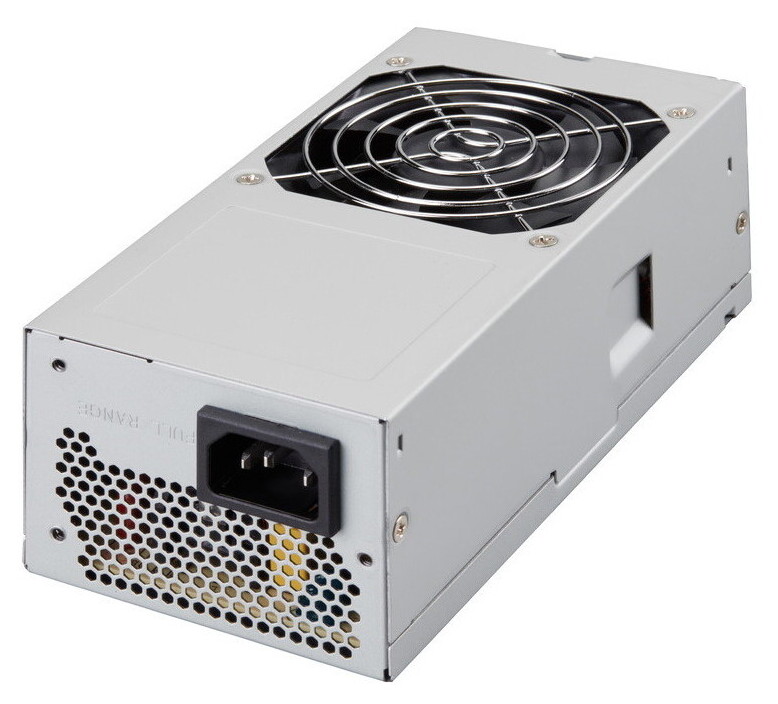
At the Intel Client Ecosystem Symposium, FSP showcased its latest V3 version of TFX 12VO PSU, which not only helps brand customers build compliant PC systems but also contributes to carbon reduction and environmental protection with a design that balances high performance and energy efficiency.

Intel's Software-Defined Vehicle Strategy: "Frisco Lake" and "Grizzly Lake" SoCs

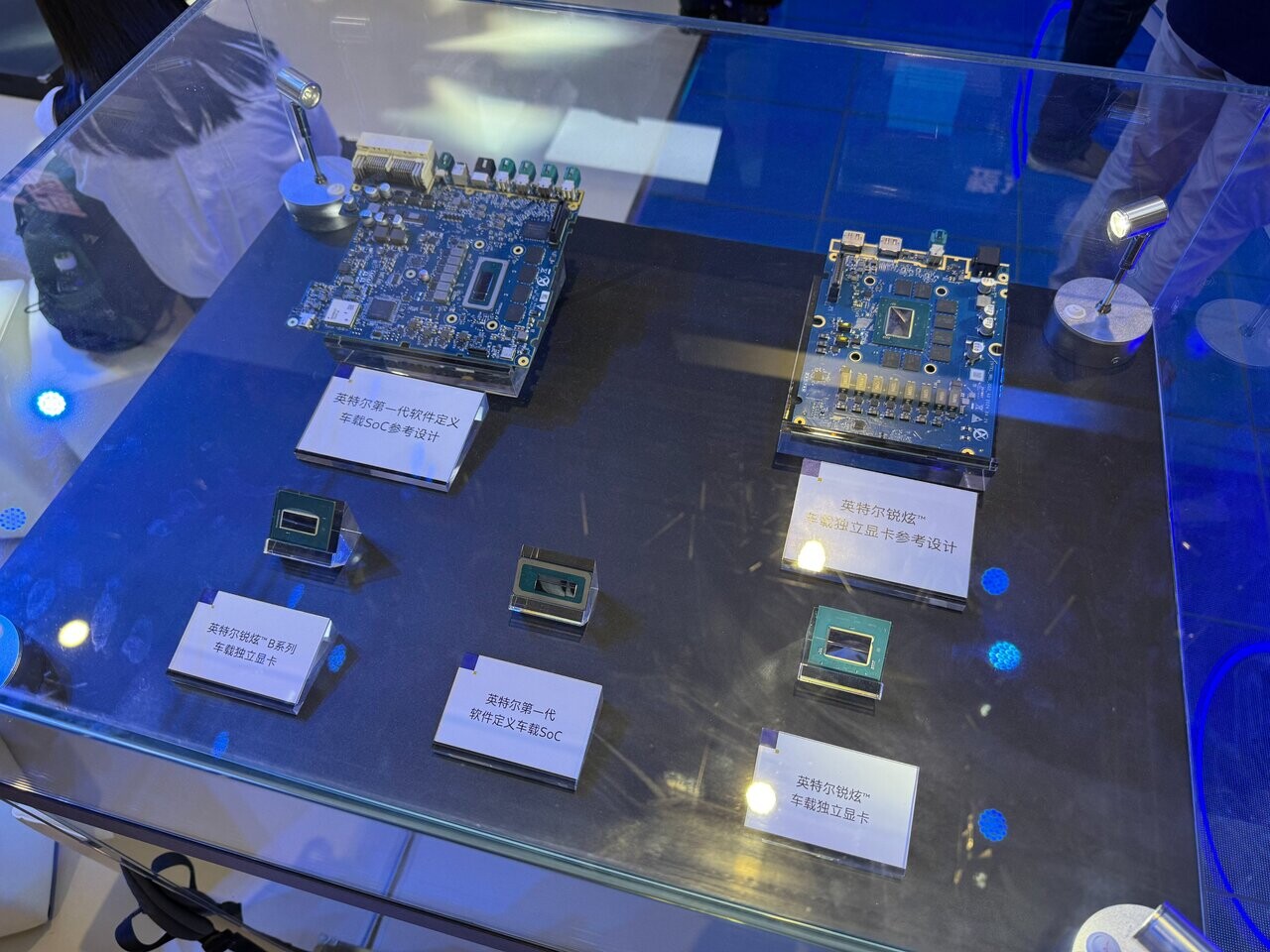
At the 2025 Shanghai Auto Show, Intel revealed its next-generation automotive system-on-chip lineup, unveiling two ambitious platforms, "Frisco Lake" and "Grizzly Lake". The company described these new designs as key steps toward fully software-driven vehicles, where much of the intelligence is handled by high-performance processors instead of dedicated hardware circuits. Intel said these chips would support advanced driver assistance and richer multimedia features. Intel's second generation Software Defined Vehicle, or SDV, Frisco Lake, is built on the upcoming "Panther Lake" architecture. The first volumes are expected in the first half of 2026, and TDP options will be among 20-65 W to meet different use cases. Intel says Frisco Lake will deliver ten times more AI performance and sixty-one percent better energy efficiency compared to the current Raptor Lake-based platform.

The new graphics block is based on the third-generation Xe architecture, known as "Celestial", replacing the older Battlemage design. Frisco Lake also supports twelve simultaneous camera inputs and up to two hundred and eighty audio channels. Linux kernel patch analysis also shows Frisco Lake cores are based on Panther Lake, confirming Intel's adaptation of its client CPUs for automotive use. Looking further ahead, Intel shared an early roadmap for its third-generation SDV platform, Grizzly Lake, which should arrive in the first half of 2027. Codenamed Monument Peak, these chips will use "Nova Lake" cores and may offer up to 32 efficiency-optimized cores along with an integrated Xe GPU capable of about seven TeraFLOPS. Additional features include support for six independent displays, twelve camera interfaces, and compliance with automotive safety standards.

Intel Arc GPU Graphics Drivers 101.6737 WHQL Released

Intel has released the latest version of its Arc GPU Graphics Drivers, version 101.6737 WHQL. The newest drivers update from Intel adds Game On Driver support for Clair Obscur: Expedition 33 and The Elder Scrolls IV: Oblivion Remastered games on Intel Arc B-series and A-series GPUs, as well as Intel Core Ultra CPUs with built-in Intel Arc GPUs. The new driver update also improves average performance on Intel Arc B-series GPUs in Infinity Nikki by up to 7 percent at 1080p resolution with Ultra Settings and up to 5 percent at 1440p with Ultra Settings.

The new Intel Arc GPU Graphics Drivers update also fixes a couple of issues on Intel Arc B-series GPUs, including application crash in Marvel's Spider-Man 2 and intermittent crash on certain motherboards with ray tracing enabled in Cyberpunk 2077. Intel also fixed issue with Call of Duty Black Ops 6 on Intel Arc A-series GPUs where shadows could exhibit darker than expected in certain campaign scenarios. The same issue is also fixed on Intel Core Ultra Series 2 CPUs with built-in Intel Arc GPUs, alongside issues where users may experience less than expected performance with screen recording on certain devices and intermittent freeze issue with video playback on external display while performing certain operations.

DOWNLOAD: Intel Arc GPU Graphics Drivers 101.6737 WHQL

Lenovo Introduces New ThinkPad Mobile Workstations and Business Laptops Designed for the AI-Ready Workforce

Lenovo today unveiled a refreshed portfolio of ThinkPad devices engineered to meet the evolving needs of modern professionals—from content creators and engineers to knowledge workers and hybrid teams. The lineup includes powerful Copilot+ PCs, such as the ThinkPad P14s Gen 6 AMD and ThinkPad P16s Gen 4 AMD mobile workstations, alongside new ThinkPad L Series business laptops and expands its ThinkPad X1 Aura Editions, delivering the performance, manageability, and intelligence today's AI-powered workflows demand.

Together, these latest ThinkPad systems reflect Lenovo's commitment to delivering smarter, more adaptive solutions that support advanced workloads, sustainability goals, and flexible work models—whether users are building complex simulations or collaborating across teams.

Rebuilding Intel: Q1 Results to Reveal Tan's Blueprint for Reversing Decline

Intel is at a crossroads as the company prepares to report earnings on April 24, 2025. Investors are hoping that Lip-Bu Tan, Intel's new CEO, can turn the company's fortunes around and stem its revenue losses. Currently, Intel is projected to report its fourth straight quarter of revenue decline with a 3.4% revenue loss, according to Reuters, and expects a significant widening of its losses to approximately $945 million compared with a loss of $381 million a year ago. Intel continues to lose market share to AMD in both personal computing and data center markets, while NVIDIA dominates the highly lucrative AI chip market. In addition, Intel's PC division is likely to report an 11% revenue decrease to $6.73 billion, and its data center business is probably facing its twelfth consecutive quarter of declines. "The most important thing for Intel now is Lip-Bu Tan's playbook... How he can give investors confidence that he is the person who can turn Intel around and whether a turnaround is possible in the first place," said Hendi Susanto, portfolio manager at Gabelli Funds, which holds Intel shares.

Tan has been implementing sweeping changes as part of his turnaround plan, cutting more than 20% of the employees at Intel and a change in the leadership model to provide quicker decisions. The company is seeing significant geopolitical threats as U.S.-China trade tensions are rolling back. China is threatening to impose retaliatory tariffs of up to 85% on all chips produced in the U.S. and along these lines has also imposed a requirement for licenses to sell some high-end AI products to the Chinese customers. Likely, as part of this, the company is presumed to be moving the production of its 3 nm chips from Arizona to Ireland in late 2025. Under all of these factors, Intel could eventually receive a temporary boost if PC shipments are pulled forward ahead of these tariffs that may ultimately positively impact a significant portion of Intel's sales (nearly one-third of total revenues).

G.Skill Releases DDR5 Memory Support List for Intel 200S Boost

G.SKILL International Enterprise Co., Ltd., the world's leading brand of performance overclock memory and PC components, is excited to unveil a list of compatible G.SKILL DDR5 memory kits that support the newly announced Intel 200S Boost program, introduced by Intel to improve system and gaming performance for platforms with unlocked Intel Core Ultra 200S series desktop processors and a compliant Intel Z890 chipset motherboard.

Intel 200S Boost - What is it?
The Intel 200S Boost is a new overclocking feature designed by Intel to work in conjunction with their latest unlocked Intel Core Ultra 200S series desktop processor, a compliant Intel Z890 chipset motherboard and validated DDR5 memory kits with an Intel XMP 3.0 memory overclock profile of up to DDR5-8000 and a maximum rated voltage of 1.4 V. Enabling this feature in the motherboard BIOS will automatically set your XMP values whilst boosting various CPU parameters to gain extra system performance.

MSI Z890 Motherboards Fully Support Intel 200S Boost Technology

MSI proudly announces full support for Intel 200S Boost technology for the latest Z890 motherboard lineup, empowering gamers, creators, and enthusiasts to unlock next-level performance with a single click. Intel 200S Boost is a cutting edge memory enhancement technology that allows users to safely elevate DDR5 memory performance when paired with Intel Core Ultra 200S Series Desktop "K-SKU" processors and "Z890 series motherboards". To fully optimize this feature, MSI has forged strong partnerships with leading memory brands. Together, we've rigorously tested and validated a wide range of DDR5 modules to meet Intel 200S Boost standards, delivering exceptional performance, stability, and compatibility. Learn more about Intel 200S Boost.

Once a compatible processor and supported memory kit are installed, users can instantly activate 200S Boost via MSI Click BIOS X, no manual tuning or technical expertise required. This one click feature enables real performance improvements in gaming, content creation, and everyday multitasking. To support this breakthrough, MSI has released the latest BIOS for all Z890 series motherboards, ensuring full compatibility with Intel 200S Boost. Users are encouraged to visit MSI's official website and product pages for the latest BIOS updates.
Return to Keyword Browsing
Nov 17th, 2026 14:37 CST change timezone

New Forum Posts

Popular Reviews

TPU on YouTube

Controversial News Posts