News Posts matching #Intel

Return to Keyword Browsing

NVIDIA DLSS Technology is Now Present in Almost 770 Games and Applications

Today, NVIDIA confirmed that its Deep Learning Super Sampling technology (DLSS) boasts native support in 769 games and applications, reinforcing its lead over competing upscaling suites from AMD and Intel. With the addition of six newly announced titles, including the open-world survival MMO RuneScape: Dragonwilds, DLSS's ecosystem continues to expand rapidly. Since its debut alongside the RTX 20 series in 2018, DLSS has evolved from a single AI-powered upscaling method into a comprehensive toolkit. The current DLSS 4 iteration introduces Multi-Frame Generation (MFG) and DLSS Transformers, delivering sharper images and smoother frame rates than earlier convolutional neural network modes. On supported RTX 40- and 50-series GPUs, gamers can now take advantage of frame generation, denoising enhancements via ray reconstruction, and AI-driven anti-aliasing.

Of the six titles highlighted in NVIDIA's latest blog post, Steel Seed from Storm in a Teacup is the first to ship with DLSS 4's MFG. RuneScape: Dragonwilds, The Talos Principle: Reawakened, and Tempest Rising have added DLSS 3's frame-generation and Super Resolution features, while indie releases Clair Obscur: Expedition 33 and Commandos: Origins deploy DLSS 2's Super Resolution alone. These incremental rollouts demonstrate how studios of all sizes are integrating NVIDIA's upscaling techniques at varying depths. By contrast, AMD's FidelityFX Super Resolution (FSR) and Intel's Xe Super Sampling (XeSS) toolkits support 356 and 161 titles, respectively. While AMD's FSR 4.0 can override older versions, its adoption remains focused on basic upscaling without frame generation, and XeSS continues to trail in overall scope. NVIDIA's manual override in its GeForce Experience app further widens the gap, allowing engineers to retrofit MFG into titles whose developers have yet to implement it natively.


Intel to Explore Optimization of Arc GPUs When Paired with Older Generation CPUs

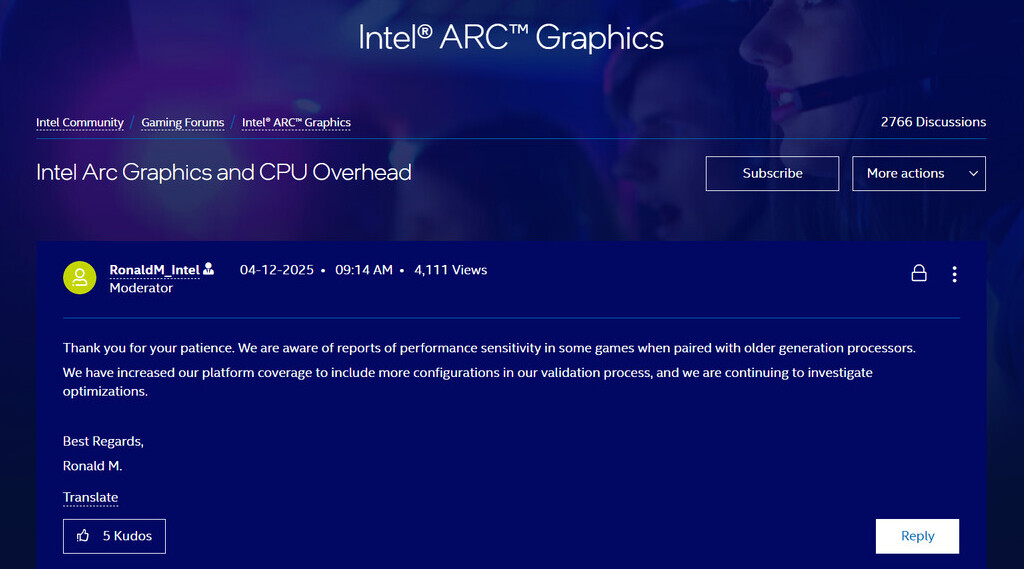
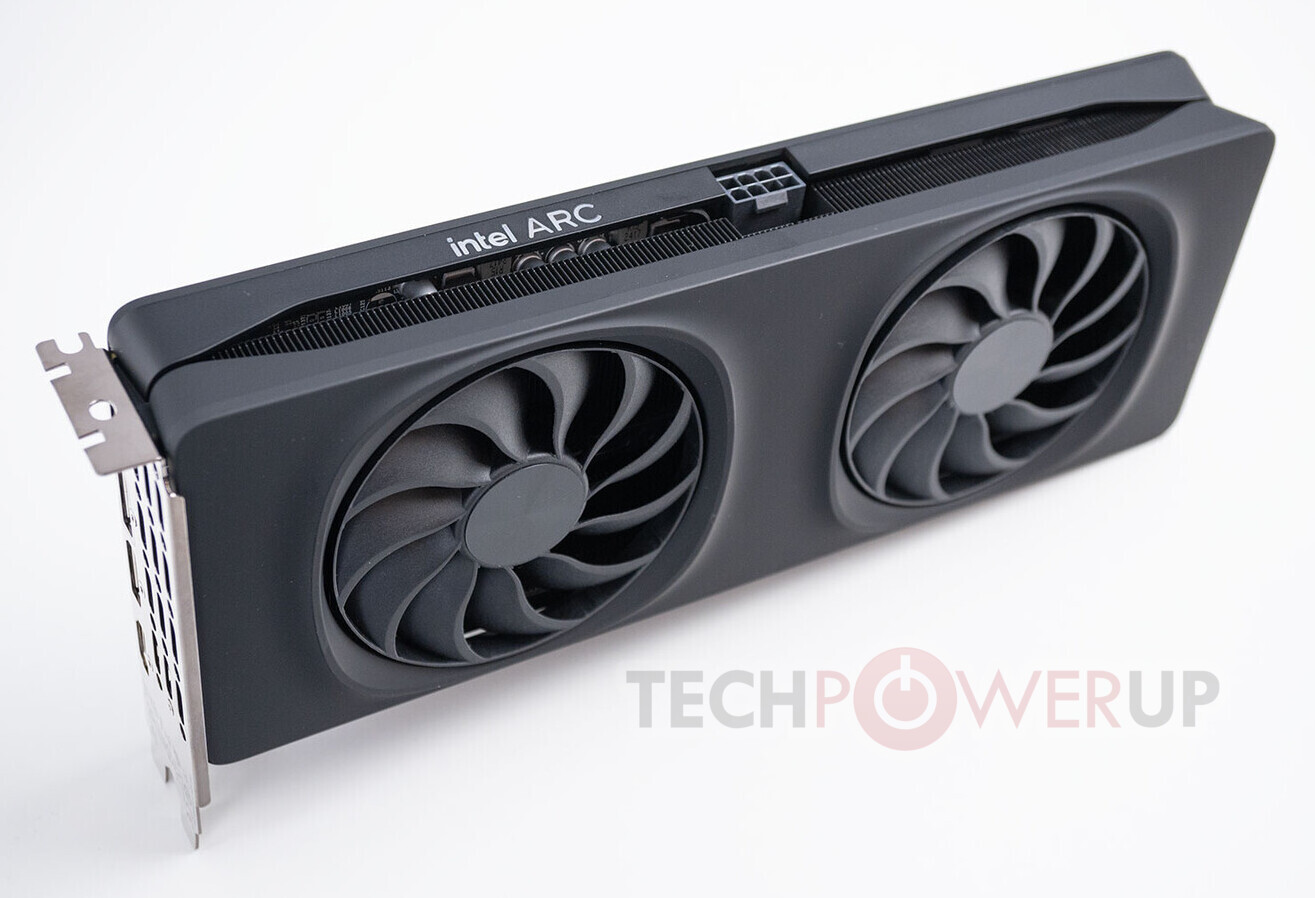
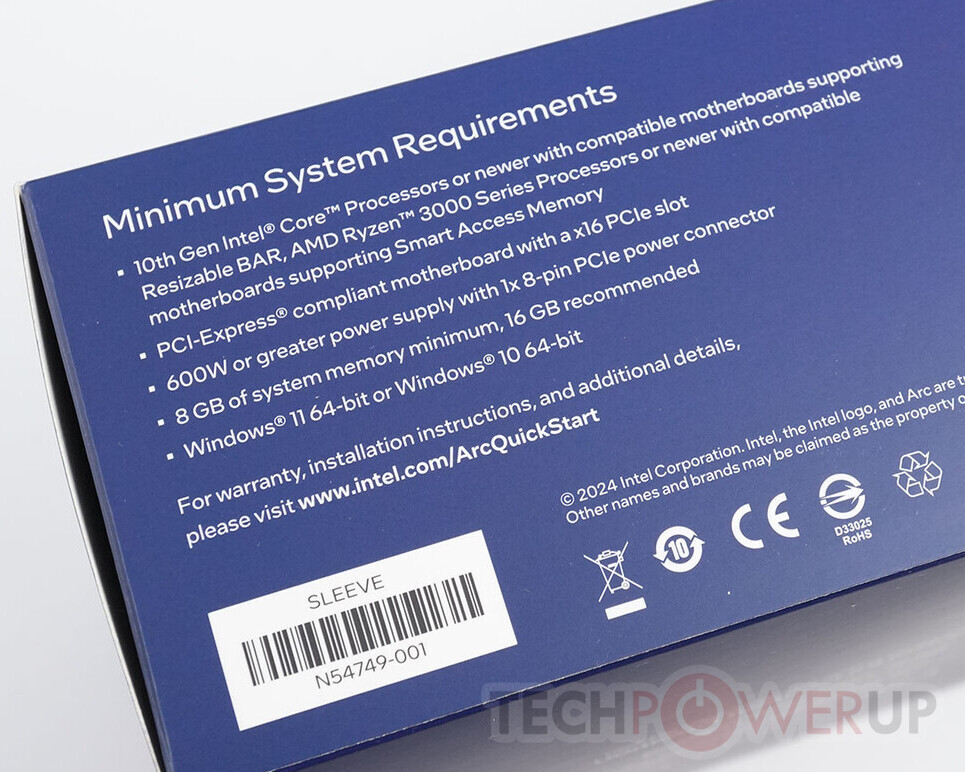
VideoCardz has put a spotlight on a compelling Intel Community announcement—ten days ago, a site moderator (RonaldM_Intel) disclosed that company engineers are currently engaged in the investigation of a major Arc graphics card-related issue. At the beginning of 2025, Hardware Unboxed uploaded a video article (see below) that delved into the Arc Xe2 B580 graphics card design's "big problem." Going back several months, review outlets observed B580 sample cards leveraging lower than expected performance when paired with older generation processors. As summarized by VideoCardz's recent report; significant performance drops were tracked when test units were linked up with AMD Ryzen 5 2600 or 5600 CPUs—relative to a more modern rig; powered by Team Red's Ryzen 7 9800X3D. Additionally, evaluators observed worrying signs when B580 cards were tested on platforms based on Intel's 9th Gen Core i5-9600K processor.

Budget-conscious buyers have embraced Team Blue's new generation cards, with many participants upgrading older builds with Intel Arc B580 12 GB and B570 10 GB graphics cards (original launch MSRPs: $250 and $220, respectively). Given that many owners will be sticking with prior-gen processors, industry watchdogs have leveled criticism at Team Blue—the company has disappointed many, with an apparent lack of action. Months after the fact—likely after a healthy intake of community feedback—Intel has officially acknowledged these issues. As disclosed by RonaldM_Intel's announcement: "thank you for your patience. We are aware of reports of performance sensitivity in some games when paired with older generation processors. We have increased our platform coverage to include more configurations in our validation process, and we are continuing to investigate optimizations."

Intel Arc Xe2 "BMG-G31" GPU Spotted in Shipping Manifest; "Battlemage" B770 Model's Fortunes Revived?

At the tail end of March, an interaction between Tomasz Gawroński (aka GawroskiT) and Jaykihn (jaykihn0) indicated that Intel had abandoned the development of higher-end Arc Xe2 "Battlemage" graphics cards—possibly back in late 2024. Months of silence—since the launch of pleasingly wallet-friendly B580 and B570 models—instilled a sense of unease within segments of the PC gaming hardware community. Many watchdogs assumed that company engineers had simply moved onto devising futuristic Arc Xe3 "Celestial" equivalents. As discovered last week, hopes have been elevated for a potential expansion of Team Blue's "Battlemage" dGPU lineup. Haze2K1 highlighted an intriguing entry within an NBD shipping manifest; a "BMG-G31"-type GPU was transferred "for R&D purposes." Currently, the lower end of Intel's B-card series is populated by discrete solutions based on their smaller "BMG-G21" GPU design.

Tomasz Gawroński spent part of his Easter weekend poring over shipping documents; soon stumbling on an entry that mentioned a mysterious "IBC C32 SKT"—again, listed under "research and development" purposes. In a reply to Gawroński's social media bulletin, miktdt weighed in with a logical theory: "because of the BMG in the text the best I could believe is a reworked/restarted BMG G31. C32 could simply mean cores 32 which is a fully-enabled G31. This makes more sense to me." VideoCardz posits that these leaks do not necessarily signal the revival of fortunes for more potent Arc Xe2 "Battlemage" SKUs; Intel could be shipping "canceled project" prototypes to different locations. Going back to late summer 2023, a "BMG G10" GPU die was spotted by members of the press during a tour of Team Blue's Malaysian test lab. Back then, certain industry insiders believed that the whole "Battlemage" endeavor was going through "development hell." Fast-forward to the present day; OneRaichu reckons that there is still a likelihood of Team Blue's "B770" model turning up at some point in the future.

ASRock Latest Z890 BIOS Update Enables Intel 200S Boost Feature

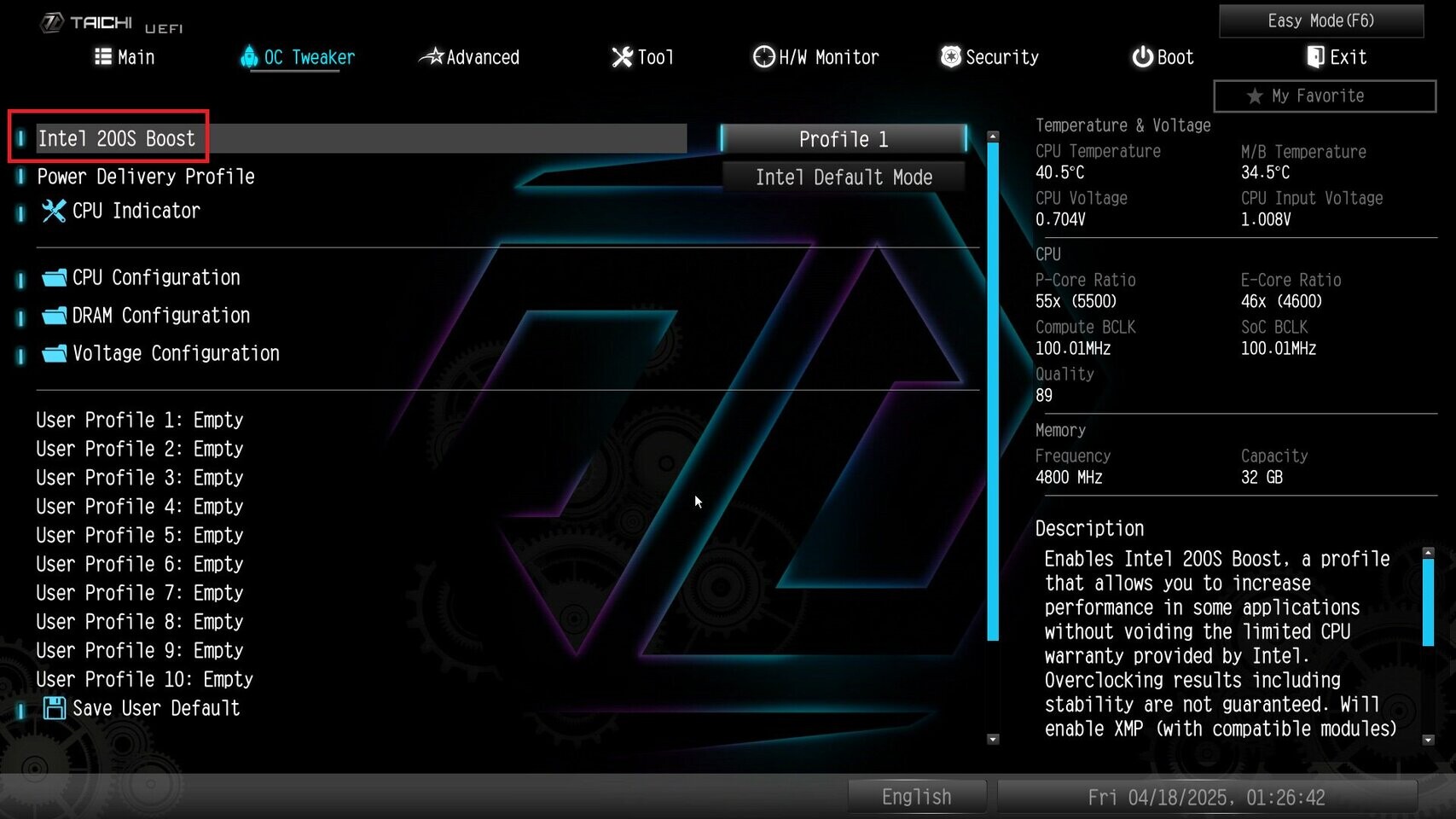
ASRock Inc., a leading global motherboard manufacturer, officially announces today the release of a comprehensive BIOS update for its Intel Z890 series motherboards, enabling the brand-new Intel 200S Boost feature. With this update, users can effectively "upgrade" their existing Intel Core Ultra processors and enjoy a significant performance boost.

Intel 200S Boost is achieved through fine-tuning of BIOS settings and voltage adjustments, leveraging a subset of overclocking features found on K-series CPUs to enhance system performance, offering a truly noticeable upgrade. What's even more exciting is that this overclocking method does not void Intel's limited processor warranty.

Intel's "Nova Lake" Processors Reportedly Slated for TSMC's 2nm Node

TSMC is pushing forward its plans to make 2 nm process chips in large quantities in the second half of the year, with major customer developments coming to light. After AMD placed its order, reports suggest Intel has also become one of TSMC's first 2 nm customers aiming to use this cutting-edge technology for its next-gen desktop processors. Intel, already a big TSMC customer for advanced processes sent out key compute tiles for its Core Ultra processors to TSMC using different processes like N3B, N5P, and N6. To be exact, these were Intel Core Ultra 200V "Lunar Lake" series laptop processors and Core Ultra 200S "Arrow Lake" series. While both companies didn't comment on the latest news, industry talk hints that they're cooperating on Intel's upcoming Nova Lake desktop processor set to launch next year (rumors suggest that it could be the Compute Tile). With the codename "NVL-S" Nova Lake combines two groups of eight high-performance "Coyote Cove" P-cores with 16 "Arctic Wolf" E-cores. It also includes four ultra-low-power LPE cores in a separate SoC tile. It is expected that Nova Lake-S will use LGA 1954, which has 1,954 active lands and might have more than 2,000 total pads when you count debug pins.

TSMC's work on 2 nm technology is moving forward as expected. The company uses first-generation nanochip transistor technology to boost performance and reduce power consumption across process nodes with big clients finishing designing silicon IPs and starting validation steps. AMD shared that its next EPYC "Venice" chip will be the first high-performance computing processor to use TSMC's 2 nm process. AMD validated it at TSMC's Arizona plant and is on track to launch it in 2026. Also, word has it that Apple's future iPhone 18 lineup will have its A20 chip made with the same TSMC 2 nm process.

Supercharge Your Gaming Performance with Intel 200S Boost on GIGABYTE's Z890 Motherboards

GIGABYTE Technology, one of the top global manufacturers of motherboards, graphics cards, and hardware solutions, is pleased to announce that our entire line of Intel Z890 motherboards now fully supports Intel 200S Boost technology, offering gamers a simple way to enhance performance while maintaining warranty protection.

Intel 200S Boost delivers pre-configured overclocking profiles for Intel Core Ultra 200S Series processors that enhance gaming performance by raising frequencies across processor components for improved framerates and system responsiveness. GIGABYTE Z890 motherboard owners can activate this feature with a simple one-touch profile in the BIOS, eliminating traditional overclocking guesswork while supporting blazing-fast Intel XMP profiles up to DDR5-8000. Best of all, Intel 200S Boost is fully covered under Intel's 3-year processor warranty, allowing gamers to enjoy performance benefits without traditional warranty concerns.

Intel Job Listing Suggests Company Implementing GDDR7 with Future GPU

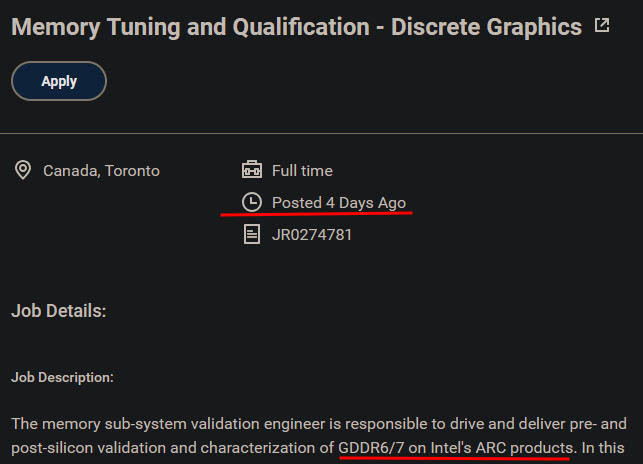
A recent job listing at Intel for a memory sub-system validation engineer—a person that tests and validates memory with new types with prototype silicon, suggests that Intel is implementing the contemporary GDDR7 memory standard with an upcoming GPU. The position calls for drive-and-deliver pre- and post-silicon validation and characterization of GDDR6 and GDDR7 memory types on Intel's Arc GPU products. Given that Intel is putting this listing out now, in Q2-2025, an actual product that implements GDDR7 could be rather far out, considering typical GPU silicon development timelines. We predict such a chip could be taped out only by 2026, if not later.

A possible-2026 tapeout of a GPU silicon implementing GDDR7 points to the likelihood of this being a 3rd Gen Arc GPU based on the Xe3 "Celestial" graphics architecture. Given Intel's initial success with the Arc B580 and B570, the company could look to ramp up production of the two through 2025, and continue to press home its advantage of selling well-priced 1080p-class GPUs. Intel could stay away from vanity projects such as trying to create enthusiast-class GPUs, sticking to what works, and what it could sell in good volumes to grab market share. This is a business decision even AMD seems to have taken with its Radeon RX RDNA 4 generation.

TSMC Expects to Produce 30 Percent of its Sub-2nm Chips in the US, Denies Intel Joint Venture

On the back of TSMC's first quarter report, news is coming out of Taiwan that the company is expecting to produce as much as a third of its sub 2 nm chips in its US fabs, at some point in the future. This is according to comments made by TSMC's chair and CEO C.C. Wei during its online investors conference. As we've already mentioned, TSMC is looking to expand in Arizona with a further two fabs later this year, both targeting sub 2 nm chip production, but the comments by the CEO suggests that these might be bigger fabs than initially expected, if they're going to be able to produce as much as a third of all of TSMC's sub 2 nm output by some time around the next decade.

Apparently the move to build the new fabs is due to increased demand from TSMC's US customers, which includes AMD, Apple, NVIDIA, Qualcomm and Broadcom, to mention its biggest US customers. It seems like those that are planning to produce chips at TSMC's new fabs in the US are accepting an increase in cost, although it has apparently been framed as a value proposition from TSMC's side towards its customers, which have accepted it as such. At the same time Wei once again refuted that TSMC is in any kind of talks with Intel or any other companies about joint ventures, technology licensing or technology transfer. This should put further rumours about any form of joint venture to rest for now.

Sharkoon Launches Its First CPU Air Coolers Series

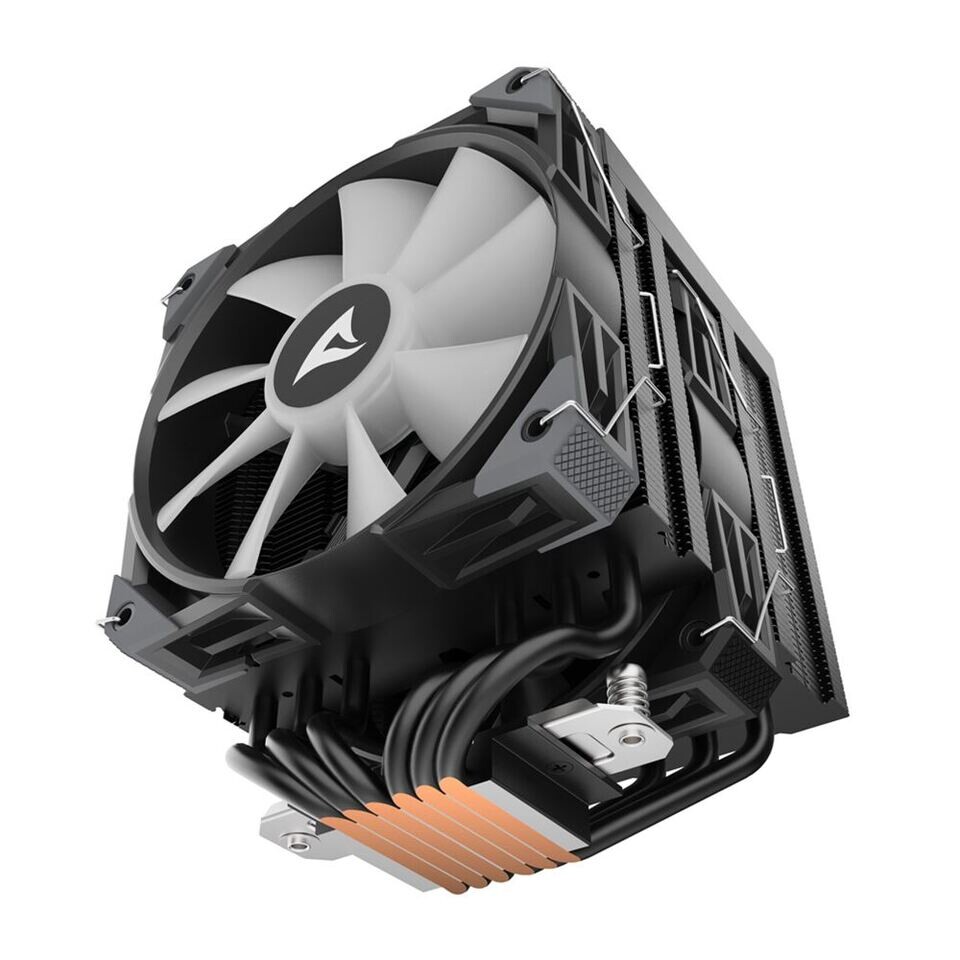
Sharkoon launched its first three air-cooled CPU coolers: the A40, A50, and A60. All three are tower-style (A40 and A50 are single tower, A60 uses a dual tower design) and are available in three versions: matte black, black RGB, and white RGB. The A40, A50, and A60 use four, five, and six 6 mm diameter heat pipes in direct contact with the CPU. The overall dimensions of the A40 and A50 are the same at 120×72×153 (mm), while the A60, being a dual-fan dual-tower, measures 120×125×156 (mm). The nominal TDPs (Thermal Design Power) are 220 W (A40), 230 W (A50), and 260 W (A60). Another aesthetic difference between the matte black version and the RGB ones is that the latter include "the infinity mirror effect" for the top cooler cover.

The first three air-cooled models of Sharkoon's A series CPU coolers use the same 120 mm fluid dynamic bearing fans with 9 blades working at 500-1,800 rpm, offering 121.55 m³/h maximum airflow, 2.90 mm H₂O max. air pressure, and 30 dB (A) maximum noise level. The RGB fan versions include 12 Addressable RGB LEDs; however, only one fan offers RGB lighting in dual fan configurations (Sharkoon A60 RGB Black/White).

QNAP Releases Dual-Active Controller ES1686dc R2 NAS

QNAP Systems, Inc. today launched the ES1686dc R2, a high-performance 16-bay SAS 12 Gb/s enterprise NAS engineered for mission-critical applications. Featuring dual active-active controllers, it ensures High Availability (HA) and delivers uncompromising performance for demanding workloads. Designed for enterprise file and virtualization storage, the ES1686dc R2 minimizes downtime with redundant controllers and power supplies, enabling seamless component replacement. This ensures continuous operations, reliability, and stability for business-critical environments.

"The ES1686dc R2 delivers outstanding performance and a reliable high-availability storage solution," said Waterball Liu, Product Manager of QNAP, adding: "The QES operating system features an intuitive user-friendly interface with enhanced functionality, enabling customers to effortlessly adopt professional-grade dual-controller enterprise storage when high availability is required. Whether deployed as a mission-critical file server, virtualization server, VDI, or for efficient file backup and recovery, the ES1686dc R2 meets service-level agreements for both performance and uptime."

Acer Debuts Nitro Gaming PCs Featuring Latest NVIDIA GeForce RTX 50 Series GPUs

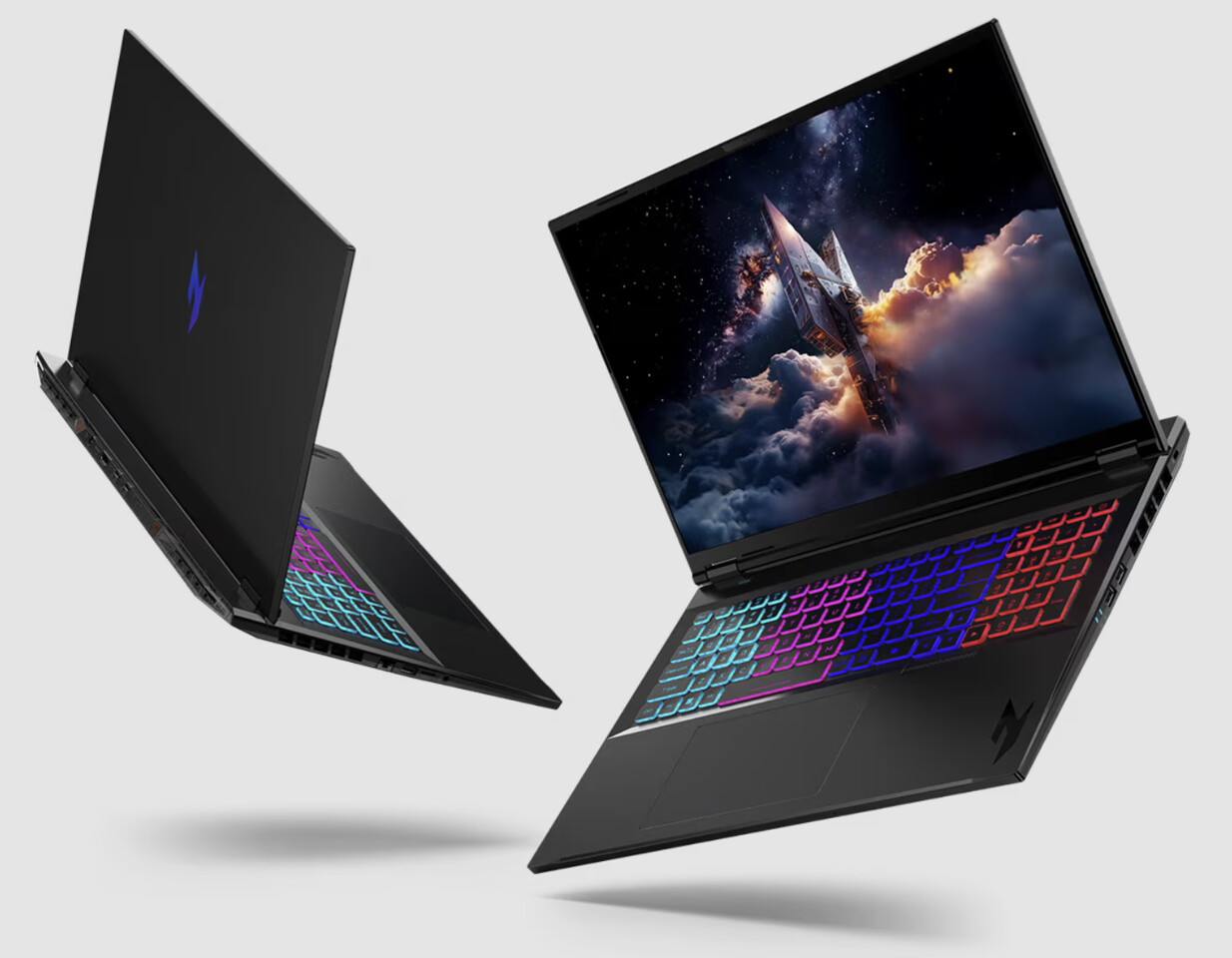
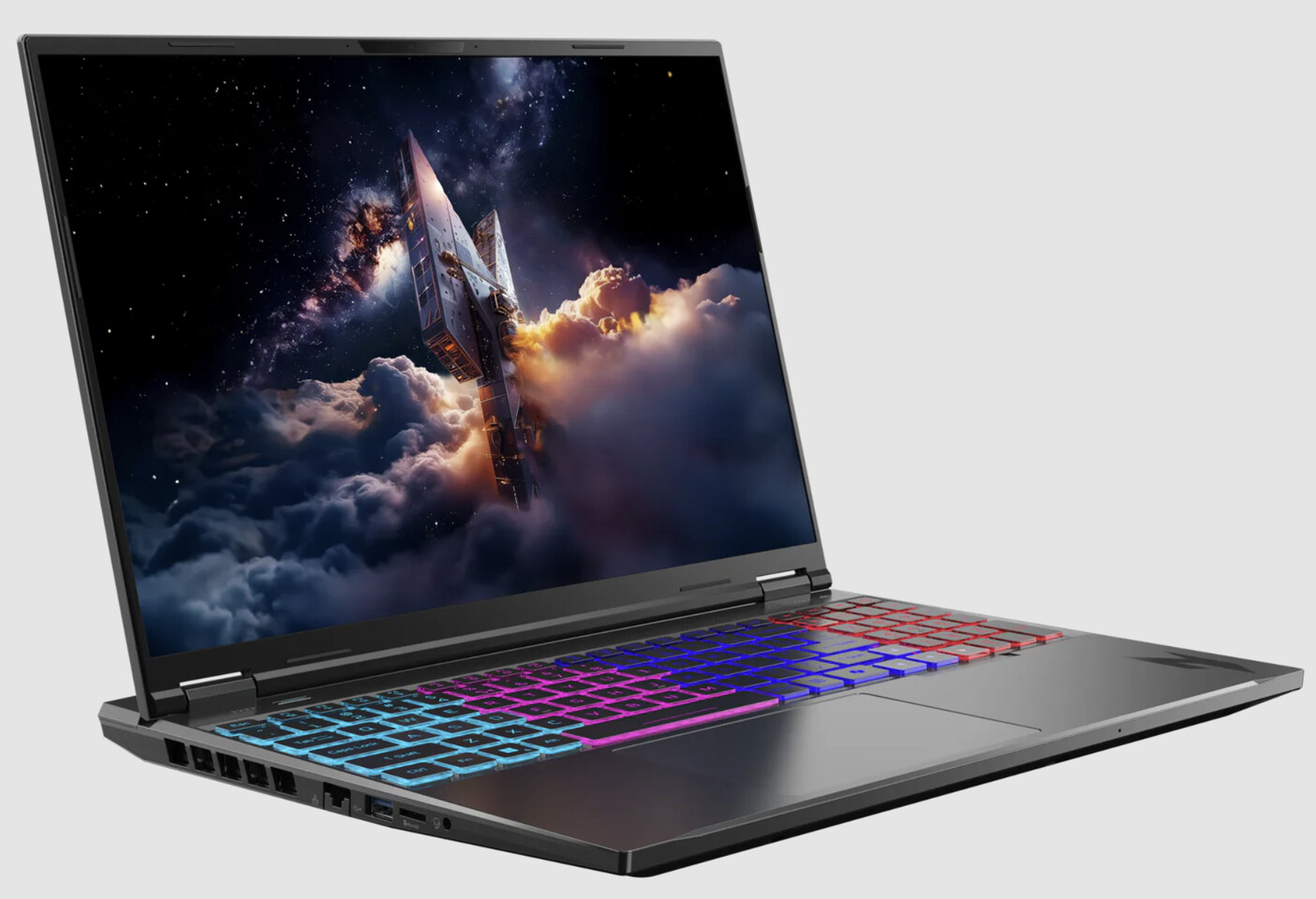
Acer today announced the expansion of its mainstream Nitro gaming line with the launch of the new Acer Nitro AI laptops and the Nitro 20 desktop. The Nitro range brings a full-package gaming experience and great value for gamers and content creators, combining robust processing power, essential computing features, and more without breaking the bank. The addition of slim laptops and a compact Windows PC option also support users with limited space for their gaming set-ups.

The Nitro AI laptops are Copilot+ PCs, powered by AMD Ryzen AI 300 Series processors and equipped with the game-changing NVIDIA GeForce RTX 50 Series Laptop GPUs to make more powerful AI rendering capabilities more accessible. The Nitro 20 desktop also utilizes AI processors and up to an NVIDIA GeForce RTX 5060 GPU, focusing on better energy efficiency with a smaller footprint.

Corsair Launches Upgraded HXi Series Power Supplies

Corsair is excited to announce upgraded HX1200i and HX1500i Series fully modular, low-noise power supplies for 2025. These powerful PSUs are Cybenetics Platinum-certified for up to 91% efficiency, delivering clean, reliable power. They now feature updated cables with a debossed design and low-profile cable combs for easy cable management and a sleek appearance. In addition, HXi Series power supplies now include two 12V-2x6 GPU power cables with a new dual-color connector that provides visual confirmation of a secure connection, offering additional peace of mind for PC builders. The HXi Series is built for high-end PCs using the latest, most powerful GPUs, including NVIDIA RTX 50 series and AMD 9070 series graphics cards.

Corsair HXi power supplies are ATX 3.1 certified and PCIe 5.1 compliant, supporting the latest power standards with high reliability and efficiency. They are Modern Standby compatible for extremely fast wake-from-sleep times and excellent low-load efficiency. A resonant LLC topology with DC-to-DC conversion provides clean, consistent power. A 10-year warranty ensures these PSUs will last through several upgrade cycles, delivering reliable power to even the most ambitious builds for years to come.

Intel "Bartlett Lake-S" Gaming CPU is Possible, More Hints Appear for a 12 P-Core SKU

Intel's "Bartlett Lake-S" architecture, previously only offered for edge and networking deployment, may spawn a 12 P-core variant for gamers that eliminates efficiency cores entirely. This hopeful configuration would specifically target applications that benefit from consistent single-threaded performance and deterministic core behavior, addressing a market segment underserved since Intel's transition to hybrid architectures. Recent software support developments strengthen this speculation, with diagnostic utility AIDA64 explicitly adding "improved support for Intel Bartlett Lake-S CPU" in its 7.65.7404 beta release notes from April 13, 2025. This update precedes any consumer launch announcement, suggesting possible platform expansion. MSI-affiliated overclocker Toppc amplified these rumors by highlighting the AIDA64 changelog while referencing undisclosed developments under NDA, a pattern historically preceding consumer product launches.

The rumored gaming-oriented CPU would leverage the LGA 1700 platform compatibility, enabling drop-in upgrades for existing 600-series and 700-series motherboard owners. Unlike the current flagship Core 7 251E with its 8P+16E configuration, a pure performance-core implementation would eliminate the Windows scheduler complications that sometimes impact frame timing in latency-sensitive games. Current hybrid designs force game engines to navigate complex thread scheduling across heterogeneous cores, with performance-critical threads occasionally migrating to efficiency cores during intensive scenes. A homogeneous 12 P-core architecture would eliminate this behavior, providing stable thread assignment and potentially reducing the 99th percentile frame time variances that affect perceived smoothness in CPU-bound titles.

High-NA EUV Tools Cost Nearly $400 Million Yet Deliver Big Savings on Complex Layers

High-NA EUV lithography comes with a crazy $380 million price tag, but it can actually cut overall production costs in the right situations. At the SPIE Advanced Lithography and Patterning conference in February 2025, IBM researchers in Veldhoven revealed that one high-NA exposure runs about 2.5x the cost of a standard low-NA shot. That seems steep, yet High-NA's real strength shows up when it replaces complicated multi-patterning processes. SemiAnalysis had predicted last year that High-NA would not become cost-effective until around 2030, largely because higher dose requirements slow down throughput on the trickiest layers. However, after reviewing IBM's new data, the firm adjusted its outlook. Their model confirms that sticking with Low-NA double patterning for two-mask sequences remains the cheapest path.

On the other hand, once you need three or more Low-NA masks, switching to a single High-NA pass starts to pay off. In fact, for a four-mask self-aligned litho-etch flow, High-NA can reduce total wafer cost by roughly 1.7-2.1x compared to using Low-NA multi-patterning. One big reason fabs are interested is that fewer exposures mean simpler process flows. You cut down cycle time and lower the chance of overlay mistakes. Still, SemiAnalysis warns that a simpler flow does not automatically mean lower expense in every case. Looking at Intel 14A, it turns out only a few critical metal layers at the 14A node hit the sweet spot where High-NA's higher per-shot cost is outweighed by ditching multiple masks.

addlink EMP-520 Series Compact Box PC Wins Best-in-Show at Embedded World 2025

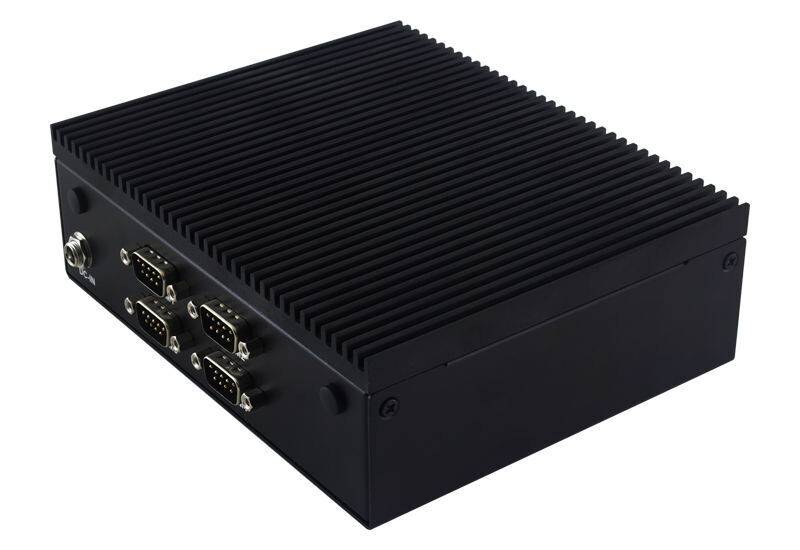
ADLINK Technology Inc., a global leader in edge computing, proudly announces that its newly released EMP-520 Series industrial compact box PC has been recognized for its excellence, securing the Best-in-Show award in the Computer Boards, Systems, Components & Peripherals category at embedded world 2025. It was selected for its innovative design, user-centric features, and exceptional performance in industrial environments.

Smart, Reliable, and Efficient Industrial Computing Solution
Designed to meet the needs of modern industrial applications, the EMP-520 Series delivers high computing performance with minimal maintenance, helping businesses maximize productivity and reduce downtime. Powered by Intel 14th Gen Core processors, it ensures energy-efficient operation, making it ideal for high-demand environments that require continuous, reliable computing. Supporting four simultaneous 4K video outputs and EDID emulation, users can achieve seamless visual performance. The compact design enables easy integration into space-constrained environments while ensuring reliable operation in mission-critical applications.

Intel's 18A Node Outperforms TSMC N2 and Samsung SF2 in 2 nm Performance Class

Intel's 18A node isn't all about yields and density (which are still very important factors) but also performance. According to Taiwanese media 3C News, citing TechInsights research and calculations, the new leader of node performance is Intel 18A. On a custom scale used by TechInsights, Intel 18A gets a 2.53 score, while the performance score of TSMC N2 is 2.27, and the performance score of Samsung SF2 is 2.19. This is all among two nm-class nodes, where Intel leads the category. Being the first node with a Backside Power Delivery Network (BSPDN), it will appear in the Panther Lake CPUs in late 2025 for testing and early 2026 for shipments. This new power architecture boosts layout efficiency and component utilization by 5-10%, lowers interconnect resistance, and enhances ISO power performance by up to 4%, thanks to a significant drop in intrinsic resistance versus traditional front-end power routing. Relative to its predecessor, Intel 3, the 18A process delivers a 15% improvement in performance per watt and packs 30% more transistors into the same area.

Featuring RibbonFET design, it has entered risk production. According to Intel, "This final stage is about stress-testing volume manufacturing before scaling up to high volume in the second half of 2025." When it comes to other aspects like SRAM density, high-performance SRAM cells shrank from 0.03 µm² in Intel 3 to 0.023 µm² in Intel 18A, while high-density cells contracted to 0.021 µm², reflecting scaling factors of 0.77 and 0.88 respectively and defying previous assumptions that SRAM scaling had plateaued. Intel's innovative "around-the-array" PowerVia approach addresses voltage drops and interference by routing power vias to I/O, control, and decoder circuits, freeing up the bit-cell area from frontal power supplies. The result is a 38.1 Mbit/mm² macro bit density, positioning Intel to rival TSMC's N2. All this, combined with BSPDN, is shaping up a powerful node. We can't wait to get our hands on some 18A silicon in the future and run it through our labs for testing.

Cervoz Launches a New Range of Industrial Grade Network Cards

As industrial systems become more interconnected and data-driven, the need for connectivity solutions that offer superior performance, scalability, and flexibility is growing rapidly. Cervoz, a leading provider of industrial embedded modules, is meeting this demand with an expanding portfolio of innovative, real-world expansion solutions.

Seamless Expansion for Future-Ready Performance
Picture a smart logistics hub handling tens of thousands of packages a day, where Autonomous Mobile Robots (AMRs) operates across vast spaces. In such environments, traditional RJ45 connections may initially suffice—but as operation expand and AMRs navigate distances beyond 100 meters, connectivity becomes prone to signal degradation and industrial interference.

Intel's IPO Program Supercharges Underperforming "Arrow Lake" Chips, but Only in China for Now

The long-promised gaming performance uplift for "Arrow Lake" processors is here, but for now, it is only available in China. Called Intel Performance Optimizations (IPO), this feature aims at system integrators rather than end users and offers a balanced approach between stock settings and full manual overclocking, all while preserving warranty coverage. IPO works by applying optimized profiles that adjust a range of CPU and memory parameters. On the CPU side, it fine-tunes P-core and E-core frequencies, ring-bus speeds, the UPI interconnect, D2D links between tiles, and both PL1 and PL2 power limits. For RAM, IPO raises transfer rates and tightens timings, pushing modules beyond their factory XMP or EXPO profiles. Early results from Chinese OEM Maxsun show that IPO can boost core clocks by about 200 MHz and elevate DDR5-8000 kits to DDR5-8400. In gaming tests provided by Maxsun, this translated to roughly a 10 percent uplift in frame rates, an encouraging figure given Arrow Lake's mild launch performance in gaming.

At debut, some Arrow Lake SKUs trailed their "Raptor Lake" predecessors because the chiplet-based memory controller introduced extra latency and ring-bus clocks ran slower. Supply-chain constraints and tariffs have limited IPO's rollout to China so far, where pre-built systems from vendors like Maxsun are shipping with the feature enabled. Warranty handling stays with the OEM, so users can enjoy the extra headroom without risking hardware support. Behind the scenes, Intel has been issuing firmware and microcode patches since December, most recently microcode 0x114 paired with CSME firmware 19.0.0.1854v2.2, to improve Arrow Lake's efficiency. IPO represents the next step in that effort and could become a model for global "opt-in" BIOS presets if the pilot proves successful. For now, China is serving as the testing ground for Intel's latest attempt to squeeze more performance out of Arrow Lake. We have to wait and see if Western markets follow soon.

Framework Laptop 12 Now Available for Pre-Order

Framework Laptop 12 pre-orders are now open, with first shipments in June! We're pricing Framework Laptop 12 as low as we can to bring the Framework mission to as many people as possible. DIY Edition starts at €569/£499/$719 CAD and is available in five colorways: Black, Gray, Lavender, Bubblegum, and Sage. If you prefer not to assemble your laptop, we also have pre-built options in Black in some keyboard languages, starting at €849/£749/$1,079 CAD. Pre-orders are open today in all countries we ship to, with the temporary exception of the US. We shared a blog post earlier today detailing how we're handling the impact of tariffs for US customers.

Framework Laptop 12 is a 12.2", 13th Gen Intel Core-powered notebook that is designed to last. We have robust compatibility with both Linux and Windows 11, i3 and i5 Intel Core processor options, support for up to 48 GB of DDR5 and 2 TB of storage, Wi-Fi 6E, an excellent full-size keyboard, a 50Wh battery, a bright 1920x1200 touchscreen, a 1080p webcam, and USB 3.2, DisplayPort, and power input on all four Expansion Card slots. You can check out the full specs on our website. Even though this product is small and fun, it's also a real computer!

Biostar Introduces MX-X7433RE Industrial PC

BIOSTAR, a leading manufacturer of IPC solutions, motherboards, graphics cards, and PC peripherals, today unveils the MS-X7433RE, a compact, high-performance embedded system purpose-built for modern kiosk applications and edge computing environments. Powered by the Intel Amston Lake X7433RE processor, the MS-X7433RE delivers efficient performance with its quad-core architecture, reaching speeds up to 3.4 GHz while maintaining a low TDP of just 9 W. Integrated Intel UHD Graphics drives both HDMI 2.0 and DisplayPort 1.4++ outputs, making it an excellent choice for digital displays, payment machines, and access control systems.

Designed for system integrators and developers, the MS-X7433RE combines reliable hardware with flexible expansion options. It supports up to 16 GB of DDR5 4800 MHz memory and includes a SATA III port alongside an M.2 Key-M slot, enabling both traditional and high-speed NVMe storage. A Mini-PCIe slot and M.2 Key-B interface with support for 4G/5G modules make it easy to tailor the system for wireless connectivity and real-time data processing unlocking superior edge computing capability.

Simply NUC Unveils the NUC 15 Pro Cyber Canyon

Simply NUC, a global leader in customized computing solutions, proudly adds ASUS's NUC 15 Pro Cyber Canyon to its product lineup, setting a new benchmark for AI-optimized performance in a compact form factor. Engineered with Intel Core Ultra Series 2 processors and Intel Arc Graphics, the Cyber Canyon is designed to accelerate AI workloads, empower edge computing, and deliver seamless business productivity.

"The NUC 15 Pro Cyber Canyon is not just a step forward—it's a leap into the future of AI computing," said Ed Barkhuysen, VP of Product at Simply NUC. "With the latest Intel Core Ultra processors, Wi-Fi 7 connectivity, and cutting-edge security, Cyber Canyon is built for professionals and businesses looking for a powerful yet compact computing solution."

Intel Arc GPU Graphics Drivers 101.6734 WHQL Released

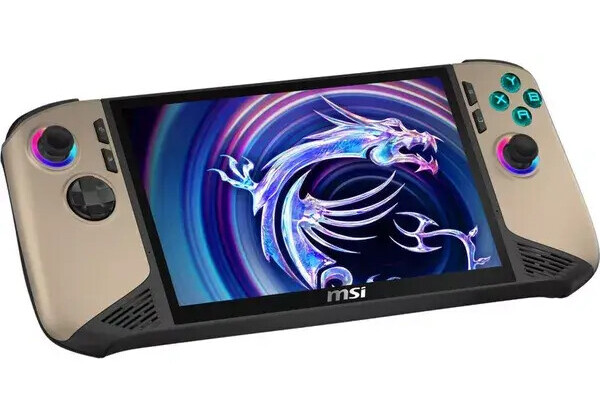
Intel today released the latest version of its Arc GPU Graphics Drivers. Version 101.6734 WHQL mostly builds on the recent 101.6732 Beta release, with just a couple of changes. To begin with, it introduces a new power management optimization for Core Ultra 200V "Lunar Lake" processors and their iGPUs for handheld gaming consoles, such as the new generation of MSI Claw based on them. Next up, it fixes an issue with Core Ultra series 2 processors ("Lunar Lake" and "Arrow Lake") where some games don't enumerate all supported display resolutions in the game settings of some notebook devices. Grab the drivers from the link below.

DOWNLOAD: Intel Arc GPU Graphics Drivers 101.6734 WHQL

UGREEN Showcases the New AI-Powered NASync iDX Series at NAB Show 2025

From April 6-9th, UGREEN, a global leader in consumer electronics and charging technology, is showcasing its innovative NASync series at the NAB Show in Las Vegas. The UGREEN NASync iDX6011 and iDX6011 Pro have been the highlights of the display at Booth SL9210 in the Las Vegas Convention Center. These latest UGREEN NASync iDX models revolutionize data management and security for content creators through advanced AI technology, setting a new standard as the world-first AI-powered NAS.

UGREEN NASync is a series of network-attached storage devices tailored for personal, home, or business use. In March 2024, UGREEN launched a 44-day crowdfunding campaign on Kickstarter for the NASync DXP series, successfully raising over $6.6 million achieved No.1 in the NAS category. This remarkable support highlights the strong demand for advanced storage solutions.

ASUS to Unveil ProArt Displays, PC Solutions, and More at NAB Show 2025

ASUS today announced its participation in the NAB Show 2025. Visitors to the ASUS booth will have the opportunity to experience the future of content creation with live demonstrations of the latest ASUS ProArt offerings. The showcase includes the debut of the ProArt Cinema PQ09 monitor, featuring the largest-ever ASUS microLED display. The ProArt Display 6K PA32QCV and the ProArt CaliContrO MCA02 three-in-one calibrator will also be showcased. Also on show will be the 16-inch ProArt P16, a creative powerhouse laptop equipped with a 50 TOPS NPU, AMD Ryzen AI 9 HX 370 processor, and up to an NVIDIA GeForce RTX 5070 Laptop GPU. In addition, the NAB Show 2025 will feature the latest installment of the ProArt Masters' Talks series, with renowned creatives sharing their perspectives on current trends.

The ProArt Cinema PQ09 is the latest addition to the ProArt Cinema microLED display lineup. This 162-inch 4K HDR monitor features advanced panel technologies, ultrasmall 0.93 mm pixel pitch, 1200nits peak brightness, high 1,000,000:1 contrast ratio, and 97% DCI-P3 color gamut. Compared to conventional microLED displays with a 1.2 or 1.5 mm pixel pitch, ProArt Cinema PQ09 delivers smoother and more vibrant visuals, making it the perfect large-screen display for home cinema, broadcasting or other uses.

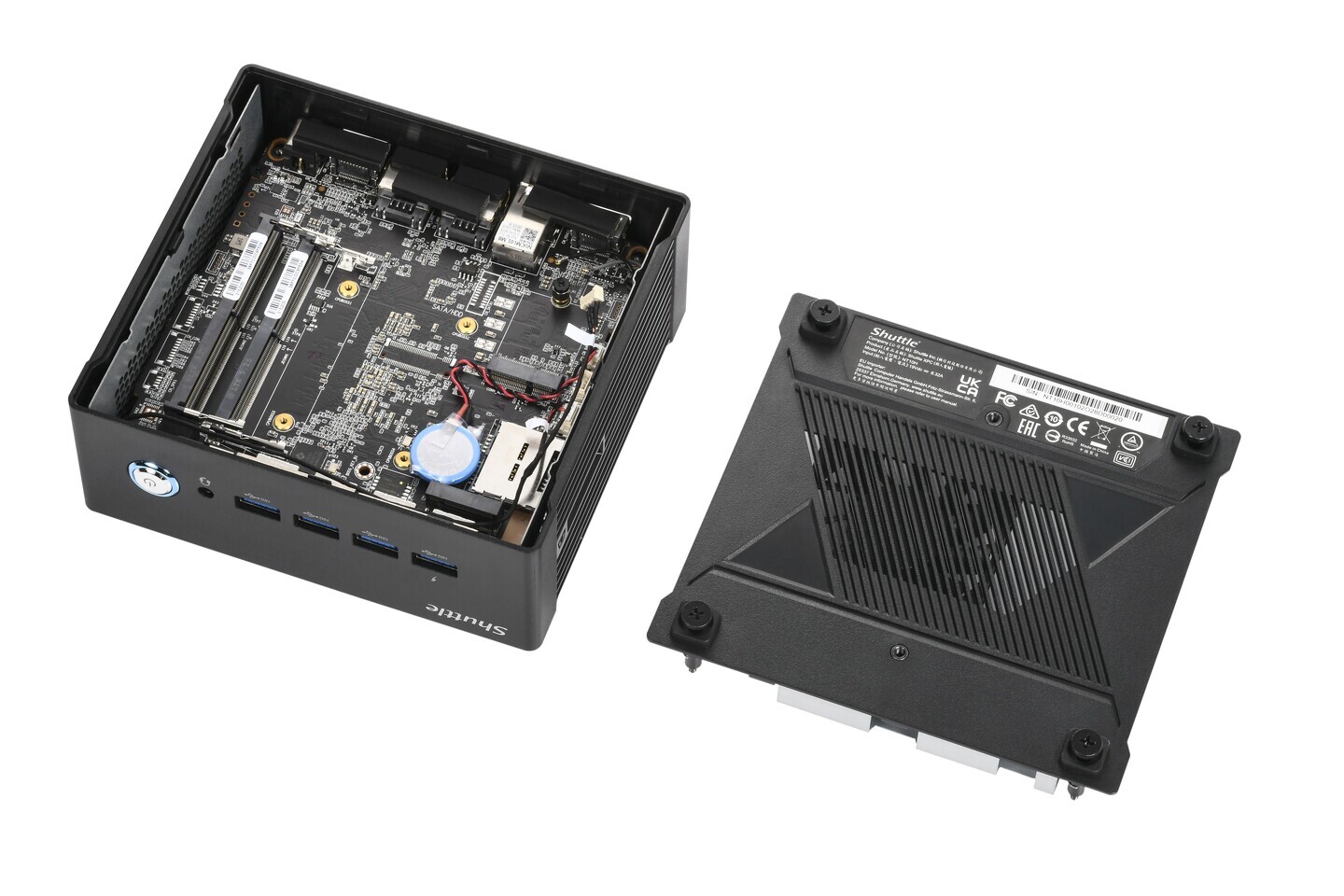
Shuttle Expanding AI-Accelerated XPC Nano Series With Intel-Based Model

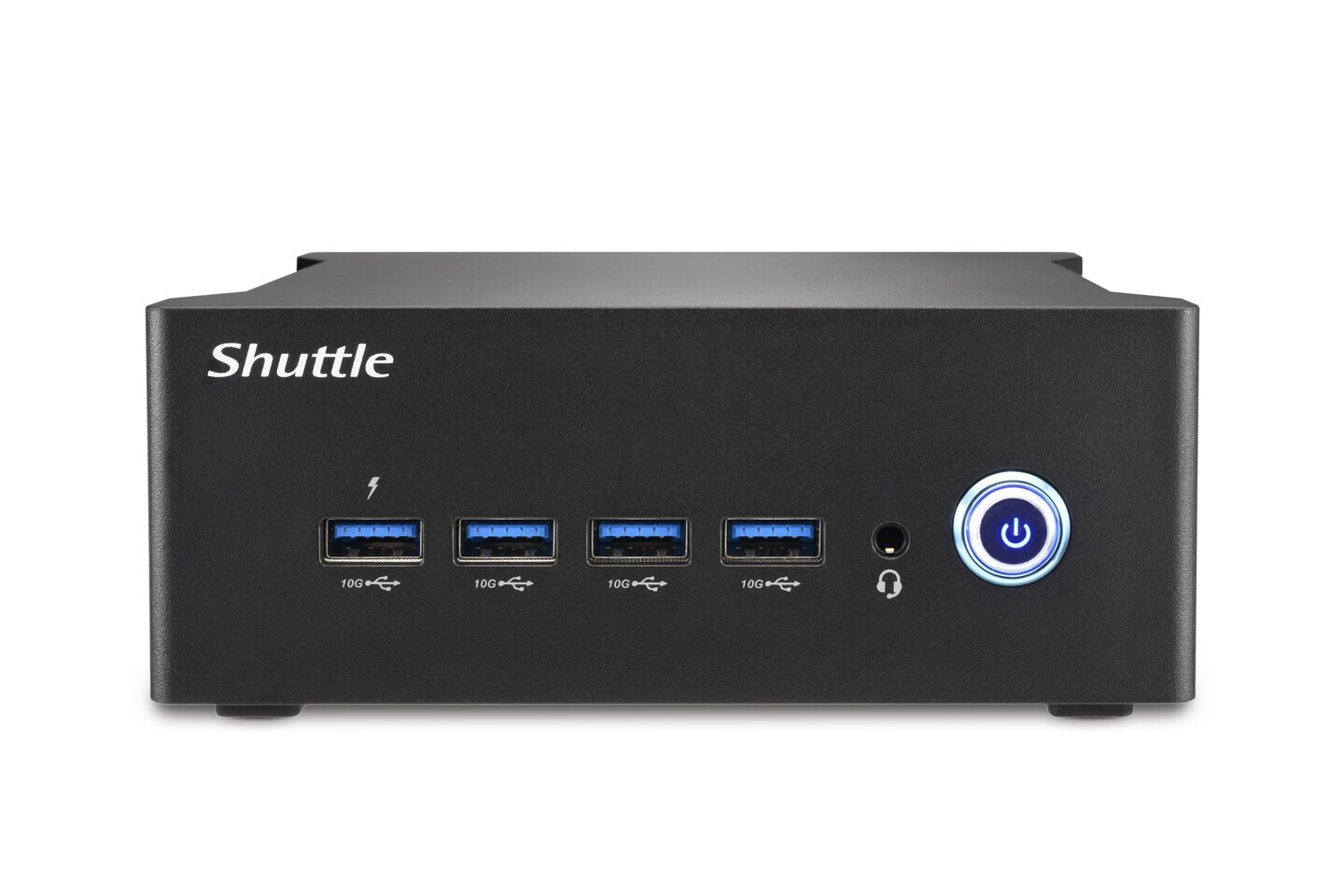
Following the successful launch of our AMD-powered AI-PC NA10H7, Shuttle is proud to announce the release of two new additions to our compact XPC nano family: NT10H5 and NT10H9. Designed in the same ultra-compact 1-liter chassis, both newcomers offer powerful AI-acceleration and multitasking capabilities - now based on Intel's cutting-edge Core Ultra processors.

Compact Yet Powerful: The New NT10H Series
The NT10H5 and NT10H9 mini-PCs carry the same DNA as the NA10H7, delivering high-performance computing in a nano-sized footprint (132 x 143 x 55 mm). They are equipped with Intel Core Ultra 5-125H and Intel Core Ultra 9-185H processors respectively, featuring integrated Intel Arc graphics and the dedicated Intel AI Boost NPU. These systems reach up to 34 TOPS of AI performance, making them ideal for machine learning, content creation, and real-time data processing in modern business or creative environments.
Return to Keyword Browsing
Nov 17th, 2026 14:17 CST change timezone

New Forum Posts

Popular Reviews

TPU on YouTube

Controversial News Posts