
News Posts matching #M4 Pro

Return to Keyword Browsing

Apple Increases Prices Amid Rising NAND Flash and DRAM Costs

Apple temporarily halted its online store today to implement a pricing update, bringing the store back online shortly after the changes were made. Even a leading consumer electronics company like Apple, known for having one of the best component supply chains in the world, couldn't ignore the impact of NAND Flash and DRAM price changes. As a result, the company has adjusted the prices of all products containing these components, reflecting an upward trend. Starting with its most affordable Mac option, the MacBook Neo, the price has increased from $599 to $699 for the base configuration. This pricing does not include the student discount, which has become more stringent. Apple now requires student verification for college students and other forms of verification for educational staff to access these discounts.

The average increase in today's price hike is $246.67. The most significant change is seen in the Mac Studio powered by the M3 Ultra SoC, which is now priced at $5,299, a $1,300 increase from its original $3,999 price. On the other end of the spectrum, the HomePod mini has experienced a $30 increase, going from $99 to $129. You can view the entire pricing update, compiled by MacRumors, below. Additionally, the 256 GB version of the Mac mini is back in stock, now priced at $799, up from its previous listing of $599. No price changes have been applied to any iPhone, Apple Watch, AirPods, Studio Display, and accessories.
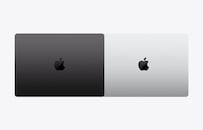
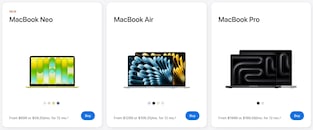
All price changes follow.

StarTech.com Launches Industry-First USB4 Dock with Driverless Dual Display for Mac, Windows, and Linux

StarTech.com, a global provider of performance connectivity solutions for IT professionals, announces the launch of its Driverless Dual 4K USB4 Universal Docking Station (208N-USB4-DOCK), an industry-first solution designed to deliver driverless dual-display support for MacBook users while enabling seamless compatibility across Windows and Linux laptops.

The new dock gives IT teams a single solution to standardize across their entire fleet. Native driverless compatibility removes the need for software installation, eliminating common deployment challenges and ensuring consistent performance across Mac, Windows, and Linux environments.

Apple Silicon Approaches AMD's Laptop Market Share Only Five Years In

According to data collected by Mercury Research and analyzed by Bernstein Research, Apple Silicon has made significant progress, achieving a laptop market share comparable to that of AMD, a long-time supplier in this sector. When Apple launched its first Arm-based custom M1 SoC, it transitioned away from Intel processors in favor of customized designs aimed at enhancing battery life and optimizing performance for macOS. This shift began in November 2020. Now, five years into the Apple Silicon ecosystem, the company has established a substantial laptop market share that rivals AMD.

According to these charts below, AMD's share in the laptop sector hovers just above 20%, at roughly 21-22%, with Apple slightly below the 20% mark, around 18-19%. This difference is fascinating as Apple has just entered year six of its custom silicon for MacBook laptops and Mac desktops, with no stopping in sight. Additionally, Intel's market share in the laptop sector has been steadily declining and now grabs the remaining 60%+ share, with fluctuations. For desktop segment, Apple also made an interesting market penetration as the company holds about 10% share in the sector which has typically been dominated by Intel and AMD. Any market share deducted from Intel is going directly to AMD in the desktop sector, as the charts show, meaning that the recent trend among consumers is again loud and clear that AMD is slowly becoming a more popular choice.

Snapdragon X2 Elite Extreme Benchmarks Highlight Impressive CPU Performance but Underwhelming GPU

Qualcomm recently unveiled the Snapdragon X2 Elite Extreme SoC as its latest foray into the world of Windows on Arm hardware. It claimed that the new processor would deliver up to 75% higher CPU performance and a 2.3 × improvement in performance per watt. Now, following the post-launch hype, independent benchmarks are starting to appear and show what Qualcomm didn't on-stage. The most recent set of benchmarks comes from ComputerBase, the German-language outlet known for its in-depth hardware testing, and it shows that Qualcomm's claims of CPU performance were surprisingly impressive. Although it also becomes clear why Qualcomm stuck to performance per watt instead of focusing too much on raw GPU performance.

According to the ComputerBase review, the Qualcomm Snapdragon X2 Elite Extreme was able to outperform Apple's best and brightest, the Apple M4 Pro, in both Cinebench 2024 and Geekbench 6.3 multicore benchmarks, scoring 1,964 and 23,693 points, respectively. Results are a little less consistent when it comes to single-core scores, with the Apple M4 Pro pulling ahead of the Snapdragon SoC by 7% in the Cinebench 2024 single-core test but falling behind the X2 Elite Extreme by 7% in Geekbench 6.5. NPU performance was also impressive, with the X2 Elite Extreme's 80 TOP NPU coming out undefeated, at 128% faster than the Intel Core Ultra 9 288V in the ASUS Zenbook S 14. Unfortunately, that seems to be where the good news for Qualcomm ends—mostly. When it comes to GPU tests, the Snapdragon X2 Elite Extreme remains well behind the Apple M4 Pro in both the 3DMark Steel Nomad Light Unlimited and 3DMark Solar Bay Unlimited tests, scoring 5,687 points and 22,946 points, respectively. While that puts the new Arm silicon a solid 37-40% ahead of the nearest competing iGPU, the Apple M4 10-Core, it is still 37-46% behind the Apple M4 Pro in GPU benchmarks. It remains to be seen how this translates to real-world gaming performance and actual CPU workloads, given the translation layer that Arm SoCs currently still rely on for many non-native Windows apps and games, but it's an impressive showing nonetheless.

Apple Mac mini Goes Retro: ColorWare Intros Custom Mac mini With $300 Premium

The M4 Mac Mini is quite certainly a delightful little computer. Powered by Apple's widely praised M4 SoC, the 0.8-liter mini PC punches well above its weight class in both CPU and GPU benchmarks. However, for those of us who are obsessed with retro tech but still desire modern-age performance, ColorWare has introduced a limited-edition Mac mini with a customized enclosure that looks straight of the 1970s, joining the extensive list of custom Apple products, including Apple Pencil and AirPods, that the company sells at a premium.

Unsuprisingly, the internals of the Mac mini remains unchanged. ColorWare has three versions on offer, ranging from the base M4 variant with 16 GB memory and 256 GB storage, all the way to the high-end M4 Pro-equipped variant, with 24 GB memory and twice the storage. The exterior, of course, is where all the customization takes place. The Mac mini Retro is available in two colorways: Retro Light, and Retro Dark. The latter is basically black, while the former utilizes a beige theme. The Apple logo at the top of the system has been replaced with Apple's colorful logo from the tech giant's early days in the 70s, and the sides have been customized to sport CNC-milled "vents" that mimic Macs from the era, such as the Apple II.

Apple's New MacBook Pro Features Powerful M4 Family of Chips and Ushers in a New Era With Apple Intelligence

Apple today unveiled the new MacBook Pro, powered by the M4 family of chips—M4, M4 Pro, and M4 Max—delivering much faster performance and enhanced capabilities. The new MacBook Pro is built for Apple Intelligence, the personal intelligence system that transforms how users work, communicate, and express themselves, while protecting their privacy. Now available in space black and silver finishes, the 14-inch MacBook Pro includes the blazing-fast performance of M4 and three Thunderbolt 4 ports, starting with 16 GB of memory, all at just $1,599. The 14- and 16-inch models with M4 Pro and M4 Max offer Thunderbolt 5 for faster transfer speeds and advanced connectivity. All models include a Liquid Retina XDR display that gets even better with an all-new nano-texture display option and up to 1000 nits of brightness for SDR content, an advanced 12MP Center Stage camera, along with up to 24 hours of battery life, the longest ever in a Mac. The new MacBook Pro is available to pre-order today, with availability beginning November 8.

Apple Introduces M4 Pro and M4 Max Processors

Apple today announced M4 Pro and M4 Max, two new chips that—along with M4—bring far more power-efficient performance and advanced capabilities to the Mac. All three chips are built using industry-leading, second-generation 3-nanometer technology, which improves performance and power efficiency. The CPUs across the M4 family feature the world's fastest CPU core, delivering the industry's best single-threaded performance, and dramatically faster multithreaded performance. The GPUs build on the breakthrough graphics architecture introduced in the previous generation, with faster cores and a 2x faster ray- racing engine. M4 Pro and M4 Max enable Thunderbolt 5 for the Mac for the first time, and unified memory bandwidth is greatly increased—up to 75 percent. Combined with a Neural Engine that's up to 2x faster than the previous generation and enhanced machine learning (ML) accelerators in the CPUs, the M4 family of chips brings incredible performance for pro and AI workloads. And they deliver blazing performance for Apple Intelligence, the personal intelligence system that transforms how users work, communicate, and express themselves, while protecting their privacy.
Return to Keyword Browsing
Nov 14th, 2026 19:15 CST change timezone

New Forum Posts

Popular Reviews

TPU on YouTube

Controversial News Posts