News Posts matching #NVIDIA

Return to Keyword Browsing

NVIDIA Announces Generative AI Models and NIM Microservices for OpenUSD Language, Geometry, Physics and Materials

NVIDIA today announced major advancements to Universal Scene Description, or OpenUSD, that will expand adoption of the universal 3D data interchange framework to robotics, industrial design and engineering, and accelerate developers' abilities to build highly accurate virtual worlds for the next evolution of AI.

Through new OpenUSD-based generative AI and NVIDIA-accelerated development frameworks built on the NVIDIA Omniverse platform, more industries can now develop applications for visualizing industrial design and engineering projects, and for simulating environments to build the next wave of physical AI and robots.

NVIDIA Accelerates Humanoid Robotics Development

To accelerate humanoid development on a global scale, NVIDIA today announced it is providing the world's leading robot manufacturers, AI model developers and software makers with a suite of services, models and computing platforms to develop, train and build the next generation of humanoid robotics.

Among the offerings are new NVIDIA NIM microservices and frameworks for robot simulation and learning, the NVIDIA OSMO orchestration service for running multi-stage robotics workloads, and an AI- and simulation-enabled teleoperation workflow that allows developers to train robots using small amounts of human demonstration data.

Maingear Intros New 17-inch ML-17 Gaming Laptops with Desktop-like Performance

MAINGEAR, the leader in premium-quality, high-performance gaming PCs, today unveiled its all-new 17-inch ML-17 gaming laptop developed in collaboration with CLEVO. Engineered for gamers who want a larger screen without compromising on power or portability, the ML-17 brings it all with the 14th Gen Intel Core i9-14900HX mobile processor, Thunderbolt 5 technology, NVIDIA GeForce RTX 4090 mobile GPU, and Wi-Fi 7.

"Continuing our partnership with CLEVO and Intel, our new collaboratively-developed 17-inch ML-17 gaming laptop raises the bar on what gaming laptops should be capable of delivering in terms of performance and overall value," said Wallace Santos, CEO at MAINGEAR. "Packed full of the latest, high-performance components, including the most powerful CPUs and GPUs available on the market, as well as premium specs like Thunderbolt 5 and Wi-Fi 7, this laptop delivers a top-tier gaming experience that parallels the kind of high-performance desktop-like gameplay that gamers demand, all in a backpackable form factor."

Samsung's HBM3 Chips Approved by NVIDIA for Limited Use

Samsung Electronics' latest high bandwidth memory (HBM) chips have reportedly passed NVIDIA's suitability tests, according to Reuters. This development comes two months after initial reports suggested the chips had failed due to heat and power consumption issues. Despite this approval, NVIDIA plans to use Samsung's memory chips only in its H20 GPUs, a less advanced version of the H100 processors designed for the Chinese market to comply with US export restrictions.

The future of Samsung's HBM3 chips in NVIDIA's other GPU models remains uncertain, with potential additional testing required. Reuters also reported that Samsung's upcoming fifth-generation HBM3E chips are still undergoing NVIDIA's evaluation process. When approached for comment, neither company responded to Reuters. It's worth noting that Samsung previously denied the initial claims of chip failure.

NVIDIA Plans RTX 3050 A with Ada Lovelace AD106 Silicon

NVIDIA may be working on a new RTX 3050 A laptop GPU using an AD106 (Ada Lovelace) die, moving away from the Ampere chips used in other RTX 30-series GPUs. While not officially announced, the GPU is included in NVIDIA's latest driver release and the PCI ID database as GeForce RTX 3050 A Laptop GPU. The AD106 die choice is notable, as it has more transistors and CUDA cores than the GA107 in current RTX 3050s and the AD107 in RTX 4050 laptops. The AD106, used in RTX 4060 Ti desktop and RTX 4070 laptop GPUs, boasts 22.9 billion transistors and 4,608 CUDA cores, compared to GA107's 8.7 billion transistors and 2,560 CUDA cores, and AD107's 18.9 billion transistors and 3,072 CUDA cores.

While this could potentially improve performance, it's likely that NVIDIA will use a cut-down version of the AD106 chip for the RTX 3050 A. The exact specifications and features, such as support for DLSS 3, remain unknown. The use of TSMC's 4N node in AD106, instead of Samsung's 8N node used in Ampere, could potentially improve power efficiency and battery life. The performance of the RTX 3050 A compared to existing RTX 3050 and RTX 4050 laptops remains to be seen, however, the RTX 3050 A will likely perform similarly to existing Ampere-based parts as NVIDIA tends to use similar names for comparable performance levels. It's unclear if NVIDIA will bring this GPU to market, but adding new SKUs late in a product's lifespan isn't unprecedented.

NVIDIA GeForce NOW Gets Elder Scrolls V: Skyrim Special Edition and More Games

It's the summer of Elder Scrolls - whether a seasoned Dragonborn or a new adventurer, dive into the legendary world of Tamriel this GFN Thursday as The Elder Scrolls V: Skyrim Special Edition joins the cloud. Epic adventures await, along with nine new games joining the GeForce NOW library this week. Plus make sure to catch the GeForce NOW Summer Sale for 50% off new Ultimate and Priority memberships.

Unleash the Dragonborn
Experience the legendary adventures, breathtaking landscapes and immersive storytelling of the iconic role-playing game The Elder Scrolls V: Skyrim Special Edition from Bethesda Game Studios - now accessible on any device from the cloud. Become the Dragonborn and defeat Alduin the World-Eater, a dragon prophesied to destroy the world. Explore a vast landscape, complete quests and improve skills to develop characters in the open world of Skyrim. The Special Edition includes add-ons with all-new features, including remastered art and effects. It also brings the adventure of Bethesda Game Studios creations, including new quests, environments, characters, dialogue, armor and weapons.

NVIDIA DLSS 3 Comes to Marvel Rivals Closed Beta and Kunitsu-Gami: Path of the Goddess

More than 500 games and applications feature RTX technologies, and each week new games integrating NVIDIA DLSS, NVIDIA Reflex and advanced ray-traced effects are released or announced, delivering the definitive PC experience for GeForce RTX players. Starting today, Marvel Rivals Closed Beta is available with DLSS 3 and Reflex support. Plus, Kunitsu-Gami: Path of the Goddess recently launched with DLSS 3. FINAL FANTASY XIV Online: Dawntrail, F1 Manager 2024, and Dark and Darker are available now with DLSS 2, Trepang 2 Bladekisser DLC launches July 25 with DLSS 2, and the newly announced open-world RPG Neverness to Everness will launch with DLSS and ray tracing. Learn more about each game below.

Kunitsu-Gami: Path of the Goddess Available Now With DLSS 3, Ray Tracing & Reflex
In Capcom's unique, Japanese-inspired, visually captivating Kunitsu-Gami: Path of the Goddess, players will play as protagonist Soh, making sharp strategic decisions and use of skillful dancing sword skills, while working with rescued villagers and the Maiden Yoshiro to overcome the challenges ahead. During the day, explore the village and purge demonic defilement by rescuing villagers and wisely assigning them roles and positions to help attack the evil Seethe at night. During the night, the villagers will fight alongside Soh to protect Yoshiro from the swarm of Seethe. In this intense action-strategy game, face the formidable Festering Seethe, purge the village's defilement, and return peace to the mountain.

ASUS Announces All-New Server-Grade Hardware Powered by AMD EPYC 4004

ASUS today announced an all-new range of servers, workstations and motherboards driven by the power of AMD EPYC 4004 CPUs - heralding next-level performance and density. The new offerings include: ASUS Pro ER100A B6, a compact, 1U rack server. ASUS ExpertCenter Pro ET500A B6, a power-efficient Zen 4 workstation, ASUS Pro WS 665-ACE, a resilient ATX workstation motherboard; and ASUS Pro WS 600M-CL, a compact, chipset-less mATX motherboard for workstation applications.

Engineered specifically for the dynamic needs of small businesses and hosted IT service providers, these business-grade platforms empower high-performance computing in diverse forms, from ready-to-roll workstations to powerful motherboards. Ideal for a variety of applications, from cloud services to dedicated hosting or content delivery, ASUS equipment with AMD EPYC 4004-series processors ensure that that evolving business operations are powered by the performance the modern world demands - and backed by the ASUS expertise enterprise expects.

NVIDIA GeForce "Blackwell" Won't Arrive Before January 2025?

It appears like 2024 will go down as the second consecutive year without any new GPU generation launch from either NVIDIA or AMD. Kopite7kimi, a reliable source with NVIDIA leaks, says that the GeForce RTX 50-series "Blackwell" generation won't see a debut before the 2025 International CES (January 2025). It was earlier expected that the company would launch at least its top two SKUs—the RTX 5090 and RTX 5080—toward the end of 2024, and ramp the series up from 2025. There is no explanation behind this "delay." Like everyone else, NVIDIA could be rationing its foundry allocation of the 3 nm wafers from TSMC for its high-margin "Blackwell" AI GPUs. The company now makes over five times the revenue from selling AI GPUs than it does from gaming GPUs, so this development should come as little surprise.

Things aren't any different with NVIDIA's rivals in this space, AMD and Intel. AMD's RDNA 4 graphics architecture and the Radeon RX series GPUs based on it, aren't expected to arrive before 2025. AMD is making several architectural upgrades with RDNA 4, particularly to its ray tracing hardware; and the company is expected to build these GPUs on a new foundry node. Meanwhile, Intel's Arc B-series gaming GPUs based on the Xe2 "Battlemage" graphics architecture are expected to arrive in 2025, too, although these chips are rumored to be based on a more mature 4 nm-class foundry node.

NVIDIA GeForce NOW Gets 50% Off on Priority and Ultimate Membership and More Games

It's time for a sweet treat - the GeForce NOW Summer Sale offers high-performance cloud gaming at half off for a limited time.And starting today, gamers can directly access supported PC games on GeForce NOW via Xbox.com game pages, enabling them to get into their favorite Xbox PC games even faster. It all comes with nine new games joining the cloud this week.

We Halve a Deal
Take advantage of a special new discount - one-month and six-month GeForce NOW Priority or Ultimate memberships are now 50% off until Aug. 18. It's perfect for members wanting to level up their gaming experience or those looking to try GeForce NOW for the first time to access and stream an ever-growing library of over 1,900 games with top-notch performance. Priority members enjoy more benefits over free users, including faster access to gaming servers and gaming sessions of up to six hours. They can also stream beautifully ray-traced graphics across multiple devices with RTX ON for the most immersive experience in supported games.

NVIDIA Shifts Gears: Open-Source Linux GPU Drivers Take Center Stage

Just a few months after hiring Ben Skeggs, a lead maintainer of the open-source NVIDIA GPU driver for Linux kernel, NVIDIA has announced a complete transition to open-source GPU kernel modules in its upcoming R560 driver release for Linux. This decision comes two years after the company's initial foray into open-source territory with the R515 driver in May 2022. The tech giant began focusing on data center compute GPUs, while GeForce and Workstation GPU support remained in the alpha stages. Now, after extensive development and optimization, NVIDIA reports that its open-source modules have achieved performance parity with, and in some cases surpassed, their closed-source counterparts. This transition brings a host of new capabilities, including heterogeneous memory management support, confidential computing features, and compatibility with NVIDIA's Grace platform's coherent memory architectures.

The move to open-source is expected to foster greater collaboration within the Linux ecosystem and potentially lead to faster bug fixes and feature improvements. However, not all GPUs will be compatible with the new open-source modules. While cutting-edge platforms like NVIDIA Grace Hopper and Blackwell will require open-source drivers, older GPUs from the Maxwell, Pascal, or Volta architectures must stick with proprietary drivers. NVIDIA has developed a detection helper script to guide driver selection for users who are unsure about compatibility. The shift also brings changes to NVIDIA's installation processes. The default driver version for most installation methods will now be the open-source variant. This affects package managers with the CUDA meta package, run file installations and even Windows Subsystem for Linux.

Gigabyte AI TOP Utility Reinventing Your Local AI Fine-tuning

GIGABYTE TECHNOLOGY Co. Ltd, a leading manufacturer of motherboards, graphics cards, and hardware solutions, released the GIGABYTE exclusive groundbreaking AI TOP Utility. With reinvented workflows, user-friendly interface, and real-time progress monitoring, AI TOP Utility provides a reinventing touch of local AI model training and fine-tuning. It features a variety of groundbreaking technologies that can be easily adapted by beginners or experts, for most common open-source LLMs, in anyplace even on your desk.

GIGABYTE AI TOP is the all-round solution for local AI Model Fine-tuning. Running local AI training and fine-tuning on sensitive data can relatively provide greater privacy and security with maximum flexibility and real-time adjustment. Collocating with GIGABYTE AI TOP hardware and AI TOP Utility, the common constraints of GPU VRAM insufficiency when trying to execute AI fine-tuning locally can be addressed. By GIGABYTE AI TOP series motherboard, PSU, and SSD, as well as GIGABYTE graphics cards lineup covering NVIDIA GeForce RTX 40 Series, AMD Radeon RX 7900 Series, Radeon Pro W7900 and W7800 series, the size of open-source LLM fine-tuning can now reach up to 236B and more.

Global AI Server Demand Surge Expected to Drive 2024 Market Value to US$187 Billion; Represents 65% of Server Market

TrendForce's latest industry report on AI servers reveals that high demand for advanced AI servers from major CSPs and brand clients is expected to continue in 2024. Meanwhile, TSMC, SK hynix, Samsung, and Micron's gradual production expansion has significantly eased shortages in 2Q24. Consequently, the lead time for NVIDIA's flagship H100 solution has decreased from the previous 40-50 weeks to less than 16 weeks.

TrendForce estimates that AI server shipments in the second quarter will increase by nearly 20% QoQ, and has revised the annual shipment forecast up to 1.67 million units—marking a 41.5% YoY growth.

Qualcomm Snapdragon X "Copilot+" AI PCs Only Accounted for 0.3% of PassMark Benchmark Runs

The much-anticipated revolution in AI-powered personal computing seems to be off to a slower start than expected. Qualcomm's Snapdragon X CPUs, touted as game-changers in the AI PC market, have struggled to gain significant traction since their launch. Recent data from PassMark, a popular benchmarking software, reveals that Snapdragon X CPUs account for a mere 0.3% of submissions in the past 30 days. This is a massive contrast to the 99.7% share held by traditional x86 processors from Intel and AMD, which raises questions about the immediate future of ARM-based PCs. The underwhelming adoption comes despite bold predictions from industry leaders. Qualcomm CEO Cristiano Amon had projected that ARM-based CPUs could capture up to 50% of the Windows PC market by 2029. Similarly, ARM's CEO anticipated a shift away from x86's long-standing dominance.

However, it turns out that these PCs are primarily bought for the battery life, not their AI capabilities. Of course, it's premature to declare Arm's Windows venture a failure. The AI PC market is still in its infancy, and upcoming mid-tier laptops featuring Snapdragon X Elite CPUs could boost adoption rates. A lot of time still needs to pass before the volume of these PCs reaches millions of units shipped by x86 makers. The true test will come with the launch of AMD's Ryzen AI 300 and Intel's Lunar Lake CPUs, providing a clearer picture of how ARM-based options compare in AI performance. As the AI PC landscape evolves, Qualcomm faces mounting pressure. NVIDIA's anticipated entry into the market and significant performance improvements in next-generation x86 processors from Intel and AMD pose a massive challenge. The coming months will be crucial in determining whether Snapdragon X CPUs can live up to their initial hype and carve out a significant place in the AI PC ecosystem.

NVIDIA DLSS 3 and Reflex Available In Dungeonborne, Flintlock: The Siege of Dawn and More Games

More than 500 games and applications feature RTX technologies, and each week new games integrating NVIDIA DLSS, NVIDIA Reflex and advanced ray-traced effects are released or announced, delivering the definitive PC experience for GeForce RTX players. This week, Dungeonborne and Flintlock: The Siege of Dawn will launch with day-one DLSS 3 and Reflex support. And gamers can sign up for the Marvel Rivals Closed Beta, which begins next week and features support for both DLSS 3 and Reflex. THRONE AND LIBERTY also has an Open Beta starting this week featuring DLSS 3 and Reflex, and Stormgate is coming soon with DLSS 3 and Reflex.

Stormgate Coming Soon With DLSS 3 & Reflex
Stormgate is the upcoming free-to-play real-time strategy game from the team at Frost Giant Studios, featuring developers who've worked on some of gaming's most popular RTS games, including Warcraft III and StarCraft II. In Stormgate, you'll explore an ever-evolving story through thrilling campaign missions where science fiction and fantasy collide. Alternatively, battle opponents around the world on the competitive 1v1 ladder, or team up with your friends to challenge the AI in the 3-player co-op modes. Developed in Unreal Engine 5, Stormgate sets itself apart from past RTS games with unmatched responsiveness and features rollback technology for smooth online play. Stormgate supports high-resolution HD visuals at 4K, with hundreds of units on-screen in epic, large-scale wars across a variety of maps and tilesets.

Simply NUC Introduces Scorpion Canyon NUC 14 Performance

Simply NUC, Inc., a leading custom computing company, proudly announced the launch of the Scorpion Canyon NUC 14 Performance device across their global websites, a revolutionary PC workstation designed to meet diverse computing needs. Featuring the latest Intel Core Ultra "Meteor Lake" CPUs, Intel Arc integrated graphics, and optional NVIDIA RTX 4060 or 4070 graphics, the NUC 14 Performance redefines computing in a compact form factor.

"Introducing the NUC 14 Performance is a significant milestone for us," said Aaron Rowsell, Founder & President of Simply NUC. "This product family ushers in advanced AI capabilities and top-tier graphics in computing power. With unmatched performance, AI-readiness, and a sleek tool-less design, the NUC 14 Performance sets a new standard for compact workstations."

NVIDIA Releases GeForce 560.70 WHQL Game Ready Drivers

NVIDIA today released the latest version of its GeForce software. Version 560.70 WHQL comes Game Ready for Dungeonborne, Flintlock: The Siege of Dawn, and Stormgate. Besides performance optimization, the driver enables support for DLSS 3 Frame Generation and Reflex for the three games. The drivers add G-SYNC compatibility for 14 new monitor models. The driver also adds support for CUDA 12.6. This release doesn't fix any gaming related bugs but addresses a few with popular content creation apps.

A bug that causes NVENC to ignore quality and bitrate settings for 10-bit encoding, has been fixed. Scaling 10-bit HEVC or AV1 content down below 50% in viewport shows display corruption, which has been fixed. A bug that causes Unity Engine to throw up artifacts when rendering overlapped geometry on an anti-aliased framebuffer, has been fixed. Visual corruption noticed in Source and Program Monitor Previews of Adobe Premiere has been fixed.

DOWNLOAD: NVIDIA GeForce 560.70 WHQL

ASUS Announces NUC 14 Performance With Core Ultra 9 or Ultra 7 processors and GeForce RTX 4070 and RTX 4060 Discrete Graphics

ASUS today announced ASUS NUC 14 Performance, a business-friendly barebones mini PC that offers a dynamic fusion of efficiency and raw power. Featuring Intel Core Ultra 9 or 7 processors and NVIDIA GeForce RTX 4070 or 4060 graphics, ASUS NUC 14 Performance delivers the computing prowess enterprises need for AI-based workloads.

New AI-enabled performance
The latest Intel Core 9 and 7 series CPUs employ new Intel processor technology that enhances computing performance by approximately 21.5% (versus previous-generation processors) while reducing power consumption by up to 40%. An integrated Neural Processing Unit (NPU) helps boost AI applications, giving the processor exceptional energy-efficiency and endurance for sustained AI computing tasks like image generation and facial recognition.

NVIDIA GeForce RTX 50 Series "Blackwell" TDPs Leaked, All Powered by 16-Pin Connector

In the preparation season for NVIDIA's upcoming GeForce RTX 50 Series of GPUs, codenamed "Blackwell," one power supply manufacturer accidentally leaked the power configurations of all SKUs. Seasonic operates its power supply wattage calculator, allowing users to configure their systems online and get power supply recommendations. This means that the system often gets filled with CPU/GPU SKUs to accommodate the massive variety of components. This time we have the upcoming GeForce RTX 50 series, with RTX 5050 all the way up to the top RTX 5090 GPU. Starting with the GeForce RTX 5050, this SKU is expected to carry a 100 W TDP. Its bigger brother, the RTX 5060, bumps the TDP to 170 W, 55 W higher than the previous generation "Ada Lovelace" RTX 4060.

The GeForce RTX 5070, with a 220 W TDP, is in the middle of the stack, featuring a 20 W increase over the Ada generation. For higher-end SKUs, NVIDIA prepared the GeForce RTX 5080 and RTX 5090, with 350 W and 500 W TDP, respectively. This also represents a jump in TDP from Ada generation with an increase of 30 W for RTX 5080 and 50 W for RTX 5090. Interestingly, this time NVIDIA wants to unify the power connection system of the entire family with a 16-pin 12V-2x6 connector but with an updated PCIe 6.0 CEM specification. The increase in power requirements for the "Blackwell" generation across the SKUs is interesting, and we are eager to see if the performance gains are enough to balance efficiency.

2.1 Billion Pixels in Las Vegas Sphere are Powered by 150 NVIDIA RTX A6000 GPUs

The city of Las Vegas late last year added another attraction to its town: the Sphere. The Sphere is a 1.2 million pixel outdoor display venue famous for its massive size and inner 18,600-seat auditorium. The auditorium space is a feat of its own with features like a 16x16 resolution wraparound interior LED screen, speakers with beamforming and wave field synthesis technologies, and 4D physical effects. However, we have recently found out that NVIDIA GPUs power the Sphere. And not only a handful of them, as 150 NVIDIA RTX A6000 power the Sphere and its 1.2 million outside pixels spread on 54,000 m², as well as 16 of 16K inner displays with a total output of 2.1 billion pixels. Interestingly, the 150 NVIDIA RTX A6000 have a combined output cable number of 600 DisplayPort 1.4a ports.

With each card having 48 GB of memory, that equals to 7.2 TB of GDDR6 ECC memory in the total system. With the Sphere being a $2.3 billion project, it is expected to have an infotainment system capable of driving the massive venue. And it certainly delivers on that. Only a handful of cards powers most massive media projects, but this scale is something we see for the first time in non-AI processing systems. The only scale we are used to today is massive thousand-GPU clusters used for AI processing, so seeing a different and interesting application is refreshing.

NVIDIA GeForce NOW Gets Three New Games This Week

Unlock new experiences every GFN Thursday. Whether post-apocalyptic survival adventures, narrative-driven games or vast, open worlds, GeForce NOW always has something fresh for members to explore. This week, GeForce NOW brings the survival game Once Human from Starry Studio to the cloud, part of three new titles.

Survive the Stardust
Step into a post-apocalyptic world where cosmic energy has transformed humanity in Once Human. As a Meta-Human, survive the contamination and use the powers of Stardust to navigate a new and bizarre open-world universe. Experience elements of survival, crafting and combat while challenging players to gather resources, build shelters and fend off human and monstrous threats. Uncover the rich lore through interactions with various characters and artifacts scattered throughout the world. Delve into the truth of Stardust - discover where it came from and what it wants. Play alone or grab a squad to fight, build and explore together. Level up with an Ultimate or Priority membership to stream across devices at higher resolutions and frame rates over free members. Gaming sessions are up to six hours for Priority members and eight hours for Ultimate members, plenty of time to unravel the cosmic mysteries of Once Human.

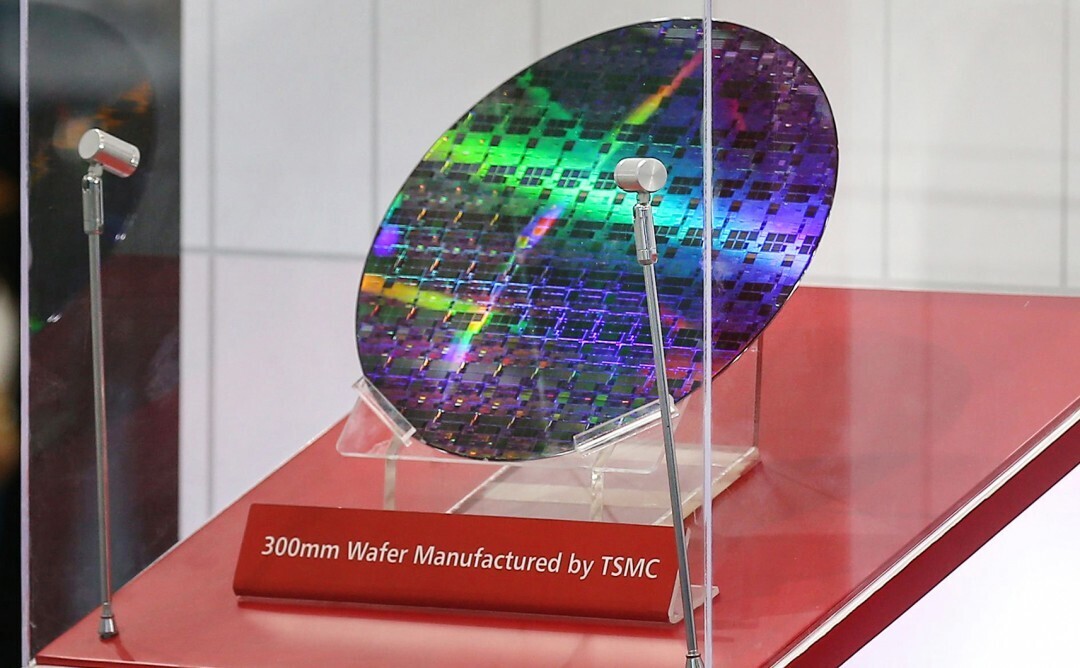
TSMC to Raise Wafer Prices by 10% in 2025, Customers Seemingly Agree

Taiwanese semiconductor giant TSMC is reportedly planning to increase its wafer prices by up to 10% in 2025, according to a Morgan Stanley note cited by investor Eric Jhonsa. The move comes as demand for cutting-edge processors in smartphones, PCs, AI accelerators, and HPC continues to surge. Industry insiders reveal that TSMC's state-of-the-art 4 nm and 5 nm nodes, used for AI and HPC customers such as AMD, NVIDIA, and Intel, could see up to 10% price hikes. This increase would push the cost of 4 nm-class wafers from $18,000 to approximately $20,000, representing a significant 25% rise since early 2021 for some clients and an 11% rise from the last price hike. Talks about price hikes with major smartphone manufacturers like Apple have proven challenging, but there are indications that modest price increases are being accepted across the industry. Morgan Stanley analysts project a 4% average selling price increase for 3 nm wafers in 2025, which are currently priced at $20,000 or more per wafer.

Mature nodes like 16 nm are unlikely to see price increases due to sufficient capacity. However, TSMC is signaling potential shortages in leading-edge capacity to encourage customers to secure their allocations. Adding to the industry's challenges, advanced chip-on-wafer-on-substrate (CoWoS) packaging prices are expected to rise by 20% over the next two years, following previous increases in 2022 and 2023. TSMC aims to boost its gross margin to 53-54% by 2025, anticipating that customers will absorb these additional costs. The impact of these price hikes on end-user products remains uncertain. Competing foundries like Intel and Samsung may seize this opportunity to offer more competitive pricing, potentially prompting some chip designers to consider alternative manufacturing options. Additionally, TSMC's customers could reportedly be unable to secure their capacity allocation without "appreciating TSMC's value."

NVIDIA DLSS 3 Coming to Wuthering Waves and Black Myth: Wukong

More than 500 games and applications feature RTX technologies, and many new games integrating NVIDIA DLSS, NVIDIA Reflex and advanced ray-traced effects are released or announced each month, delivering the definitive PC experience for GeForce RTX players. Today, we can confirm that Wuthering Waves will be upgrading to DLSS 3 later this year, multiplying performance for GeForce RTX gamers. And our new Black Myth: Wukong GeForce RTX 40 Series bundle is available now ahead of the eagerly anticipated game's August 20th release. Also, Bears In Space and The Black Pool recently launched with DLSS 3, adding to our ever-growing catalog of RTX games and applications.

Wuthering Waves DLSS 3 Update Coming Soon
Desolated by the Lament, civilization is born anew in KURO GAMES' open world game Wuthering Waves. As the world of Solaris-3 unfolds, your lost memory begins to see its recovery through a ceaseless quest in the game's expansive world. Engage in fast-paced combat, enlist companions to aid your journey, and discover the secrets that await in this highly anticipated title.

NVIDIA to Bundle Black Myth: Wukong with Select RTX 40-series Graphics Cards

NVIDIA today launched the "Fulfill Your Destiny" game bundle. The company, along with its board partners, are bundling "Black Myth: Wukong," the fantasy action RPG that's setting the Summer PC gaming scene on fire. Almost the entire GeForce RTX 40-series "Ada" is eligible for the game bundle, with the exception of the RTX 4060 Ti and RTX 4060. So, this should include the RTX 4090, RTX 4080 SUPER, RTX 4080, RTX 4070 Ti SUPER, RTX 4070 Ti, RTX 4070 SUPER, and RTX 4070. The bundle is open worldwide, through participating retailers, and covers eligible graphics cards purchased after July 9, 2024. Black Myth: Wukong is powered by Unreal Engine 5, and its developers are implementing NVIDIA technologies such as DLSS 3.5 ray reconstruction.

Moore Threads MTLink Scales Up to 10,000 Home-Grown GPUs in AI Cluster

Chinese GPU manufacturer Moore Threads has announced a significant upgrade to its KUAE data center server. The company now has the ability to connect up to 10,000 GPUs in a single cluster, marking a huge leap in its scale-out capabilities for artificial intelligence and high-performance computing applications. The enhanced KUAE server incorporates eight MTT S4000 GPUs, leveraging Moore Threads' proprietary MTLink interconnect technology. These GPUs, based on the MUSA architecture, each feature 128 tensor cores and 48 GB of GDDR6 memory, delivering a bandwidth of 768 GB/s. While the full performance metrics of a 10,000-GPU cluster remain undisclosed, the sheer scale of 1,280,000 tensor cores suggests decent computing potential. Moore Threads' GPUs currently lag behind NVIDIA's GPU offerings in terms of performance. However, the company claims its MTT S4000 remains competitive against certain NVIDIA models, particularly in large language model training and inference tasks.

The Chinese company is facing significant challenges due to its inclusion on the U.S. Department of Commerce's Entity List, restricting access to advanced manufacturing processes. Despite these obstacles, the firm has secured partnerships with major Chinese state-run telecom operators and technology companies, focusing on developing new computing cluster projects. A recent financing round raised approximately $343.7 million will help Moore Threads' ambitious expansion plans. However, limited access to cutting-edge semiconductor fabrication technologies may constrain the company's future growth. Nonetheless, creating a scale-out server infrastructure with up to 10,000 GPUs is vital for LLM training and inference, especially as Chinese AI labs catch up to Western labs in terms of the performance of their AI models.
Return to Keyword Browsing
Nov 27th, 2026 19:31 CST change timezone

New Forum Posts

Popular Reviews

TPU on YouTube

Controversial News Posts