News Posts matching #NVIDIA

Return to Keyword Browsing

NVIDIA DLSS Coming to More Games, Including Dragon Age: The Veilguard and Avowed

In December we celebrated the release of over 500 RTX-enhanced games and apps. And now, we've already surpassed 600 RTX games and apps, as adoption of NVIDIA DLSS, NVIDIA Reflex and advanced ray-traced effects continues to accelerate! RTX encompasses an ecosystem of technologies that make high-performance, high fidelity gaming a reality. Ray Tracing, powered by dedicated RT Cores, brings immersive and realistic lighting and reflections to games. NVIDIA DLSS, made possible by Tensor Cores, enables industry-leading AI graphics acceleration, capable of delivering up to 5 times faster performance in the most immersive games, like Alan Wake 2, Black Myth: Wukong, Cyberpunk 2077, and Star Wars Outlaws.

RTX is also integrated in the world's leading creative applications, accelerating workflows by orders of magnitude, powering exciting AI tools and enhancements, and enabling real-time ray-traced previews in apps that previously took hours to render even a single frame. And the RTX momentum continues - at Gamescom 2024, we're announcing 20 new RTX and DLSS integrations.

NVIDIA Announces Star Wars Outlaws GeForce RTX 40 Series Bundle

Take on high-risk, high-reward missions as the galaxy's most wanted in Star Wars Outlaws and marvel at iconic ray-traced Star Wars locations, enhanced with NVIDIA DLSS 3.5's AI-powered graphics, using the power of the GeForce RTX 40 Series to deliver an unparalleled PC experience. And gain the upper hand in thrilling dogfights with The Empire thanks to NVIDIA Reflex and its unbeatable responsiveness. As the Galactic Empire relentlessly pursues the final defeat of the Rebel Alliance, the criminal underworld thrives. Fans will play as cunning scoundrel Kay Vess and her loyal companion Nix, as they attempt one of the greatest heists the Outer Rim has ever seen. Seeking the means to start a new life, players will join Kay and Nix as they fight, steal, and outwit their way through the galaxy's crime syndicates and join the galaxy's most wanted.

As part of our collaboration with Ubisoft, Massive Entertainment and Lucasfilm Games on Star Wars Outlaws, we're today introducing a new Star Wars Outlaws GeForce RTX 40 Series Bundle, available until September 19th. Buyers of eligible products from select retailers and etailers, including GeForce RTX 4090, 4080 SUPER, 4080, 4070 Ti SUPER, 4070 Ti, 4070 SUPER and 4070 graphics cards and desktop PCs, and laptops with a GeForce RTX 4090 Laptop GPU, RTX 4080 Laptop GPU, or RTX 4070 Laptop GPU, will receive a digital copy of the Standard Edition (valued at $69.99) to play when released on August 30th.

NVIDIA GeForce 560.94 Game Ready Drivers Released for Black Myth Wukong

NVIDIA today released the latest version of its GeForce Game Ready drivers. These come just in time for today's earth-shattering new AAA game release, "Black Myth: Wukong." Over 2 million players are already at it. Besides this, the driver also includes optimization for "Star Wars Outlaws," "Final Fantasy XVI," "Concord," and "Warhammer 40000: Space Marine 2." The patch also fixes an issue that breaks Octane Benchmark. Grab the drivers and head to ancient China!

DOWNLOAD: NVIDIA GeForce 560.94 WHQL

NVIDIA GeForce NOW Gets More Games, Including Psychonauts Series

Time to be wowed: GeForce NOW members can now stream World of Warcraft on supported devices with in-game mods powered by the CurseForge platform for WoW customization. With support for top mods, even the most hardcore raid leaders can play like a hero, thanks to the cloud. Embark on a new adventure in Azeroth when the upcoming World of Warcraft expansion, The War Within, launches on Monday, Aug. 26, at 3 p.m. PT. GeForce NOW members who purchase the Epic Edition of The War Within will get early streaming access on Thursday, Aug. 22, at 3 p.m. PT. And check out the five new games available in the ever-expanding GeForce NOW library this week, including the Psychonauts series from Double Fine Productions. For those looking to upgrade their play or try out GeForce NOW for the first time, the Summer Sale is offering new one- and six-month Ultimate and Priority memberships at 50% off through this Sunday, Aug. 18.

Play Your Way
Return to World of Warcraft in style across supported devices with GeForce NOW and support for top CurseForge Addons. One of the most popular platforms for WoW Addons, CurseForge includes user interface customization, combat Addons, action bars, quest helpers and many more categories. GeForce NOW has collaborated with CurseForge to include over 25 of the top Addons from its platform, available to Ultimate and Priority members - including Day Pass users - to seamlessly customize their WoW experience. The Addons are just as easy to implement as they would be while playing locally on a PC gaming rig, and a CurseForge account isn't required - just launch WoW and enable Addons from the game's menu.

Geekbench AI Hits 1.0 Release: CPUs, GPUs, and NPUs Finally Get AI Benchmarking Solution

Primate Labs, the developer behind the popular Geekbench benchmarking suite, has launched Geekbench AI—a comprehensive benchmark tool designed to measure the artificial intelligence capabilities of various devices. Geekbench AI, previously known as Geekbench ML during its preview phase, has now reached version 1.0. The benchmark is available on multiple operating systems, including Windows, Linux, macOS, Android, and iOS, making it accessible to many users and developers. One of Geekbench AI's key features is its multifaceted approach to scoring. The benchmark utilizes three distinct precision levels: single-precision, half-precision, and quantized data. This evaluation aims to provide a more accurate representation of AI performance across different hardware designs.

In addition to speed, Geekbench AI places a strong emphasis on accuracy. The benchmark assesses how closely each test's output matches the expected results, offering insights into the trade-offs between performance and precision. The release of Geekbench AI 1.0 brings support for new frameworks, including OpenVINO, ONNX, and Qualcomm QNN, expanding its compatibility across various platforms. Primate Labs has also implemented measures to ensure fair comparisons, such as enforcing minimum runtime durations for each workload. The company noted that Samsung and NVIDIA are already utilizing the software to measure their chip performance in-house, showing that adoption is already strong. While the benchmark provides valuable insights, real-world AI applications are still limited, and reliance on a few benchmarks may paint a partial picture. Nevertheless, Geekbench AI represents a significant step forward in standardizing AI performance measurement, potentially influencing future consumer choices in the AI-driven tech market. Results from the benchmark runs can be seen here.

Huawei Reportedly Developing New Ascend 910C AI Chip to Rival NVIDIA's H100 GPU

Amidst escalating tensions in the U.S.-China semiconductor industry, Huawei is reportedly working on a new AI chip called the Ascend 910C. This development appears to be the Chinese tech giant's attempt to compete with NVIDIA's AI processors in the Chinese market. According to a Wall Street Journal report, Huawei has begun testing the Ascend 910C with various Chinese internet and telecom companies to evaluate its performance and capabilities. Notable firms such as ByteDance, Baidu, and China Mobile are said to have received samples of the chip.

Huawei has reportedly informed its clients that the Ascend 910C can match the performance of NVIDIA's H100 chip. The company has been conducting tests for several weeks, suggesting that the new processor is nearing completion. The Wall Street Journal indicates that Huawei could start shipping the chip as early as October 2024. The report also mentions that Huawei and potential customers have discussed orders for over 70,000 chips, potentially worth $2 billion.

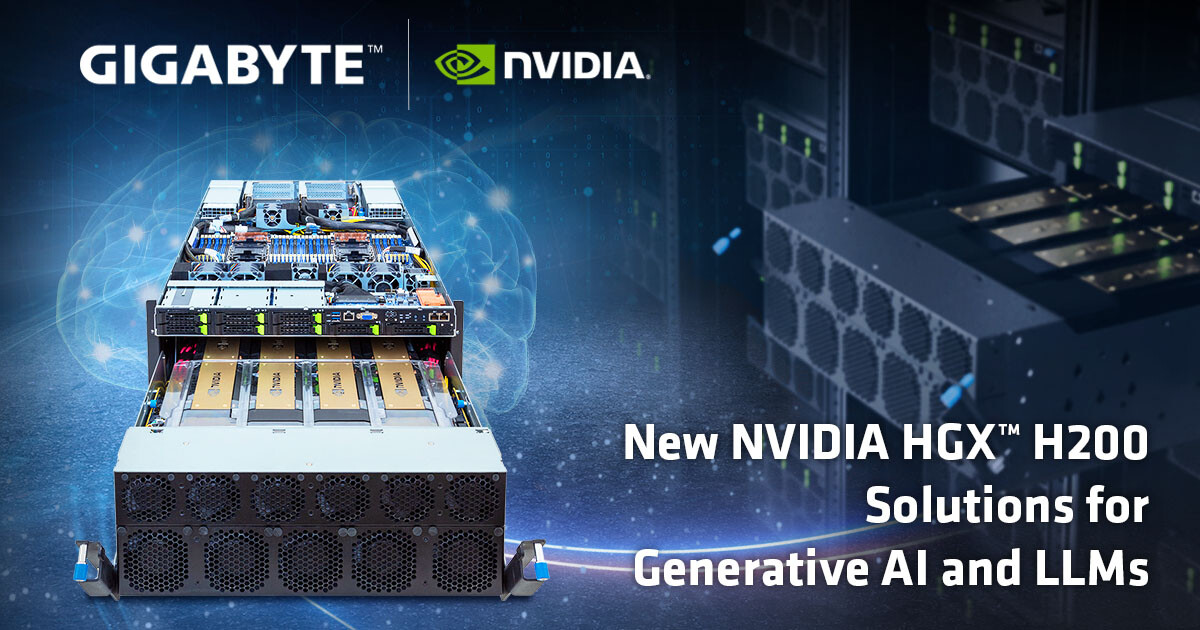
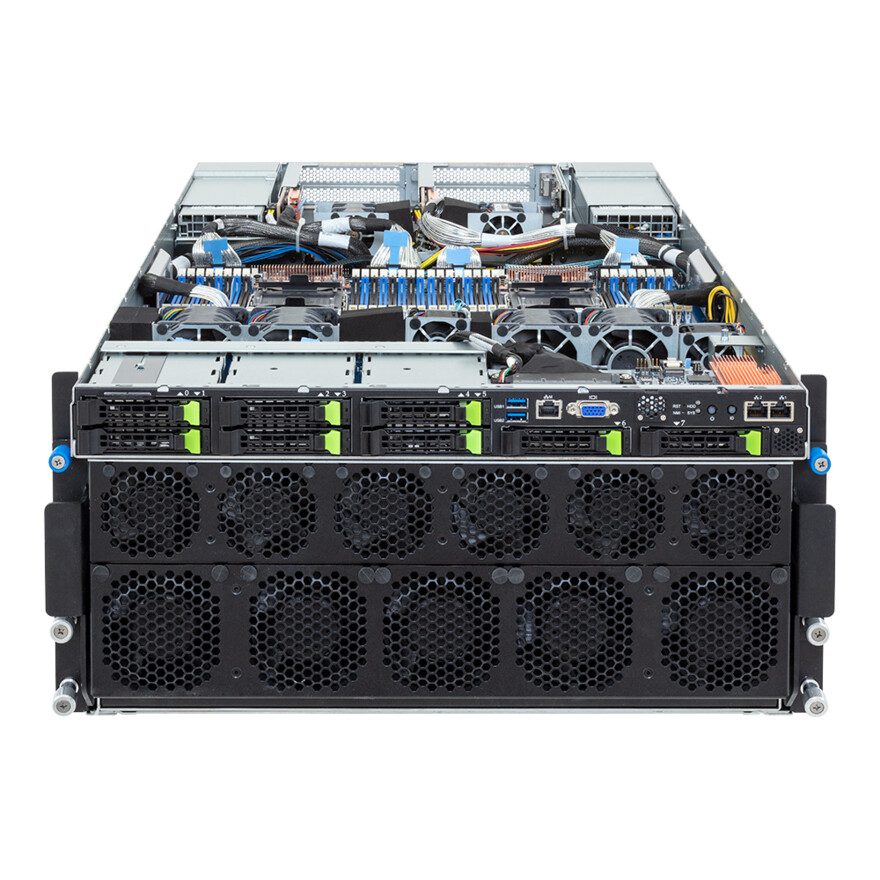
GIGABYTE Introduces Accelerated Computing Servers With NVIDIA HGX H200

Giga Computing, a subsidiary of GIGABYTE and an industry leader in generative AI servers and advanced cooling technologies, today added two new 8-GPU baseboard servers to the GIGABYTE G593 series that support the NVIDIA HGX H200, a GPU memory platform ideal for large AI datasets, as well as scientific simulations and other memory-intensive workloads.

G593 Series for Scale-up Computing in AI & HPC
With dedicated real estate for cooling GPUs, the G593 series achieves stable, demanding performance in its compact 5U chassis with high airflow for incredible compute density. Maintaining the same power requirements as the air-cooled NVIDIA HGX H100-based systems, the NVIDIA H200 Tensor Core GPU optimally pairs with the road-tested GIGABYTE G593 series server that is purpose-built for an 8-GPU baseboard. To alleviate the memory bandwidth constraints on AI, including AI inference, the NVIDIA H200 GPU offers a sizable increase in memory capacity and bandwidth compared to the NVIDIA H100 Tensor Core GPU. The H200 GPU has up to 141 GB of HBM3e memory and 4.8 TB/s of memory bandwidth, translating to a 1.7X increase in memory capacity and 1.4X increase in throughput.

ASUS Presents Comprehensive AI Server Lineup

ASUS today announced its ambitious All in AI initiative, marking a significant leap into the server market with a complete AI infrastructure solution, designed to meet the evolving demands of AI-driven applications from edge, inference and generative AI the new, unparalleled wave of AI supercomputing. ASUS has proven its expertise lies in striking the perfect balance between hardware and software, including infrastructure and cluster architecture design, server installation, testing, onboarding, remote management and cloud services - positioning the ASUS brand and AI server solutions to lead the way in driving innovation and enabling the widespread adoption of AI across industries.

Meeting diverse AI needs
In partnership with NVIDIA, Intel and AMD, ASUS offer comprehensive AI-infrastructure solutions with robust software platforms and services, from entry-level AI servers and machine-learning solutions to full racks and data centers for large-scale supercomputing. At the forefront is the ESC AI POD with NVIDIA GB200 NVL72, a cutting-edge rack designed to accelerate trillion-token LLM training and real-time inference operations. Complemented by the latest NVIDIA Blackwell GPUs, NVIDIA Grace CPUs and 5th Gen NVIDIA NVLink technology, ASUS servers ensure unparalleled computing power and efficiency.

NVIDIA DLSS Coming to More Games, Including Level Zero: Extraction and Warhammer 40,000: Speed Freeks

More than 500 games and applications feature RTX technologies, and each week new games integrating NVIDIA DLSS, NVIDIA Reflex and advanced ray-traced effects are released or announced, delivering the definitive PC experience for GeForce RTX players. Read on to learn about this week's new integrations of DLSS.

Level Zero: Extraction Launching Today With DLSS 3
Level Zero: Extraction is a new multiplayer extraction horror shooter from Doghowl Games and tinyBuild. The game blends the heart-pounding tension of asymmetric survival horrors with the high-stakes showdowns of extraction shooters to create a brand-new immersive multiplayer experience. Playing as an elite PMC mercenary, embark on dangerous raids to extract valuable loot and face off against other players and unpredictable PvE hazards. Or take on the role of a formidable alien monster and hunt the humans until no mortal is left standing. When Level Zero: Extraction launches later today, GeForce RTX gamers can accelerate frame rates with DLSS 3 and Frame Generation.

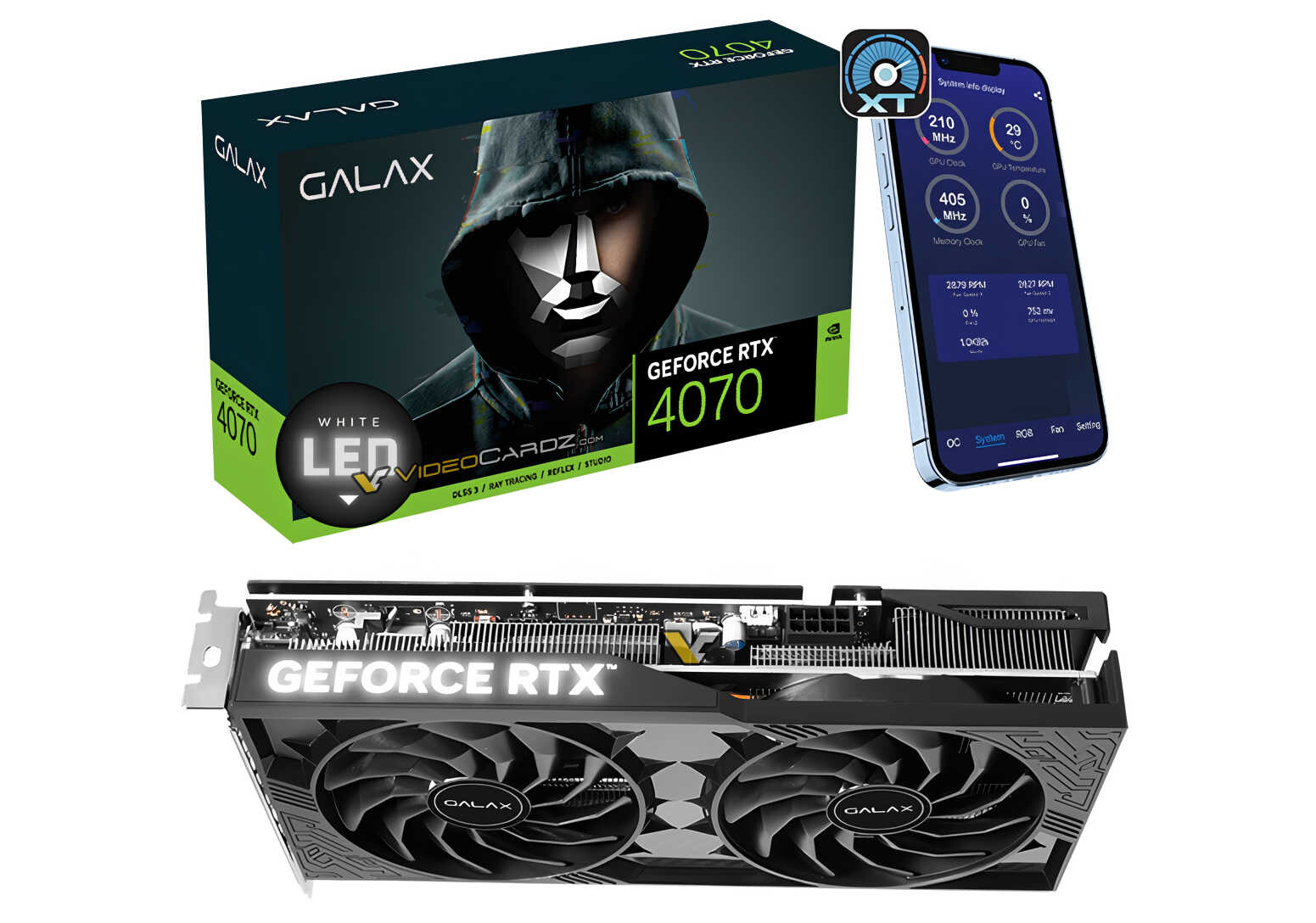
NVIDIA Readies GeForce RTX 4070 GDDR6 Variant?

NVIDIA is possibly launching a more cost-effective variant of its GeForce RTX 4070 graphics card featuring GDDR6 memory, replacing the GDDR6X that it originally launched with. The new SKU would be better differentiated from the RTX 4070 SUPER. When NVIDIA refreshed its RTX 40-series "Ada" product stack in January, it discontinued the RTX 4070 Ti and RTX 4080, which had been replaced in the lineup by the RTX 4070 Ti SUPER and RTX 4080 SUPER, but at the time it didn't tinker with the RTX 4070, which continued to sell at a roughly $50 lower price than the RTX 4070 SUPER. This new SKU could be an attempt by NVIDIA to get further down below the $500-mark in pricing.

The RTX 4070 originally launched with 21 Gbps GDDR6X memory. This new variant sees the memory replaced with 20 Gbps conventional GDDR6. The JEDEC standard GDDR6 chips could be cheaper than GDDR6X, and could very well be the same GDDR6 chip models AMD uses in some of its higher Radeon RX 7000 series SKUs. This, however, comes with a 4.75% drop in memory bandwidth, which NVIDIA probably overcomes with increasing the GPU clocks a touch. The ASIC code for this SKU is AD104-251, compared to the AD104-250 of the original RTX 4070. The core configuration is otherwise unchanged—you get 5,888 CUDA cores across 46 streaming multiprocessors. Galax has a card based on this SKU ready.

Strong AI Chip Demand Pushes TSMC's July Revenue by 45% Year-over-Year

The demand for AI accelerators is going strong, and the world's largest semiconductor manufacturer, TSMC, has just confirmed that with its July 2024 revenue report. According to its latest July 2024 data, TSMC has reported a consolidated revenue of NT$256.95 billion, or about $7.94 billion at the time of writing. This represents a massive 23.6% jump from June 2024 and a 44.7% from July 2023, when revenue came in at NT$207.869 billion and NT$177.616 billion, respectively. For revenue throughout the year, measured from January to July, TSMC booked NT$1.523 trillion, or about $47 billion at the current rate. For this 7-month period, TSMC's revenue has increased by 30.5% Year-on-Year (YoY), showing great demand and an uptick in the company's production capabilities.

Of course, this is possible thanks to the massive demand driving AI chip sales from various startups and established giants like NVIDIA and AMD. Another vital customer for TSMC is Apple, which produces smartphone and Mac chips at Taiwanese facilities. The solid financial results from TSMC suggest that other fabless chip designers in its ecosystem may also experience positive outcomes in their earnings. It's worth noting that the semiconductor supply chain operates on a long-term planning basis, with arrangements made months in advance. As such, we can expect advanced silicon solutions to reach new customers in the coming months, further driving growth in the sector.

Samsung's 8-layer HBM3E Chips Pass NVIDIA's Tests

Samsung Electronics has achieved a significant milestone in its pursuit of supplying advanced memory chips for AI systems. Their latest fifth-generation high-bandwidth memory (HBM) chips, known as HBM3E, have finally passed all NVIDIA's tests. This approval will help Samsung in catching up with competitors SK Hynix and Micron in the race to provide HBM memory chips to NVIDIA. While a supply deal hasn't been finalized yet, deliveries are expected to start in late 2024.

However, it's worth noting that Samsung passed NVIDIA's tests for the eight-layer HBM3E chips while the more advanced twelve-layer version of the HBM3E chips is still struggling pass those tests. Both Samsung and NVIDIA declined to comment on these developments. Industry expert Dylan Patel notes that while Samsung is making progress, they're still behind SK Hynix, which is already preparing to ship its own twelve-layer HBM3E chips.

NVIDIA's New B200A Targets OEM Customers; High-End GPU Shipments Expected to Grow 55% in 2025

Despite recent rumors speculating on NVIDIA's supposed cancellation of the B100 in favor of the B200A, TrendForce reports that NVIDIA is still on track to launch both the B100 and B200 in the 2H24 as it aims to target CSP customers. Additionally, a scaled-down B200A is planned for other enterprise clients, focusing on edge AI applications.

TrendForce reports that NVIDIA will prioritize the B100 and B200 for CSP customers with higher demand due to the tight production capacity of CoWoS-L. Shipments are expected to commence after 3Q24. In light of yield and mass production challenges with CoWoS-L, NVIDIA is also planning the B200A for other enterprise clients, utilizing CoWoS-S packaging technology.

NVIDIA GeForce 560.81 WHQL Game Ready Drivers Released

NVIDIA today released the latest version of its GeForce Game Ready drivers. Version 560.81 WHQL comes with optimization for "Hunt: Showdown 1896." The drivers also add optimal settings for games such as "Chained Together," "Dungeonborne," "Once Human," and "Stormgate." A game bug with "Farming Simulator 22" that caused the game to crash during the loading screen with certain RTX 30-series and RTX 40-series GPUs on the older 560.70 series drivers, has been fixed. Also fixed is a bug that causes games to stutter if the overlay GPU metrics are stuck at 0%; the full range of available display refresh-rates not being exposed on some monitors; and NVIDIA container service exhibiting unusually high CPU utilization.

DOWNLOAD: NVIDIA GeForce 560.81 WHQL

Minisforum Announces G7 Ti Mini PC Powered by 14th Gen Core Processors

Minisforum today announced the G7 Ti Powerhouse, a Versatile mini-PC that offers AI-enhance creativity and raw power. Featuring Intel Core i9-14900HX or i7-14650HX processors and NVIDIA GeForce RTX 4070 graphics, Minisforum G7 Ti delivers unparalleled performance for AI-based workloads. The powerhouse mini-PC solution is optimized for AI features, powered by up to an Intel Core i9-14900HX CPU, and NVIDIA GeForce RTX 4070 Graphics. Minisforum G7 Ti offers avid gamers an unmatched experience and endless possibilities for creators.

Utilized the 14th Gen Intel Core i9-14900HX and i7-14650HX Processor, the AI-enabled CPU delivers 24 cores and 32 threads with 36 MB L3 high-speed cache, that rates the single-core turbo frequency up to 5.8 GHz and max performance at 90 W. The beast CPU helps AI applications, achieving 20% higher performance in the Cinebench R23 test versus previous-generation processors, making Minisforum G7 Ti capable of handling AAA games, video rendering, 3D design, and AI projects.

Lossless Scaling Frame Generation Boosts Frame Rate by 4x in All PC Games, Update Arrives This Week

Lossless Scaling, an all-in-one paid gaming utility for scaling and frame generation, is set to introduce an outstanding 4x FPS mode to its Lossless Scaling Frame Generation (LSFG) technology. Officially announced in the Lossless Scaling Discord and showcased by the YouTube user Vyathaen, the upcoming 4x FPS mode is expected to arrive in the upscaler's frame generation option within this week. While YouTube videos may not fully capture the experience and benefit of this improvement, beta testers have reported that the latency remains consistent with the current 2x FPS option, ensuring that most games will remain perfectly playable given a sufficiently high base framerate. For those seeking a more comprehensive demonstration, the Lossless Scaling official Discord server features a Cyberpunk 2077 video that better illustrates the capabilities of the 4x FPS mode.

The journey of Lossless Scaling has been marked by continuous innovation since its initial release. Version 2.1, launched in June, introduced a 3x FPS mode, effectively tripling framerates. Additionally, it brought performance optimizations that enhanced the speed of the 2x FPS mode compared to previous iterations. The update also included refinements for scenarios where the final frame rate surpasses the monitor's refresh rate. The software is universally compatible with all GPUs and PC games, including emulated titles, requiring only windowed mode and Windows 10 1903 or newer. While the LSFG frame generation technology and LS1 upscaler are proprietary, for upscaling, users can choose one of the many underlying options depending on their GPU like AMD FidelityFX Super Resolution, NVIDIA Image Scaling, Integer Scaling, Nearest Neighbor, xBR, Anime4K, Sharp Bilinear, Bicubic CAS. Below, you can check out the YouTube video with 4x frame generation example.
Lossless Scaling Lossless Scaling

Design Issues May Postpone Launch of NVIDIA's Advanced Blackwell AI Chips

NVIDIA may face delays in releasing its newest artificial intelligence chips due to design issues, according to anonymous sources involved in chip and server hardware production cited by The Information. The delay could extend to three months or more, potentially affecting major customers such as Meta, Google, and Microsoft. An unnamed Microsoft employee and another source claim that NVIDIA has already informed Microsoft about delays affecting the most advanced models in the Blackwell AI chip series. As a result, significant shipments are not expected until the first quarter of 2025.

When approached for comment, an NVIDIA spokesperson did not address communications with customers regarding the delay but stated that "production is on track to ramp" later this year. The Information reports that Microsoft, Google, Amazon Web Services, and Meta declined to comment on the matter, while Taiwan Semiconductor Manufacturing Company (TSMC) did not respond to inquiries.

NVIDIA GeForce NOW Gets 18 New Games in August

Members can choose their own adventure with GeForce NOW bringing 18 new games to the cloud in August - including Square Enix's fantasy role-playing game Visions of Mana when it launches on PC Thursday, Aug. 29. From cozy games to thrilling battles, there's something for everyone. Dive into the latest titles and experience powerful performance across all devices - start with the six games available to stream this week. Plus, the limited-time GeForce NOW Summer Sale continues, offering a 50% discount on new one-month and six-month Ultimate and Priority memberships. Check it out before the deal ends on Sunday, Aug. 18.

Awesome August
Plunge into the heart of battle with Stormgate, a newly released real-time strategy game from Frost Giant Studios, which is renowned for its work on popular games StarCraft II and Warcraft III. In single-player or multiplayer mode, fight demonic invaders, build bases and command armies to save humanity. Get immersed in a rich storyline, explore diverse factions and experience a blend of new and classic real-time strategy mechanics.

NVIDIA Hit with DOJ Antitrust Probe over AI GPUs, Unfair Sales Tactics and Pricing Alleged

NVIDIA has reportedly been hit with a US Department of Justice (DOJ) antitrust probe over the tactics the company allegedly employs to sell or lease its AI GPUs and data-center networking equipment, "The Information" reported. Shares of the NVIDIA stock fell 3.6% in the pre-market trading on Friday (08/02). The main complainants behind the probe appear to be a special interest group among the customers of AI GPUs, and not NVIDIA's competitors in the AI GPU industry per se. US Senator Elizabeth Warren and US progressives have been most vocal about calling upon the DOJ to investigate antitrust allegations against NVIDIA.

Meanwhile, US officials are reportedly reaching out to NVIDIA's competitors, including AMD and Intel, to gather information about the complaints. NVIDIA holds 80% of the AI GPU market, while AMD, and to a much lesser extent, Intel, have received spillover demand for AI GPUs. "The Information" report says that the complaint alleges NVIDIA pressured cloud customers to buy "multiple products". We don't know what this means, one theory holds that NVIDIA is getting them to commit to buying multiple generations of products (eg: Ampere, Hopper, and over to Blackwell); while another holds that it's getting them to buy multiple kinds of products, which include not just the AI GPUs, but also NVIDIA's first-party server systems and networking equipment. Yet another theory holds that it is bundle first-party software and services to go with the hardware, far beyond the basic software needed to get the hardware to work.

Supermicro Launches Plug-and-Play SuperCluster for NVIDIA Omniverse

Supermicro, Inc., a Total IT Solution Provider for AI, Cloud, Storage, and 5G/Edge, is announcing a new addition to its SuperCluster portfolio of plug-and-play AI infrastructure solutions for the NVIDIA Omniverse platform to deliver the high-performance generative AI-enhanced 3D workflows at enterprise scale. This new SuperCluster features the latest Supermicro NVIDIA OVX systems and allows enterprises to easily scale as workloads increase.

"Supermicro has led the industry in developing GPU-optimized products, traditionally for 3D graphics and application acceleration, and now for AI," said Charles Liang, president and CEO of Supermicro. "With the rise of AI, enterprises are seeking computing infrastructure that combines all these capabilities into a single package. Supermicro's SuperCluster features fully interconnected 4U PCIe GPU NVIDIA-Certified Systems for NVIDIA Omniverse, with up to 256 NVIDIA L40S PCIe GPUs per scalable unit. The system helps deliver high performance across the Omniverse platform, including generative AI integrations. By developing this SuperCluster for Omniverse, we're not just offering a product; we're providing a gateway to the future of application development and innovation."

NVIDIA's Supply Cut Could Spark Price Hike for RTX 40 Series

According to a report from The Economic Daily (via ITHome), NVIDIA has reduced the supply of high-end RTX 40 GPUs by up to 50% in preparation for the upcoming RTX 50 Blackwell launch. This supply cut primarily affects NVIDIA's higher-end models, ranging from the RTX 4070 to the RTX 4090, and is intended to free up production capacity for the new Blackwell cards. NVIDIA is likely strategizing to create an ideal market environment, this would typically involve high demand for new products and minimal competition from rivals and its own existing lineup. Consequently, AIB partners like ASUS, MSI, and Gigabyte are expected to raise prices on their RTX 40 offerings.

Despite these potential price hikes, most high-end RTX 40 GPUs currently sell at or near their MSRPs. For example, the RTX 4070 is available at $549 on Amazon, alongside the RTX 4070 SUPER and RTX 4070 Ti SUPER at their respective MSRPs or lower. The RTX 4080 SUPER can be found below its $999 official price, while only the RTX 4090 consistently sells above its $1,599.99 MSRP. Given these circumstances, consumers considering a high-end GeForce GPU purchase might want to act soon, as market conditions for buyers could potentially worsen in the near future.

NVIDIA DLSS 3 and Reflex Available Now In Stormgate

More than 500 games and applications feature RTX technologies, and each week new games integrating NVIDIA DLSS, NVIDIA Reflex and advanced ray-traced effects are released or announced, delivering the definitive PC experience for GeForce RTX players. Starting today, gamers can play the new RTS Stormgate, accelerated by DLSS 3 and enhanced by Reflex. Additionally, Call of Duty Season 5 is available now with support for DLSS 3, Reflex and DLAA, and Nobody Wants to Die recently launched with DLSS Super Resolution.

Stormgate Launches Today, Featuring DLSS 3 & Reflex
Stormgate is the free-to-play real-time strategy game from the team at Frost Giant Studios, including developers who've worked on some of gaming's most popular RTS games, such as Warcraft III and StarCraft II. For players who participated in Stormgate beta tests, backed the game's massively successful Kickstarter, or pre-ordered on the official website, Stormgate goes online at 11 a.m. PT today. And on August 13th, everyone's invited to play with the official free-to-play Steam launch. In Stormgate, you'll explore an ever-evolving story through thrilling campaign missions where science fiction and fantasy collide. Alternatively, battle opponents around the world on the competitive 1v1 ladder, or team up with your friends to challenge the AI in the 3-player co-op modes. Developed in Unreal Engine 5, Stormgate sets itself apart from past RTS games with unmatched responsiveness and features rollback technology for smooth online play. Stormgate supports high-resolution HD visuals at 4K, with hundreds of units on-screen in epic, large-scale wars across a variety of maps and tilesets.

Intel to Cut 10,000 Jobs Across the Globe, Projected to Save $10 Billion

According to sources close to Bloomberg, Intel plans to cut 10,000 jobs from its global workforce. The news comes amid heavy pressure on the semiconductor giant, which has been on a steady decline over the years, while other industry rivals like AMD and NVIDIA have been rising and taking market share in various areas from Intel. It is reported that Intel currently has 110,000 employees globally, and reducing the workforce by 10,000 would net Intel around 100,000 global employees left. These figures exclude employees from spun-out units like Altera FPGA company, which is under Intel's ownership. Intel's aim to reduce its workforce is expected to come with a significant cost benefit to the company, with projected savings of $10 billion by 2025.

The news isn't yet official, but it is expected to see the light of the day as soon as this week. As Intel's CEO Pat Gelsinger invests heavily into the fab construction and development of next-generation products, there have been a few notes that Intel would have to overcome some challenges shortly to reach its long-term goals like more advanced silicon manufacturing facilities and new products for AI/HPC and client sector. One of those short-term measures is reducing the workforce to cut down expenses. Intel has reduced its workforce before. In 2022, the company announced reduced spending in non-critical areas and reducing the workforce, and in 2023, cut the workforce by 5% to 124,800 employees last year, only to be left with 110,000 employees in 2024.

Apple Trained its Apple Intelligence Models on Google TPUs, Not NVIDIA GPUs

Apple has disclosed that its newly announced Apple Intelligence features were developed using Google's Tensor Processing Units (TPUs) rather than NVIDIA's widely adopted hardware accelerators like H100. This unexpected choice was detailed in an official Apple research paper, shedding light on the company's approach to AI development. The paper outlines how systems equipped with Google's TPUv4 and TPUv5 chips played a crucial role in creating Apple Foundation Models (AFMs). These models, including AFM-server and AFM-on-device, are designed to power both online and offline Apple Intelligence features introduced at WWDC 2024. For the training of the 6.4 billion parameter AFM-server, Apple's largest language model, the company utilized an impressive array of 8,192 TPUv4 chips, provisioned as 8×1024 chip slices. The training process involved a three-stage approach, processing a total of 7.4 trillion tokens. Meanwhile, the more compact 3 billion parameter AFM-on-device model, optimized for on-device processing, was trained using 2,048 TPUv5p chips.

Apple's training data came from various sources, including the Applebot web crawler and licensed high-quality datasets. The company also incorporated carefully selected code, math, and public datasets to enhance the models' capabilities. Benchmark results shared in the paper suggest that both AFM-server and AFM-on-device excel in areas such as Instruction Following, Tool Use, and Writing, positioning Apple as a strong contender in the AI race despite its relatively late entry. However, Apple's penetration tactic into the AI market is much more complex than any other AI competitor. Given Apple's massive user base and millions of devices compatible with Apple Intelligence, the AFM has the potential to change user interaction with devices for good, especially for everyday tasks. Hence, refining AI models for these tasks is critical before massive deployment. Another unexpected feature is transparency from Apple, a company typically known for its secrecy. The AI boom is changing some of Apple's ways, and revealing these inner workings is always interesting.

NVIDIA Blackwell's High Power Consumption Drives Cooling Demands; Liquid Cooling Penetration Expected to Reach 10% by Late 2024

With the growing demand for high-speed computing, more effective cooling solutions for AI servers are gaining significant attention. TrendForce's latest report on AI servers reveals that NVIDIA is set to launch its next-generation Blackwell platform by the end of 2024. Major CSPs are expected to start building AI server data centers based on this new platform, potentially driving the penetration rate of liquid cooling solutions to 10%.

Air and liquid cooling systems to meet higher cooling demands
TrendForce reports that the NVIDIA Blackwell platform will officially launch in 2025, replacing the current Hopper platform and becoming the dominant solution for NVIDIA's high-end GPUs, accounting for nearly 83% of all high-end products. High-performance AI server models like the B200 and GB200 are designed for maximum efficiency, with individual GPUs consuming over 1,000 W. HGX models will house 8 GPUs each, while NVL models will support 36 or 72 GPUs per rack, significantly boosting the growth of the liquid cooling supply chain for AI servers.
Return to Keyword Browsing
Nov 27th, 2026 19:31 CST change timezone

New Forum Posts

Popular Reviews

TPU on YouTube

Controversial News Posts