News Posts matching #NVMe

Return to Keyword Browsing

ASUS Announces SC4000A-E10 GPGPU Server with NVIDIA A100 Tensor Core GPUs

ASUSTek, the leading IT Company in server systems, server motherboards and workstations today announced the new NVIDIA A100-powered server - ESC4000A E10 to accelerate and optimize data centers for high utilization and low total cost of ownership with the PCIe Gen 4 expansions, OCP 3.0 networking, faster compute and better GPU performance. ASUS continues building a strong partnership with NVIDIA to deliver unprecedented acceleration and flexibility to power the world's highest-performing elastic data centers for AI, data analytics, and HPC applications.

ASUS ESC4000A-E10 is a 2U server powered by the AMD EPYC 7002 series processors that deliver up to 2x the performance and 4x the floating point capability in a single socket versus the previous 7001 generation. Targeted for AI, HPC and VDI applications in data center or enterprise environments which require powerful CPU cores, more GPUs support, and faster transmission speed, ESC4000A E10 focuses on delivering GPU-optimized performance with support for up to four double-deck high performance or eight single-deck GPUs including the latest NVIDIA Ampere-architecture V100, Tesla, and Quadro. This also benefits on virtualization to consolidate GPU resources in to shared pool for users to utilize resources in more efficient ways.


AMD "Renoir" Die Annotation Raises Hopes of Desktop Chips Featuring x16 PEG

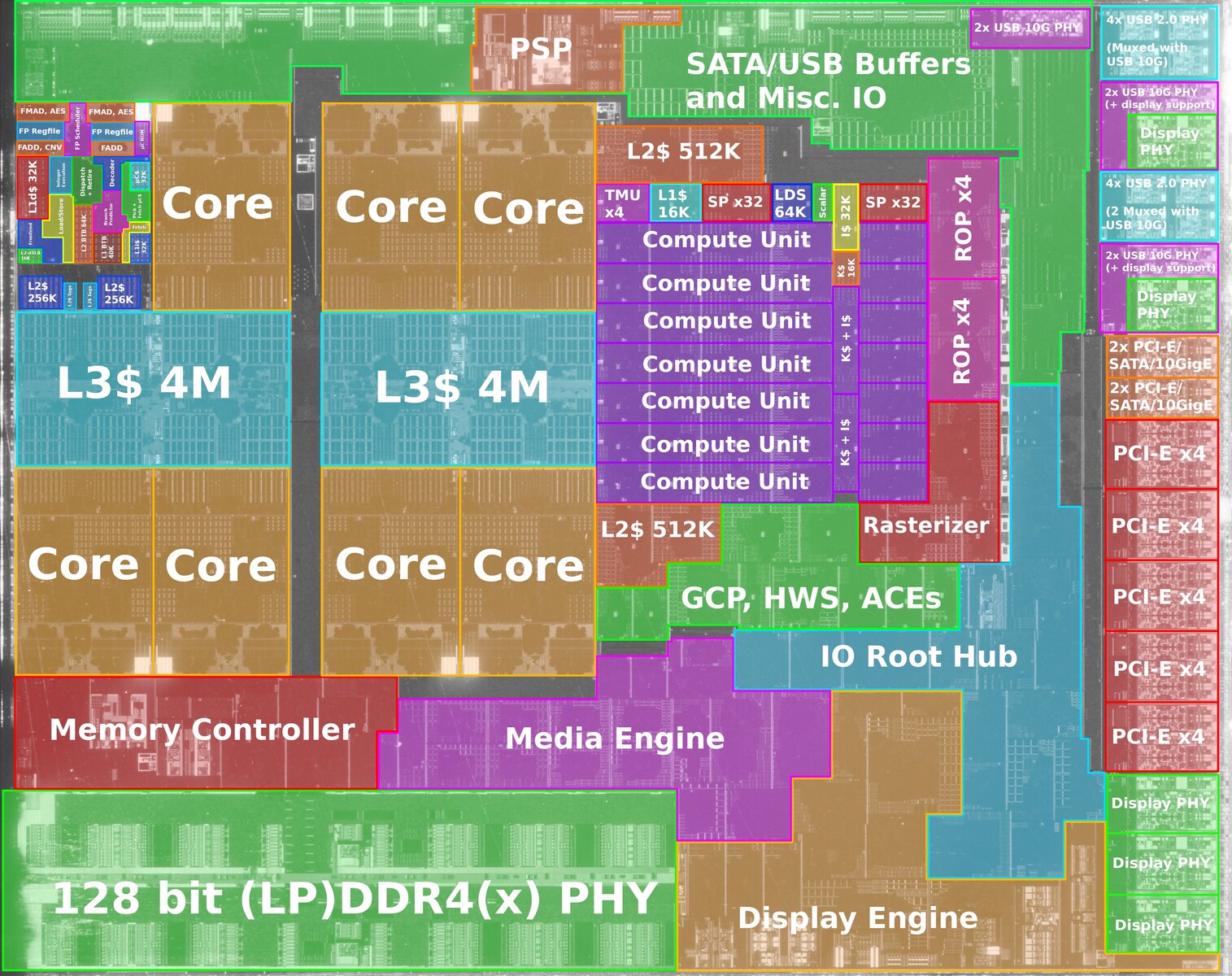
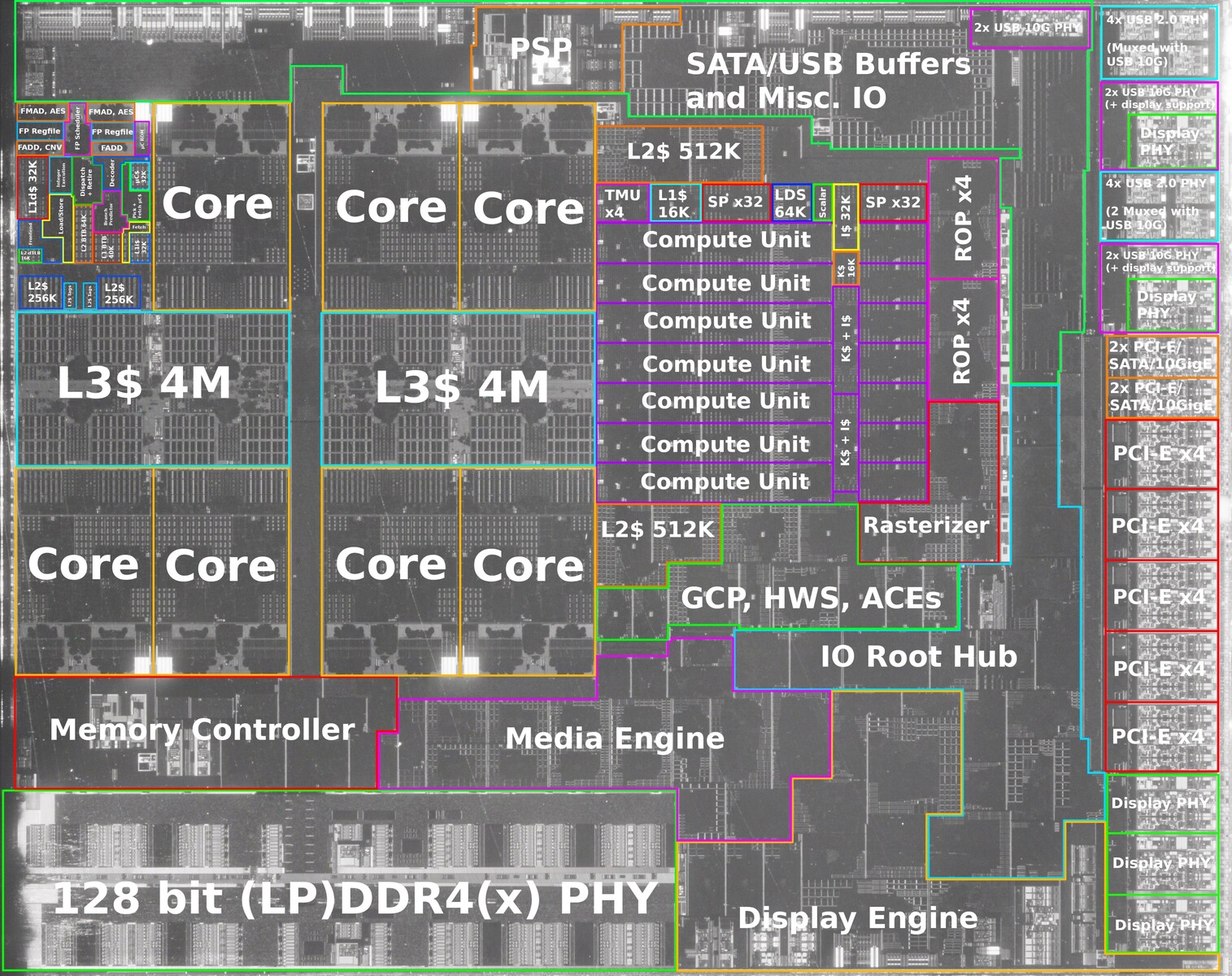
VLSI engineer Fritzchens Fritz, famous for high-detail EM photography of silicon dies and annotations of them, recently published his work on AMD's 7 nm "Renoir" APU silicon. His die-shots were annotated by Nemez aka GPUsAreMagic. The floor-plan of the silicon shows that the CPU component finally dwarfs the iGPU component, thanks to double the CPU cores over the previous-gen "Picasso" silicon, spread over two CCXs (compute complexes). The CCX on "Renoir" is visibly smaller than the one on the "Zen 2" CCDs found in "Matisse" and "Rome" MCMs, as the L3 cache is smaller, at 4 MB compared to 16 MB. Being MCMs with disintegrated memory controllers, it makes more sense for CCDs to have more last-level cache per CCX.

We also see that the iGPU features no more than 8 "Vega" NGCUs, so there's no scope for "Renoir" based desktop APUs to feature >512 stream processors. AMD attempted to compensate for the NGCU deficit by dialing up engine clocks of the iGPU by over 40% compared to those on "Picasso." What caught our eye in the annotation is the PCI-Express physical layer. Apparently the die indeed has 20 PCI-Express lanes besides an additional 4 lanes that can be configured as two SATA 6 Gbps ports thanks to SerDes flexibility.

Synology Announces DS220+, DS420+, DS720+, and DS920+ NAS

Synology Inc. today launched a new generation of two and four bay Plus Series NAS, designed as a centralized data management solution for both home and business environments. "Plus series is one of our most popular and versatile product lines," said Hewitt Lee, Director of Synology Product Management Group."The series offers an ideal mix of processing power and advanced capabilities such as containers and virtualization support, in compact and quiet desktop form factors. It is also the starting point for our advanced data protection solutions, enabling small businesses to cost-effectively deploy solutions that can protect their entire IT infrastructure."

Up to 133% faster in website responsiveness and over 15% improvement in compute-tasks, the new Plus series enables you to get things done faster and more efficiently. Two M.2 NVMe slots2 enable accelerated I/O performance, especially in multi-user environments. Synology storage solutions are not only designed to fulfill data management requirements, but centralize backups for Microsoft Windows PCs and Servers, VMware vSphere and Microsoft Hyper-V VMs, and Microsoft 365 and G Suite accounts using our Active Backup suite.

Supermicro Launches 4-Socket Server for 3rd Gen Xeon Scalable

Super Micro Computer, Inc., a global leader in enterprise computing, storage, networking solutions and green computing technology, today launched a new high-performance X12 generation 4-socket SuperServer optimized for the new 3rd Gen Intel Xeon Scalable Processors (codenamed Cooper Lake) and Intel Optane Persistent Memory 200 series (codenamed Barlow Pass), which were both officially launched by Intel today. The tremendous growth in applications and use cases that require real-time analysis and manipulation of big data has helped Supermicro's 4-socket server family to be one of the fastest-growing product lines in recent times.

"As Supermicro's first X12 generation system, this new 4-socket server is our most robust enterprise-class platform featuring the most powerful Intel Xeon Scalable Processors, Intel Optane Persistent Memory, and a new silicon based Root-of-Trust implementation for enhanced security," said Charles Liang, CEO and president of Supermicro. "This new SuperServer provides a powerful and trusted foundation for your most secure and mission critical workloads in enterprise, cloud-scale, or hybrid environments."

Silicon Power Announces US70 PCIe Gen 4x4 SSD

Spring into the future with our new PCIe 4.0. Offering a standard data transfer rate that's double that of the previous 3.0 version, the US70 PCIe Gen 4x4 with 3D NAND flash memory and NVMe 1.3 support is exactly what combative gamers, competitive overclockers, professional designers/editors, and high-end business users crave. With incredible read and write speeds up to 5,000MB/s and 4,400MB/s, respectively, the US70 is nearly 10 times faster than traditional SATA III SSDs. It provides next-level specs that will be competitively relevant for the future, while also being backwards-compatible with PCIe 3.0 too.

Kingston Ships 2TB KC2500 NVMe PCIe SSD

Kingston Digital, Inc., the Flash memory affiliate of Kingston Technology Company, Inc., a world leader in memory products and technology solutions, today began shipping the 2 TB KC2500 M.2 NVMe PCIe SSD for desktop, workstations and high-performance computing (HPC) systems. The new, higher capacity gives customers the flexibility to keep up with increasing storage needs and improves workflow.

KC2500 combines outstanding performance with endurance using the latest Gen 3.0 x 4 controller and 96-layer 3D TLC NAND, with speeds up to 3,500 MB/s read and up to 2,900 MB/s write. The self-encrypting SSD supports a full-security suite for end-to-end data protection using AES-XTS 256-bit hardware-based encryption and allows the usage of independent software vendors with TCG Opal 2.0 security management solutions such as Symantec, McAfee, WinMagic and others. KC2500 also has built-in Microsoft eDrive support, a security storage specification for use with BitLocker.

ZADAK Unveils SPARK M.2 RGB SSD with Stunning Aluminum Heatsink

ZADAK, a leading provider of PC enthusiast components, unveils the SPARK PCIe Gen3x4 M.2 RGB SSD. As the company's first PCIe M.2 SSD, the SPARK PCIe M.2 captivates high-end PC users through its excellent compatibility with the latest Intel and AMD platforms and top-rate sequential read and write speeds of 3,200 / 3,000 MB/s, respectively. In addition, the SPARK PCIe M.2 SSD was engineered with a stunning aluminium heatsink and features eye-catching customizable RGB lighting.

The M.2 slot of the SPARK SSD is highly compatible, a perfect fit for those looking to upgrade their PC. It also delivers an impressively fast read speeds of up to 3,200 MB/s and write speeds of up to 3,000 MB/s. ZADAK's SPARK PCIe M.2 is available in 512 GB, 1 TB, and 2 TB capacities. The SPARK PCIe M.2 RGB SSD is backed by a 5-year warranty.

Chieftec Launches New External Storage Accessories

CHIEFTEC, a world-wide renowned brand for reliable PC chassis and power supplies, today announced the launch of three new accessories products: One M.2 NVMe External SSD Enclosure and two USB-C Docking Stations. Firstly, the CEB-M2C joins the external enclosure product category, supporting the installation of M.2 SSD's with NVMe interface and connecting to the host device via USB 3.1 Gen2 Type-C connector, enabling up to 10 Gbit/s transfer speeds.

Additionally, Chieftec is expanding the product range by introducing two USB-C Docking stations to provide Notebook-PC users additional functionality and flexibility. Both docking stations come with Power Delivery 3.0 transferring up to 60 W and a host connection via USB-C 3.1 Gen1. We would highly appreciate if you would be happy to share this news with your readers and viewers. The press kit includes datasheets, images and press release announcement for you to download.

ASUSTOR Announces Lockerstor 10 Pro NAS with ECC Memory and Xeon Processor

ASUSTOR today has officially announced the release of the ten bay Lockerstor 10 Pro sporting a 9th generation Intel Xeon Quad-Core processor. The Xeon E-2224 runs at 3.40 GHz and turbos to 4.60 GHz, making everything faster than ever, especially transfer speeds, virtual machines and Docker apps. The Lockerstor 10 Pro comes with eight Gigabytes of DDR4-2666 ECC memory and supports up to thirty-two Gigabytes of RAM. The ECC RAM included with the NAS corrects memory errors in real-time and helps avoid data loss caused by memory corruption, keeping critical data safe.

In terms of transmission speed, the Lockerstor 10 Pro provides a single 10-Gigabit Ethernet connection as well as triple 2.5-Gigabit Ethernet ports. With the all-new Intel Xeon processor, Link Aggregation on the 2.5-Gigabit ports, up to 7.5 Gbps of bandwidth can be achieved while the 10-Gigabit port brings the full 1.25 GB/s speeds. The Lockerstor 10 Pro also features dual M.2 SSD slots, which support a variety of m.2 form factors and thumbscrews for easy installation. With NVMe SSD caching, the performance of traditional HDD hard drives is quickly upgraded to SSD levels, bringing the best of both storage and speed. The Lockerstor 10 Pro also features USB 3.2 Gen2 which provides up to 10 Gbps of speed and supports up to 192 TB of extra capacity using the AS6004U for a total of 160+192 TB.

Corsair Unveils 4TB Variant of MP510 M.2 NVMe SSD

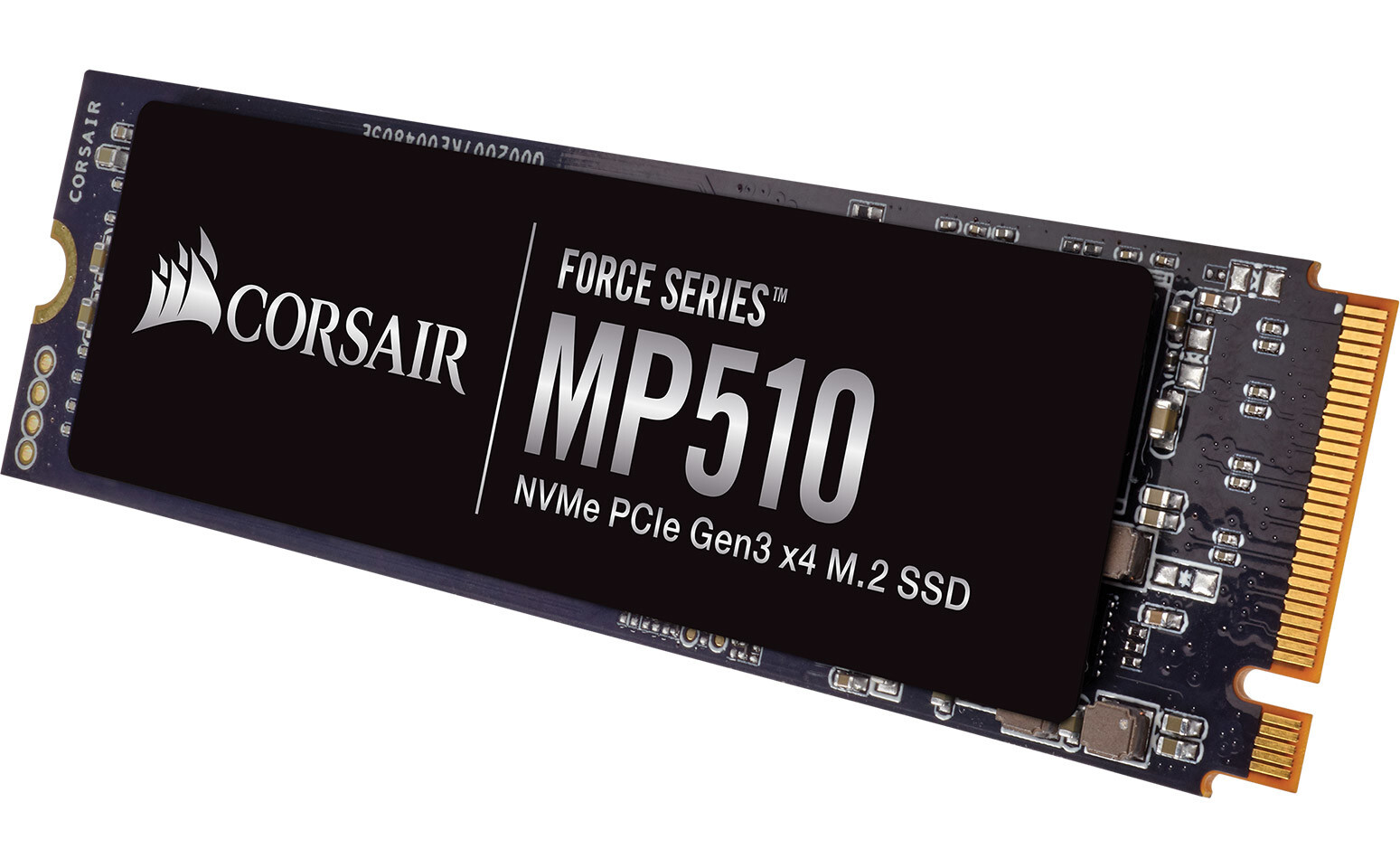
Corsair unveiled a new high-capacity 4 TB variant of its MP510 M.2 SSDs that take advantage of the PCI-Express 3.0 x4 host interface, and NVMe protocol (model: CSSD-F4000GBMP510). The drive retains its Phison PS5012-E12 controller, but paired with 96-layer 3D TLC NAND flash. The drive retains the manufacturer-rated performance numbers for the 2 TB variant: up to 3,480 MB/s sequential reads, up to 3,000 MB/s sequential writes, up to 580,000 IOPS 4K random reads, and up to 680,000 IOPS 4K random writes. Thanks to its high capacity, the drive enjoys a stellar endurance rating of 6,820 TBW. When it goes on sale, on June 4, the drive is expected to be priced close to the USD $800-mark.

HighPoint Launches Low-Profile, Bootable NVMe RAID Controller for Windows & Linux

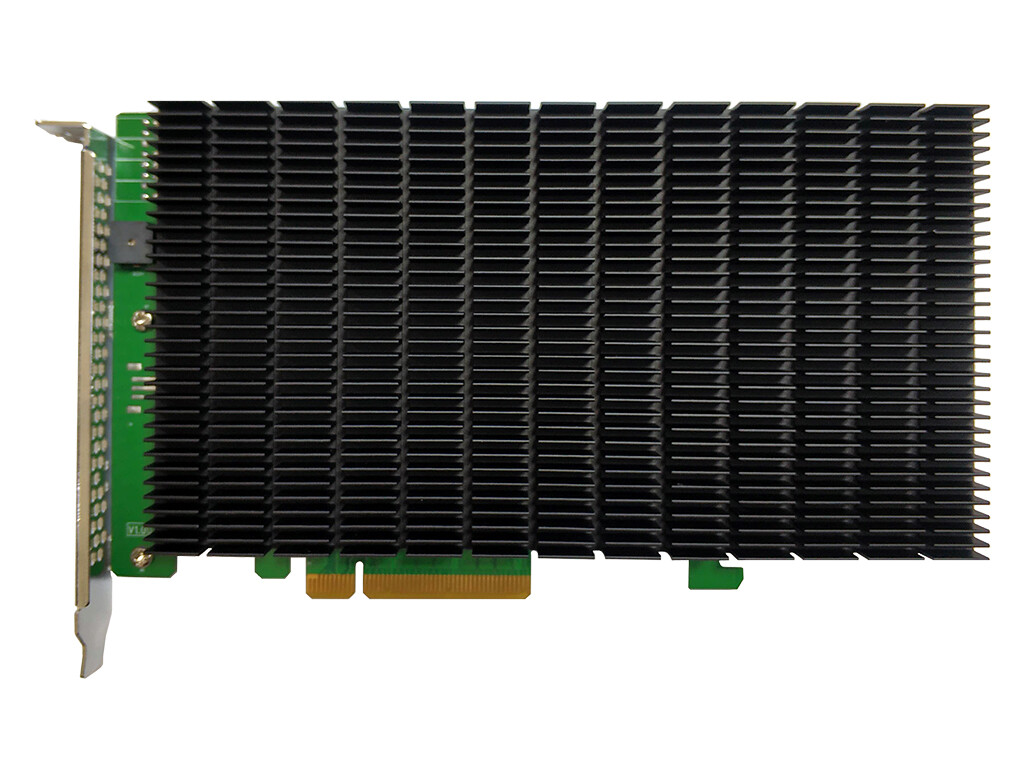
HighPoint launches the third generation SSD7202 NVMe RAID controller - the industry's first ultra-compact, low-profile, bootable NVMe RAID solution for Windows and Linux platforms. The SSD7202 is ideal for PC's that require NVMe boot performance or an ultra-compact storage solution. The low-profile SSD7202 smaller than your average video card, yet can host up to 8 TB of storage and can be easily installed into any industry standard PCIe 3.0/4.0 x8 or x16 slot.

Our third-generation NVMe architecture utilizes our Smart-Switching PCIe 3.0 x8 host interface to ensure broad compatibility with a wide range of hardware platforms without compromising performance; the dedicated x8 bandwidth enables the SSD7202 to deliver up to 7000 MB/s using just two M.2 SSD's. The SSD7202 is the first NVMe RAID controller to feature our ultra-efficient two-stage cooling solution, which removed the need for a bulky, external case. The card-length heat sink features an integrated low-noise fan to ensure the NVMe SSDs and critical chipset components remain cool even under sustained load.

HighPoint Unveils Zero-NoiseNVMe RAID Storage Controller for Mac, Linux & Windows

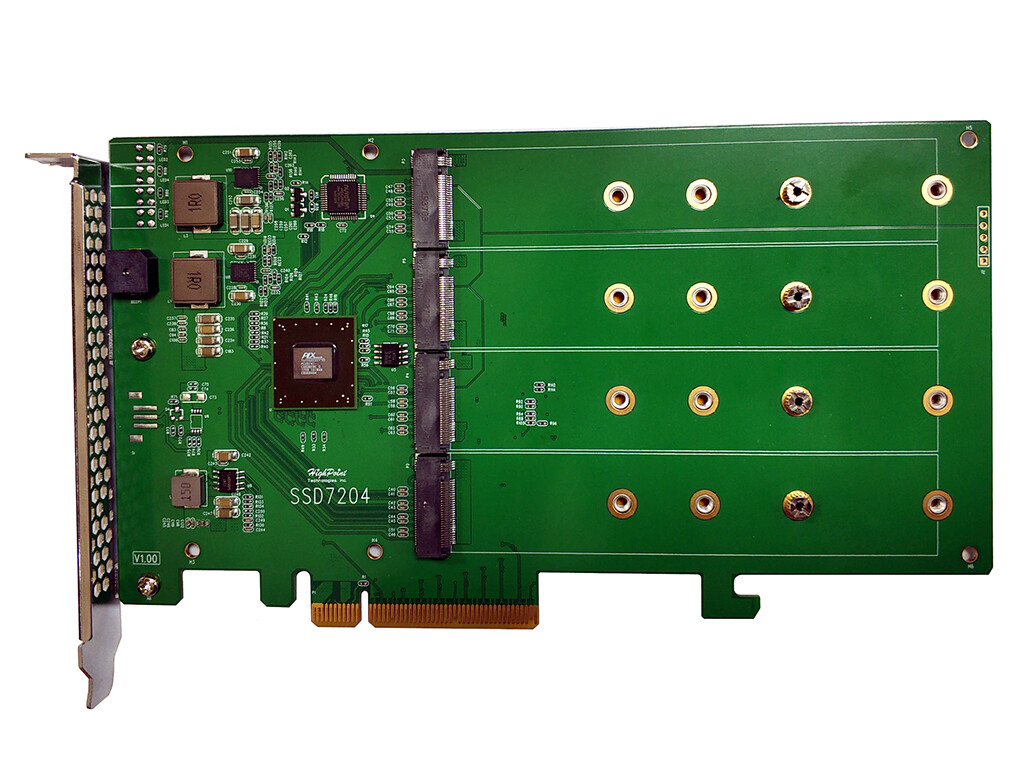
HighPoint launches the SSD7204 - the industry's best cost/performance 4-slot NVMe RAID storage. The SSD7204 is ideal for media applications that require high-speed NVMe silent working environments and up to 16 TB high-performance storage that can be easily installed into any industry standard PCIe 3.0/4.0 x8 or x16 slot.

The dedicated PCIe 3.0 bandwidth can assign up to 4 lanes per NVMe SSD, and delivers over 7000 MB/s of transfer performance, and can support RAID 0, 1, 1/0 and single disk configurations. Comprehensive device driver support and installation guides are available for all major operating system platforms including Windows 10 and Server 2019, macOS 10.15 Catalina, and leading Linux distributions.

ASUS Intros ROG Strix B460-H Gaming Motherboard

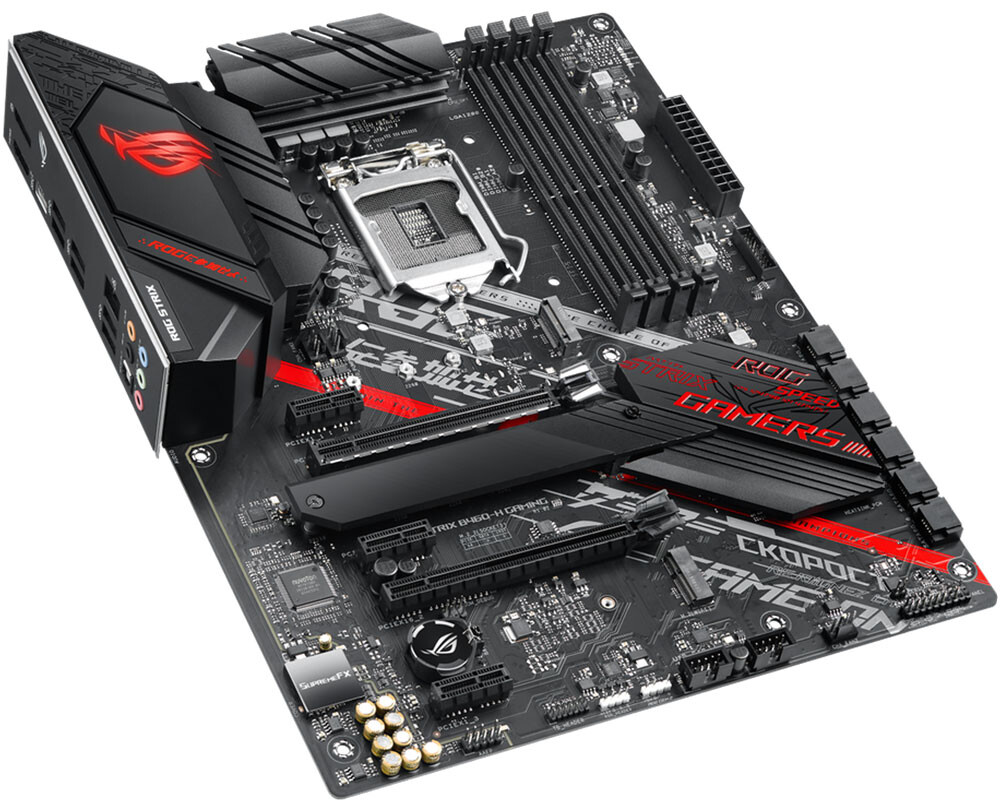
ASUS introduced the ROG Strix B460-H Gaming motherboard, expanding its ROG Strix family of motherboards based on Intel's mid-range B460 chipset for 10th generation Core "Comet Lake" processors in the LGA1200 package. The board joins Strix-F and Micro-ATX Strix-G SKUs based on this chipset. The Strix-H covers all platform essentials, but tops them with Intel Ethernet and a premium SupremeFX onboard audio solution. The Strix-H uses a simple 8-phase CPU VRM that pulls power from a single 8-pin EPS connector. The board offers a rear I/O shroud that has the latest generation ROG Strix design language, and a single-color (red) ROG illuminated logo. It also comes with an integrated rear I/O shield.

The LGA1200 socket is wired to four DDR4 DIMM slots supporting up to 128 GB of dual-channel DDR4-2933 memory (the maximum memory clock for the B460 platform is 2933 MHz); and a metal-reinforced PCI-Express 3.0 x16 slot. The board offers two M.2 NVMe slots, both with PCIe gen 3.0 x4 wiring; and an M.2 E-key slot for WLAN cards. Other storage connectivity includes six SATA 6 Gbps ports. The board's sole networking interface is a 1 GbE connection driven by an Intel i219-V controller. The company didn't reveal pricing.
ASUS ROG Strix B460-H Gaming

Addlink Debuts the S68 M.2 NVMe SSD Series

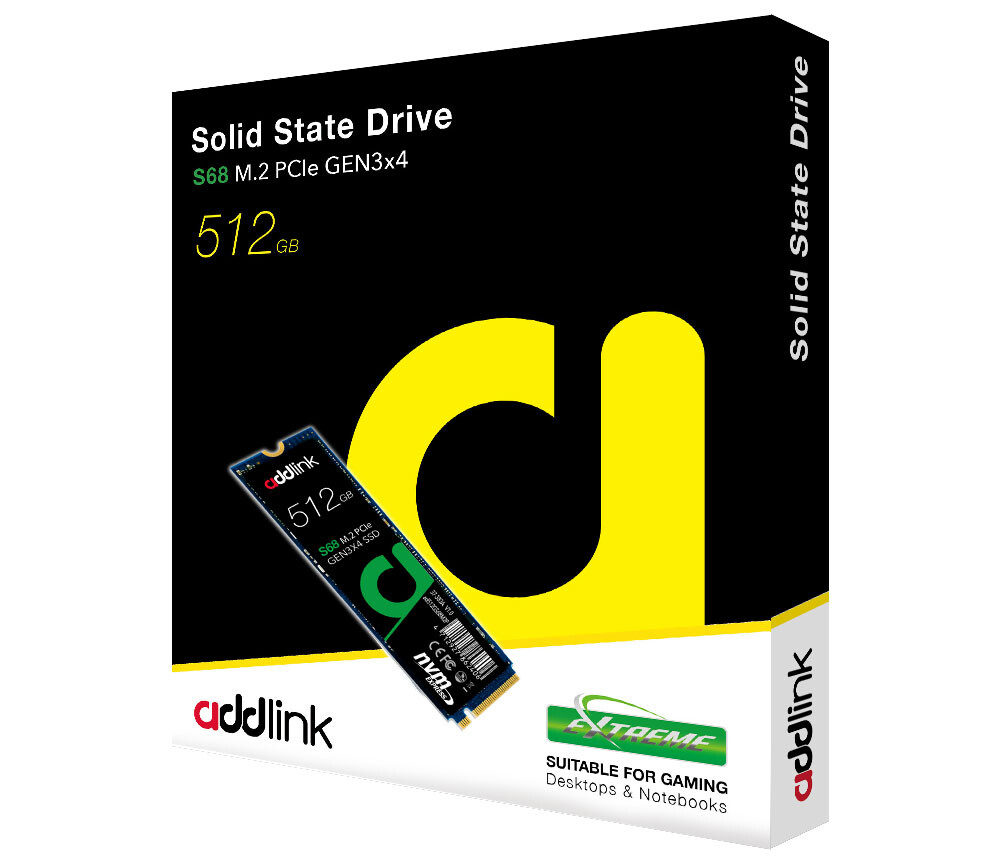
Addlink today debuted its S68 line of mainstream M.2 NVMe SSDs. Built in the M.2-2280 form-factor and taking advantage of the PCI-Express 3.0 x4 host interface, the S68 comes in 512 GB and 1 TB capacities. The drives combine a Phison E13T-series controller with 3D TLC NAND flash memory. The 1 TB variant offers sequential read speeds of up to 2,500 MB/s with up to 2,100 MB/s sequential writes; while the 512 GB model offers up to 2,100 MB/s reads with up to 1,700 MB/s writes. 4K random access for both drives are vaguely stated as up to 295,000 IOPS reads, and up to 430,000 IOPS writes. Write endurance of the two are rated at 400 TBW for the 512 GB model, and 800 TBW for the 1 TB model. The company is backing these drives with 5-year warranties. It didn't reveal pricing or availability information.

Kingston Ships 7.68TB Capacity for Industry-Leading High-Performance Data Center SSDs

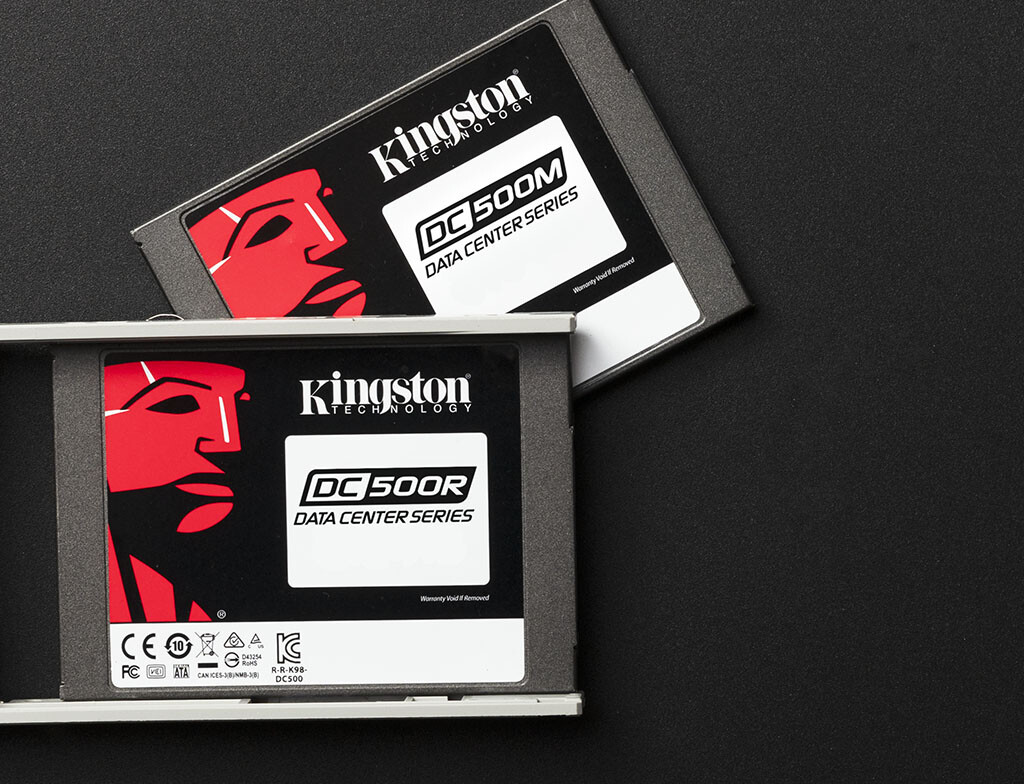
Kingston Digital, Inc., the Flash memory affiliate of Kingston Technology Company, Inc., a world leader in memory products and technology solutions, today began shipping the 7.68 TB model of the Data Center 500R (DC500R) and 450R (DC450R) SATA SSDs. The DC1000M 7.68 TB U.2 NVMe ships in June. The SSDs provide additional storage and implement strict QoS ensuring predictable IO and low latency for data centers using both NVMe and/or SATA.

The three SSDs join the DC1000B NVMe boot drive, DC500M (for mixed workloads) SATA SSD and Server Premier DRAM to form the most complete range of superior enterprise-class data center storage solutions in the market. "Higher capacity options for data centers enables organizations to increase storage space in their current footprint as Cloud computing continues to grow at unprecedented levels," said Tony Hollingsbee, SSD business manager, Kingston EMEA. "Our evolving line of data center storage solutions serve enterprise customers of all levels from hyperscalers on down and are a key component for organizations to keep the total cost of ownership down."

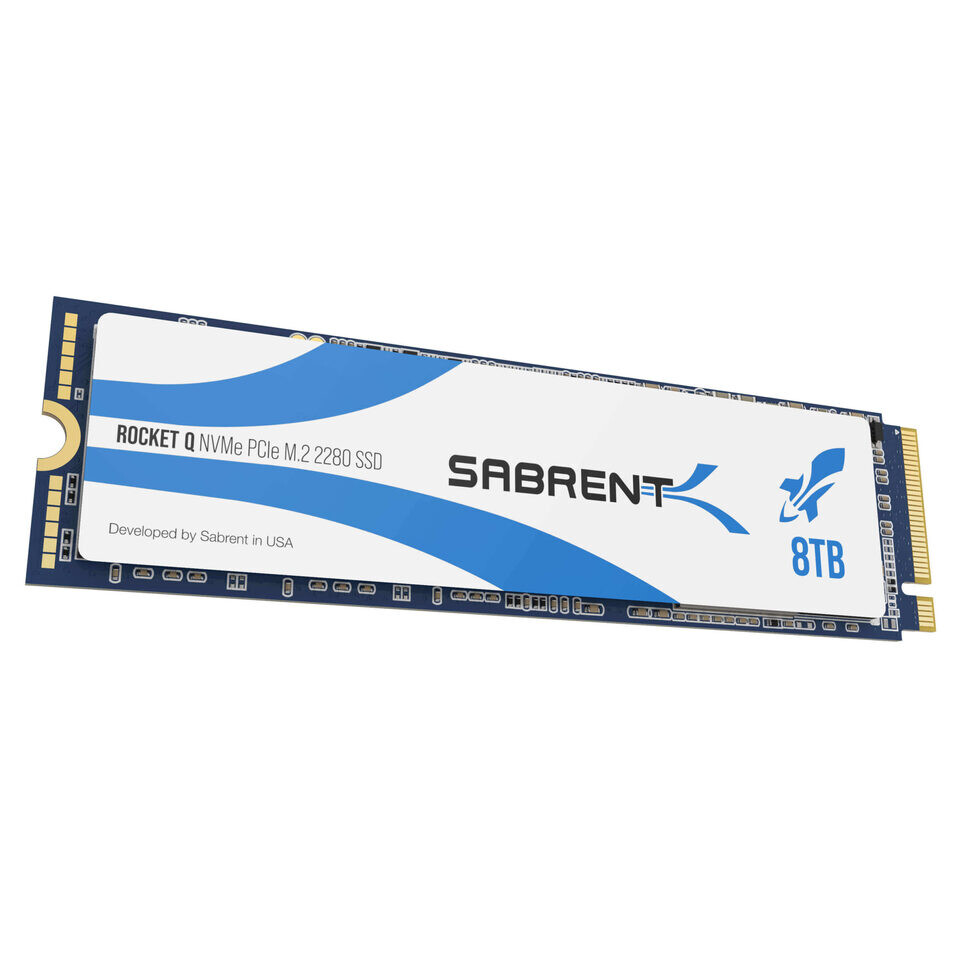
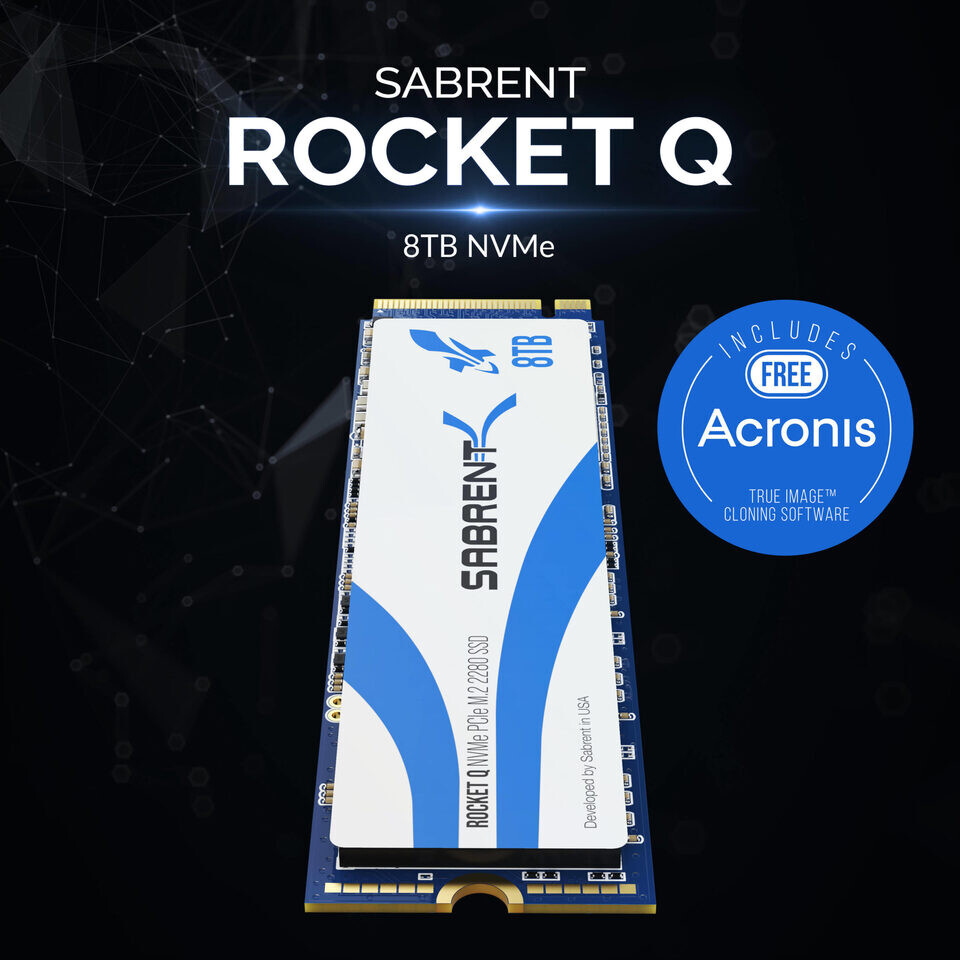
Sabrent Launches World's First 8 Terabyte M.2 NVMe SSD

Sabrent, a company focused on making storage devices and PC accessories, today announced the release of the world's first 8 terabyte NVMe SSD delivered in the M.2 form factor. The new SSD dubbed Rocket Q 8 TB NVMe PCIe M.2 SSD is a real treat for all SSD enthusiasts. Besides its staggering capacity, it has plenty of features as well. Built on top of 3D QLC NAND Flash memory chips, the Rocket Q SSD is supposed to deliver very high speeds on PCIe 3.0 x4 bus. With up to 3.4 GB/sec reads, and up to 3 GB/sec writes, the SSD is pushing the limits of the PCIe 3.0 x4 bus that it is designed to work for.

Rocking a Phison's E12S controller, it is supposed to maintain high speeds even on random 4K reads and writes. The company didn't reveal too many details about the performance, however, we can wait for some reviews. The SSD is PCIe 3.1 Compliant, NVMe 1.3 Compliant, and supports SMART and TRIM commands. With a purchase of this SSD, you get a free copy of Sabrent Acronis True Image for Sabrent Software for easy cloning. Pricing and availability are unknown.
Sabrent Rocket Q 8 TB NVMe PCIe M.2 SSD Sabrent Rocket Q 8 TB NVMe PCIe M.2 SSD

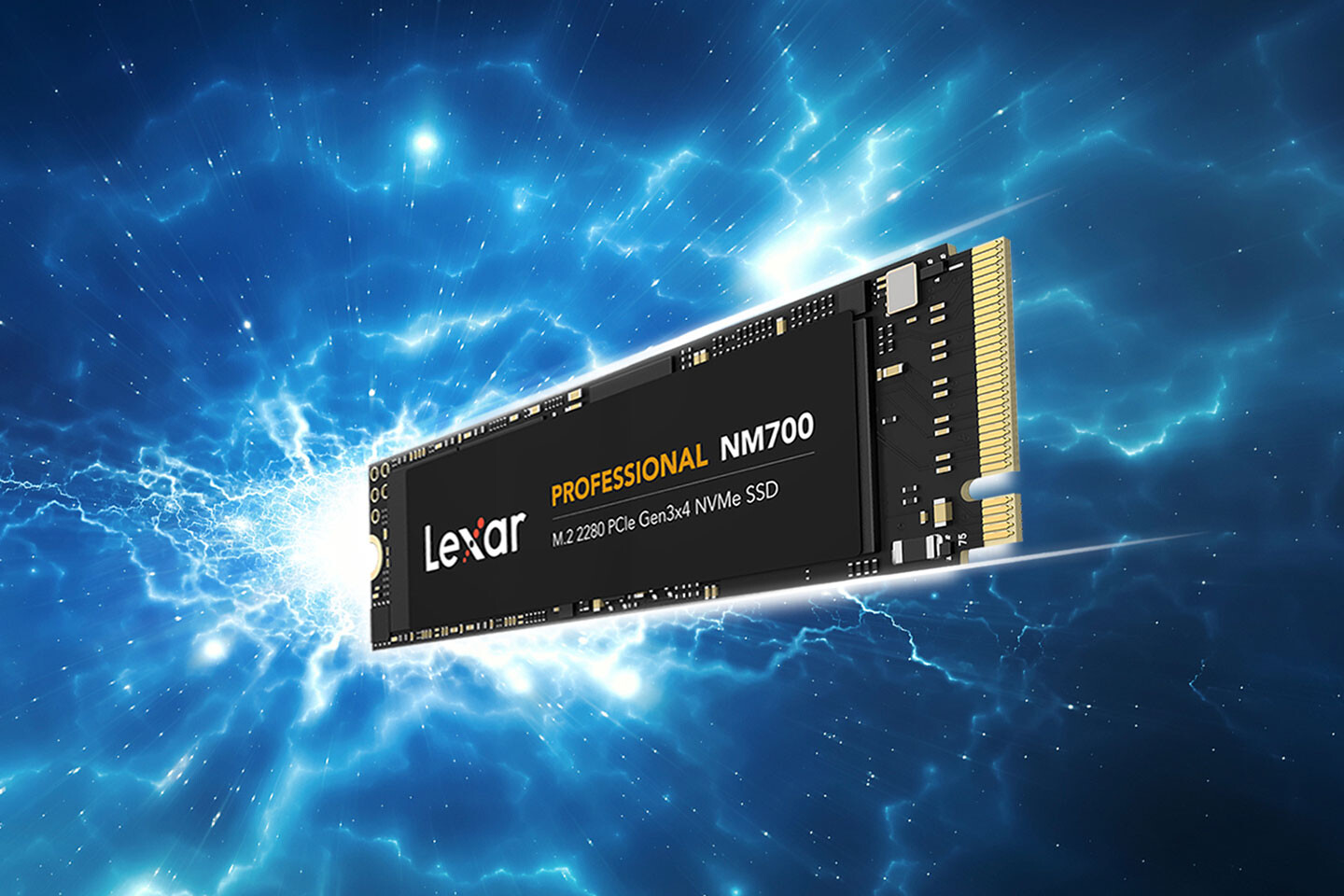
Lexar Announces New Professional NM700 M.2 2280 PCIe Gen3x4 NVMe SSD

Lexar, a leading global brand of flash memory solutions, today announced the new Lexar Professional NM700 M.2 2280 PCIe Gen3 x4 NVMe SSD to its family line of SSD products. As the need for faster performance and uninterrupted application experiences increases, Lexar has developed a solution to keep videographers, photographers, and designers in the driver's seat with speeds of up 3500 MB/s read, and 2000 MB/s write. The NM700 is supported by PCIe Gen3 x4 NVMe and built with 3D NAND flash for higher capacity and more efficiency without unnecessary slowdowns.

"The Lexar Professional NM700 allows our high-intensive users to experience improved performance with speeds that will keep them in front of any task. This new SSD solidifies our commitment to improving our SSD portfolio and meets the demands of our customers' needs," said Joel Boquiren, Director of Global Marketing.
Lexar NM700

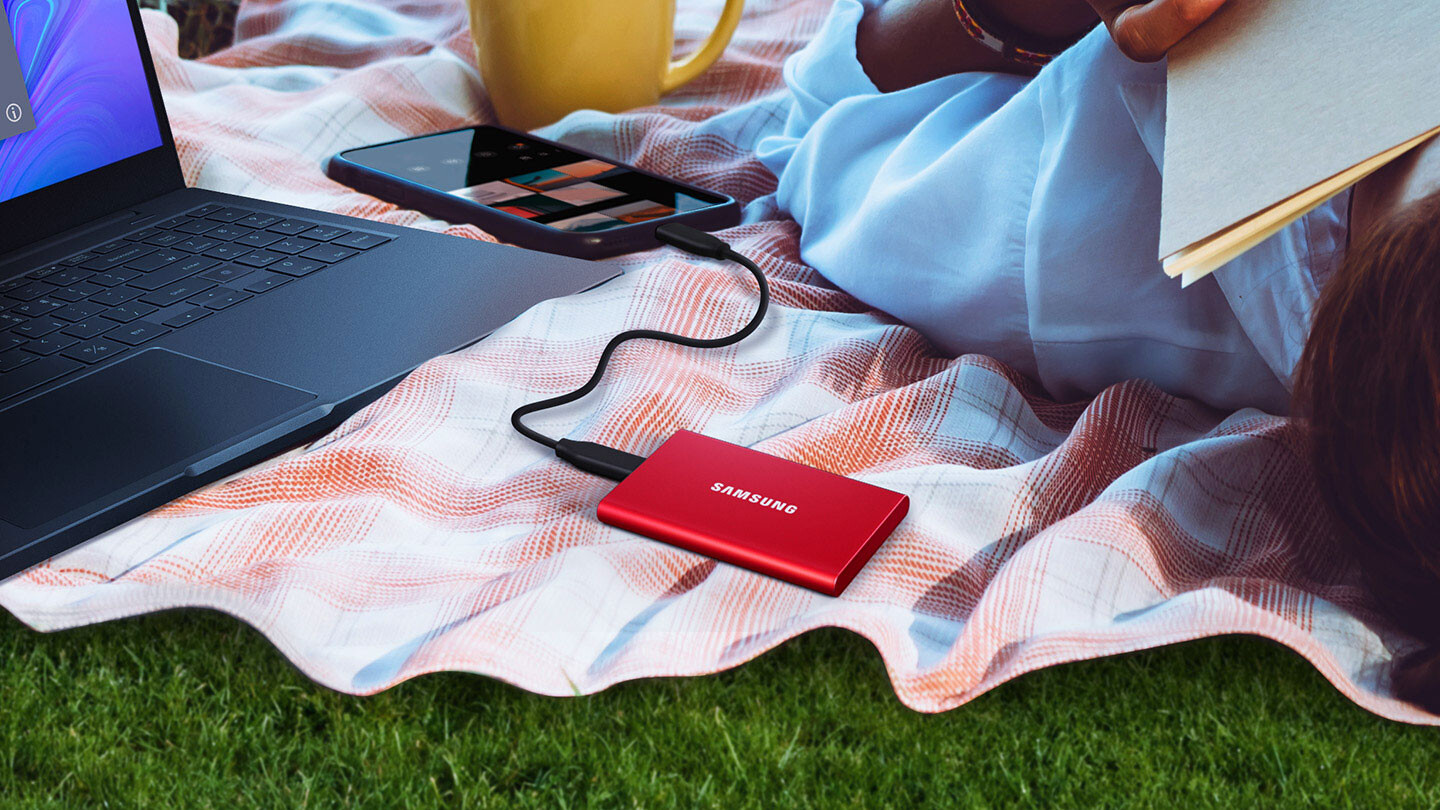
Samsung T7 Portable SSD is Now Available for Purchase

Following the release of Samsung's T7 Touch portable SSD in January, the T7 is now available. Samsung T7 combines sleek, compact design with the fastest transfer speeds currently available based on the USB 3.2 Gen 2 standard. The business card-sized portable SSD can be slipped into nearly any pocket and holds up to 2 TB of data. Samsung T7 is the perfect everyday storage companion for those looking to save video and photo content from a variety of USB-compatible devices. The T7 saves time with incredibly fast transfer speeds, and gives users peace of mind with data security features.

The T7 offers a significant speed upgrade over previous storage solutions. With a read speed of 1,050 MB/s and a write speed of 1,000 MB/s, it is approximately twice as fast as its predecessor, the T5, and up to 9.5 times faster than external hard disk drives. Moreover, the device can reach its maximum speed when used with the NVMe interface. With these speeds, Samsung T7 can help improve daily workflow and save valuable time for digital creative professionals.
Samsung T7

ADATA Launches Swordfish and Falcon NVMe SSDs for Creators

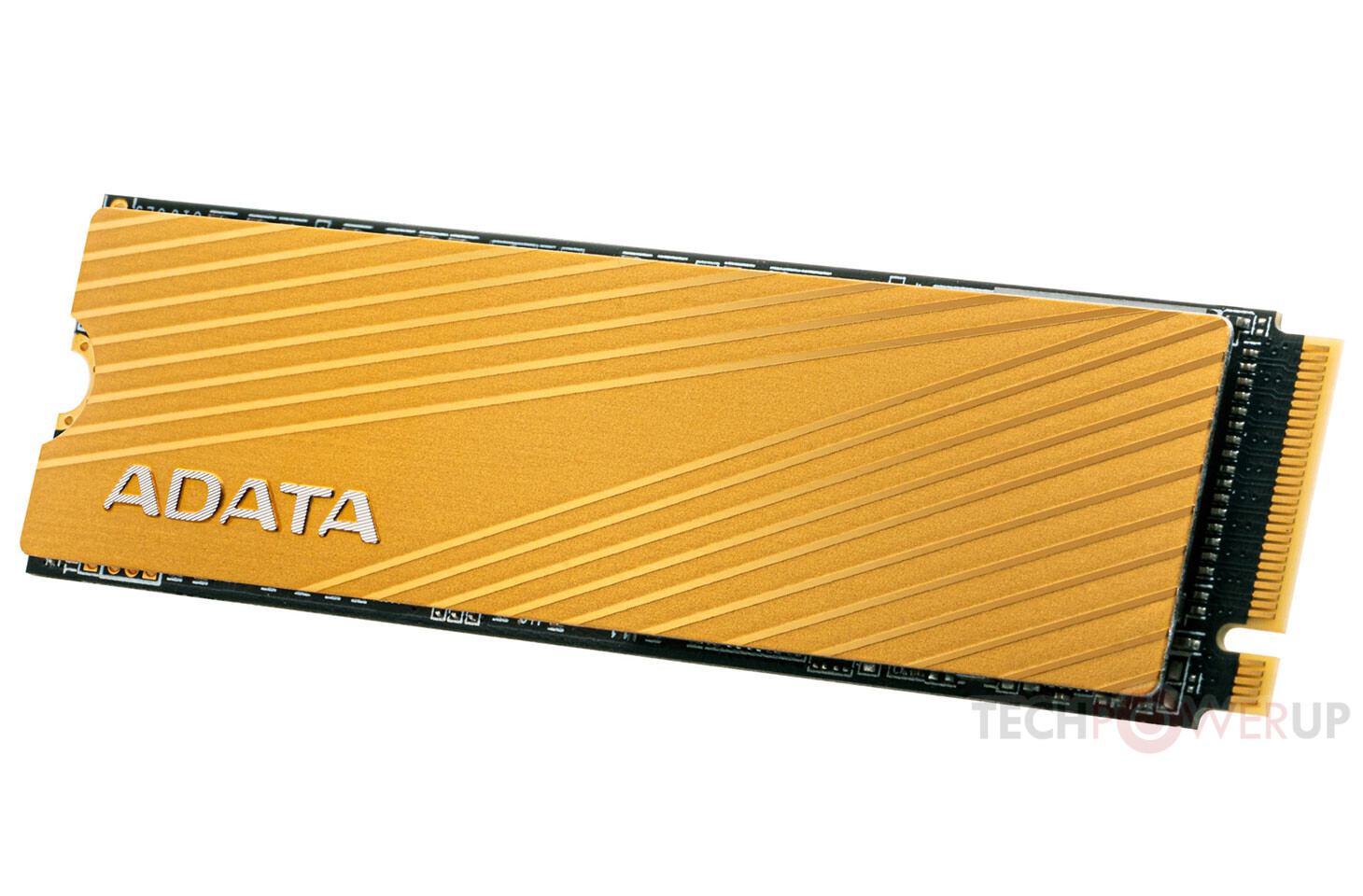
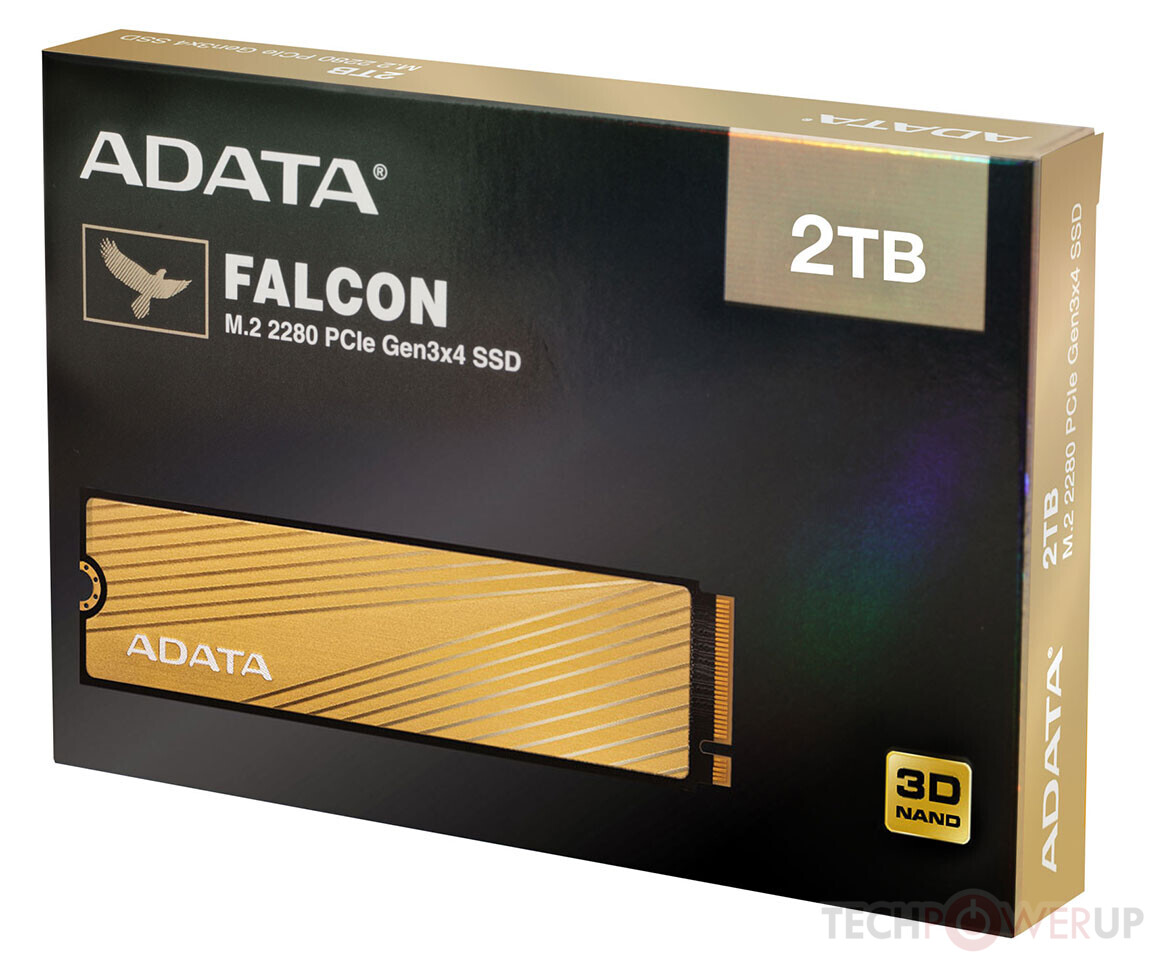
ADATA Technology, a leading manufacturer of high-performance DRAM modules, NAND Flash products, and mobile accessories, today announces the launch of two new PCIe Gen 3 x4 M.2 2280 solid state drives (SSD), the ADATA FALCON and SWORDFISH. Both SSDs were designed with creators in mind and are built with 3D NAND Flash memory and support the PCIe Gen 3 x4 interface for excellent performance and reliability.

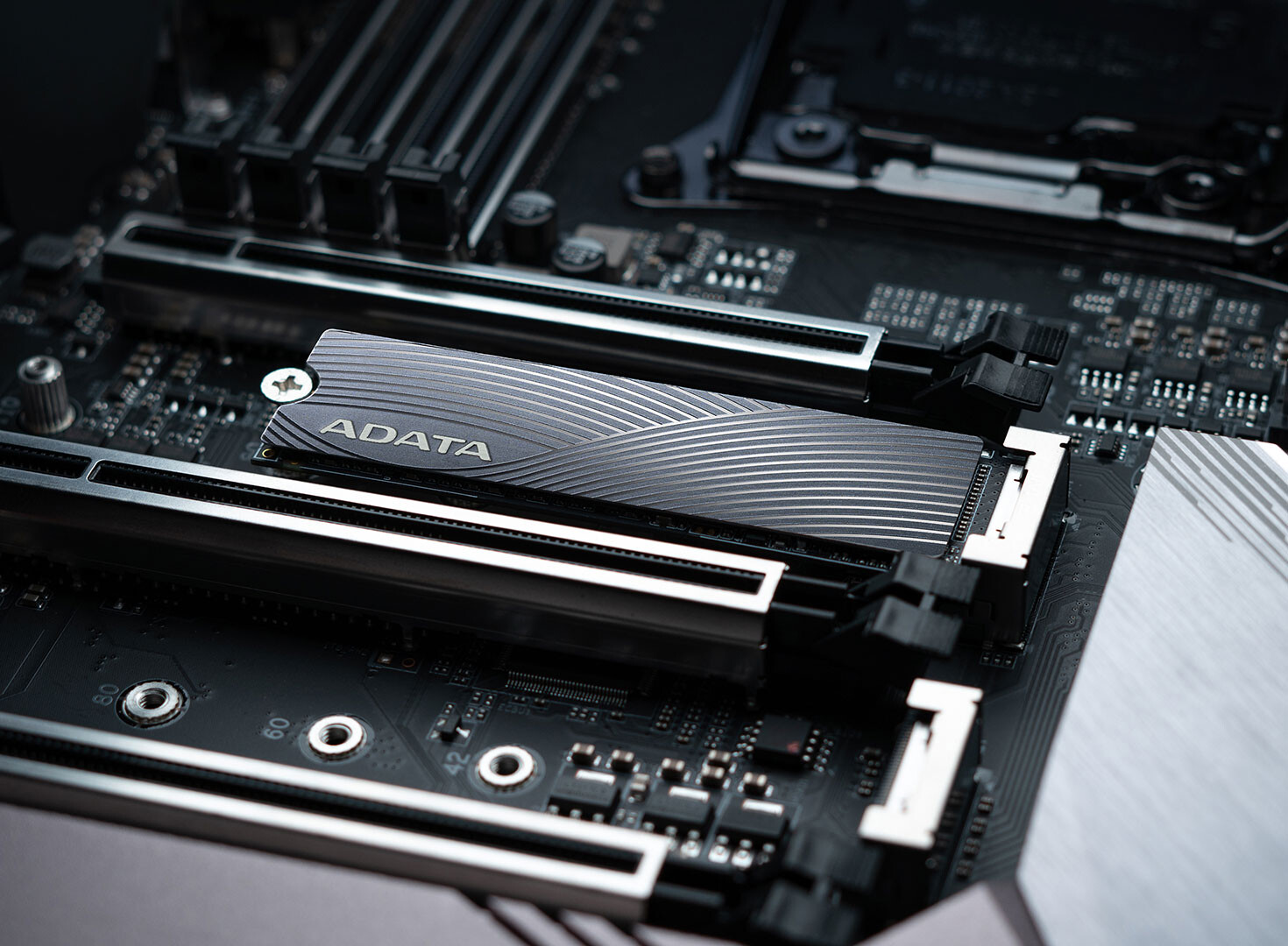
The ADATA FALCON SSD is made to help creators up their creative power. Using the PCIe Gen 3 x4 interface and equipped with 3D NAND Flash memory, the FALCON delivers read/write speed of up to 3100/1500 MB per second for uninterrupted productivity and creativity. With 3D NAND Flash, the FALCON features higher efficiency and increased reliability compared to 2D NAND SSDs. It comes in diverse capacities, ranging from 256 GB to 2 TB and features data protection and correction technologies to expand the lifespan of SSD. What's more, the FALCON sports intelligent SLC caching, host memory buffer, and random read/write of 180/180K IOPS to give creators seamless performance for creating. The FALCON also comes with a stylish aluminium alloy heatsink for heat dissipation.

ZOTAC Announces VR GO 3.0 Gaming Backpack PC

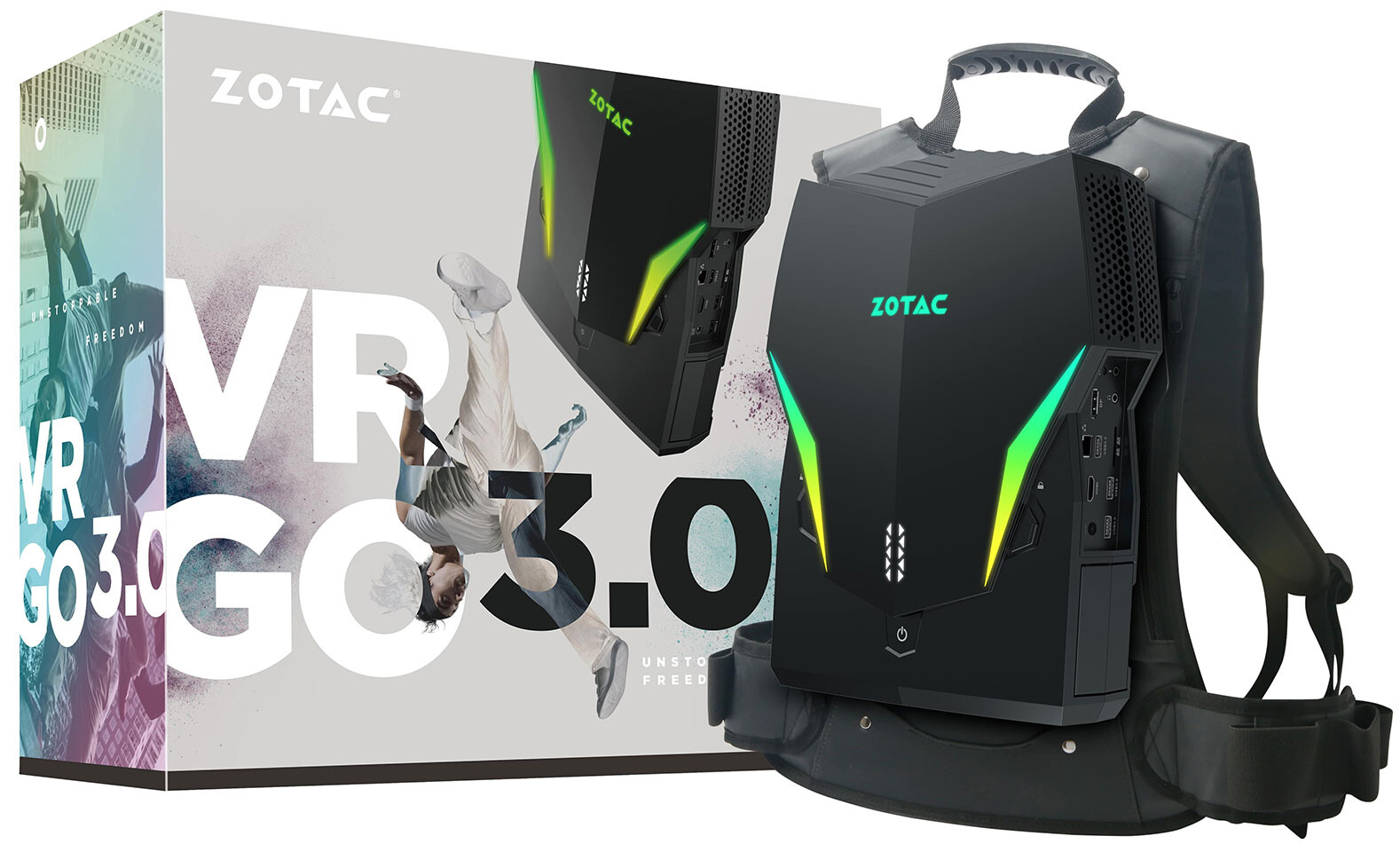
ZOTAC got around to launching the third generation of its VR GO line of gaming backpack PCs, the VR GO 3.0. ZOTAC had unveiled it at the 2020 International CES. These devices are essentially desktop-replacement notebooks minus the display, with connectivity for a VR headset, which you wear like a backpack. This is the device's first update in over two years, with the VR GO 2.0 launching in the thick of the VR craze around 2018.

The new VR GO 3.0 comes with an improved wearable design, with better thermal insulation and ventilation for the wearer. It also gets updated hardware in the form of a Core i7-9700 processor, GeForce RTX 2070 graphics, 16 GB of DDR4-2667 SO-DIMM memory, and 240 GB NVMe SSD storage. The device comes with two hot-swappable battery packs. You can swap out a battery with at least one of them in the bay, in the middle of your game. The VR GO 3.0 supports a wide range of VR HMD standards, and is based on Windows 10. The company didn't reveal pricing.

Micron Delivers Client NVMe Performance and Value SSDs With Industry-Leading Capacity Sizes and QLC NAND

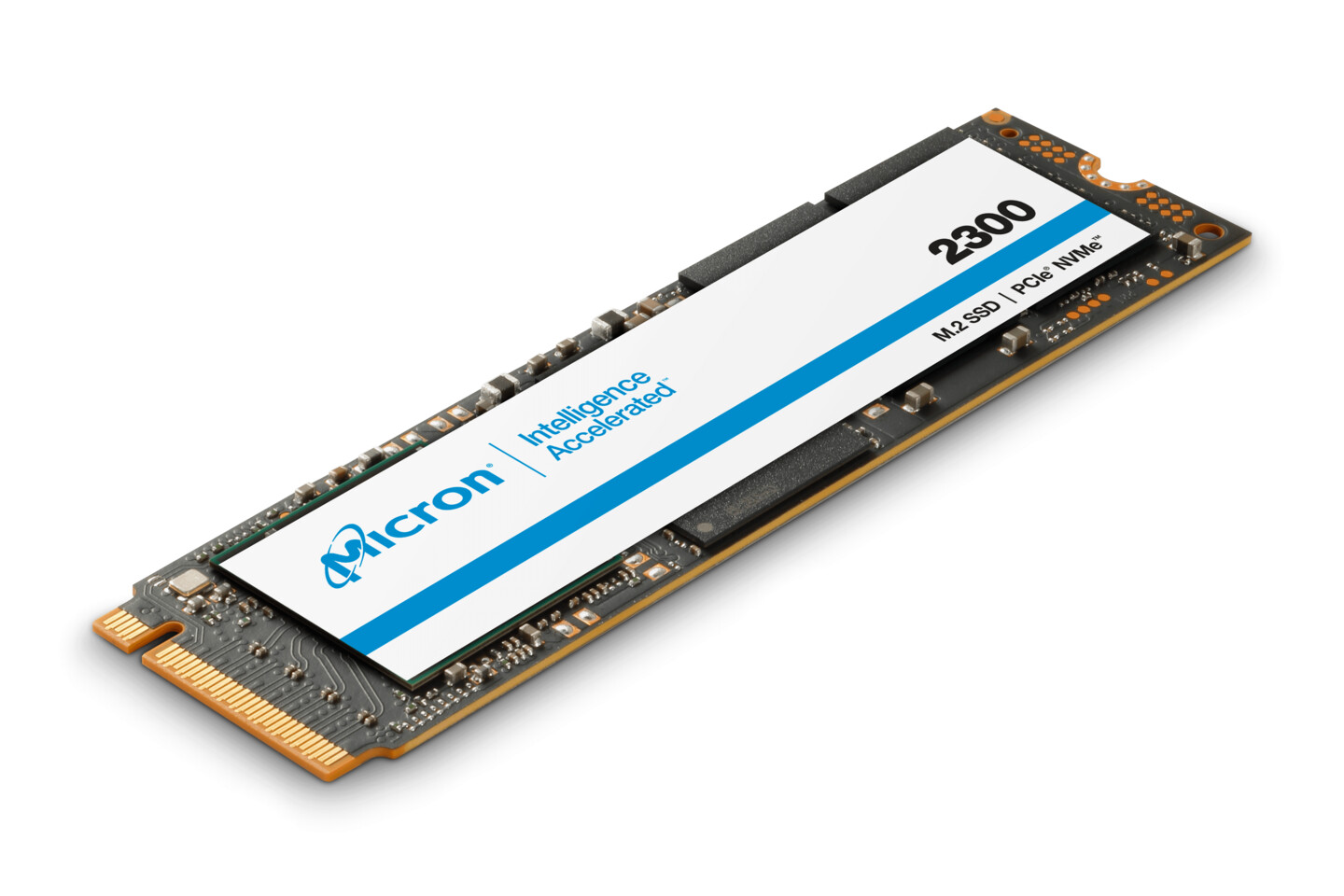
Micron Technology, Inc., today announced new client solid-state drives (SSDs) that bring NVMe performance to client computing applications, freeing laptops, workstations and other portables from legacy architectures that can rob devices of battery power, performance and productivity. The Micron 2300 SSD combines the power and density needed to drive compute-heavy applications in a compact form factor with the reduced power consumption modern mobile users demand. For the first time, Micron brings together NVMe performance and low-cost quad-level-cell (QLC) NAND in the Micron 2210 QLC SSD. It combines fast NVMe throughput and Micron's leadership in QLC technology to offer flash capabilities at hard disk drive-like price points while reducing power consumption by 15 times when compared to hard drives.
Micron 2300 NVMe SSD

ADATA Announces the Falcon M.2 NVMe PCIe Gen 3 SSDs

ADATA today announced the Falcon line of SSDs in the M.2-2280 form-factor, with NVMe 1.3 protocol support, leveraging PCI-Express 3.0 x4 host interface. The drives are characterized by an aluminium heatspreader on top of the NAND flash chips and controller, which isn't just an adhesive metal peal, but a 1 mm-thick metal plate. The Falcon comes in capacities of 256 GB, 512 GB, 1 TB, and 2 TB; and uses 3D NAND flash memory (likely QLC).

The ADATA Falcon offers sequential speeds of up to 3,100 MB/s reads, with up to 1,500 MB/s writes; and up to 180,000 IOPS 4K random access. The 2 TB variant offers 1,200 TBW endurance, the 1 TB variant offers 600 TBW, the 512 GB variant 300 TBW, and the 256 GB variant 150 TBW. ADATA is backing the drives with a 5-year warranty. The company didn't reveal pricing.
ADATA Falcon

KIOXIA Showcases PCIe 4.0 SSDs, New Software-enabled Flash Tech at OCP Virtual Summit

From introducing game-changing new technologies to being the first to deliver PCIe 4.0 U.3 SSDs, KIOXIA America, Inc. (formerly Toshiba Memory America, Inc.), continues to demonstrate its commitment to delivering cutting-edge flash solutions. This dedication will be on full display at this week's Open Compute Project (OCP) Virtual Summit and Future Technologies Symposium, where KIOXIA will showcase its data center and enterprise solid state drive (SSD) portfolio.

At the Summit, KIOXIA will highlight its CM6 and CD6 Series PCIe 4.0 NVMe enterprise and data center SSDs, KumoScale storage software based on NVM Express over Fabrics (NVMe-oF ) and a new Software-Enabled Flash (SEF) technology that redefines digital storage. KIOXIA has the broadest portfolio of SSDs in the market, including SSDs for client PCs, data center, hyperscale, high-end servers and storage systems.

HP to Release EX900 Pro M.2 NVMe 1.3 SSD

HP is reportedly looking to releases a next-generation storage device in the form of the EX900 pro SSD. Next-generation because this SSD will ship with the NVMe 1.3 protocol over a PCIe 3.0 interface (4x). HP is quoting maximum sequential read and write speeds set at 2095 MB/s and 1965 MB/s for the 1 TB version, which will obviously be the best-performing among offered capacities (256 GB and 512 GB). Random read and write IOPS are quoted at 283 K and 286 K, respectively. Apparently, the EX900 Pro features an independent cache design, though the original report is extremely scarce on details; for this to be relevant, it should be something different from the usual DRAM and SLC-caching that is usually employed by the best-performing SSD drives.

The EX900 Pro will ship with 3D NAND of unspecified layer topology, though the 5 year warranty given across the board is a welcome sight; TBW ratings are set at 650 TBW for the 1 TB version, 320 TBW for the 512 GB, and 160 TBW for the 256 GB one. The NVMe-based SSD will also offer support for NANDXtend error correction code (ECC) technology, SRAM ECC and end-to-end data path protection technology. No word on pricing or availability was available at time of writing.

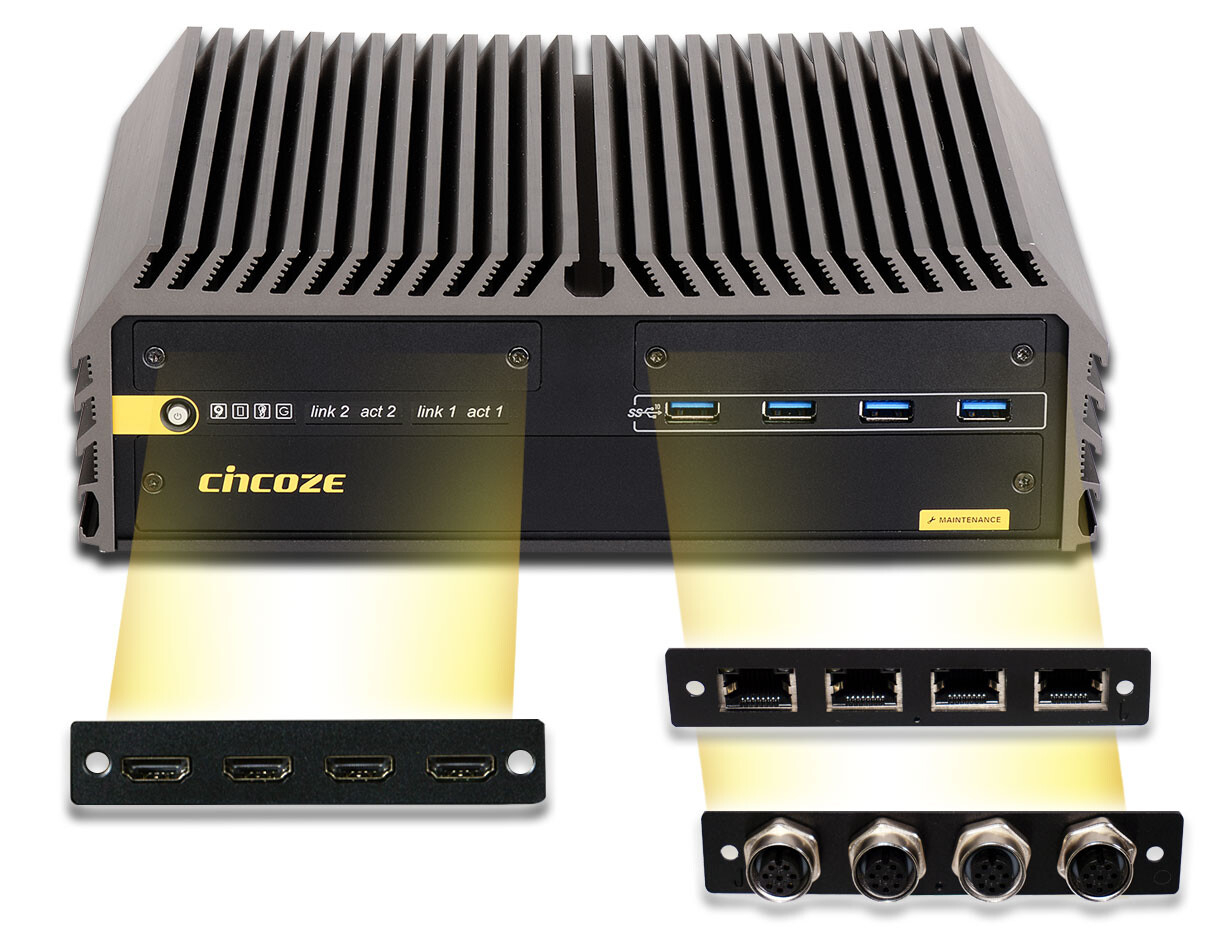
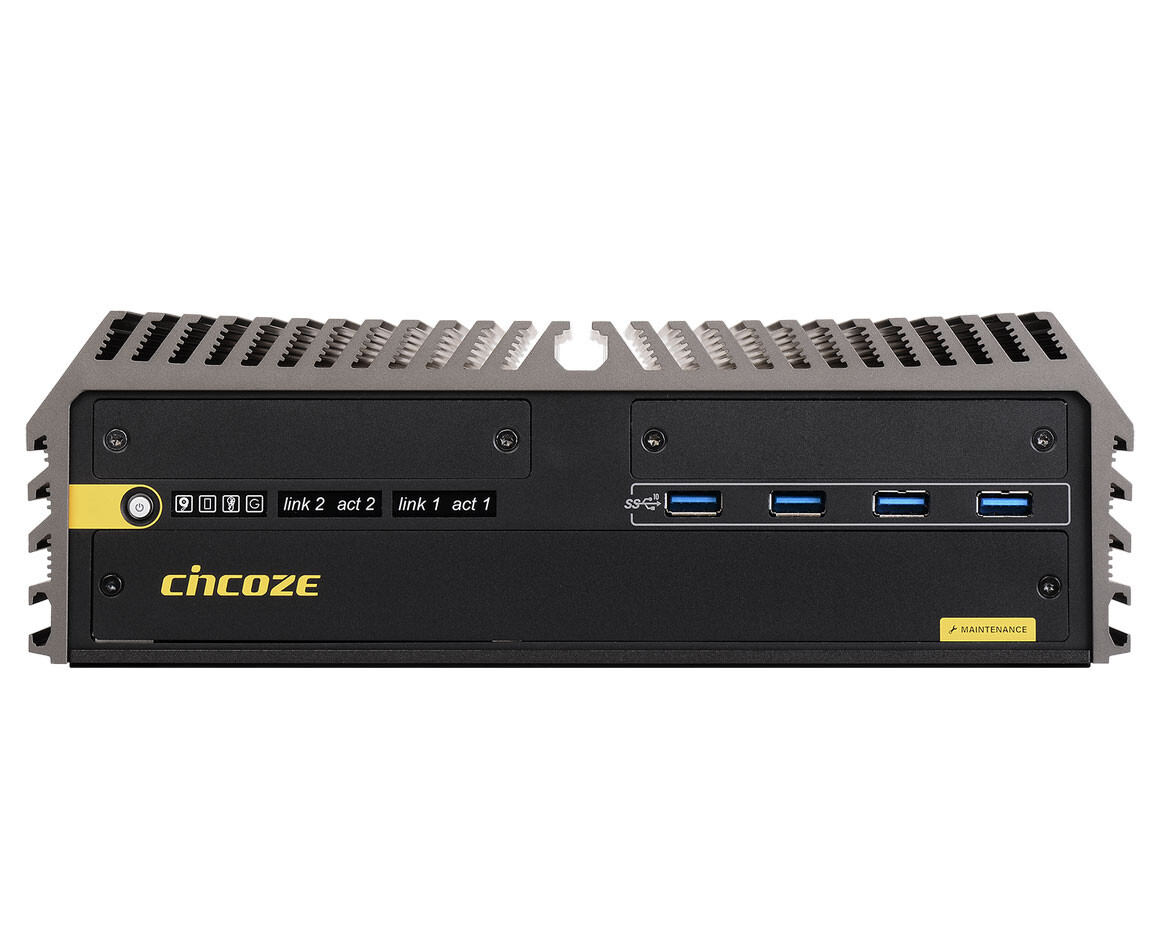
Cincoze Unveils GM-1000 Rugged Compact GPU Computer

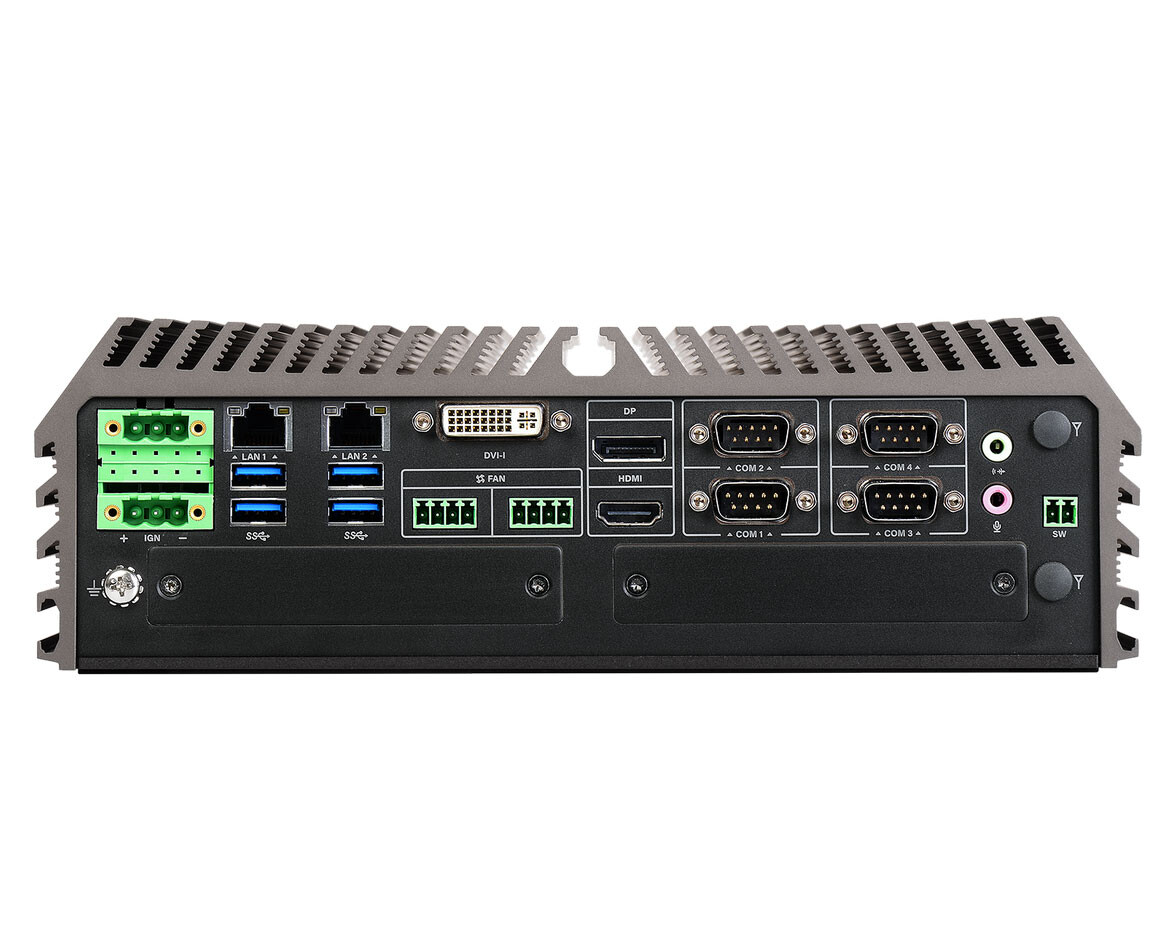
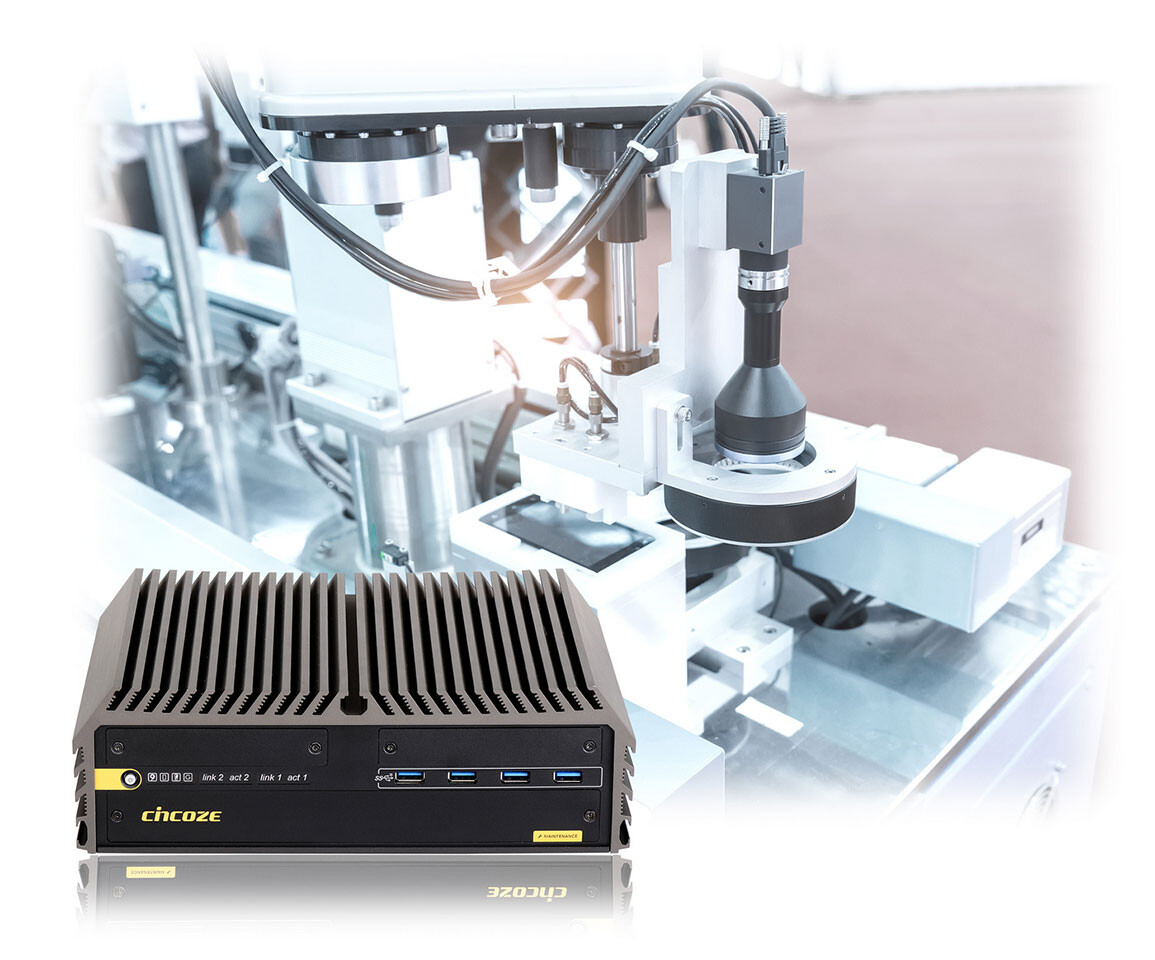
Cincoze, a professional manufacturer of embedded systems, unveils the GM-1000 rugged GPU computer, which is powered by the 9th/8th generation Intel CPU and supports one MXM GPU module expansion. This GPU computer provides high-performance computing capability with a small footprint design, which is suitable for applications like edge computing, machine vision, image processing, and artificial intelligence.

GM-1000 can be configured with a range of 9th/8th generation Intel CPUs, including Xeon and Core i up to 8 cores. It supports dual channel DDR4 2666 MHz SO-DIMM up to 64 GB. It has abundant I/Os, including 4x COM, 2x GbE LAN, 8x USB, 1x HDMI, and 1x DVI-I. GM-1000 comes with an M.2 M key slot to support NVMe SSD, and M.2 E key slot to support CNVi for WiFi or Bluetooth connection which are commonly required in high speed data storage and communication. All these functions are integrated in a small footprint just 260 mm x 200 mm x 85 mm, making it easily installed in space-limited environments.
Return to Keyword Browsing
Nov 22nd, 2026 18:42 CST change timezone

New Forum Posts

Popular Reviews

TPU on YouTube

Controversial News Posts