News Posts matching #NVMe

Return to Keyword Browsing

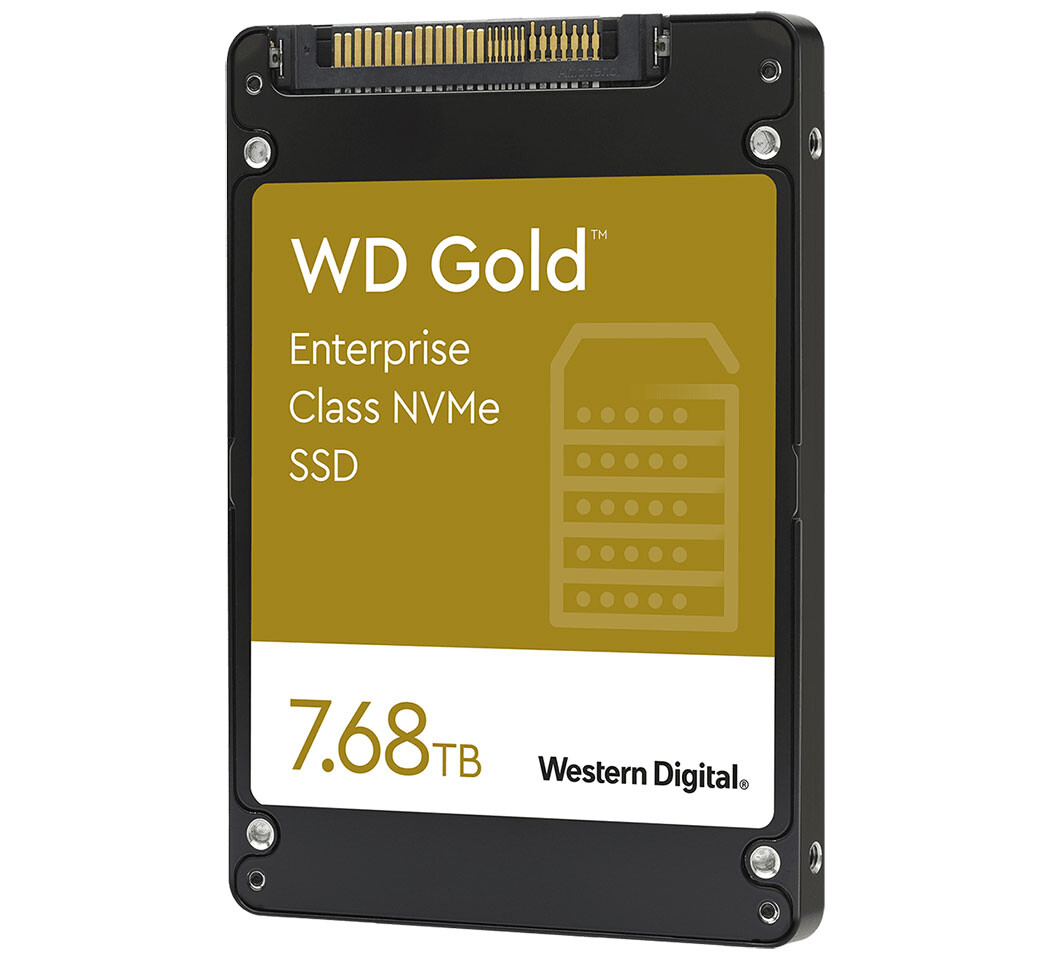
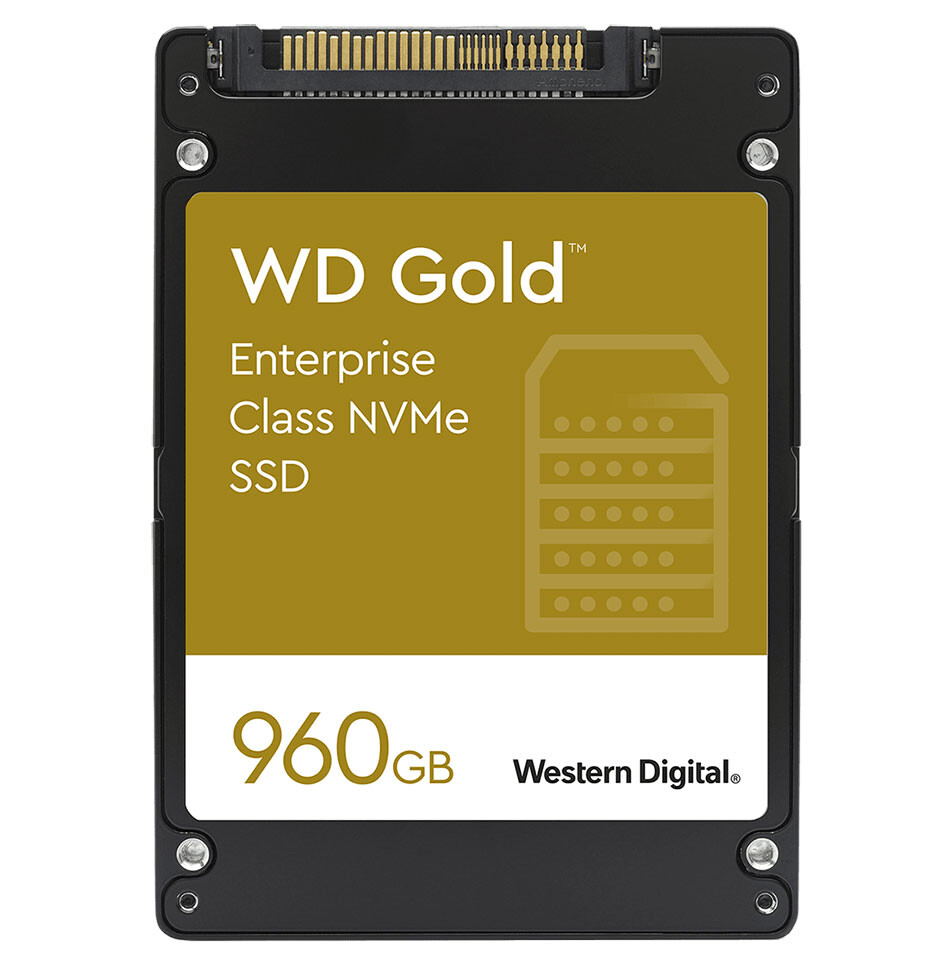
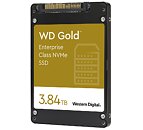
Western Digital Announces the WD Gold Series U.2 NVMe Enterprise SSDs

Western Digital is enabling small and medium-sized enterprises (SMEs) to easily transition to NVMe storage and dramatically improve application performance with a new addition to its portfolio of data center NVMe SSDs: the first enterprise-class NVMe SSD in the WD Gold family. Industry analyst firm IDC expects NVMe unit shipments to reach more than 79 percent of the market by 2023. With advancements in multi-core, multi-threaded CPUs, legacy storage technology has become a bottleneck to maximum application performance.

Shipping in early cQ2 2020, the new WD Gold NVMe SSDs will be available in four capacities to channel partners and end customers. The WD Gold NVMe SSD is designed to be the primary storage in servers delivering superior response times, higher throughput and greater scale than existing SATA devices for enterprise applications. WD Gold NVMe SSDs complement recently launched WD Gold HDDs by providing a high-performance storage tier for applications and data sets that requires low latency or high throughput.
Kingston Releases DC1000M U.2 NVMe SSDs for Mixed-use in Data Centers

Kingston Digital, Inc., the Flash memory affiliate of Kingston Technology Company, Inc., a world leader in memory products and technology solutions, today announced the availability of DC1000M, a new U.2 data center NVMe PCIe SSD. DC1000M is designed to support a wide range of data-intensive enterprise workloads, including Cloud computing, web hosting, high-performance computing (HPC), virtual infrastructures, artificial intelligence and deep learning applications. DC1000M joins the recently released DC1000B NVMe boot drive, the VMware Ready DC500 series SATA SSDs and DC450R to form the most complete range of superior enterprise-class data center storage solutions in the market.
"Mission critical services and Cloud-based applications depend not only on lightning-fast IOPS and bandwidth, but also on the consistency and predictability of the data being serviced," said Keith Schimmenti, enterprise SSD business manager, Kingston. "DC1000M provides the stability and low latency for the evolving data center, while powering the workloads that require one drive write per day (1 DWPD) endurance."
KIOXIA First to Deliver Enterprise and Data Center PCIe 4.0 U.3 SSDs

The PCI Express 4.0 specification was designed to double the performance of server and storage systems, pushing speeds up to 16.0 gigatransfers per second (GT/s) or 2 gigabits per second (Gb/s) throughput per lane, and driving new performance levels for cloud and enterprise applications. Today, KIOXIA America, Inc. (formerly Toshiba Memory America, Inc.) announced that its lineup of CM6 and CD6 Series PCIe 4.0 NVM Express (NVMe ) enterprise and data center solid state drives (SSDs) are now shipping to customers.

An established leader in developing PCIe and NVMe SSDs, KIOXIA delivers never-before-seen performance. KIOXIA was the first company to publicly demonstrate PCIe 4.0 SSDs and is now the first to ship these next-generation drives. The CM6 and CD6 Series SSDs are compliant to the latest NVMe specification, and include key features such as in-band NVMe-MI, persistent event log, namespace granularity, and shared stream writes. Additionally, both drives are SFF-TA-1001 conformant (also known as U.3), which allows them to be used in tri-mode enabled backplanes, which can accept SAS, SATA or NVMe SSDs.

AMD Gets Design Win in Cray Shasta Supercomputer for US Navy DSRC With 290,304 EPYC Cores

AMD has scored yet another design win for usage of its high-performance EPYC processors in the Cray Shasta supercomputer. The Cray Shasta will be deployed in the US Navy's Department of Defense Supercomputing Resource Center (DSRC) as part of the High Performance Computing Modernization Program. The peak theoretical computing capability of 12.8 PetaFLOPS, or 12.8 quadrillion floating point operations per second supercomputer will be built with 290,304 AMD EPYC (Rome) processor cores and 112 NVIDIA Volta V100 General-Purpose Graphics Processing Units (GPGPUs). The system will also feature 590 total terabytes (TB) of memory and 14 petabytes (PB) of usable storage, including 1 PB of NVMe-based solid state storage. Cray's Slingshot network will make sure all those components talk to each other at a rate of 200 Gigabits per second.

Navy DSRC supercomputers support climate, weather, and ocean modeling by NMOC, which assists U.S. Navy meteorologists and oceanographers in predicting environmental conditions that may affect the Navy fleet. Among other scientific endeavors, the new supercomputer will be used to enhance weather forecasting models; ultimately, this improves the accuracy of hurricane intensity and track forecasts. The system is expected to be online by early fiscal year 2021.

PATRIOT Launches the P300 M.2 PCIe Gen3 x4 NVMe SSD Series

PATRIOT, a global leader in performance memory, SSDs, gaming peripherals, and flash storage solutions, is pleased to announce the official launch of P300 Gen3 x4 NVMe m.2 SSD with capacities available from 256 GB up to 1 TB. The P300 is designed to deliver the most significant all-around performance for desktop and laptop users. Built with next-generation PCIe Gen3 x4 NVMe controller and best-in-class components, the P300 is posed to bring out rapid data transfer speeds and best in class reliability for the user. P300 represents a milestone for the next generation of PCIe Gen3 x4 NVMe SSD, which can offer 25% higher transfer speeds better IOPs over standard PCIe 3 x2 solutions and attribute to its low power consumption is the best solution for laptop battery endurance.

ICY DOCK Introduces ToughArmor MB720M2K-B Full Metal 4 Bay for M.2 NVMe SSDs

Introducing the ToughArmor MB720M2K-B, the world's first quad drive ruggedized M.2 NVMe SSD removable enclosure. M.2 NVMe SSDs no longer requires to be installed on to a motherboard or a riser card with a tiny screw and can now be installed and accessed from the front of your computer without any tools. The ToughArmor MB720M2K-B comes with patent-pending tool-less M.2 drive installation design which will alleviate the pain that many user experiences when installing M.2 drives and offer easy drive maintenance and system upgrading.

MSI's Rose Pink Prestige 14 Laptop Packs Some Serious Horsepower

MSI got bored of old dark/gray/white laptop designs and decided to spice things up a bit. Say goodbye to the old boring laptops and enter the MSI Prestige 14 Limited Edition Rose Pink laptop. Designed as a premium-looking machine, it has decent specifications to back up the good looks. Equipped with a 14-inch IPS display comes in two variants, a 1080p version, and 4K edition, and it has 100% coverage of the AdobeRGB spectrum. With such specifications, we know that it is targeting the professional content creators.

Under the hood, there is Intel's 10th generation Core i7-10710U "Comet Lake" processor paired with 16 GB of LPDDR3 2133 MHz RAM running in single-channel mode. For graphics, NVIDIA's GTX 1650 Max-Q GPU is on board with 4 GB of GDDR6 memory. Storage is limited to 512 gigabytes of PCIe 3.0 NVMe SSD space, as there is no room for expansion. Connectivity options include Bluetooth 5 and Wi-Fi 6 powered by Intel Wi-Fi 6 AX201 wireless adapter. When it comes to the IO, the Prestige 14 laptop is rocking two USB 2.0 adapter along with two Thunderbolt 3 ports, one 3.5 mm headphone jack, and one Micro-SD card reader. There is also a 3-cell 50 Whr battery powering the system. Price-wise, this laptop is retailing for around $1399 on stores like Amazon and Newegg.

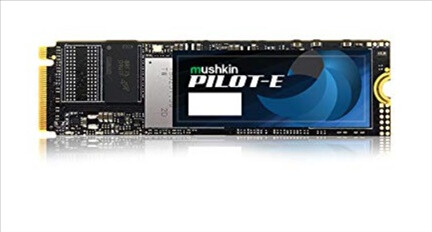
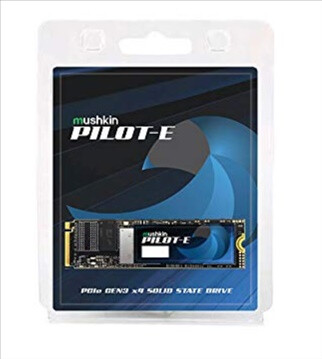
Mushkin Launches PILOT-E Series NVMe SSDs

Mushkin has announced availability of their updated PILOT-E NVMe M.2 SSDs, which build upon their previously released PILOT family of SSDs. The PILOT-E are offered in the M.2 2280 form-factor, and make use of the PCIe 3.0 x4 interface to achieve speeds of up to 3,500 MB/s sequential reads and 3,100 MB/s sequential writes. The PILOT-E SSDs make use of Silicon Motion's SM2262EN" controller, which supports up to 8 NAND channels for increased throughput which connects to the PILOT-E's 3D TLC NAND.

The PILOT-E family of NVMe SSDs will be available in capacities ranging from 500 GB up to 2 TB, which seems about right for current market trends. The 500 GB model will feature the lowest performance figures at 3,500 MB/s sequential reads,2,300 MB/s sequential writes, random reads at 344,400 IOPS, random writes at 343,000 IOPS, and a write endurance rated at 350 TBW. The PILOT-e counts with SLC cache for improved performance, as well as LDPC ECC, end-to-end protection, global wear leveling, static data refresh, HMB, and AES 256-bit encryption. MTBF is set at 1.5 million hours, and typical warranty is set at three years. I'm seeing pricing starting at $74,99 for the 500 GB version and $249.99 for the 2 TB one.

Intel 400-series Chipset Motherboards to Lack PCIe Gen 4.0, Launch Pushed to Q2

Intel's upcoming 400-series desktop chipset will lack support for PCI-Express gen 4.0. The motherboards will stick to gen 3.0 for both the main x16 PEG slots wired to the LGA1200 socket, and general purpose PCIe lanes from the PCH, according to a Tom's Hardware report. It was earlier expected that 400-series chipset motherboards will come with preparation for PCIe gen 4.0, so even if the upcoming 10th gen "Comet Lake" desktop processors lacked gen 4.0 root-complexes, the boards would be fully ready for the new bus standard in 11th gen "Rocket Lake" desktop processors.

10th gen "Comet Lake" desktop processors are built on 14 nm process, and implement Intel's current-gen CPU core design Intel has been implementing since 6th gen "Skylake." It's only with 11th gen "Rocket Lake" that the mainstream desktop platform could see a new CPU core design, with the company reportedly back-porting "Willow Cove" CPU cores to the 14 nm process. "Rocket Lake" is also expected to feature a small Gen12 iGPU with 32 execution units, and a new-gen uncore component that implements PCIe gen 4.0. PCIe gen 4.0 doubles bandwidth over gen 3.0, and while only a handful GPUs support it, the standard is made popular by a new generation of M.2 NVMe SSDs that are able to utilize the added bandwidth to push sequential transfer rates beyond M.2 PCIe 3.0 x4 limitations.

Razer at CES 2020: Kishi Mobile Controller, Tomahawk Gaming Desktop, and an Epic Sim

Razer had an interesting outing at CES 2020. There were no new PC gaming peripherals, other than Star Wars "storm trooper" co-branded Kraken, Goliathus, and Atheris; but three interesting exhibits. To begin with, Razer Kishi is an adjustable, split game controller for smartphones. The controller's two ends (meant for your left and right hands, wrap around the two ends of your smartphone. You get two analog thumbsticks, a D-pad, four action buttons, and four triggers. The Razer Gamepad app lets you map the controller to your smartphone over Bluetooth, and provides custom button mapping. The company also showed off Arctech line of smartphone sleeves that are designed to dissipate heat.

Having made its mark as a leading gaming notebook vendor, Razer is turning its attention to pre-built gaming desktops, and we saw one of its first creations, the Tomahawk SFF. Much like Apple, Razer has a serious focus on form as much as function, and that's evident with the aluminium CNC precision-milled chassis with tempered glass side-panels, and a size that's fit both for desks and the living room.

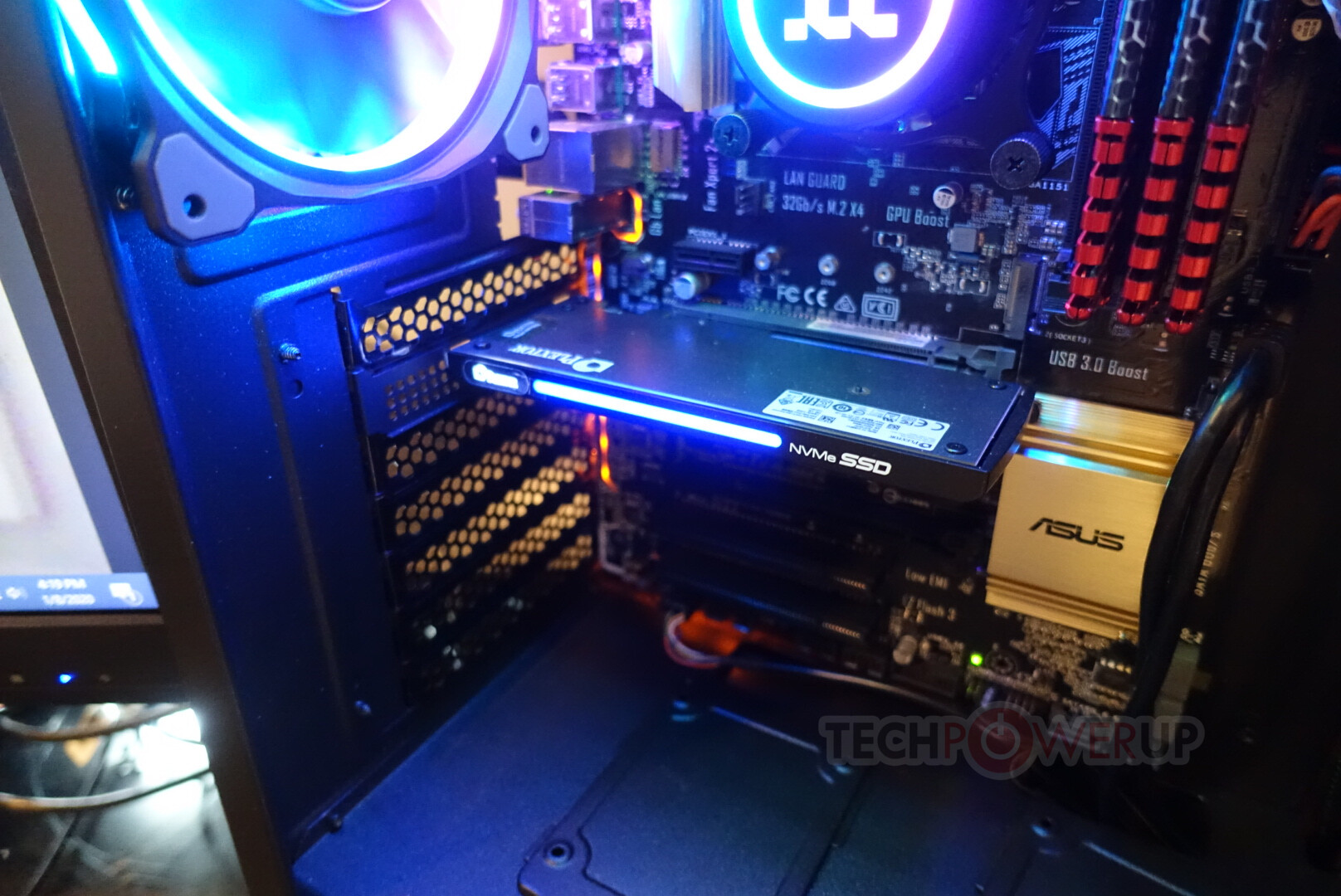
Plextor at CES 2020: M9P Plus AIC SSD and its M.2 Twin

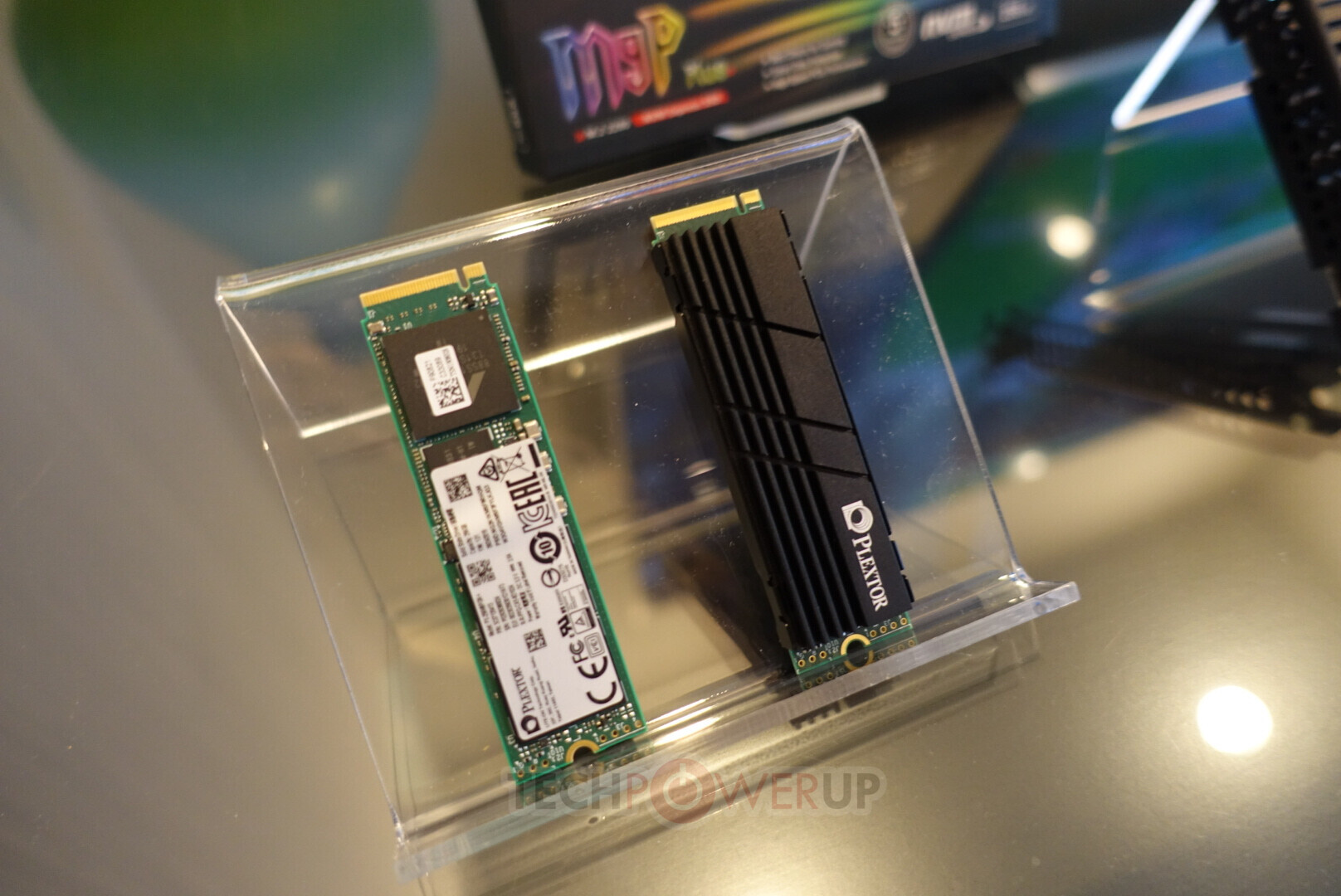
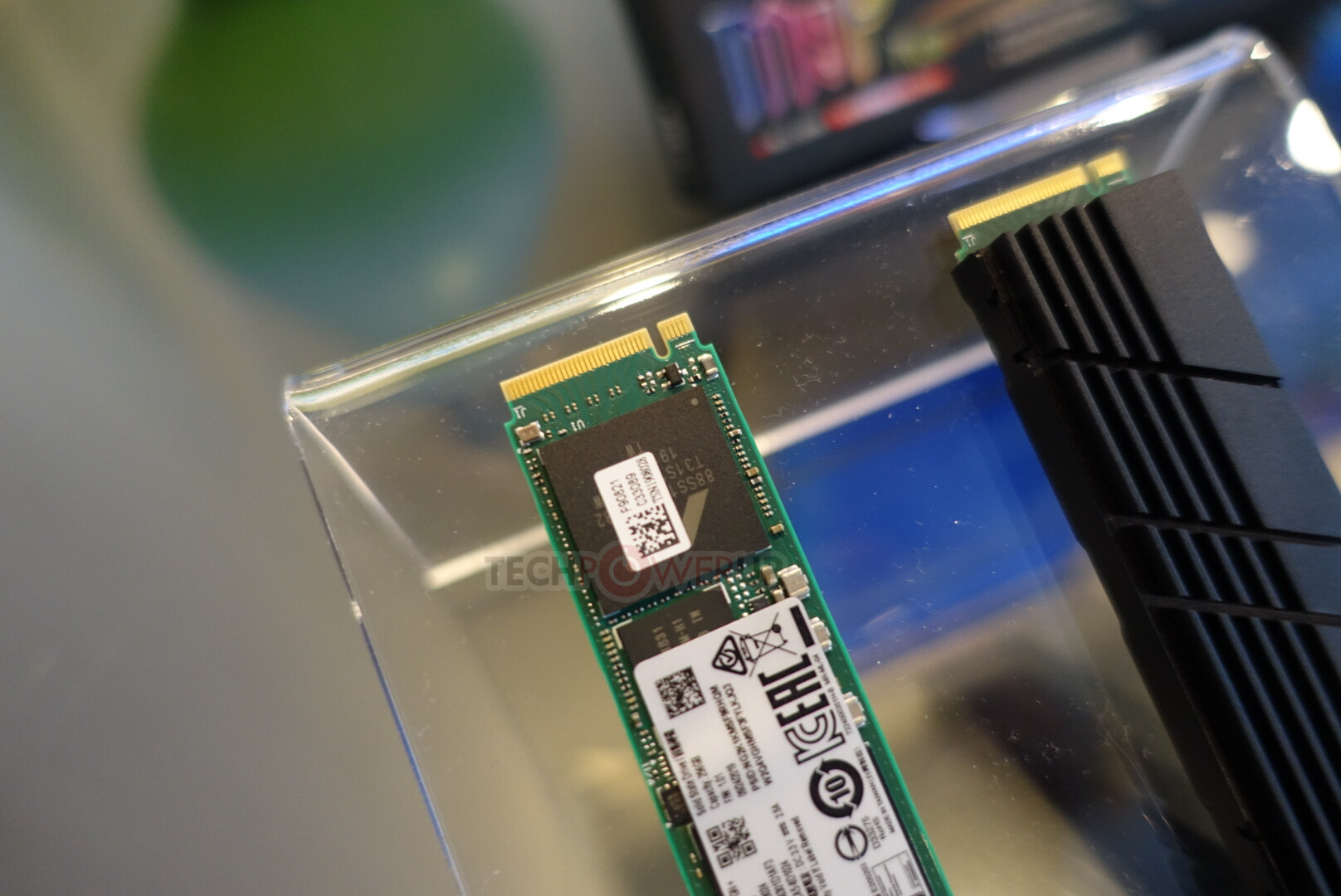
Plextor showed off its very recently announced M9P line of premium PCI-Express NVMe SSDs at CES 2020. The M9P Plus comes in both half-height add-in card (AIC) form-factor, and a more conventional M.2-2280 form-factor. In both, it leverages PCI-Express 3.0 x4 along with the NVMe 1.3 protocol. At the heart of these drives is the Marvell 88SS1092 "Eldora Plus" controller that has 8 flash channels. This controller is paired with Kioxia 96-layer 3D TLC NAND flash (BiCS 4), and a DDR4 DRAM cache.

With capacities of 256 GB, 512 GB, and 1 TB, the M9P offers sequential reads of up to 3,400 MB/s, with up to 2,200 MB/s writes (up to 1,700 MB/s writes for the 256 GB variant). Endurance (TBW) for the three models are proportionately rated at 160 TB, 320 TB, and 640 TB. The 256 GB variant of the M.2-2280 model is priced at $51, the 512 GB variant at $81, and the 1 TB variant at $135. The AIC equivalents are priced at roughly $15 premiums over these prices, and in addition to the convenience of AIC (easier to swap in a test bench), they feature some RGB LED embellishments.

STEIGER DYNAMICS launches FORGE Living Room Gaming PC

At the Consumer Electronics Show 2020, Living Room PC manufacturer STEIGER DYNAMICS launches the liquid cooled FORGE compact Gaming PC. Measuring only 6.7 x 18.5 x 10.8 inches (17 x 47 x 27.4 cm (WxHxD), 22 L volume), FORGE feels equally home on desks, TV cabinets and other areas with limited space. FORGE can be placed vertically or horizontally while providing equal cooling performance and quietness levels.

Based on a modified Phanteks Evolve Shift chassis, FORGE features a high-quality, vibration-optimized, sand-blasted aluminium design with side mesh or windows. FORGE is available in Satin Black and Anthracite Grey color options. 120 and 140 mm CPU liquid cooling options and 140 mm case fans allow for maximum air flow and ultra-quiet operation at idle and low loads. This gives FORGE the capability to handle latest generation overclocked Intel CPUs up to 10 cores/20 threads and the AMD Ryzen 9 3950X with 16 cores/32 threads as well full-size NVIDIA graphics cards up to the GeForce RTX 2080 Ti.

Mini PCs for Creators, NUC Rivals, AMD-powered ZBOXes: ZOTAC at CES

ZOTAC isn't just a graphics card major, but over the years developed a thriving lineup of compact desktops, mini PCs, and compact gaming desktops. The big buzzword this CES is "creator," and the company unveiled its new Inspire Studio line of compact desktops targeting creators, which are physically similar to the ZBOX Magnus. These are 5.85-liter (volume) boxes that take up minimal space on your desk, but pack serious hardware: a 9th gen Core i7 processor, GeForce RTX 2060 Super graphics, M.2 NVMe storage, and modern networking that include 802.11ax WLAN and 2.5 GbE wired Ethernet.

Next up is the ZBOX Edge. ZOTAC has been pushing the limits of compact desktops, and the ZBOX Edge MI643 is their latest creation. With an ultra-thin design that involves a 2.85 cm tall body and the ability to tuck it away behind your monitor, the MI643 packs a Core i5-10210U quad-core "Comet Lake" processor, DDR4 SO-DIMM memory, M.2 NVMe SSD storage, 802.11ac WLAN, dual 1 GbE networking, and Bluetooth 5.0. A more economical variant of this is the CI341, with 3.21 cm height, Celeron N4100 SoC, M.2 SATA storage, and SO-DIMM memory slots.

ASRock to Launch Hyper Quad M.2 PCIe 4.0 Expansion Card

ASRock is looking to launch a PCIe expansion card for all of your M.2 needs. Should you find your current motherboard is already full to the gills with M.2 SSDs, ASRock's Hyper Quad M.2 PCIe expansion card will allow you to increase M.2 vacancy by up to four additional slots (there's an on-off toggle for you to move in the PCB to select the active M.2 SSDs). The card uses the PCIe 4.0 x16 interface to sufficiently feed the four M.2 SSDs (which typically use the PCIe 4x NVMe protocol) with data.

This is a top notch expansion card design, featuring an aluminium cover and a 50 mm fan to cool down all those SSDs' controllers. The cover features 4x 110 mm thermal pads which align with the M.2 mounts on the PCB, thus allowing the aluminium cover to serve as a veritable heatsink and improve operating temperatures. The expansion card is fed by a single 6-pin power connector, and there is an activity LED for quality of life improvements. No word on pricing just yet.

Kingston Technology Announces Data Center DC1000B NVMe SSD

Kingston Technology today announced the Data Center DC1000B M.2 NVMe SSD, optimized for server boot drive applications, featuring power-loss protection (PLP). Kingston's Data Centre DC1000B is a high-performance M.2 (2280) NVMe PCIe SSD using the latest Gen 3.0 x 4 PCIe interface with 64-layer 3D TLC NAND. DC1000B offers data centres a cost-effective boot drive solution with the reassurance that they are purchasing an SSD designed for server use. The DC1000B is ideally suited as an internal boot drive for use in high-volume rack-mount servers, as well as for use in purpose-built systems that require a high-performance M.2 SSD that includes on-board power loss protection (PLP).

M.2 NVMe SSDs are evolving within the data centre, providing efficiencies in booting servers to preserve valuable front-loading drive bays for data storage. Whitebox and Tier 1 Server OEMs are beginning to equip server motherboards with one, or sometimes two, M.2 sockets for boot purposes. While the M.2 form factor was originally designed as a client SSD form factor, its small physical size and high performance make it attractive for server use. Not all SSD are created equal and using a client SSD in a server application may result in poor, inconsistent performance.

ASRock at CES 2020: Jupiter A320 Mini-PC, A320-M ITX Motherboard

ASRock at CES 2020 showcased their newfound commitment to AMD APUs and CPUs in the form of their new 1-liter Jupiter A320 mini-PC and the A320-M motherboard. The A320-M motherboard supports up to 65 W AMD APUs, features dual SODIMM memory sticks support, includes 1x NVMe M.2 storage slot and 1x SATA. Video outputs include 2x HDMI and one D-Sub.

ASRock also showcased their Jupiter A320 Mini-PC, which was previously an Intel-only product but will now be offered with AMD innards as well. Offering support for up to 65 W AMD APUs, the Jupiter A320 offers 2x NVMe M.2 storage expansion, 1x SATA, and 8x USB (including 2x Type C and 2x Type-A in the front panel). Video output is taken care of by 1x DisplayPort or 1x HDMI.

Silverstone at CES 2020: Cases, PSUs, and Accessories Galore

Silverstone at CES 2020 took the opportunity to showcase selections of their portfolio for the media, ranging from PC cases in major form-factors, PSUs, and a range of "ease-of-life" and aesthetic-driven accessories. Accessory-wise, there's a range of SSD-related products, such as the MS09 stick, which allows conversion of an M.2 SSD to what basically amounts to a USB 3.1 pen drive; other products in this category include the MS09-Mini and the MS11, which improves support for the NVMe protocol. The ECM26 is a PCIe adapter for M.2 sticks, while the Silverstone TP02-M2 presents itself as a heatsink for installation on non-passive-cooled M.2 SSDs.

Continuing the SSD accessories galore, there are a number of other solutions, including a tool-less NMVe to PCIe adapter (ECM21-E), an ARGB powered one (ECM24-ARGB, which includes a heatsink), a simpler, non-ARGB one with a heatsink (ECM23), and my personal favorite, a docking station for a barebones M.2 drive you may have around, in the form of the TS16 station. The presence of a Power button very surely means this can't be hot-swapped - the risk of data-loss is real.

Samsung at CES 2020: SSD 980 PCIe Gen 4 M.2, SSD T7, and the Gorgeous Odyssey G9 Monitor

It's finally here: a high-end PCI-Express gen 4.0 M.2 NVMe SSD by Samsung, made end-to-end by homebrew components. When it releases sometime later this year with a possible technical reveal in Q2, the SSD 980 will be possibly the only client-segment M.2 NVMe PCIe gen 4 SSD to feature MLC (2 bits per cell) NAND flash memory. This also means that the highest capacity on offer is just 1 TB. The company also put out sequential transfer rates: up to 6,500 MB/s reads, with up to 5,000 MB/s writes. The biggest payoffs of MLC would be sustained write performance and endurance (in its capacity class, compared to TLC and QLC).

Next up, is the Portable SSD T7 Touch, a successor to the T5 from 2017. This drive comes in an in-built fingerprint reader, letting you secure its data with your fingerprints. The drive is also a much needed update to the T5, which still uses 64-layer TLC NAND; and possibly uses the latest generation 96-layer V-NAND. The drive is built with an aluminium case that's drop-resistant up to 2 m. A single USB 3.2 connection handles power and data. The drive includes type-C to type-C and type-C to type-A cables, and will be compatible not just with PCs, but also Samsung Galaxy smartphones and tablets.

Kioxia, Formerly Toshiba Memory, Makes its CES Debut

One of the big hardware industry changes of 2019 was the formal spin-off of Toshiba Memory as an entirely independent firm called Kioxia. This is big, because Toshiba is regarded as the inventor of NAND flash as we know it; and a pioneering firm with DRAM, NAND flash, and other forms of solid-state storage. Toshiba retains the hard disk business. Having formally begun operations only in Q4-2019, much of Kioxia's upcoming products are in development, but we still caught some of their latest SSDs that implement PCIe gen 4.0 and NVMe 1.4 protocol, besides some former-Toshiba products under new Kioxia branding. Kioxia is planning to make a big splash in the near future as its pioneering Twin BiCS Flash tech hits the market, besides scoring design wins with the automotive and data-center industries.

The CD6 and CM6 SSDs are star-attractions. The CD6 is designed for data-centers, and comes in capacities ranging all the way from 800 GB to 15 TB, with 1 to 3 DWPD endurance. It uses the next-generation U.3 (SFF-TA-1001) connector with PCI-Express 4.0 x4 physical-layer and NVMe 1.4 protocol. Among its security features are SIE, FIPS140-2, and SED Opal/Ruby. The drive is built in the 15 mm-thick 2.5-inch form-factor. The CM6 is its cousin, targeted at enterprise environments with higher mission-criticality. With capacities ranging from 800 GB to a staggering 30 TB, the drive offers sequential transfer-rates of up to 6,400 MB/s by leveraging PCI-Express 4.0 x4 and NVMe 1.4. Much like the CD6, the CM6 uses the new U.3 connector, and is built in the 15 mm form-factor. Endurance and security feature-set are identical to the CD6. We also spotted the 2+ year old rebranded XD5-series and PM5-series in fresh Kioxia colors. Lastly, there are the XG6 and XG6-P SSDs from 2019 transitioned to the Kioxia brand.

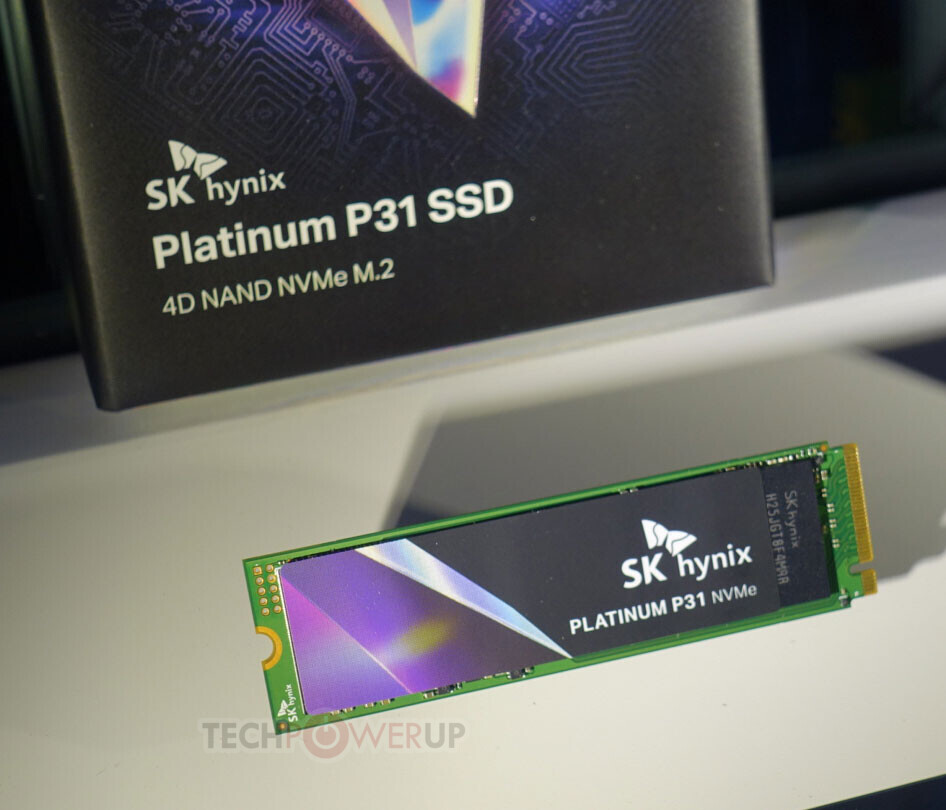
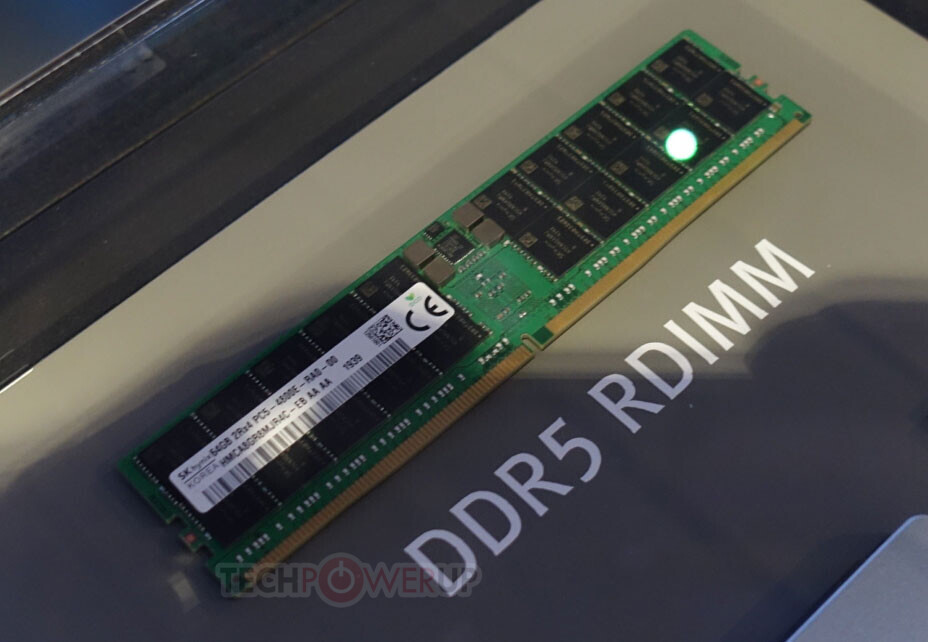
A Walk Through SK Hynix at CES 2020: 4D NAND SSDs and DDR5 RDIMMs

Korean DRAM and NAND flash giant SK Hynix brought its latest memory innovations to the 2020 International CES. The star attraction at their booth was the "4D NAND" technology, and some of the first client-segment SSDs based on it. As a concept, 4D NAND surfaced way back in August 2018, and no, it doesn't involve the 4th dimension. Traditional 3D NAND chips use charge-trap flash (CTF) stacks spatially located next to a peripheral block that's responsible for wiring out all of those CTF stacks. In 4D NAND, the peripheral block is stacked along with the CTF stack itself, conserving real-estate on the 2-D plane (which can then be spent on increasing density). We caught two 128-layer 4D NAND-based client-segment drives inbound for 2020, the Platinum P31 M.2 NVMe, and Gold P31 M.2 NVMe. The already launched Gold S31 SATA drive was also there.

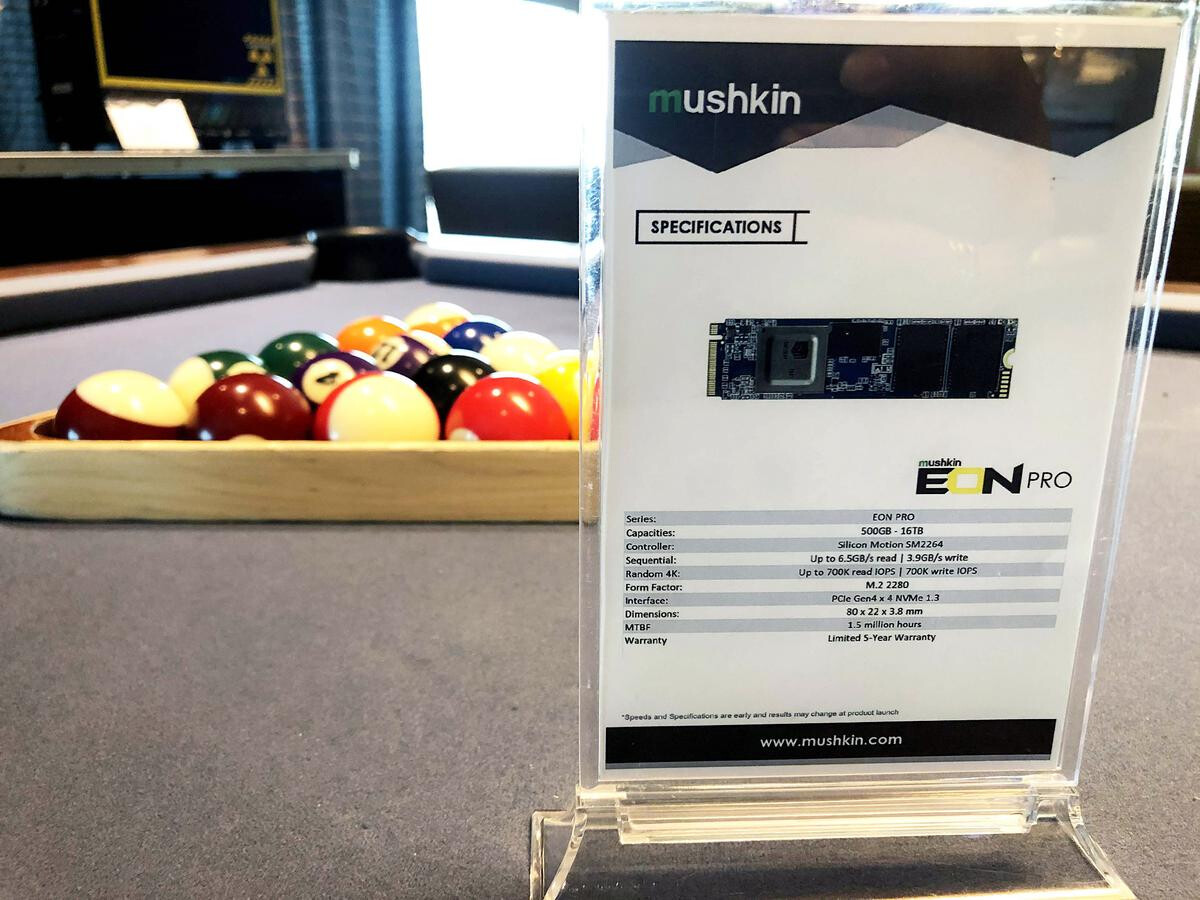
Mushkin at CES 2020: EON and EON Pro NVMe SSDs, Source Q SSD, CarbonX External SSD, and Blackline RGB Memory

Mushkin at CES 2020 showcased their latest products, both in the storage or random access memory space. Starting with the NVMe products, the EON NVMe SSD will be available in capacities starting at 500 GB through 4 TB, and make use of 3D TLC NAND paired with Silicon Motion's SM2267 controller. It's a PCIe 4.0 x4 affair in the M.2 2280 form-factor, with built-in LDPC ECC technology. The company is quoting speeds up to 4 GB/s read and up to 3 GB/s writes, with up to 400K IOPS on either case. The EON Pro upgrades both storage capacity (available in up to a whopping 16 TB density) and speeds, leveraging Silicon Motion's SM 2264 controller. Sequential reads and writes are quoted at 6.4 GB/s and 3.9 GB/s, respectively, with 700K IOPS on both scenarios.

The Source Q, on the other hand, is a 2.5" SATA SSD, and keeps the Silicon Motion trend going with the company's SM2259XT controller. It offers up to 560 MB/s reads and 515 MB/s writes, with up to 95K read IOPS and 86K write IOPS. It will only be available in 500 GB through 2 TB capacities, which goes to show how Mushkin is prioritizing demand for their NVMe drives.

Patriot at CES 2020: Introduces P210 and P220 SSDs; Showcases Portfolio

Patriot at CES 2020 showcased two new products that will be added to their portfolio in the form of the P210 and P220 SSDs. The company has already built a reputation for themselves with their high-performance VPN100 and VP4100 SSDs in the M.2 form-factor, and are now adding some budget padding to their lineup with the 2.5", SATA-based P210 and P220. The P220 will be available in up to 4 TB capacities and features Phison's S12 controller, whilst the P210 will offer only up to 2 TB maximum storage and an undisclosed next-gen SMI 2259XT Next-Gen controller.

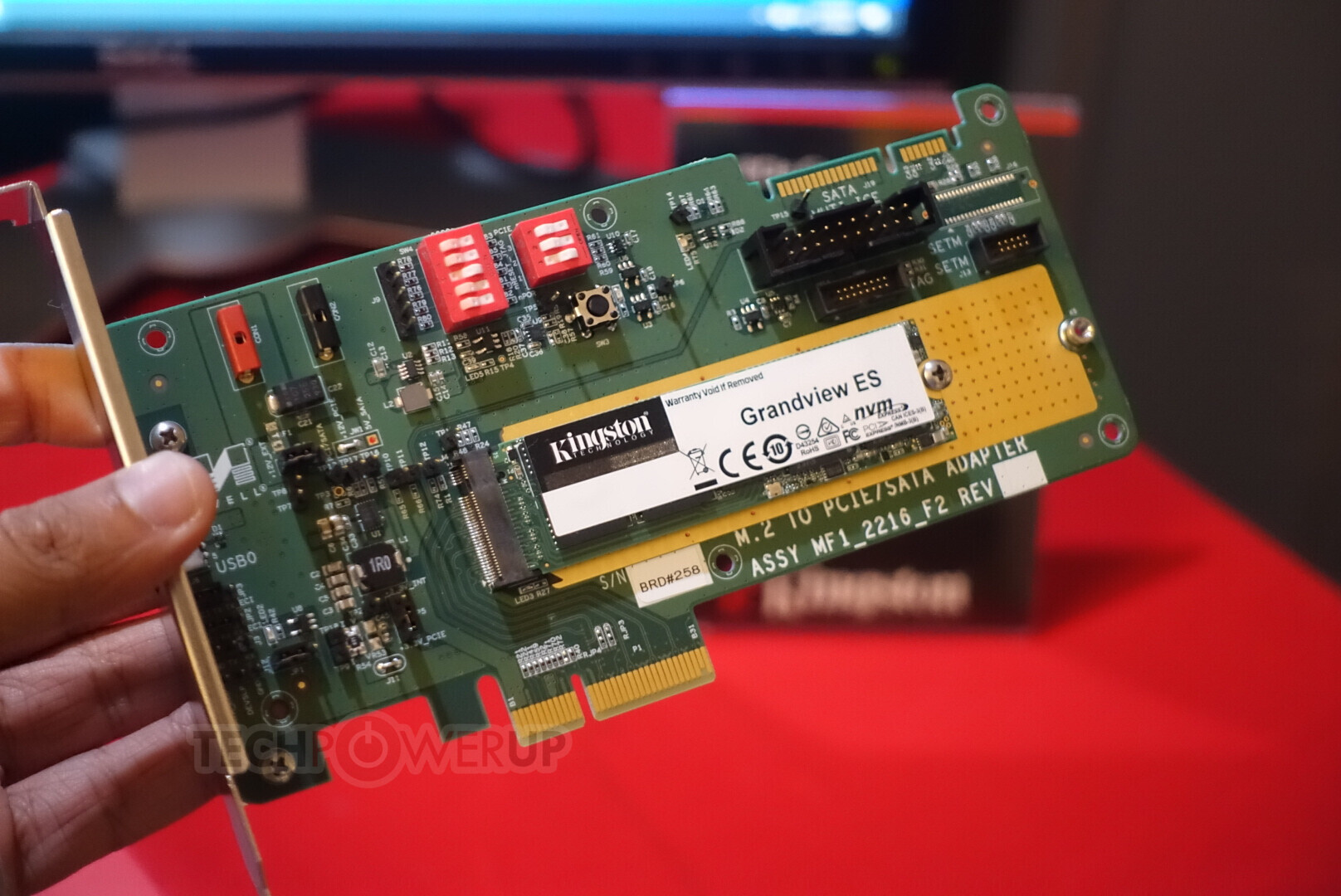
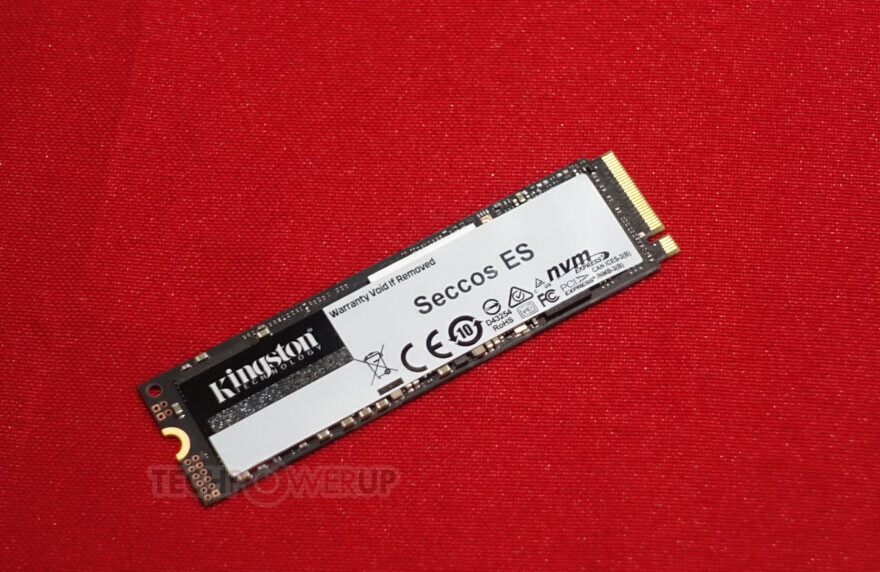
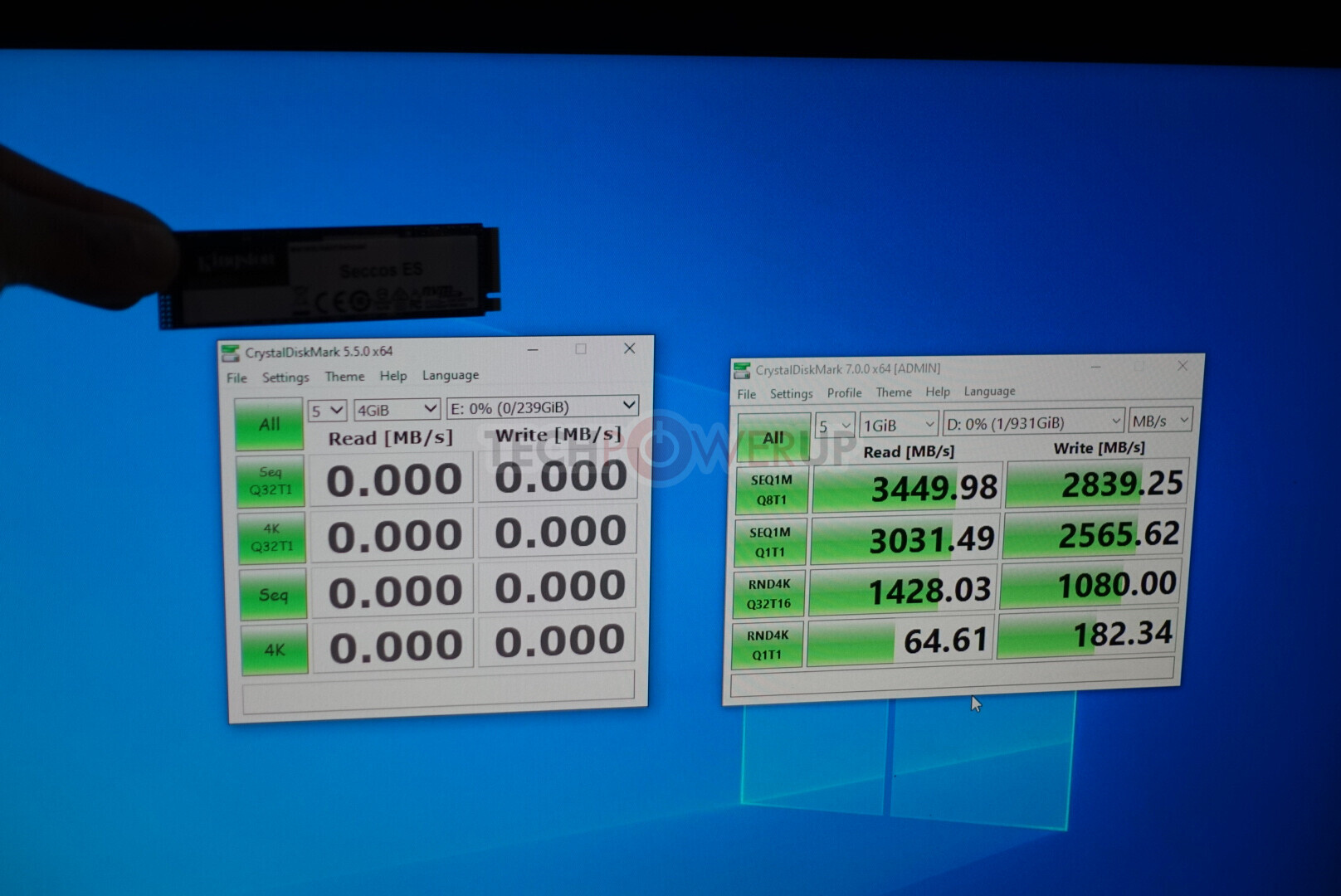
Kingston Teases "Grandview," its Upcoming Mid-range PCIe 4.0 M.2 SSD, and Current-Gen "Seccos"

Kingston at the 2020 International CES shows us their upcoming mid-range M.2 NVMe SSD that has the latest PCI-Express 4.0 x4 host interface and NVMe 1.4 protocol, codenamed "Grandview." Later this year, this drive will be launched as a high cost-performance product under the company's marquee or HyperX brand. Available in capacities ranging between 500 GB and 2 TB, the drive is powered by Marvell "Whistler Plus" 12 nm controller that has 4 flash channels, and 1.2 GT/s per channel bandwidth. They wouldn't tell us if it's TLC or QLC NAND flash in use, or the manufacturer-rated performance numbers. The PCIe to M.2 adapter in these pictures will not be part of the package.

Also on display was "Seccos," their new PCI-Express 3.0 x4 drive that uses an unnamed 8-channel controller (likely Marvell), and 3D TLC NAND flash, with capacities ranging between 250 GB to 2 TB. Kingston put out some CDM numbers for the 1 TB model of Seccos: 3,449 MB/s sequential reads, and 2,839 MB/s sequential writes. The manufacturer-rates performance numbers are up to 3,500 MB/s reads, and up to 3,000 MB/s writes.

SK hynix Displays its Semiconductor Technologies Leading the 4th Industrial Revolution

SK hynix Inc. presents its innovative semiconductor technologies leading the 4th Industrial Revolution at CES 2020, the world's largest trade show for IT and consumer electronics in Las Vegas, USA, from January 7-10, 2020. In line with its "Memory Centric World" theme, SK hynix depicts a futuristic city which effectively utilizes enormous amounts of data. The Company also showcases its semiconductor solutions across six crucial business fields - artificial intelligence (AI), augmented reality (AR) / virtual reality (VR), automotive, Internet of Things (IoT), big data and 5G.

Headlining at CES 2020 are SK hynix's memory solutions including HBM2E, DDR5 for servers, and SSD, which are already highly regarded and widely used in 4th industrial fields such as 5G and AI for their stability, speed, power consumption and density excellence. Other cutting-edge products set to make headlines in January are the Company's highly durable LPDDR4X and eMMC 5.1, which are optimized for automobiles. What's more, SK hynix is displaying its LPDDR5 and UFS that enhance the performance of 5G smartphones as well as CIS (CMOS Image Sensor) which is essential in establishing effective environments for AR/VR and IoT.

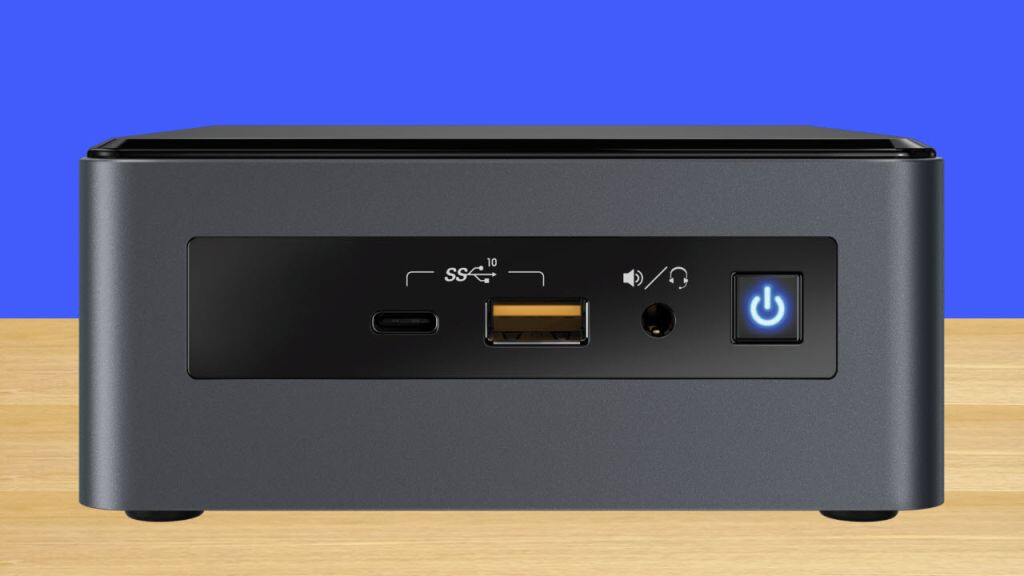
Intel's Frost Canyon NUC 10 Mini PC is now Available

Intel's latest NUC (Next Unit of Computing) series of Mini PCs, based on the 10th generation of Intel "Core" processors, is now available for purchase. Dubbed Frost Canyon, this NUC series is featuring Intel's 10th generation Comet Lake CPUs at its base. All of the available configurations are based around the Intel Core i7-10710U processor, Intel i219-V Gigabit Lan, Bluetooth 5.0 and Intel WiFi 6 AX200 networking module. Configurations are varying by the amount of pre-installed RAM and storage and the option of whatever you want OS pre-installed or not.

The NUC 10 supports up to 64 GB of DDR4 memory, while the storage options include space for one 2.5 inch SSD/HDD in smaller variants or two 2.5 inch SSD/HDD drives in taller variants, with one NVMe M.2 SSD slot available in both versions. Pricing starts at $679 for the base models, while higher-end configurations cost upward of $1,295. Additionally, it is worth pointing out that all CPUs inside the new NUC are configured to run at 25 W of TPD, regardless of the model. This will result in higher performance compared to 15 W versions of processors found in most laptop solutions.
Return to Keyword Browsing
Nov 22nd, 2026 18:49 CST change timezone

New Forum Posts

Popular Reviews

TPU on YouTube

Controversial News Posts