News Posts matching #RTX 5090

Return to Keyword Browsing

MODDIY Recommends Latest 12V-2X6 Cables for GeForce RTX 50-series Cards

MODDIY has swiftly updated its Help Center site with new guidelines, following recent reports of one of its older 12VHPWR cable designs having a high temperature disagreement with an NVIDIA GeForce RTX 5090 Founders Edition card and ASUS ROG Loki SFX-L power supply unit. The company's newest batch of (2025) 12V-2X6 and 12VHPWR are manufactured with the latest specifications and standards in mind, thus given the all-clear for utilization with NVIDIA's recently introduced GeForce RTX 5090 and RTX 5080 graphics cards. Any products from the 2024 production cycle (and before) are deemed safe to use with the GeForce RTX 40-series, but not "officially" valid for anything newer.

The company's renewed guidelines state: "as of 2025, the industry standard has transitioned to 12V-2X6, replacing the previous 12VHPWR standard. Our new cables incorporate significant advancements, including enhanced terminal and connector housing materials, along with thicker wires, to provide an additional safety buffer for the latest GPUs. At MODDIY, all 12VHPWR / 12V-2X6 cables purchased from 2025 onward are manufactured in accordance with the new 12V-2X6 specifications and standards, ensuring compatibility and optimal performance with the RTX50 series GPUs. Prior to 2024, the RTX50 series GPUs had not yet been introduced, and the prevailing standard was 12VHPWR. All cables produced before this period were designed and tested for use with the RTX40 series GPUs. We recommend that all users upgrade to the new 12V-2X6 cables to take full advantage of the enhanced safety and performance features offered by this new standard." They believe that their messily-named "ATX 3.1 PCIe 5.1 H++ 12V-2X6 675 W 12VHPWR 16 Pin Power Cable" premium custom tailor-made model is the best candidate for Team Green's modern generation of gaming cards.

ASUS ROG Astral GeForce RTX 5090 & 5080 BIOS Update Tool Retunes Quiet Mode

ASUS has released version one of a BIOS update tool for its ultra-premium air-cooled ROG Astral graphics cards, OC and standard flavors. Yesterday's update advertises an improved "Quiet Mode," that implements a "more silent fan curve." TechPowerUp reviewed the quad-fan configured ASUS ROG Astral GeForce RTX 5090 and RTX 5080 OC Edition cards late last month. Resident GPU evaluator, W1zzard, awarded the astronomically-priced flagship model with an "Editor's Choice" badge, but simultaneously pinned on a "But Expensive" honor. The lesser (GB203-based) Astral did not receive any accolades. Both models have courted criticism for louder than expected operation; W1zzard did not enjoy listening to the Astral GeForce RTX 5090 OC Edition's collective fan concerto. "Out of the box" settings were not great, and the quiet BIOS mode did not "help much" in reducing the highest-end Astral's cacophony.

TPU's GPU guru elaborated further: "the second BIOS runs a more relaxed fan curve, but it's not much quieter and achieves 36.5 dBA with 70°C. Sure, good temperature, but isn't the point of a 'quiet' BIOS that isn't quiet, even if temperatures are higher? MSI's Suprim lineup does much better noise-wise, with temperatures that aren't that much higher." The ASUS ROG Astral RTX 5080 OC Edition seems to be a less noisy prospect, given that its cooling solution is not dealing with the largest "Blackwell" GPU die. Its sound signature was less offensive, but W1zzard reckoned that there was room for improvement. On this subject he stated: "with the default (performance) BIOS, temperatures are extremely low, but noise levels are a little bit on the high side with 36 dBA. I would have preferred a more balanced setting. Good thing that ASUS includes a secondary quiet BIOS with their card. Now the card runs whisper quiet, emitting only 26 dBA, which is highly impressive for a card in this performance segment. It is not the quietest card though, the MSI Suprim SOC is a tiny bit quieter, and it is so out of the box, without requiring a manual BIOS switch change." ASUS has seemingly absorbed initial feedback from review outlets (plus early adopters)—yesterday's update arrived just under two weeks from launch time. Watch out for possible upcoming reassessments.

GIGABYTE AORUS RTX 5080 MASTER's Optional Fourth Fan Lowers Temps by 2 °C

The new ASUS ROG Astral GeForce RTX 5090 and RTX 5080 designs have attracted a lot of attention, due to an unusual cooling configuration that includes a backplate-mounted fourth fan. At CES 2025, MSI teased onlookers with a placard adorned with a GeForce RTX 32G "Lightning" Special Edition model—featuring a "FiveFrozr" cooling solution. A traditional triple-fan setup is placed in the expected shroud location, but two additional units are integrated into the card's backplate. According to recent reports and early reviews, GIGABYTE has deployed a somewhat related system, albeit entirely optional (depending on user discretion). The Taiwanese manufacturer sent its AORUS RTX 5090 and 5080 MASTER models to market last week. These premium card designs feature the company's new "Screen Cooling Plus" system. CES press material claims that the "extra air-boosting fan" grants more airflow.

GIGABYTE's fourth fan has flown under the radar, but major hardware news outlets have just picked up on initial impressions. Singapore's HardwareZone appreciated the inclusion of an optional extra—with their AORUS RTX 5080 MASTER sample—but criticized GIGABYTE's slightly undercooked implementation. Their reviewer did not evaluate whether the modular part made any difference in terms of reducing temperatures—instead, they opined: "to further improve cooling, the card also comes bundled with a separate 120 mm RGB fan that you can place on the back of the card to pull air out—a design reminiscent of the ROG Astral RTX 5080's built-in cooling solution. It's a practical touch but not an elegant one, as it means having to deal with additional cables to tidy up since—oddly enough—the card itself does not come with a power connector for the extra fan." GLITCHED.online, a South African tech site, took GIGABYTE's AORUS RTX 5080 MASTER ICE card for a test drive—they found that the extra bit of cooling potential made a difference, but it was "almost unnoticeable." We hope that GIGABYTE will send review samples to TPU's W1zzard in the near future. Will the fourth fan make any difference on the AORUS RTX 5090 MASTER model?

Official: NVIDIA GeForce RTX 50-series Laptop Pre-orders Start on February 25

Earlier today, NVIDIA happily declared that: "GeForce RTX 50-series laptop pre-orders start February 25 from OEMs." A March launch window was mentioned during the company's official unveiling of its "Blackwell" GPU architecture at CES 2025. Mobile variants of the GeForce RTX 5090, RTX 5080, and RTX 5070 Ti are expected to ship with laptops next month. GeForce RTX 5070 Mobile-equipped devices are due in April. As reported by VideoCardz, a Finnish retailer's webstore has confirmed the February 25 pre-order start date. The Gigantti.fi site lists several new ASUS ROG Zephyrus and Strix laptops; configured with the latest Intel Core Ultra 200HX or AMD "Strix Point/Fire Range" mobile APUs, and NVIDIA GeForce RTX 50-series discrete graphics solutions. The most expensive option is listed with a €5499 price point—interested buyers are looking at a spec that includes a 16-inch OLED screen, Core Ultra 9-285H processor, 32 GB LPDDR5X RAM, 1 TB M.2 PCIe SSD, and a GeForce RTX 5090 32 GB mobile GPU. At the time of writing, Gigantti's "cheapest" option is a €2999 ROG Strix 16 model; sporting a Ryzen 9 9955HX APU and GeForce RTX 5070 Ti 12 GB Mobile GPU.

NVIDIA disclosed official MSRPs during last month's CES presentation: $2199 for RTX 5090, $2199 for RTX 5080, $1599 for RTX 5070 Ti, and $1299 for the RTX 5070. Western press outlets have scouted North American online retail outlets. Tom's Hardware observed (ASUS and HP) price ranges starting at $1800. The most expensive offering came in at $4200; an ultra high-end ROG Strix Scar 18 laptop featuring a GeForce RTX 5090 Mobile GPU and an Intel Core Ultra 9 275HX CPU. Team Green's upcoming launch partners include Acer, ASUS, Dell, Gigabyte, HP, Lenovo, Mechrevo, MSI and Razer. NVIDIA seems to have extra GeForce RTX 50-series announcements in the pipeline—they recommend that potential buyers: "stay tuned for more details!"

NVIDIA GeForce RTX 4090/5090 Prototypes Tested with Quad 16-Pin 12V-2x6 Connectors

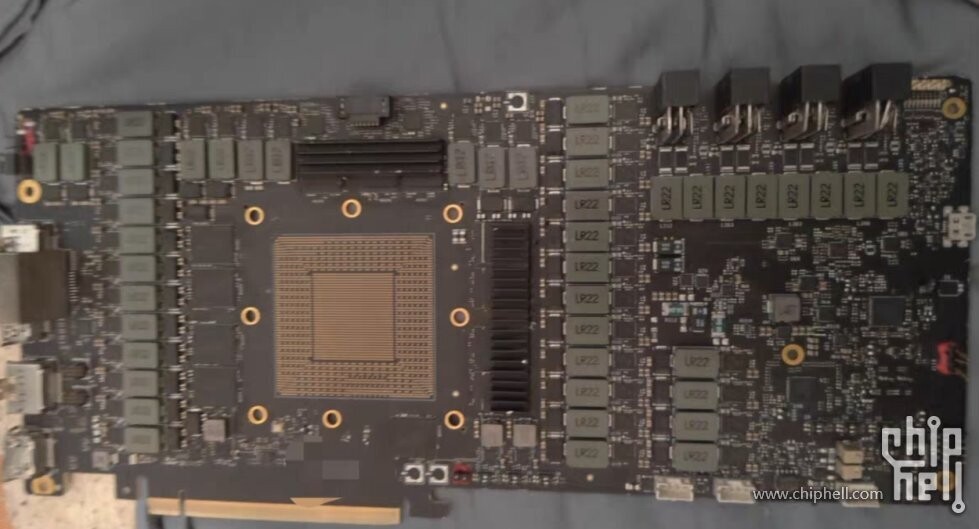
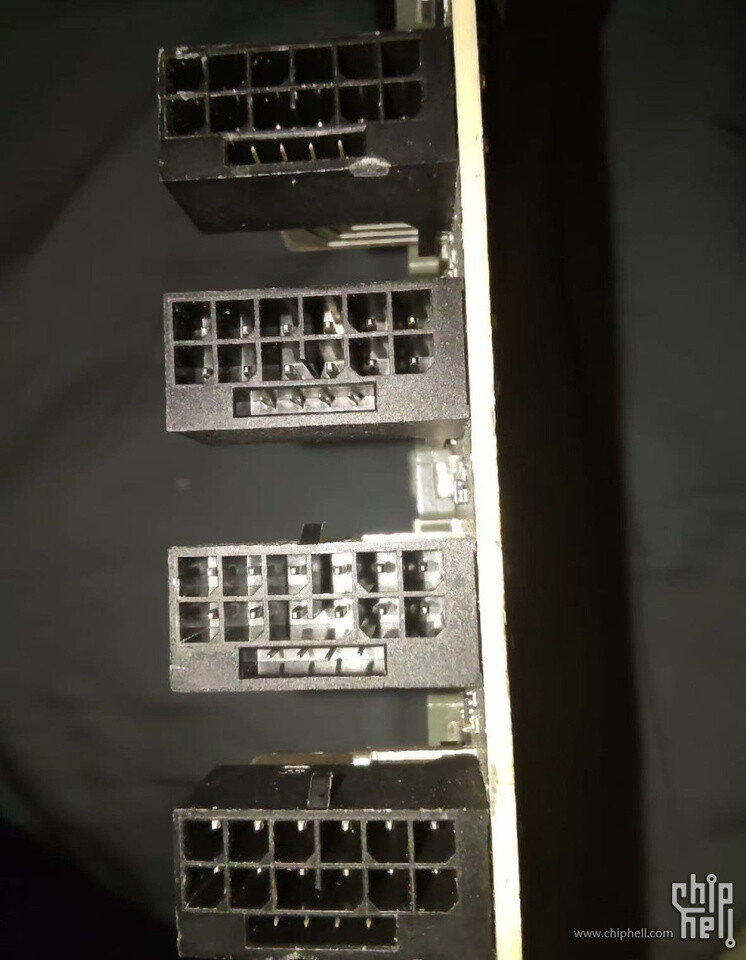
Recent engineering prototype leaks reveal NVIDIA's power delivery design for its RTX 5090 flagship GPU featured a jaw-dropping quad 12V-2x6 connector configuration. The prototype board, while not publicly photographed, is significantly different from the final version we have today. The quad-connector design serves multiple purposes beyond raw power delivery. Each 12V-2x6 connector, capable of delivering up to 600 W individually, creates a theoretical power ceiling far beyond reasonable requirements. More likely, the implementation allows for separate voltage rails and enhanced power stability, crucial for the card's reported 575 W TDP - a 125 W increase from the RTX 4090's specifications. This overengineered piece follows NVIDIA's historical engineering practices, where early prototypes typically feature expanded power delivery systems that are later optimized for production.

The timing of this leak happens just in time with ongoing discussions about 12V-2x6 connector reliability, particularly following documented failures. While the quad-connector design may seem excessive, it distributes power load more evenly across multiple connection points, potentially addressing thermal concentration issues that plagued single-connector implementations. Board partners like ASUS have already implemented sophisticated current monitoring solutions in their custom designs, using shunt resistors to detect overcurrent conditions across individual pins. Established hardware leaker, Panzerlied confirmed the prototype's existence on Chinese forums, alongside images of other engineering samples featuring similar power delivery experiments across multiple GPU generations.

NVIDIA Investigating Reported GeForce RTX 5090 & 5080 Black Screen & Stability Issues

Unlucky owners of problematic GeForce RTX 5090 and RTX 5080 graphics cards have posted feedback across various online community sites. Press outlets started to take notice of these documented issues soon after the launch of NVIDIA's debut wave of "Blackwell" GPUs. PC Gamer has "kept track" of reports relating to black screens and miscellaneous failures—the site published an investigative article late last week, following user feedback "hitting critical mass" across Reddit and Team Green's own forum. A request for comment was sent over to NVIDIA HQ; PC Gamer received a brief response. A company spokesperson confirmed that their team is: "investigating the reported issues with the RTX 50-series."

Several PC hardware community members have documented their troubleshooting experiences—the most common suggestion involves downshifting from a PCIe 5.0 connection to 4.0, on the PEG-16 graphics port. Unfortunately, this step did not resolve black screen issues for certain owners—a member of the buildapc subreddit explored a wide array of troubleshooting channels. They re-installed Windows 11 (23H2), adjusted BIOS settings, experimented with monitor connections, and played around with drivers. Best results were produced by connecting a single monitor to their MSI GeForce RTX 5090 GAMING TRIO OC's DisplayPort, with nothing else hooked up to the other ports (DP and HDMI). They suspect that Team Green's GPU drivers could be the source of frustrations; corroborated by a recent VideoCardz news piece. In addition, the 572.16 driver is reportedly affecting "certain GeForce RTX 40-series." A smaller number of owners have discussed a "bricking" of cards; VideoCardz believes that China-exclusive GeForce RTX 5090D models are suffering the most. Manli will be analyzing a "bricked" unit at its service center, in the near future. Colorful did not reply with a comment on the situation.

Custom Water Block Drops NVIDIA GeForce RTX 5090 GPU Temperatures Down by 30°C

German overclocking specialist Der8auer has showcased a custom water block for NVIDIA's flagship RTX 5090 Founders Edition, achieving a remarkable 30-degree Celsius reduction in core GPU temperatures. The prototype copper cooling solution demonstrated peak operating temperatures of just 43.8°C, compared to the stock cooler's 73.8°C under identical testing conditions. The design features an all-copper construction with a substantial 14 mm-thick cold plate, engineered specifically for optimal thermal transfer from the GB202 die. While maintaining the dual-slot form factor of the original Founders Edition cooler, the water block incorporates multiple cooling channels beneath a transparent top panel that reveals the coolant flow.

Memory temperatures also significantly improved, dropping by 38 degrees Celsius below stock measurements. Despite its impressive thermal performance, the prototype faces several engineering challenges. The team was constrained by the graphics card's display output ribbon cable, which prevented a more compact design closer to the actual PCB dimensions. Additionally, the Founders Edition card's unique split PCIe finger design presented structural concerns that require additional reinforcement before any potential commercial release. Der8auer's prototype prioritizes function over aesthetics, omitting common features like RGB lighting in favor of raw cooling performance. The water block's industrial design reflects its proof-of-concept nature, though the transparent top panel offers practical utility for monitoring coolant flow. While no retail release timeline has been announced, Der8auer indicated that addressing the PCIe slot structural support issue remains a critical milestone before any commercial version could be considered.

Unofficial 12V-2x6V Power Connector Melts NVIDIA GeForce RTX 5090

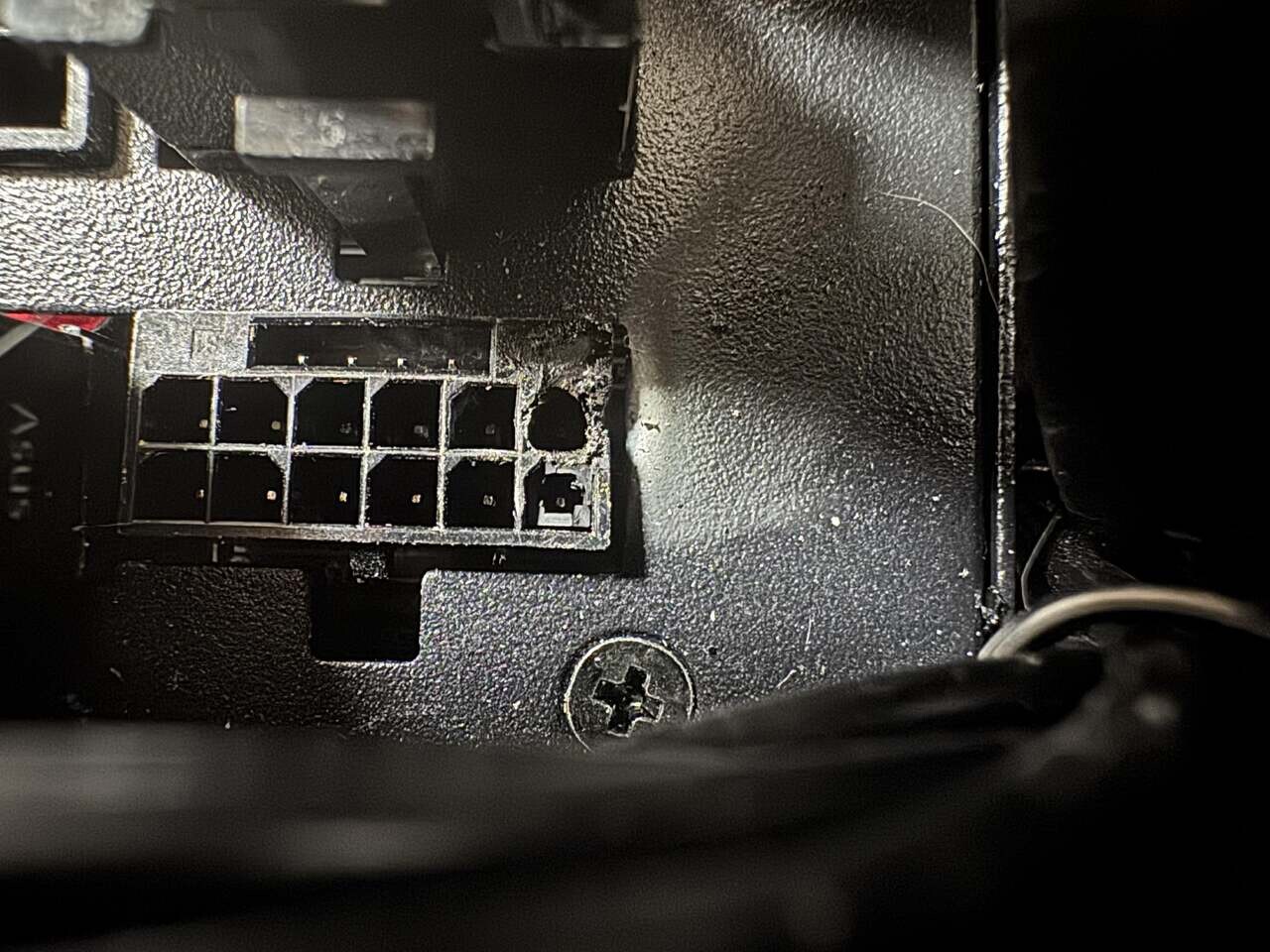
NVIDIA's high-TDP flagship GPU, the GeForce RTX 5090, appears to cause additional headaches for users, not including the high power bill. According to a Reddit user, we now have the first documented case of a melted power connector on NVIDIA's flagship GeForce RTX 5090 Founders Edition, reigniting concerns over high-wattage GPU safety from the last generation. While playing Battlefield 5, Reddit user ivan6953 detected a burning odor and immediately shut down their system, only to discover severe damage to both the RTX 5090's 12V-2×6 connector and their ASUS ROG Loki SFX-L PSU. The user had employed a Moddiy 12VHPWR cable, marketed as ATX 3.0/PCIe 5.0-compliant and rated for RTX 5090's 600 watts of power. Despite claims of secure installation—audible clicks at both ends—the cable melted at 500-520 W load, charring connectors on the GPU and PSU.

Notably, the same cable had powered an RTX 4090 FE for two years without issue. NVIDIA's RTX 5090 FE ships with a redesigned adapter featuring a longer, more flexible cable and an angled connector to reduce strain in compact builds. NVIDIA asserts that no incidents have occurred with its bundled adapter, emphasizing compliance with the updated 12V-2×6 standard, which shortens sensing pins to prevent power flow if connections loosen. Hence, an older connector can not provide 100% secure usage despite the user thinking that the sensing pins are touching properly.

Zotac Uses Discord to Sell RTX 50 GPUs and Stop Scalpers

Zotac has come up with a new way to fight graphics card scalping by starting a "Priority Access Campaign" on their Discord server, with a Zotac employee named Bryant making the announcement. The plan is simple and has only one main goal: to help regular buyers get a real chance of buying NVIDIA's new GeForce RTX 5080 and 5090 models at the right price. These cards have been almost impossible to get because they sell out fast and end up on resale sites at high prices. Zotac says it wants to use its online community to help real gamers, not scalpers.

The process is pretty straightforward, with users being selected based on engagement in discussions and various challenges. Then, using a random number generator, eligible buyers will be selected. The campaign is already active (is limited to users in the U.S.) with special Discord channels to give out RTX 5080 models (currently Zotac has only ten RTX 5080 cards) while the RTX 5090 isn't yet available. The company has insisted on warning scalpers; each card sold via this method will have its serial number recorded, and any user caught trying to resell it at a higher price will be permanently banned from any future Zotac direct sales events or raffles. Zotac isn't the first to try this approach, in the past, companies like Newegg and NVIDIA have used lottery systems or sold directly to customers to avoid scalpers. While there is no guarantee of completely avoiding scalpers, the action is commendable and it is possible that we will see similar actions from other brands or retailers in the future.

Phanteks Announces Next Generation Glacier EZ-FIT VGA Water Blocks

Phanteks, a leading innovator in custom PC water-cooling solutions, today announce its upcoming designed for NVIDIA's flagship GeForce RTX 5090 and all major third-party GPU brands. These new water blocks embody Phanteks' dedication to premium cooling solutions, combining top-tier performance with effortless installation.
Featuring the EZ-Fit system with fittings already integrated, they offer a true plug-and-play experience while delivering exceptional thermal
efficiency—perfect for enthusiasts and overclockers demanding peak cooling performance.

NVIDIA GeForce RTX 5080 FE Buyer Receives Mislabeled Card, Engraved with "5090"

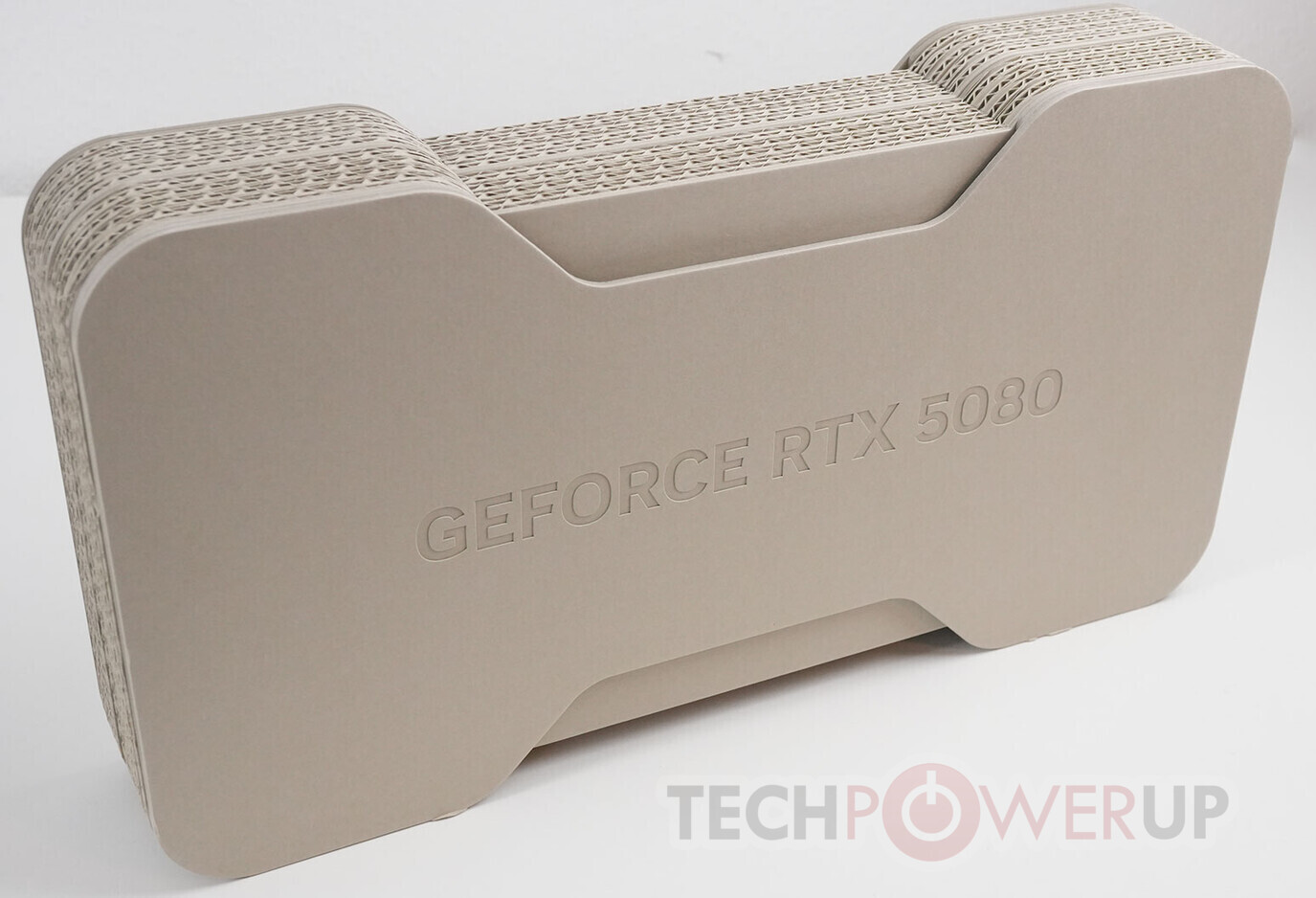
As documented on the Linus Tech Tips (LTT) subreddit, a lucky customer presented their freshly-delivered Founders Edition (FE) GeForce RTX 5080 graphics card model. Newly registered member, EssDee3D, had much to celebrate—having acquired launch stock, presumably at a non-scalped price—but they were confused by their package's contents. A question was pushed out to the LTT community: "can someone explain what happened here? Direct from NVIDIA...I ordered an RTX 5080, and I got a graphics card with 5090 engraved on it. The outer box has the 5080 SKU on it. Wondering if anyone else has seen something like this before?" Unique circumstances—possibly caused by a mix-up during the manufacturing process—have produced an oddball hybrid. EssDee3D proceeded to add this curiosity to their PC build—following an absorption of (very mixed) feedback from other LTT members. Basic diagnostics—performed in a Windows OS environment—revealed that the card in question housed a bog-standard GeForce RTX 5080 GB203-based GPU.

NVIDIA's two Founders Edition shroud designs—for its GeForce RTX 5090 and 5080 SKUs—look nigh identical. TechPowerUp's resident graphics card reviewer extraordinaire—W1zzard—captured a handful of comparison shots for usage in his evaluation of NVIDIA's GeForce RTX 5080 Founders Edition model. The GeForce RTX 5090 FE's cooling solution—utilizing liquid metal, instead of thermal paste—is more robust when compared to the one present on its step-down sibling—rated for a TDP of 575 W (versus 360 W). Evidently, designed to temper any radiance emitted by Team Green's GB202 GPU. EssDee3D's "chimera" card was placed in the correct packaging; a 5080-labelled paper-fiber box—but the shroud's backside advertises itself as a GeForce RTX 5090 FE. PC hardware news outlets and Redditors are wondering whether additional examples—of jumbled up "Blackwell" GPU Founders Edition parts—will appear online over the next month or two, or three...or more.

ASUS ROG Takes a Closer Look at Astral GeForce RTX 5090 & 5080 Models

The next generation of graphics performance has arrived. We've prepared an all-new series of cards: ROG Astral. Featuring a new, sophisticated design and an outstanding cooling solution, the ROG Astral GeForce RTX 5090 and ROG Astral GeForce RTX 5080 are your premium picks for supercharging the performance of your gaming PC. All this new hardware in the ROG Astral GeForce RTX 5090 requires no small amount of power so that it can stretch its legs and run. Your PSU should be capable of at least 1000 W to run this card—more on that later. The circuitry that delivers this power is just as important, and it's one reason why many enthusiasts prefer ROG graphics cards. We've equipped the ROG Astral GeForce RTX 5090 and 5080 for premium power delivery with 80-amp MOSFETs that can supply over 35% more headroom than standard designs. A massive 24-phase VRM array for the GPU and a seven-phase VRM for the GDDR7 memory chips distribute the work of supplying power, ensuring rock-solid stability and long-lasting performance. To give you peace of mind that your 16-pin PCIe power connector is seated properly, we provide monitoring through Power Detector+ in the GPU Tweak III app so that you can verify that the connector is fully seated. The app can even tell you exactly which pin is not seated properly, if that ever becomes a concern.

Ada, meet Blackwell
With the GeForce RTX 50 Series, NVIDIA debuts its latest Blackwell architecture. Armed with fifth-gen Tensor cores, new streaming multiprocessors optimized for neural shaders, and fourth-gen Ray Tracing cores built for Mega Geometry, the new graphics cards unlock access to the next generation of graphics technologies. For many gamers, the highlight of the new architecture is DLSS 4. DLSS is a revolutionary suite of neural rendering technologies that uses AI to boost FPS, reduce latency, and improve image quality. The latest breakthrough, DLSS 4, brings new Multi Frame Generation and enhanced Ray Reconstruction and Super Resolution. But there's more. NVIDIA Reflex 2 with Frame Warp provides game-winning responsiveness, and these cards are equipped to give you the best experience with ray-traced graphics yet.

ASUS & MSI US Official Stores Raise GeForce RTX 5090 & 5080 MSRPs

The buying landscape for GeForce RTX 5090 and RTX 5080 graphics cards is looking barren, just one week post-launch—global demand has far outstretched initial supply. Mid-week news points to two of NVIDIA's board partners increasing MSRPs for the top-end Blackwell GPU models, seemingly adding insult to already inflicted injuries. ASUS and MSI's North American online stores are completely devoid of stock—at the time of writing, almost all product entries are accompanied by "notify me" tags. The two hardware manufacturers have implemented comprehensive price hikes—as reported by VideoCardz. The publication pinpointed flagship models, as prime examples. The liquid-cooled ASUS ROG Astral LC RTX 5090 OC Edition 32 GB model was already a pricey prospect at launch ($3099), but the official store has tacked on another $311. A total charge of $3410 gets you one of the nicest and feature-rich card designs on the market, but you will be paying a premium of $1411—above Team Green's official GeForce RTX 5090 MSRP of $1999—for the privilege of ownership and/or bragging rights. Further down in the product stack—TechSpot noted that a Prime GeForce RTX 5080 (non-OC) 16 GB model has jumped from an original figure of $999, up to $1,264. At the time of writing, this price has been re-adjusted back down to just below $1000—thanks to a special "deal." The overclocked Prime variant is currently priced at $1320.

Looking at the MSI US store, VideoCardz reported on all GeForce RTX 5090 and RTX 5080 cards being priced north of original MSRPs—they highlighted a lowly not-overclocked RTX 5080 16G VENTUS 3X model having its price adjusted upwards—now $1140, instead of the original $1000 (at launch). MSI's "cheapest" RTX 5090 card is another VENTUS 3X design—this non-OC model is now $380 more expensive than last week's asking price ($2000). Overall, MSI's US webshop has raised prices in the ranges of $140 to $500 for GeForce RTX 5080 cards, and $380 to $790 for RTX 5090 offering—according to VideoCardz research. The company's RTX 5090 SUPRIM LIQUID SOC flagship design is not quite expensive as the equivalently appointed ASUS liquid-cooled model, but the newly adjusted MSRP of $2790 is difficult to digest. Press outlets have noted that listings on Newegg are up to $40 more expensive, when compared to the prices published on MSI's first-party store. As an added incentive, the MSI North American store is offering potential buyers a saving of: "$200 on MPG 322URX QD-OLED at checkout with RTX 5080/5090 series purchase."

ASUS Unveils Gilded GeForce RTX 5090 ROG Astral Dhahab Edition

ASUS ROG Astral GeForce RTX 5090 was reviewed by us at launch, where we remarked that it is the most expensive custom-design, with a launch price of $2,800 against the NVIDIA baseline of $2,000 (a 40% premium). The card is further marked up by retailers, and is going for nearly $3,000. While this is going on, ASUS released its first halo variant, the ROG Astral RTX 5090 OC Dhahab Edition. Probably targeting the MENA (Middle-East and North Africa) markets, the Dhahab Edition is a luxurious collector's edition item that's finished in gold. Dhahab is Arabic for gold, and you can see elements of this across the cooler shroud, backplate, and the GPU retention bracket. Even the heatsink underneath has gold color. We don't know the exact material of this card—whether it is a gold-like polish, or gold electroplated.

Contrasting all this gold is a turquoise-like stone embellishment that refracts light in a blue-green tone, just like the actual stone. There are several other cultural elements to this design, including Arabic calligraphy, and motifs representing "strength, courage, and unity." The gold backplate even has machined regional motifs representing the desert, and skyscrapers. Given that the regular ROG Astral RTX 5090 OC is already at around $3,000 on the streets, sky is the limit for what ASUS could ask for this collector's item.

ZOTAC GeForce RTX 5090 SOLID OC on Auction in China, Apparently Sourced from S. Korea

A South Korea-based hardware enthusiast—Harukaze5719—has discovered a curious listing of ZOTAC's GeForce RTX 5090 SOLID OC model on a Chinese auction site (asking price: ~$4175 USD). This finding was shared with their audience, via a social media post—a screenshot was accompanied by harukaze5719's short and succinct message: "OMG..." Officially, NVIDIA and its board partners cater to the Chinese hardware market with a restricted variant of the flagship "Blackwell" GPU—GeForce RTX 5090D. Despite under-the-hood nerfing, this region-exclusive model still offers enviable performance (when pushed).

The "full fat" GeForce RTX 5090 GPU appears to be an even hotter commodity—with demand (at launch) exceeding far exceeding supply. ZOTAC's South Korean branch warned potential customers about difficult conditions almost two weeks ahead of Blackwell's market debut on January 30. Harukaze5719 has likely expressed semi-personal frustration over apparent South Korea market-destined ZOTAC stock turning up for sale in China. So-called "Chinese GPU shopping tourists" could have made the journey to a South Korean PC hardware store, with their sole objective being the acquisition of GeForce RTX 5090 graphics cards. Tom's Hardware has gathered various related tidbits from Japanese and Taiwanese news sources—where local TV coverage explored the events of last week's launch event.

Overclockers UK Expecting Next Batch of GeForce RTX 5090 GPUs in 3 to 16 Weeks

Overclockers UK (OcUK)—a well-known PC hardware retailer—has revealed estimated timeframes for renewed stock of GeForce RTX 5090 and RTX 5080 graphics cards. Late last week, its various web presences informed potential customers about anticipated lead times. The company's blog disclosed that: "due to incredibly high demand and limited stock, all 50 Series cards sold shortly after launch with some pre-orders taken in restricted quantities." New GeForce RTX 5090 stock is expected to arrive at the OcUK warehouse in about three to sixteen weeks. The British store reckons that they will receive GeForce RTX 5080 cards in two to six weeks time. TechPowerUp picked up on various online predictions—a week before the market launch of NVIDIA GeForce RTX 50-series GPUs—pointing to extremely low numbers of forthcoming launch stock. An OcUK employee disclosed that their inventory—of GeForce RTX 5090 graphics cards—was in single digits.

OcUK's dedicated RTX 50-series blog includes an apology—apparently their webstore experienced an outage shortly before launch time. They also informed customers about external factors affecting the re-opening of order books: "we have no plans to take pre-orders for any 50 Series cards until we have greater clarity on availability and have fulfilled the pre-orders we have taken." VideoCardz has discovered an informative post on the Megekko.nl discussion forum—where a new member has shared insider information. Board partners and suppliers are complaining about difficult conditions, according to the leaker's sources—they believe that ASUS and MSI have been forced into releasing forthcoming RTX 5090 stock via a staggered batch system (see screenshot below). The Verge has reached out to NVIDIA for comment—regarding shortages at launch—their request was not entertained.

Reports of Bricked NVIDIA GeForce RTX 5090 and RTX 5090D Surge

According to widespread user reports from Chinese tech forums and Reddit communities, multiple RTX 5090 and 5090D graphics cards are failing permanently after standard driver installation. The issue affects both the standard RTX 5090 and the export-modified 5090D variant released for the Chinese market on January 30th. Users report consistent failure patterns: upon initial driver installation, displays go dark, and systems permanently lose the ability to detect the GPU through both DisplayPort and HDMI interfaces. Hardware failures have been documented across multiple board partners, with Colorful, Manli, and Gigabyte cards showing identical symptoms. Third-party vendor reports sometimes indicate potential IC burn damage, suggesting hardware-level failure rather than recoverable software issues.

Some investigations point to PCIe Gen 5 implementation as a possible root cause. The RTX 5090 series represents NVIDIA's first fully Gen 5-compliant GPU architecture, introducing new signal integrity challenges. Some users report temporary mitigation by forcing PCIe 4.0 mode in BIOS settings, though this workaround remains unverified. Additional complications arise from modern motherboard designs that share PCIe lanes between M.2 storage and graphics slots. The failure pattern appears consistent across both domestic and international markets. On r/ASUS, users report identical detection failures persisting through CMOS resets and system rebuilds. Chinese forum documentation shows systematic failures across multiple board partner implementations, suggesting a fundamental architecture or driver compatibility issue rather than isolated manufacturing defects. NVIDIA has not issued official guidance on the failures.
Below are screenshots of the reported user problems:

Manli Releases GeForce RTX 5090 32GB Graphics Cards

The NVIDIA GeForce RTX 5090 is the most powerful GeForce GPU ever made, bringing game-changing capabilities to gamers and creators. Tackle the most advanced models and most challenging creative workloads with unprecedented AI horsepower. Game with full ray tracing and the lowest latency. The GeForce RTX 5090 is powered by the NVIDIA Blackwell architecture and equipped with 32 GB of superfast GDDR7 memory, so you can do it all.

Manli Design
NVIDIA GeForce RTX 5090 GPUs bring game-changing capabilities to gamers and creators. The RTX 5090 enables new experiences and next-level graphics fidelity. Multiply performance with NVIDIA DLSS 4, generate images at unprecedented speed. Clock speed has been boosted to 2407 MHz.

NVIDIA GeForce RTX 5090 Runs on 3x8-Pin PCI Power Adapter, RTX 5080 Not Booting on 2x8-Pin Configuration

NVIDIA's flagship GeForce RTX 5090 demonstrated flexibility in power compatibility, while its sibling, the RTX 5080, struggled with stricter requirements. Recent tests by a German tech outlet, ComputerBase, reveal that the RTX 5090 can operate with three 8-pin PCI power connectors instead of the recommended four, albeit with a performance trade-off. However, the RTX 5080 fails to boot when using only two 8-pin connectors. The RTX 5090, with a default TDP of 575 W, officially requires a 600 W 12V-2×6 connector or an adapter with four 8-pin PCI cables. However, tests on the ASUS ROG RTX 5090 Astral and Zotac RTX 5090 Solid show the GPU boots even with three 8-pin cables, capping its TDP at 450 W—matching the three connectors' 150 W-per-cable spec. Performance losses are modest: benchmarks indicate a 5% drop in average FPS at 450 W compared to full power.

In contrast, the RTX 5080's 360 W TDP proves less forgiving. Attempts to run the Founders Edition and Zotac RTX 5080 AMP Extreme Infinity with two 8-pin connectors (300 W total) resulted in failure: the screen remained blank, and the card refused to initialize. NVIDIA's firmware appears to lack a lower power-limit threshold for the RTX 5080, unlike the 5090, which automatically adjusts when detecting insufficient power delivery. This requirement forces users to adhere strictly to the three 8-pin or 12V-2×6 power connectors. While the RTX 5090 offers flexibility for users upgrading from older systems, the RTX 5080's limitations may frustrate owners of less powerful PSUs. For the RTX 5090, the 5% performance penalty at 450 W may be a reasonable trade-off for avoiding costly PSU upgrades, but RTX 5080 users have no such recourse. Verifying power supply compatibility, as underpowered setups risk instability or hardware damage, is a must, and when your $2000+ GPU runs, you should at least power it properly. This experiment is more a "for science" type of run.

TechPowerUp Introduces TechPowerUp GPU-Z v2.62.0

TechPowerUp today released the latest version of TechPowerUp GPU-Z, the graphics sub-system information and monitoring utility for PC gamers and enthusiasts. The latest version 2.62.0 introduces full support for NVIDIA "Blackwell" generation of GPUs, which should cover not just the RTX 5090 and RTX 5080 that were recently released, but also preliminary support for upcoming SKUs such as the RTX 5070 Ti, and RTX 5070. Support is also added for the NVIDIA H200 NVLink compute GPU, and RTX 5000 Ada Generation Embedded pro-vis graphics card. Subvendor detection for Maxsun has been fixed. Grab GPU-Z from the link below.

DOWNLOAD: TechPowerUp GPU-Z 2.62.0

Edward Snowden Lashes Out at NVIDIA Over GeForce RTX 50 Pricing And Value

It's not every day that we witness a famous NSA whistleblower voice their disappointment over modern gaming hardware. Edward Snowden, who likely needs no introduction, did not bother to hold back his disapproval of NVIDIA's recently launched RTX 5090, RTX 5080, and RTX 5070 gaming GPUs. The reviews for the RTX 5090 have been mostly positive, although the same cannot be said for its affordable sibling, the RTX 5080. Snowden, voicing his thoughts on Twitter, claimed that NVIDIA is selling "F-tier value for S-tier prices".

Needless to say, there is no doubt that the RTX 5090's pricing is quite exorbitant, regardless of how anyone puts it. Snowden was particularly displeased with the amount of VRAM on offer, which is also hard to argue against. The RTX 5080 ships with "only" 16 GB of VRAM, whereas Snowden believes that it should have shipped with at least 24, or even 32 GB. He further adds that the RTX 5090, which ships with a whopping 32 GB of VRAM, should have been available with a 48 GB variant. As for the RTX 5070, the security consultant expressed desire for at least 16 GB of VRAM (instead of 12 GB).

ASUS TUF Gaming Discusses GeForce RTX 5090 & 5080 Feature Sets

We build our TUF Gaming components for users who want an emphasis on substance, meaning you're paying for pure performance when you go TUF. That focus on function is where the TUF Gaming GeForce RTX 5090 and TUF Gaming GeForce RTX 5080 graphics cards excel, providing you with next-gen graphics capabilities as well as high-performance thermal solutions that'll hold up under 4K AAA gaming pressure. If you've been waiting to upgrade your rig and want to treat yourself to a premium power bump, now's the time to pull the trigger. You're in for a truly substantial generational leap with these high-end components featuring the power of NVIDIA's latest GPU architecture alongside the sophistication of our latest graphics card designs.

Next-gen tech for tomorrow's heavyweight games
The GeForce RTX 5090 and 5080 comprise the top of the power stack for NVIDIA's 50 Series GPUs, so when you invest in either a TUF Gaming GeForce RTX 5090 or 5080 graphics card, you're setting yourself up for years to come. The 50 Series is powered by NVIDIA's Blackwell architecture, meaning these GPUs feature 4th generation RT cores to give gamers the best ray tracing performance yet. They also pack neural shaders, which compress textures to cut down on memory usage and produce incredible real-time visuals. And NVIDIA has ensured its 50 Series is equipped for neural processing via a built-in AI management processor, so you'll get an optimal experience when harnessing the power of NVIDIA DLSS 4. Powered by 5th generation Tensor Cores, DLSS 4 uses a Multi Frame Generation solution to boost your framerate to new heights.

Newegg Sold Out Most NVIDIA RTX 50 Series GPUs in Just 5 Minutes, Entire Stock Cleared in 20 Minutes

Newegg Commerce, Inc., a global leader in e-commerce for technology products, experienced an overwhelming response to the highly anticipated launch of the NVIDIA GeForce RTX 50 Series GPUs, with inventory selling out within minutes. Gaming enthusiasts, content creators, system integrators, and PC builders rushed to secure the first batch of the latest AI-powered graphics technology, driving demand to unprecedented levels and cementing the RTX 50 Series as one of the most sought-after GPU launches in history.

"The response to the NVIDIA RTX 50 Series has been extraordinary," said Jim Tseng, VP of Product Management at Newegg. "The overwhelming demand reaffirms the gaming and PC community's enthusiasm for the very best technology. For our customers who have not yet been able to secure a GPU, we're committed to working with NVIDIA and our AIB (Add-In Board) partners to ensure future restocks and continued availability." Tseng continued, "Getting the latest cards into our customers is our passion, and we're proud to also offer a GPU trade-in program that makes it more affordable for customers to upgrade to the latest generation of video cards."

Thermal Grizzly Introduces New Size of KryoSheet for the GeForce RTX 5090

Thermal Grizzly, a high-performance cooling solutions provider, introduces new size of KryoSheet for the specific adaptation of GeForce RTX 5090 graphics cards to a water cooling solution. KryoSheet graphene thermal pads are an excellent alternative for thermal pastes and have a conformable surface with very high thermal conductivity. The KryoSheet in the size of 44 × 37 mm comes with a Kapton Insulation Sheet.

The new size makes it suitable as a replacement for thermal paste on air-cooled RTX 5090 graphics cards, as the size of the GPU chip can lead to an acceleration of the pump-out effect. The KryoSheet, with dimensions of 44 × 37 mm, fully covers the GB202-300-A1 GPU of the NVIDIA GeForce RTX 5090 and slightly extends beyond the chip's edges. This makes it necessary to electrically insulate the surrounding electronic components. For this purpose, the new size comes with the TG Kapton Insulation Sheet.

MAINGEAR Launches New Desktop Gaming PCs and Workstations With NVIDIA GeForce RTX 50 Series GPUs

MAINGEAR, the leader in premium-quality, high-performance gaming PCs, today unveiled a variety of custom-configurable "50 Series" gaming desktops, featuring NVIDIA's newly revealed GeForce RTX 5080 and RTX 5090 GPUs. Available across seven gaming chassis options—MG-1, North, shroud, shroud Signature Edition, Rush, Force, and Zero, as well as all Workstations—these systems can be custom configured with NVIDIA GeForce RTX 50-series GPUs and the latest CPU options from AMD and Intel to set a new benchmark for desktop gaming performance and customization.

Building on the excitement from CES 2025, MAINGEAR's "50 Series" also introduces non-APEX configurations of the hot new Rush and Force desktops, featuring 360 mm and 420 mm AIO coolers respectively, instead of open loop liquid cooling. Additionally, customers can order Rush desktops with custom chassis artwork for unparalleled personalization - as seen at CES. Available custom designs include Machina, Night Drive and Good Fortune.
Return to Keyword Browsing
Nov 22nd, 2026 01:00 PST change timezone

New Forum Posts

Popular Reviews

TPU on YouTube

Controversial News Posts