Tuesday, February 11th 2025

NVIDIA GeForce RTX 4090/5090 Prototypes Tested with Quad 16-Pin 12V-2x6 Connectors
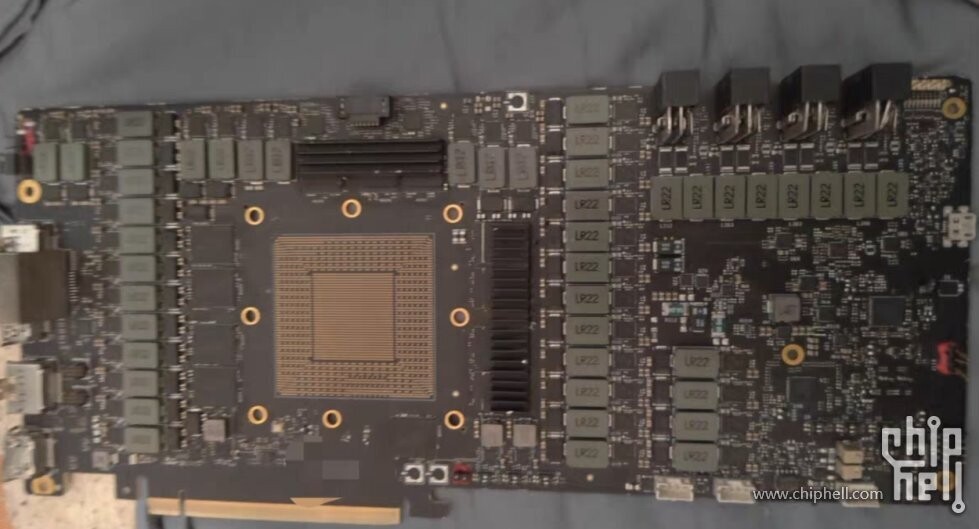
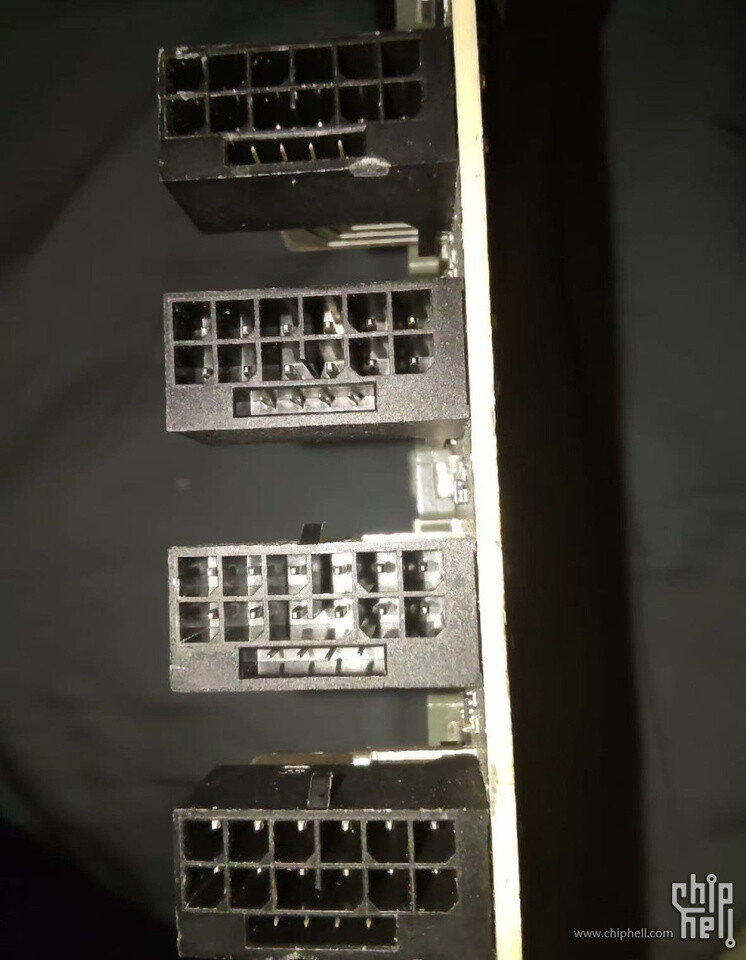
Recent engineering prototype leaks reveal NVIDIA's power delivery design for its RTX 5090 flagship GPU featured a jaw-dropping quad 12V-2x6 connector configuration. The prototype board, while not publicly photographed, is significantly different from the final version we have today. The quad-connector design serves multiple purposes beyond raw power delivery. Each 12V-2x6 connector, capable of delivering up to 600 W individually, creates a theoretical power ceiling far beyond reasonable requirements. More likely, the implementation allows for separate voltage rails and enhanced power stability, crucial for the card's reported 575 W TDP - a 125 W increase from the RTX 4090's specifications. This overengineered piece follows NVIDIA's historical engineering practices, where early prototypes typically feature expanded power delivery systems that are later optimized for production.
The timing of this leak happens just in time with ongoing discussions about 12V-2x6 connector reliability, particularly following documented failures. While the quad-connector design may seem excessive, it distributes power load more evenly across multiple connection points, potentially addressing thermal concentration issues that plagued single-connector implementations. Board partners like ASUS have already implemented sophisticated current monitoring solutions in their custom designs, using shunt resistors to detect overcurrent conditions across individual pins. Established hardware leaker, Panzerlied confirmed the prototype's existence on Chinese forums, alongside images of other engineering samples featuring similar power delivery experiments across multiple GPU generations.

Sources:
HXL, via VideoCardz
The timing of this leak happens just in time with ongoing discussions about 12V-2x6 connector reliability, particularly following documented failures. While the quad-connector design may seem excessive, it distributes power load more evenly across multiple connection points, potentially addressing thermal concentration issues that plagued single-connector implementations. Board partners like ASUS have already implemented sophisticated current monitoring solutions in their custom designs, using shunt resistors to detect overcurrent conditions across individual pins. Established hardware leaker, Panzerlied confirmed the prototype's existence on Chinese forums, alongside images of other engineering samples featuring similar power delivery experiments across multiple GPU generations.
26 Comments on NVIDIA GeForce RTX 4090/5090 Prototypes Tested with Quad 16-Pin 12V-2x6 Connectors
Quadruple the chance of "user error"!
now we have gone from 1 to 2 to.... not 3, but 4 connectors just to temper the outrageous power draw of these new cards & keep them from m*e*l*t*i*n*g like a bucket of ice cream at the gates of hell....like, w.T.f..... ?
I can only assume nVidia's engineers have been well-aware of the transient current issue, and did something else to mitigate Vdrooping.
These connectors are paralleled inside
and only being treated as one giant cable from the PSU and the card.
Therefore current flow through the path of least resistance
Hence the wire with better contact actually melts first.
The whole electrical solution is just flawed at the very beginning.
One more observation.
Noticed that both the burn and der8auser's hottest wire all come from the nearest pin from PCB
That pin has the shortest 90 degree bridge behind the connector, hence least amount of resistance.
There it was suppose to be less power each gen. Boy they got that one wrong. According to that road map Blackwell would have be 100 watts maybe.
Like the Geforce GTX 480 to 580 was a drop of 100 watts but better performance same when it went from the 580 to 680 to 780 each time less wattage more performance.
Nvidia got better and better. Then they went complete reverse with the 2000 and 3000 and 4000 and now 5000 series more and more power hungry. Reminds me of the vacum cleaner card.
At this moment in time solution to the problem would be a total recall and redesign by splitting load between 2 12V 2x6 connectors with proper voltage/current regulation/balancing/limits on PCB. nVidia's reference 4090/5090 design really is bottom of the barrel stupidity. In itself Plug is OK (assuming no loose wires and botched connectors), but how PCB handles power delivery is sheer lunacy.
I was ready to get some for work, but I'm not so sure about that now (shame I got my Seasonic PX-2200W so early before seeing all this shit, but at least has rock solid plugs and wires). Perhaps after all this disaster PR nVidia will at least do properly 5080Ti?