News Posts matching #Solar Bay

Return to Keyword Browsing

Intel Arc B390 Panther Lake iGPU Impresses in Linux Performance Tests

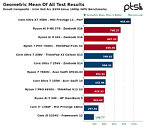
Intel's Arc graphics solutions initially had a rough start to life on the Linux side of things, but it seems as though the tide is changing. Phoronix recently tested the new Panther Lake Intel Arc B390 iGPU in the Intel Core Ultra X7 358H, comparing the new iGPU to the venerable Radeon 890M in the AMD Ryzen AI 9 HX 370, and Intel's iGPU consistently outpaces the Radeon iGPU, which isn't a surprise if you've been keeping track of early benchmarks on Windows. The publication tested the new Xe3 integrated graphics in an MSI Prestige 14 running the latest Mesa 26.0 drivers on Linux Kernel version 6.19 on Ubuntu 26.04.

When it comes to gaming, the only games in which the Xe3 iGPU was bested by the AMD competition were Counterstrike 2, running at 1920×1200, and Quake II RTX. In every other game, the Intel Arc B390 beat both the AMD competition and the Intel Core Ultra 7 155H and Core Ultra 7 258V significantly. Depending on the game and in-game settings, the Arc B390 was anywhere between 15% and upwards of 50%. Hitman 3 was a particularly impressive outlier, with the B390 managing to get over 50% more FPS than the nearest competitor and 64% more FPS than the Radeon 890M at 1920×1200 and low settings, with similar gains at medium quality settings, and a slightly less impressive performance improvement when bumping up to ultra settings.
Snapdragon X2 Elite Extreme Benchmarks Highlight Impressive CPU Performance but Underwhelming GPU

Qualcomm recently unveiled the Snapdragon X2 Elite Extreme SoC as its latest foray into the world of Windows on Arm hardware. It claimed that the new processor would deliver up to 75% higher CPU performance and a 2.3 × improvement in performance per watt. Now, following the post-launch hype, independent benchmarks are starting to appear and show what Qualcomm didn't on-stage. The most recent set of benchmarks comes from ComputerBase, the German-language outlet known for its in-depth hardware testing, and it shows that Qualcomm's claims of CPU performance were surprisingly impressive. Although it also becomes clear why Qualcomm stuck to performance per watt instead of focusing too much on raw GPU performance.

According to the ComputerBase review, the Qualcomm Snapdragon X2 Elite Extreme was able to outperform Apple's best and brightest, the Apple M4 Pro, in both Cinebench 2024 and Geekbench 6.3 multicore benchmarks, scoring 1,964 and 23,693 points, respectively. Results are a little less consistent when it comes to single-core scores, with the Apple M4 Pro pulling ahead of the Snapdragon SoC by 7% in the Cinebench 2024 single-core test but falling behind the X2 Elite Extreme by 7% in Geekbench 6.5. NPU performance was also impressive, with the X2 Elite Extreme's 80 TOP NPU coming out undefeated, at 128% faster than the Intel Core Ultra 9 288V in the ASUS Zenbook S 14. Unfortunately, that seems to be where the good news for Qualcomm ends—mostly. When it comes to GPU tests, the Snapdragon X2 Elite Extreme remains well behind the Apple M4 Pro in both the 3DMark Steel Nomad Light Unlimited and 3DMark Solar Bay Unlimited tests, scoring 5,687 points and 22,946 points, respectively. While that puts the new Arm silicon a solid 37-40% ahead of the nearest competing iGPU, the Apple M4 10-Core, it is still 37-46% behind the Apple M4 Pro in GPU benchmarks. It remains to be seen how this translates to real-world gaming performance and actual CPU workloads, given the translation layer that Arm SoCs currently still rely on for many non-native Windows apps and games, but it's an impressive showing nonetheless.

UL Releases 3DMark Solar Bay Extreme, The Ultimate Ray Tracing Benchmark

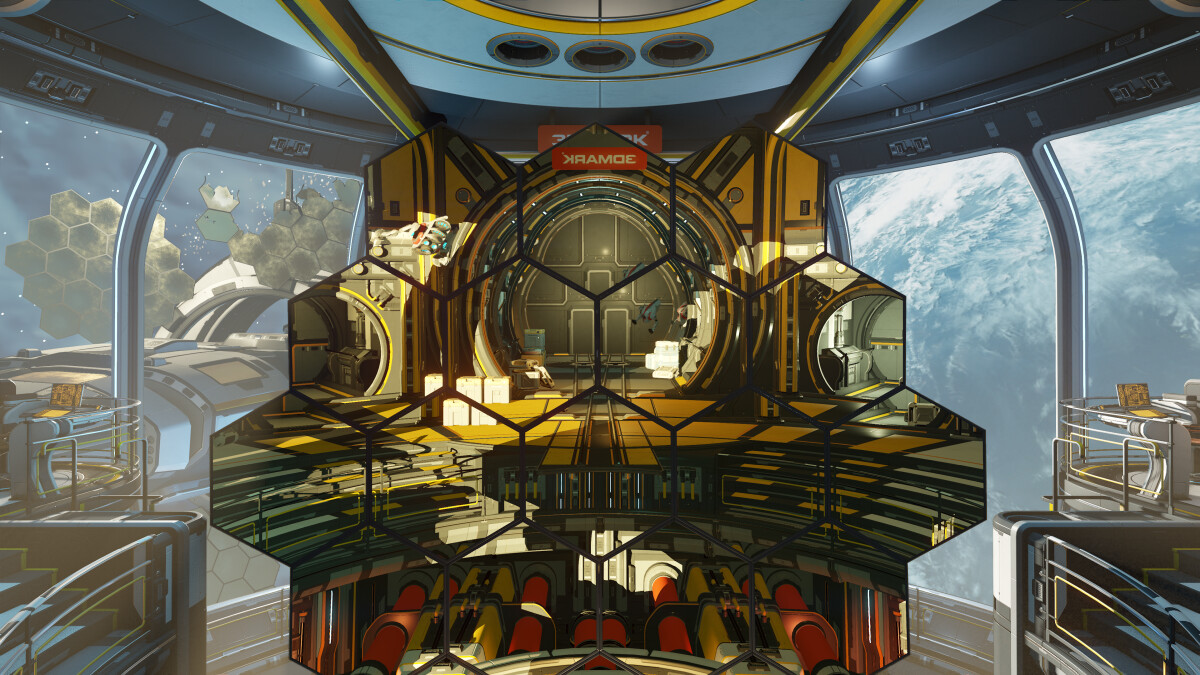
UL Benchmarks has released Solar Bay Extreme, a major update to the cross-platform 3DMark Solar Bay benchmark that cranks up ray tracing demands for both desktop and mobile devices. The update is now available as a free upgrade for existing 3DMark owners and is designed to showcase the capabilities of current hardware in pushing modern lighting techniques. Everyone can now run the test to compare scores on 3DMark leaderboards and utilize the built-in stress mode to monitor for throttling and stability issues during extended runs. Solar Bay Extreme runs on native APIs for each platform, utilizing Vulkan on Android, Metal on Apple platforms, and DirectX 12 on Windows, ensuring results that accurately reflect how real games behave.

The new edition brings more detailed scenes and a heavier ray tracing workload, including ray-traced specular reflections on rough and glossy surfaces, glass reflections and soft ray-traced shadows for directional lights. UL also added a second assembly bay to the scene where a rival team builds a solar array, which adds geometric complexity and varied lighting that exposes differences between GPUs and drivers.

UL Solutions Launches 3DMark Solar Bay, New Cross-Platform Ray Tracing Benchmark

We're excited to announce the launch of 3DMark Solar Bay, a new cross-platform benchmark for testing ray traced graphics performance on Windows PCs and high-end Android devices. This benchmark measures games-related graphics performance by rendering a demanding, ray-traced scene in real time. Solar Bay is available now for Android on the Google Play Store and for Windows on Steam, Epic Games or directly from UL Solutions.

Compare ray tracing performance across platforms
Ray tracing is the showcase technology for Solar Bay, simulating real-time reflections. Compared to traditional rasterization, ray-traced scenes produce far more realistic lighting. While dedicated desktop and laptop graphics processing units (GPUs) have supported ray tracing for several years, it's only recently that integrated GPUs and Android devices have been capable of running real-time ray-traced games at frame rates acceptable to gamers.
Return to Keyword Browsing
Nov 13th, 2026 22:12 CST change timezone

New Forum Posts

Popular Reviews

TPU on YouTube

Controversial News Posts