News Posts matching #Steam

Return to Keyword Browsing

Capcom Axes Live Service Game "Exoprimal" After Just 3 Years

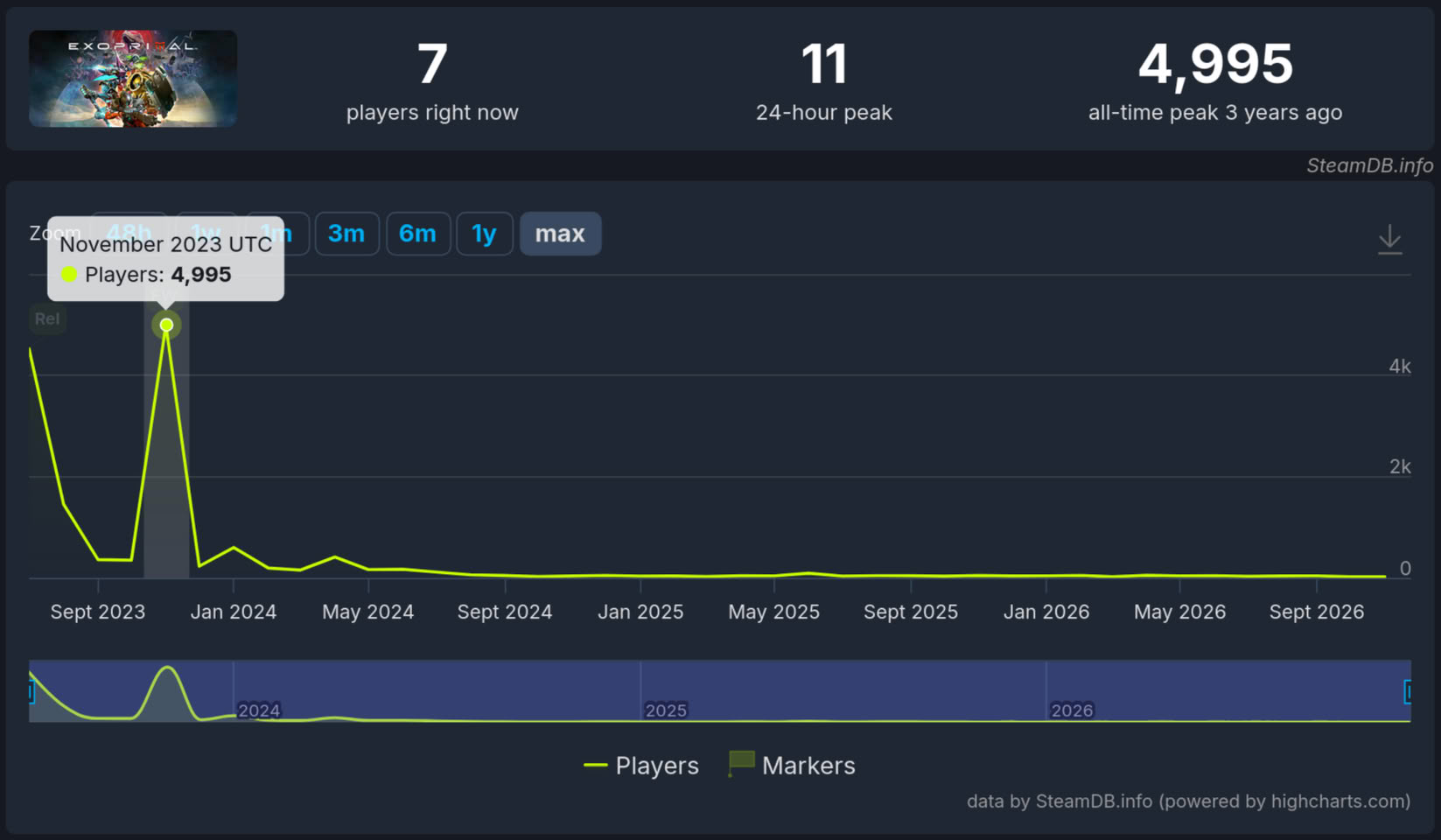
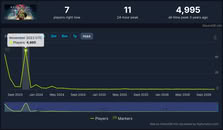
It seems as though Sony isn't the only gaming stalwart struggling to make sense of a changing live-service gaming landscape. Exoprimal launched on Steam in July 2023 with what ought to be a convincing concept: mech suits versus dinosaurs; and it looked like Capcom had big plans for the game. However, it appears as though a compelling gameplay concept just isn't enough in a world flooded with live-service games, as the online PvP shooter failed to even crack 5,000 concurrent players on Steam.

Now, just over three years since its launch, Capcom has announced that it will be shutting down Exoprimal for good in September 2027. Capcom has not provided a reason for the game shutting down, but it's safe to assume the low player retention is to blame. As of November 24, 2026, Exoprimal players will no longer be able to buy the Survival Pass Premium battle pass tiers. The game itself will be delisted on March 30, 2027, and the servers will shut down on September 29, 2027. There does not appear to be a post-service plan to keep the game alive at all—unlike the recently discontinued Splitgate: Arena Reloaded and Empulse, which both received a final patch allowing peer-to-peer hosting.


System76 Launches Pop!_OS 26.04 With Major UI and Usability Improvements

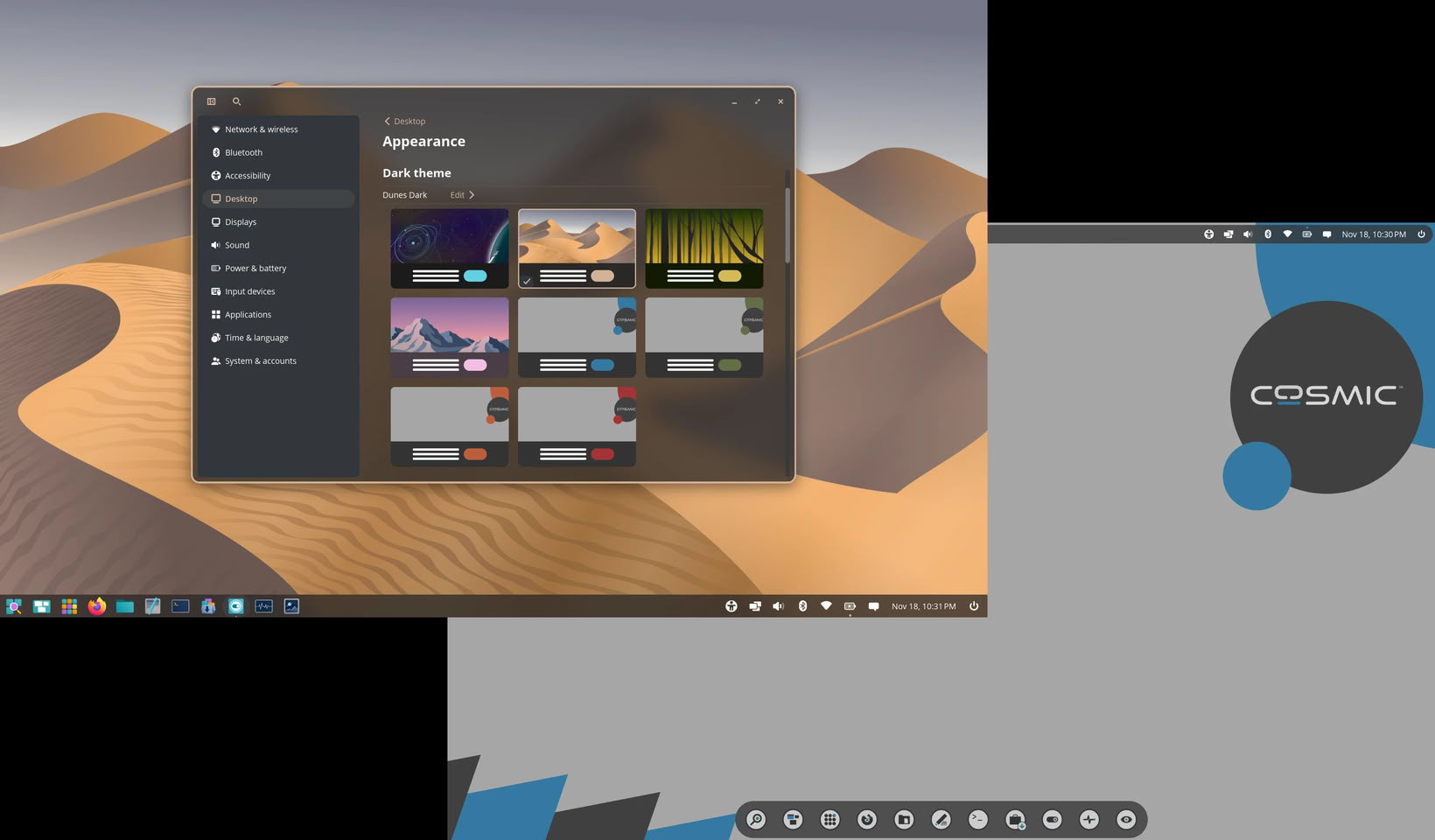
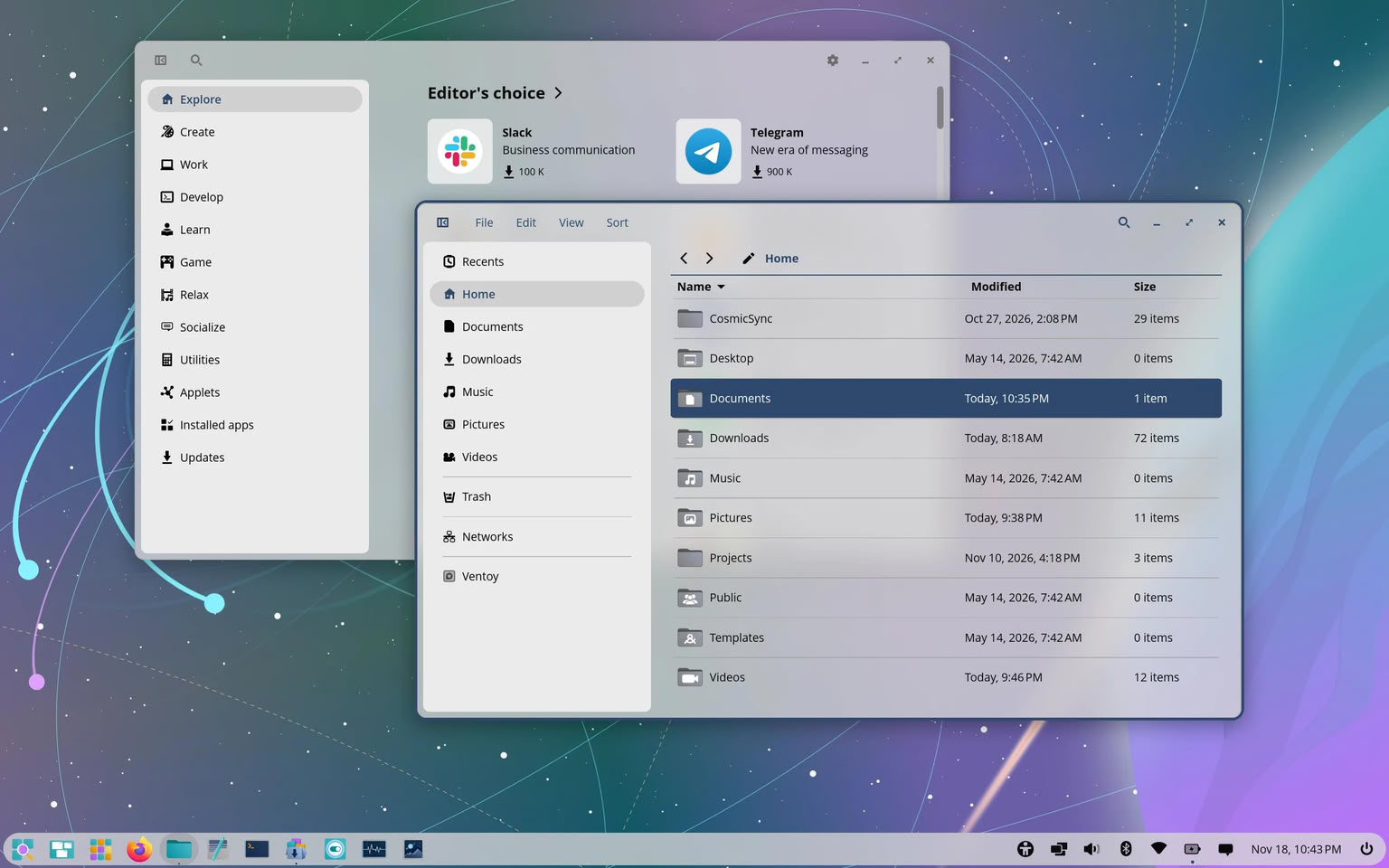
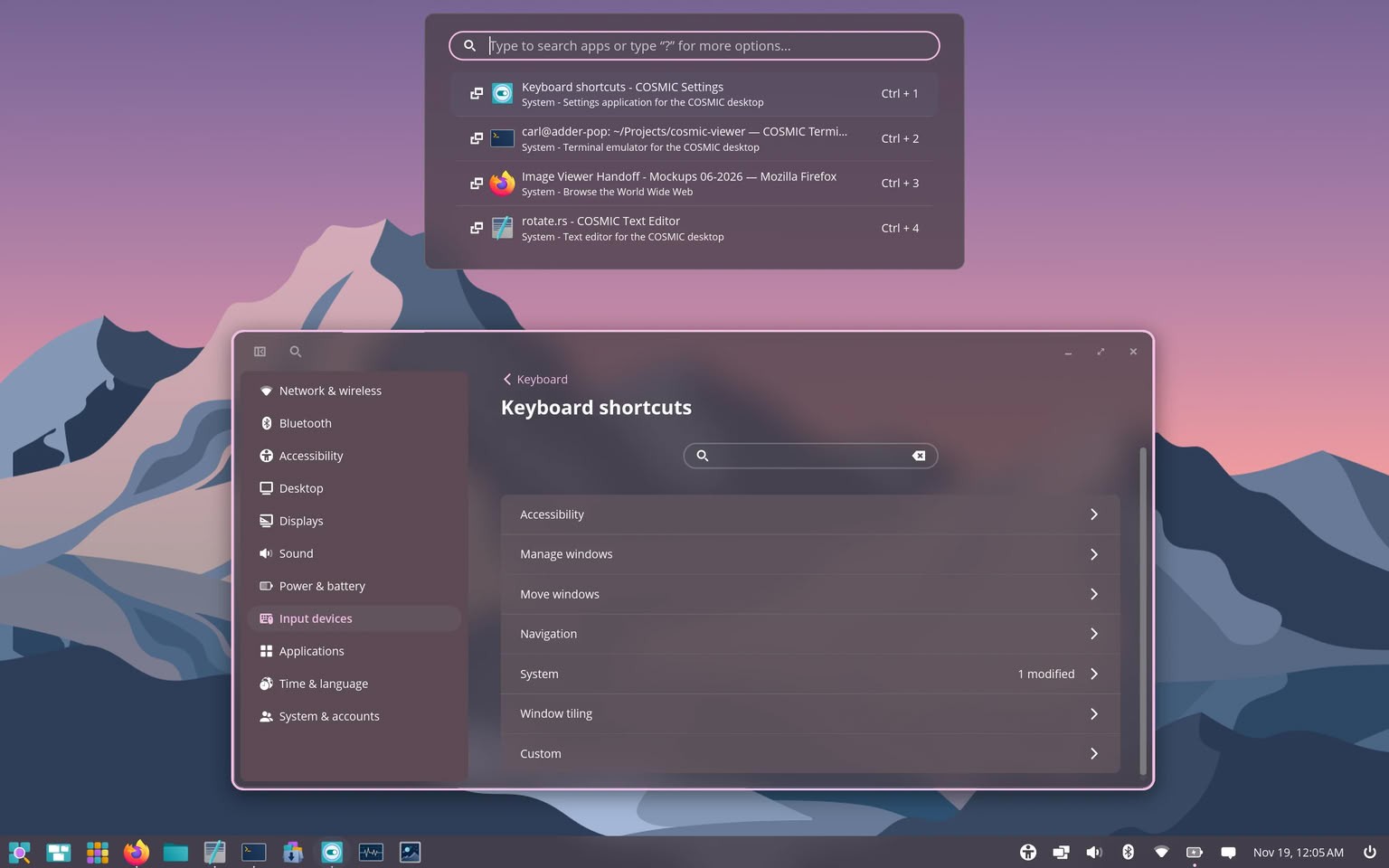
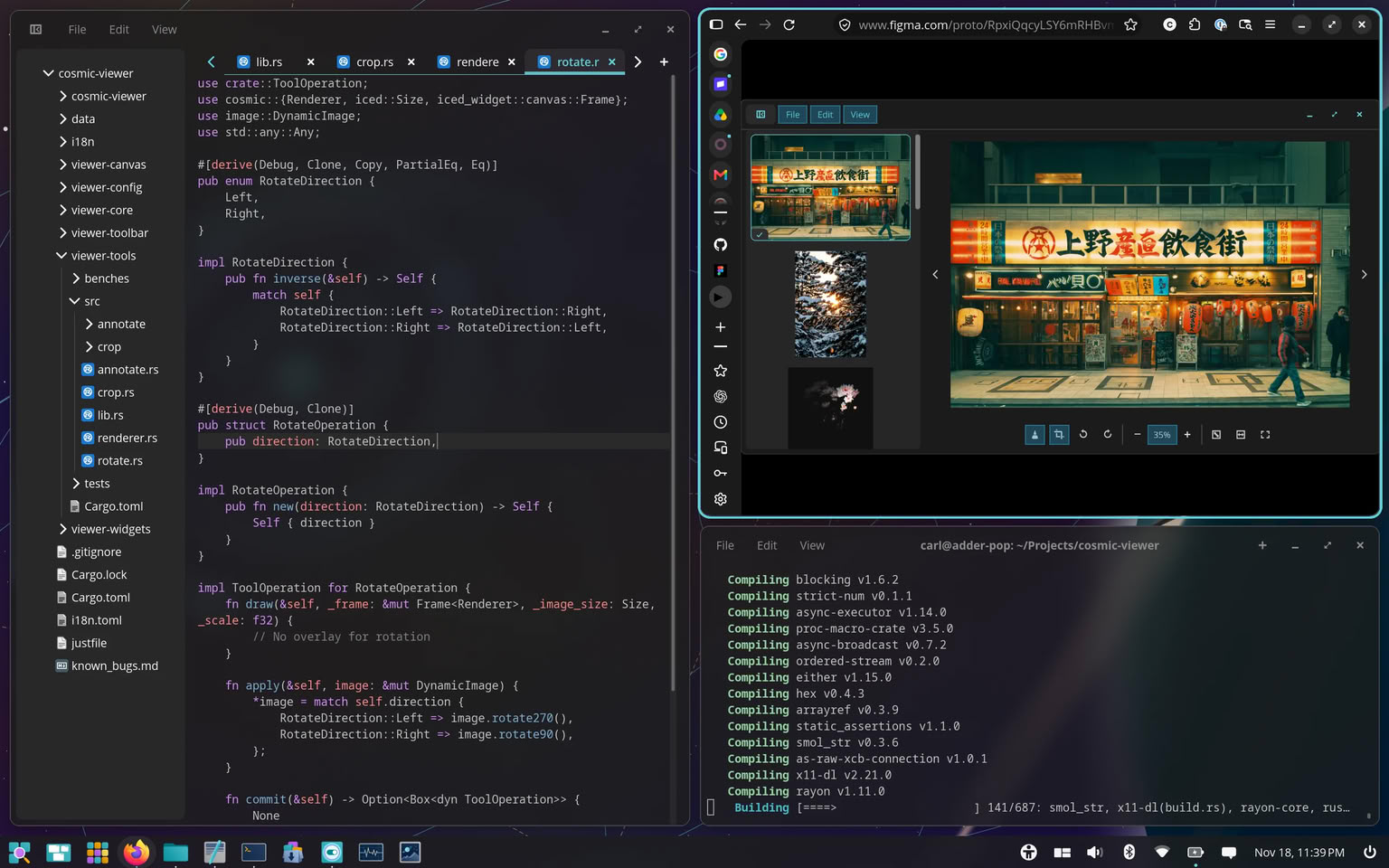
Pop!_OS, the Linux distribution shipped by default with System76's PCs, like the recently released Thelio Prime desktop, has officially been updated to version 26.04 LTS from 24.06. The new update to Pop!_OS has brought with it a host of updates, most of which are aimed at making the distribution and its Cosmic desktop significantly more feature-complete and competitive with the likes of GNOME. The update to 26.04 is largely considered to be a big step for both Pop!_OS and Cosmic, because the Cosmic desktop has been playing catch-up, but it has some highly sought-after power-user design concepts, like the configurable, user-friendly, auto-tiling window management.

The distribution itself is now on kernel version 7.2.15, although kernel versions aren't tied to a specific version of Pop!_OS, due to its update cycle. The major usability improvements come from changes to the desktop, which, in 26.04, include: new Cosmic Image Viewer and System Monitor apps; new Constellations themes with bundled wallpapers, icons, colors, and fonts; built-in drawing tablet support; an on-screen keyboard with touch and gamepad support; support for automatic system and app updates; remote desktop support; configurable workspace wrapping; variable refresh rate support; improved gaming, especially with Steam Big Picture; improvements to touchscreen support; and individual app volume control.

Valve Overhauls Steam Community Market With New UI, Item Watchlist, and Live Price Changes

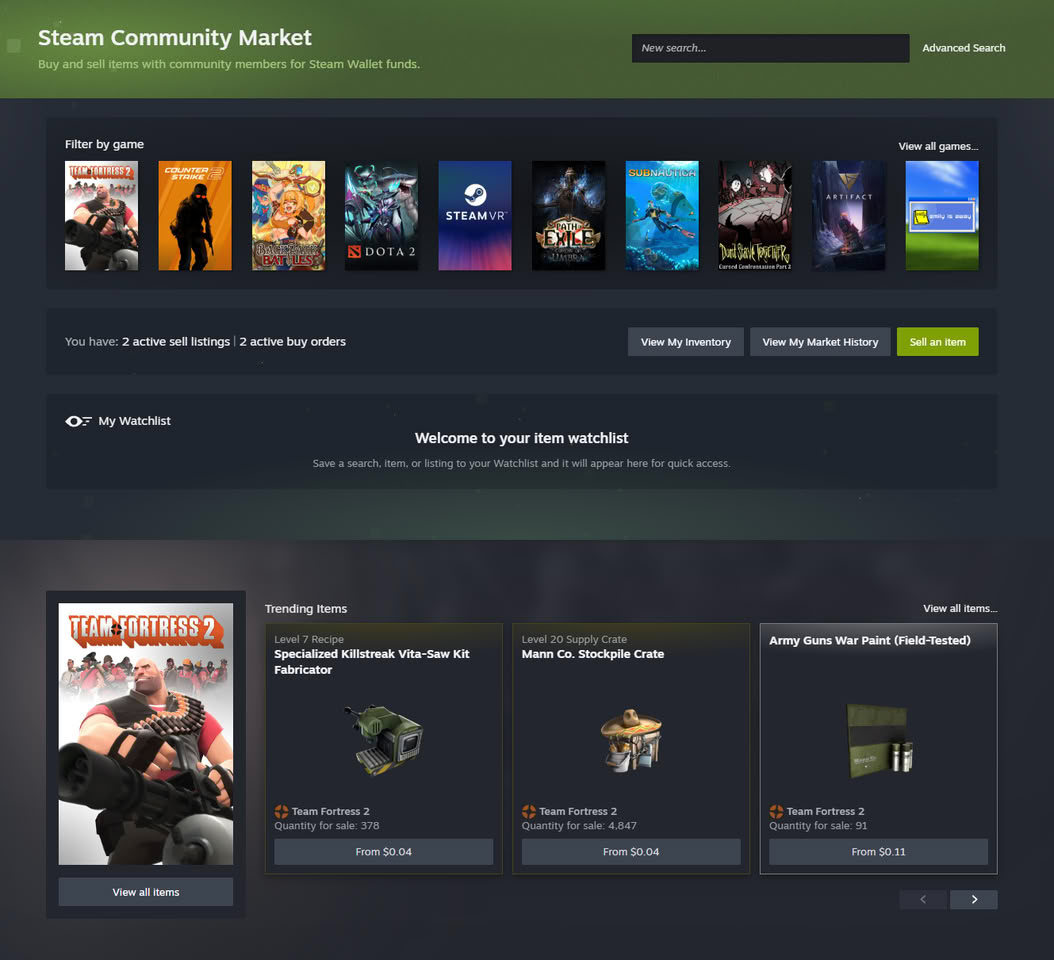
Valve's Steam remodeling spree continues, this time with a recently announced overhaul to the Steam Community Market. As of the latest update, the Steam Community Market has an updated home page with a more prominent Trending Items section tailored to each individual player's games, and quick access to your personal watchlist.

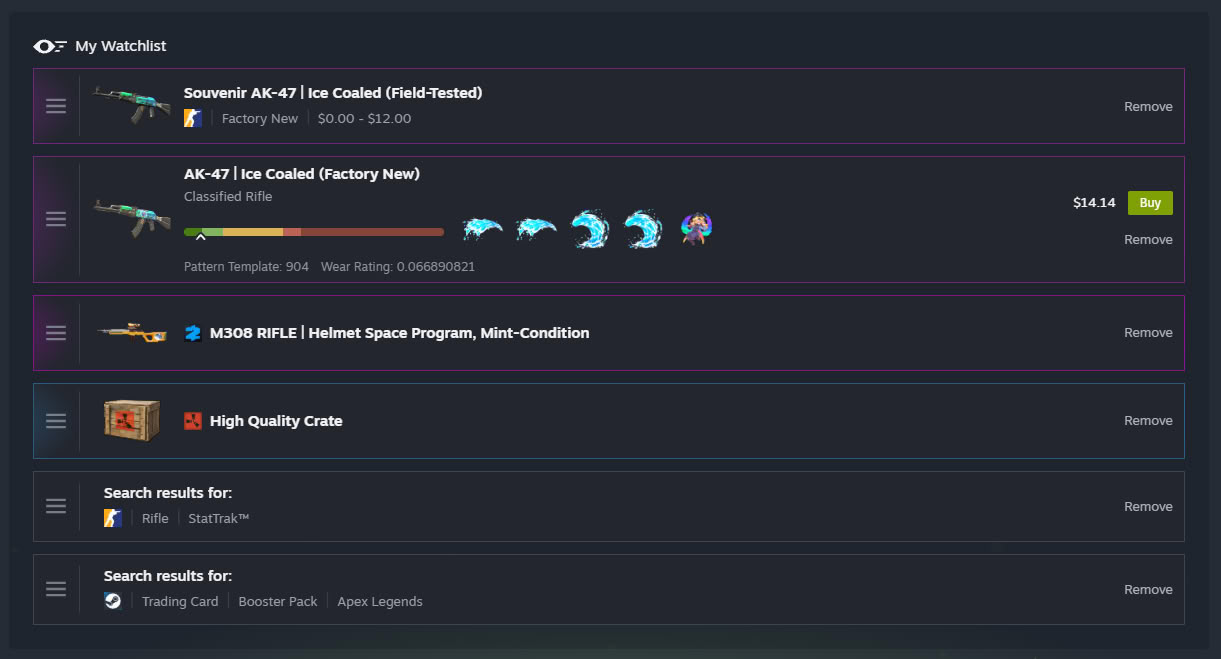
Watchlist is a new feature in the updated Community Market UI, too, as a dedicated page to keep track of items you're interested in. The Watchlist is searchable and can be configured to watch for specific items, listings, item types, and search filters. The Community Market homepage also now has a section highlighting Community Items tailored to each player's library.

Valve Opens Nominations for 10th Anniversary Steam Awards With 3 New Categories

Valve has officially opened nominations for the 10th Anniversary Steam Awards, marking the special occasion with a new Hall of Fame awards category, which allows players to nominate a prior Game of the Year award winner as the best game of the last decade. That list includes Grand Theft Auto V, The Witcher III, PUBG: Battlegrounds, Sekiro: Shadows Die Twice, Red Dead Redemption, Resident Evil Village, Elden Ring, Baldur's Gate III, Black Myth Wukong, and Hollow Knight: Silksong.

The other categories are the standard fair of Game of the Year, VR Game of the Year, Labor of Love, Best Handheld Game, Better with Friends, Outstanding Visual Style, Best Soundtrack, Best Game You Suck At, Outstanding Story-Rich, and the Sit Back and Relax award. However, there are also a few newcomer categories that bring the total category count to 14: The "This Is My Job Now" award for real-world job simulators, the "Defies Description" award for games that mix genres and gameplay mechanics to the extent that they no longer conform to one specific genre, and the "Just Five More Minutes" award for games that suck players into a hole of "just one more level."

Xbox Helix Was Reportedly Planned With Free Online Multiplayer and Steam Access

Microsoft's next-generation Xbox, codenamed "Project Helix," was apparently planned to include free online multiplayer, according to Windows Central's Jez Corden. Sources close to Microsoft's plans tell Corden that Project Helix was conceived under Phil Spencer and Sarah Bond, and the original vision was more of a PC-console hybrid. That meant running the Windows operating system with access to PC stores such as Steam. The reported plan also mentions free multiplayer support, and the price of that was meant to be factored into the cost of the product. You could also reportedly exit the Xbox interface straight to the Windows desktop.

The plan sounds legitimate since you can already access online play for free on a Windows PC. The other details also make it sound like Xbox was shaping Project Helix more like a traditional PC. However, it looks like that plan changed somewhere along the way, especially since Phil Spencer has retired and Bond has also left Microsoft. New Xbox CEO Asha Sharma's team seems to be taking Xbox Helix back to its traditional console roots. Xbox VP Jason Ronald said earlier this month that Helix is "a console that is also capable of playing games from your PC," not the other way around. Corden also doesn't see the feasibility of free online multiplayer anymore, given the rising component costs and CEO Satya Nadella wanting Xbox to "pay for itself." Xbox Helix is already projected internally to cost between $1,200 and $ 1,800.

ShiftUp Claims Stellar Blade Blood Rain is "Handmade Start To Finish" After AI Music Video Backlash

ShiftUp, the game studio behind the Stellar Blade franchise, has been open about its use of generative AI for both its games and its promotional material, with a recent Stellar Blade: Blood Rain music video receiving substantial backlash online for being AI-generated. However, the studio's CEO, Kim Hyung-tae, recently clarified the studio's AI use at G-Con 2026, a Korean game expo hosted on November 19-22. As reported by Inven, the CEO says that the recent backlash taught the game studio a lot about how AI and the gaming audience.

He said that, following the backlash, the studio established a new internal policy that he describes as "handmade from start to finish," and he explains that ShiftUp will start with a human-made foundation, and that AI will be used in intermediate tasks, like prototyping and testing for things like texturing, lighting, weathering, and for tasks like retopology and mesh optimization. Human artists will also be used to evaluate and polish any assets before they're implemented into the game, serving as a sort of quality control for the end product.

Debian Linux Forms Gaming Hardware Team for Handheld and Bleeding Edge Hardware Testing

While newer gaming distributions, like CachyOS and Bazzite, are all the rage these days, Debian has always been a go-to distro for a lot of Linux users who simply need something reasonably lightweight and highly stable. This is why distributions like Linux Mint are based on Debian. However, it seems as though the Debian development team is finally starting to broaden its horizons, following the popularization of Linux as a gaming platform, thanks to devices like the Steam Deck and Machine. As per a recent announcement in the Debian mailing list, project maintainer, Aryan Karamtoth, has officially started the Debian Gaming Hardware Team.

He explains in the post that the Debian Gaming Hardware Team's main focus is to "bring over some attention towards Debian as a choice for gaming hardware," after he noticed that all the popular gaming distributions are based on Arch or Fedora Linux. The Debian Gaming Hardware Team will focus on testing gaming hardware, including "handhelds, emulation devices, and home consoles," in order to document compatibility and issues, and subsequently explore the possibility of introducing patches and fixes for hardware issues. He goes so far as to say that the Gaming Hardware Team may go so far as to "address the elephant in the room" regarding compatibility with bleeding-edge gaming hardware—an area Debian has struggled with in the past—without losing its reputation for stability.

Valve Ditches Steam Machine Reservations but Warns of Price Hikes and Shortages

Valve officially released the Steam Machine in mid-2026 with a reservation program and limitations on per-customer sales in order to minimize the impact of the ongoing RAM crisis and ensure that as many people as possible got a fair shout at buying a living room console-PC hybrid. Now, nearly five months after the console's initial launch, Valve has dropped the Steam Machine's reservation program and started selling the device to the public. At the time of the announcement, Valve had stock of the 512 GB Steam Machine, but it has not yet cleared out the existing reservation queue of the 2 TB unit. However, the announcement that the Steam Machine's general availability also comes with a warning that supply and pricing aren't guaranteed.
We are continuing to build more Steam Machine units, but memory and storage costs continue to increase at unprecedented levels; as a result we don't yet know the number we are able to make, and at what price we'll be able to offer them. The 2 TB model in particular will be especially constrained.
We anticipate having more information to share come January.

Windows 7 Gets Unofficial DirectX 12 Support for Modern GPUs

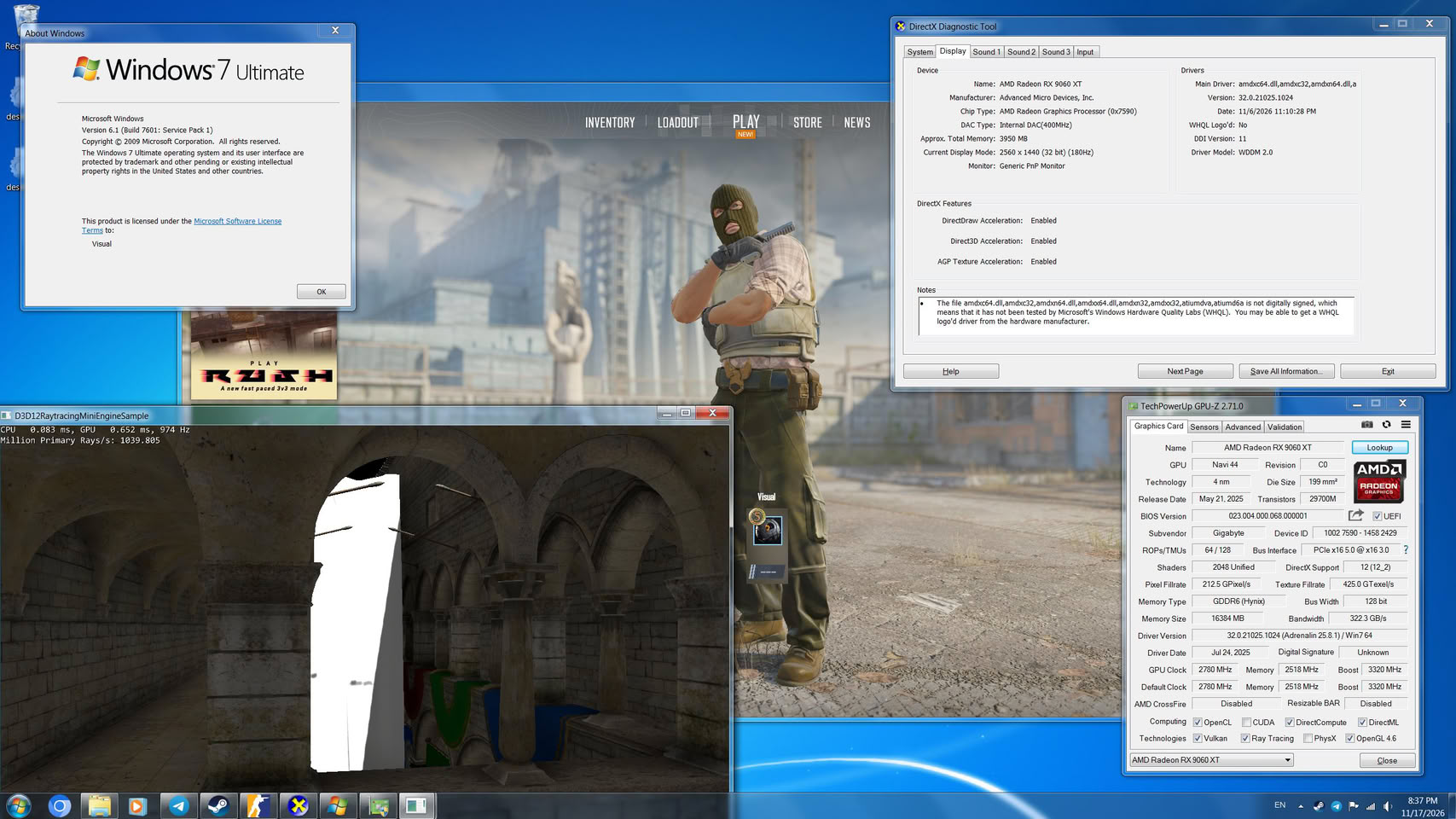
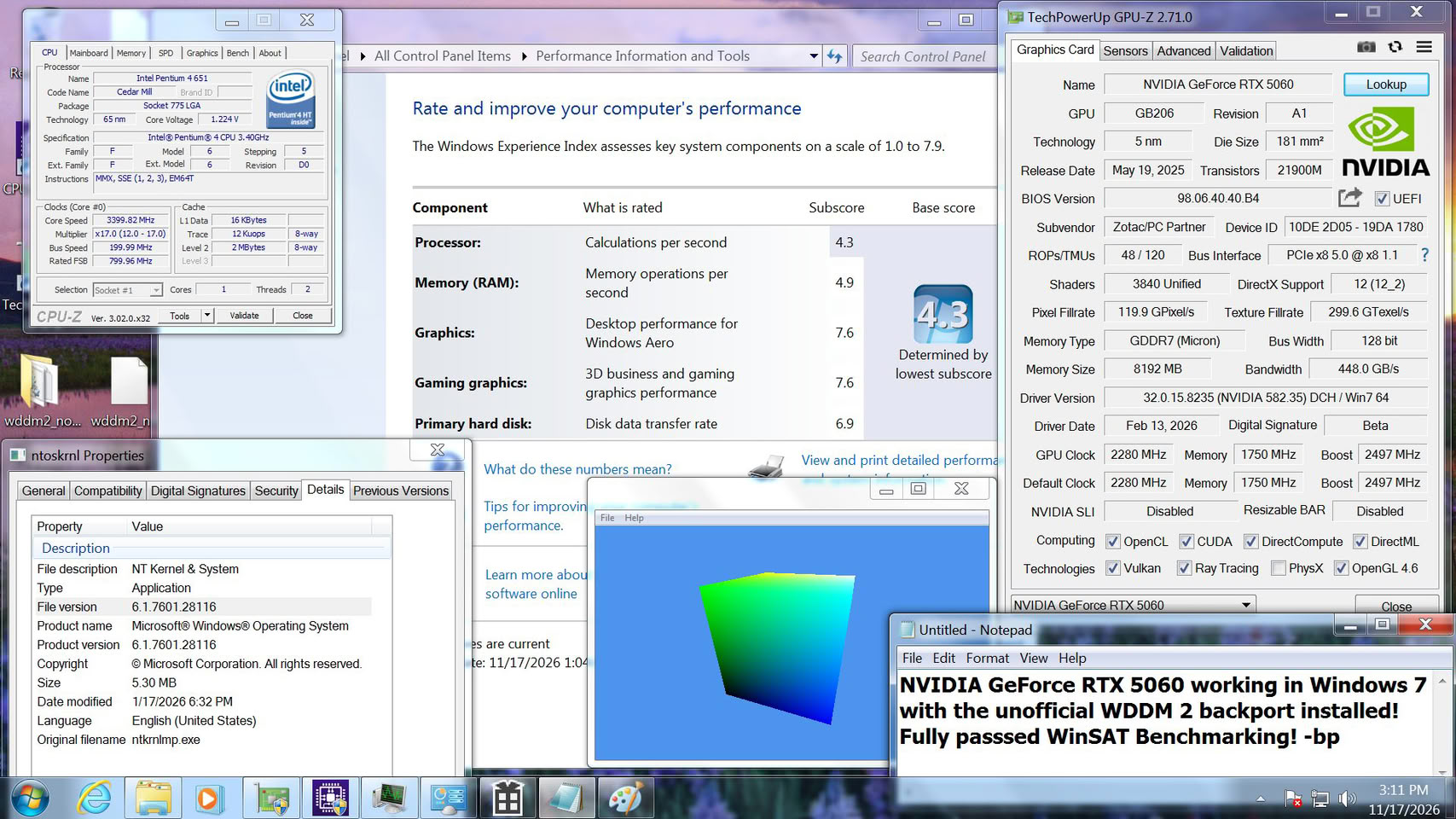
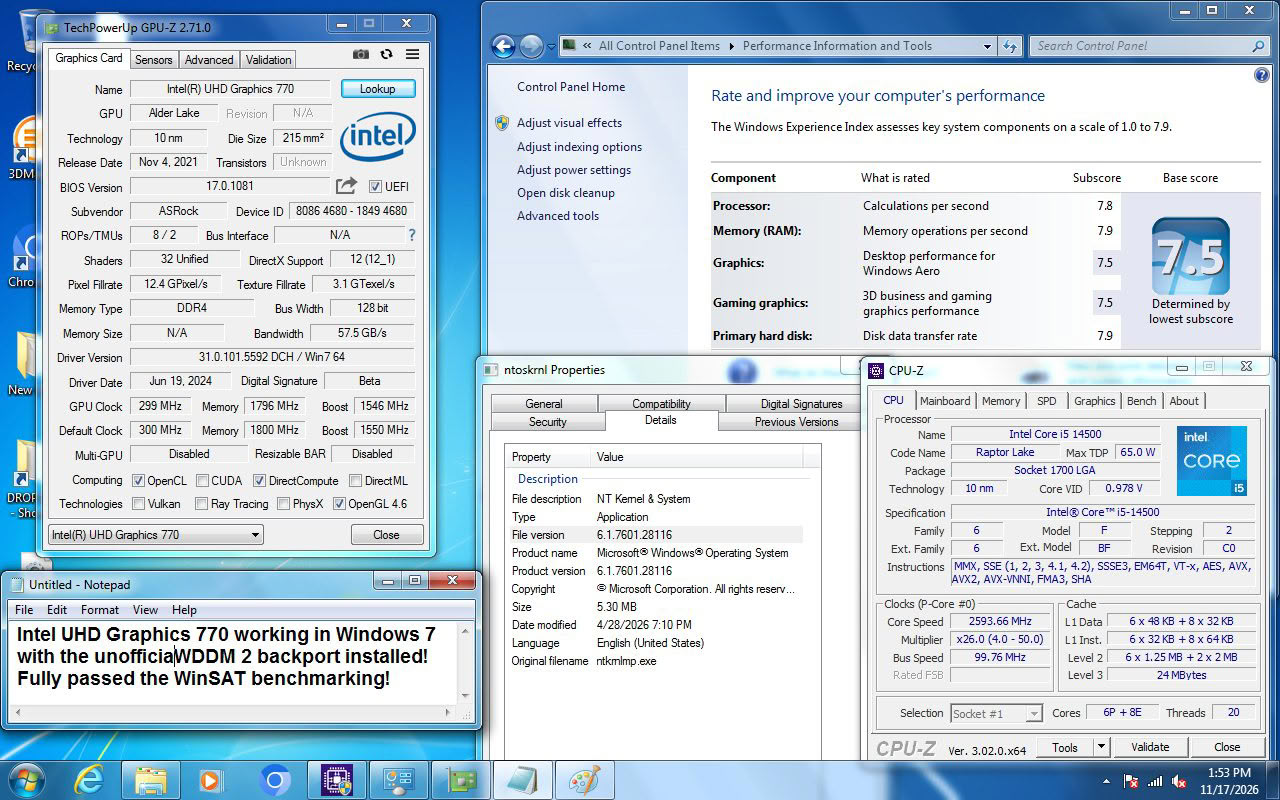
Windows 7 was a beloved operating system for many, and if you're still running a machine with that OS, this release might be for you. Three Windows 7 enthusiasts have managed to get current-generation GPUs and DirectX 12 running on Microsoft's 17-year-old OS. Bob Pony shared the project on X, called WDDM2Win7, an unofficial backport of the Windows Display Driver Model (WDDM) 2. The screenshots show Intel UHD Graphics 770, an NVIDIA GeForce RTX 5060, and an AMD Radeon RX 9060 XT, all detected in TechPowerUp's GPU-Z and running in Windows 7. According to the developer, GeForce RTX 40-series and 50-series cards, as well as Radeon RX 7000 and RX 9000 series cards, work. Intel UHD and Xe graphics are also supported, and DirectX 12 works as well.

Windows 7 originally shipped with WDDM 1.1, while WDDM 2.0 arrived alongside Windows 10 in 2015, bringing DirectX 12 along with it. Microsoft then brought DirectX 12 to Windows 7 in 2019, though only as a user-mode runtime. Individual games like World of Warcraft had to ship it themselves, which limited compatibility. The developers behind this project also backported the Steam client beta to Windows 7 last December after Valve dropped support for the OS in early 2024. As for WDDM2Win7, there is still plenty of testing to be done, but so far there are screenshots showing various GPUs being detected and some DX12 games working. Windows 7 stopped getting free security updates in January 2020, so if you have to try this, make sure it is on a secondary or offline machine.

Slay the Spire 2 Sold Nearly 8 Million Units on Steam in Just 8 Months

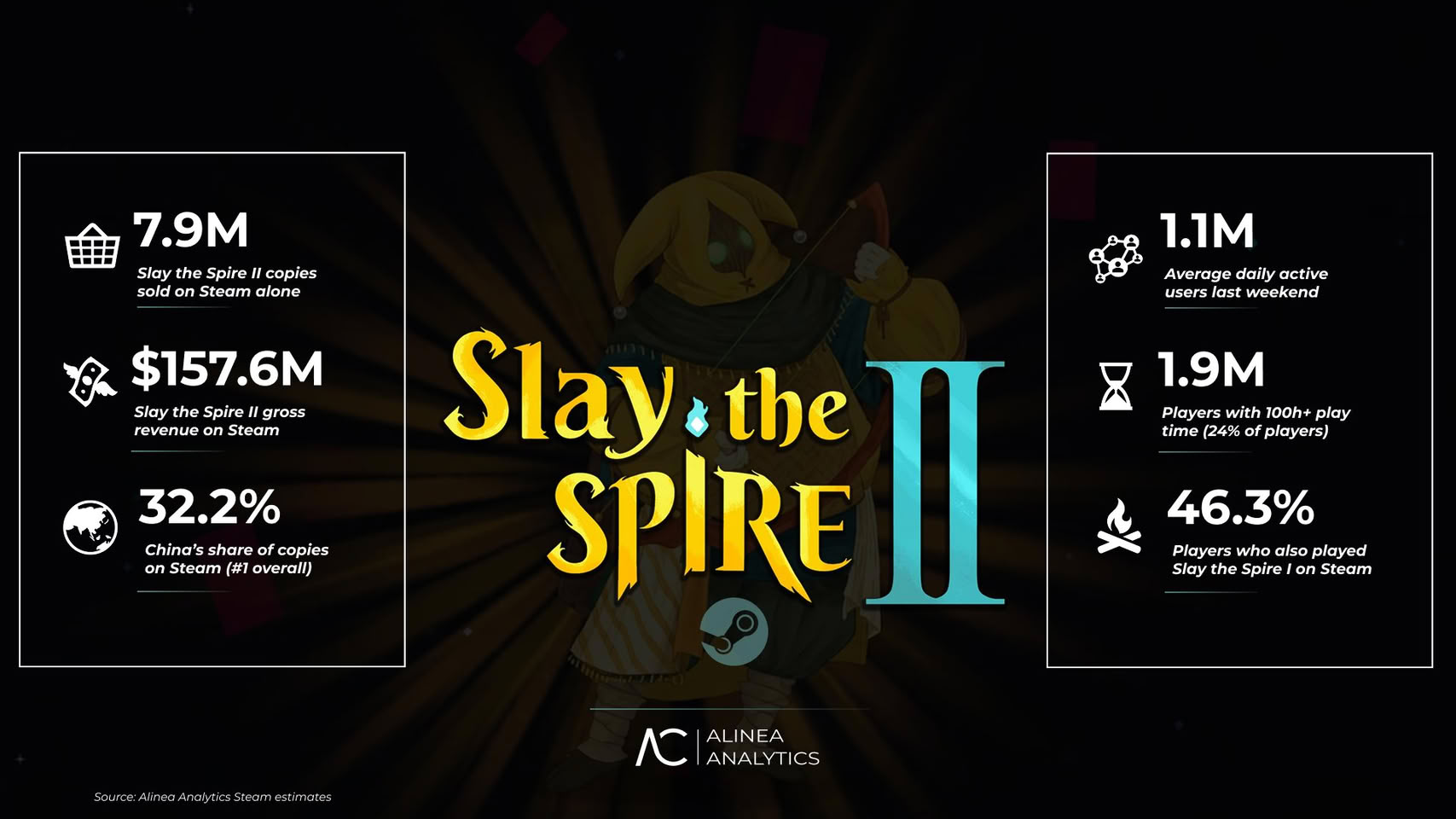
It was clear with in the first 24 hours of the game's early access launch that Slay the Spire 2 would be a screaming success, with the indie game peaking at over 430,000 concurrent players on Steam in its first day on the market. According to recent Alinea Analytics data (via Rhys Elliott), Slay the Spire 2's success has continued in the eight months following its launch leading up to November, with the market research firm estimating that the game has sold a whopping 7.9 million copies on Steam since its launch.

Other notable analytics include that, in early November, Slay the Spire sat at around 500,000 daily active users, but that number jumped to 1.1 million shortly after the game's v0.113.0 update, which introduced a new character and new gameplay modes and mechanics alongside the usual bug fixes and patches. The analytics firm also estimates that as many as 100,000 Slay the Spire owners haven't even launched the game, but as many as 24% of the game's players have played it for over 100 hours.

GTA 5 Sees Sales Spike Ahead of GTA VI Launch

It has long been predicted that the launch of Grand Theft Auto VI would have an outsized impact on the gaming industry when it launches on November 19, but what might not have been as widely anticipated is how it would impact the sales of its 13-year-old predecessor, Grand Theft Auto V. According to recent data published by Alinea Analytics's Rhys Elliott, Grand Theft Auto V has sold a total of 150,000 copies in the first 13 days of November 2026 and garnered 16 million monthly active users to date for November, across all three platforms where it is available.

According to Elliott, 54.2% of new GTA V sales were on PS5, while 25.2% were on Steam, and an additional 20.6% were on Xbox. This follows a legendary run in Q2 2026, during which Take-Two Interactive says GTA V sold over 5 million copies, bringing its grand total to over 235 million sales and $10 billion in revenue. Previous estimates put the budget of the upcoming GTA VI at as high as $3 billion on salaries alone, suggesting the actual budget to be over $5 billion.

SteamOS Beta Drops Fixes For High Refresh Displays and HDR Content

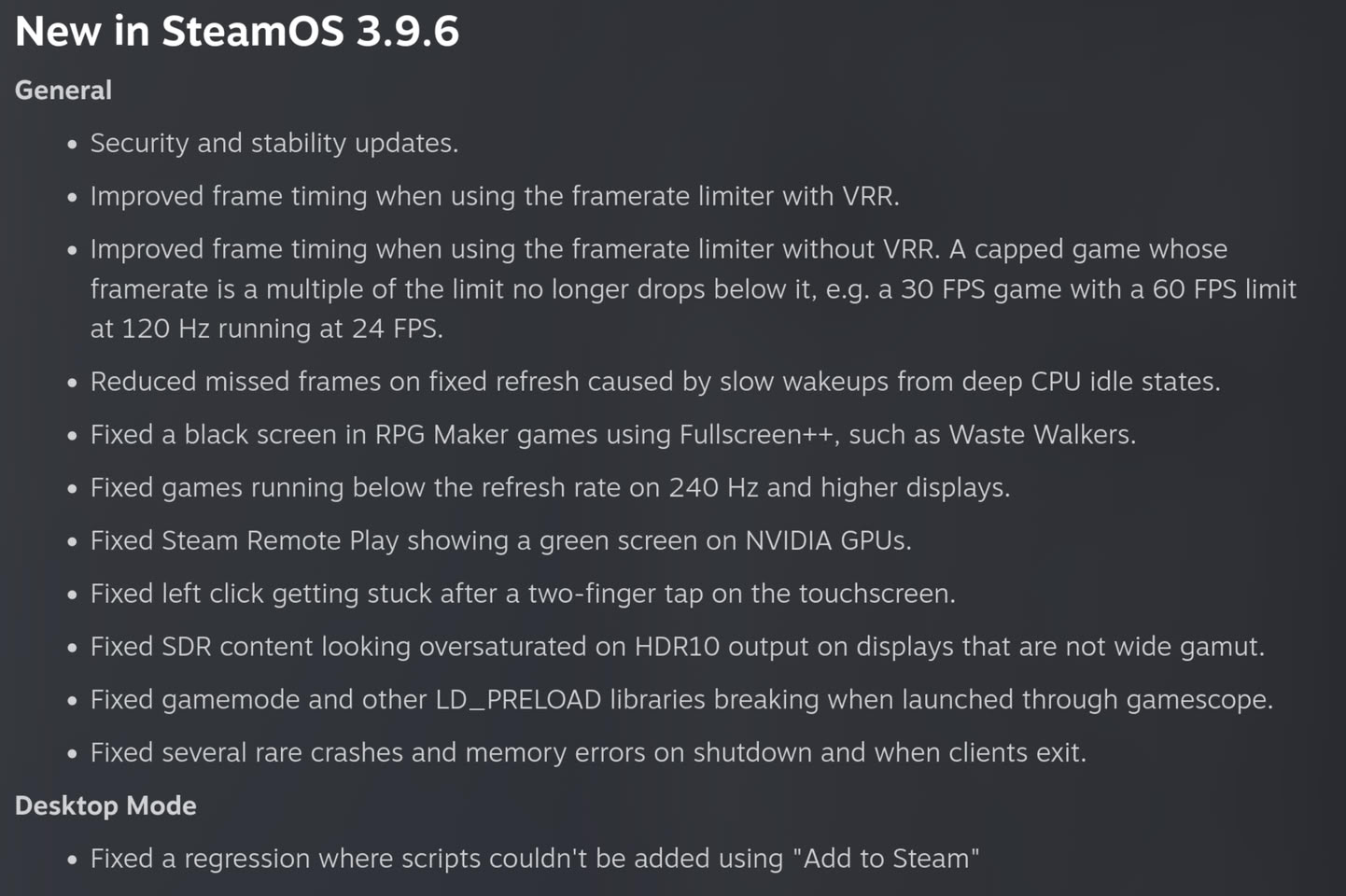
Valve has been seemingly working non-stop on developing SteamOS in order to deliver a competitive advantage over alternatives like Windows, with recent updates frequently polishing the overall user experience and fixing annoying bugs. The most recent update to the SteamOS beta channel, SteamOS 3.9.6, has just been pushed, with improvements to VRR, high framerate games, and high refresh rate monitors.

Aside from the usual line-up of bug fixes for edge cases, the update notes directly mention improved frame timing when using a combination of VRR and the framerate limiter, a change that will likely be noticeable in how games feel to play; improved frame timing without VRR and with the framerate limiter enabled, with specific mention of games with capped frame rates; and more consistent performance after CPUs waking from deep CPU idle states. Games capable of running at high refresh rates will also no longer run at low refresh rates on 240 Hz displays. The beta also corrects issues with Remote Play on NVIDIA GPUs and fixes SDR saturation with HDR10 output on non-wide gamut displays.

Linux Finally Gets 64-Bit Steam Client and New Game Achievements Management

Even while Valve transitioned its Steam client to 64-bit, its Linux client has remained stuck in 32-bit land, but it appears as though that is finally slated to change, with a new 64-bit Steam client for Linux finally launching in the beta branch. This follows on the recent announcement of the beta RT3 client earlier in 2026 marking the start of the transition and promising a more consistent experience across different Linux distributions.

The launch of the 64-bit beta comes alongside Steam's new Achievement Sets update that allows developers to group base game, DLC, and other achievements based on categories. There is also a new achievements page to more easily track game achievements. Ahead of the latest beta launch, Valve also responded to Epic Games's new vibe-coded Epic Games Launcher beta with a mainline Steam client update that resulted in significantly faster cold-start times.

Update Nov 12th: The new Steam Achievements Sets feature has officially been released to the Stable channel as of a November 11 Steam Client update, whose update notes also make mention of several improvements to performance, responsiveness, and stability.

Valve Adds Steam Deck FPS Data To Game Compatibility Screen in Latest Update

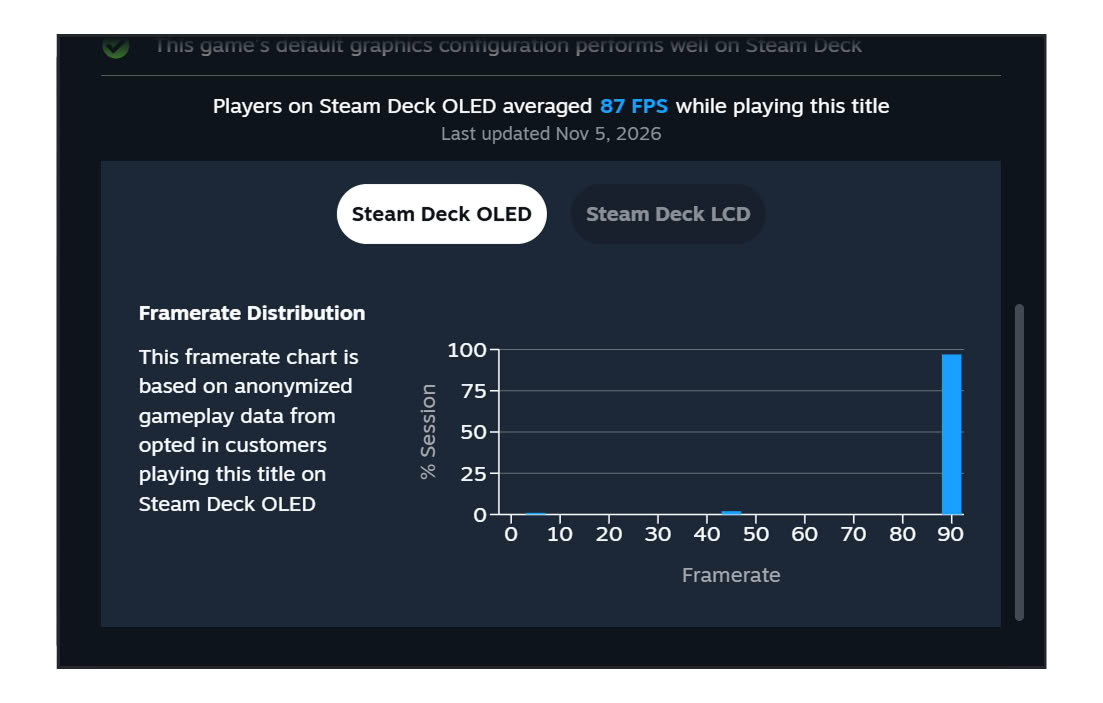
Valve recently announced that it was adding an opt-in toggle to enable data collection in Steam for the Steam Deck, with the idea behind the new feature being that developers could analyze the reported framerate data using Steam's built-in tools to better optimize their games for the handheld's hardware. In a new Steam Client update, however, Valve has confirmed that it will start sharing that same average Steam Deck framerate data with players before they buy the game, so that they can get a relatively accurate idea of what to expect from the gameplay experience before spending money on the game.

The framerate data will be displayed as an average at the bottom of the Steam Deck compatibility screen as an FPS figure specific to the player's current hardware. The figure will also cite the date the average was last updated. Clicking or tapping the dropdown arrow next to the framerate note will expand a histogram showing the game's average framerate distribution across gaming sessions as a percentage. This should, with relative certainty, convey how often players ran into gameplay hitching.

Epic Games Names SteamOS Among Planned Linux Targets for Its New Launcher

SteamOS is now officially on the list of Linux distributions Epic Games plans to support with its new Epic Games Launcher. In a statement to GamingOnLinux, Epic communications director Jake Jones said the launcher is still in Preview, and that Epic plans to "support as many Linux distributions as possible, including Fedora, SteamOS, Cachy, Omarchy, and more." It seems to be the first time Epic has explicitly named SteamOS, which runs on the Steam Deck and Steam Machine. For now, the Preview only ships as a.deb package for Debian and Ubuntu, though Epic says it is testing other packaging formats and will bring back the AppImage version this month. Epic first said a native Linux launcher was coming back in August, and the Preview arrived on October 14.

For Steam Deck owners, official support could mean an easier way into their Epic libraries without third-party tools like the Heroic Games Launcher. However, Epic hasn't said how the launcher will work in SteamOS's Game Mode, and Windows games will still need a compatibility layer. In the current Preview, the launcher handles that by downloading GE-Proton. As for Fortnite, Epic plans to bring it to Linux through the new launcher once EAC Linux v2 is ready, but the new anti-cheat relies on a signed kernel, Secure Boot, and several other security features. Back in October, Epic said the Steam Deck doesn't currently support what EAC v2 needs, and that it is talking with Valve about it. It looks like Steam Deck owners will get the launcher well before they get Fortnite.

CPU-Z Data Shows 16 GB RAM Gaining Ground While 32 GB and 64 GB RAM Shares Shrink

PCs with 32 GB and 64 GB of RAM are becoming less common, at least in the latest CPU-Z Validator statistics. According to Doc TB, one of the developers behind CPU-Z, this is the first time RAM capacity on PCs has declined year over year. 32 GB is still the most popular configuration at 37.2% of validations, though its share is down 2.5% compared to a year ago. 64 GB took a much bigger hit, falling 18% to 7.3%. Lower capacities are moving the other way, with 16 GB up 12.9% to 33.0% and 8 GB up 5.5% to 11.0%, while 96 GB and 128 GB setups dropped by more than 26% each. Memory type tells a similar story, with DDR4 now making up 54.5% of validations, up 6.0%, while DDR5 slipped 2.9% to 32.9%.

Of course, these figures only cover systems that users actually submit to the validator over the last three months, so they aren't a full picture of the PC market. Steam's September survey, for example, showed 32 GB overtaking 16 GB as the most common configuration among gamers, but that promptly flipped with the October survey. Still, the timing makes sense. Memory prices have climbed sharply this year, and Team Group expects the worst of the shortage to land between Q4 2026 and Q2 2027. DDR4 platforms may also get a second wind, with DDR4 motherboards getting released for unannounced LGA1700 processors expected in early 2027. It looks like plenty of people are sticking with older DDR4 systems or settling for 16 GB instead of paying current prices.

NVIDIA Marks 20 Years of the GeForce 8800 GTX With a Free Path-Traced Steam Demo

NVIDIA is celebrating 20 years of the GeForce 8800 GTX, which hit store shelves on November 8, 2006, with a free tech demo on Steam. Called GeForce 8800 GTX - 20 Years of a Legend, it was created by Unreal Engine artist Dylan Browne, the developer of Through The Ages, with support from NVIDIA. The semi-interactive demo puts players in a 2006-era PC gaming room, where they can unbox the 8800 GTX, inspect it up close, and install it in an era-accurate PC tower, with GeForce easter eggs scattered around. The scene is rendered with path tracing, DLSS 4.5 Ray Reconstruction, Dynamic Multi Frame Generation, and RTX Mega Geometry. It is available now on Steam and is coming soon to GeForce NOW for Ultimate members.

Naturally, the 8800 GTX itself can't run any of this, which is quite ironic, to say the least. Steam lists an RTX 4070 as the bare minimum and recommends an RTX 5080, alongside 32 GB of system RAM and 30 GB of storage. That RAM figure alone is over 40 times the 8800 GTX's 768 MB of video memory. The recommended RTX 5080 is far from cheap right now either, with TechSpot's October survey putting its lowest US price at around $2,200. So a demo built around the thrill of unboxing a new GPU in 2006 wants one of the priciest gaming cards of 2026 to look its best.

GOG Announces New Galaxy Launcher for Linux in 2027 With Faster Launching for macOS and Windows Also Coming

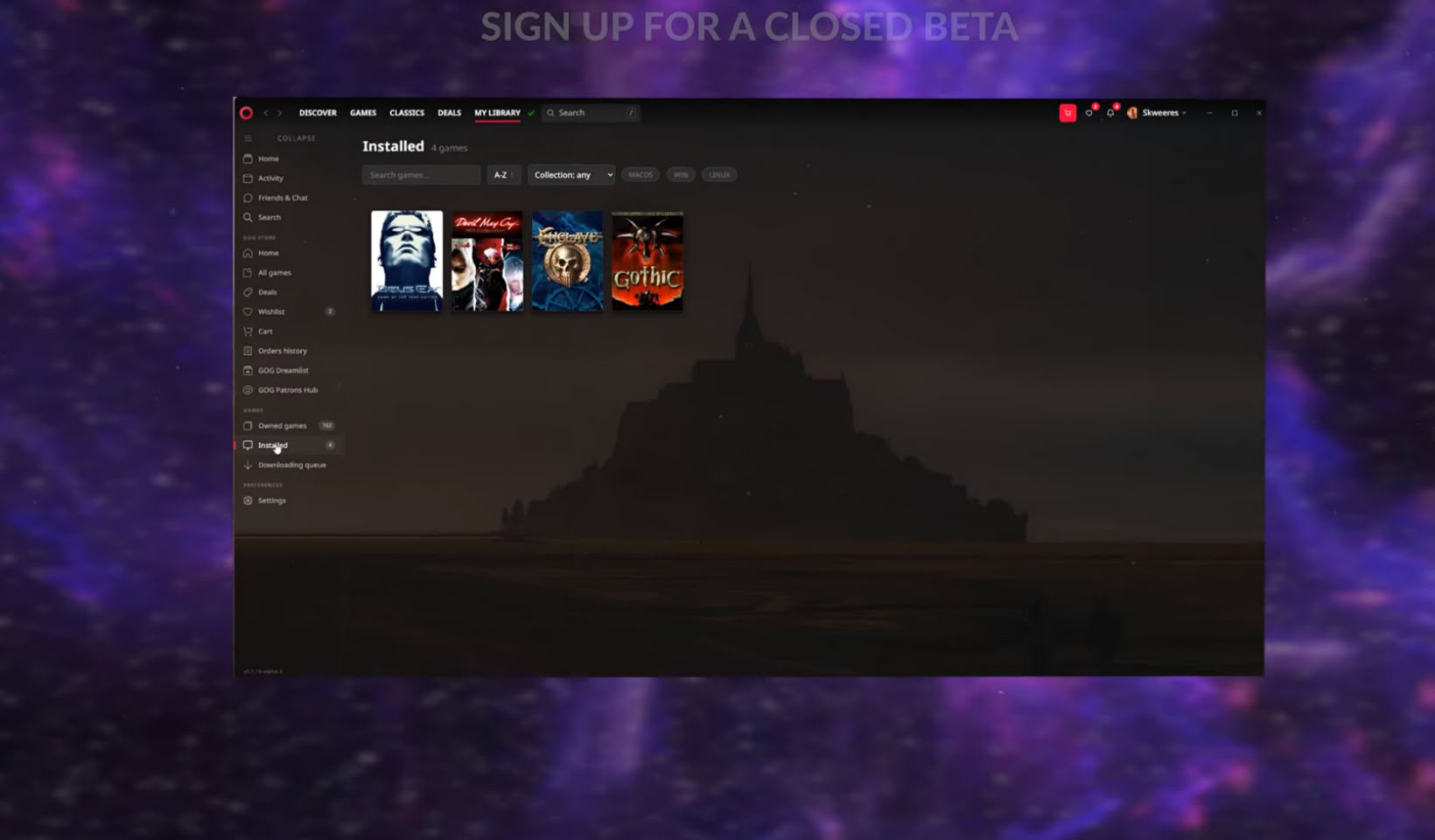
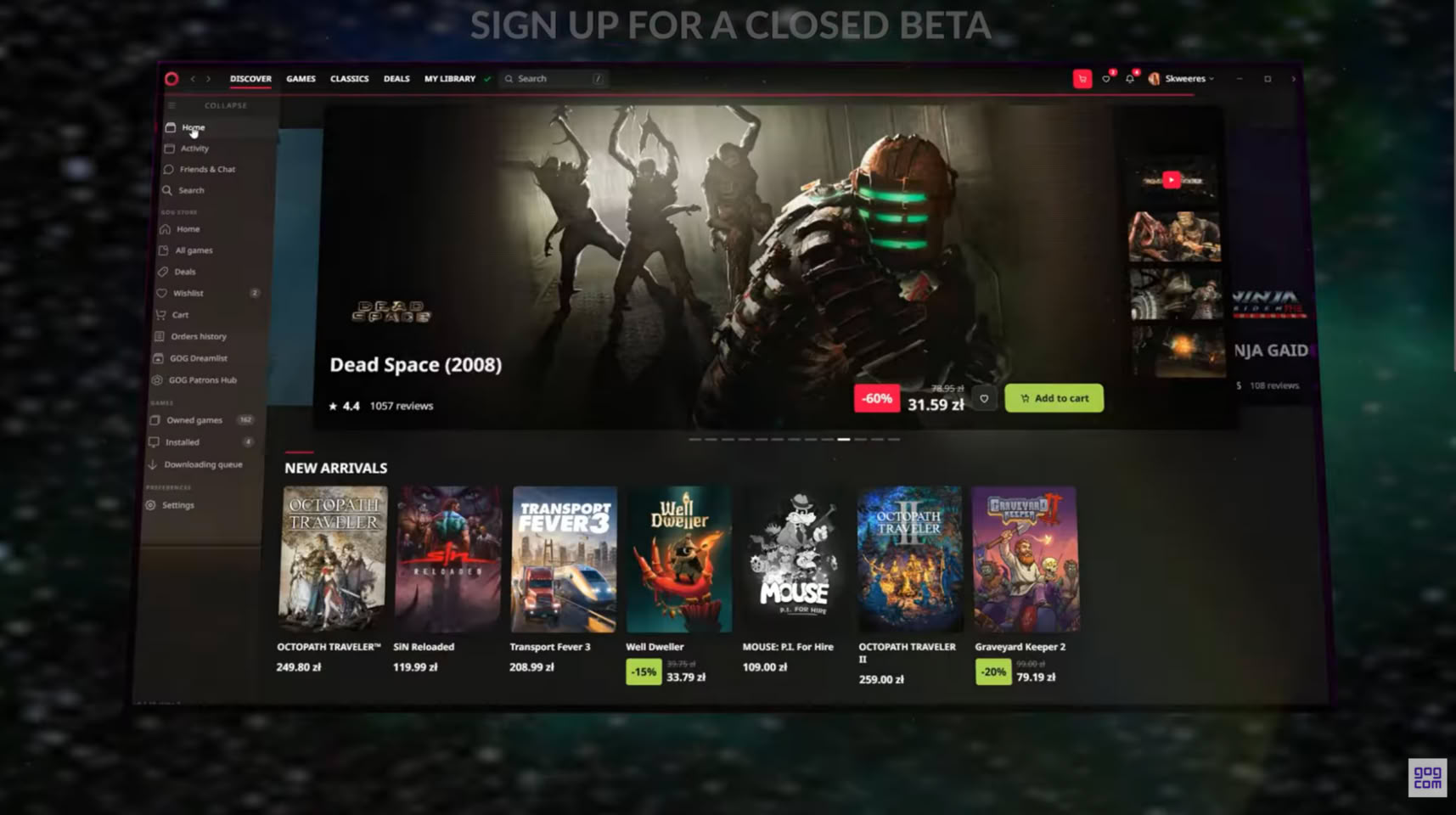
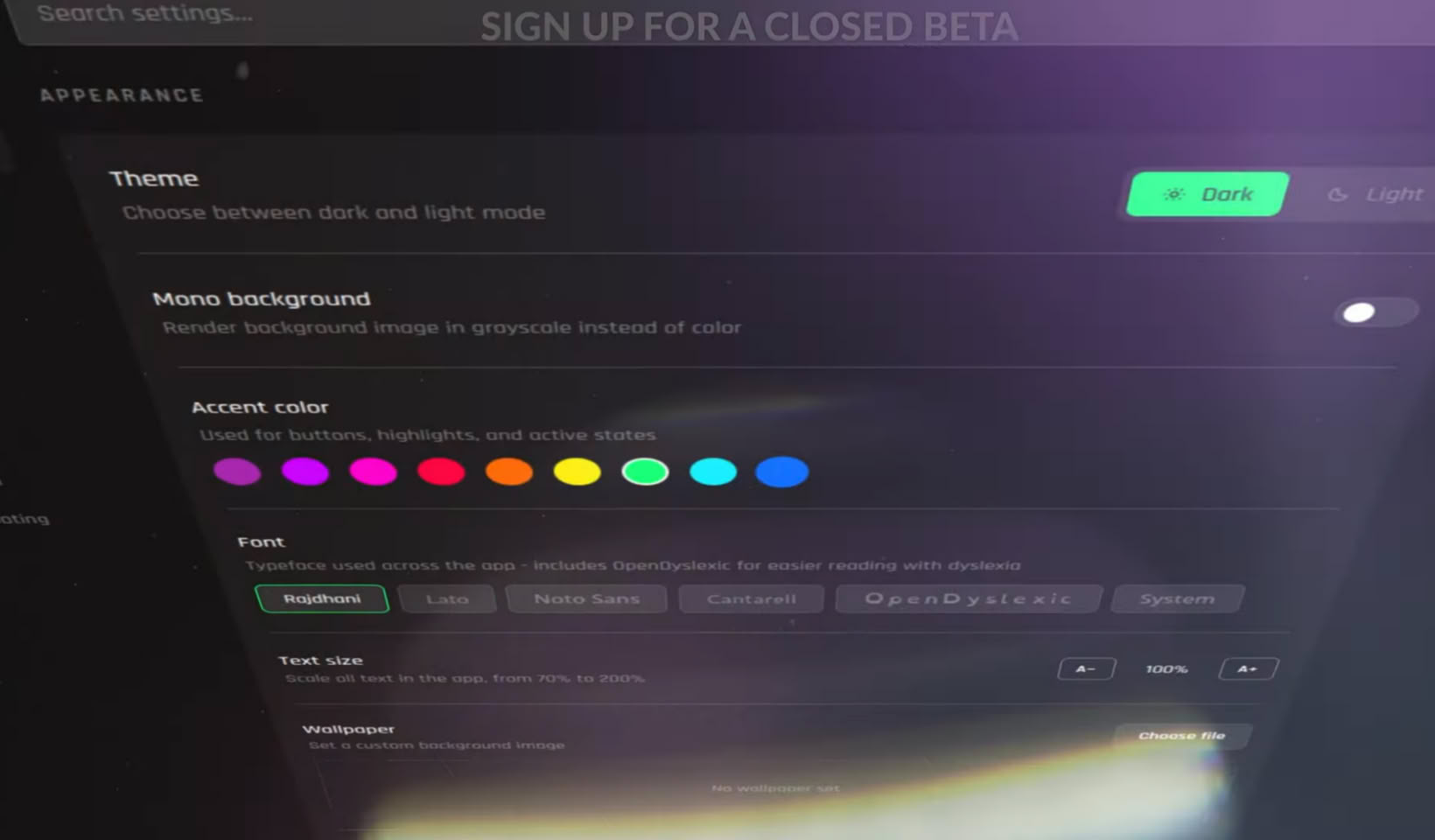
GOG has long since confirmed that it was working on a Galaxy game launcher for Linux, but it has officially just previewed the updated GOG Galaxy launcher in a new announcement on X. According to the post, not only has GOG Galaxy received a proper Linux version for the first time ever, the macOS and Windows versions have also been updated with a new UI, faster loading, and new library management tools. The new launcher has yet to be made available to the public, even in testing, but the announcement video showed off the new game launcher's UI and announced a 2027 launch window.
GOG.com on XGOG GALAXY is officially heading to Linux. At the same time, we've reworked the client on Windows and Mac to be simpler, run faster, and give you cleaner ways to view your library. Most importantly, our core promise stays untouched: GOG GALAXY is entirely optional. Your games are yours to download and keep through offline installers, exactly as they've always been.

Discord Is Rebuilding Its App in Rust, Early Build Uses Just 290 MB of RAM

Discord is rewriting its desktop app in Rust and dropping Electron, and the early numbers look very promising. Discord CTO and co-founder Stanislav Vishnevskiy posted a Task Manager screenshot on X showing the new client, listed as "Discord Phoenix," using just 290.2 MB of RAM. In the same screenshot, Steam's WebHelper sits at 856 MB and Battle.net at 344 MB. That's a big drop, as Discord said late last year that its current Windows client normally stays under 1 GB, and it even tested auto-restarting the app once it crossed 4 GB. Vishnevskiy also shared a side-by-side clip on two laptops showing the new client booting much faster, adding that clicking around "feels instant."

Mobile is getting the same treatment. According to Vishnevskiy, Discord is dropping React Native as well, so the mobile apps will keep their native interface while sharing app code with the desktop client through Rust. The new client is built on GPUI, the Rust UI framework from the team behind the Zed code editor, rather than Tauri as many had guessed. There's no release date yet, and Discord only says it hopes to get it into testing with users soon.

Road Rash Finally Goes Digital as EA Adds 25 Classic Games to Steam

EA has put 25 classic PC games on Steam with a very interesting story behind them. Seven of them are restored Anniversary Editions of Road Rash and six Wing Commander titles. The other 18, which include Theme Hospital, Strike Commander, both Crusader games, and eleven Ultima games, are on Steam for the first time, according to EA. The Anniversary Editions cost $9.99 and the rest go for $4.99, and Steam currently has them at 50% off until November 19. EA returned to Steam back in 2020 and has been slowly adding older classics since.

Apparently, it all started in March 2022, when EA producer Jim Vessella found a storage room at EA's Redwood Shores campus with nearly 20,000 old tapes, film reels, and CD-ROMs, including the master recordings for Wing Commander and Road Rash. By April 2026, around 6,000 had been digitized, and EA says that helped restore over 1,500 cutscenes. Much of the work happened on personal time, with Vessella using lunch breaks and evenings and Brian Barnes spending his weekends on Road Rash, the same pair that helped make the Command & Conquer source code public last year. Fan modders also played a big part, as the Wing Commander releases ship with community patches, and GOG's engineers built the Prophecy edition.

Steam Wants Devs to Play Their Games For At Least 5 Minutes First

Valve now requires developers to launch their game through the Steam client and run it for at least five minutes before submitting it for review, as part of several new additions to Steam's pre-release checklist. It doesn't have to be the developer playing, since anyone's playtime counts, as long as it was logged within the past seven days, or since the last build upload if that's older. Apparently, Valve keeps getting builds that were never run through Steam at all, which is how games end up with broken launch options or missing depots.

The changes are meant to cut down Steam's review backlog. Valve says store page and build submissions have jumped over the last few months, and it's quite obvious why that would be. For Valve, build reviews that usually take three to five days are now taking up to 12 business days, largely because games that fail basic checks have to be reviewed again. Other new checks include at least five screenshots tagged as gameplay, a test save written to Steam Cloud for games that support it, a list of required redistributables like DirectX or Visual C++, and complete achievement setup.

Steam Hardware Survey: Old Leaders Return as 16 GB RAM and RTX 3060 Are Back on Top

Valve's October 2026 Steam Hardware & Software Survey shows much of September's odd data snapping back. After 32 GB system RAM overtook 16 GB last month, the 16 GB tier is back in first place at 41.42% (up 3.60 points), while 32 GB dropped 5.16 points to 37.06%. The GeForce RTX 3060 is the most common GPU again at 3.62% across all platforms, a spot it held before September, while the RTX 5070 fell from 5.86% to 3.56%. It looks like the survey sample played a big part. Simplified Chinese fell 9.41 points to 21.98%, while English rose 4.84 points to 39.04%. The survey is voluntary, so a change in who responds can move the numbers without an actual hardware change behind it. We can't confirm that, but it would explain why so many categories shifted at once.

Windows 11 rose 1.17 points to 72.51%, and Linux climbed 0.90 points to 3.95%. The 1440p share dropped 5.22 points to 21.82%, while 1080p sits at 50.23%. On Windows, Intel gained 0.89 points to reach 53.48% CPU share, with AMD at 46.51%. Valve's Steam Frame, which launched in September, now holds 4.13% of surveyed VR headsets, up 3.72 points, while Meta Quest 3 continues to dominate with a 27.27% share. However, headset owners are only 1.75% of the survey, so it's a small group. The interesting bit is still the system RAM split, and while 32 GB RAM had been slowly gaining on 16 GB, it looks like September was the outlier. November's data should give us a better idea of the split.

Fans Rebuild Valve's Scrapped Portal Prequel "F-Stop" From Three Separate Leaks

F-Stop, the Portal prequel Valve canceled in 2007, is now playable after the community stitched it together from several leaks. Most of its assets were already sitting in the gigantic 12 TB Steam2 archive that leaked in August, but that dump didn't include the game's source code or its mapsrc data, Valve's folder for map source files. Those two missing pieces showed up on the Valve Cut Content project's Discord server over the past few days, where the team verified the map files before everything was merged into one build. It isn't fully complete, as some textures and dialogue are still missing, but YouTube playthroughs suggest it's largely stable, and the campaign wraps up in under an hour. Getting a copy yourself is another matter, since the Discord server apparently went invite-only after all the attention.

F-Stop came out of what Gabe Newell later called the Directed Design Experiments, a three-month stretch where Valve split into five teams, each building its own prototype. Its central idea is an Aperture Science camera that photographs an object so you can place it elsewhere to solve puzzles, a concept the 2023 game Viewfinder later explored. Valve staff apparently liked it, but playtesters were less impressed. It was shelved, and some of its dialogue, characters, and mechanics were reworked into Portal 2. The playthroughs show an early Cave Johnson talking to the player (without J.K. Simmons' voice), along with personality cores acting as puzzle companions. Valve hasn't commented on this project, and there's no indication of an official release.

Over 80% of Roblox's Top 100 Games are AI-Assissted, Topping 70,000 AI Games

As usual, generative AI appears to be splitting the gaming industry in half. While Valve recently acknowledged the issue of AI-generated clones on Steam—although declined to actually do anything about it—Roblox just published a shareholder letter in which it boasts that "AI-enabled game creation, automation in code generation and AI supported asset creation are leading to an explosion of content" since it launched its AI assisted game builder tools.

The letter adds that over 80% of its top 100 games by hours played in the month of September were AI assisted, while the raw number of games created with its Build generative AI platform topped 70,000 since Q2. Usage of Roblox's AI tools for game development more than tripled among top creators. It also notes that in Q3, two games "created almost entirely with AI" managed to break into the top 20 Roblox game ranking by concurrent player count.

Silent Hill Townfall Tops 42% Physical Revenue Share on PlayStation as Horror Grows on Steam

Silent Hill Townfall launched on Steam and PlayStation 5 in September, and despite the game having been cracked before its official release, it has apparently been a hit, with Alinea Analytics citing a total figure of over 404,000 sales in its first month on the market. On PlayStation alone, the game has earned $20.2 million in revenue, with as much as 42.8% of those sales being physical sales. PlayStation also accounted for 70.9% of the game's total revenue earned, with Steam and GOG accounting for the other 29.1% of sales. According to Alinea's data, Townfall also sold through all of its physical retail copies, suggesting that physical game demand exceeded the available stock.

[Editor's note: Our in-depth review of Silent Hill Townfall is live]

The horror genre also appears to be growing on Steam, with horror games on Steam having earned a whopping $1.3 billion in total for 2026 so far, already showing a 17% increase in revenue over 2025. 41% of that revenue came from games that launched in 2026, unsurprisingly, given that it was a stacked year that saw the release of Resident Evil Requiem, which accounted for $211.3 million in revenue alone for Valve's platform in 2026 so far. In late September, it was estimated that Resident Evil Requiem had topped $500 million in total revenue, and it also had a high physical revenue share, with disc sales representing around 30.8% of PlayStation's game sales.
Return to Keyword Browsing
Nov 28th, 2026 19:45 CST change timezone

New Forum Posts

Popular Reviews

TPU on YouTube

Controversial News Posts