
News Posts matching #Steam

Return to Keyword Browsing

Valve Dev Launches DIY "Inkterface" Steam Machine E-Ink Front Panel

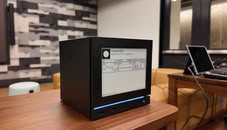
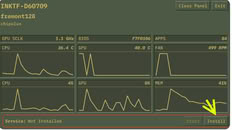
One of the details that got gamers excited around the time Valve announced the Steam Machine was the inclusion of an e-ink panel that was shown off in the console's announcement video, which we later discovered would not be commercially available. Following the e-ink panel hype and the official launch of the Steam Machine, NaKyle Write, a Valve contractor, has officially published a GitLab page detailing a DIY Inkterface panel, which gives gamers the ability to build the e-ink panel as long as they have access to parts and a soldering iron, and the ability to combine the two. The GitLab post lists all the necessary parts, but it requires some knowledge of the Linux AppImage packaging format and building and flashing firmware for the e-ink panel.

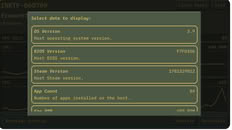
Valve says that it has In total, the BOM cost comes out to around $88.15 using the sources Valve lists in the GitLab instructions, although it's likely that the parts or 1:1 alternatives could be acquired more affordably on sites like AliExpress. The most expensive component is the 5.83-inch e-ink display, at $49.95. The Steam Machine Inkterface panel is technically an independent peripheral in that it does not need the Steam Machine to display an image. As such, it connects to the Steam Machine with a BLE connection, and it is controlled by the Steam Machine using an app, which currently needs to be compiled as an AppImage but will later be shipped on Steam. The Inkterface panel can display a number of system stats or custom layouts and images created in Lunacy, an open-source Figma alternative.
Marvel Tokon Fighting Souls Blocked in 132 Countries Ahead of Launch

Following similar restrictions on Helldivers 2—and the ensuing backlash—reports have emerged that Sony will be restricting the sale of Marvel Tōkon: Fighting Souls, banning at least 132 countries from buying the game, according to package details in SteamDB. The long list of banned countries suggests that a PSN account will once again be mandatory for Fighting Souls, although the list of countries has shrunk to 132 countries from the 177 countries where Helldivers 2 was unavailable. The same restrictions are present for all versions of Marvel Tōkon: Fighting Souls.

It was already previously confirmed that Marvel Tōkon: Fighting Souls would require a PSN account, thanks to the notice on the game's Steam page. Sony famously walked back the PSN account requirement for Helldivers 2 after community backlash, and it seems as though the community is reacting strongly to the news of regional restrictions for Fighting Souls, so it's still possible that Sony could reverse course ahead of the game's August 6 release date. This news is the latest in PlayStation's growing list of bad news, which recently included the announcement that Sony would no longer be producing physical games media as of January 2027—a move that's been widely criticized, as well as by the Video Game History Foundation—and the recent news that Sony will effectively no longer be porting its single-player games to PC.

Infamous Steam Machine "Red Line of Death" Solved by Simple CMOS Clear

In something of a bizarre twist, the recent reports of a Steam Machine "red line of death" that seemed to indicate a GPU issue were apparently merely a BIOS issue. According to an original post on r/steammachine on Reddit, a user who goes by u/me_hill suffered what appeared to be a GPU failure on their Valve Steam Machine as little as 20 minutes after setting it up. However, after contacting Steam Support and working through some troubleshooting steps provided by commenters on the Reddit thread, the original poster updated the thread explaining that they "left [the Steam Machine] unplugged overnight and plugged it back in today to try some of the BIOS stuff that other people suggested... and it booted up immediately without issue."

A comment by u/SteamHWFeedback, an official Valve support account on Reddit, explained, in response to another user with the same issue, that the curious behavior reported in both cases was indicative of a BIOS or memory training issue, and that unplugging and power cycling the Steam Machine, then plugging it back in and performing a BIOS reset should be enough to trigger memory training on the next power cycle. Many redditors are urging the user to contact Valve about the issue anyway, since it occurred at random, but as the Valve representative indicated, it seems as though the Steam Machine rebooted in the middle of an incomplete BIOS update.

Relic Entertainment Announces Company of Heroes 3: Final Stand, Launching July 29

Relic Entertainment is proud to announce Company of Heroes 3: Final Stand. Launching July 29 on PC via Steam, Final Stand captures the strategy and intensity of Company of Heroes' cinematic battles in a fast-paced wave defense experience for solo and cooperative play.

Built on the beloved tactical foundation of Company of Heroes, Final Stand expands the series' signature combat with roguelite progression that encourages experimentation, adaptation, and replayability. Players must dig in, build layered defenses, and survive against escalating waves of enemy forces across 12 increasingly challenging rounds, featuring intimidating bosses and dynamic battlefield events unique to Final Stand. Final Stand will launch at $29.99 USD/£23.99 GBP/€28.99 EUR on July 29. Players can take advantage of a 10% launch period discount, while Company of Heroes 3 owners will receive an additional 20% bundle discount.

Assassin's Creed Black Flag Resynced Gets Steam Deck Verified Ahead of Launch

As was the case with Assassin's Creed Shadows, Ubisoft has just announced that Assassin's Creed Black Flag Resynced has been Steam Deck Verified ahead of its July 9 launch, and that it will also support Steam Achievements on day one, again following the recent trend of doing the same with older Assassin's Creed games. In the announcement of day-one Steam Deck support, Ubisoft claims that Black Flag Resynced has been optimized for and looks great on the Steam Deck, despite its low-powered APU. Of course, given the relaxed Steam Machine Verified requirements, this means Black Flag Resynced will also work on the new mini PC, too.

Ubisoft also claims that the Black Flag Resynced will "look and run great on the Steam Deck," and that "developers have worked hard on features like ray tracing across all platforms, dynamic weather that looks and feels fantastic, and a Caribbean remade from the ground up." Assassin's Creed Shadows, for its part, mostly runs at 30 FPS on the Steam Deck with a built-in graphics preset, which locks down a number of graphics options, and upscaling tech is doing a lot of heavy lifting to keep the game running smoothly. Given that Assassin's Creed Black Flag Resynced is being built on the modern Ubisoft Anvil engine with support for many of the same visual settings and graphical fidelity options as Shadows, we can likely expect similar performance. More good news is that more powerful gaming handhelds, like the new Intel Arc G3-powered versions or the ASUS ROG Xbox Ally X (read TechPowerUp's review here) will run Assassin's Creed Black Flag Resynced even more smoothly.

Steam Machine Crippled by Single-Channel RAM

Shortly after Valve launched the long-awaited Steam Machine, reviews were quick to point out its middling performance and high price, with the gaming console scoring in between the AMD Radeon RX 6600 and 7600 in gaming tests. As it turns out, one of the compromises Valve made in order to launch the Steam Machine at a slightly lower price was to use single-channel DDR5 and not dual-channel DDR5. Curiously, even though you might expect the Steam Machine to suffer from a GPU bottleneck, given the GPU specs and limited VRAM, recent tests by Gamers Nexus on YouTube show that the mini PC is capable of up to 19.4% more performance in CPU-intensive workloads.

The YouTube channel's testing team put the Steam Machine through a battery of CPU and GPU tests, and, as expected, the biggest differences showed up in CPU-intensive workloads, with GPU tests demonstrating a peak performance difference of 8.7% in Baldur's Gate 3 at 1080p in Ultra settings. That's not to say there weren't improvements to gaming workloads. Especially when targeting high frame rates in games, as would be the case with e-sports games, for instance, differences of up to 15% could be observed. These substantial differences were observed by Gamers Nexus when testing Baldur's Gate 3 at 1080p and low settings, where a 15.3% performance improvement was exhibited, while Outer Worlds 2 at 1080p and low settings also showed a 14.7% performance improvement going from single-channel to dual-channel SODIMMs. The other major outlier was Resident Evil 4 at 1080p and "prioritize performance" mode, which showed a 10% improvement in frame rate.

Steam Frame Verified Ratings Roll Out With Portal 2

With the Steam Controller and the Steam Machine now officially launched and presumably making their way into the hands of consumers, the only new hardware product left for Valve to launch is the Steam Frame. Now, it seems as though the launch date for the new VR headset may be approaching, with Valve's Portal 2 getting a new update on June 29 that includes Steam Frame compatibility information. The official Steam Frame rating for Portal 2 is "Playable," with the game missing out on Frame Verified status due to not rendering in the Frame's native resolution. Curiously, Half-Life: Alyx, Valve's VR-only Half-Life game, has not yet received a similar compatibility update at the time of writing.

The Frame Verified rating has not yet been added to Steam's storefront, with compatibility information listed on SteamDB, but a June 29 update also fixed an issue with Portal 2 launching on Linux, suggesting Valve is putting in active development work to get its games and verification system ready for the official launch of the Frame hardware. According to the recently published Steam Frame Verified specifications, games need to be fully playable on the Frame controllers and reach at least 90 FPS for standalone VR titles and 30 FPS for standalone 2D titles at 1280 × 720 p, and it must have a legible UI at the default resolution of the Frame.

Sony Spurs $1,000 PlayStation 6 Rumors

Rumors of sky-high next-gen consoles have been floating around for about as long as the next-gen consoles have been confirmed as in development, but it seems as though Sony CEO, Hideaki Nishino has all but confirmed $900+ pricing for the PS6 in a recent Q&A session following an official Gaming & Network Services meeting. When asked about the sales strategy for the upcoming console generation, which would be the PS6, Nishino replied that, despite recent price increases on PlayStation hardware, "sales are proceeding as planned, and we do not believe that this has led to a decline in customer demand. As a principle, we do not intend to sell hardware at significant losses. At the same time, we are carefully monitoring the market and continuing to evaluate our approach." This suggests that the PS6, and its upcoming portable companion, will likely be priced as low as possible without eating into Sony's bottom line. Instead of chasing a specific price point and using subsidized pricing to reach the lower price, Sony appears to be pricing the PS6 according to what will be competitive and accepted by the consumers at launch.

He went on to say that "it is important for us to make every effort to ensure that customers fully understand the value we provide in relation to pricing," and explaining that "the value of [PlayStation hardware] lies in the experience, not the hardware itself. As a dedicated gaming device, it provides seamless, immediate access to content—unlike general-purpose devices, which involve multiple layers before gameplay." Taken together, especially given the recent news about the return of PlayStation exclusives, the launch pricing of the Steam Machine, and the recent price increases and expected price of the Xbox Helix at Microsoft, it seems as though $1,000 as a starting price for the PS6 is becoming more and more likely. Micron recently announced that, while it has projects in place to try and meet demand for DRAM, it does not see the DRAM crisis ending or significantly easing before 2028. An increased BOM cost for consoles with an increased subsidy from Sony may also accelerate the increase of game prices, since consoles are usually sold as loss-leaders, at least initially, with profits being recouped via games sold for the platform.

Dbrand Forced To Pull Steam Machine Companion Cube

Mere after the reveal of the Valve Steam Machine, accessory maker Dbrand announced that it was releasing the "Companion Cube," a Steam Machine accessory that was modelled after the Portal weighted companion cube storage box. Following massive interest in the Companion Cube in the week since its announcement, Dbrand announced that it has been forced by Valve to pull the product from its website and social media pages, despite Dbrand's efforts to retroactively seek licensing rights from Valve in response to the takedown notice. Dbrand has complied and wiped the Companion Cube from its online presence, redirecting the product page link to a Reddit post explaining the situation, but fortunately the original product page had been archived before the Companion Cube's untimely demise. Dbrand will also be issuing refunds to anyone who purchased the Companion Cube.

Dbrand explained in the post on r/Dbrand on Reddit that it was contacted by Valve's legal team and informed that the Companion Cube was Valve's intellectual property and that the accessory maker did not have license to use the IP in such a capacity. According to Dbrand, the Companion Cube was the culmination of seven months and over a thousand hours of engineering work that resulted in four sets of injection molds being produced. The Companion Cube was reportedly Dbrand's second-fastest-selling product to date behind the Switch 2 Killswitch, and fans of the design have expressed both disappointment in Dbrand for not approaching Valve and licensing the product correctly and understanding that Valve may not want its brand attached to a product whose engineering and thermal qualities cannot necessarily be verified.

Micron Predicts DRAM Crisis Until At Least 2028

It's no secret that the DRAM crisis is predicted to go on for a while, with everyone from Korean news outlets to, more recently, OEMs like Lenovo, predicting that massive price hikes are slated to be the norm in PC hardware for the foreseeable future, thanks to AI data center demand. Following the recent Micron Q3 financial report, in which the DRAM maker revealed record results for the quarter, Micron's CEO, Sanjay Mehrotra, commented on the current DRAM situation, stating to investors that "Our customers are recognizing that supply shortages in memory and storage will take considerable time to improve."

He continued, saying that "Even as we expect industry supply to improve gradually in 2028, we currently do not have a line of sight as to when memory supply will be able to catch up with increasing demand." Earlier in 2027, Micron announced a number of new initiatives to increase DRAM supply to meet current demand, including a new megafab in New York, which it expects to complete by early 2029, and intentions to buy a fab from PSMC in a $1.8 billion deal that would see meaningful DRAM output by late 2027. While the shortage is expected to ease somewhat, it's entirely likely that prices will remain elevated for a while to come, which will likely affect the upcoming Xbox Helix console, PS6 and PS6 Portable, and the already announced Steam Machine—which Valve expects will continue to be overpriced—for a while.

Scalpers List Steam Machine Reservations at $1,700+

Following a brief reservation period, prospective buyers of the Valve Steam Machine started reporting on June 26 that they had begun to receive reservation confirmation emails for the new hybrid console. However, on the same day, and almost predictably, apparent scalpers listed Steam Machine units on sites like eBay, with prices for the 512 GB version of the console without the Steam Controller starting at a whopping $1,700, which is a 61% increase over the already high launch price. One particular eBay listing for the Steam Machine has a 512 GB version of the console with a Steam Controller listed at $3,200—a 160% premium over the retail price, likely an attempt to capitalize on the added scarcity of the Steam Controller.

Given recent conversations about the value of the Steam Machine and Valve's own admission that the $1,049.99 launch pricing is significantly higher than it should have been, it goes without saying that a 70%+ increase over that launch price is bad value. It seems unlikely that anyone would pay that much for the Steam Machine, which offers mid-range PC performance at best, but scalpers previously also attempted, and apparently succeeded, to sell the Steam Deck in the same fashion for highly inflated prices, likely banking on the hype of the gaming handheld. The combination of limited supply and Valve's lottery system for the Steam Machine almost seems to encourage scalping, since it results in scarcity. Despite the price, the Machine also already sold out in Japan within 48 hours of launch. While Valve has provided an estimated June 29 shipping date, but there's no telling when the second batch of production units will start shipping.

Valve "Not Optimistic" About Lower Steam Machine Price Soon

Valve's Steam Machine, originally meant to be a somewhat affordable SFF console-PC hybrid, officially went on sale in mid-June at a rather alarming starting price of $1,049, as a result of the ongoing DRAM and storage crisis. One question that has repeatedly come up is how the value proposition of the Steam Machine would change if the price were to drop. In a recent interview with Digital Foundry, Valve has explained its stance on the Steam Machine pricing and its expectations for the future of the PC gaming hardware market.

Valve engineers, Yazan Aldehayyat and Pierre-Loup Griffais explained that "there's no point for us to keep hardware at a higher price. It's meant to be an enabler of a stronger connection between people and their games," going on to comment that "the cheaper, the better," however, as Aldehayyat says, "it's hard for us to predict the future, but we're not optimistic it's going to happen soon," adding that "other people in the industry have said as much." Aldehayyat is referring to ongoing and future DRAM price hikes, which Microsoft recently predicted would continue to rise when it announced the upcoming August Xbox price increases.

Steam Machine Gets 4K 240 Hz Support With HDMI 2.1 Support Finalized

Despite recently updating the Steam Machine's product page to more accurately reflect the SteamOS-powered gaming PC's actual 4K performance, Valve has been working behind the scenes for a long time to enable HDMI 2.1 support on Linux in order to have full-featured, high-framerate 4K support over HDMI. In a recent statement to Digital Foundry, Valve engineer Pierre-Loup Griffais has confirmed that its work with AMD to implement HDMI 2.1 with FRL support has been completed, and although full support for HDMI 2.1 has not yet been implemented for the Steam Deck, it will be added in a future update, which will also add support for 4K 240 Hz with DSC over HDMI. The current driver setup already has support for important features, like variable refresh rate over HDMI.
We've worked a ton with various partners in AMD, who has done a ton of work to try and drive resolution there, and we think that's fully resolved. The current software stack we have on Steam Machine has HDMI 2.1 VRR enabled, not only on FreeSync displays but also on HDMI Forum VRR ones. This is a very important part of the performance puzzle, along with the FSR 4 boosts to come.

Epic Games CEO Calls Steam AI Disclosure "Irresponsible"

Epic Games CEO, Tim Sweeney, has a reputation for his hot takes on the gaming industry, and he has previously been vocal about both the perceived benefits of AI in gaming and his criticisms of its detractors. Now, the executive has expanded on his prior comments about Valve's mandatory generative AI disclosure, which he previously said "makes no sense for game stores," in a new interview with PC Gamer. These comments follow the recent announcement that Unreal Engine 5.8 and Unreal Engine 6 will add more generative AI features to the game engine. Addressing the question of AI art and how it may be more of a PR problem, Tim Sweeney said that "it's just a question of adaptation of tools, because there's nothing like a prompt-to-game solution on the horizon that anybody expects will work," going on to explain that artists at Epic Games are already using generative AI to "reduce the drudge work," referring to some of the more tedious parts of the 3D modelling and texturing process.

He goes on to advocate for using AI, stating that "it's impossible to reconcile the idea that developers shouldn't use productivity-improving tools with the state of the industry." He goes on to explain that how you go about creating an in-game asset isn't important, and that "you might spend a million dollars modeling a flower pot to get the most detailed flower pot creatable by humanity, but you could also scan a flower pot with a very high resolution camera," and that "the value is not in creating a perfect flower pot...the real value is in building the scene and building the game and building the narrative." Ultimately, his argument is that AI makes it cheaper to make games and in-game assets, but he argues that "it's unfortunate that so many developers are put into this position. If you want to launch a game and get it as widely publicized as possible, you've got to put it on Steam...then you have to get this Scarlet Letter of AI attached to your product, and now there is a hater community trying to kill the game." He calls Valve's AI disclosure "irresponsible" and says that it makes it "much, much, much harder for a game developer to have a chance of success."

Valve Quietly Walks Back Steam Machine 4K 60 FPS Performance Claims

Valve's Steam Machine has earned more than its fair share of skeptics, thanks to performance claims and more recently its unfortunate pricing. More recently, though, Valve has seemingly taken some of this criticism to heart and silently changed some of those performance claims on the Steam Machine product page. Where the performance claims on the product page once read "4K gaming at 60 FPS with FSR," they now say "Up to 4K gaming with FSR 4.1," removing any mention of FPS and softening the claim with the classic "up to."

As shown in a number of performance reviews, the Steam Machine sometimes struggles to hit 60 FPS at 1080p in certain games when using maximum or ultra graphics quality, and 1080p would be upscaled to 4K when using FSR 4 in Performance mode. It makes sense that Valve wouldn't want to misrepresent the performance of the Steam Machine in order to avoid litigation, but many fans are drawing comparisons between the 4K/60 FPS claims and Sony's 8K marketing for the PS5. It's also worth noting that this change seems to have been made on June 25, which is the same day that Valve cut off reservations for Steam Machine pre-orders.

LDLC "PC Box" Targets Steam Machine Pricing with RDNA 4 Performance

With launch pricing putting a damper on the hype for Valve's Steam Machine, it's no surprise that gamers are looking to more affordable or better value alternatives to the Steam Machine. One French PC vendor, LDLC, has officially announced its pre-built answer to the Steam Machine in the new "PC Box" pre-built PC. Somewhat comically, the PC was previously being referred to as the "Stim Machine" but has seemingly been rebranded as the PC Box in the meantime. The LDLC PC Box appears to be almost perfectly optimized to edge out the Steam Machine in performance, even if pricing is somewhat higher in the pre-built configuration.

The PC Box is available from LDLC as a pre-built PC for €1039.99 or as a DIY kit you can assemble yourself for €999.99, and its basic specs include an AMD Ryzen 5 8400F, 16 GB of dual-channel DDR5 memory, an AMD Radeon RX 9060 XT 8 GB, a 512 GB SSD, and a 350 W 80+ Bronze certified PSU, all built into a small form-factor SilverStone Sugo SG13B case. The most noticeable performance difference between the Steam Machine and the PC Box is that the latter has a significantly more powerful and modern GPU, which should deliver around 70% better GPU performance in many cases, based on currently available data on the Steam Machine hardware. One obvious drawback to the more powerful hardware is that, even though it is a Mini ITX case, the SilverStone Sugo SG13 is larger than the Steam Machine, at 222 (W) x 181 (H) x 285 mm), compared to the Machine's 152 × 162.4 × 156 mm.

Proton Experimental Adds FSR 4 Support for RDNA 3 GPUs on Linux

Following the recent release of FSR 4 support on RDNA 3 GPUs, Valve engineer, Pierre-Loup Griffais, has announced in a post on Bluesky that the same support has officially been added to Linux via Steam's Proton compatibility layer. Support for FSR 4 on RDNA 3 comes by way of the latest version of Proton Experimental, so it's by no means a stable implementation just yet, but the engineer specifically calls out SteamOS and the Steam Machine as the target system for the new upscaler support, suggesting that Valve will invest development resources into getting the support into a more complete state ahead of the full roll-out of the Steam Machine.

Curiously, the post also specifically calls out devices with RDNA 3 discrete GPUs and the Steam Machine, suggesting that support for Radeon iGPUs, like the 780M and 890M that largely dominate the gaming handheld space has not yet been implemented. It's possible that Valve developers, who often contribute to Linux graphics drivers and gaming optimizations, may implement support for the gaming handhelds. There are also reports that manually adding support for FSR 4 on RDNA 3-based iGPU systems—via tools like OptiScaler, for example—results in a working implementation of the upscaler.

"Memories in Orbit" Game Studio Closes Down After Lackluster Launch

Memories in Orbit (MIO) launched in January 2026 to a relatively positive critical reception, but it seems as though its commercial success has not met expectations. According to a recent report by French news outlet, Le Figaro, Douze Dixièmes will be closing down following a buyout deal by Douze Dixièmes co-founders that would allow them to regain control of the company from Focus Entertainment and close things out on their terms.

While Memories in Orbit received high praise at launch, at its height, it failed to even break 3,000 concurrent players on Steam, according to SteamDB. At the time of writing, the game has a 24-hour peak concurrent player count of 201 players, and ownership estimates put the $19.99 indie Metroidvania's sales at around 67,000-112,500 units, which was seemingly not even enough to sustain the small team of around 10 people at Douze Dixièmes and support the game's future development. Douze Dixièmes has not yet publicly acknowledged the closure.

Steam Machine Sells Out in Japan Despite Woeful Pricing

As was the case with the Steam Deck, Valve is selling the Steam Machine via Komodo Station, an Asian reseller that serves much of South-East Asia, and as a result, it skips the reservation and lottery system that is currently in place on Valve's own Steam Store. While this doesn't combat issues like scalping and shortages as well as Steam's in-house system, it provides a much more realistic indication of current stock levels. According to Komodo Store, however, all versions of the Valve Steam Machine have officially sold out less than 48 hours after the new hardware launched.

In Japan, the Steam Machine starts at $1,175 for the 512 GB model and goes up from there to ~$1,638 for the 2 TB model with two Steam Controllers and two additional faceplates. It remains to be seen how well the console will sell in the west when it officially starts shipping on June 25, however, since the price is quite high, especially compared to consoles like the PS5 Pro and similar small-form-factor PCs. As far as sentiment goes, there appears to be a divide forming in online spaces, like r/steammachine on Reddit, where some are saying the convenience of not having to set up any hardware is worth the price trade-off. The Steam Machine was seemingly meant to cost around 30% less initially, but it's unclear if or when it will come down to that price, which will only be possible if the RAM crisis comes to an end and hardware prices ease.

Titanfall-Inspired "Empulse" Delayed for PS5

1047 Games, the developer behind Splitgate, recently announced that its upcoming Titanfall-inspired shooter, Empulse, would be launching in Early Access on Xbox, PS5, and Steam on June 24 at 9 AM PT (16:00 UTC). Less than a day ahead of that launch, however, 1047 Games announced on X that the new shooter would be delayed on PS5 due to the certification process, which is apparently taking longer than anticipated. At the time of writing, it is unclear when the new movement shooter will launch on Sony's console, but FragPunk was delayed for similar reasons and was released on console nearly two months after it launched on PC.

Despite the rousing success of its first shooter, Splitgate, 1047 Games has had a rough run of it with the aforementioned game's sequel, Splitgate: Arena Reloaded, but it's currently somewhat unclear how well Empulse will do at launch. While Empulse has managed to make it onto the wishlists of over 250,000 players across PlayStation, Steam, and Xbox platforms, SteamDB indicates that the demo peaked at just 4,316 players in a little over a month since it went live. A recent update from 1047 Games also indicates that the developer has been pouring a lot of resources into the game and plans to make significant changes based on community feedback.

Games Made With Gen AI Suffer Up To 53% Worse Sales on Steam

It's no secret that large game studios are leaning into generative AI in search of greater productivity and efficiency, but there is a growing resentment in the gaming and game dev community towards games created with generative AI. In a recent analysis published on Game Oracle, data analyst, Ross Burton, presents evidence that the use of generative AI may be negatively affecting game sales significantly. The exact numbers are hard to pin down, since AI usage isn't accurately reported, and Steam does not publicly disclose sales figures, however, Burton analyzed game performance based on how many reviews a game received instead. He found that, on average, and after accounting for other factors (like luck and developer experience and skill), games that used AI—or at least those that disclosed their use of AI—received around 53% fewer reviews on Steam, indicating that they potentially sold as much as 53% fewer units.

What's more, of the games in the analysis, those with AI-generated content consistently received lower player ratings. The data indicates that for games with AI-generated content, the median review rating was 84.6% positive, while games that did not use AI had a median of 88.3% positive reviews. Digging further into it, the analyst found that AI had a stronger negative correlation when the games in question were made by large studios and publishers. Higher profile games also seemed to be more impacted by AI use than low-quality games, leading the analyst to call the effect a stigma, since the negative response appears to be linked to AI use. Anecdotally, this is also backed up by the backlash related to accusations and confirmations of AI use in games like Clair Obscur: Expedition 33, Crimson Desert and The Alters.

Steam Deck 2 "Getting There" But Efficiency Remains an Issue

So far, every time Valve has spoken about the possibility of a Steam Deck 2, it has said that it is waiting for a true generational leap in performance, and that that has not yet happened. Following the launch of the Steam Machine, Valve engineer, Pierre Loup-Griffais, commented on the Steam Deck 2 in an interview with IGN, revealing, seemingly for the first time, that things are moving in the right direction for the Steam Deck 2, even if they're not quite there yet. According to the developer, the current crop of mobile CPUs are beginning to show promise in terms of performance, but efficiency is now becoming a bigger problem.

"I'd say we're closer than we were the last time we talked. We're definitely getting there," said Griffais, going on to explain that "I would say that the new chips that are coming out are still in power envelopes that are not quite the right segment that you'd want for a true handheld experience." Going a little deeper into it, he said that "I think a lot of them are more low-end laptop chips or playing in that sort of form factor that are then repurposed for handhelds and maybe not leading to, I guess the trade-off that we would've chosen in terms of power and better life and that and all that."

Valve Is Collaborating With NVIDIA to Bring SteamOS Support to More PCs

Valve announced the availability of its long-awaited Steam Machine yesterday, bringing its mini home gaming cube to the masses. However, some interesting details about SteamOS—the operating system behind the Valve machines—have surfaced thanks to an interview with Valve's Pierre-Loup Griffais by The Verge. According to him, Valve has been working on expanding SteamOS compatibility with other hardware, even collaborating with NVIDIA to bring support for NVIDIA GeForce RTX GPUs to SteamOS, alongside numerous optimizations. Reportedly, Valve has been rolling out SteamOS improvements and optimizations to achieve much wider hardware compatibility than the current AMD-centric stack, meaning that the future landscape is expected to be much broader for Linux gaming enthusiasts.

For instance, SteamOS is Valve's fork of Arch Linux, with additional customization and optimization added to the operating system. Technically, NVIDIA GPUs can work under that OS with the installation of regular drivers, but Valve's modifications might hinder smooth usage due to many underlying OS changes. As a result, Valve has reportedly hired a "growing team" of engineers and developers to work on achieving proper support for NVIDIA drivers, which is expected to be available in the coming months. Griffais noted that this support might not arrive this year as Valve is optimizing the software stack for its current hardware like the Steam Deck and Steam Machine, but it will be available next year at the latest.

Splitgate Dev Details Their New Game "Empulse"—Inspired by Titanfall

1047 Games, the developer behind Splitgate and its infamous sequel, has just wrapped up a Steam Next Fest demo of its upcoming game, Empulse, which is inspired by Titanfall, with a heavy focus on mobility, verticality, and high-octane gunplay. Following the play testing and the user feedback, 1047 Games published a short update post on Steam detailing the changes that would be coming to Empulse ahead of launch. In general, the changes seem to be in service of greater mobility, a stronger identity, more variety, and an overall faster pace. The official early access launch date for Empulse is June 24, so some of these updates will likely be ready by EA launch, while others will follow the launch.

The post by 1047 Games reveals that the studio will make bigger maps for Empulse and rework the visual direction to give the world more characters. Apparently, there was consistent feedback that the world was too clean and simple, which 1047 explains is as a result of prioritizing readability over character, but the studio has confirmed that it will be addressing the lack of personality by adding weathering and destruction to the maps. Some of the gameplay changes include balancing weapons and the Speed P.A.I.N.T. mechanic, in order to make other gameplay styles more viable and attractive. The grappling hook will also be updated to be faster and carry more player momentum in order to make swinging around the cityscape feel more natural.

New Friendslop Game "Meccha Chameleon" Earns 5 Million Sales in 10 Days

Meccha Chameleon is a new multiplayer "friendslop" hide and seek game that launched on June 9 and sees players conceal themselves on surfaces by painting over their bodies to match the surface textures. As the developer recently announced in a Steam community update on June 19, Meccha Chameleon has sold over 5 million units in its first 10 days on Valve's storefront. According to SteamDB, Meccha Chameleon reached a peak concurrent player count of 244,731 players on June 18. That performance almost matches the recent success of Resident Evil: Requiem, for reference.

As a result of the game's success, the developer has also promised more content coming soon, although they have not specified what those content updates will entail. However, the developer has been busy since the game launched, having already added another map and expanded an existing map, in addition to the usual bug fixes and optimization updates, following the game surpassing 3 million sales on June 16. Part of the game's success is almost certainly due to its low $5.99 price, but it's also riding on a wave of recent successes in the "friendslop" or party game genre, which has seen games like Peak and REPO blow up thanks to their multiplayer and social gameplay.
Return to Keyword Browsing
Nov 28th, 2026 19:55 CST change timezone

New Forum Posts

Popular Reviews

TPU on YouTube

Controversial News Posts