News Posts matching #Universal

Return to Keyword Browsing

Microsoft Unifies GPU Crash Diagnostics with DirectX Dump Files

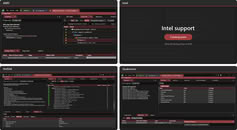
Microsoft is bringing some of its Xbox console technology to Windows PCs with the introduction of DirectX Dump Files. When a GPU crashes on your PC, you can investigate what happened in the same way Xbox developers do with their GPU crashes, gaining insight into the underlying issues. With the latest Agility SDK 1.620 and PIX 2610.28, DirectX Dump Files provide data from Windows, Direct3D, and GPU drivers to help investigate a crash, understand its cause, and improve the graphics rendering pipeline to prevent future crashes. Joining Microsoft in this effort are AMD, Intel, NVIDIA, and Qualcomm.

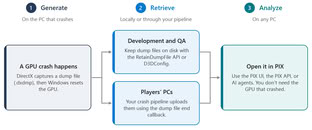
The process begins with a GPU crash. Once the GPU stops its graphics processing, DirectX creates a new dump file containing traces of what occurred before Windows resets the GPU. This includes the last Direct3D runtime state, hardware and driver data, and up to 2 MB of data from the game developer that might be traced. These files can be saved on developers' machines, but on players' PCs in production, they aren't saved by default. However, game developers can set up a crash pipeline to send crash data back to them for analysis. Once the data is available, Microsoft's PIX tool, used for performance-tuning and debugging DirectX 12 games, helps analyze the situation. PIX decodes data, analyzes dump files, identifies hang points, and traces shaders and resources that caused the crash. This allows developers to quickly isolate and fix the problem.
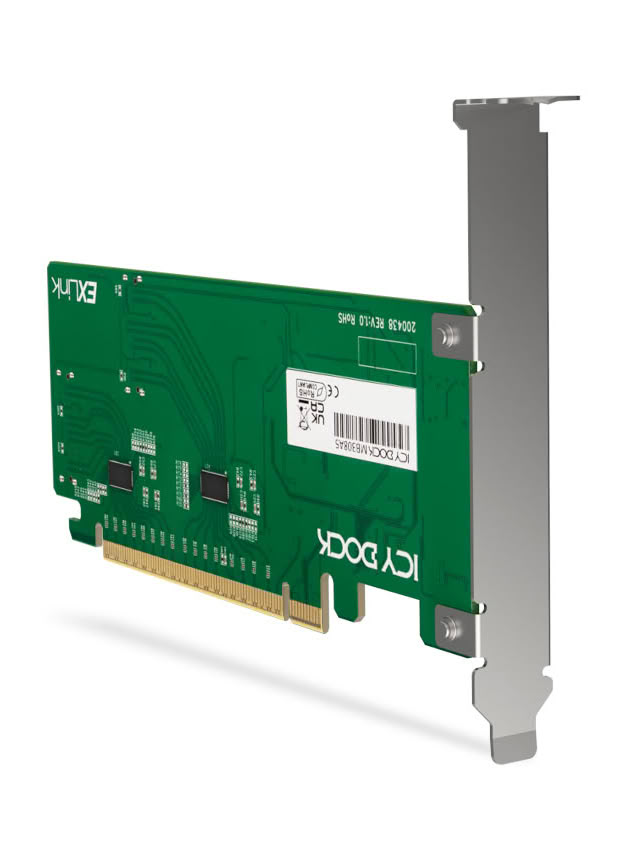
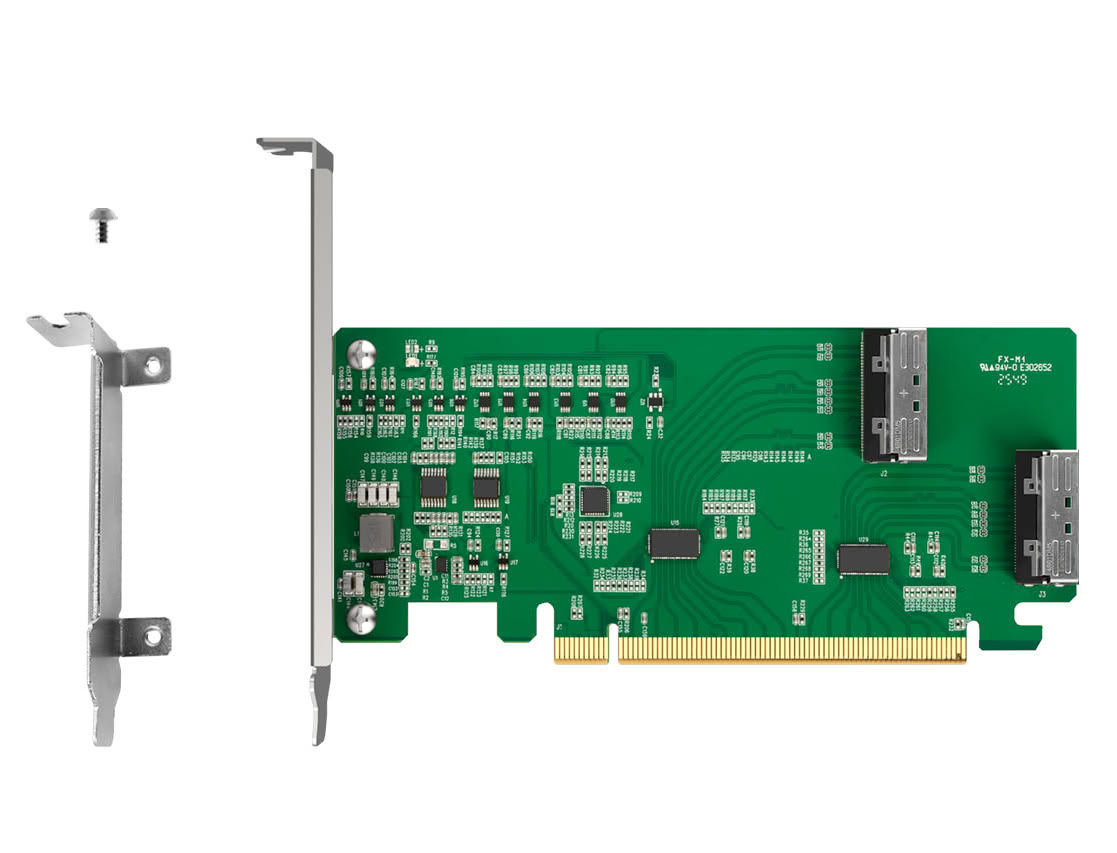
Icy Dock Releases EXLink MB308A5 PCIe 5.0 x16 NVMe Host Adapter Card

The ICY DOCK EXLink MB308A5 is a PCIe 5.0 x16 NVMe host adapter card with dual MCIO 8i (SFF-TA-1016) connectivity, designed for next-generation high-speed NVMe cabling. With an integrated PCIe Gen 5 redriver and 100 MHz clock buffering, it helps maintain signal integrity for 32 GT/s links across longer trace and cable routing commonly found in servers, workstations, and validation platforms.

PCIe 5.0 x16 Lane Bifurcation for Multi-Drive NVMe Topologies
With a PCIe 5.0 x16 interface delivering up to 512 Gbps of total bandwidth, the MB308A5 is designed for platforms that support PCIe lane bifurcation (x4 / x4 / x4 / x4). When enabled, the PCIe x16 interface can be allocated into four independent NVMe x4 links, allowing up to four NVMe SSDs to be addressed through MCIO cabling.

StarTech.com Launches Quad Monitor Thunderbolt 5 Dock for Multi-Display Workstations

StarTech.com has launched a new Universal Thunderbolt 5 Docking Station (206N-TB5USB4DOCK) built for power users who need more display space, more charging power, and fewer compromises at the desk. The dock supports up to four 4K 60 Hz monitors on Windows, giving IT teams a driverless way to equip demanding workstations for engineering, finance, development, content creation, and other multi-display workflows.

The dock delivers up to 140 W Power Delivery to the host laptop, supporting high-performance systems through the same connection used for displays, networking, storage, and peripherals. Its downstream Thunderbolt 5 port also provides up to 45 W of charging for compatible devices, adding another source of power for connected hardware.

StarTech.com Launches Industry-First USB4 Dock with Driverless Dual Display for Mac, Windows, and Linux

StarTech.com, a global provider of performance connectivity solutions for IT professionals, announces the launch of its Driverless Dual 4K USB4 Universal Docking Station (208N-USB4-DOCK), an industry-first solution designed to deliver driverless dual-display support for MacBook users while enabling seamless compatibility across Windows and Linux laptops.

The new dock gives IT teams a single solution to standardize across their entire fleet. Native driverless compatibility removes the need for software installation, eliminating common deployment challenges and ensuring consistent performance across Mac, Windows, and Linux environments.

Satechi Launches ChargeView 140 W Desktop Charger with Display and Four USB-C Ports

Your desk has evolved. Sharper displays, better keyboards, devices designed to work together across a full Apple ecosystem—your workspace already looks like the future. Now picture a charger built to match. Meet the Satechi ChargeView 140 W Desktop Charger: a charging station with a live digital display, four USB-C ports, and 140 W of GaN-powered output, engineered to be a working part of your desk setup.

Power You Can See
Charging used to be a guessing game. ChargeView ends the guessing, in real time. Each port shows its current wattage at a glance, so you know exactly what's flowing where. No more cable-swapping just to figure out what's charging. No more wondering whether your MacBook Pro is at full speed or barely sipping. No more guessing whether the cable is the problem, or the port.

Open Gaming Collective Forms to Enhance Linux Gaming

Linux gamers may have a reason to celebrate. A new collaborative initiative, the Open Gaming Collective (OGC), is being launched to enhance support for Linux-based gaming. The OGC aims to establish a unified set of software components that will become the standard across various Linux distributions within the gaming community. Founded by ASUS's Linux division, Universal Blue / Bazzite, ChimeraOS, Nobara, Playtron, Fyra Labs, PikaOS, and ShadowBlip, the OGC team is focused on a universal goal of bringing Linux gamers a better experience. The basic concept involves all members contributing software updates across the stack and standardizing certain areas to improve game and device compatibility. The newest collective aims to make gaming on Linux much smoother, similar to what Valve did with its SteamOS and Proton compatibility layer.
Shared Technical Pillars
OGC focuses on the foundational layers of the Linux gaming stack. We host shared components, agreed upon by the members, for all to use, with an "Upstream First" philosophy. Some of the projects we have in mind:
  • The OGC Kernel—a shared gaming-focused kernel
  • A downstream fork of Gamescope that expands hardware support to more devices

Tachyum Intros 2 nm Prodigy Universal Procesor Targeting Improved AI Rack Efficiency

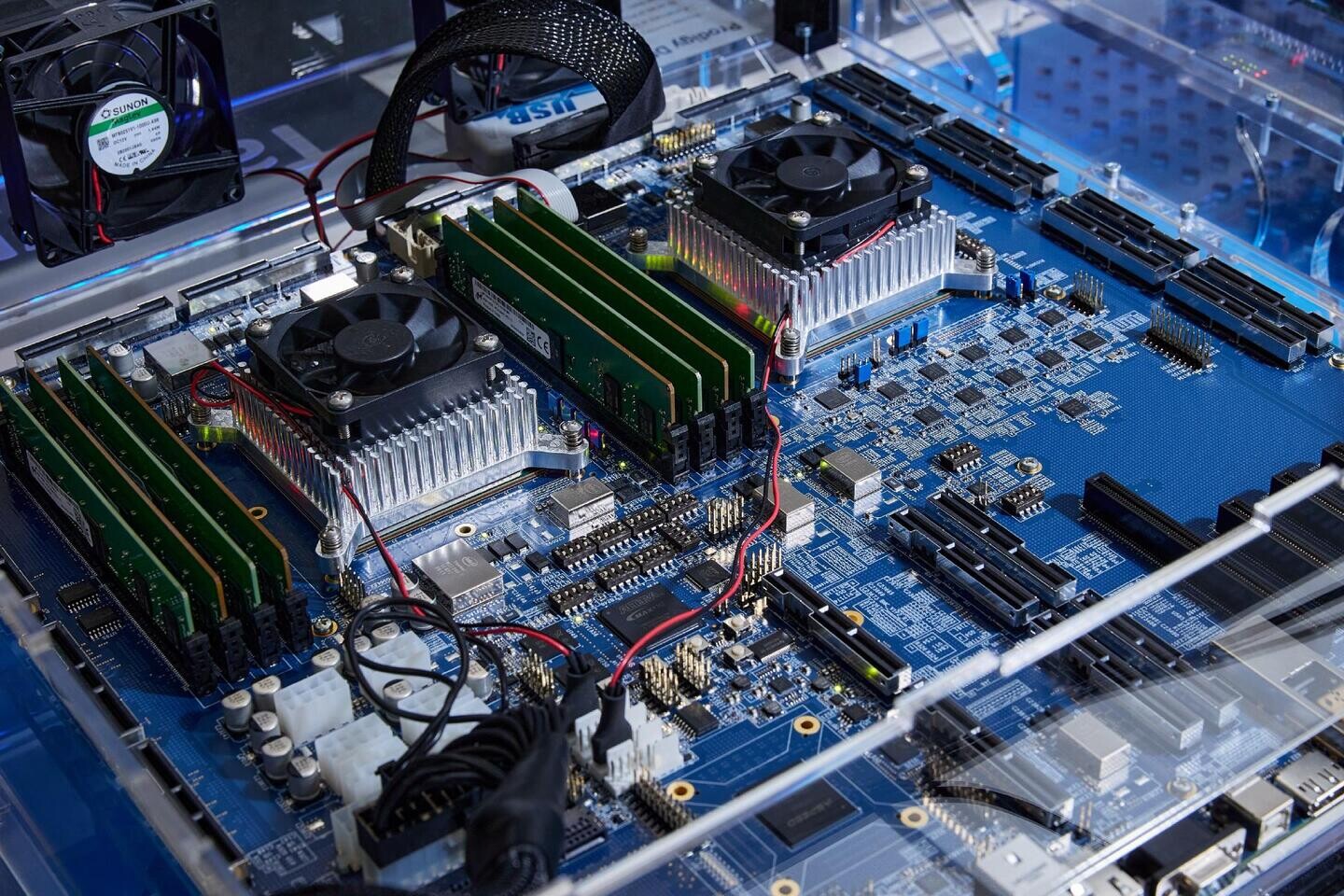
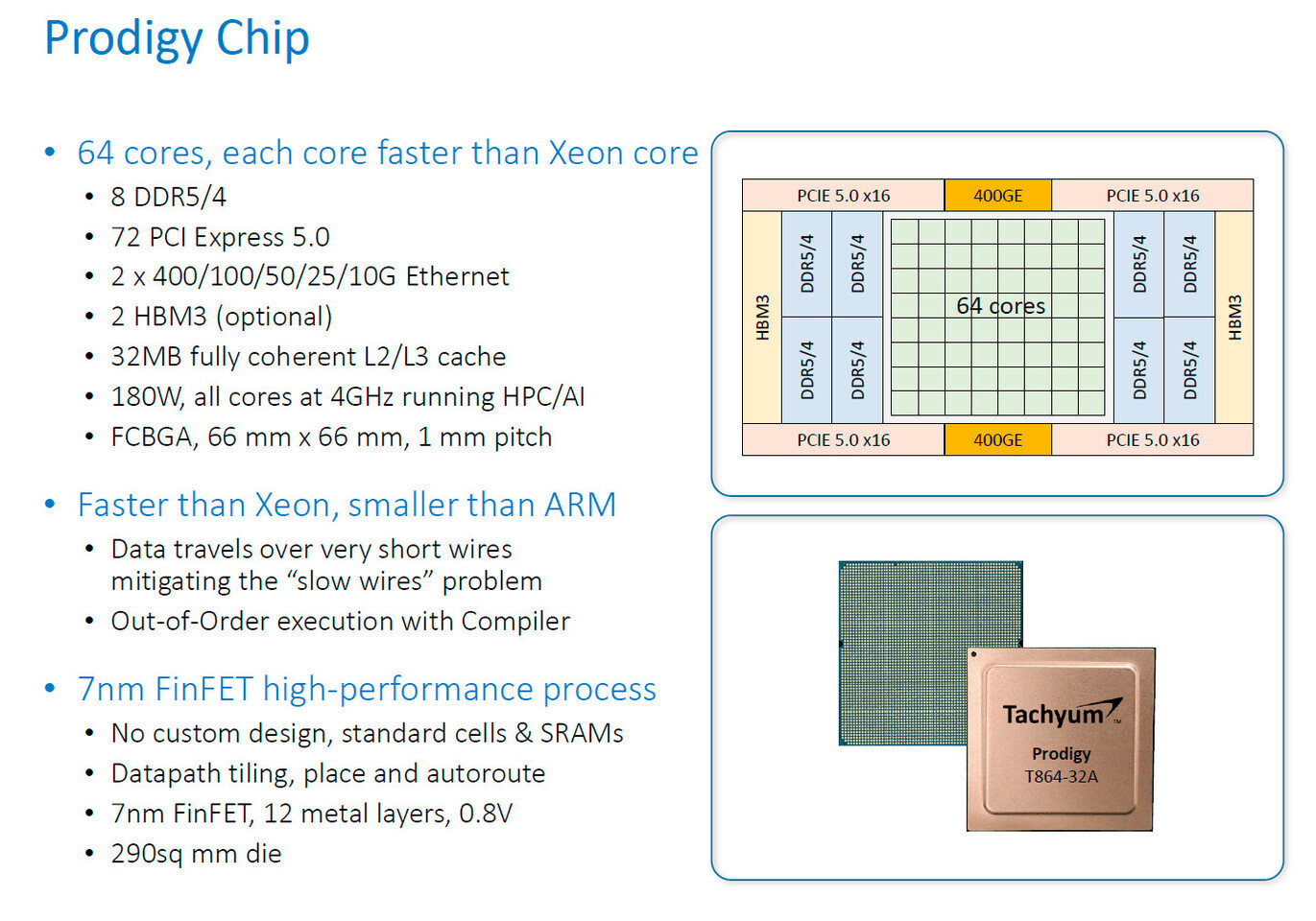
Tachyum today announced details and specifications for its 2 nm Prodigy Universal Processor, which will enable AI models with parameters many orders of magnitude larger than those of any existing solution at a fraction of the cost.

Prodigy Ultimate provides up to 21.3x higher AI rack performance than NVIDIA Rubin Ultra NVL576. Prodigy Premium provides up to 25.8x higher AI rack performance than Vera Rubin 144. Technical details of the 2 nm Prodigy, the first ever chip to exceed 1,000 PFLOPs on inference, will be published within a week. NVIDIA Rubin delivers 50 PFLOPs.

Tachyum Signs $220 Million Funding and $500 Million Purchase Order

Tachyum today announced that it has executed a binding agreement for its Series C funding with a $220 million investment to be wired into Tachyum's account within a month, by a European investor that positions the company to become one of the top enablers within the AI data center market. The Series C investor has also signed a $500 million purchase order for Prodigy chips, which will increase AI performance by an order of magnitude and reduce the cost of ultra large LLM/AI models by approximately two orders of magnitude.

The lead investor from the US took a semiconductor company public last year in the US with a valuation of nearly a billion USD, and the same investor took another US company public through a SPAC for several billion USD.

LIAN LI Launches 8.8" Universal Screen with Flexible Mounting Solution

LIAN LI Industrial Co., Ltd., a leading manufacturer of chassis and PC accessories, is proud to introduce the 8.8" Universal Screen (US88v1), a versatile USB-powered secondary display. Featuring a crisp 1920x480 IPS panel with a 60 Hz refresh rate and 500 nits of brightness, the screen delivers real-time system stats, media, or personalized content without occupying a GPU display output. Controlled via L-Connect 3, users can upload videos, images, and synchronize the built-in diffused ARGB lighting with their system. The included adjustable bracket allows for tilt, rotation, and height adjustment on both the screen and the mount, with multiple mounting options, including placement on top of 120 mm and 140 mm fans, case panels, or adhesive attachment.

Versatile Wide Display
Unlike traditional secondary displays, the 8.8" Universal Screen connects via USB, either through a 9-pin motherboard header or Type-A extension, so it doesn't use any of your graphics card's display outputs. This plug-and-play setup provides a clean, independent way to display hardware statistics, custom media, or animated preset overlays without consuming GPU resources.

NVIDIA at Hot Chips 2025 Pushes Blackwell to Power Neural Rendering

NVIDIA's Hot Chips 2025 appearance on the graphics track was less about new silicon and more about a change in emphasis. Blackwell is being presented as a platform that makes machine learning a natural part of rendering rather than an add-on. The company showed how the architecture stretches from big datacenter cards all the way down to laptop GPUs and explained why that range matters. Instead of relying on brute-force raster work, the focus is on neural approaches, such as denoising and learned frame generation, that can reproduce or enhance pixels at far lower cost. To support that shift, NVIDIA is moving toward FP4 math to shrink memory and compute footprints, and it has invested in scheduler improvements like shader execution reordering and heavy integer work so streaming multiprocessors stay busy. The talk also showed an on-chip AI management processor that coordinates data and priorities so graphics shaders and inference kernels do not block one another.

The practical plumbing behind these concepts mattered as much as the models. Blackwell's GDDR7 support delivers more usable bandwidth at lower voltages, which helps both traditional rendering passes and large tensor jobs. NVIDIA described techniques to shorten the time to first token in mixed workloads so interactive agents and graphics can meet different latency needs. The company pushed the idea of a "race to idle," where a system uses learned interpolation or selective inference in place of a full render to save power. Finally, features borrowed from the datacenter world, such as Universal MIG, let a single GPU be split into many smaller virtual GPUs, improving utilization for light clients and yielding sizable gains over simple time slicing. The net message was clear: Blackwell is not just about adding TeraFLOPS. It is about rethinking scheduling and blending ML with graphics to make real-time, efficient experiences practical. Neural rendering is where the graphics world is headed, and NVIDIA wants to accelerate every stage of the pipeline.

Tachyum Enhances Prodigy Universal Processor Behind eBPF Port

Tachyum today announced that it has successfully ported the eBPF Just-In-Time (JIT) compiler on its Prodigy Universal Processor software emulation platform.

eBPF is a technology that can run sandboxed programs in a privileged context, such as the operating system kernel. It is used to extend the capabilities of the kernel safely and efficiently without requiring changes to the kernel source code or having to load kernel modules. Uses include kernel tracking, profiling and debugging; performance profiling; network packing filtering; security policies and events; and task scheduling. eBPF JIT is around 10 times faster than a generic eBPF interpreter.

ASUS ROG Teases Continued Refinement of Modular Hardware Concepts

Browse the list of bestselling PC cases on Amazon, and you'll see a pattern emerge very quickly. Today's PC builders aren't deciding whether they want a tempered glass side panel: they're deciding how many of these panels they want. Panoramic PC cases provide an undeniably gorgeous view of your internal PC hardware, so it's no wonder that they've soared in popularity. But that wide-open panorama does pose a problem for people who prefer a pristine PC. If you have a stray cable or wire in such a build, you'll notice it every time you sit down at your desk.

Already, we offer an ecosystem of BTF motherboards, PC cases, and graphics cards that help you tuck your PC's wires and cables out of sight. But we're interested in doing even more, and we're eager to present solutions that work with traditional PC hardware designs, not just BTF. Behind the scenes, we've been working on modular hardware concepts that cut down on cable clutter for two key components: chassis fans and AIO coolers. Visitors to our Computex 2025 booth will get to see this concept hardware in action, but perhaps a trip to Taipei isn't in the works for you this year. Let's take a closer look.

EK Releases New EK-Quantum Velocity³ 1700/1851/AM5 Universal CPU Water Block

EK, the premium liquid cooling manufacturer, is proud to announce the latest generation of EK-Quantum Velocity³ CPU water blocks. Offering universal compatibility for both AMD AM5 and Intel LGA 1700 / 1851 sockets, the EK-Quantum Velocity³ features a fully customizable configuration that allows you to rotate, adjust, and reposition the internal components, heat spreader, and ports - ensuring high-performance liquid cooling that's perfectly optimized for your build.

Universal Intel & AMD Platform Compatibility
The EK-Quantum Velocity³ offers a new level of compatibility with design that allows you to interchange between Intel LGA 1700 / 1851 & AMD AM5 with a few simple adjustments. When choosing your platform, simply align the jet plate alignment based on the Intel or AMD socket, reposition the cold plate and attach the LGA or AM5 mounting bracket - it's that simple. This design ensures universal compatibility, offering high performance liquid-cooling that's future proofed should you wish to change platform when upgrading your PC.

Ubitium Debuts First Universal RISC-V Processor: CPU, GPU, DSP, FPGA All in One Chip

For over half a century, general-purpose processors have been built on the Tomasulo algorithm, developed by IBM engineer Robert Tomasulo in 1967. It's a $500B industry built on specialized CPU, GPU and other chips for different computing tasks. Hardware startup Ubitium has shattered this paradigm with a breakthrough universal processor that handles all computing workloads on a single, efficient chip - unlocking simpler, smarter, and more cost-effective devices across industries - while revolutionizing a 57-year-old industry standard.

Alongside this, Ubitium is announcing a $3.7 million in seed funding round, co-led by Runa Capital, Inflection, and KBC Focus Fund. The investment will be used to develop the first prototypes and prepare initial development kits for customers, with the first chips planned for 2026.

Tachyum Builds Last FPGA Prototypes Batch Ahead of Tape-Out

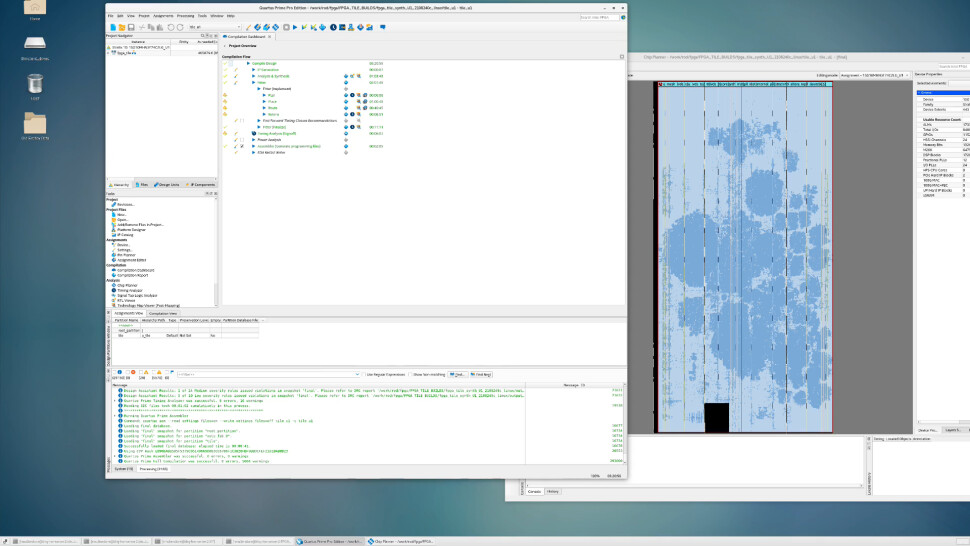
Tachyum today announced the final build of its Prodigy FPGA emulation system in advance of chip production and general availability next year. As part of the announcement, the company is also ending its purchase program for prototype systems that was previously offered to commercial and federal customers.

These last hardware FPGA prototype units will ensure Tachyum hits its extreme-reliability test targets of more than 10 quadrillion cycles prior to tape-out and before the first Prodigy chips hit the market. Tachyum's software emulation system - and access to it - is expanding with additional availability of open-source software ported ahead of Prodigy's upstreaming.

GameSir Launches its G8+ Bluetooth Mobile Controller

GameSir, a leading provider of innovative, high quality gaming peripherals, is thrilled to unveil its latest masterpiece, the GameSir G8+ Bluetooth Mobile Controller. This cutting-edge wireless controller is designed to provide a console-like gaming experience across multiple platforms, including Switch, iOS, Android, tablets, and PC.

The GameSir G8+ is engineered with ergonomic grips and responsive motors, ensuring the comfort and feedback of a traditional console controller. Gamers can now enjoy a seamless and immersive experience, transforming mobile gaming into an engaging adventure. With console-sized sticks and buttons, the G8+ provides unmatched comfort during extended gameplay, offering unparalleled control for navigating challenging terrains or executing precise shots.

Tachyum Achieves 192-Core Chip After Switch to New EDA Tools

Tachyum today announced that new EDA tools, utilized during the physical design phase of the Prodigy Universal Processor, have allowed the company to achieve significantly better results with chip specifications than previously anticipated, after the successful change in physical design tools - including an increase in the number of Prodigy cores to 192.

After RTL design coding, Tachyum began work on completing the physical design (the actual placement of transistors and wires) for Prodigy. After the Prodigy design team had to replace IPs, it also had to replace RTL simulation and physical design tools. Armed with a new set of EDA tools, Tachyum was able to optimize settings and options that increased the number of cores by 50 percent, and SERDES from 64 to 96 on each chip. Die size grew minimally, from 500mm2 to 600mm2 to accommodate improved physical capabilities. While Tachyum could add more of its very efficient cores and still fit into the 858mm2 reticle limit, these cores would be memory bandwidth limited, even with 16 DDR5 controllers running in excess of 7200MT/s. Tachyum cores have much higher performance than any other processor cores.

The US is Considering Universal Charger Standard for Consumer Electronics

After the EU lawmakers agreed on making USB Type-C the charging interface standard for the union, it appears US senators are considering something similar. Although it's early days at this point, with just a letter penned by a few democratic senators to the Secretary of Commerce, the route to implementation is likely to be a lot longer. The reasoning is very similar to the one from the EU lawmakers, namely to reduce e-waste and make life easier for consumers. The letter states that "the average consumer owns approximately three mobile phone chargers, and around 40 percent of consumers report that, on at least one occasion, they "could not charge their mobile phone because available chargers were incompatible.""

It goes on to say that innovation should benefit consumers rather than come at their expense, especially as consumers end up with a collection of incompatible chargers and connectivity cables. In reality things are a bit more complex, as so often is the case, but there's really no reason why more standardised chargers can't finally become the norm, with the computer and mobile industries largely pushing for USB Type-C as the common connector, with some exceptions. The extra incentive by regulation should help speed things up, but the USB standard isn't as straightforward as the politicians seem to think, which could cause some consumer complaints during the transition period. However, certified USB PD compliant devices should make everyone's life simpler in the long term. Time will tell if the Secretary of Commerce agrees with the senators and there's obviously no guarantee that USB Type-C will be the chosen standard, regardless of how likely it is.

OWC Announces Envoy Pro mini the Ultimate Works With Everything Pocket-Sized USB-C and USB-A SSD

OWC, a leading customer-focused creator of innovative solutions for over 30 years that have enabled individuals, businesses, content professionals, and educators to get maximum usefulness from their technology investment, today introduced the OWC Envoy Pro mini. The OWC Envoy Pro mini is a pocket-sized SSD with full-sized SSD performance and capacity for audio, photography, graphics, gaming, and general data storage/backup uses. Now, everyday users, students, mobile professionals, IT techs, and content creators can take, access, save, and share their data anywhere. The OWC Envoy Pro mini works with USB and Thunderbolt (USB-C) Macs, PCs, iPads, Chromebooks, Android tablets, and Surface devices made over the last 15 years. Available in 250 GB, 500 GB, and 1 TB capacities and can access and transfer data with everything at up to 946 MB/s real-world speed with Plug and Play ease.

Using the Envoy Pro mini in a mixed Mac and Windows environment is remarkably easy with the addition of OWC's MacDrive (sold separately). This seamless software runs in the background, so there is nothing to launch or learn. Just plug in the Envoy Pro mini, and not only do you have instant-read access, but full write access. MacDrive also includes powerful features that enable you to format and partition drives and repair fundamental disk issues.

Tachyum Successfully Runs FreeBSD in Prodigy Ecosystem; Expands Open-Source OS Support

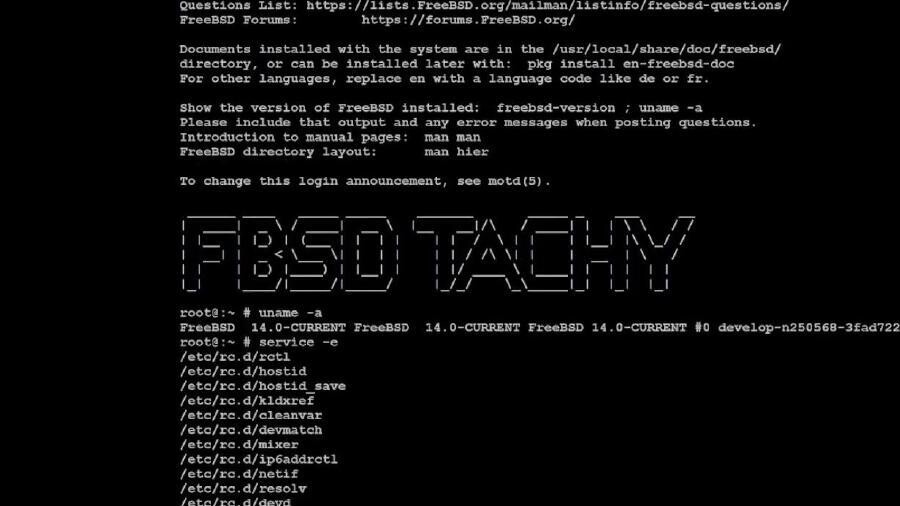
Tachyum today announced it has completed validation of its Prodigy Universal Processor and software ecosystem with the operating system FreeBSD, and completed the Prodigy instruction set architecture (ISA) for FreeBSD porting. FreeBSD powers modern servers, desktops, and embedded platforms in environments that value performance, stability, and security. It is the platform of choice for many of the busiest websites and the most pervasive embedded networking and storage devices.

The validation of FreeBSD extends Tachyum's support for open-source operating systems and tools, including Linux, Yocto Project, PHP, MariaDB, PostgreSQL, Apache, QEMU, Git, RabbitMQ, and more.

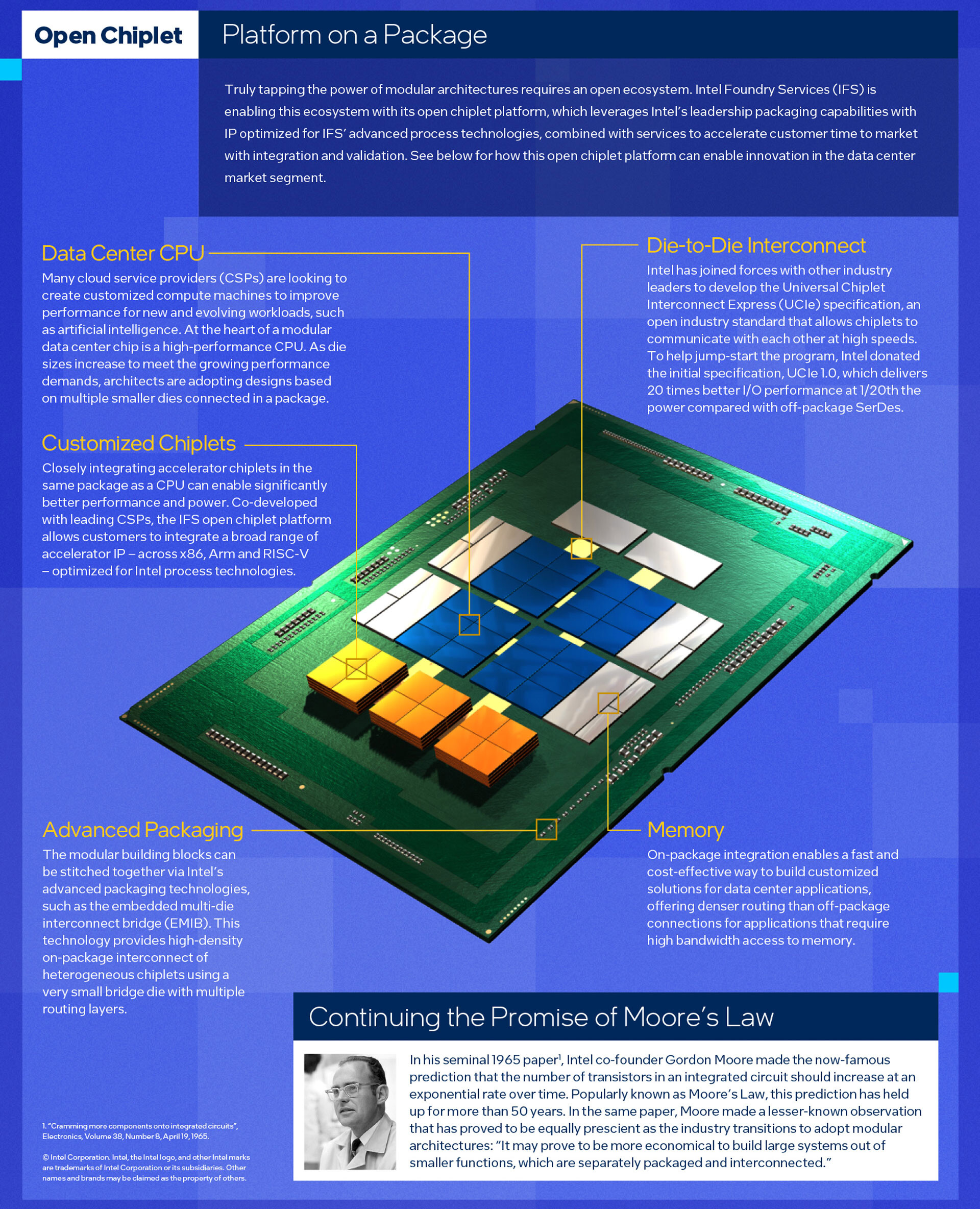
Intel, AMD, Arm, and Others, Collaborate on UCIe (Universal Chiplet Interconnect Express)

Intel, along with Advanced Semiconductor Engineering Inc. (ASE), AMD, Arm, Google Cloud, Meta, Microsoft Corp., Qualcomm Inc., Samsung and Taiwan Semiconductor Manufacturing Co., have announced the establishment of an industry consortium to promote an open die-to-die interconnect standard called Universal Chiplet Interconnect Express (UCIe). Building on its work on the open Advanced Interface Bus (AIB), Intel developed the UCIe standard and donated it to the group of founding members as an open specification that defines the interconnect between chiplets within a package, enabling an open chiplet ecosystem and ubiquitous interconnect at the package level.

"Integrating multiple chiplets in a package to deliver product innovation across market segments is the future of the semiconductor industry and a pillar of Intel's IDM 2.0 strategy," said Sandra Rivera, executive vice president and general manager of the Datacenter and Artificial Intelligence Group at Intel. "Critical to this future is an open chiplet ecosystem with key industry partners working together under the UCIe Consortium toward a common goal of transforming the way the industry delivers new products and continues to deliver on the promise of Moore's Law."

Tachyum Boots Linux on Prodigy FPGA

Tachyum Inc. today announced that it has successfully executed the Linux boot process on the field-programmable gate array (FPGA) prototype of its Prodigy Universal Processor, in 2 months after taking delivery of the IO motherboard from manufacturing. This achievement proves the stability of the Prodigy emulation system and allows the company to move forward with additional testing before advancing to tape out.

Tachyum engineers were able to perform the Linux boot, execute a short user-mode program and shutdown the system on the fully functional FPGA emulation system. Not only does this successful test prove that the basic processor is stable, but interrupts, exceptions, timing, and system-mode transitions are, as well. This is a key milestone, which dramatically reduces risk, as booting and running large and complex pieces of software like Linux reliably on the Tachyum FPGA processor prototype shows that verification and hardware stability are past the most difficult turning point, and it is now obvious that verification and testing should successfully complete in the coming months. Designers are now shifting their attention to debug and verification processes, running hundreds of trillions of test cycles over the next few months, and running large scale user mode applications with compatibility testing to get the processor to production quality.

Epic Games Joins GOG in the Goal to Deliver Universal Ownership of Digital Goods

Today owning digital copies of games is a real struggle. There are are many platforms that offer games to be purchased, and some games are platform-specific. Take a look at Fortnite for example. It is only available on the Epic Games platform and launcher, so you have to download and sign-up to that if you wish to play the game. The PC platform is currently struggling with that problem as there is no unified store where you can purchase all of your digital copies of games. That is the main reason why Good Old Games, called GOG shortly, has decided to invite Epic Games and make a universal launcher for all storefronts.

The GOG Galaxy 2.0 is a new storefront that aims to give gamers the ability to "Install and launch any PC game you own, no matter the platform." With Epic Games joining the platform, it is a matter of time before others join. Some are still resistant, however. Steam and Origin are still not okay with that idea and they are keeping it to themselves. It is interesting to see the development of this, and in the meantime, you can check out GOG Galaxy 2.0 here.

JEDEC Publishes Update to Universal Flash Storage (UFS) Standard

JEDEC Solid State Technology Association, the global leader in the development of standards for the microelectronics industry, today announced the publication of Universal Flash Storage (UFS) version 3.1, JESD220E. In addition, an optional new companion standard, JESD220-3: UFS Host Performance Booster (HPB) Extension, has also been published. Developed for mobile applications and computing systems requiring high performance with low power consumption, UFS 3.1 introduces new features intended to help maximize device performance while minimizing power usage. Both JESD220E and JESD220-3 are available for download from the JEDEC website.

ENERMAX Launches LIQTECH II, Universal AIO Liquid Cooler with TDP 500+ Watts

ENERMAX, a leading designer and manufacturer of high-performance PC hardware products, announces the launch of a new all-in-one liquid cooler series, LIQTECH II. Responding the market demand of cooling solution for high-end CPUs, LIQTECH II can deliver enthusiast-grade cooling capacity of 500+ watts (TDP) and is compatible with both Intel and AMD sockets (except AMD sTR4).

Furthermore, certified by main motherboard makers (ASRock, ASUS, Gigabyte, and MSI), LIQTECH II can support the latest addressable RGB lighting synchronization with advanced motherboards featuring addressable RGB headers (pin assignment: 5V/D/-/G) to create dynamic visual effects. LIQTECH II is perfect for overclocked systems, image editing workstations, and high-end gaming machines.
Return to Keyword Browsing
Nov 11th, 2026 03:12 CST change timezone

New Forum Posts

Popular Reviews

TPU on YouTube

Controversial News Posts