Microsoft Paves the Way for Industry-Wide Adoption of Variable Rate Shading
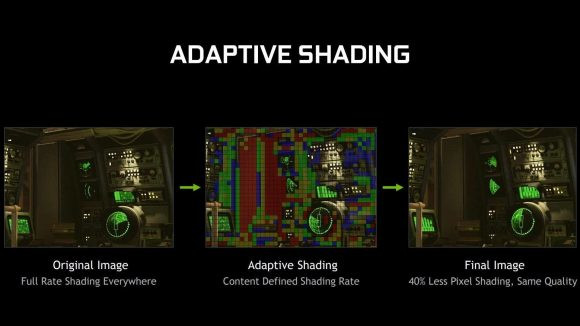
Microsoft today via a devblog announced their push to make Variable Rate Shading an industry-wide adoption in the search of increased performance that can support the number of pixels and quality of those pixels in future games. The post starts with what is likely the foremost question on the mind of any discerning user that hears of a technique to improve performance: "does it degrade image quality?". And the answer, it seems, is a no: no discernible image quality differences between the Variable Rate Shading part of the image, and the fully rendered one. I'll give you the option to speak on your own perception, though: analyze the image below and cast your vote on the poll.
As resolution increases, so does the amount of work that any given GPU has to process to generate a single frame - and compare that to the amount of additional work that goes from rendering a 30 FPS, 1080p game to a 60 FPS, 4K one, and... It stands to reason that ways of squeezing the highest amount of performance from a given process are at a premium. Particularly in the console space, where cost concerns require the usage of more mainstream-equivalent hardware, which requires creative ways of bridging the desired image quality and the available rendering time for each frame.

As resolution increases, so does the amount of work that any given GPU has to process to generate a single frame - and compare that to the amount of additional work that goes from rendering a 30 FPS, 1080p game to a 60 FPS, 4K one, and... It stands to reason that ways of squeezing the highest amount of performance from a given process are at a premium. Particularly in the console space, where cost concerns require the usage of more mainstream-equivalent hardware, which requires creative ways of bridging the desired image quality and the available rendering time for each frame.