UK-based Wholesaler Lists 12-core Intel Core 9 "Bartlett Lake-S" OEM SKUs
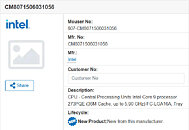
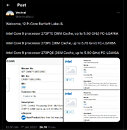
Late last week, a not-yet-released Intel "Core 7 253PE" processor model leaked out via the PassMark CPU benchmark database. This ten P-Core (all performance) candidate signalled the first signs of "Bartlett Lake-S" activity in 2026, after many months of silence. Over the past weekend, additional "Team Blue Refreshed" product discoveries have been made. On Saturday (January 17) Vectral555 highlighted three new SKUs, but did not reveal the actual source of these leaks. Screenshots show model names, codes, and very basic specifications—evidently, these grabs were lifted from premature listings published by Mouser Electronics UK. The three unreleased OEM/tray products are categorized as Core 9 SKUs, all featuring 36 MB of cache, and destined for deployment on Team Blue's "FC-LGA16A" platform—this unusual socket name seems to be another way to refer back to the familiar LGA 1700 insert.
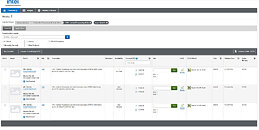
The "273PQE" model is boost clocked the highest at a maximum 5.9 GHz, the "273PE" SKU is specced at a max. 5.7 GHz, and the "273PTE" option makes do with 5.5 GHz. At the time of writing, the British wholesaler is offering both single unit and bulk orders. The fanciest "Core 9 273PQE" model is "on order" with zero units in stock, but tagged with £657.04 (single order) and £579.17 (bulk order, ten or more units) prices. The other options—"273PTE" and "273PE"—seem to be "non-stocked," and cost the same: £629.00 (single) or £554.46 (bulk). Intel could be prepping "Bartlett Lake-S" processors—under "Core Series 2" naming convention—for imminent launch. Two days ago, ITHome shared an impressively comprehensive list of Core 5, 7, and 9 model names plus basic spec credentials.
The "273PQE" model is boost clocked the highest at a maximum 5.9 GHz, the "273PE" SKU is specced at a max. 5.7 GHz, and the "273PTE" option makes do with 5.5 GHz. At the time of writing, the British wholesaler is offering both single unit and bulk orders. The fanciest "Core 9 273PQE" model is "on order" with zero units in stock, but tagged with £657.04 (single order) and £579.17 (bulk order, ten or more units) prices. The other options—"273PTE" and "273PE"—seem to be "non-stocked," and cost the same: £629.00 (single) or £554.46 (bulk). Intel could be prepping "Bartlett Lake-S" processors—under "Core Series 2" naming convention—for imminent launch. Two days ago, ITHome shared an impressively comprehensive list of Core 5, 7, and 9 model names plus basic spec credentials.