News Posts matching #computex

Return to Keyword Browsing

Seasonic Teases Imminent Launch of 3,200 W PRIME ENTERPRISE PX-3200 PSU

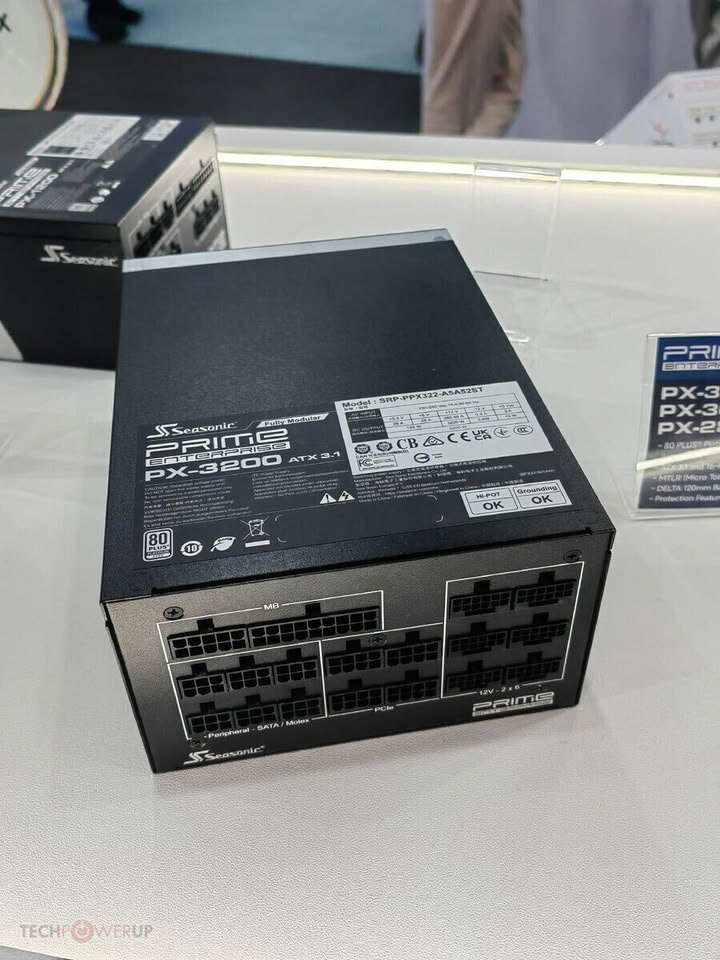
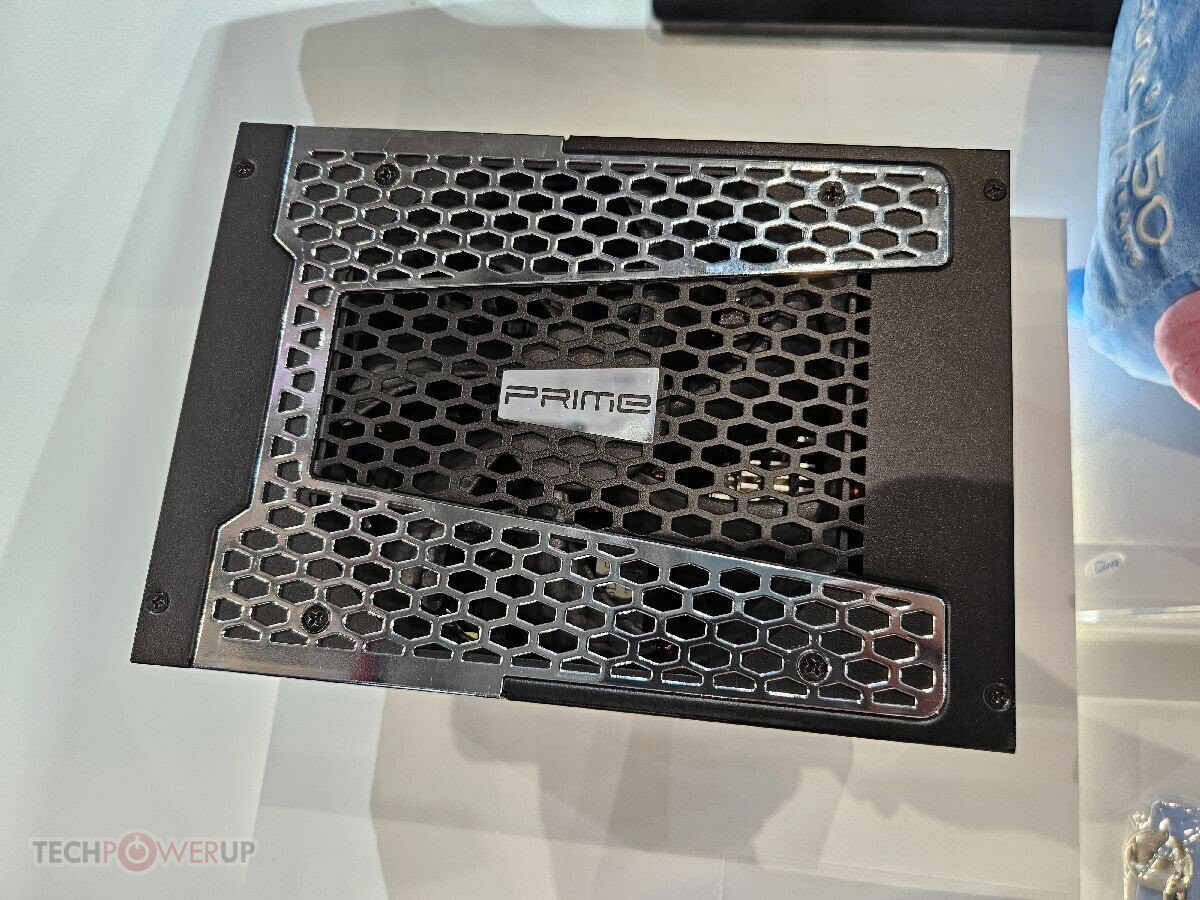
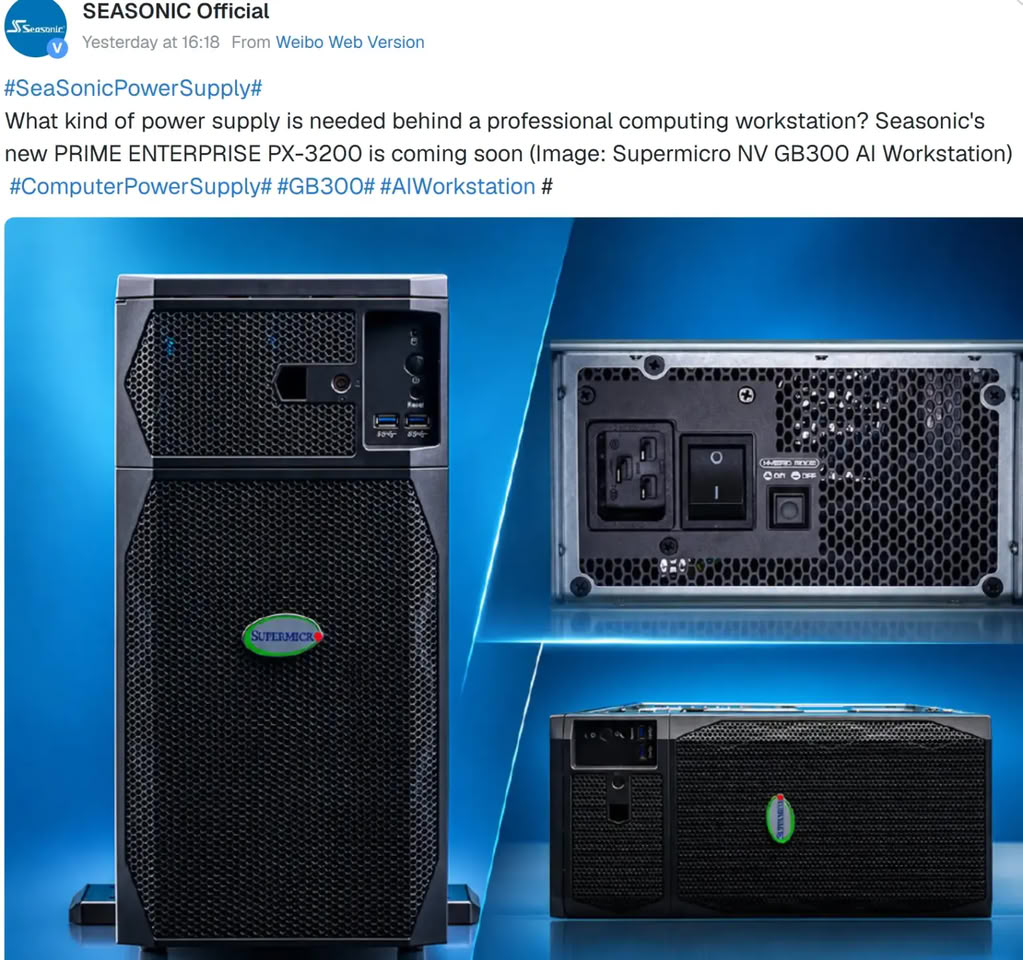
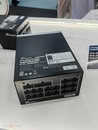
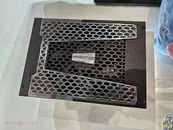
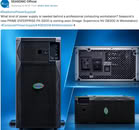
It looks like Seasonic's 3,200 W PRIME ENTERPRISE PX-3200 PSU is close to launch. As spotted by Videocardz, the company's official Weibo account posted that the new PSU is coming soon, attaching an image of Supermicro's NVIDIA GB300 AI workstation as well. The PX-3200 offers six 12V-2x6 connectors, ideal for feeding several high-end GPUs directly. It also carries 80 Plus Platinum and Cybernetics Platinum ratings, as far as efficiency goes. There's no official word on pricing or a public release date, but the post does suggest that the launch is just around the corner.

Seasonic first showed the PRIME PX-3200 at Computex 2025, so it's not exactly a new unit. Back then, the company quoted 266.7 A on a single +12 V rail, up to 94% efficiency at typical loads, and a 12-year warranty for that version. We saw the unit again at Computex 2026, this time under the PRIME ENTERPRISE banner, alongside 2,800 W and 3,000 W models aimed at multi-GPU workstations. For the show, Seasonic used two 3,200 W units to power a system with four NVIDIA RTX PRO 6000 Blackwell cards. At the time, Japanese outlet GDM reported that the series was shipping only to enterprise customers, with no consumer release planned. It's still unclear whether the "coming soon" in Seasonic's post points to retail availability.
AMD "Zen 6" for Desktop Reportedly Pushed to Computex 2027

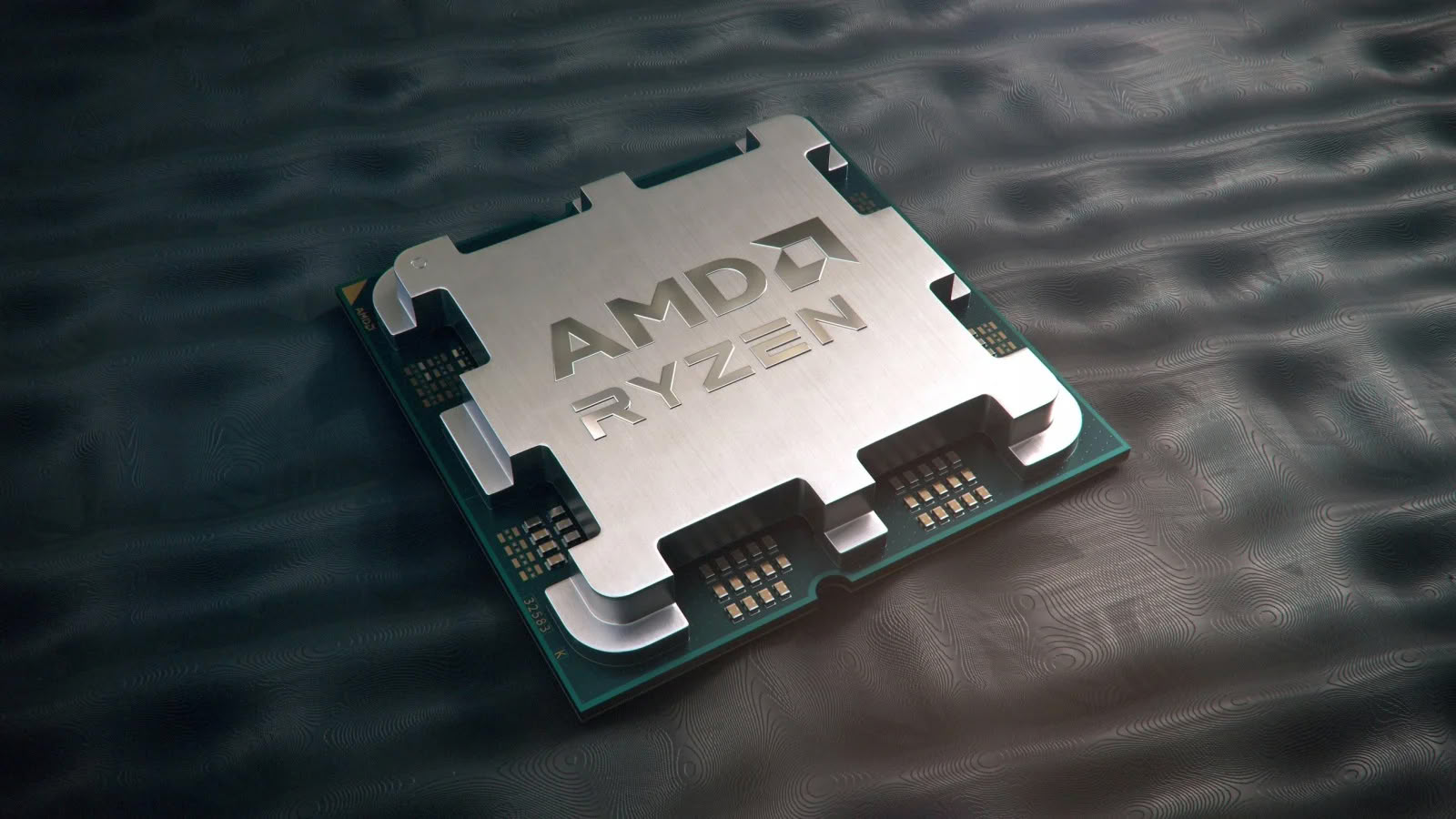
AMD's upcoming Ryzen processors based on the new "Zen 6" core architecture are reportedly delayed until Computex 2027, according to the latest information from Chiphell. The "Zen 6" EPYC lineup will utilize TSMC's N2 node, with the standard version for "Venice" and the enhanced N2P for "Verano." However, for the desktop "Zen 6" Ryzen family, codenamed "Olympic Ridge," AMD is switching to TSMC's N2X node, an enhanced variant of the standard N2 that targets higher frequencies. This switch results in delayed mass production and rollout of desktop Ryzen. TSMC plans to begin mass production of its N2X node in 2027, meaning "Olympic Ridge" will likely arrive a few months later, with Computex 2027 being the probable announcement date.

AMD likely chose the N2X node for its higher clock potential. Originally, TSMC targeted HPC workloads, but desktop processors can also benefit from high clock speeds for maximum performance. The N2X node offers two advantages over the standard N2: an ultra-high performance standard cell that delivers a 5% higher clock speed, and a high-speed device, which provides an additional 5% boost, resulting in a combined 10% speed increase.

Maxsun Readies Panther Lake and Wildcat Lake MoDT NAS Motherboards for November

Maxsun has shared full specifications for the SK-PTLNAS and SK-WCLAIO, two NAS-focused MoDT (Mobile on Desktop) motherboards built around Intel's Panther Lake and Wildcat Lake chips. Both were first shown at Computex 2026 and are expected to launch this month, though pricing is still unknown. The SK-PTLNAS now tops out at the Core Ultra 9 386H, a 16-core chip with four Xe3 GPU cores, a 25 W base power and up to 80 W of turbo power. The Computex listing mentioned options up to the Core Ultra X9 388H, which no longer seems to be on the table. It supports up to 128 GB of DDR5-7200 memory across two SO-DIMM slots, with five M.2 slots and three Mini SAS ports for storage. The board also gets a PCIe 5.0 x8 slot, 10GbE, 2.5GbE and two 1GbE ports, plus two Thunderbolt 4 ports. Maxsun lists Windows 11 and Ubuntu support.

The SK-WCLAIO measures just 90 x 165 mm, a big change from the mATX design shown in June. It runs the six-core Core 7 350 (2P + 4LPE) with two Xe3 cores, a single DDR5-6400 SO-DIMM slot for up to 48 GB, 1 TB of onboard UFS 3.1 storage and four M.2 slots. Wildcat Lake has very few PCIe lanes, so those drives probably won't each get full x4 bandwidth. Maxsun rates the system at 45 W when active and 16 W with drives on standby, which should suit an always-on home NAS. The power input is a bit unclear for now, since the listing mentions both a 12 V DC jack and USB-C PD.

GALAX Prepares GeForce RTX 5090 HOF with Swarovski Crystals

GALAX has officially teased its GeForce RTX 5090 Hall of Fame Edition GPU, featuring unique details with Swarovski crystals. What the company originally showcased at Computex 2026 now appears to be a product scheduled for launch on October 22. The GeForce RTX 5090 HOF maintains the distinctive white aesthetic that GALAX GPUs are known for. However, this time, the design is enhanced with Swarovski crystals embedded across the GPU shroud, adding a nuanced touch. This should help the GPU stand out in all-white builds, especially when RGB lighting hits the crystals, reflecting and bursting in multiple directions.

Another interesting aspect is that the card is expected to feature dual 12V-2×6 power connectors, providing significant power headroom. GALAX has already offered its flagship GeForce RTX 5090D HOF Edition GPUs with dual 12V-2x6 power connectors, but this will be the first time an overclocking-focused graphics card receives such a luxurious finish with crystals. Initially, the GPU's appearance at Computex 2026 was thought to be a preview for the GeForce RTX 6090. However, it is now clear that the item will be more of a collectible, as GeForce RTX 5090 GPUs have become extremely expensive on their own.

AMD RDNA 5 Likely Scheduled for Second Half of 2027

AMD's next-generation gaming graphics cards featuring the RDNA 5 GPU architecture are unlikely to debut before the second half of 2027, according to well-known hardware leaker Kepler_L2. The leaker suggests that AMD is unlikely to release any RDNA 5 desktop graphics cards before Computex 2027, indicating that these GPUs will probably arrive in the latter half of that year. AMD is expected to lead with the silicon codenamed "AT2," which is part of a family of discrete RDNA 5 GPUs. This will be followed by "AT0," "AT3," and "AT4," which are expected to launch a few quarters later in 2028. Since "AT2" likely refers to a mid-range design, AMD might begin its rollout with a mid-range GPU first, followed by flagship and lower-end models in 2028.

Previously, we learned that AMD's RDNA 5 GPUs will incorporate GDDR7 memory with unknown capacities, as GDDR7 is now listed among the supported VRAM types in the AMDGPU driver. Currently, AMD's graphics cards use GDDR6 for the consumer RDNA 4-based Radeon RX 9000 series, while Instinct MI data center and workstation GPUs use HBM3E and HBM4 memory. Since AMD is developing data center GPUs with HBM and consumer cards are the only models using GDDR, the GDDR7 placeholder suggests future support for RDNA 5.

Lian Li Debuts Edge Hub Adv With Automatic Shutdown for 12V-2x6 Cable Thermal Events

There is no shortage of horror stories about misbehaving 12V-2x6 power connectors, whether they be on AMD Radeon or on NVIDIA GPUs. The ongoing drama with the GPU connector has prompted manufacturers of other PC gaming hardware to come up with solutions, like ASUS's ROG Equalizer, Cooler Master's GPU Shield technology, or ASRock's protected, right-angled 12V-2x6 cable. The latest to join the GPU power race with active protection is Lian Li, except it does things a little differently.

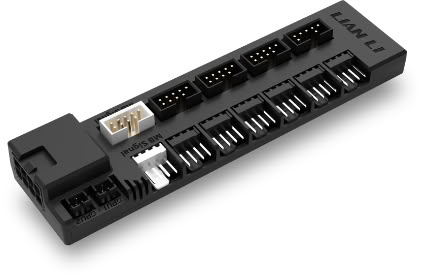
The Lian Li Edge Hub Adv is the latest iteration of the brand's USB-controlled fan hub, and the new model includes two sensor ports for temperature sensing using NTC (negative temperature coefficient) sensors built into an included 650 mm 12V-2x6 GPU power cable. The power cable connects the GPU to the PSU, and the NTC cable plugs directly into the Lian Li Edge Hub Adv, which connects to Lian Li's L-Connect 3 monitoring software on Windows. By default, L-Connect is set up to monitor the temperature of the NTC sensor and start an emergency shut-down once the connector temperature reaches a certain threshold. In addition to an on-screen pop-up alerting the user to an imminent shutdown and giving them the chance to trigger the shutdown manually instead, Lian Li will also send the user an email when a shutdown is triggered by a misbehaving GPU power connector.

Chieftec Debuts a New All-Black 120mm Air Cooler at IFA 2026

The TechPowerUp team is on the ground at IFA 2026, and the Chieftec booth had some interesting offerings. Chieftec used the floor to show off a new air cooler alongside its case and PSU lineups: the CAC-S120PWM-T150. It's a tower-style air cooler with an all-black matte finish, standing 148 mm tall. Socket support is broad, covering Intel's LGA 1851, LGA 1700, LGA 1200, and LGA 115X, plus AMD's AM5 and AM4, so it should slot into current and slightly older builds without issue. I spotted five heatpipes running through the heatsink array, which should give it enough grunt to handle some serious CPUs.

The single 120 mm PWM fan spins between 500 and 2,400 RPM (±10 percent), pushing up to 74.54 CFM of airflow at 3.51 mm H₂O of static pressure. That puts it in a similar performance bracket to Chieftec's Single Tower CAC-SI2-BLK from Computex 2025, though this new model trims one heat pipe and adds a bit more height. Chieftec hasn't announced pricing or availability yet, but we'll know more soon. The company has been steadily expanding its air and liquid cooling range this year, following the announcement of the Iceberg PRO series AIOs earlier.

Xeron Debuts Nex A61 ARGB CPU Air Coolers and Affordable Case Fans at Gamescom

Xeron, the PC hardware company that recently launched at Computex 2026, whose cases and AIO liquid coolers we've already seen at Gamescom, has also launched the NEX A61 ARGB, a new CPU tower cooler designed for AMD's AM5 socket. The CPU tower cooler integrates noise-damping rings on the fan mounts and uses 120 mm ARGB fans mounted to either side in a push-pull orientation in order to maximize the cooling density. The cooling tower measures just 148 mm tall and has an offset design for memory compatibility.

Xeron Shows Off C Lab Semi-Open-Air PC Cases At Gamescom 2026

After its launch at Computex earlier this year, Xeron has made an appearance at Gamescom 2026, launching a line-up of reasonably priced, flashy, ARGB AIO coolers for DIY PC builds. Also at Gamescom, the new hardware outfit showed off its line-up of C Lab cases, this time displaying builds in both the white and black models.

The Xeron C Lab cases are full ATX mid-tower cases that have support for up to 405 mm long GPUs and 280 mm or 360 mm CPU AIO coolers in the top position. The C Lab case uses modular curved sheet metal components to suspend the motherboard compartment for a unique look, with exposed brass screws and replaceable materials and color options for each individual panel, and separate cooling compartments that allow the PSU, GPU, and CPU cooling access to their own fresh air supply. The PSU is hidden in its own compartment behind the motherboard tray and has access to its own ventilation.

Thermaltake Launches CAPO X Dual-System Full-Tower Chassis

Thermaltake CAPO X is one of the more unusual cases we've seen at Computex this year, and now it has been officially launched. CAPO X is a full tower designed to house two completely independent microATX systems in a single enclosure. The interior of the case is split into two separate motherboard compartments. Both offer support for standard microATX boards as well as rear-connector designs such as ASUS BTF, MSI Project Zero, and Gigabyte Project Stealth. Each of those compartments gets five expansion slots, GPU clearance up to 420 mm, CPU cooler height up to 180 mm, ATX PSU support up to 250 mm and 360 mm radiator mount for independent cooling. Dedicated 2.5-inch storage mounts in each section mean both systems run completely separately, including their own operating systems.

Front I/O is also independent per system, the upper compartment's panel sits near the top-left, the lower one toward the front-bottom, each with a USB Type-C 10 Gbps port and two USB Type-A 5 Gbps ports alongside power, reset, and audio headers. The case is made from 1 mm SPCC steel, measures 691 x 305 x 448 mm and has a single 4 mm curved tempered glass side panel spanning both compartments. The use cases are fairly niche but make sense, a gaming and dedicated streaming setup, an AI inference system alongside a primary workstation, or simply saving desk space by running two systems in one chassis. Thermaltake CAPO X is available in black and white and has a price of 1270 yuan (around $187).

Noctua Prepares Low-Profile AM5, Workstation Air Coolers, and Next-Gen PSU Collaborations for 2027

Noctua has released a new roadmap update for its upcoming products, providing concrete timelines for many items the company teased during this year's Computex 2026 international show. One of the most interesting designs is the low-profile, 70 mm tall small form-factor cooler for AMD's AM5 socket platform. This cooler is a variation of the NH-L12 series and incorporates Noctua's classic technologies. It features six 6 mm copper heat pipes and dense aluminium fins for effective heat dissipation. The cooler comes with Noctua's own NF-A12x25 G2 120 mm fan, which efficiently blows air across the fins. It also allows for about 35 mm of height for RAM kits, ensuring it does not interfere with memory selection on ITX motherboards. Noctua confirms that the cooler is scheduled for release in Q2 of 2027, consistent with what was announced at Computex 2026.

Looking at more immediate releases, the company is preparing its carbon nanotube thermal pad, NT-CP1, for AM4 and AM5 sockets in Q3 of this year, along with the Pulsar Feinmann F01 Noctua Edition mouse. Q3 will also see the launch of the WireView Pro II for measuring voltage, power, temperature, and current from the entire 12V-2x6 connector, and readings from each individual pin. The WireView Pro II Noctua Edition will have all the features and functions of the original WireView Pro II but will use a different CNC-machined aluminium case with a Noctua-optimized fan grill to improve airflow-to-noise performance. It will also feature Noctua's frameless NF-A4x10 PWM fan with a semi-passive cooling mode.

GIGABYTE Formally Launches X870 AORUS Infinity Motherboard

GIGABYTE formally launched the X870 AORUS Infinity Socket AM5 motherboard for competitive overclockers. The board was part of GIGABYTE's G.Skill Computex Memory OC competition, and was a part of the company's 40th Anniversary showcase. Although built in the ATX form-factor, this board features a layout that's optimized for test benches, and not cases. Most of its key connectors are pointed sideways, such as its 24-pin ATX power input, while there's a conveniently organized onboard control panel with two sets of ISA 80h readouts, and SMD buttons, which include a cold reboot button. The CPU socket is rotated 90° CCW to enable the memory slots to line its top edge.

The board draws power from a combination of one 24-pin ATX, two 8-pin EPS, and an 8-pin PCIe power supplementary input that enables 65 W USB-PD on the type-C ports. The board features an 18+2+2 phase CPU VRM that uses 110 A DrMOS and high-grade tantalum capacitors. This is among the rare few high-end motherboards that use a 10-layer PCB. The CPU socket is wired to two DDR5 DIMM slots in a 1-DIMM per channel topology that's best suited for memory overclocking, particularly tightening memory timings. It is also wired to two M.2 NVMe Gen 5 x4 slots, and two PCI-Express 5.0 x16 slots (x8/x8 Gen 5 when both are populated). The AMD X870 chipset puts out a third M.2 slot, which runs at Gen 4 x4 speed.

GIGABYTE Launches RTX 5080 AORUS Infinity Wood, RTX 5080 and RTX 5070 Ti AORUS Infinity Graphics Cards

GIGABYTE expanded its AORUS Infinity line of flagship custom-design GeForce RTX 50-series graphics cards with three new models, two of which are based on the GeForce RTX 5080, and the third one on the GeForce RTX 5070 Ti. The company had debuted the AORUS Infinity series with the top-dog GeForce RTX 5090 AORUS Infinity, which was unveiled at CES 2026, and went on sale from May. The RTX 5080 AORUS Infinity Wood was showcased earlier this month at Computex, and gets formally launched.

GIGABYTE's AORUS Infinity series is its take on the dual flow-throw cooler architecture NVIDIA innovated with the RTX 50-series Founders Edition graphics cards. The PCB with the GPU, memory, and VRM, are centrally located, any rely on breakout boards to interface with power, display I/O, and possibly even the PCIe interface. The RTX 5080 AORUS Infinity Wood, unlike the other three AORUS Infinity cards, switches to a matte-white+beige wood 2-tone color trim on the cooler shroud, and features a real wood trim along its top edge. It aesthetically blends with the company's Aero Wood series motherboards, such as the X870E Aero X3D Wood. The card offers a massive factory overclock of 2805 MHz core, compared to 2617 MHz NVIDIA-reference.

Lexar AI Storage Solution Helps Limited DRAM Run Larger Local AI Models

Lexar has been exploring various technologies to help consumers achieve faster data throughput and more reliable storage. The company now envisions a shift as the PC evolves from a traditional personal computer to a local AI-enhanced experience. We interviewed Lexar's Chief Technical Officer, Daniel Guo, about the technology Lexar is developing to help reduce some DRAM demand and shift the balance towards integrated hardware-software AI storage solution with NAND Flash. According to Guo, DRAM is about six times more expensive to manufacture than NAND Flash, and AI SSDs present opportunities to reduce DRAM requirements for running AI models on local hardware. This is where the Lexar AI Storage Solution comes into play, as the company is creating new storage solutions to support local AI deployments in constrained DRAM capacity by offloading some parts of large language models to SSDs. This approach allows larger and more powerful LLMs to fit into a PC build, reducing DRAM capacity requirements by up to 40% in specific scenarios.

Based on internal testing, Lexar managed to run the Qwen 3.5 122B AI model on a local PC. Traditionally, users would need to invest about $4,500 in a PC with a decent CPU and 128 GB of DRAM to run this model. Through hardware and software optimization, the Lexar AI suite with the Lexar AI SSD can reduce the DRAM requirement to 32 GB and run the model with 35 billion parameters at 15.6 tokens per second, compared to only 5.2 tokens per second using traditional frameworks. When attempting to load the 122B model on 32 GB of DRAM, the traditional Llama.cpp fails to load and crashes, while Lexar's SSD offloading provides about 4.4 tokens per second.

AMD Explains FSR 4.1 Upscaling for RDNA 3, Promises Quality Parity with RDNA 4

At Computex 2026, we had the opportunity to interview AMD's Chief Software Officer, Andrej Zdravkovic, and Terry Makedon, Senior Director of Software at AMD, to discuss various developments happening in AMD's labs. One of our questions focused on the FSR 4.1 Upscaling algorithm, which is currently exclusive to the RDNA 4 generation with the Radeon RX 9000 series of graphics cards. However, it is expected to be available this July for RDNA 3-based Radeon RX 7000 series GPUs. We were curious whether the FSR 4.1 Upscaling model that currently runs on RDNA 4 would be the same one used on RDNA 3. AMD explained that the underlying model is slightly different, but the end result will be of the same quality. This is reassuring news for millions of RDNA 3 and RDNA 2 gamers worldwide, especially during a time when upgrading PC hardware is more challenging than it has been in years.

For example, we know there are some fundamental differences in the RDNA generations regarding microarchitecture. For RDNA 3, this means there is no 8-bit floating point support in older generations, as only the latest RDNA 4 uses FP8. To run the FSR 4.1 Upscaling model on RDNA 3, AMD must convert this to 8-bit integer data, since RDNA 3 hardware uses INT8 data types without FP8 support. Generally, integer math is sufficient to optimize these models, but the conversion work is necessary, hence the delay between RDNA 4 and RDNA 3 support. This difference requires AMD to completely modify the FSR 4.1 model for the new data type and ensure there is no quality loss in the final visual output. AMD's software officials have confirmed that the company has been working hard on this issue, and more information will be released next month, in July, as the launch approaches.

NVIDIA at Computex 2026: RTX Spark Gaming Hands-On, DLSS 4.5, and More

At Computex 2026 in Taipei, NVIDIA invited the press to a hands-on walkthrough of the RTX Spark platform, spread across multiple rooms covering gaming, creator, and AI workloads. Everything ran on Microsoft Surface Laptops, and Microsoft was also present—a clear signal that Redmond is fully committed to making Windows on Arm succeed this time around. Microsoft revealed that it has made several kernel-level optimizations to Windows 11 specifically for RTX Spark, changes that notably were never made for Qualcomm's Snapdragon platforms.

At the heart of RTX Spark is the NVIDIA N1X chip, which pairs a 20-core NVIDIA Grace Arm-based CPU with a Blackwell RTX GPU packing 6,144 CUDA cores and 5th Generation Tensor Cores with FP4 math precision, all connected via NVLink-C2C. The chip supports up to 128 GB of LPDDR5X unified memory in a 45-80 W power envelope (H-segment), and NVIDIA claims up to 1 petaFLOP/s of AI compute. A lower-end N1 variant with 5,120 CUDA cores is also planned. RTX Spark is not strictly a laptop platform either—NVIDIA also showed compact desktop mini PCs and the DGX Spark, targeting creators and developers who want the same silicon in a stationary form factor. And, looking at that power envelope, I wouldn't be surprised if N1X (or a variant) eventually ends up in a handheld gaming console—it just makes a lot of sense. A chip like this could also compete with semi-custom AMD chips for the next Xbox or PlayStation.

DeepCool's Prototype SFF PC Takes the CPU Cooler to Fresh Air

We've already covered a number of DeepCool's latest innovations at Computex 2026, from its latest CPU and AIO coolers to its new silent daisy-chain fans, but the brand has also shown off a new prototype SFF PC that flips the script on PC building. The as-yet-unnamed mini PC packs the motherboard and main hardware into a small chassis with a cutout over the CPU where one of DeepCool's new Assassin V coolers sticks out into the open air. This protruding CPU tower cooler presents two main advantages: The CPU always has unfettered access to fresh, cool air, and CPU performance is no longer constrained by the size of the cooler that can fit into the case.

Of course, there are obvious drawbacks, namely that there is a giant hole in the case, where dust will undoubtedly enter the mini PC, and that the air being forced through the tower cooler isn't filtered, so dust and debris will eventually accumulate on the CPU cooler. In addition to the CPU cooler that sticks out of the case, DeepCool's prototype mini PC has a GPU module, which is a separate compartment entirely that connects to the CPU/motherboard module with a PCIe riser cable and slots in under the base module. The compartmentalization of components would likely help with cooling, but also serves to enhance the aesthetics of the mini PC somewhat. It's unclear if and when the prototype mini PC will launch, but it will likely have to compete with the likes of the Steam Machine if it does make it to the mass market. DeepCool also didn't give any indication of what sort of internals we could expect from this prototype, but given the standard cooler compatibility and full-length PCIe riser, it seems likely that the modular mini PC is hiding an ITX or microATX motherboard.

Lian Li Debuts DK-B Motorized Sit-Stand Desk with Built-In PC Case at Computex

Aside from the new desktop PC PSUs and premium PC cases shown off at Computex, Lian Li also debuted its new DK-B, a motorized sit-stand ergonomic desk with a built-in PC case that supports a wide array of hardware. The DK-B, which won a TechPowerUp Best of Computex award, has a top surface that measures 800 mm deep and 1,600 mm wide, with a height range of 710-1170 mm. The desk, built in collaboration with Backbone, also features pegboards for mounting and storing accessories to avoid desktop clutter while keeping things within reach.

The DK-B's integrated case is hidden under the desktop towards the back left corner, keeping it out of the way, while a tempered glass window recessed into the desktop lets you see into the PC case and give your setup some visual flair. The case itself is almost entirely made of mesh, for obvious airflow-related reasons, and it fits ATX motherboards, full-size ATX PSUs, and 360 mm AIO coolers. There is also a peg board mounted to the back of the bottom of the desk, which was used to hold a shelf that supported a Sony PS5 in the Computex demo, but it could just as easily be used for 3D-printed or DIY cable management hardware. On the front edge of the DK-B, there is a control panel for the sit-stand functionality, allowing for both manual up and down adjustment as well as four configurable profiles. Lian Li also had a small monitor recessed into the desk near the PC for showing system resource usage, but it's unclear if this will be a stock feature or an optional accessory. The DK-B will launch at an MSRP of $499.99 in Q3 2026.

Thermal Grizzly Shows New Duronaut Pro and Hydronaut Pro and Several New Prototypes at Computex 2026

Thermal Grizzly showcased its new and upcoming Duronaut Pro and Hydronaut Pro high-performance thermal paste that should be coming to market soon. In addition, the company brought several new prototypes to the show, including a diamond-based version of the Mycro Direct-Die block, as well as a couple of new block coatings developed with Swiss coating technology expert Platit.

While the upcoming Duronaut Pro and Hydronaut Pro thermal paste versions will bring improvements compared to the previously available ones. The Duronaut Pro, which offers long-term durability and high thermal conductivity, is aimed at gamers and overclockers, as well as demanding industrial cooling systems. The new version, Duronaut Pro, promises much lower temperatures compared to the previous version, and the same goes for the Hydronaut Pro, which is a silicon-free thermal paste more aimed at gaming systems with liquid coolers that have large-surface heatsinks. The Duronaut Pro and Hydronaut Pro should be launching pretty soon, and we will surely keep an eye on them.

DeepCool Launches Updated PC Case Fans for Quiet and Tidy Builds at Computex 2026

DeepCool showed off a number of slick new CPU coolers at Computex 2026, which we already covered previously, but some of the company's new fans might be even more interesting to PC builders—especially those looking for silent and clutter-free PC builds. The update to DeepCool's fan line-up sees the brand update its daisy-chain FL12 fans with the INF versions, which now feature ARGB-illuminated infinity mirrors on the edges of the fans that would normally be visible in a daisy-chain setup. The FL12 INF will, like the other fans in the FL12 series, be available in black or white and with both regular and reverse fan blade orientations.

DeepCool has also announced a revised version of the FD12 and FD12 ARGB fans, called the FD12 ARGB V2 and FD12 V2. With the update, DeepCool has redesigned the FD12 fan blades with an integral design that it calls a "closed fan wheel design," which is essentially just a ring that connects the exteriors of all the fan blades. DeepCool says this allows the FD12 V2s to deliver higher airflow, more static pressure, and lower noise, with claims of a 7% increased effective cooling area. The new FD12 ARGB V2 fans feature the same second-generation eight-pin daisy-chain connection, and they have nine ARGB LEDs for color-matching purposes, while the non-RGB FD12 V2s forego both RGB and daisy-chaining in favor of a regular four-pin PWM connector. Like the new FL-series fans, the FD12 V2 fans will be available in both black and white and in forward and reverse configurations.

Tryx Shows Off New Luca Compact Panoramic PC Case With BTF Motherboard Support

At Computex 2026, Tryx has shown off the latest iteration of its Luca PC case, this time opting for a more compact version of the tempered glass-clad panoramic chassis. The Luca Compact, as it is known, is a compact mid-tower PC case with a focus on aesthetics and build flexibility. The Luca Compact has tempered glass on the front, top, and right side of the case, with airflow supplied by up to three 120 mm fans mounted to the bottom of the case and up to three more fans mounted next to the motherboard. The Luca Compact also supports tool-free vertical and horizontal GPU mounting, and it has what Tryx calls the "Stealth Tubing Architecture," which aims to hide AIO tubing as much as possible. The Luca Compact also supports Back-To-Front motherboards for less cable clutter, but it's unclear if that means only the ASUS implementation will work.

The Tryx Vas is another new case from the company, built in collaboration with 12Square, this time serving SFF builders with a portable stainless steel and aluminium ITX case with an industrial look and a wood grab handle for portable applications and LAN parties. Apart from the design, Tryx hasn't shared too much about the Vas, although it's clear that there are separate motherboard, PSU, and GPU compartments, which should help keep such a compact build cool. Tryx also debuted a new green colorway of the Flova fabric mid-tower PC case, complementing the existing range of pink, black, and white versions of the case. The Flova is an ATX mid-tower case with top, front, and motherboard-side 120 mm fan intakes, but it stands out for its use of fabric throughout the case exterior paneling, which serves to both set it apart visually and provide some sound damping properties. The Flova also has a cross-flow fan built into the side of the front panel for additional airflow.
More images follow.

Maxsun Shows Off iCraft Z890 ITX Wi-Fi Motherboard at Computex 2026

Maxsun has officially shown off its new iCraft Z890 ITX motherboard at Computex, with active chipset and VRM cooling in an ITX form factor. The Z890 ITX is built for the Intel LGA-1851 socket, with support for Intel's Core Ultra 2 series CPUs in mind. Maxsun claims that the Z890 ITX is capable of powering a CPU with a 250 W TDP, thanks to an 8+1+1 power circuit design, making it powerful enough even for the likes of the Core Ultra 9 285K at stock clocks, according to the testing in the TechPowerUp Core Ultra 9 285K in-depth technical review. Pricing and a launch date have not yet been revealed for the Maxsun iCraft Z890 ITX Wi-Fi motherboard.


Physically, the new motherboard sports a full-length PCIe 5.0 ×16 slot and two DDR5 memory slots for dual-channel memory configurations, and it has active cooling on both the VRM and in the M.2 heat sink under the PCIe slot. It supports 1× PCIe 5.0 ×4 M.2 SSD on the front of the motherboard, 1× PCIe 4.0 ×4 M.2 SSD in a rear-mounted M.2 slot, and 4× PCIe 4.0 Slim SAS SFF-8654 4i SSDs. As for network connectivity, the motherboard sports Bluetooth 5.4 and Wi-Fi 7, as well as Realtek 5G LAN, and the rear I/O has both DisplayPort 1.4 and HDMI 2.1, 3× USB Type-C 20 Gbps ports, 6× USB Type-A 10 Gbps ports, 2× USB 5 Gbps ports, and 4× USB 2.0 ports. The motherboard also features a built-in 5 v ARGB connector for case and fan customization purposes.

ATK Debuts Nothing 68 Magnetic Keyboard and Premium "Velota" Sub-Brand at Computex 2026

ATK Gear, the Chinese brand known for making budget gaming peripherals with flagship internals, has officially shown off the Nothing 68 as its latest magnetic keyboard at Computex 2026. The Nothing 68 features a compact 68% layout, which has become quite popular of late, thanks to its compact form factor and inclusion of a full-size arrow cluster. The Nothing 68 will be available in two colorways, but both will be based on a translucent plastic design, with one being closer to transparent and the other being a smoky gray color with a gray tint on the keycaps and the keyboard's bottom case. The Nothing 68 prototype shown off at Computex has RGB lighting under diffusers in various spots along the bottom, sides, and top edges of the keyboard's case, and it looks to be using a gasket mount design to offer some sound and bottom-out damping. ATK didn't specify which switches will be featured in the ATK Nothing 68, but it looks, through the shine-through keycaps, as though it will be using something like the Crystal Blade switches that ATK has been selling for a while now in keyboards like the RS7 Air. The keycaps on the Nothing 68 look to be polycarbonate with UV printing.

The other Computex launch is an ATK sub-brand called Velota, which will apparently be the brand's more premium, aesthetics-focussed division, and what appears to be the first Velota keyboard is the Fuzzy 60 V2. As the name suggests, the Fuzzy 60 V2 is a more traditional 60% keyboard with full-size right shift, enter, backspace, and pipe keys, although it lacks an arrow cluster, owing to the 60% form factor. The Fuzzy 60 V2 has many of the same aesthetic cues as the aforementioned Nothing 68, but instead of a transparent plastic case, it has a quick-release aluminium top case. It also uses ATK's custom Silver Regent switch, which has a similar transparent design to the Crystal Blade switches in the Nothing 68, but th The Fuzzy 60 V2 also has a bottom accent plate with polished metal trim. The Velota brand is China-exclusive at the time of writing, but many ATK products that were once exclusive to China have made it to global audiences at a later date, so it would not be surprising to see the same thing happen here. Currently, you can find the ATK Velota Fuzzy 60 V2 on Halleffectkeyboard.com for $299.99.

AIO Unveils Case with Gull Wing Doors, In-built Compound Fans, and More

AIO showcased its latest cases at the 2026 Computex. The GM06807 is a unique wide-format microATX tower case that's vertically partitioned. An interesting design aspect of this case is its gull wing doors. The front panel is rounded-rectangular in shape. The left (main) compartment sees a curved tempered glass panel cover the left and top sides, hinged at the top. The right compartment has a similar top-right panel, but made of steel. Both panels are open up like gull wing doors seen on some supercars. The right compartment has a true-color display that peeks out from the front panel.

The GA01N01 is an ATX vertically-partitioned case with a unique design element—its front features an open fan intake with frosted-white vanes that serve as soft light diffusers for the ARGB intake fans behind. The GM01P01 is a microATX cube-shaped case with horizontal partitioning and a pedestal motherboard tray in its upper compartment that's ventilated by two 140 mm intake fans. The GM08L10 is a vertically partitioned case with glass taking up its front and left panels with hexagon print film on top.

Synology Brings AI-Powered Private Cloud, Backup, and New Surveillance Solutions to Computex 2026

Synology had plenty to show at Computex 2026 in Taipei, unveiling a broad range of new products and software updates focused on AI, private cloud, data protection, and surveillance, but while many focused on AI, Synology focused on keeping users data private and under control with all those AI enhancements. The biggest update is the next generation of DSM, Synology's operating system that powers its NAS systems. The company is leaning heavily into AI features, adding smarter automation tools, AI-assisted workflows, and improved management for both businesses and larger deployments. Since the company is focusing on data security, those same AI features are meant to be run locally instead of relying entirely on cloud services.

Synology also showcased updates to its ActiveProtect platform, including ActiveProtect Manager 2.0 and the new DP5200, which promises further flexibility for deployment. The updated platform now supports more cloud and virtualization services while also adding AI-powered threat and anomaly detection. The company is obviously focusing on enterprise backup and cybersecurity due to raising AI-related security issues. On the surveillance side, which also fell victim to AI, Synology introduced new cameras, access control products, and updated DVA systems with smarter AI-powered search and tracking capabilities. The company also previewed Surveillance365, a hybrid cloud surveillance platform aimed at easier remote and multi-site monitoring.
Return to Keyword Browsing
Nov 20th, 2026 08:30 PST change timezone

New Forum Posts

Popular Reviews

TPU on YouTube

Controversial News Posts