News Posts matching #i7-11700

Return to Keyword Browsing

Death Stranding 2: On the Beach PC Minimum Specifications Revealed Alongside Graphics Enhancements

Death Stranding 2: On the Beach is slated to launch on March 19 for PC after almost nine months as a PS5 exclusive, and Nixxes and Kojima Productions just revealed the minimum PC hardware requirements, as well as the supported upscaling and graphical enhancement options, in a PlayStation Blog post. According to the blog post, the absolute minimum spec, which gets you 30 FPS as 1080p with low settings, requires an AMD Ryzen 3 3100 or Intel Core i3-10100, 16 GB of RAM, and an NVIDIA GeForce GTX 1660 or AMD Radeon RX 5500 XT 8 GB. Medium, or 1080p with medium settings, requires an RTX 3060 12 GB or Radeon RX 6600, and an AMD Ryzen 5 5600 or Intel Core i5-11400. Stepping it up to High (or recommended specs), which gets you 1440p at 60 FPS with high settings, requires an AMD Radeon RX 6800 or NVIDIA GeForce RTX 3070 and an AMD Ryzen 7 5700X or Intel Core i7-11700. Very High, or 4K resolution at 60 FPS with very high settings, calls for an upgrade to an NVIDIA GeForce RTX 4080 or Radeon RX 9070 XT, while the CPU and memory specs remain the same as for the High tier. All spec tiers require 16 GB of memory, Windows 11 or Windows 10 1909 or up, and at least a 150 GB SSD.

Death Stranding 2: On the Beach will also offer PC players support for both 21:9 and 32:9 ultrawide aspect ratios, and players with 16:9 displays can simulate a cinematic experience by opting for a 21:9 aspect ratio with black bars on the top and bottom of the display—this option will also be introduced for PS5 at the same time as the PC release. PC players will also get support for upscaling tech from all three GPU manufacturers: NVIDIA DLSS 4, AMD FSR 4, and Intel XeSS 2, with both frame generation and upscaling options available. These upscaling options can be used in conjunction with Dynamic Resolution Scaling, and players will be able to adjust upscaling quality. The game will also see the debut of Pico—Progressive Image Compositor—on PC. This is the upscaling technology used by Death Stranding 2 on PS5 and developed by Guerrilla Games for the Decima engine, and it can also be used alongside all available frame generation options and on all available graphics card manufacturers. The game will also offer native AA options for those not interested in upscaling.


MSI Announces PRO AP241 All-in-One Desktop

MSI, a world leader in high performance and innovative computing solutions, have announced the PRO AP241 11M All-in-One PC. Featuring powerful processors and eye care technology with an IPS panel for a wide viewing angle and enhanced viewing experience, PRO AP241 is designed with efficiency and productivity in mind. While most All-in-One PCs in the market utilize mobile-grade processors, the PRO AP241 11M features the Desktop-grade H510 chipset with new 11th Gen Intel Rocket Lake CPUs for unparalleled performance. It is easier than ever to upgrade this All-in-One PC with relatively easier access to critical components like the CPU, RAM, SSD, and HDD. This increases product usefulness over time with potential upgrades and easier maintenance.

PRO AP241 11M can help improve work flow and efficiency. With an HDMI-out port, you are able to connect another monitor and easily navigate multiple windows or documents at the same time. Anti-flicker technology for the display helps to keep your eyes healthy and reduce fatigue throughout long work hours. Featuring up to Intel Core i7-11700 processor, PRO AP241 stays responsive with low load times when multi-tasking while remaining cool thanks to it's Server-grade cooling system to reduce CPU thermal throttling. Information security is always indispensable for businesses; the PRO AP241 supports FW TPM technology which can protect device data from attacks by malicious software and unauthorized access.

Intel Launches 10nm "Tiger Lake" Desktop Processors

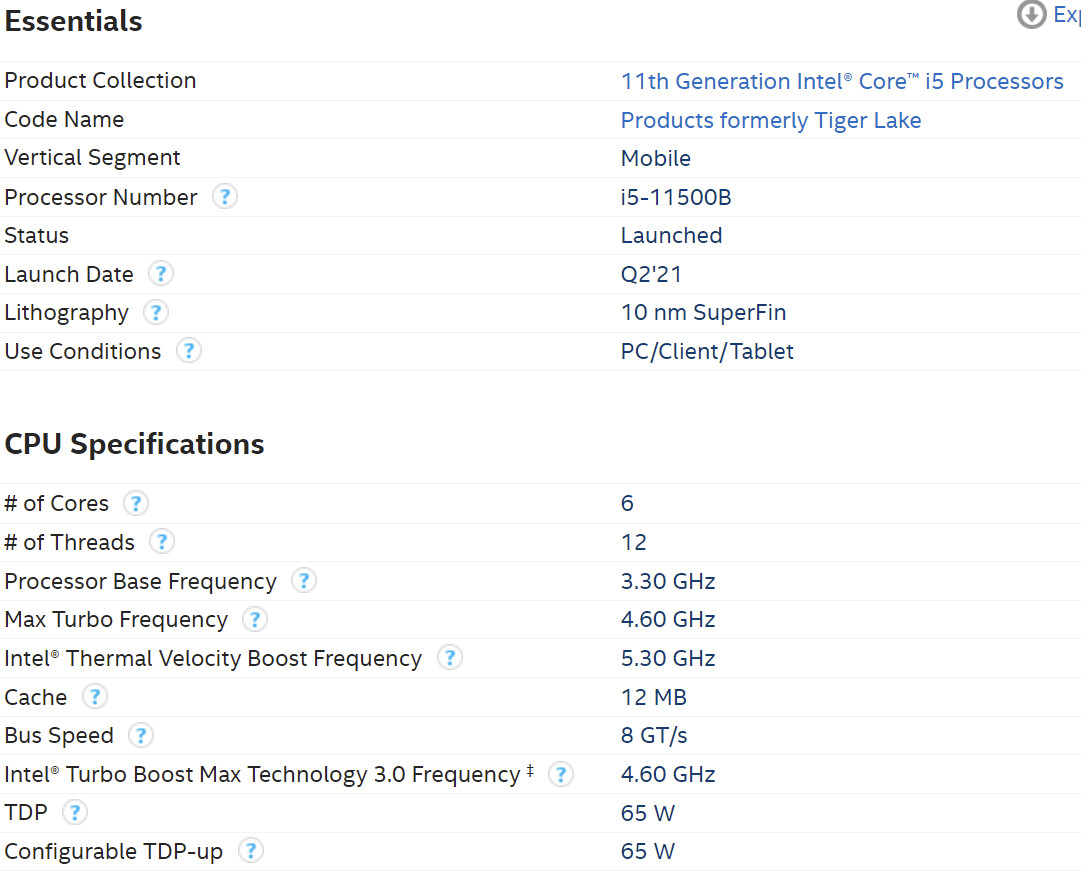
Intel is likely preparing to launch its 10 nm "Tiger Lake" processor on the desktop platform. momomo_us discovered the existence of at least four new processor SKUs in Intel's ARK pages. At least one of these is marked as a desktop chip. What isn't clear, is whether these are Socket LGA1200 chips, like "Rocket Lake-S," or whether these are FC-BGA chips that have been adapted for specific desktop use-cases, such as NUCs. At the heart of these chips is the new 10 nm "Tiger Lake" 8-core/16-thread silicon, which packs 8 "Willow Cove" CPU cores, 24 MB of shared L3 cache, and a Gen12 Xe LP iGPU that has 32 EUs.

The common theme with the processor model numbering with these SKUs is the brand extension "B," next to model numbers we commonly associate with "Rocket Lake-S" SKUs. Another commonality is TDP. All four SKUs are marked as 65-Watt chips, including the part that has an unlocked multiplier. The lineup is led by the Core i9-11900KB, an 8-core/16-thread chip with Thermal Velocity Boost frequency of up to 5.30 GHz, and base frequency of 3.30 GHz. The Core i7-11700B lacks an unlocked multiplier, but interestingly features TVB, and retains the core-count and cache amount of the i9-11900KB. It is clocked at speeds of up to 5.30 GHz. The Core i5-11500B is a 6-core/12-thread part, with 12 MB of L3 cache, and the same 5.30 GHz boost, set via TVB. The Core i3-11100B is a 4-core/8-thread part with 8 MB L3 cache, and is likely based on the 4-core "Tiger Lake" die, with its iGPU cut down. The clocks remain the same. It remains to be seen how Intel markets these parts.

MSI Announces Gaming Desktops Powered by 11th Gen Core "Rocket Lake" Processors

As a world leading gaming brand, MSI is the most trusted name in gaming and eSports. We stand by our principles of breakthroughs in design, the pursuit of excellence, and technological innovation. Integrating gamers' most coveted extreme performance, realistic visuals, authentic sound, precise control and smooth streaming functions into its gaming rigs, MSI frees gamers from tedious trial and error and pushes gaming performance beyond limits. The determination to surpass past achievements has made MSI a True Gaming brand with gaming spirit throughout the industry!

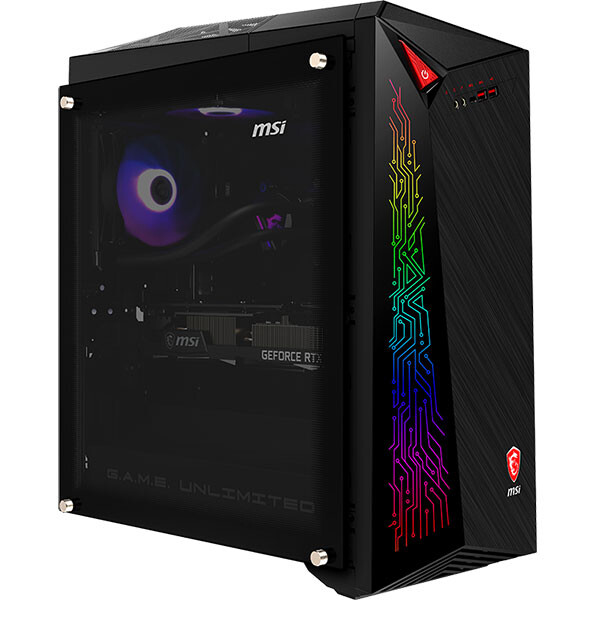
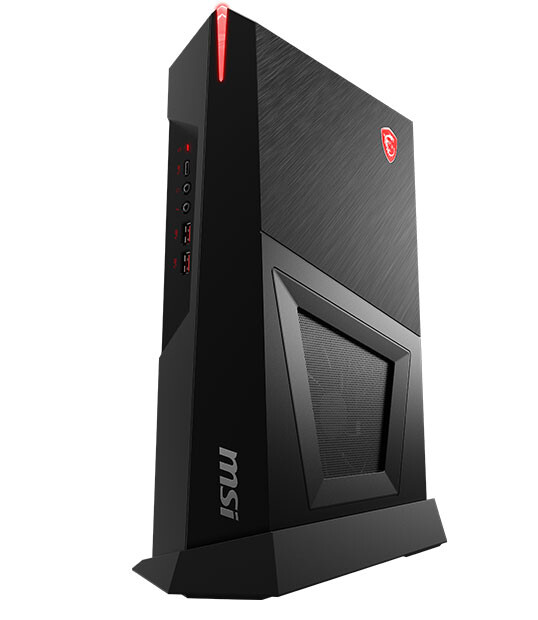
MSI announced a gaming desktop equipped with Intel 11th Gen Rocket Lake-S processor. The 11th generation Intel Core processor adopts Cypress Cove's new architecture, which changes hardware and software efficiency and improves their performance. This allows users to achieve the perfect balance between gaming and productivity. The graphics card comes with NVIDIA RTX 3090 specifications, allowing players to enjoy the most extreme gaming experience. MSI launched a total of five models this time, from the flagship Aegis Series to the eSport Gaming Infinite Series, as well as the compact-sized Trident Series, to meet the hardware needs of different players.

Intel Core i7-11700 "Rocket Lake" Tested Some More: Competition for 5800X Firms Up

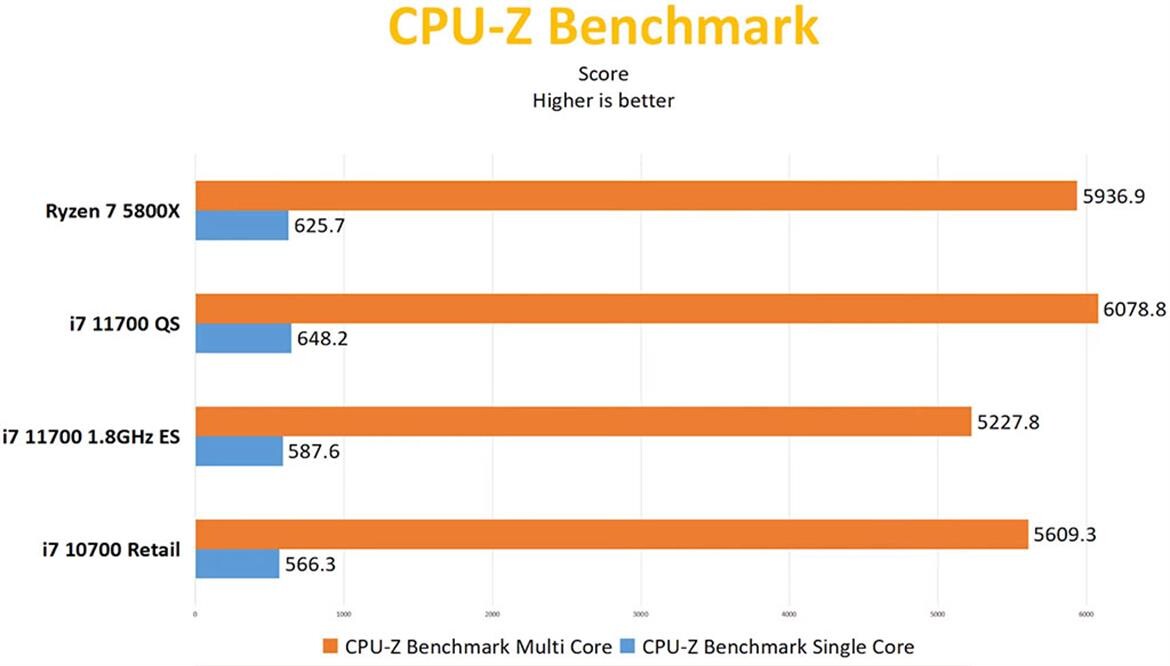
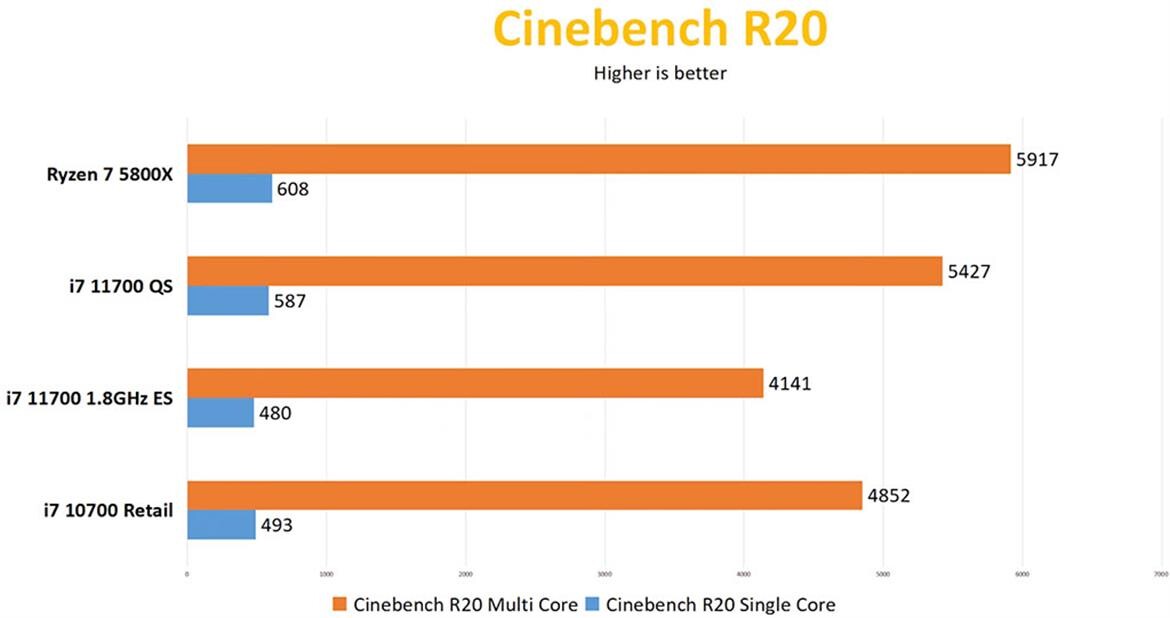
Odd Tech Reviews published a performance review of an Intel Core i7-11700 (non-K) "employee beta sample." This review comes on the heels of a Lab501.ro review of an unlocked i7-11700K engineering sample; and yet springs a different set of results in relation to the AMD Ryzen 7 5800X. The i7-11700 is shown having a slight edge over the 5800X in both the single- and multi-threaded tests of the CPU-Z Bench, where it's shown posting a 3.59% higher single-threaded score.

The Ryzen 7 5800X retakes the lead over the Core i7-11700 sample in Cinebench R15 and R20, posting higher scores in both the single- and multi-threaded tests. The 5800X also maintains lead with 7-Zip. Blender sees the i7-11700 once again run past the 5800X, but the AMD chip claws back with V-Ray and Handbrake video-encoding tests. There's a pitched battle between the 5800X and the i7-11700 with gaming, with each chip having an upper hand over the other, depending on the test. Find all these results and more in the Odd Tech Reviews presentation.
Return to Keyword Browsing
Nov 18th, 2026 23:42 PST change timezone

New Forum Posts

Popular Reviews

TPU on YouTube

Controversial News Posts