News Posts matching #ownership

Return to Keyword Browsing

Physical Games Still Make Up 30% of Owned Console Libraries, Survey Finds

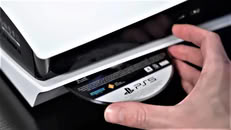
Physical copies still make up close to a third of the console games people actually own, according to a new Newzoo white paper produced with support from G2A. The firm surveyed 6,166 "premium gamers" across the US, UK, Germany, Poland, Brazil, and Saudi Arabia in August, defined as players aged 18 to 55 who game at least monthly on PC or a current-gen console and bought or subscribed to at least one AA or AAA title in the past year. Of the console games these respondents paid for outright, 30.4% were physical. That share drops to 11% across everything they play, since free-to-play and subscription titles together account for more than half of it.

Apparently, the most common reason for buying physical is being able to play without a stable internet connection, followed by the feeling of owning something tangible and saving storage space. That last one carries a bit more weight now that game download sizes have ballooned, with GTA 6 needing up to 212 GB on its own. Reselling, trading, or lending games came in fourth, and that is something digital console purchases still largely don't allow. PC is a different story, with PC-only players reporting just 6% physical ownership, although GOG would like to change that.

Unity in Talks To Be Acquired By EA's New Owners

A little over a year ago, PIF and Silver Lake were announced as two parts of EA's new ownership trifecta, following a $55 billion buyout agreement, and it has now been revealed in a new Reuters report that PIF and Silver Lake have met with Unity Software to initiate talks to buy the game engine developer. Similarly to the EA buyout, insiders claim that the Unity buyout would also be a leveraged buyout agreement, although there have been no claims about a potential buyout amount.

As was the case leading up to the EA buyout, Silver Lake has already invested in Unity, with an 8% share in the company. Following the recent EA buyout, the gaming giant's new owners have made several changes at the company, including a restructuring that led to significant layoffs and the closure of BioWare, one of the most recognizable game studios in gaming history. Earlier in the year, EA also reportedly accelerated its investment in and use of AI in order to cut costs. Unity itself has announced a similar increased adoption of AI with its new Unity Spark AI systems.

New Xbox Job Listing Hints at Physical Games Possibly Sticking Around

Microsoft has posted a job listing for an "Xbox Games Supply Strategist," and the role revolves entirely around physical games. The full-time, Redmond-based position went live on October 14 and was spotted by users on X a few days later. The new hire will join the Xbox Supply Chain team to coordinate the launch of physical Xbox games "across all platforms," along with global supply planning, inventory, and retail sales. Oddly enough, the listing never mentions discs. The timing is interesting regardless. Sony confirmed in July that it will stop producing discs for new PlayStation games from January 2028, and its lawyers have since argued that digital game ownership "is not plausible." On the other hand, Microsoft's signals have been more mixed.

Team Green's Disc-to-Digital program lets owners of supported Xbox One and Series X discs claim a digital license, which many read as groundwork for a discless Project Helix, yet Microsoft later asked Insiders whether its next-gen console should install games from physical discs. Xbox CEO Asha Sharma also told the BBC in August that she wants players to have a choice between physical and digital, without committing to anything for Helix. Still, a job listing isn't a confirmed hardware roadmap. "Across all platforms" could simply cover Xbox-published games that ship physically on PlayStation and Nintendo consoles, and it says nothing about a disc drive on Helix. It looks like boxed Xbox games will stick around a while longer in some form, but anyone hoping for a disc drive on Helix should wait for Microsoft to confirm it.

Rep. Ritchie Torres Wants Gamers to Own the Games They Buy, Announces Power To The Players Act

U.S. Representative Ritchie Torres (D-NY) has announced plans to introduce the "Power To The Players Act," a federal bill that would direct the FTC to write rules making a game purchase actual ownership rather than a revocable license. Games that rely on online servers would also need to offer an offline mode before those servers are switched off, and players would keep the right to transfer the games they buy. The bill hasn't been formally introduced yet, so there's no bill text, and Torres hasn't confirmed any cosponsors. Torres pointed to NBA 2K25 as the example. The game sold for $69.99, or $99.99 for the All-Star Edition, and it leaves digital storefronts on October 30, with online servers shutting down at the end of the year, roughly two years after launch. Here's how Torres put it:
When you pay for a game, you should own it. Consumers must have the right to own, the right to play, and the right to transfer the games they buy. A game that can be taken away the moment a company pulls the plug is not a purchase. It is a rental disguised as a sale. Families in the Bronx and across the country save up to buy these games, and they deserve better than a license that can vanish at any time. The Power To The Players Act ensures consumers own what they buy and can keep playing long after a company moves on.

Ninja Theory Staff Report Layoffs as Xbox Moves Toward Closing Hellblade Studio

Staff at Ninja Theory, the Cambridge studio behind Hellblade, have started posting on LinkedIn that they have been laid off or that their jobs are at risk. The posts were first spotted by journalist Chris Kerr, and they come from a technical director, a gameplay programmer, sound designers, and technical artists, among others. Senua, the third Hellblade game, was revealed at the Xbox Games Showcase in June with a 2027 release window on PC, Xbox, and PlayStation 5. Xbox hasn't officially canceled it; however, gameplay programmer Katrin Mair wrote in her post that it was sad knowing "we won't get to finish what we were working on."

Ninja Theory was supposed to survive the 3,200-job Xbox "reset" announced in July. Xbox CEO Asha Sharma said at the time that the studio had entered terms to join new ownership, with funding to finish Senua. That plan fell apart in September, when Xbox chief content officer Matt Booty told staff that "two separate agreements for Ninja Theory fell through" and that a consultation on a proposed closure would begin. He did add that Xbox would keep looking at other options for the studio, though there has been no update on that since. Neither Xbox nor Ninja Theory has said how many people are affected, and the closure itself is still officially a proposal. Xbox has an all-hands town hall scheduled for October 6, so more details may follow.

Sony Legally Argues That Digital Game Ownership Is Not Plausible

Sony has filed its response to a proposed class action lawsuit over how the PlayStation Store discloses its digital licensing terms. The company's stance is that no reasonable buyer expects to actually own a digital game. The suit, Heycock v. Sony Corporation of America, was filed on June 18 by four PlayStation owners in the Northern District of California. It alleges that Sony's checkout violates AB 2426, a California law requiring clear disclosure when a digital purchase only grants a license. Sony's August 21 response argues that "reasonable consumers would not be misled" into believing they own their games, since buyers agree to the Software Product License Agreement (SPLA) before purchase, which states plainly that "the software is licensed to you, not sold."

To support the point that digital ownership "is not plausible," Sony's lawyers cite two of the plaintiffs' own purchase histories: Jason Mendoza bought Resident Evil Requiem on February 14, 2026, and Edward Heycock bought the same digital copy for $69.99 just 11 days later. If ownership was genuinely transferred at purchase, Sony argues that Heycock's transaction couldn't have occurred, since Mendoza would already own it. Judge Vince Chhabria is set to hear both the arbitration motion and Sony's fallback dismissal argument on October 1 in San Francisco. Sony has confirmed it will stop producing physical PlayStation discs for new releases starting January 2028, leaving digital licenses as the only option for future titles.
Return to Keyword Browsing
Nov 11th, 2026 06:15 CST change timezone

New Forum Posts

Popular Reviews

TPU on YouTube

Controversial News Posts