News Posts matching #ssd

Return to Keyword Browsing

Kingston Digital Launches New DC600M Data Center SSD for Mixed-Use Workloads

Kingston Digital, Inc., the Flash memory affiliate of Kingston Technology Company, Inc., a world leader in memory products and technology solutions, today announced its new DC600M Enterprise SSD. DC600M is optimized for mixed-use workloads with excellent Quality of Service (QoS)1 to ensure latency and IOPS consistency to hit Service-level agreements.

DC600M is 6 Gbps SATA 3.0 storage with 3D TLC NAND, suited for use in high-volume rack-mount servers. The drive includes hardware based on-board power loss protection via power loss capacitors to protect data against unexpected power failure reducing the risk of data loss, and ensures the drive successfully re-initializes on the next system power-up. With predictable low latencies over a wide range of read and write workloads DC600M is designed for system integrators, hyperscale data centers, and cloud service providers.


Silicon Motion Announces Results for the Period Ended March 31, 2023

Silicon Motion Technology Corporation ("Silicon Motion", the "Company" or "we") today announced its financial results for the quarter ended March 31, 2023. For the first quarter of 2023, net sales (GAAP) decreased sequentially to $124.1 million from $200.8 million in the fourth quarter of 2022. Net income (GAAP) decreased to $10.2 million, or $0.30 per diluted American Depositary Share ("ADS") (GAAP), from net income (GAAP) of $23.5 million, or $0.71 per diluted ADS (GAAP), in the fourth quarter of 2022.

For the first quarter of 2023, net income (non-GAAP) decreased to $11.2 million, or $0.33 per diluted ADS (non-GAAP), from net income (non-GAAP) of $41.1 million, or $1.22 per diluted ADS (non-GAAP), in the fourth quarter of 2022.

Corsair Launches MP700 PCIe Gen 5 M.2 NVMe SSDs

CORSAIR, a world leader in enthusiast components for gamers, creators, and PC builders, today announced the launch of the MP700, its first PCIe Gen 5 M.2 SSD. Available in capacities up to 2 TB, the MP700 sets a new standard for next-generation storage, with sequential read and write performance topping out an incredible 10,000 MB/sec and 10,000 MB/sec respectively—up to 40% faster than even the best PCIe 4.0 SSDs available today (see cooling requirements below).

On top of the impressive sequential throughput, the random read and write performance of up to 1.5 million read and 1.7 million write input/output operations per second (IOPS) put the MP700 way ahead of the best PCIe Gen 4 drives. The MP700 is backward compatible with PCIe 4.0 motherboards, making this an upgrade that will last you for years to come. Native support for Microsoft DirectStorage ensures that you'll get the most from the latest games, while copying files in Windows and loading applications has never felt so fast.

Don't forget to check out the TechPowerUp Review of the CORSAIR MP700 2 TB SSD

Can You Build an Operable PC in 37 Minutes? The Neo Forza & Newegg PC Building Event Winner Just Did

The Newegg PC Building Contest finals were held in Taipei, on April 22nd. This isn't a typical e-sports event, or even an overclocking/benchmarking contest, but one with a very simple premise—build an operable PC using the parts of your choice, within a time-limit. The finals saw the top-5 contestants from a pool of 50 make their way to Taipei, and for the final event, the time set was just 1 hour. That seems like an eternity for someone used to building PCs, but this isn't a mom-and-pop Dell you're building—a fully fledged high-end gaming desktop with certain mandatory components to have (although the choice of make of the components is up to you). You're supposed to assemble the desktop and bring it up to an operable state.

Neo Forza became the DDR5 memory and SSD manufacturer of choice for most of the finalists. Three out of five finalists chose Neo Forza Trinity DDR5-7200 memory, and all five of them chose Neo Forza NFP455 NVMe Gen 4 SSD. While the winner put together the build in 37 minutes, the slowest of the five made it in just under the hour. They stated that the build was "stressful" and they never thought it could get so nerve-racking to put together a simple PC. Meanwhile, Neo Forza celebrated its unexpected claim to fame for being the memory vendor of choice among the finalists. "We were humbly overwhelmed as the event, inadvertently, showed Neo Forza as a preferred choice by experienced pro-users for DRAM and SSD in PC builds suitable for gaming, content-creation, streaming and 3D rendering," the company commented.

ASUS Launches ExpertCenter PN53 Powered by AMD Ryzen 7000 Series Processors

ASUS today announced ExpertCenter PN53, a mini PC that harnesses the power of the latest AMD Ryzen 7000 series processors and AMD Radeon 600M series graphics. ExpertCenter PN53 features a triple-storage design that can accommodate a variety of storage combinations. Two PCIe 4.0 M.2 SSDs and DDR5 memory ensure fast boot-up and app loading times. In addition, ExpertCenter PN53 includes cleverly designed cooling features, AI-powered noise-cancelation technology for improved voice communications, and can support a single 8K monitor or up to four 4K monitors.

ExpertCenter PN53 offers up to 34% better single-thread performance and up to a 29% boost in multithread performance, compared to the previous PN51 model. In PCMark 10 Essentials group tests, ExpertCenter PN53 showed a 10% improvement in web browsing, videoconferencing, and app start-up times. It also performed 10% better than ExpertCenter PN51 in the Productivity test group that measures system performance with everyday office applications, including spreadsheets and writing workloads.

Solidigm Synergy 2.0 Software Offers New Features to Optimize and Personalize Storage Performance

Solidigm, a leading global provider of innovative NAND flash memory solutions, has announced the launch of Solidigm Synergy 2.0 software. The Solidigm Synergy software suite improves overall system performance and delivers a better user experience than hardware alone can provide. This free download includes two elements, both optional, but highly recommended: the Solidigm Synergy Driver, which automatically improves the performance of Solidigm SSDs, and the Solidigm Synergy Toolkit, which offers useful SSD health reporting and tools for SSDs from any manufacturer.

Solidigm is the only company today that is investing in a solution with software built on top of the SSD that understands system behavior and adapts based on the user's needs. The latest Solidigm Synergy software improves the PC user experience for all SSD users. It increases performance where it matters most on Solidigm SSDs, and offers a host of useful drive management features for all SSDs, regardless of manufacturer. Solidigm is combining breakthrough SSD products with revolutionary software solutions and plans to introduce further innovations to deliver additional improvements to end-users.

Crucial T700 PCIe Gen 5 SSD Series Now Available for Pre-order

Crucial's T700 PCIe Gen 5 NVMe SSD series has been previewed a couple of times, showing some impressive sequential read and write performance, and now, Crucial has announced that it is available for pre-order, directly from Crucial's own store. The release date is set for May 30th.

In case you missed it earlier, the Crucial T700 PCIe Gen 5 NVMe SSD offers sequential performance of up to 12,400 MB/s for read and up to 11,800 MB/s for write (11,700 MB/s and 9,500 MB/s for the 1 TB version). Available in 1 TB, 2 TB, and 4 TB capacities, and with or without the heatsink, the Crucial T700 uses Micron 232-layer TLC NAND paired up with Phison's E26 controller. The endurance rating (TBW) for the Crucial T700 SSD series is set at 600 TB for the 1 TB version, 1200 TB for the 2 TB version, and 2400 TB for the 4 TB version, and it is backed by a 5-year limited warranty.

Giga Computing and GRAID Team up to Set New NVMe Standards for Storage

Giga Computing, a subsidiary of GIGABYTE and an industry leader in high-performance servers, server motherboards, and workstations, today announced continued collaboration with GRAID Technology, and the creation of GIGABYTE R Series servers to overcome NVMe bottlenecks in storage applications. Online shopping, financial trading, editing high-resolution images, and AI-generated content have all become parts of everyday life. Enterprise companies are now developing better server solutions with faster compute speeds, greater energy efficiency, and more secure data protection. Giga Computing focuses on the design of computing hardware for GIGABYTE servers and works with GRAID Technology to develop integration solutions that disrupt the storage market. Together they have created next-generation servers and NVMe controllers that will become the new standards for RAID across NVMe SSDs.

Traditional RAID technologies have become a bottleneck for NVMe SSD performance, so GRAID developed the SupremeRAID high-speed RAID card which Giga Computing used to develop a comprehensive solution. The GIGABYTE R283-S92 server became the first server to support the SupremeRAID SR-1010 RAID card. In addition, all future GIGABYTE R283 and R183 servers will incorporate this optimization and become servers with the highest compatibility for GRAID's next-generation technologies. After installing SupremeRAID SR-1010, the user simply installs the corresponding driver and software on the operating system to activate the virtual controllers on the NVMe SSD, process storage and computing functions, and satisfy the ultra-high-performance requirements for all types of workloads.

Cooler Master Launches Oracle Air Aluminium M.2 Storage Enclosure

Cooler Master introduces Oracle Air, the inaugural product of its innovative storage enclosure line, designed to complement the modern digital experience. Leveraging state-of-the-art NVMe M.2 technology, this elegant aluminium SSD enclosure, delivers blazing-fast, effortlessly scalable, and portable storage solutions tailored for gaming enthusiasts and digital nomads alike. When one's daily routine entails traversing various locations while igniting innovative concepts and crafting artistic creations on the fly, reliable data storage becomes essential for safeguarding those invaluable moments.

Offering sturdy protection for creative assets during transit, Oracle Air also ensures swift data transmission to make the most of every moment in a busy lifestyle. Designed for effortless integration, users can easily switch between multiple SSDs or expand storage capacity without dealing with screws or tools. With built-in MOLLE compatibility, Oracle Air can be smoothly attached to backpacks and other carrying options, ensuring one's progress stays close at hand while exploring the world.

Icy Dock Launches Dual NVMe SSD Dock PCIe Card

Although not a new concept as such, especially as the company has already launched a a similar product for a single NVMe SSD, Icy Dock's new ToughArmor MB842MP-B dual NVMe SSD dock, could be handy for those that need to move large amounts of data on fast storage units. Another alternative would be for video professionals that want easy access to multiple projects, without having to access the projects over a network. The NVMe drive docks are tool-less to make it as easy as possible to add the NVMe drives and drives in the 2230 to the 22110 M.2 form factor are supported.

The dock itself features a PCIe x8 interface and tops out at PCIe 4.0 speed. However, there's no bridge controller on the card, so a system that supports PCIe bifurcation is required, or only one drive slot will be accessible. Each of the docking units feature an activity light and it's even possible to connect the PCIe card to the hard drive activity LED on a regular PC case. The ToughArmor MB842MP-B retails for US$249.99, with additional drive trays costing US$34.99.

Cigent Protects SSD Data from Ransomware Attacks Using AI Technology

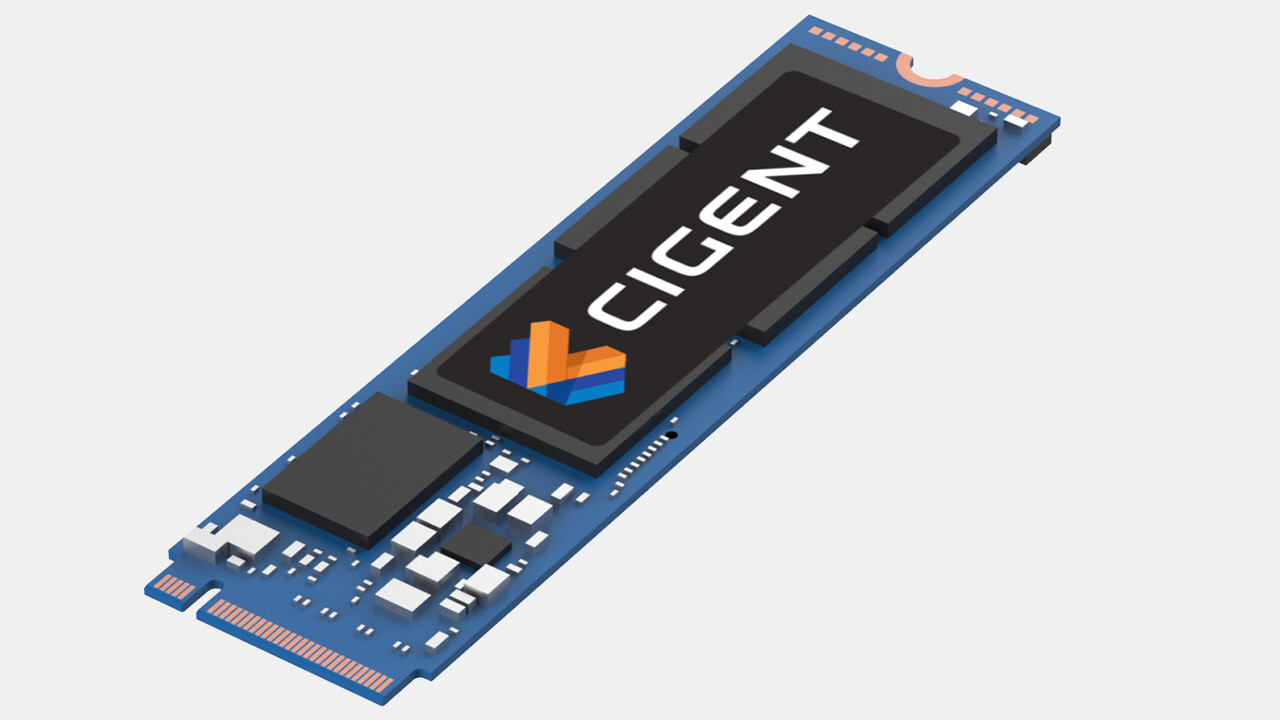
Cigent Technology, a company specializing in data security, has unveiled its unique Cigent Secure SSD+ drives. In contrast to the earlier Secure SSD series, the SSD+ incorporates a cutting-edge AI microprocessor that leverages machine learning (ML) to combat ransomware attacks and protect drive data. The Cigent Secure SSD+ emphasizes a proactive approach, integrating attack prevention within the storage. Its AI microprocessor applies ML algorithms to monitor SSD activity, mitigating ransomware threats. Users can customize detection sensitivity to reduce false positives. Working with Cigent Data Defense software, the Secure SSD+ provides several protective layers upon detecting potential attacks. It can initiate a "Shields Up" mode, demanding multi-factor authentication (MFA) for accessing secure files. The software can also auto-secure drive data or set read-only mode, preventing unauthorized access or modifications.

When an attack is detected, the software notifies security personnel to activate "Shields Up" on other Cigent-protected network systems. The Cigent Secure SSD+ logs data access, allowing a review of all activity performed on the drive. The company has also introduced safeguards to deter bad actors from disabling security features. However, the Cigent Secure SSD+ has limitations. To perform as intended, future users of these drives need to install them as their primary storage, and for now, only Windows OS is supported. We expect to see expansion to Linux as well, as software enablement for Linux happens. Also, the ML algorithms used are unknown, leaving everyone wondering about their effectiveness. As far as exact specifications, pricing, and availability, we have yet to have data for now but don't expect it to come cheap. The regular Secure SSD can cost over 1,000 USD for a 1 TB option. Additionally, Cigent has confirmed that these SSDs come in a standard M.2 2280 drive form factor, with mentions that it is a double-sided design, so some ultra-thin laptops could not support it. On the company website, Cignet offers a pre-order option, where you need to fill out a form.
Cigent Secure SSD+

CORSAIR Launches MP600 Mini and MP600 Core XT M.2 NVMe SSDs

CORSAIR, a world leader in enthusiast components for gamers, creators, and PC builders, today announced the launch of two new PCIe Gen 4 M.2 Solid State Drives—the MP600 MINI and the MP600 CORE XT. These drives extend the CORSAIR SSD range to an ultra-compact M.2 2230 form factor, and a new highly competitive combination of price and performance, allowing a new wave of device upgrades.

The MP600 MINI brings CORSAIR M.2 SSD performance to its smallest ever size, with the M.2 2230 form factor measuring just 22 mm x 30 mm. The MP600 MINI is compatible with popular handheld gaming systems, such as the Valve Steam Deck, as well as thin and light machines where space is at a premium, such as the Microsoft Surface Pro 8 and 9. With an impressive 1 TB of capacity and PCIe Gen 4 performance of up to 4,800 MB/sec read and 4,800 MB/sec write, the MP600 MINI is an ideal performance and storage upgrade for data hungry small-form-factor devices, whether it's to store a growing game collection, or essential files.

ASUSTOR Announces Flashstor 6 and Flashstor 12 Pro SSD NAS

ASUSTOR Inc. today launched two of its fastest NAS devices ever, the all-NVMe Flashstor 6 and Flashstor 12 Pro. The biggest feature of the Flashstor series NAS is that this is ASUSTOR's first dedicated PCIe 3.0 M.2 NVMe SSD NAS, which brings unmatched performance in a NAS device. The Flashstor 6 has six M.2 slots for NVMe SSDs and dual 2.5GbE for amazing performance while the Flashstor 12 Pro comes with twelve M.2 slots for NVMe SSDs combined with 10GbE for unmatched speed. Both Flashstor models are equipped with Intel's newest generation of 10 nm Quad-Core Intel Celeron N5105 that boosts up to 2.9 GHz. With 4 GB of energy-efficient DDR4 -2933 RAM that provides 40% more efficiency and dual USB 3.2 Gen 2x1, the Flashstor ensures that bottlenecks are a thing of the past.

The advantages of the Flashstor include, but are not limited to, are its low weight to be used as portable storage while efficiently cooled and quiet. The Flashstor series is specifically designed M.2 SSDs and the chassis makes it easy to add or remove SSDs by removing the chassis screws. The design of the Flashstor not only makes it look great in any environment, but also contains efficient hardware that ensures it can chew through virtually any storage or editing workload thrown at it while keeping hardware and SSDs cool. For extra cooling, the Flashstor comes with heatsinks to help more powerful SSDs to receive the cooling they need for optimal performance while remaining quiet at as low as 18.7 decibels. This ensures that content creation and consumption is enjoyed without interference.

ASUS Thincredible Launch Event: Zenbook S 13 OLED, the World's Slimmest OLED Ultraportable Laptop, and Vivobook x BAPE Collaboration Unveiled

ASUS today introduced its newest laptops, with the latest Zenbook and Vivobook lineups during the Thincredible product launch event. Zenbook S 13 OLED (UX5304) debuted as the world's slimmest OLED ultraportable laptop—redefining what an ultraportable laptop can be. Equipped with the stunning new ASUS Lumina OLED displays, ASUS IceCool technology, and extremely durable and unique designs, the latest Zenbook and Vivobook lineups empower users with their outstanding sustainable performance and purposeful innovations.

Zenbook S 13 OLED is only 1 cm thin and weighs just 1 kg[iii]. This Intel Evo -certified laptop provides exceptional performance, battery life, and sustainability combined with an ASUS Lumina OLED display in an ultracompact chassis. Offering an all-day 63 Wh battery and full I/O ports, it's the perfect companion for those who need maximum portability to match their lifestyle. The Zenbook lineup also includes Zenbook 14X OLED (UX3404), a compact and high-performance portable laptop, and Zenbook 14 Flip OLED (UP3404), a convertible ultraportable laptop with immense versatility.

Thermalright HR-10 PRO Heatsink Prepared for Gen5 SSDs

Thermalright has quietly updated its product page this week, and has rolled out another SSD cooler that looks quite familiar. The HR-10 2280 PRO M.2 SSD heatsink is now featured on their website, where it sits close to a similar looking model - the now standard HR-10 2280. This non-PRO version was revealed late last month as a step up from the older HR-09 SSD heatsink. The brand new HR-10 2280 PRO sports a key upgrade over its passively cooled older siblings - a 30 mm 12 V cooling PWM fan has been integrated into the middle of the fin stack's body. Thermalright's latest M.2 heatsink also fully prepared for and compatible with the next generation of SSDs - its revised design will accommodate Gen 5 solid-state drive standards.

The HR-10 Pro is consists of four 5 mm-thick nickel-plated copper heatpipes that make contact with a user appointed M.2-2280 SSD, over a mirror-finish nickel-plated copper base-plate. The heatpipes loop through a dense aluminium fin-stack with slats designed to maximize surface area for highly effective heat dissipation. A die-cast metal top-plate with company branding completes the package. The HR-10 PRO weighs in at 95 g (so 10 g more than the standard HR-10). The heatsink measures 23.7 mm x 90.3 mm x 43.8 mm (WxDxH). Thermalright has not revealed any pricing or stock availability at the time of writing.

HBM Supply Leader SK Hynix's Market Share to Exceed 50% in 2023 Due to Demand for AI Servers

A strong growth in AI server shipments has driven demand for high bandwidth memory (HBM). TrendForce reports that the top three HBM suppliers in 2022 were SK hynix, Samsung, and Micron, with 50%, 40%, and 10% market share, respectively. Furthermore, the specifications of high-end AI GPUs designed for deep learning have led to HBM product iteration. To prepare for the launch of NVIDIA H100 and AMD MI300 in 2H23, all three major suppliers are planning for the mass production of HBM3 products. At present, SK hynix is the only supplier that mass produces HBM3 products, and as a result, is projected to increase its market share to 53% as more customers adopt HBM3. Samsung and Micron are expected to start mass production sometime towards the end of this year or early 2024, with HBM market shares of 38% and 9%, respectively.

AI server shipment volume expected to increase by 15.4% in 2023
NVIDIA's DM/ML AI servers are equipped with an average of four or eight high-end graphics cards and two mainstream x86 server CPUs. These servers are primarily used by top US cloud services providers such as Google, AWS, Meta, and Microsoft. TrendForce analysis indicates that the shipment volume of servers with high-end GPGPUs is expected to increase by around 9% in 2022, with approximately 80% of these shipments concentrated in eight major cloud service providers in China and the US. Looking ahead to 2023, Microsoft, Meta, Baidu, and ByteDance will launch generative AI products and services, further boosting AI server shipments. It is estimated that the shipment volume of AI servers will increase by 15.4% this year, and a 12.2% CAGR for AI server shipments is projected from 2023 to 2027.

Crucial T700 Clocks 12.4 GB/s Sequential Reads in Previews

Crucial T700 marks the brand's return to the high-end SSD segment after years of catering to the mainstream segment with well-priced drives that the company can move in high volumes. The company had retired its Ballistix brand to mark its withdrawal from the high-end. The drive combines Micron's 232-layer 3D TLC NAND flash with a Phison E26-series controller and LPDDR4-based DRAM cache, and takes advantage of the PCI-Express 5.0 x4 host interface, with NVMe. A small section of the tech press was sampled with these drives and permitted to do performance previews.

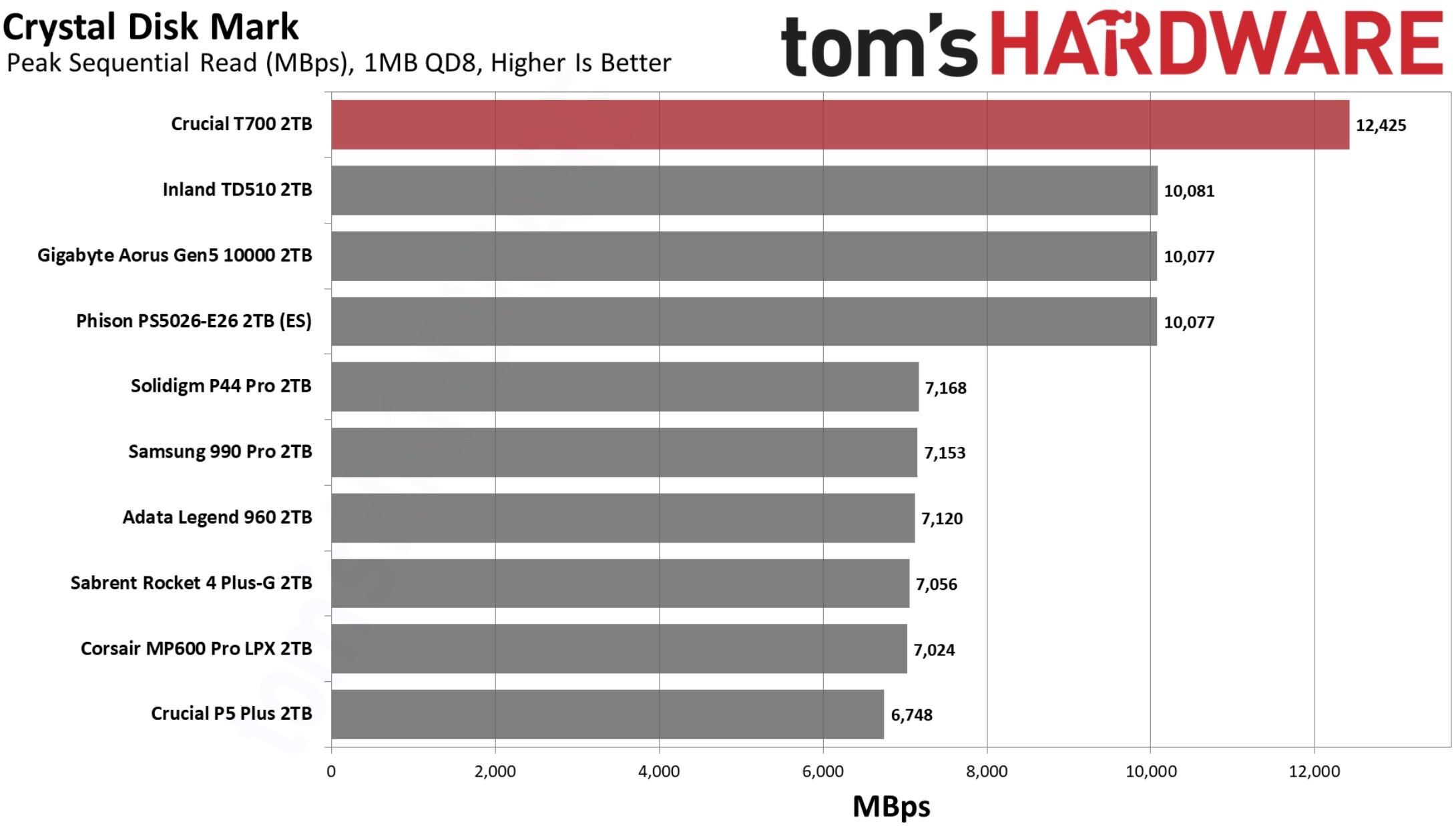
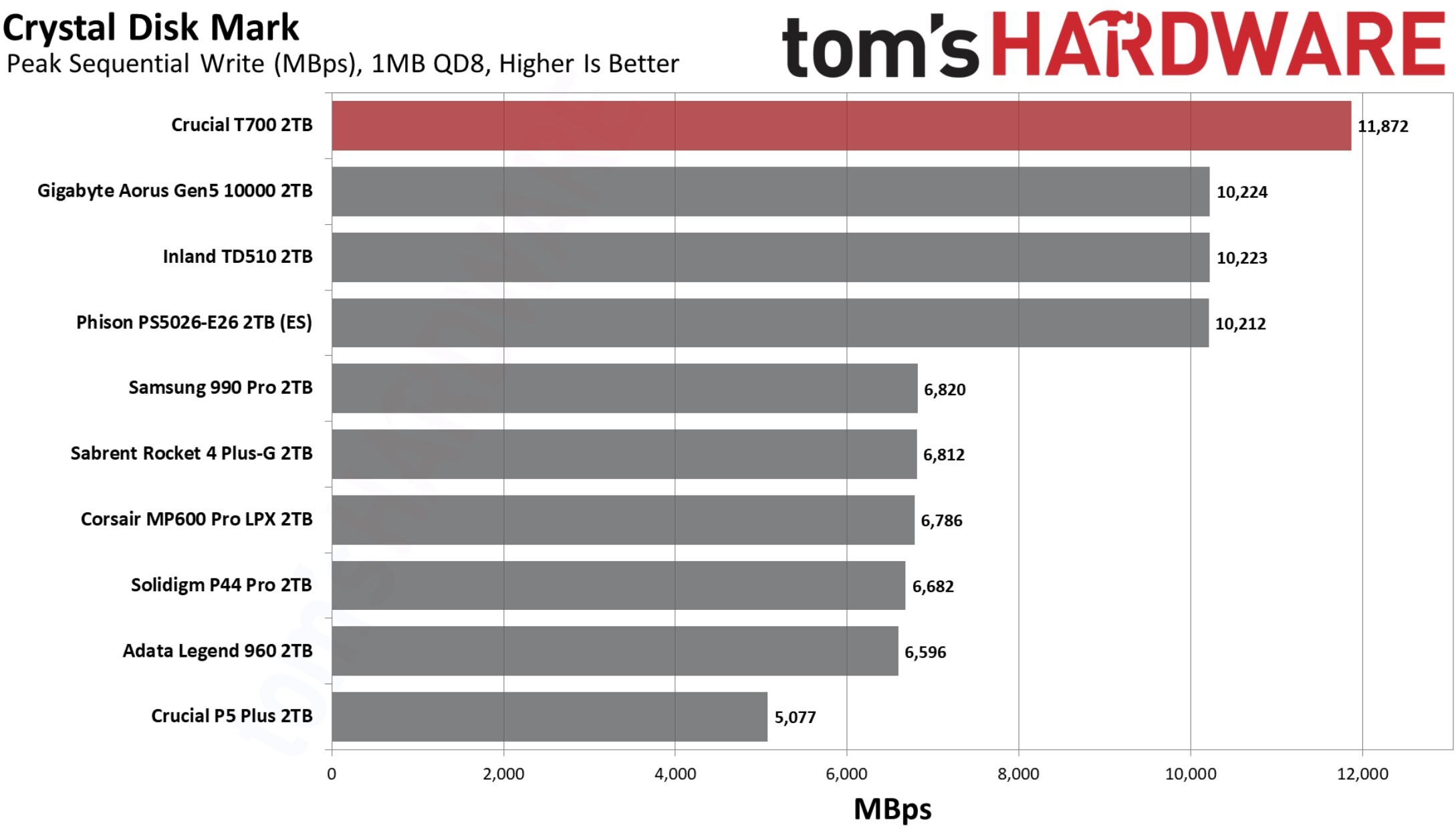
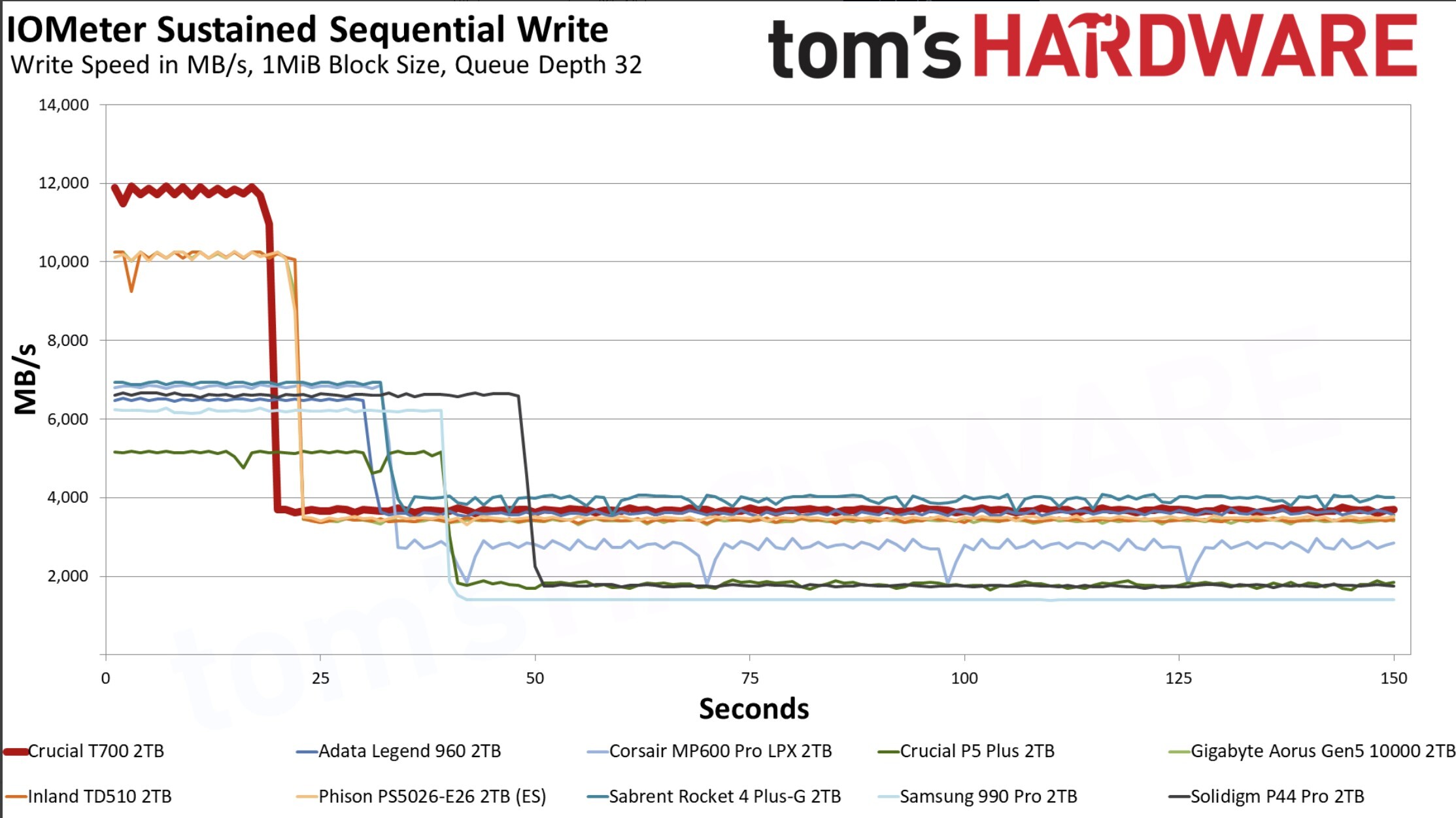
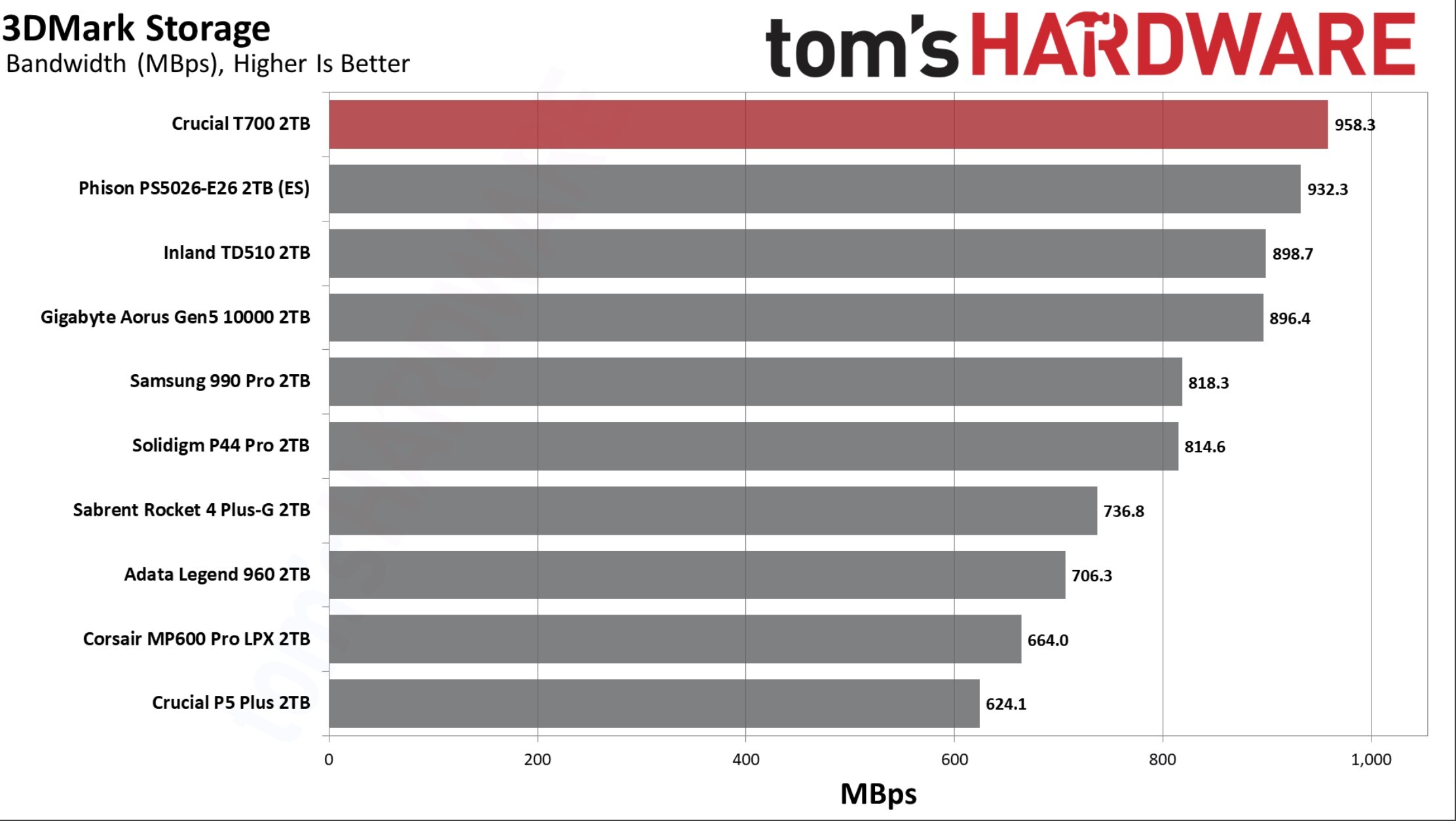
Every SSD manufacturer's favorite benchmark, CrystalDiskMark (CDM), shows the drive clock 12.4 GB/s sequential reads (1 MB, QD8), along with 9.22 GB/s (1 MB QD1). Sequential writes are as high as 11.87 GB/s (1 MB QD8), and 9.66 GB/s (1 MB QD1). IOMeter testing revealed that the sustained write speeds are rather low, with the T700 holding onto top speeds only up to 25 GB, beyond which write performance falls off a cliff to 3.8 GB/s. Find more such interesting results in the source link below.

Sabrent Shows Off Apex X21 Destroyer Card, a Behemoth Multi-SSD Array Offering 168 TB Storage

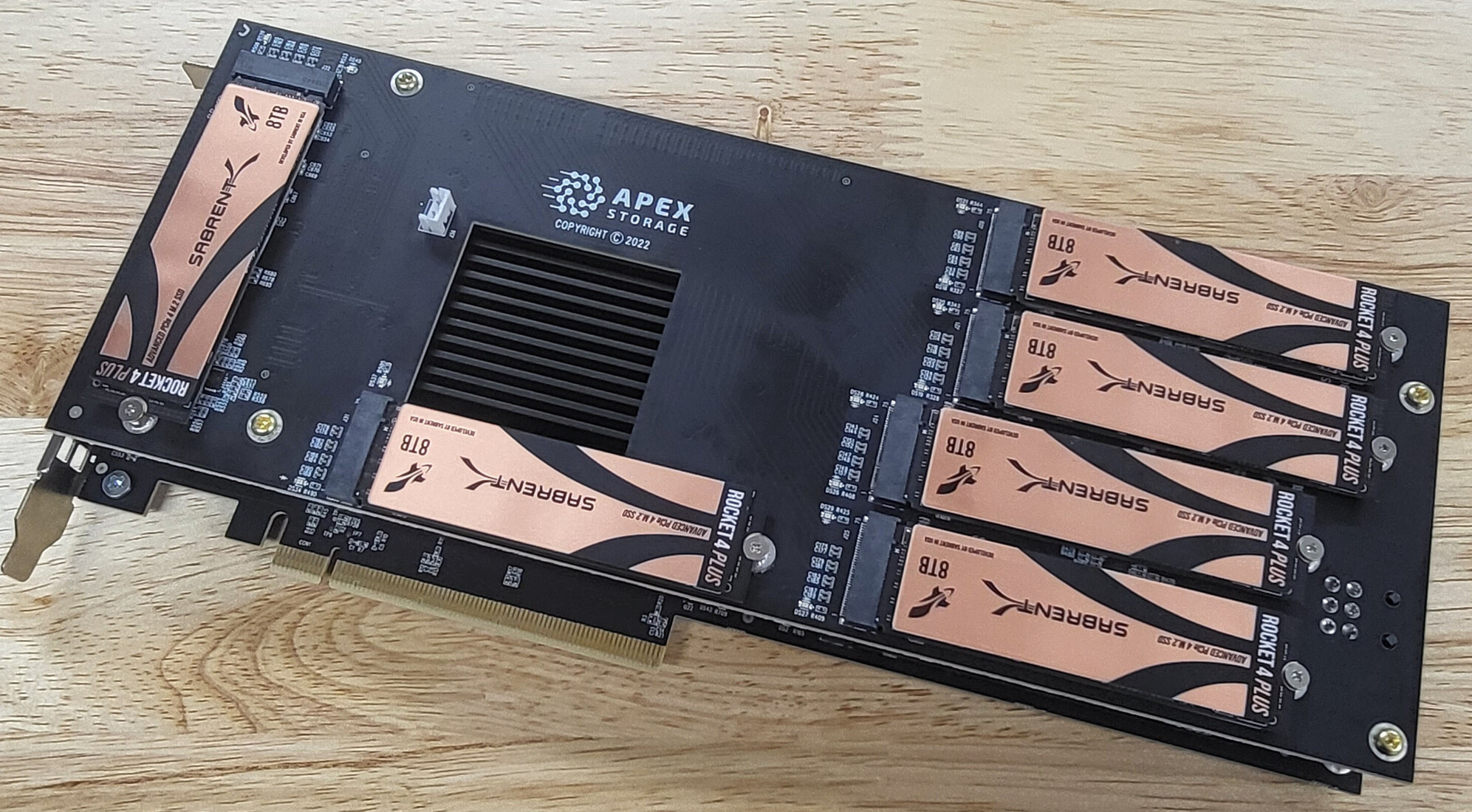
Sabrent USA was in a boastful mood yesterday, and proceeded to gloat on Twitter about an upcoming gargantuan storage solution: "At Sabrent, we run on the cutting edge of technology. Working with Apex, we received one of these new cards and currently running it through tests. We call this the Sabrent Apex X21 Destroyer. 21X 8 TB SSDs for 168 TB of storage on single card!" The company has revealed that it is collaborating with Apex Solutions on the single PCIe card offering, but the smattering of text and two photos uploaded to Twitter are just teaser material for the moment. There have been no reports of preview units getting sent to potential testers or hardware influencers. Sabrent and Apex will continue to tweak and evaluate.

The Destroyer is formed of already existing parts, namely Apex Solution's own x21 NVMe mounting platform card, and twenty-one of Sabrent's Rocket 4 Plus SSD 8 TB NVMe 4.0 Gen 4 PCIe M.2 Internal SSD model (SB-RKT4P-8TB). A single Apex x21 card will set you back $2800, and the 8 TB Rocket 4 Plus SSD is currently discounted to $1099 (from $1499). That grand total comes to a whopping $25,879, and extra expenses are expected in the form of adequate cooling solutions and a hardware controller capable of managing that unruly gang of SSDs. Sabrent is expected to post updates about finalized fittings, features and exact pricing in the near future.

Solid State Drive (SSD) Market Size to Grow by CAGR 23.87% from 2022 to 2027: Technavio

Technavio has been monitoring the solid-state drive (SSD) market, and it is expected to grow by USD 74,553.83 million from 2022 to 2027. The market will progress at a CAGR of 23.87% during the forecast period. This report aids business leaders with an up-to-date analysis that includes the study of the current market scenario, the latest trends and drivers that are likely to influence the market growth, and the overall market environment. The increasing emergence of 3D NAND is an emerging trend in the SSD market. The architecture of NAND flash devices is one-dimensional. Increasing the density allows more data to be stored, thus expanding the capacity of SSD.

Moreover, 3D NAND drives are gaining significant traction in IoT devices and autonomous vehicles. Hence, the development of storage devices has increased significantly. For instance, in July 2018, Toshiba Memory developed a prototype sample of the 96-layer BiCS FLASH, its proprietary 3D flash memory. Additionally, due to the high growth potential of the 3D NAND market, leading vendors are increasingly investing in the development of 3D NAND fab facilities. Download the Latest Sample Report here.

Transcend Intros 4TB Variant of MTE250 Series M.2 Gen 4 SSD

Transcend Memory introduced a high-capacity 4 TB variant of its MTE250H (with heatsink) and MTE250S (without heatsink) M.2 NVMe Gen 4 SSD that the company debuted in October 2022. The former comes with an extruded-aluminium heatsink, while the latter has a graphene-coated film on top of the hot components. The drive offers an NVMe 1.4-compliant 8-channel controller that uses a DRAM cache; paired with 3D TLC NAND flash memory. The drives take advantage of PCI-Express 4.0 x4 host interface. The 4 TB variant offers sequential transfer rates of up to 7.5 GB/s reads, with up to 6.7 GB/s writes; up to 540k IOPS random reads, and up to 440k IOPS random writes; along with a rated endurance of 3,120 TBW. Transcend is backing these drives with 5-year warranties.

Star Wars Jedi: Survivor PC Install Size is Daunting at 155 GB

Electronic Arts has updated the listings for PC system requirements for Star Wars Jedi: Survivor, and the gaming community has reacted to the refresh of the game's minimum installation storage requisite. It calls for a whopping 155 GB of disk space, for the base game alone, not including the expected routine of patches and extra story content (via DLC). The publisher suggests that an SSD is best used for an optimal in-game experience. The slightly older PC requirements specified a minimum of 150 GB for HDDs, and 130 GB for SSDs.

As it stands, the Respawn Entertainment developed action adventure game has one of the larger minimum storage requirements among modern titles - all the more surprising given that it will offer a relatively short and linear single player experience. Current installations of the PC version of Red Dead Redemption 2 will occupy 150 GB of disk space. Jedi: Fallen Order (2019), Survivor's preceding title in the series, demands a comparatively modest install base of 55 GB. It will be interesting to observe whether Jedi: Survivor will drive sales of larger storage solutions - in the recent past, gamers have scrambled to acquire higher capacity SSDs and HDDs in order to accommodate the ever-growing installations and content drops required to play the Call of Duty/Modern Warfare series.

QNAP Releases Short-depth Rackmount TS-855eU NAS Series

QNAP Systems, Inc., a leading computing, networking and storage solution innovator, today unveiled the 2U short-depth TS-855eU NAS Series, including the TS-855eU with single PSU and the TS-855eU-RP with redundant power supplies. The short-depth rackmount TS-855eU NAS series is exceptionally suitable for IT deployment in small cabinet, spacious business workplaces, or production lines. Powered by an Intel Atom C5125 8-core 2.8 GHz processor with Intel QuickAssist Technology and supporting up to 64 GB memory (ECC memory supported), the sturdy and feature-rich TS-855eU series provides eight SATA drive bays, dual-port 2.5GbE. With these features and more, the TS-855eU series fulfills the performance and capacity requirements of business file servers, virtual machines, SaaS backups, and virtualization applications.

"With a 38% reduction in size, the 2U rackmount TS-855eU NAS series is only 11.7 inches (297.4 mm) deep, making it suitable for installation in small cabinets and IT rooms with strict cabling and ventilation requirements," said Andy Chuang, Product Manager of QNAP. "It fits in constrained environments while supporting reliable daily operations with its excellent performance and well-rounded business-ready features."

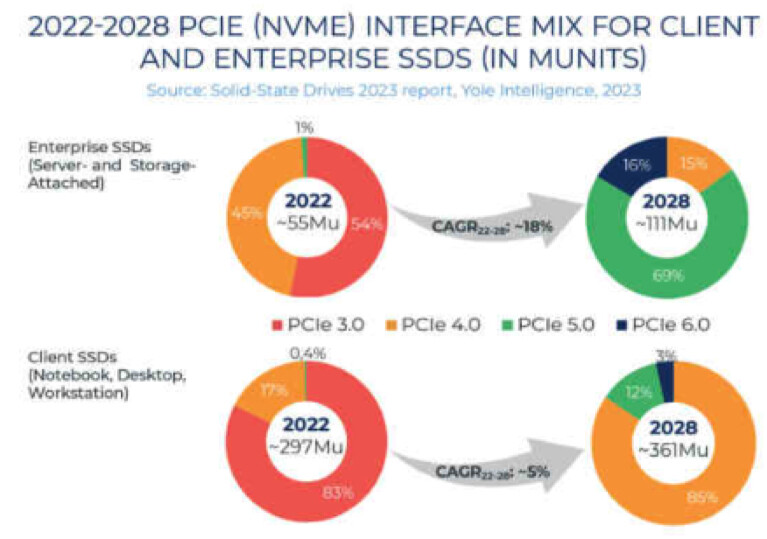
SSD Market Predicted to Reach $67 Billion by 2028, Short Term Numbers Less Encouraging

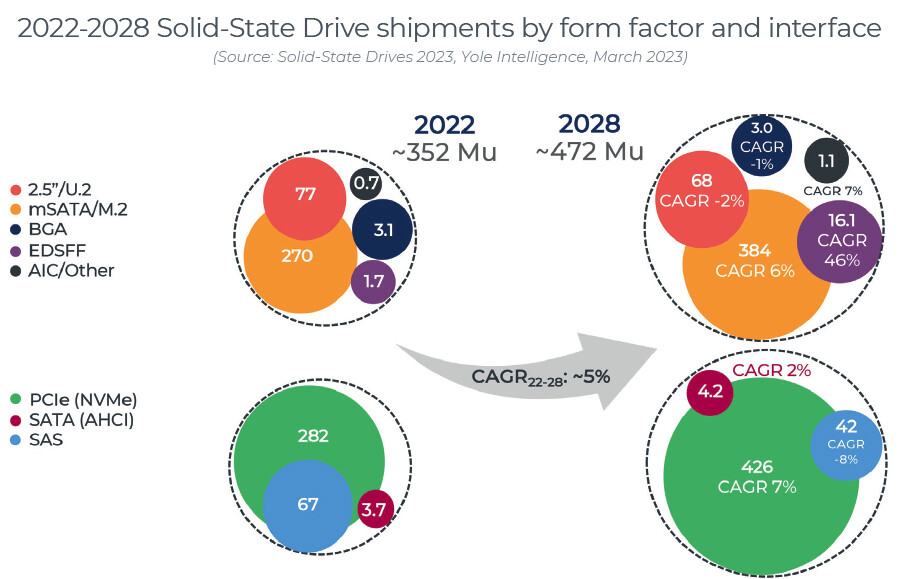
Analyst firm Yole Group has predicted that SSD sales revenues will grow to $67 billion in the year 2028, generated by 472 million unit sales - indicating a very healthy outlook in the long term. However, their predictions for market performance in 2023 appear to be less cheerful for manufacturers of NAND flash memory. The SSD market dynamic was positive in 2021 and the starting months of 2022, but demand has dropped sharply since then due to a number of factors including global inflation, geopolitical tensions, and inventory digestion at electronics manufacturers. Sales revenues in 2022 totaled $29 billion (352 million units), down from $34 billion (400 million units) in 2021 - demonstrating a 14% year-to-year decline.

The continued weakening of global demand in 2023 will have an effect on SSD sales revenues, and the Yole Group has foreseen troublesome outcomes for manufacturers. The average selling price of NAND memory and solid-state drive units has been on the decline in the recent quarters, caused by sluggish demand and a surplus of stock. Despite the grim outlook in the short term, the research body is predicting a compounded annual growth rate (CAGR) of about 15% between 2022 and 2028 for the overall size of the SSD market.

Seagate Introduces Star Wars-Inspired Lightsaber Collection Special Edition SSDs

Today, Star Wars fans can choose to represent their side of the Force with the new collectible Seagate Solid State Drives (SSD) inspired by iconic characters of the Star Wars galaxy. Featuring interchangeable faceplate designs honouring Obi-Wan Kenobi, Darth Vader, and Luke Skywalker, the latest additions to the company's line of licensed special edition storage devices bring PCIe Gen 4 speeds, peak performance, and customisation to the battle stations of Star Wars collectors and tech enthusiasts.

Officially licensed by Lucasfilm, the special edition FireCuda NVMe SSD represents the famed characters with three iconic Lightsaber designs built on swappable heatsink faceplates so gamers can choose a design inspired by the Jedi or Sith that fits their collection at any moment. The drive includes customisable RGB LED lighting that shines through the faceplate to bring a galaxy of atmosphere to battle stations. The unique loading mechanism that attaches the interchangeable faceplates to the SSD and the heatsink were engineered and developed by EKWB. The integrated passive heatsink minimises thermal throttling and maintains peak performance for longer periods of time.

Cervoz Announces High Performance, Industrial-Grade NVMe PCIe Gen 4 x4 SSDs

Cervoz Technology, a leading supplier of industrial-grade storage and memory solutions, is excited to announce the new NVMe PCIe Gen 4x4 SSDs, the T441. Purposefully designed to cater to the growing automaticity trend of the industry, the T441 is the ideal choice for companies seeking cutting-edge technology in high-performance storage solutions.

Blazing Speeds with High Capacity
The Cervoz T441 SSDs leverage the power of 112-layer 3D TLC NAND flash technology, offering storage capacities of up to 3840 GB in a compact and energy-efficient design. In addition, the high-speed PCIe Gen 4x4 interface enables faster and more efficient data access, with Read/Write speeds of up to 7,100/6,190 MB/s and 4K random IOPS of up to 1,000K. This exceptional performance makes the T441 an ideal solution for applications requiring real-time processing of vast data, such as surveillance, machine vision, and edge AI, as well as those handling massive data sets like CAD, biomedical engineering, and atmospheric sciences.
Return to Keyword Browsing
Nov 19th, 2026 00:25 PST change timezone

New Forum Posts

Popular Reviews

TPU on YouTube

Controversial News Posts