 18
ASRock Radeon RX 9070 XT Monster Hunter Wilds Edition Review
(18 Comments) »Introduction

ASRock Radeon RX 9070 XT Monster Hunter Wilds Edition is a special graphics card model that's officially licensed by Capcom to celebrate one of 2025's biggest AAA RPG releases. Although it's not declared as such officially, this card is based on ASRock's RX 9070 XT Steel Legend OC, but with many exclusive design uplifts. To begin with, the cooler shroud features a two-tone trim including silver and cyan finish from the game's color scheme; and a matching backplate. The backplate has a die-cast print of a monster from the game. Along the top of the card, we see the acrylic ARGB-illuminated Steel Legend logo being replaced by an Arkveld logo from the game. Out of the box, the card comes with an ARGB lighting scheme that aligns with the general aesthetic of the game. Lastly, the fans have groovy decals themed after the game.

AMD Radeon RX 9070 XT is this generation's fastest GPU from the red team, and is powered by the company's latest RDNA 4 graphics architecture. The card offers abundant performance to plow through Monster Hunter Wilds at high resolutions, such as 4K Ultra HD, and 1440p. RDNA 4 sees AMD withdraw from the enthusiast-segment, and focus on winning the performance segment with the best price-performance, without compromising on features. AMD made advances to shoring up the ray tracing and AI acceleration performance of its GPUs with RDNA 4. The company also advanced its performance upscaling technology with FSR 4, which taps into machine learning to significantly improve image quality at every performance tier over the previous FSR 2.2. AMD is planning to sign off 2025 with Project Redstone, a suite of feature additions to FSR 4 such as ML-based radiance caching, ray reconstruction, and frame generation, which close technological gaps with NVIDIA.
AMD designed the RDNA 4 architecture around the 4 nm EUV foundry node, and the Navi 48 silicon powering the Radeon RX 9070 series is a classic monolithic chip built entirely on 4 nm, unlike its predecessors from the RDNA 3 generation that were based on chiplets that combined 5 nm and 6 nm on a merit-basis. This, together with architecture-level advances AMD made to the shader engines translate into a large uplift in performance per Watt over RDNA 3. The RDNA 4 architecture provides a nearly 100% increase in ray tracing performance over the previous generation, and significant increases in AI acceleration performance to enable ML-based models powering the various FSR 4 and Redstone technologies. With a CU count of 64, or 4,096 stream processors, AMD is able to match its previous-gen enthusiast-segment GPUs with 50% higher CU counts. This is thanks not just to the IPC improvements, but also the much higher clock speeds these GPUs operate at.
Radeon RX 9070 XT maxes out the 4 nm Navi 48 silicon it's based on, with 64 compute units making 4,096 stream processors, 64 RT accelerators, and 128 AI accelerators. The GPU also has 256 TMUs, and 128 ROPs. RX 9070 XT gets 16 GB of 20 Gbps GDDR6 memory, with 640 GB/s of memory bandwidth. AMD has innovated several architecture-level memory management optimizations, with which AMD can hold on to older GDDR6 memory standards even as NVIDIA has moved on to GDDR7. AMD did implement PCI-Express Gen 5 for the host interface, and board vendors have the freedom to implement modern 12V-2x6 power connectors if they want to. ASRock's own RX 9070 XT Taichi has it.
ASRock is pricing the Radeon RX 9070 XT Monster Hunter Wilds at $650, a $50 premium over the regular RX 9070 XT Steel Legend graphics card that's going for $600. The premium covers its unique design, which could appeal to die-hard fans of the game, and gaming content creators planning on creating a Monster Hunter Wilds-themed build. This is not just a sticker-job, ASRock used die-cast printing on the backplate, it also used a unique color scheme on the cooler shroud and the ARGB ornament. Also included is a game key for the full Monster Hunter Wilds game (valid until Dec 31 2025), which is a $40 value or so. In terms of clock speeds, the MHW Edition ticks at reference frequency.
| Price | Cores | ROPs | Core Clock | Boost Clock | Memory Clock | GPU | Transistors | Memory | |
|---|---|---|---|---|---|---|---|---|---|
| RTX 4070 | $500 | 5888 | 64 | 1920 MHz | 2475 MHz | 1313 MHz | AD104 | 35800M | 12 GB, GDDR6X, 192-bit |
| RX 7800 XT | $470 | 3840 | 96 | 2124 MHz | 2430 MHz | 2425 MHz | Navi 32 | 28100M | 16 GB, GDDR6, 256-bit |
| RTX 4070 Super | $600 | 7168 | 80 | 1980 MHz | 2475 MHz | 1313 MHz | AD104 | 35800M | 12 GB, GDDR6X, 192-bit |
| RX 7900 GRE | $550 | 5120 | 160 | 1880 MHz | 2245 MHz | 2250 MHz | Navi 31 | 57700M | 16 GB, GDDR6, 256-bit |
| RTX 4070 Ti | $700 | 7680 | 80 | 2310 MHz | 2610 MHz | 1313 MHz | AD104 | 35800M | 12 GB, GDDR6X, 192-bit |
| RTX 5070 | $540 | 6144 | 80 | 2325 MHz | 2512 MHz | 1750 MHz | GB205 | 31100M | 12 GB, GDDR7, 192-bit |
| RTX 4070 Ti Super | $750 | 8448 | 96 | 2340 MHz | 2610 MHz | 1313 MHz | AD103 | 45900M | 16 GB, GDDR6X, 256-bit |
| RX 7900 XT | $620 | 5376 | 192 | 2000 MHz | 2400 MHz | 2500 MHz | Navi 31 | 57700M | 20 GB, GDDR6, 320-bit |
| RX 9070 | $530 | 3584 | 128 | 2070 MHz | 2520 MHz | 2518 MHz | Navi 48 | 53900M | 16 GB, GDDR6, 256-bit |
| RX 9070 XT | $600 | 4096 | 128 | 2400 MHz | 2970 MHz | 2518 MHz | Navi 48 | 53900M | 16 GB, GDDR6, 256-bit |
| ASRock RX 9070 XT Monster Hunter Wilds | $660 | 4096 | 128 | 2400 MHz | 2970 MHz | 2518 MHz | Navi 48 | 53900M | 16 GB, GDDR6, 256-bit |
| RTX 5070 Ti | $750 | 8960 | 96 | 2295 MHz | 2452 MHz | 1750 MHz | GB203 | 45600M | 16 GB, GDDR7, 256-bit |
| RX 7900 XTX | $750 | 6144 | 192 | 2300 MHz | 2500 MHz | 2500 MHz | Navi 31 | 57700M | 24 GB, GDDR6, 384-bit |
| RTX 4080 | $850 | 9728 | 112 | 2205 MHz | 2505 MHz | 1400 MHz | AD103 | 45900M | 16 GB, GDDR6X, 256-bit |
| RTX 4080 Super | $1000 | 10240 | 112 | 2295 MHz | 2550 MHz | 1438 MHz | AD103 | 45900M | 16 GB, GDDR6X, 256-bit |
| RTX 5080 | $1000 | 10752 | 112 | 2295 MHz | 2617 MHz | 1875 MHz | GB203 | 45600M | 16 GB, GDDR7, 256-bit |
| RTX 4090 | $1800 | 16384 | 176 | 2235 MHz | 2520 MHz | 1313 MHz | AD102 | 76300M | 24 GB, GDDR6X, 384-bit |
| RTX 5090 | $2600 | 21760 | 176 | 2017 MHz | 2407 MHz | 1750 MHz | GB202 | 92200M | 32 GB, GDDR7, 512-bit |
Packaging

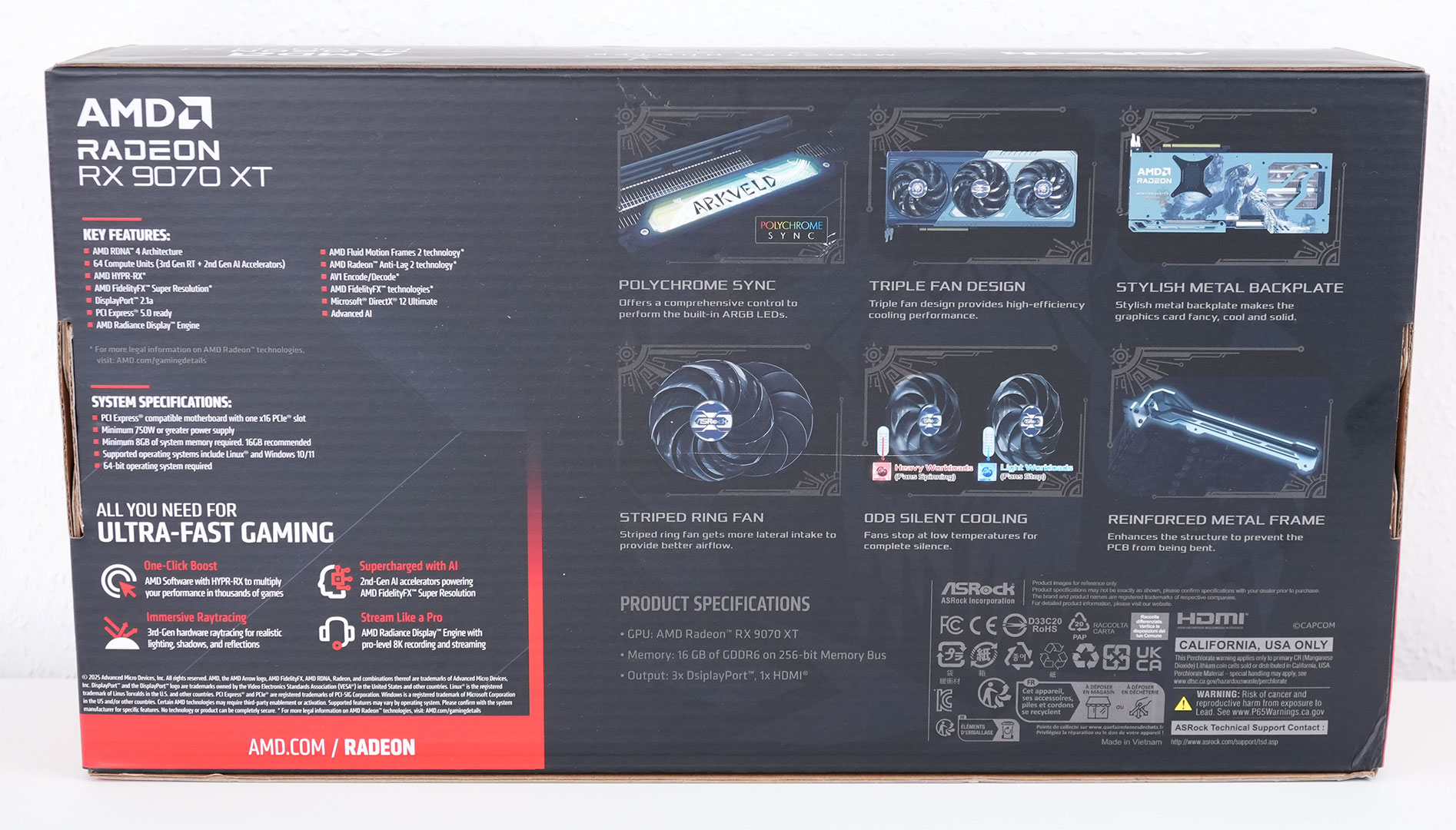
The Card


ASRock's Monster Hunter Wilds card looks great, the blue color theme works very well and matches the colors of the Arkveld monster in the game. The metal backplate has more MHW artwork and a cutout for air to flow through.
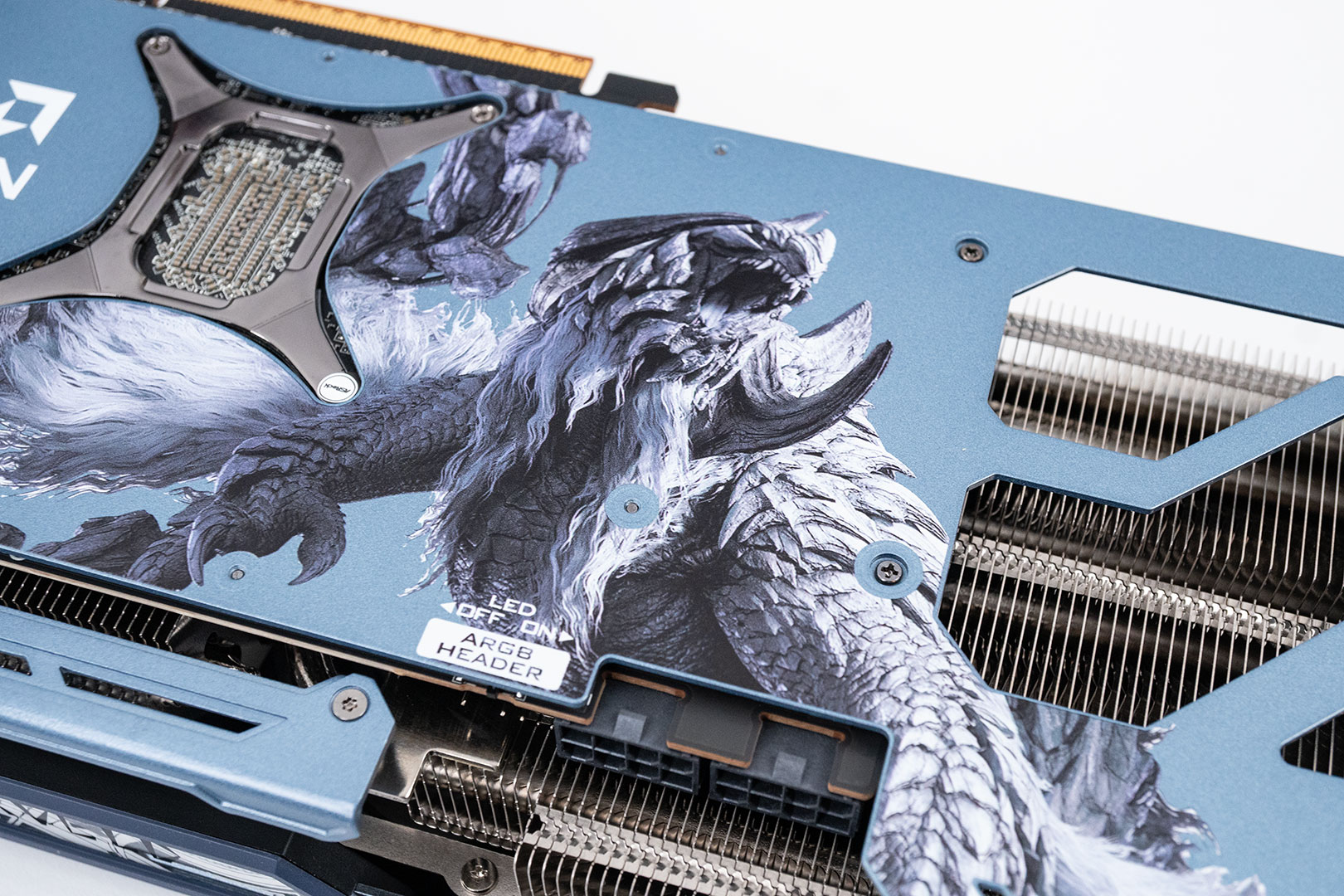
Here's a closeup of the backplate—good-looking, high-quality print.
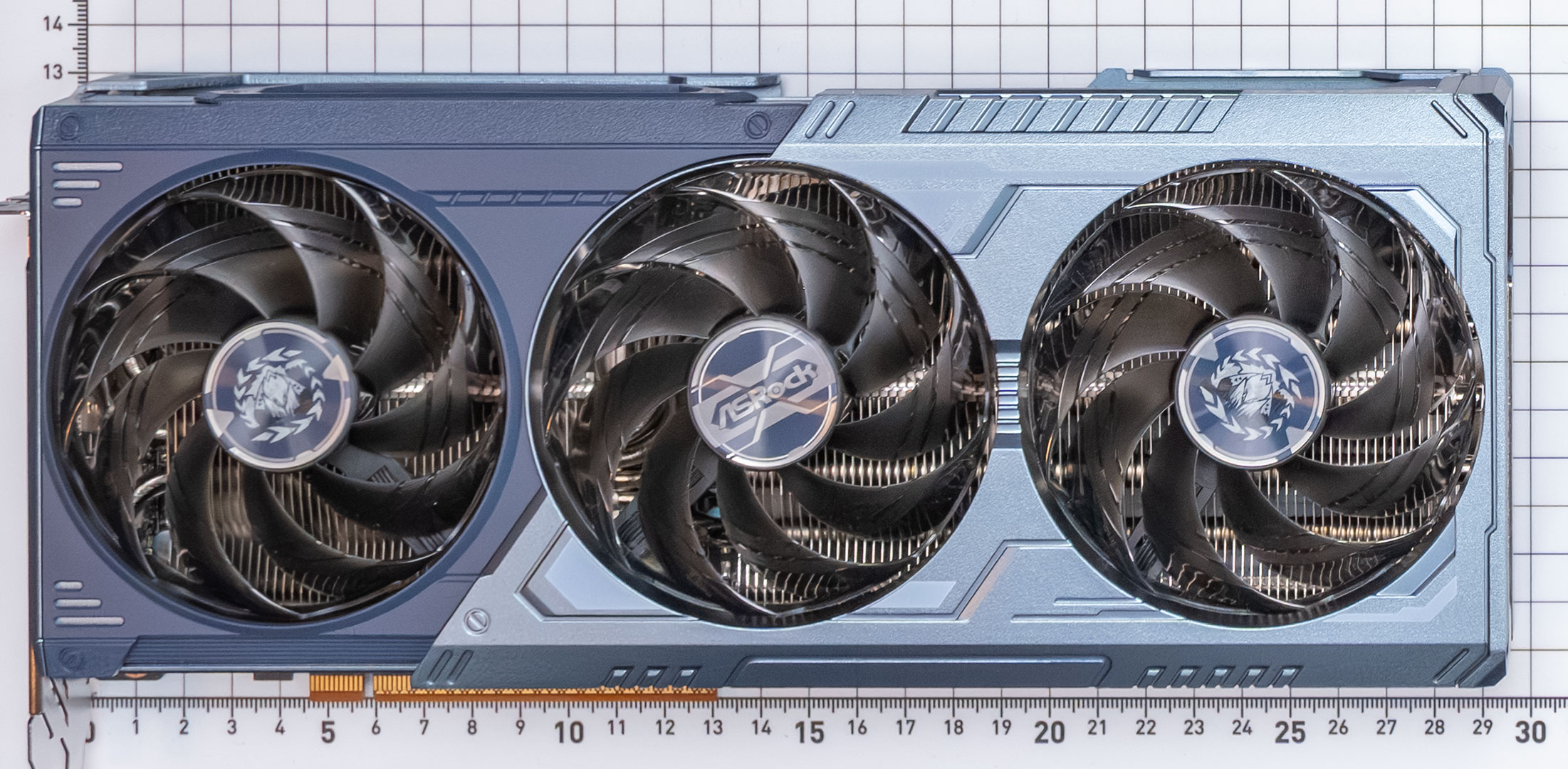
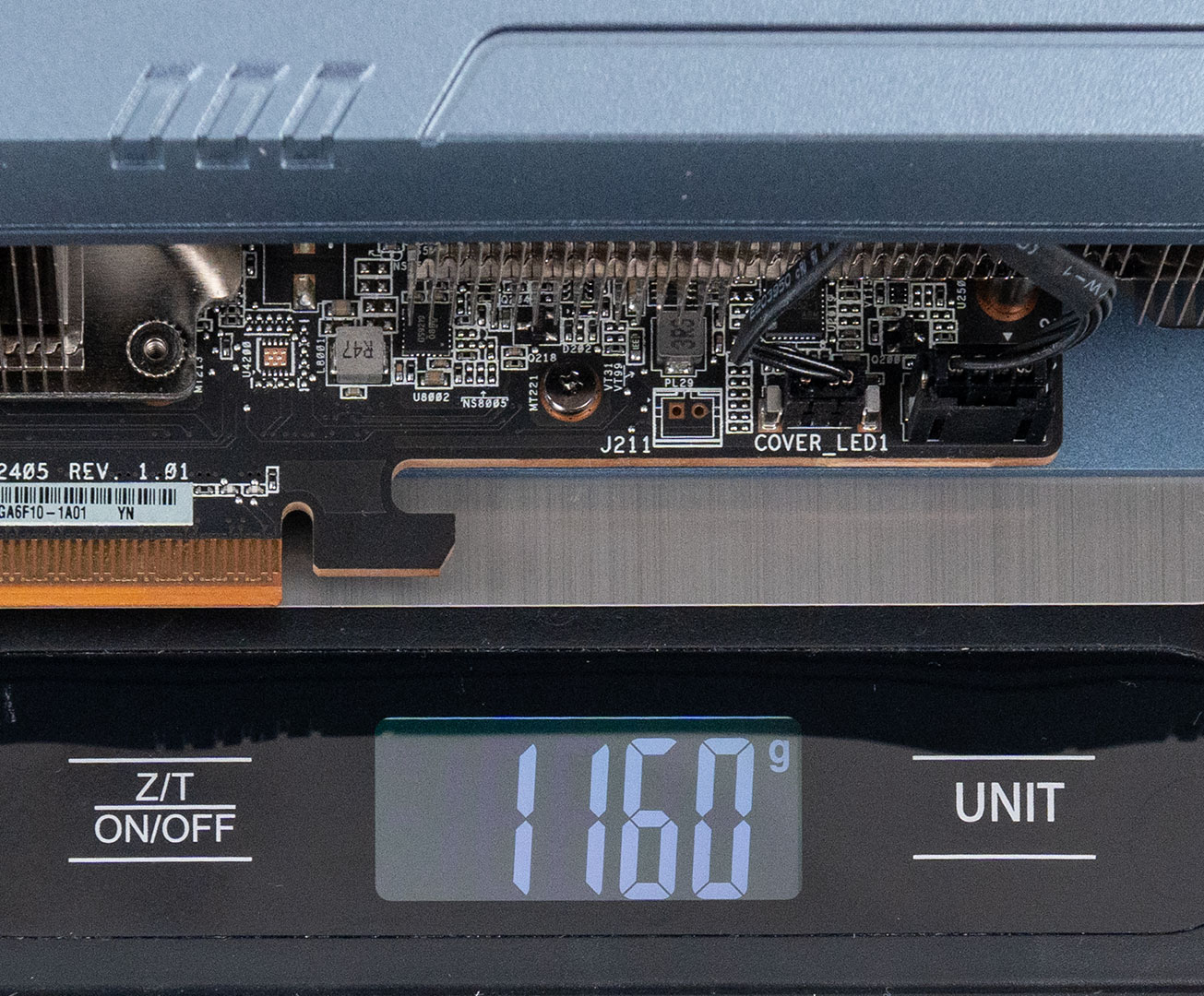
Dimensions of the card are 29.5 x 13.0 cm, and it weighs 1160 g.
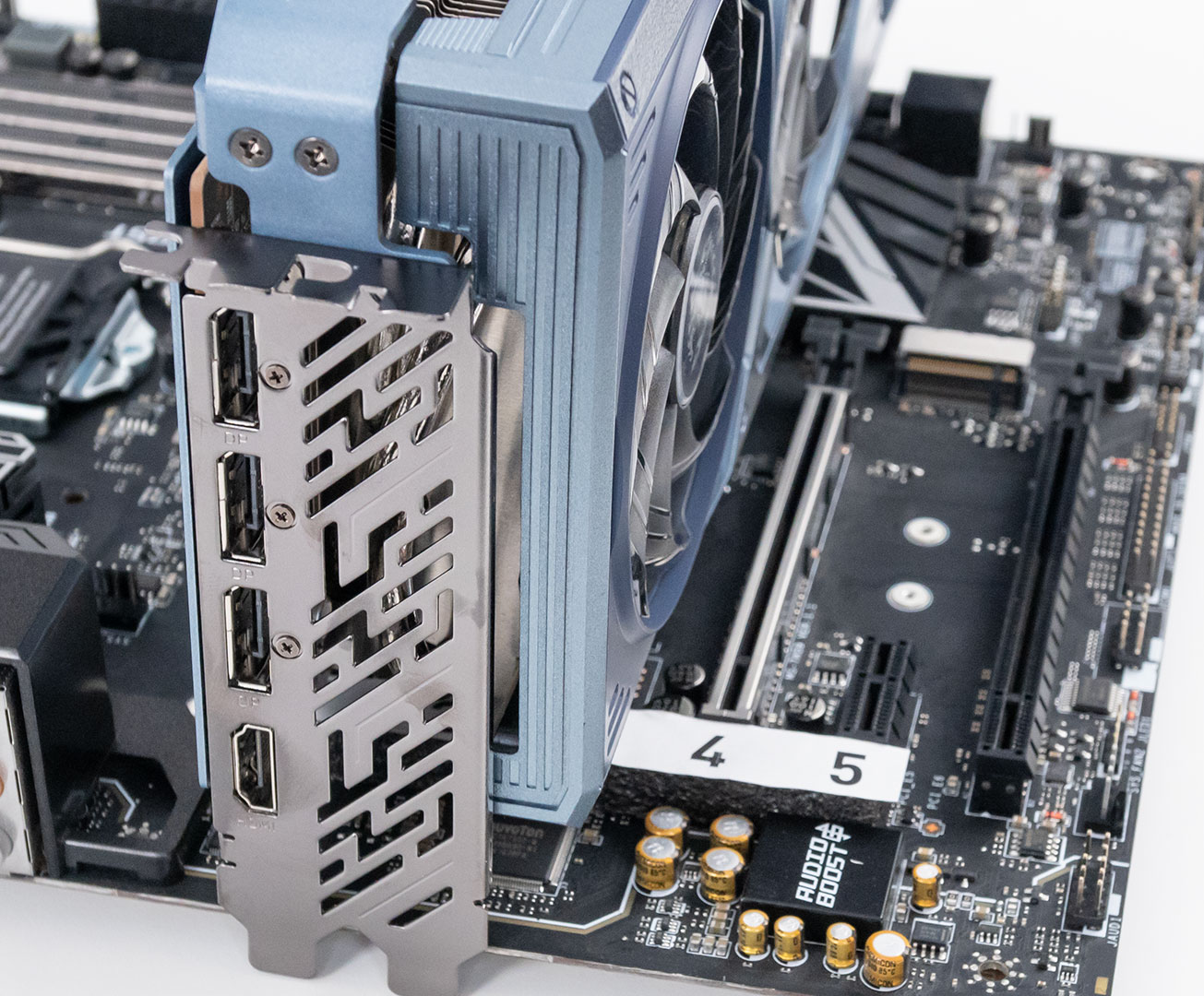
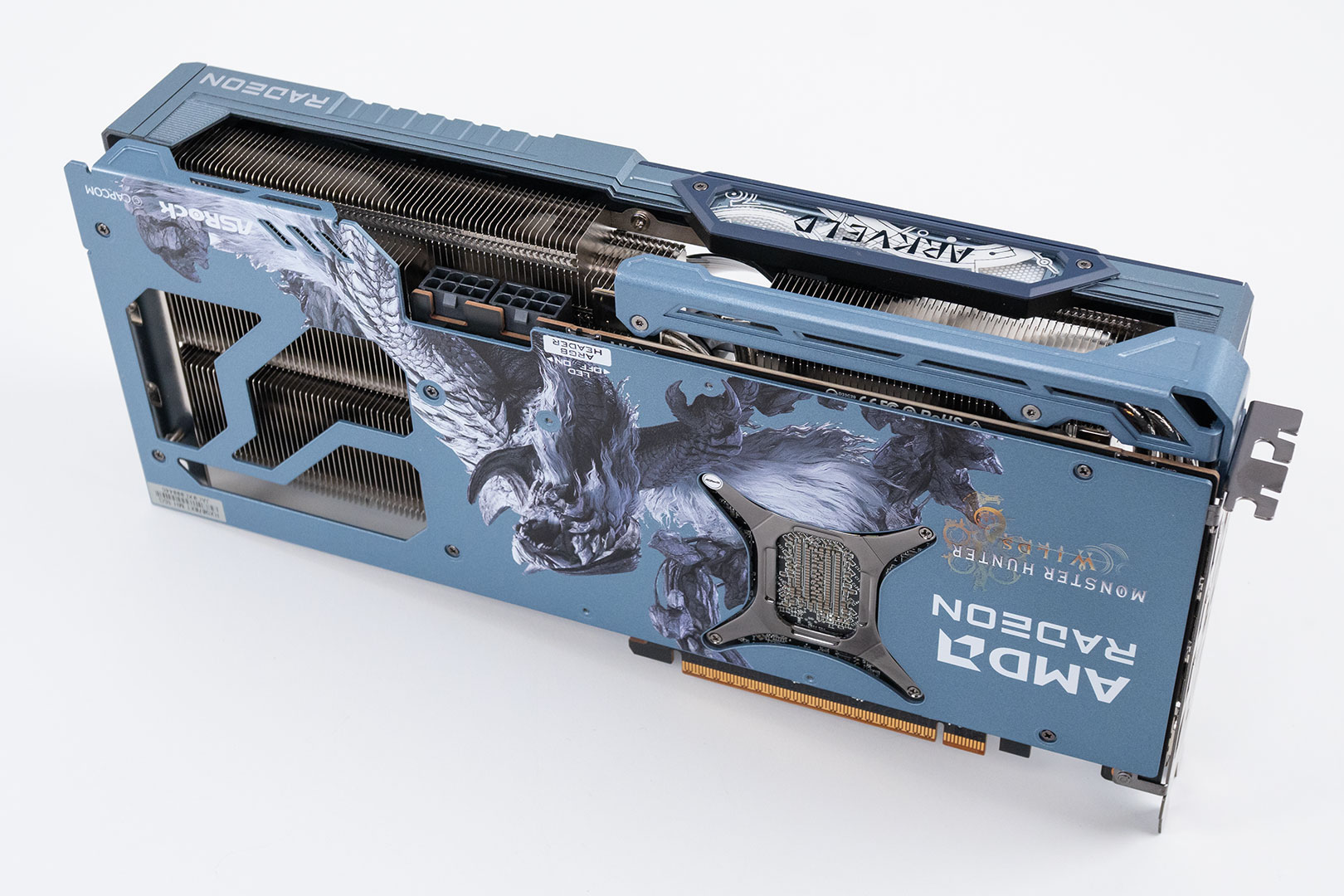
Installation requires three slots in your system. We measured the card's width to be 57 mm.

Display connectivity includes three standard DisplayPort 2.1a and one HDMI 2.1b port.
With RDNA 4, AMD put effort to improve its standing with game streamers and creative professionals. It's done this by giving Navi 48 a dual VCN solution, so the GPU has two concurrent hardware accelerators for encoding and decoding. Perhaps the biggest changes at the silicon level is that AMD improved the encoding quality of its hardware H.264 and HEVC codecs. This was a niche complaint streamers had with AMD GPUs, and would avoid the brand altogether. The company also updated its AV1 hardware acceleration with support for B-frames, which are frames that lack image information, but math data that let the decoder reconstruct image data by comparing with the image data from adjacent I-frames containing it. This technique vastly improves streaming bitrates since half the frames lack image data.
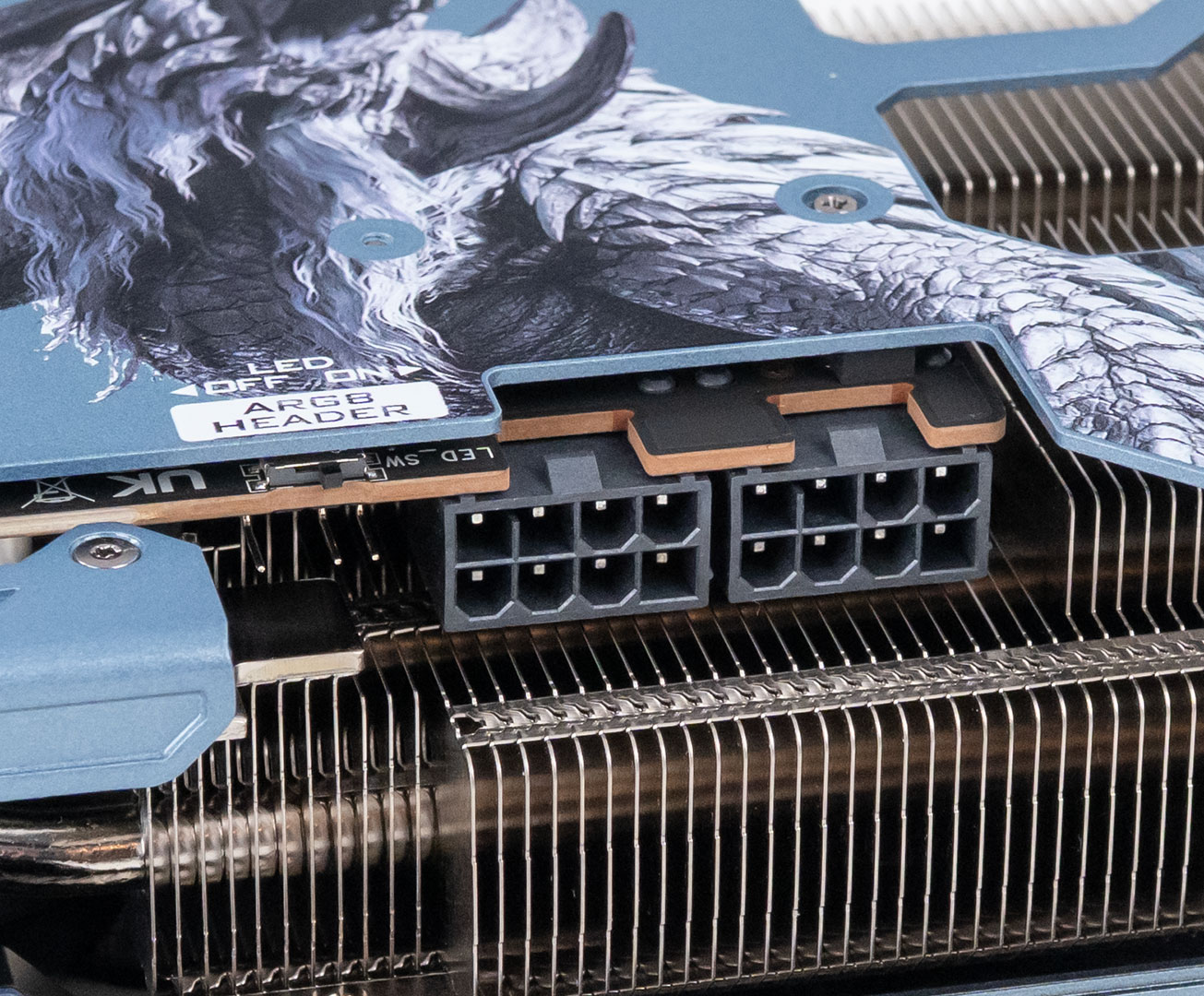
The card uses two 8-pin power connectors, which allow a maximum of 300 W power draw, plus 75 W from the slot. The board power limit is set to 304 W, with a manual adjustment range allowing up to 333 W.
Right next to the power inputs you can find a dedicated switch to turn off the RGB lighting—no software required. Below that sits a header that lets you sync the ARGB effects of the graphics card with the rest of your system.


ASRock has added an RGB illumination zone along the long edge, near the Arkveld logo.
Teardown
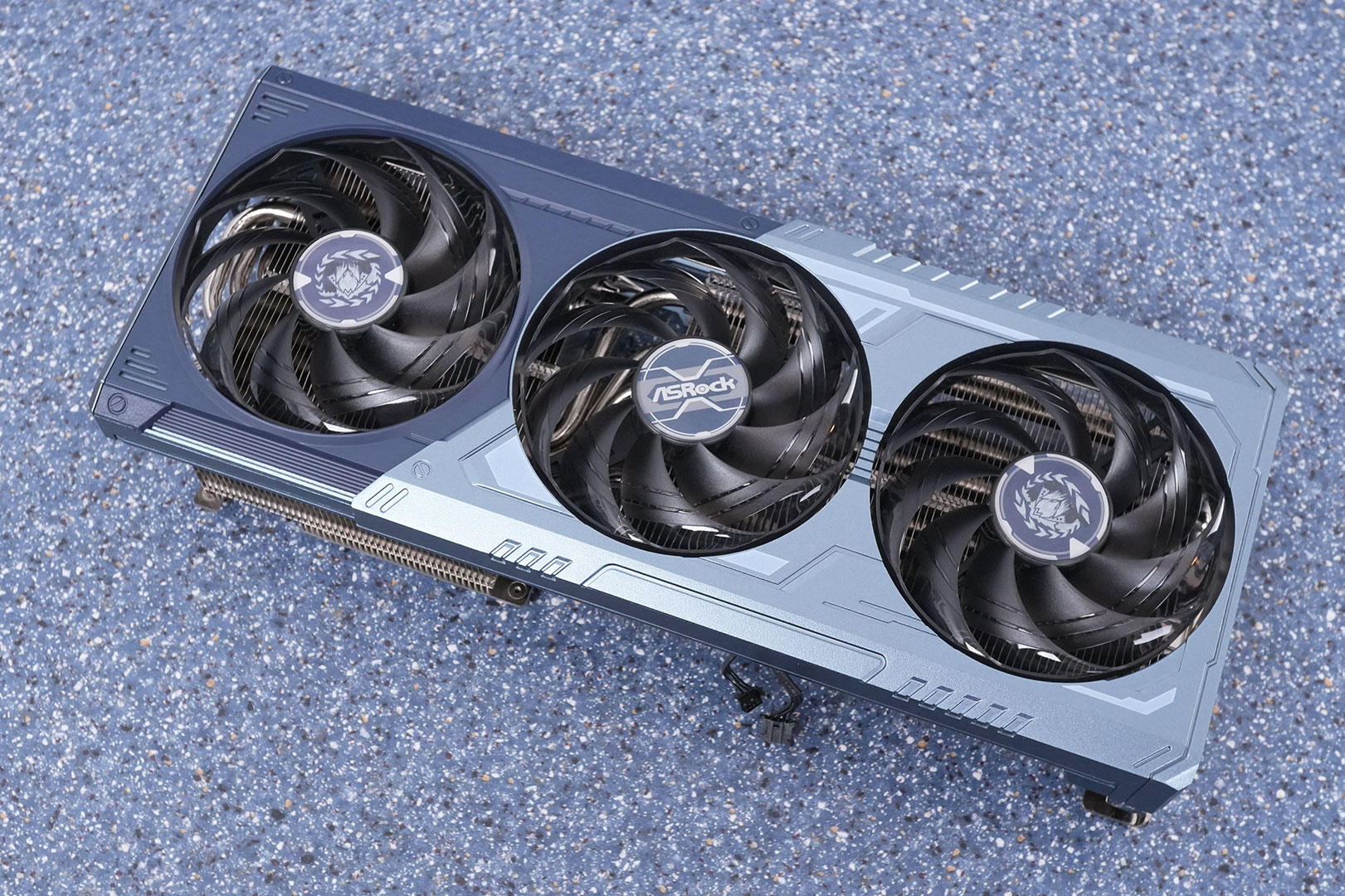
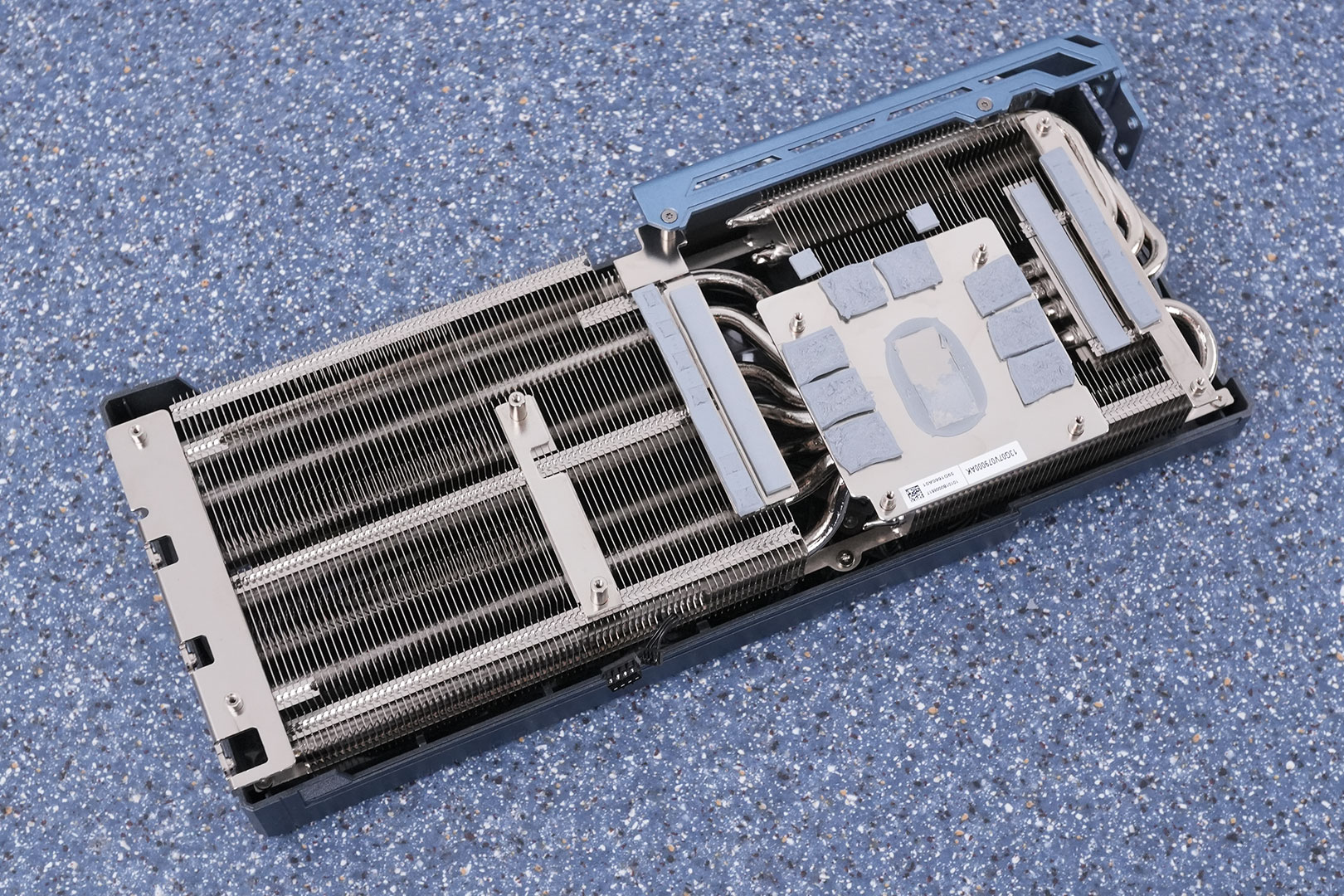
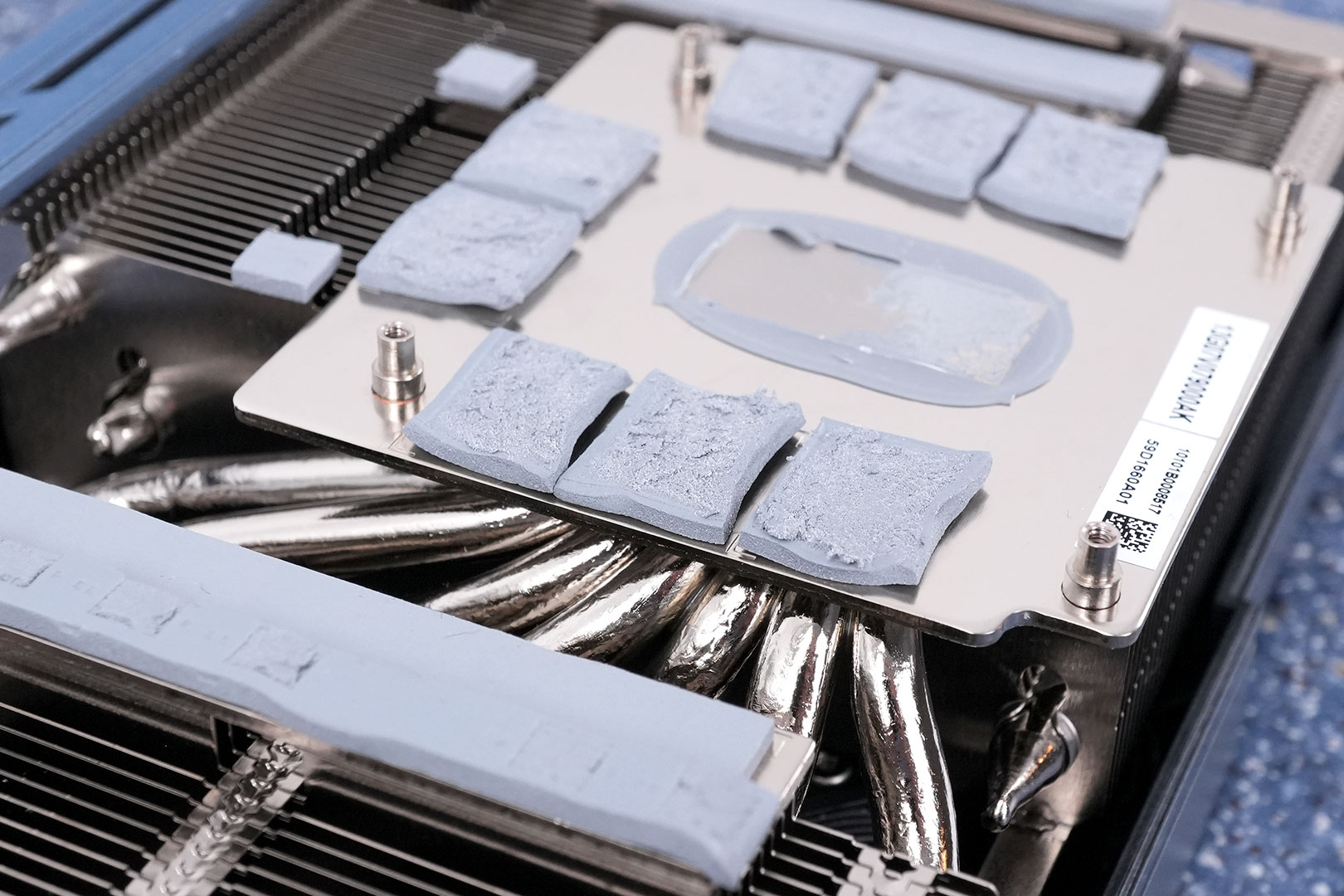
The ASRock cooling solution uses seven heatpipes. The heatsink provides cooling not only for the GPU, but also for the memory chips and VRM circuitry.

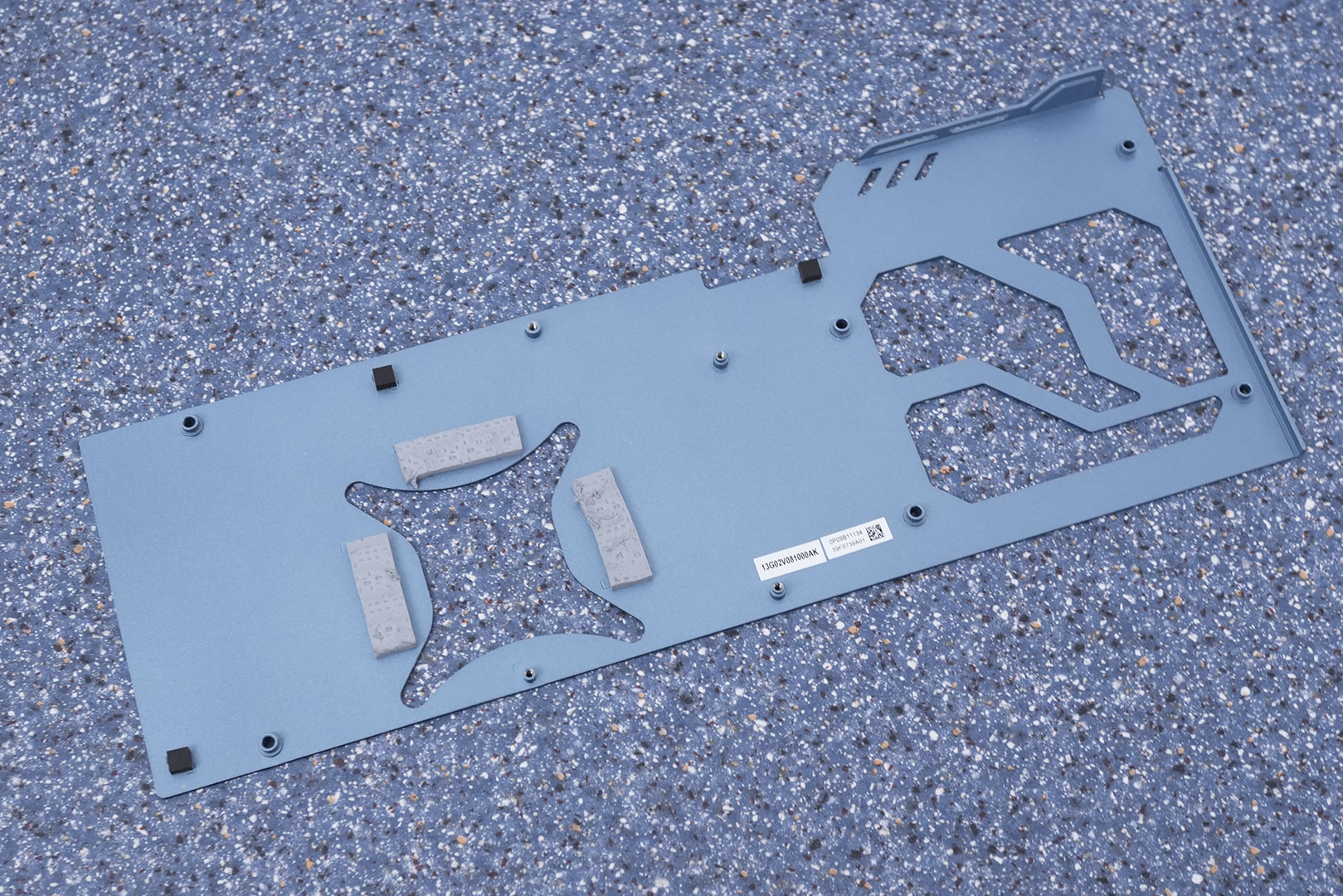
The backplate protects the PCB against damage during handling and installation. Here you can also see that the backplate metal surface is blue, not just a sticker.
High-resolution PCB Pictures
These pictures are for the convenience of volt modders and people who would like to see all the finer details on the PCB. Feel free to link back to us and use these in your articles, videos or forum posts.
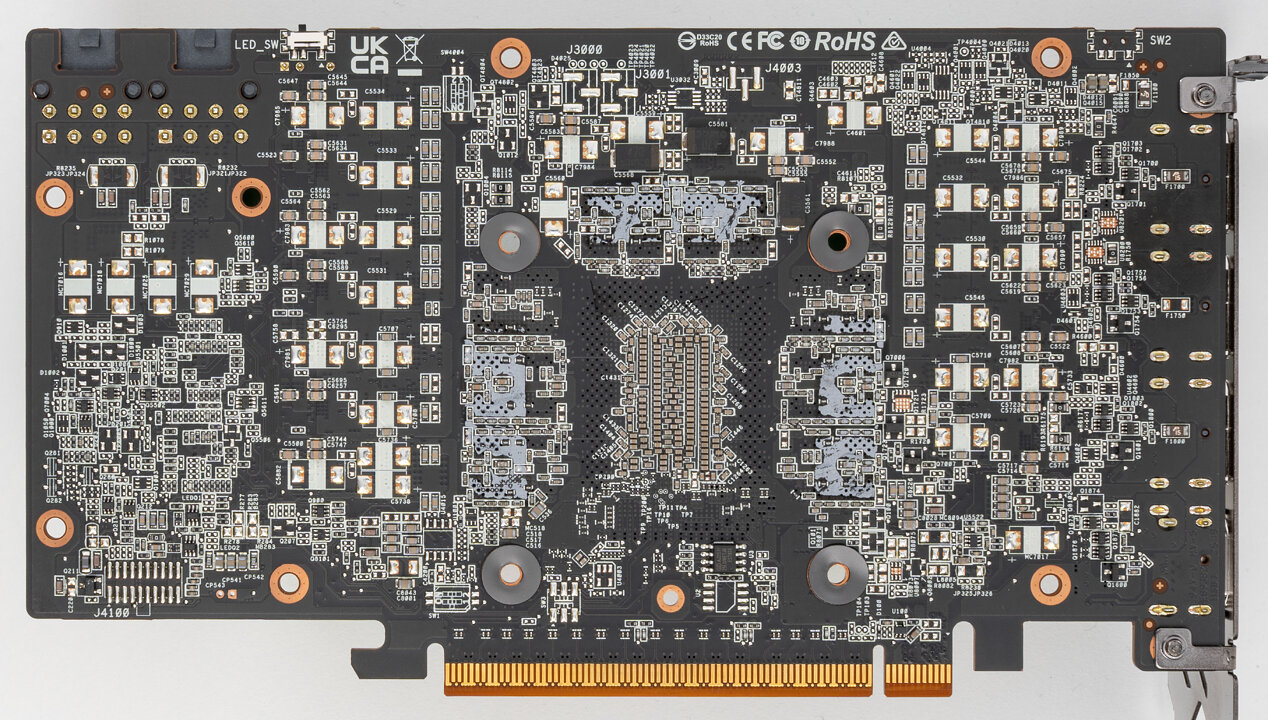
High-resolution versions are also available (front, back).
Circuit Board (PCB) Analysis

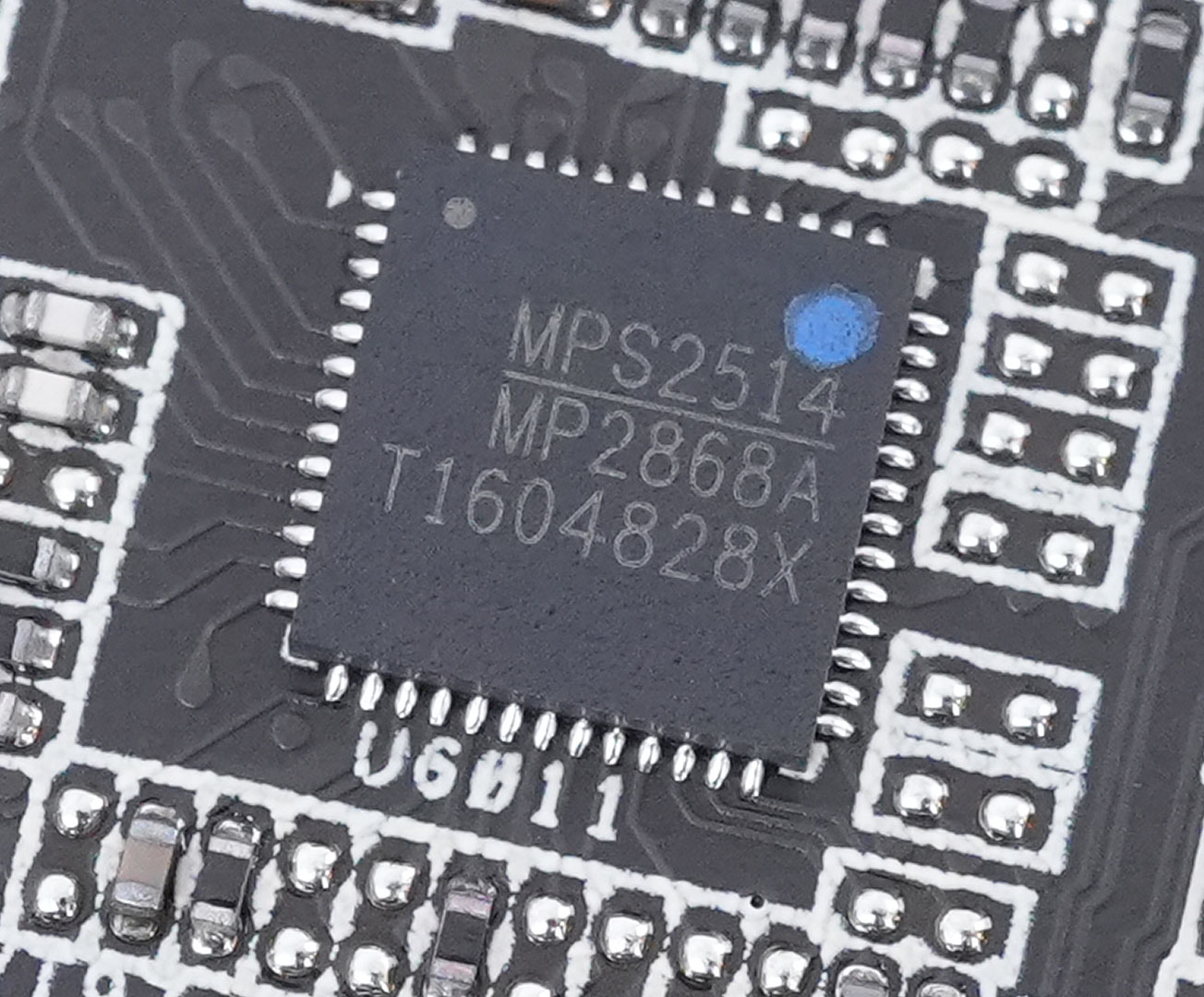
An 8+3 phase VRM powers the GPU. It is managed by a Monolithic Power Systems MP2868A controller.

All GPU power phases use Monolithic MPS MP87661 DrMOS with a rating of 60 A.

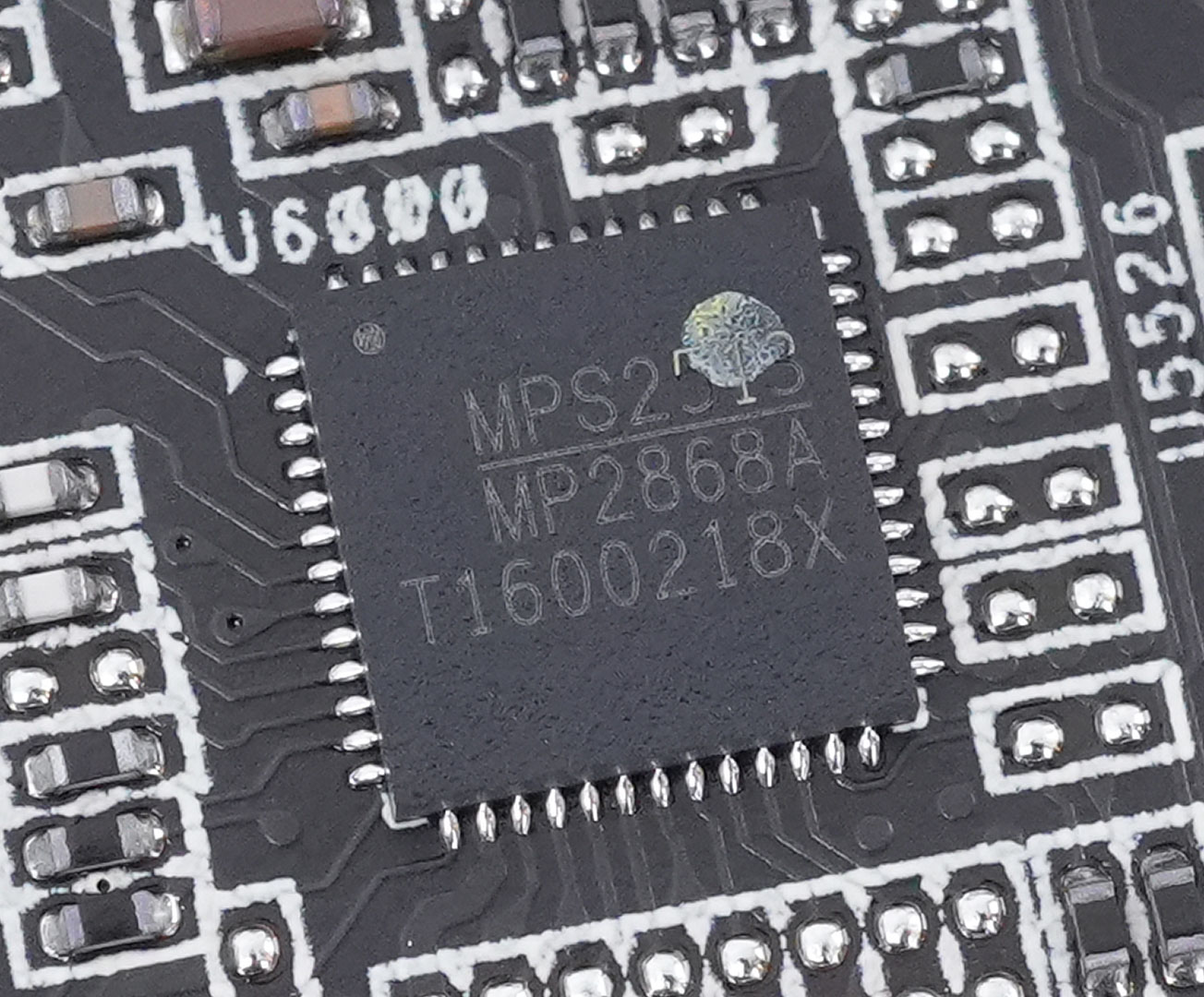
Powering the GDDR6 memory chips is a 2+1 phase VRM driven by a second Monolithic Power Systems MP2868A controller.

Just like GPU, the memory is handled by Monolithic MP87661 DrMOS chips.

The GDDR6 memory chips are made by Hynix, and bear the model number H56G42AS8DX-014, they are rated for 20 Gbps.

The AMD Navi 48 GPU at the heart of the Radeon RX 9070 XT is a monolithic die. It is fabricated using a 4 nanometer N4P process at TSMC Taiwan. The die measures 357 mm², and comes with a transistor count of 53.9 billion.
Our Patreon Silver Supporters can read articles in single-page format.
Nov 14th, 2026 03:07 CST
change timezone
Latest GPU Drivers
New Forum Posts
- Ryzen 7 8700G OC (7)
- What are you playing? (26217)
- Post your Cinebench R23 Score (3172)
- Tell me about your favourite graphics card (38)
- AI generated images... (225)
- 3D Printer Club (850)
- Browser Bechmark scores (132)
- MSI RTX 4090 SUPRIM X: FBPA5 training failure; seeking signed 20 GB VBIOS with 0x20 mask (0)
- Requesting original VBIOS for Gigabyte RX 5700 XT GAMING OC 8G Rev 2.0 (Micron) (1)
- no "PhysX" workable (9)
Popular Reviews
- AMD Zen 6 Technical Deep Dive
- Corsair HX1000i Shift Crystal Review
- NZXT C1200 Platinum Review
- ASUS ROG Strix B850-I Gaming Wi-Fi7 W Review
- Upcoming Hardware Launches 2027 (Updated Nov 2026)
- Montech King 95 3D PRO Review
- NZXT H7 RGB+ Review
- NZXT H5 Review
- Phantom Blade Zero Performance Benchmark Review - 35 GPUs Tested
- XPG NIMBUS PLUS Review - Mid-range Chair With Strong Competitors
TPU on YouTube
Controversial News Posts
- NVIDIA Co-Founder and CEO Jensen Huang Officially Resigns (382)
- OpenAI CEO Argues Home PCs Waste the World's Limited DRAM Supply (152)
- NVIDIA Launches Investigation Into Jensen Huang's Relationship With Suspected Chinese Spy (136)
- Intel "Raptor Lake Next" 16-Core and 20-Core CPUs Surface (130)
- Legendary Game Studio BioWare Shuts Down Following EA Layoffs (104)
- Dell CEO Says the Memory Shortage Will Get Worse in 2027 (95)
- NVIDIA GeForce RTX 50-Series Scheduled for up to $500 Price Hike This Week (89)
- Modder Fits RTX 5090 With Four 8-Pin Connectors, Halving Current per Wire (80)